AI Dashboard is available on the Web, Apple, Google, and Microsoft, PRO version
2022 AWS Certified Developer Associate Exam Preparation: Questions and Answers Dump.
Welcome to AWS Certified Developer Associate Exam Preparation:
Definition and Objectives, Top 100 Questions and Answers dump, White papers, Courses, Labs and Training Materials, Exam info and details, References, Jobs, Others AWS Certificates

What is the AWS Certified Developer Associate Exam?
This AWS Certified Developer-Associate Examination is intended for individuals who perform a Developer role. It validates an examinee’s ability to:
- Demonstrate an understanding of core AWS services, uses, and basic AWS architecture best practices
- Demonstrate proficiency in developing, deploying, and debugging cloud-based applications by using AWS
Recommended general IT knowledge
The target candidate should have the following:
– In-depth knowledge of at least one high-level programming language
– Understanding of application lifecycle management
– The ability to write code for serverless applications
– Understanding of the use of containers in the development process
Recommended AWS knowledge
The target candidate should be able to do the following:
- Use the AWS service APIs, CLI, and software development kits (SDKs) to write applications
- Identify key features of AWS services
- Understand the AWS shared responsibility model
- Use a continuous integration and continuous delivery (CI/CD) pipeline to deploy applications on AWS
- Use and interact with AWS services
- Apply basic understanding of cloud-native applications to write code
- Write code by using AWS security best practices (for example, use IAM roles instead of secret and access keys in the code)
- Author, maintain, and debug code modules on AWS
What is considered out of scope for the target candidate?
The following is a non-exhaustive list of related job tasks that the target candidate is not expected to be able to perform. These items are considered out of scope for the exam:
– Design architectures (for example, distributed system, microservices)
– Design and implement CI/CD pipelines
- Administer IAM users and groups
- Administer Amazon Elastic Container Service (Amazon ECS)
- Design AWS networking infrastructure (for example, Amazon VPC, AWS Direct Connect)
- Understand compliance and licensing
Exam content
Response types
There are two types of questions on the exam:
– Multiple choice: Has one correct response and three incorrect responses (distractors)
– Multiple response: Has two or more correct responses out of five or more response options
Select one or more responses that best complete the statement or answer the question. Distractors, or incorrect answers, are response options that a candidate with incomplete knowledge or skill might choose.
Distractors are generally plausible responses that match the content area.
Unanswered questions are scored as incorrect; there is no penalty for guessing. The exam includes 50 questions that will affect your score.
Get 20% off Google Google Workspace (Google Meet) Standard Plan with the following codes: 96DRHDRA9J7GTN6
 Get 20% off Google Workspace (Google Meet) Business Plan (AMERICAS): M9HNXHX3WC9H7YE (Email us for more codes)
Active Anti-Aging Eye Gel, Reduces Dark Circles, Puffy Eyes, Crow's Feet and Fine Lines & Wrinkles, Packed with Hyaluronic Acid & Age Defying Botanicals

Unscored content
The exam includes 15 unscored questions that do not affect your score. AWS collects information about candidate performance on these unscored questions to evaluate these questions for future use as scored questions. These unscored questions are not identified on the exam.
Exam results
The AWS Certified Developer – Associate (DVA-C01) exam is a pass or fail exam. The exam is scored against a minimum standard established by AWS professionals who follow certification industry best practices and guidelines.
Your results for the exam are reported as a scaled score of 100–1,000. The minimum passing score is 720.
Your score shows how you performed on the exam as a whole and whether you passed. Scaled scoring models help equate scores across multiple exam forms that might have slightly different difficulty levels.
Your score report could contain a table of classifications of your performance at each section level. This information is intended to provide general feedback about your exam performance. The exam uses a compensatory scoring model, which means that you do not need to achieve a passing score in each section. You need to pass only the overall exam.
Each section of the exam has a specific weighting, so some sections have more questions than other sections have. The table contains general information that highlights your strengths and weaknesses. Use caution when interpreting section-level feedback.
Content outline
This exam guide includes weightings, test domains, and objectives for the exam. It is not a comprehensive listing of the content on the exam. However, additional context for each of the objectives is available to help guide your preparation for the exam. The following table lists the main content domains and their weightings. The table precedes the complete exam content outline, which includes the additional context.
The percentage in each domain represents only scored content.

Domain 1: Deployment 22%
Domain 2: Security 26%
Domain 3: Development with AWS Services 30%
Domain 4: Refactoring 10%
Domain 5: Monitoring and Troubleshooting 12%
Domain 1: Deployment
1.1 Deploy written code in AWS using existing CI/CD pipelines, processes, and patterns.
– Commit code to a repository and invoke build, test and/or deployment actions
– Use labels and branches for version and release management
– Use AWS CodePipeline to orchestrate workflows against different environments
– Apply AWS CodeCommit, AWS CodeBuild, AWS CodePipeline, AWS CodeStar, and AWS
CodeDeploy for CI/CD purposes
– Perform a roll back plan based on application deployment policy
1.2 Deploy applications using AWS Elastic Beanstalk.
– Utilize existing supported environments to define a new application stack
– Package the application
– Introduce a new application version into the Elastic Beanstalk environment
– Utilize a deployment policy to deploy an application version (i.e., all at once, rolling, rolling with batch, immutable)
– Validate application health using Elastic Beanstalk dashboard
– Use Amazon CloudWatch Logs to instrument application logging
1.3 Prepare the application deployment package to be deployed to AWS.
– Manage the dependencies of the code module (like environment variables, config files and static image files) within the package
– Outline the package/container directory structure and organize files appropriately
– Translate application resource requirements to AWS infrastructure parameters (e.g., memory, cores)
1.4 Deploy serverless applications.
– Given a use case, implement and launch an AWS Serverless Application Model (AWS SAM) template
– Manage environments in individual AWS services (e.g., Differentiate between Development, Test, and Production in Amazon API Gateway)
Domain 2: Security
2.1 Make authenticated calls to AWS services.
– Communicate required policy based on least privileges required by application.
– Assume an IAM role to access a service
– Use the software development kit (SDK) credential provider on-premises or in the cloud to access AWS services (local credentials vs. instance roles)
2.2 Implement encryption using AWS services.
– Encrypt data at rest (client side; server side; envelope encryption) using AWS services
– Encrypt data in transit

2.3 Implement application authentication and authorization.
– Add user sign-up and sign-in functionality for applications with Amazon Cognito identity or user pools
– Use Amazon Cognito-provided credentials to write code that access AWS services.
– Use Amazon Cognito sync to synchronize user profiles and data
– Use developer-authenticated identities to interact between end user devices, backend
authentication, and Amazon Cognito
Domain 3: Development with AWS Services
3.1 Write code for serverless applications.
– Compare and contrast server-based vs. serverless model (e.g., micro services, stateless nature of serverless applications, scaling serverless applications, and decoupling layers of serverless applications)
– Configure AWS Lambda functions by defining environment variables and parameters (e.g., memory, time out, runtime, handler)
– Create an API endpoint using Amazon API Gateway
– Create and test appropriate API actions like GET, POST using the API endpoint
– Apply Amazon DynamoDB concepts (e.g., tables, items, and attributes)
– Compute read/write capacity units for Amazon DynamoDB based on application requirements
– Associate an AWS Lambda function with an AWS event source (e.g., Amazon API Gateway, Amazon CloudWatch event, Amazon S3 events, Amazon Kinesis)
– Invoke an AWS Lambda function synchronously and asynchronously

3.2 Translate functional requirements into application design.
– Determine real-time vs. batch processing for a given use case
– Determine use of synchronous vs. asynchronous for a given use case
– Determine use of event vs. schedule/poll for a given use case
– Account for tradeoffs for consistency models in an application design
Domain 4: Refactoring
4.1 Optimize applications to best use AWS services and features.
Implement AWS caching services to optimize performance (e.g., Amazon ElastiCache, Amazon API Gateway cache)
Apply an Amazon S3 naming scheme for optimal read performance
4.2 Migrate existing application code to run on AWS.
– Isolate dependencies
– Run the application as one or more stateless processes
– Develop in order to enable horizontal scalability
– Externalize state
Domain 5: Monitoring and Troubleshooting

5.1 Write code that can be monitored.
– Create custom Amazon CloudWatch metrics
– Perform logging in a manner available to systems operators
– Instrument application source code to enable tracing in AWS X-Ray
5.2 Perform root cause analysis on faults found in testing or production.
– Interpret the outputs from the logging mechanism in AWS to identify errors in logs
– Check build and testing history in AWS services (e.g., AWS CodeBuild, AWS CodeDeploy, AWS CodePipeline) to identify issues
– Utilize AWS services (e.g., Amazon CloudWatch, VPC Flow Logs, and AWS X-Ray) to locate a specific faulty component
Which key tools, technologies, and concepts might be covered on the exam?
The following is a non-exhaustive list of the tools and technologies that could appear on the exam.
This list is subject to change and is provided to help you understand the general scope of services, features, or technologies on the exam.
The general tools and technologies in this list appear in no particular order.
AWS services are grouped according to their primary functions. While some of these technologies will likely be covered more than others on the exam, the order and placement of them in this list is no indication of relative weight or importance:
– Analytics
– Application Integration
– Containers
– Cost and Capacity Management
– Data Movement
– Developer Tools
– Instances (virtual machines)
– Management and Governance
– Networking and Content Delivery
– Security
– Serverless
AWS services and features
Analytics:
– Amazon Elasticsearch Service (Amazon ES)
– Amazon Kinesis
Application Integration:
– Amazon EventBridge (Amazon CloudWatch Events)
– Amazon Simple Notification Service (Amazon SNS)
– Amazon Simple Queue Service (Amazon SQS)
– AWS Step Functions
Compute:
– Amazon EC2
– AWS Elastic Beanstalk
– AWS Lambda
Containers:
– Amazon Elastic Container Registry (Amazon ECR)
– Amazon Elastic Container Service (Amazon ECS)
– Amazon Elastic Kubernetes Services (Amazon EKS)
Database:
– Amazon DynamoDB
– Amazon ElastiCache
– Amazon RDS
Developer Tools:
– AWS CodeArtifact
– AWS CodeBuild
– AWS CodeCommit
– AWS CodeDeploy
– Amazon CodeGuru
– AWS CodePipeline
– AWS CodeStar
– AWS Fault Injection Simulator
– AWS X-Ray

Management and Governance:
– AWS CloudFormation
– Amazon CloudWatch
Networking and Content Delivery:
– Amazon API Gateway
– Amazon CloudFront
– Elastic Load Balancing
Security, Identity, and Compliance:
– Amazon Cognito
– AWS Identity and Access Management (IAM)
– AWS Key Management Service (AWS KMS)
Storage:
– Amazon S3
Out-of-scope AWS services and features
The following is a non-exhaustive list of AWS services and features that are not covered on the exam.
These services and features do not represent every AWS offering that is excluded from the exam content.
Services or features that are entirely unrelated to the target job roles for the exam are excluded from this list because they are assumed to be irrelevant.
Out-of-scope AWS services and features include the following:
– AWS Application Discovery Service
– Amazon AppStream 2.0
– Amazon Chime
– Amazon Connect
– AWS Database Migration Service (AWS DMS)
– AWS Device Farm
– Amazon Elastic Transcoder
– Amazon GameLift
– Amazon Lex
– Amazon Machine Learning (Amazon ML)
– AWS Managed Services
– Amazon Mobile Analytics
– Amazon Polly
Unlock the Secrets of Africa: Master African History, Geography, Culture, People, Cuisine, Economics, Languages, Music, Wildlife, Football, Politics, Animals, Tourism, Science and Environment with the Top 1000 Africa Quiz and Trivia. Get Yours Now!
"Become a Canada Expert: Ace the Citizenship Test and Impress Everyone with Your Knowledge of Canadian History, Geography, Government, Culture, People, Languages, Travel, Wildlife, Hockey, Tourism, Sceneries, Arts, and Data Visualization. Get the Top 1000 Canada Quiz Now!"
– Amazon QuickSight
– Amazon Rekognition
– AWS Server Migration Service (AWS SMS)
– AWS Service Catalog
– AWS Shield Advanced
– AWS Shield Standard
– AWS Snow Family
– AWS Storage Gateway
– AWS WAF
– Amazon WorkMail
– Amazon WorkSpaces
To succeed with the real exam, do not memorize the answers below. It is very important that you understand why a question is right or wrong and the concepts behind it by carefully reading the reference documents in the answers.
AWS Certified Developer – Associate Practice Questions And Answers Dump
Q0: Your application reads commands from an SQS queue and sends them to web services hosted by your
partners. When a partner’s endpoint goes down, your application continually returns their commands to the queue. The repeated attempts to deliver these commands use up resources. Commands that can’t be delivered must not be lost.
How can you accommodate the partners’ broken web services without wasting your resources?
- A. Create a delay queue and set DelaySeconds to 30 seconds
- B. Requeue the message with a VisibilityTimeout of 30 seconds.
- C. Create a dead letter queue and set the Maximum Receives to 3.
- D. Requeue the message with a DelaySeconds of 30 seconds.

Top
Q1: A developer is writing an application that will store data in a DynamoDB table. The ratio of reads operations to write operations will be 1000 to 1, with the same data being accessed frequently.
What should the Developer enable on the DynamoDB table to optimize performance and minimize costs?
- A. Amazon DynamoDB auto scaling
- B. Amazon DynamoDB cross-region replication
- C. Amazon DynamoDB Streams
- D. Amazon DynamoDB Accelerator
Top
Q2: You are creating a DynamoDB table with the following attributes:
- PurchaseOrderNumber (partition key)
- CustomerID
- PurchaseDate
- TotalPurchaseValue
One of your applications must retrieve items from the table to calculate the total value of purchases for a
particular customer over a date range. What secondary index do you need to add to the table?
- A. Local secondary index with a partition key of CustomerID and sort key of PurchaseDate; project the
TotalPurchaseValue attribute - B. Local secondary index with a partition key of PurchaseDate and sort key of CustomerID; project the
TotalPurchaseValue attribute - C. Global secondary index with a partition key of CustomerID and sort key of PurchaseDate; project the
TotalPurchaseValue attribute - D. Global secondary index with a partition key of PurchaseDate and sort key of CustomerID; project the
TotalPurchaseValue attribute

Top
The Cloud is the future: Get Certified now.
The AWS Certified Solution Architect Average Salary is: US $149,446/year. Get Certified with the App below:

Q3: When referencing the remaining time left for a Lambda function to run within the function’s code you would use:
- A. The event object
- B. The timeLeft object
- C. The remains object
- D. The context object
Top
Q4: What two arguments does a Python Lambda handler function require?
- A. invocation, zone
- B. event, zone
- C. invocation, context
- D. event, context
Q5: Lambda allows you to upload code and dependencies for function packages:
- A. Only from a directly uploaded zip file
- B. Only via SFTP
- C. Only from a zip file in AWS S3
- D. From a zip file in AWS S3 or uploaded directly from elsewhere
The Cloud is the future: Get Certified now.
The AWS Certified Solution Architect Average Salary is: US $149,446/year. Get Certified with the App below:
Q6: A Lambda deployment package contains:
- A. Function code, libraries, and runtime binaries
- B. Only function code
- C. Function code and libraries not included within the runtime
- D. Only libraries not included within the runtime
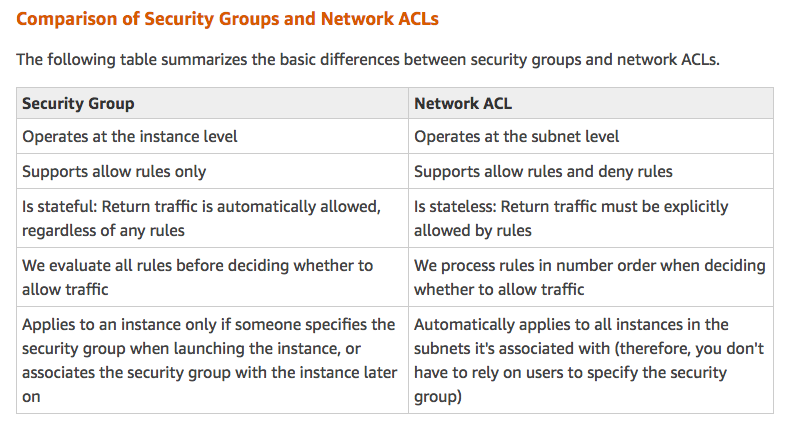
Q7: You are attempting to SSH into an EC2 instance that is located in a public subnet. However, you are currently receiving a timeout error trying to connect. What could be a possible cause of this connection issue?
- A. The security group associated with the EC2 instance has an inbound rule that allows SSH traffic, but does not have an outbound rule that allows SSH traffic.
- B. The security group associated with the EC2 instance has an inbound rule that allows SSH traffic AND has an outbound rule that explicitly denies SSH traffic.
- C. The security group associated with the EC2 instance has an inbound rule that allows SSH traffic AND the associated NACL has both an inbound and outbound rule that allows SSH traffic.
- D. The security group associated with the EC2 instance does not have an inbound rule that allows SSH traffic AND the associated NACL does not have an outbound rule that allows SSH traffic.
Top
Q8: You have instances inside private subnets and a properly configured bastion host instance in a public subnet. None of the instances in the private subnets have a public or Elastic IP address. How can you connect an instance in the private subnet to the open internet to download system updates?
- A. Create and assign EIP to each instance
- B. Create and attach a second IGW to the VPC.
- C. Create and utilize a NAT Gateway
- D. Connect to a VPN
Top
Q9: What feature of VPC networking should you utilize if you want to create “elasticity” in your application’s architecture?
- A. Security Groups
- B. Route Tables
- C. Elastic Load Balancer
- D. Auto Scaling
Top
Q10: Lambda allows you to upload code and dependencies for function packages:
- A. Only from a directly uploaded zip file
- B. Only from a directly uploaded zip file
- C. Only from a zip file in AWS S3
- D. From a zip file in AWS S3 or uploaded directly from elsewhere
Q11: You’re writing a script with an AWS SDK that uses the AWS API Actions and want to create AMIs for non-EBS backed AMIs for you. Which API call should occurs in the final process of creating an AMI?
- A. RegisterImage
- B. CreateImage
- C. ami-register-image
- D. ami-create-image
Q12: When dealing with session state in EC2-based applications using Elastic load balancers which option is generally thought of as the best practice for managing user sessions?
- A. Having the ELB distribute traffic to all EC2 instances and then having the instance check a caching solution like ElastiCache running Redis or Memcached for session information
- B. Permenantly assigning users to specific instances and always routing their traffic to those instances
- C. Using Application-generated cookies to tie a user session to a particular instance for the cookie duration
- D. Using Elastic Load Balancer generated cookies to tie a user session to a particular instance
Q13: Which API call would best be used to describe an Amazon Machine Image?
- A. ami-describe-image
- B. ami-describe-images
- C. DescribeImage
- D. DescribeImages
Q14: What is one key difference between an Amazon EBS-backed and an instance-store backed instance?
- A. Autoscaling requires using Amazon EBS-backed instances
- B. Virtual Private Cloud requires EBS backed instances
- C. Amazon EBS-backed instances can be stopped and restarted without losing data
- D. Instance-store backed instances can be stopped and restarted without losing data
The Cloud is the future: Get Certified now.
The AWS Certified Solution Architect Average Salary is: US $149,446/year. Get Certified with the App below:
Q15: After having created a new Linux instance on Amazon EC2, and downloaded the .pem file (called Toto.pem) you try and SSH into your IP address (54.1.132.33) using the following command.
ssh -i my_key.pem ec2-user@52.2.222.22
However you receive the following error.
@@@@@@@@ WARNING: UNPROTECTED PRIVATE KEY FILE! @ @@@@@@@@@@@@@@@@@@@
What is the most probable reason for this and how can you fix it?
- A. You do not have root access on your terminal and need to use the sudo option for this to work.
- B. You do not have enough permissions to perform the operation.
- C. Your key file is encrypted. You need to use the -u option for unencrypted not the -i option.
- D. Your key file must not be publicly viewable for SSH to work. You need to modify your .pem file to limit permissions.
Q16: You have an EBS root device on /dev/sda1 on one of your EC2 instances. You are having trouble with this particular instance and you need to either Stop/Start, Reboot or Terminate the instance but you do NOT want to lose any data that you have stored on /dev/sda1. However, you are unsure if changing the instance state in any of the aforementioned ways will cause you to lose data stored on the EBS volume. Which of the below statements best describes the effect each change of instance state would have on the data you have stored on /dev/sda1?
- A. Whether you stop/start, reboot or terminate the instance it does not matter because data on an EBS volume is not ephemeral and the data will not be lost regardless of what method is used.
- B. If you stop/start the instance the data will not be lost. However if you either terminate or reboot the instance the data will be lost.
- C. Whether you stop/start, reboot or terminate the instance it does not matter because data on an EBS volume is ephemeral and it will be lost no matter what method is used.
- D. The data will be lost if you terminate the instance, however the data will remain on /dev/sda1 if you reboot or stop/start the instance because data on an EBS volume is not ephemeral.
Q17: EC2 instances are launched from Amazon Machine Images (AMIs). A given public AMI:
- A. Can only be used to launch EC2 instances in the same AWS availability zone as the AMI is stored
- B. Can only be used to launch EC2 instances in the same country as the AMI is stored
- C. Can only be used to launch EC2 instances in the same AWS region as the AMI is stored
- D. Can be used to launch EC2 instances in any AWS region
Q18: Which of the following statements is true about the Elastic File System (EFS)?
- A. EFS can scale out to meet capacity requirements and scale back down when no longer needed
- B. EFS can be used by multiple EC2 instances simultaneously
- C. EFS cannot be used by an instance using EBS
- D. EFS can be configured on an instance before launch just like an IAM role or EBS volumes
The Cloud is the future: Get Certified now.
The AWS Certified Solution Architect Average Salary is: US $149,446/year. Get Certified with the App below:
Q19: IAM Policies, at a minimum, contain what elements?
- A. ID
- B. Effects
- C. Resources
- D. Sid
- E. Principle
- F. Actions
The Cloud is the future: Get Certified now.
The AWS Certified Solution Architect Average Salary is: US $149,446/year. Get Certified with the App below:
Q20: What are the main benefits of IAM groups?
- A. The ability to create custom permission policies.
- B. Assigning IAM permission policies to more than one user at a time.
- C. Easier user/policy management.
- D. Allowing EC2 instances to gain access to S3.
Q21: What are benefits of using AWS STS?
- A. Grant access to AWS resources without having to create an IAM identity for them
- B. Since credentials are temporary, you don’t have to rotate or revoke them
- C. Temporary security credentials can be extended indefinitely
- D. Temporary security credentials can be restricted to a specific region
Q22: What should the Developer enable on the DynamoDB table to optimize performance and minimize costs?
- A. Amazon DynamoDB auto scaling
- B. Amazon DynamoDB cross-region replication
- C. Amazon DynamoDB Streams
- D. Amazon DynamoDB Accelerator
Top
Q23: A Developer has been asked to create an AWS Elastic Beanstalk environment for a production web application which needs to handle thousands of requests. Currently the dev environment is running on a t1 micro instance. How can the Developer change the EC2 instance type to m4.large?
- A. Use CloudFormation to migrate the Amazon EC2 instance type of the environment from t1 micro to m4.large.
- B. Create a saved configuration file in Amazon S3 with the instance type as m4.large and use the same during environment creation.
- C. Change the instance type to m4.large in the configuration details page of the Create New Environment page.
- D. Change the instance type value for the environment to m4.large by using update autoscaling group CLI command.
Q24: What statements are true about Availability Zones (AZs) and Regions?
- A. There is only one AZ in each AWS Region
- B. AZs are geographically separated inside a region to help protect against natural disasters affecting more than one at a time.
- C. AZs can be moved between AWS Regions based on your needs
- D. There are (almost always) two or more AZs in each AWS Region
The Cloud is the future: Get Certified now.
The AWS Certified Solution Architect Average Salary is: US $149,446/year. Get Certified with the App below:
Q25: An AWS Region contains:
- A. Edge Locations
- B. Data Centers
- C. AWS Services
- D. Availability Zones
Top
Q26: Which read request in DynamoDB returns a response with the most up-to-date data, reflecting the updates from all prior write operations that were successful?
- A. Eventual Consistent Reads
- B. Conditional reads for Consistency
- C. Strongly Consistent Reads
- D. Not possible
Top
Q27: You’ ve been asked to move an existing development environment on the AWS Cloud. This environment consists mainly of Docker based containers. You need to ensure that minimum effort is taken during the migration process. Which of the following step would you consider for this requirement?
- A. Create an Opswork stack and deploy the Docker containers
- B. Create an application and Environment for the Docker containers in the Elastic Beanstalk service
- C. Create an EC2 Instance. Install Docker and deploy the necessary containers.
- D. Create an EC2 Instance. Install Docker and deploy the necessary containers. Add an Autoscaling Group for scalability of the containers.
Top
Q28: You’ve written an application that uploads objects onto an S3 bucket. The size of the object varies between 200 – 500 MB. You’ve seen that the application sometimes takes a longer than expected time to upload the object. You want to improve the performance of the application. Which of the following would you consider?
- A. Create multiple threads and upload the objects in the multiple threads
- B. Write the items in batches for better performance
- C. Use the Multipart upload API
- D. Enable versioning on the Bucket
The Cloud is the future: Get Certified now.
The AWS Certified Solution Architect Average Salary is: US $149,446/year. Get Certified with the App below:
Top
Q29: A security system monitors 600 cameras, saving image metadata every 1 minute to an Amazon DynamoDb table. Each sample involves 1kb of data, and the data writes are evenly distributed over time. How much write throughput is required for the target table?
- A. 6000
- B. 10
- C. 3600
- D. 600
The Cloud is the future: Get Certified now.
The AWS Certified Solution Architect Average Salary is: US $149,446/year. Get Certified with the App below:
Q30: What two arguments does a Python Lambda handler function require?
- A. invocation, zone
- B. event, zone
- C. invocation, context
- D. event, context
Top
Q31: Lambda allows you to upload code and dependencies for function packages:
- A. Only from a directly uploaded zip file
- B. Only via SFTP
- C. Only from a zip file in AWS S3
- D. From a zip file in AWS S3 or uploaded directly from elsewhere
Top
Q32: A Lambda deployment package contains:
- A. Function code, libraries, and runtime binaries
- B. Only function code
- C. Function code and libraries not included within the runtime
- D. Only libraries not included within the runtime
Top
Q33: You have instances inside private subnets and a properly configured bastion host instance in a public subnet. None of the instances in the private subnets have a public or Elastic IP address. How can you connect an instance in the private subnet to the open internet to download system updates?
- A. Create and assign EIP to each instance
- B. Create and attach a second IGW to the VPC.
- C. Create and utilize a NAT Gateway
- D. Connect to a VPN
Top
Q34: What feature of VPC networking should you utilize if you want to create “elasticity” in your application’s architecture?
- A. Security Groups
- B. Route Tables
- C. Elastic Load Balancer
- D. Auto Scaling
Top
Q30: Lambda allows you to upload code and dependencies for function packages:
- A. Only from a directly uploaded zip file
- B. Only from a directly uploaded zip file
- C. Only from a zip file in AWS S3
- D. From a zip file in AWS S3 or uploaded directly from elsewhere
Answer:
Top
Q31: An organization is using an Amazon ElastiCache cluster in front of their Amazon RDS instance. The organization would like the Developer to implement logic into the code so that the cluster only retrieves data from RDS when there is a cache miss. What strategy can the Developer implement to achieve this?
- A. Lazy loading
- B. Write-through
- C. Error retries
- D. Exponential backoff
Answer:
Top
Q32: A developer is writing an application that will run on Ec2 instances and read messages from SQS queue. The nessages will arrive every 15-60 seconds. How should the Developer efficiently query the queue for new messages?
- A. Use long polling
- B. Set a custom visibility timeout
- C. Use short polling
- D. Implement exponential backoff
Top
Q33: You are using AWS SAM to define a Lambda function and configure CodeDeploy to manage deployment patterns. With new Lambda function working as per expectation which of the following will shift traffic from original Lambda function to new Lambda function in the shortest time frame?
- A. Canary10Percent5Minutes
- B. Linear10PercentEvery10Minutes
- C. Canary10Percent15Minutes
- D. Linear10PercentEvery1Minute
Top
Q34: You are using AWS SAM templates to deploy a serverless application. Which of the following resource will embed application from Amazon S3 buckets?
- A. AWS::Serverless::Api
- B. AWS::Serverless::Application
- C. AWS::Serverless::Layerversion
- D. AWS::Serverless::Function
Top
Q35: You are using AWS Envelope Encryption for encrypting all sensitive data. Which of the followings is True with regards to Envelope Encryption?
- A. Data is encrypted be encrypting Data key which is further encrypted using encrypted Master Key.
- B. Data is encrypted by plaintext Data key which is further encrypted using encrypted Master Key.
- C. Data is encrypted by encrypted Data key which is further encrypted using plaintext Master Key.
- D. Data is encrypted by plaintext Data key which is further encrypted using plaintext Master Key.
Top
Q36: You are developing an application that will be comprised of the following architecture –
- A set of Ec2 instances to process the videos.
- These (Ec2 instances) will be spun up by an autoscaling group.
- SQS Queues to maintain the processing messages.
- There will be 2 pricing tiers.
How will you ensure that the premium customers videos are given more preference?
- A. Create 2 Autoscaling Groups, one for normal and one for premium customers
- B. Create 2 set of Ec2 Instances, one for normal and one for premium customers
- C. Create 2 SQS queus, one for normal and one for premium customers
- D. Create 2 Elastic Load Balancers, one for normal and one for premium customers.
Top
Q37: You are developing an application that will interact with a DynamoDB table. The table is going to take in a lot of read and write operations. Which of the following would be the ideal partition key for the DynamoDB table to ensure ideal performance?
- A. CustomerID
- B. CustomerName
- C. Location
- D. Age
Top
Q38: A developer is making use of AWS services to develop an application. He has been asked to develop the application in a manner to compensate any network delays. Which of the following two mechanisms should he implement in the application?
- A. Multiple SQS queues
- B. Exponential backoff algorithm
- C. Retries in your application code
- D. Consider using the Java sdk.
Top
Q39: An application is being developed that is going to write data to a DynamoDB table. You have to setup the read and write throughput for the table. Data is going to be read at the rate of 300 items every 30 seconds. Each item is of size 6KB. The reads can be eventual consistent reads. What should be the read capacity that needs to be set on the table?
- A. 10
- B. 20
- C. 6
- D. 30
Top
Q40: You are in charge of deploying an application that will be hosted on an EC2 Instance and sit behind an Elastic Load balancer. You have been requested to monitor the incoming connections to the Elastic Load Balancer. Which of the below options can suffice this requirement?
- A. Use AWS CloudTrail with your load balancer
- B. Enable access logs on the load balancer
- C. Use a CloudWatch Logs Agent
- D. Create a custom metric CloudWatch lter on your load balancer
Top
Q41: A static web site has been hosted on a bucket and is now being accessed by users. One of the web pages javascript section has been changed to access data which is hosted in another S3 bucket. Now that same web page is no longer loading in the browser. Which of the following can help alleviate the error?
- A. Enable versioning for the underlying S3 bucket.
- B. Enable Replication so that the objects get replicated to the other bucket
- C. Enable CORS for the bucket
- D. Change the Bucket policy for the bucket to allow access from the other bucket
Top
Q42: Your mobile application includes a photo-sharing service that is expecting tens of thousands of users at launch. You will leverage Amazon Simple Storage Service (S3) for storage of the user Images, and you must decide how to authenticate and authorize your users for access to these images. You also need to manage the storage of these images. Which two of the following approaches should you use? Choose two answers from the options below
- A. Create an Amazon S3 bucket per user, and use your application to generate the S3 URL for the appropriate content.
- B. Use AWS Identity and Access Management (IAM) user accounts as your application-level user database, and offload the burden of authentication from your application code.
- C. Authenticate your users at the application level, and use AWS Security Token Service (STS)to grant token-based authorization to S3 objects.
- D. Authenticate your users at the application level, and send an SMS token message to the user. Create an Amazon S3 bucket with the same name as the SMS message token, and move the user’s objects to that bucket.
Top
Q43: Your current log analysis application takes more than four hours to generate a report of the top 10 users of your web application. You have been asked to implement a system that can report this information in real time, ensure that the report is always up to date, and handle increases in the number of requests to your web application. Choose the option that is cost-effective and can fulfill the requirements.
- A. Publish your data to CloudWatch Logs, and congure your application to Autoscale to handle the load on demand.
- B. Publish your log data to an Amazon S3 bucket. Use AWS CloudFormation to create an Auto Scaling group to scale your post-processing application which is congured to pull down your log les stored an Amazon S3
- C. Post your log data to an Amazon Kinesis data stream, and subscribe your log-processing application so that is congured to process your logging data.
- D. Create a multi-AZ Amazon RDS MySQL cluster, post the logging data to MySQL, and run a map reduce job to retrieve the required information on user counts.
Answer:
Top
Q44: You’ve been instructed to develop a mobile application that will make use of AWS services. You need to decide on a data store to store the user sessions. Which of the following would be an ideal data store for session management?
- A. AWS Simple Storage Service
- B. AWS DynamoDB
- C. AWS RDS
- D. AWS Redshift
Answer:
Top
Q45: Your application currently interacts with a DynamoDB table. Records are inserted into the table via the application. There is now a requirement to ensure that whenever items are updated in the DynamoDB primary table , another record is inserted into a secondary table. Which of the below feature should be used when developing such a solution?
- A. AWS DynamoDB Encryption
- B. AWS DynamoDB Streams
- C. AWS DynamoDB Accelerator
- D. AWSTable Accelerator
Top
Q46: An application has been making use of AWS DynamoDB for its back-end data store. The size of the table has now grown to 20 GB , and the scans on the table are causing throttling errors. Which of the following should now be implemented to avoid such errors?
- A. Large Page size
- B. Reduced page size
- C. Parallel Scans
- D. Sequential scans
Top
Q47: Which of the following is correct way of passing a stage variable to an HTTP URL ? (Select TWO.)
- A. http://example.com/${}/prod
- B. http://example.com/${stageVariables.}/prod
- C. http://${stageVariables.}.example.com/dev/operation
- D. http://${stageVariables}.example.com/dev/operation
- E. http://${}.example.com/dev/operation
- F. http://example.com/${stageVariables}/prod
Top
Q48: Your company is planning on creating new development environments in AWS. They want to make use of their existing Chef recipes which they use for their on-premise configuration for servers in AWS. Which of the following service would be ideal to use in this regard?
- A. AWS Elastic Beanstalk
- B. AWS OpsWork
- C. AWS Cloudformation
- D. AWS SQS
Top
Q49: Your company has developed a web application and is hosting it in an Amazon S3 bucket configured for static website hosting. The users can log in to this app using their Google/Facebook login accounts. The application is using the AWS SDK for JavaScript in the browser to access data stored in an Amazon DynamoDB table. How can you ensure that API keys for access to your data in DynamoDB are kept secure?
- A. Create an Amazon S3 role in IAM with access to the specific DynamoDB tables, and assign it to the bucket hosting your website
- B. Configure S3 bucket tags with your AWS access keys for your bucket hosing your website so that the application can query them for access.
- C. Configure a web identity federation role within IAM to enable access to the correct DynamoDB resources and retrieve temporary credentials
- D. Store AWS keys in global variables within your application and configure the application to use these credentials when making requests.
Top
Q50: Your application currently makes use of AWS Cognito for managing user identities. You want to analyze the information that is stored in AWS Cognito for your application. Which of the following features of AWS Cognito should you use for this purpose?
- A. Cognito Data
- B. Cognito Events
- C. Cognito Streams
- D. Cognito Callbacks
Top
Q51: You’ve developed a set of scripts using AWS Lambda. These scripts need to access EC2 Instances in a VPC. Which of the following needs to be done to ensure that the AWS Lambda function can access the resources in the VPC. Choose 2 answers from the options given below
- A. Ensure that the subnet ID’s are mentioned when conguring the Lambda function
- B. Ensure that the NACL ID’s are mentioned when conguring the Lambda function
- C. Ensure that the Security Group ID’s are mentioned when conguring the Lambda function
- D. Ensure that the VPC Flow Log ID’s are mentioned when conguring the Lambda function
Top
Q52: You’ve currently been tasked to migrate an existing on-premise environment into Elastic Beanstalk. The application does not make use of Docker containers. You also can’t see any relevant environments in the beanstalk service that would be suitable to host your application. What should you consider doing in this case?
- A. Migrate your application to using Docker containers and then migrate the app to the Elastic Beanstalk environment.
- B. Consider using Cloudformation to deploy your environment to Elastic Beanstalk
- C. Consider using Packer to create a custom platform
- D. Consider deploying your application using the Elastic Container Service
Top
Q53: Company B is writing 10 items to the Dynamo DB table every second. Each item is 15.5Kb in size. What would be the required provisioned write throughput for best performance? Choose the correct answer from the options below.
- A. 10
- B. 160
- C. 155
- D. 16
Top
Q54: Which AWS Service can be used to automatically install your application code onto EC2, on premises systems and Lambda?
- A. CodeCommit
- B. X-Ray
- C. CodeBuild
- D. CodeDeploy
Top
Q55: Which AWS service can be used to compile source code, run tests and package code?
- A. CodePipeline
- B. CodeCommit
- C. CodeBuild
- D. CodeDeploy
Top
Q56: How can your prevent CloudFormation from deleting your entire stack on failure? (Choose 2)
- A. Set the Rollback on failure radio button to No in the CloudFormation console
- B. Set Termination Protection to Enabled in the CloudFormation console
- C. Use the –disable-rollback flag with the AWS CLI
- D. Use the –enable-termination-protection protection flag with the AWS CLI
Q57: Which of the following practices allows multiple developers working on the same application to merge code changes frequently, without impacting each other and enables the identification of bugs early on in the release process?
- A. Continuous Integration
- B. Continuous Deployment
- C. Continuous Delivery
- D. Continuous Development
Q58: When deploying application code to EC2, the AppSpec file can be written in which language?
- A. JSON
- B. JSON or YAML
- C. XML
- D. YAML
Q59: Part of your CloudFormation deployment fails due to a mis-configuration, by defaukt what will happen?
- A. CloudFormation will rollback only the failed components
- B. CloudFormation will rollback the entire stack
- C. Failed component will remain available for debugging purposes
- D. CloudFormation will ask you if you want to continue with the deployment
Top
Q60: You want to receive an email whenever a user pushes code to CodeCommit repository, how can you configure this?
- A. Create a new SNS topic and configure it to poll for CodeCommit eveents. Ask all users to subscribe to the topic to receive notifications
- B. Configure a CloudWatch Events rule to send a message to SES which will trigger an email to be sent whenever a user pushes code to the repository.
- C. Configure Notifications in the console, this will create a CloudWatch events rule to send a notification to a SNS topic which will trigger an email to be sent to the user.
- D. Configure a CloudWatch Events rule to send a message to SQS which will trigger an email to be sent whenever a user pushes code to the repository.
Top
Q61: Which AWS service can be used to centrally store and version control your application source code, binaries and libraries
- A. CodeCommit
- B. CodeBuild
- C. CodePipeline
- D. ElasticFileSystem
Top
Q62: You are using CloudFormation to create a new S3 bucket, which of the following sections would you use to define the properties of your bucket?
- A. Conditions
- B. Parameters
- C. Outputs
- D. Resources
Top
Q63: You are deploying a number of EC2 and RDS instances using CloudFormation. Which section of the CloudFormation template would you use to define these?
- A. Transforms
- B. Outputs
- C. Resources
- D. Instances
Top
Q64: Which AWS service can be used to fully automate your entire release process?
- A. CodeDeploy
- B. CodePipeline
- C. CodeCommit
- D. CodeBuild
Top
Q65: You want to use the output of your CloudFormation stack as input to another CloudFormation stack. Which sections of the CloudFormation template would you use to help you configure this?
- A. Outputs
- B. Transforms
- C. Resources
- D. Exports
Top
Q66: You have some code located in an S3 bucket that you want to reference in your CloudFormation template. Which section of the template can you use to define this?
- A. Inputs
- B. Resources
- C. Transforms
- D. Files
Top
Q67: You are deploying an application to a number of Ec2 instances using CodeDeploy. What is the name of the file
used to specify source files and lifecycle hooks?
- A. buildspec.yml
- B. appspec.json
- C. appspec.yml
- D. buildspec.json
Q68: Which of the following approaches allows you to re-use pieces of CloudFormation code in multiple templates, for common use cases like provisioning a load balancer or web server?
- A. Share the code using an EBS volume
- B. Copy and paste the code into the template each time you need to use it
- C. Use a cloudformation nested stack
- D. Store the code you want to re-use in an AMI and reference the AMI from within your CloudFormation template.
Q69: In the CodeDeploy AppSpec file, what are hooks used for?
- A. To reference AWS resources that will be used during the deployment
- B. Hooks are reserved for future use
- C. To specify files you want to copy during the deployment.
- D. To specify, scripts or function that you want to run at set points in the deployment lifecycle
Q70: Which command can you use to encrypt a plain text file using CMK?
- A. aws kms-encrypt
- B. aws iam encrypt
- C. aws kms encrypt
- D. aws encrypt
Q72: Which of the following is an encrypted key used by KMS to encrypt your data
- A. Custmoer Mamaged Key
- B. Encryption Key
- C. Envelope Key
- D. Customer Master Key
Q73: Which of the following statements are correct? (Choose 2)
- A. The Customer Master Key is used to encrypt and decrypt the Envelope Key or Data Key
- B. The Envelope Key or Data Key is used to encrypt and decrypt plain text files.
- C. The envelope Key or Data Key is used to encrypt and decrypt the Customer Master Key.
- D. The Customer MasterKey is used to encrypt and decrypt plain text files.
Q74: Which of the following statements is correct in relation to kMS/ (Choose 2)
- A. KMS Encryption keys are regional
- B. You cannot export your customer master key
- C. You can export your customer master key.
- D. KMS encryption Keys are global
Q75: A developer is preparing a deployment package for a Java implementation of an AWS Lambda function. What should the developer include in the deployment package? (Select TWO.)
A. Compiled application code
B. Java runtime environment
C. References to the event sources
D. Lambda execution role
E. Application dependencies
Q76: A developer uses AWS CodeDeploy to deploy a Python application to a fleet of Amazon EC2 instances that run behind an Application Load Balancer. The instances run in an Amazon EC2 Auto Scaling group across multiple Availability Zones. What should the developer include in the CodeDeploy deployment package?
A. A launch template for the Amazon EC2 Auto Scaling group
B. A CodeDeploy AppSpec file
C. An EC2 role that grants the application access to AWS services
D. An IAM policy that grants the application access to AWS services
Q76: A company is working on a project to enhance its serverless application development process. The company hosts applications on AWS Lambda. The development team regularly updates the Lambda code and wants to use stable code in production. Which combination of steps should the development team take to configure Lambda functions to meet both development and production requirements? (Select TWO.)
A. Create a new Lambda version every time a new code release needs testing.
B. Create two Lambda function aliases. Name one as Production and the other as Development. Point the Production alias to a production-ready unqualified Amazon Resource Name (ARN) version. Point the Development alias to the $LATEST version.
C. Create two Lambda function aliases. Name one as Production and the other as Development. Point the Production alias to the production-ready qualified Amazon Resource Name (ARN) version. Point the Development alias to the variable LAMBDA_TASK_ROOT.
D. Create a new Lambda layer every time a new code release needs testing.
E. Create two Lambda function aliases. Name one as Production and the other as Development. Point the Production alias to a production-ready Lambda layer Amazon Resource Name (ARN). Point the Development alias to the $LATEST layer ARN.
Q77: Each time a developer publishes a new version of an AWS Lambda function, all the dependent event source mappings need to be updated with the reference to the new version’s Amazon Resource Name (ARN). These updates are time consuming and error-prone. Which combination of actions should the developer take to avoid performing these updates when publishing a new Lambda version? (Select TWO.)
A. Update event source mappings with the ARN of the Lambda layer.
B. Point a Lambda alias to a new version of the Lambda function.
C. Create a Lambda alias for each published version of the Lambda function.
D. Point a Lambda alias to a new Lambda function alias.
E. Update the event source mappings with the Lambda alias ARN.
Q78: A company wants to store sensitive user data in Amazon S3 and encrypt this data at rest. The company must manage the encryption keys and use Amazon S3 to perform the encryption. How can a developer meet these requirements?
A. Enable default encryption for the S3 bucket by using the option for server-side encryption with customer-provided encryption keys (SSE-C).
B. Enable client-side encryption with an encryption key. Upload the encrypted object to the S3 bucket.
C. Enable server-side encryption with Amazon S3 managed encryption keys (SSE-S3). Upload an object to the S3 bucket.
D. Enable server-side encryption with customer-provided encryption keys (SSE-C). Upload an object to the S3 bucket.
Q79: A company is developing a Python application that submits data to an Amazon DynamoDB table. The company requires client-side encryption of specific data items and end-to-end protection for the encrypted data in transit and at rest. Which combination of steps will meet the requirement for the encryption of specific data items? (Select TWO.)
A. Generate symmetric encryption keys with AWS Key Management Service (AWS KMS).
B. Generate asymmetric encryption keys with AWS Key Management Service (AWS KMS).
C. Use generated keys with the DynamoDB Encryption Client.
D. Use generated keys to configure DynamoDB table encryption with AWS managed customer master keys (CMKs).
E. Use generated keys to configure DynamoDB table encryption with AWS owned customer master keys (CMKs).
Q80: A company is developing a REST API with Amazon API Gateway. Access to the API should be limited to users in the existing Amazon Cognito user pool. Which combination of steps should a developer perform to secure the API? (Select TWO.)
A. Create an AWS Lambda authorizer for the API.
B. Create an Amazon Cognito authorizer for the API.
C. Configure the authorizer for the API resource.
D. Configure the API methods to use the authorizer.
E. Configure the authorizer for the API stage.
Q81: A developer is implementing a mobile app to provide personalized services to app users. The application code makes calls to Amazon S3 and Amazon Simple Queue Service (Amazon SQS). Which options can the developer use to authenticate the app users? (Select TWO.)
A. Authenticate to the Amazon Cognito identity pool directly.
B. Authenticate to AWS Identity and Access Management (IAM) directly.
C. Authenticate to the Amazon Cognito user pool directly.
D. Federate authentication by using Login with Amazon with the users managed with AWS Security Token Service (AWS STS).
E. Federate authentication by using Login with Amazon with the users managed with the Amazon Cognito user pool.
Question: A company is implementing several order processing workflows. Each workflow is implemented by using AWS Lambda functions for each task. Which combination of steps should a developer follow to implement these workflows? (Select TWO.)
A. Define a AWS Step Functions task for each Lambda function.
B. Define a AWS Step Functions task for each workflow.
C. Write code that polls the AWS Step Functions invocation to coordinate each workflow.
D. Define an AWS Step Functions state machine for each workflow.
E. Define an AWS Step Functions state machine for each Lambda function.
Answer: A. D.
Notes: Step Functions is based on state machines and tasks. A state machine is a workflow. Tasks perform work by coordinating with other AWS services, such as Lambda. A state machine is a workflow. It can be used to express a workflow as a number of states, their relationships, and their input and output. You can coordinate individual tasks with Step Functions by expressing your workflow as a finite state machine, written in the Amazon States Language.
ReferenceText: Getting Started with AWS Step Functions.
ReferenceUrl: https://aws.amazon.com/step-functions/getting-started/
Category: Development
Welcome to AWS Certified Developer Associate Exam Preparation: Definition and Objectives, Top 100 Questions and Answers dump, White papers, Courses, Labs and Training Materials, Exam info and details, References, Jobs, Others AWS Certificates
What is the AWS Certified Developer Associate Exam?
This AWS Certified Developer-Associate Examination is intended for individuals who perform a Developer role. It validates an examinee’s ability to:
- Demonstrate an understanding of core AWS services, uses, and basic AWS architecture best practices
- Demonstrate proficiency in developing, deploying, and debugging cloud-based applications by using AWS
Recommended general IT knowledge
The target candidate should have the following:
– In-depth knowledge of at least one high-level programming language
– Understanding of application lifecycle management
– The ability to write code for serverless applications
– Understanding of the use of containers in the development process
Recommended AWS knowledge
The target candidate should be able to do the following:
- Use the AWS service APIs, CLI, and software development kits (SDKs) to write applications
- Identify key features of AWS services
- Understand the AWS shared responsibility model
- Use a continuous integration and continuous delivery (CI/CD) pipeline to deploy applications on AWS
- Use and interact with AWS services
- Apply basic understanding of cloud-native applications to write code
- Write code by using AWS security best practices (for example, use IAM roles instead of secret and access keys in the code)
- Author, maintain, and debug code modules on AWS
What is considered out of scope for the target candidate?
The following is a non-exhaustive list of related job tasks that the target candidate is not expected to be able to perform. These items are considered out of scope for the exam:
– Design architectures (for example, distributed system, microservices)
– Design and implement CI/CD pipelines
- Administer IAM users and groups
- Administer Amazon Elastic Container Service (Amazon ECS)
- Design AWS networking infrastructure (for example, Amazon VPC, AWS Direct Connect)
- Understand compliance and licensing
Exam content
Response types
There are two types of questions on the exam:
– Multiple choice: Has one correct response and three incorrect responses (distractors)
– Multiple response: Has two or more correct responses out of five or more response options
Select one or more responses that best complete the statement or answer the question. Distractors, or incorrect answers, are response options that a candidate with incomplete knowledge or skill might choose.
Distractors are generally plausible responses that match the content area.
Unanswered questions are scored as incorrect; there is no penalty for guessing. The exam includes 50 questions that will affect your score.
Unscored content
The exam includes 15 unscored questions that do not affect your score. AWS collects information about candidate performance on these unscored questions to evaluate these questions for future use as scored questions. These unscored questions are not identified on the exam.
Exam results
The AWS Certified Developer – Associate (DVA-C01) exam is a pass or fail exam. The exam is scored against a minimum standard established by AWS professionals who follow certification industry best practices and guidelines.
Your results for the exam are reported as a scaled score of 100–1,000. The minimum passing score is 720.
Your score shows how you performed on the exam as a whole and whether you passed. Scaled scoring models help equate scores across multiple exam forms that might have slightly different difficulty levels.
Your score report could contain a table of classifications of your performance at each section level. This information is intended to provide general feedback about your exam performance. The exam uses a compensatory scoring model, which means that you do not need to achieve a passing score in each section. You need to pass only the overall exam.
Each section of the exam has a specific weighting, so some sections have more questions than other sections have. The table contains general information that highlights your strengths and weaknesses. Use caution when interpreting section-level feedback.
Content outline
This exam guide includes weightings, test domains, and objectives for the exam. It is not a comprehensive listing of the content on the exam. However, additional context for each of the objectives is available to help guide your preparation for the exam. The following table lists the main content domains and their weightings. The table precedes the complete exam content outline, which includes the additional context.
The percentage in each domain represents only scored content.
Domain 1: Deployment 22%
Domain 2: Security 26%
Domain 3: Development with AWS Services 30%
Domain 4: Refactoring 10%
Domain 5: Monitoring and Troubleshooting 12%
Domain 1: Deployment
1.1 Deploy written code in AWS using existing CI/CD pipelines, processes, and patterns.
– Commit code to a repository and invoke build, test and/or deployment actions
– Use labels and branches for version and release management
– Use AWS CodePipeline to orchestrate workflows against different environments
– Apply AWS CodeCommit, AWS CodeBuild, AWS CodePipeline, AWS CodeStar, and AWS
CodeDeploy for CI/CD purposes
– Perform a roll back plan based on application deployment policy
1.2 Deploy applications using AWS Elastic Beanstalk.
– Utilize existing supported environments to define a new application stack
– Package the application
– Introduce a new application version into the Elastic Beanstalk environment
– Utilize a deployment policy to deploy an application version (i.e., all at once, rolling, rolling with batch, immutable)
– Validate application health using Elastic Beanstalk dashboard
– Use Amazon CloudWatch Logs to instrument application logging
1.3 Prepare the application deployment package to be deployed to AWS.
– Manage the dependencies of the code module (like environment variables, config files and static image files) within the package
– Outline the package/container directory structure and organize files appropriately
– Translate application resource requirements to AWS infrastructure parameters (e.g., memory, cores)
1.4 Deploy serverless applications.
– Given a use case, implement and launch an AWS Serverless Application Model (AWS SAM) template
– Manage environments in individual AWS services (e.g., Differentiate between Development, Test, and Production in Amazon API Gateway)
Domain 2: Security
2.1 Make authenticated calls to AWS services.
– Communicate required policy based on least privileges required by application.
– Assume an IAM role to access a service
– Use the software development kit (SDK) credential provider on-premises or in the cloud to access AWS services (local credentials vs. instance roles)
2.2 Implement encryption using AWS services.
– Encrypt data at rest (client side; server side; envelope encryption) using AWS services
– Encrypt data in transit
2.3 Implement application authentication and authorization.
– Add user sign-up and sign-in functionality for applications with Amazon Cognito identity or user pools
– Use Amazon Cognito-provided credentials to write code that access AWS services.
– Use Amazon Cognito sync to synchronize user profiles and data
– Use developer-authenticated identities to interact between end user devices, backend
authentication, and Amazon Cognito
Domain 3: Development with AWS Services
3.1 Write code for serverless applications.
– Compare and contrast server-based vs. serverless model (e.g., micro services, stateless nature of serverless applications, scaling serverless applications, and decoupling layers of serverless applications)
– Configure AWS Lambda functions by defining environment variables and parameters (e.g., memory, time out, runtime, handler)
– Create an API endpoint using Amazon API Gateway
– Create and test appropriate API actions like GET, POST using the API endpoint
– Apply Amazon DynamoDB concepts (e.g., tables, items, and attributes)
– Compute read/write capacity units for Amazon DynamoDB based on application requirements
– Associate an AWS Lambda function with an AWS event source (e.g., Amazon API Gateway, Amazon CloudWatch event, Amazon S3 events, Amazon Kinesis)
– Invoke an AWS Lambda function synchronously and asynchronously
3.2 Translate functional requirements into application design.
– Determine real-time vs. batch processing for a given use case
– Determine use of synchronous vs. asynchronous for a given use case
– Determine use of event vs. schedule/poll for a given use case
– Account for tradeoffs for consistency models in an application design
Domain 4: Refactoring
4.1 Optimize applications to best use AWS services and features.
Implement AWS caching services to optimize performance (e.g., Amazon ElastiCache, Amazon API Gateway cache)
Apply an Amazon S3 naming scheme for optimal read performance
4.2 Migrate existing application code to run on AWS.
– Isolate dependencies
– Run the application as one or more stateless processes
– Develop in order to enable horizontal scalability
– Externalize state
Domain 5: Monitoring and Troubleshooting
5.1 Write code that can be monitored.
– Create custom Amazon CloudWatch metrics
– Perform logging in a manner available to systems operators
– Instrument application source code to enable tracing in AWS X-Ray
5.2 Perform root cause analysis on faults found in testing or production.
– Interpret the outputs from the logging mechanism in AWS to identify errors in logs
– Check build and testing history in AWS services (e.g., AWS CodeBuild, AWS CodeDeploy, AWS CodePipeline) to identify issues
– Utilize AWS services (e.g., Amazon CloudWatch, VPC Flow Logs, and AWS X-Ray) to locate a specific faulty component
Which key tools, technologies, and concepts might be covered on the exam?
The following is a non-exhaustive list of the tools and technologies that could appear on the exam.
This list is subject to change and is provided to help you understand the general scope of services, features, or technologies on the exam.
The general tools and technologies in this list appear in no particular order.
AWS services are grouped according to their primary functions. While some of these technologies will likely be covered more than others on the exam, the order and placement of them in this list is no indication of relative weight or importance:
– Analytics
– Application Integration
– Containers
– Cost and Capacity Management
– Data Movement
– Developer Tools
– Instances (virtual machines)
– Management and Governance
– Networking and Content Delivery
– Security
– Serverless
AWS services and features
Analytics:
– Amazon Elasticsearch Service (Amazon ES)
– Amazon Kinesis
Application Integration:
– Amazon EventBridge (Amazon CloudWatch Events)
– Amazon Simple Notification Service (Amazon SNS)
– Amazon Simple Queue Service (Amazon SQS)
– AWS Step Functions
Compute:
– Amazon EC2
– AWS Elastic Beanstalk
– AWS Lambda
Containers:
– Amazon Elastic Container Registry (Amazon ECR)
– Amazon Elastic Container Service (Amazon ECS)
– Amazon Elastic Kubernetes Services (Amazon EKS)
Database:
– Amazon DynamoDB
– Amazon ElastiCache
– Amazon RDS
Developer Tools:
– AWS CodeArtifact
– AWS CodeBuild
– AWS CodeCommit
– AWS CodeDeploy
– Amazon CodeGuru
– AWS CodePipeline
– AWS CodeStar
– AWS Fault Injection Simulator
– AWS X-Ray
Management and Governance:
– AWS CloudFormation
– Amazon CloudWatch
Networking and Content Delivery:
– Amazon API Gateway
– Amazon CloudFront
– Elastic Load Balancing
Security, Identity, and Compliance:
– Amazon Cognito
– AWS Identity and Access Management (IAM)
– AWS Key Management Service (AWS KMS)
Storage:
– Amazon S3
Out-of-scope AWS services and features
The following is a non-exhaustive list of AWS services and features that are not covered on the exam.
These services and features do not represent every AWS offering that is excluded from the exam content.
Services or features that are entirely unrelated to the target job roles for the exam are excluded from this list because they are assumed to be irrelevant.
Out-of-scope AWS services and features include the following:
– AWS Application Discovery Service
– Amazon AppStream 2.0
– Amazon Chime
– Amazon Connect
– AWS Database Migration Service (AWS DMS)
– AWS Device Farm
– Amazon Elastic Transcoder
– Amazon GameLift
– Amazon Lex
– Amazon Machine Learning (Amazon ML)
– AWS Managed Services
– Amazon Mobile Analytics
– Amazon Polly
– Amazon QuickSight
– Amazon Rekognition
– AWS Server Migration Service (AWS SMS)
– AWS Service Catalog
– AWS Shield Advanced
– AWS Shield Standard
– AWS Snow Family
– AWS Storage Gateway
– AWS WAF
– Amazon WorkMail
– Amazon WorkSpaces
To succeed with the real exam, do not memorize the answers below. It is very important that you understand why a question is right or wrong and the concepts behind it by carefully reading the reference documents in the answers.
AWS Certified Developer – Associate Practice Questions And Answers Dump
Q0: Your application reads commands from an SQS queue and sends them to web services hosted by your
partners. When a partner’s endpoint goes down, your application continually returns their commands to the queue. The repeated attempts to deliver these commands use up resources. Commands that can’t be delivered must not be lost.
How can you accommodate the partners’ broken web services without wasting your resources?
- A. Create a delay queue and set DelaySeconds to 30 seconds
- B. Requeue the message with a VisibilityTimeout of 30 seconds.
- C. Create a dead letter queue and set the Maximum Receives to 3.
- D. Requeue the message with a DelaySeconds of 30 seconds.

Top
Q1: A developer is writing an application that will store data in a DynamoDB table. The ratio of reads operations to write operations will be 1000 to 1, with the same data being accessed frequently.
What should the Developer enable on the DynamoDB table to optimize performance and minimize costs?
- A. Amazon DynamoDB auto scaling
- B. Amazon DynamoDB cross-region replication
- C. Amazon DynamoDB Streams
- D. Amazon DynamoDB Accelerator
Top
Q2: You are creating a DynamoDB table with the following attributes:
- PurchaseOrderNumber (partition key)
- CustomerID
- PurchaseDate
- TotalPurchaseValue
One of your applications must retrieve items from the table to calculate the total value of purchases for a
particular customer over a date range. What secondary index do you need to add to the table?
- A. Local secondary index with a partition key of CustomerID and sort key of PurchaseDate; project the
TotalPurchaseValue attribute - B. Local secondary index with a partition key of PurchaseDate and sort key of CustomerID; project the
TotalPurchaseValue attribute - C. Global secondary index with a partition key of CustomerID and sort key of PurchaseDate; project the
TotalPurchaseValue attribute - D. Global secondary index with a partition key of PurchaseDate and sort key of CustomerID; project the
TotalPurchaseValue attribute
Top
The Cloud is the future: Get Certified now.
The AWS Certified Solution Architect Average Salary is: US $149,446/year. Get Certified with the App below:
Q3: When referencing the remaining time left for a Lambda function to run within the function’s code you would use:
- A. The event object
- B. The timeLeft object
- C. The remains object
- D. The context object
Top
Q4: What two arguments does a Python Lambda handler function require?
- A. invocation, zone
- B. event, zone
- C. invocation, context
- D. event, context
Q5: Lambda allows you to upload code and dependencies for function packages:
- A. Only from a directly uploaded zip file
- B. Only via SFTP
- C. Only from a zip file in AWS S3
- D. From a zip file in AWS S3 or uploaded directly from elsewhere
The Cloud is the future: Get Certified now.
The AWS Certified Solution Architect Average Salary is: US $149,446/year. Get Certified with the App below:
Q6: A Lambda deployment package contains:
- A. Function code, libraries, and runtime binaries
- B. Only function code
- C. Function code and libraries not included within the runtime
- D. Only libraries not included within the runtime
Q7: You are attempting to SSH into an EC2 instance that is located in a public subnet. However, you are currently receiving a timeout error trying to connect. What could be a possible cause of this connection issue?
- A. The security group associated with the EC2 instance has an inbound rule that allows SSH traffic, but does not have an outbound rule that allows SSH traffic.
- B. The security group associated with the EC2 instance has an inbound rule that allows SSH traffic AND has an outbound rule that explicitly denies SSH traffic.
- C. The security group associated with the EC2 instance has an inbound rule that allows SSH traffic AND the associated NACL has both an inbound and outbound rule that allows SSH traffic.
- D. The security group associated with the EC2 instance does not have an inbound rule that allows SSH traffic AND the associated NACL does not have an outbound rule that allows SSH traffic.
Top
Q8: You have instances inside private subnets and a properly configured bastion host instance in a public subnet. None of the instances in the private subnets have a public or Elastic IP address. How can you connect an instance in the private subnet to the open internet to download system updates?
- A. Create and assign EIP to each instance
- B. Create and attach a second IGW to the VPC.
- C. Create and utilize a NAT Gateway
- D. Connect to a VPN
Top
Q9: What feature of VPC networking should you utilize if you want to create “elasticity” in your application’s architecture?
- A. Security Groups
- B. Route Tables
- C. Elastic Load Balancer
- D. Auto Scaling
Top
Q10: Lambda allows you to upload code and dependencies for function packages:
- A. Only from a directly uploaded zip file
- B. Only from a directly uploaded zip file
- C. Only from a zip file in AWS S3
- D. From a zip file in AWS S3 or uploaded directly from elsewhere
Q11: You’re writing a script with an AWS SDK that uses the AWS API Actions and want to create AMIs for non-EBS backed AMIs for you. Which API call should occurs in the final process of creating an AMI?
- A. RegisterImage
- B. CreateImage
- C. ami-register-image
- D. ami-create-image
Q12: When dealing with session state in EC2-based applications using Elastic load balancers which option is generally thought of as the best practice for managing user sessions?
- A. Having the ELB distribute traffic to all EC2 instances and then having the instance check a caching solution like ElastiCache running Redis or Memcached for session information
- B. Permenantly assigning users to specific instances and always routing their traffic to those instances
- C. Using Application-generated cookies to tie a user session to a particular instance for the cookie duration
- D. Using Elastic Load Balancer generated cookies to tie a user session to a particular instance
Q13: Which API call would best be used to describe an Amazon Machine Image?
- A. ami-describe-image
- B. ami-describe-images
- C. DescribeImage
- D. DescribeImages
Q14: What is one key difference between an Amazon EBS-backed and an instance-store backed instance?
- A. Autoscaling requires using Amazon EBS-backed instances
- B. Virtual Private Cloud requires EBS backed instances
- C. Amazon EBS-backed instances can be stopped and restarted without losing data
- D. Instance-store backed instances can be stopped and restarted without losing data
The Cloud is the future: Get Certified now.
The AWS Certified Solution Architect Average Salary is: US $149,446/year. Get Certified with the App below:
Q15: After having created a new Linux instance on Amazon EC2, and downloaded the .pem file (called Toto.pem) you try and SSH into your IP address (54.1.132.33) using the following command.
ssh -i my_key.pem ec2-user@52.2.222.22
However you receive the following error.
@@@@@@@@ WARNING: UNPROTECTED PRIVATE KEY FILE! @ @@@@@@@@@@@@@@@@@@@
What is the most probable reason for this and how can you fix it?
- A. You do not have root access on your terminal and need to use the sudo option for this to work.
- B. You do not have enough permissions to perform the operation.
- C. Your key file is encrypted. You need to use the -u option for unencrypted not the -i option.
- D. Your key file must not be publicly viewable for SSH to work. You need to modify your .pem file to limit permissions.
Q16: You have an EBS root device on /dev/sda1 on one of your EC2 instances. You are having trouble with this particular instance and you need to either Stop/Start, Reboot or Terminate the instance but you do NOT want to lose any data that you have stored on /dev/sda1. However, you are unsure if changing the instance state in any of the aforementioned ways will cause you to lose data stored on the EBS volume. Which of the below statements best describes the effect each change of instance state would have on the data you have stored on /dev/sda1?
- A. Whether you stop/start, reboot or terminate the instance it does not matter because data on an EBS volume is not ephemeral and the data will not be lost regardless of what method is used.
- B. If you stop/start the instance the data will not be lost. However if you either terminate or reboot the instance the data will be lost.
- C. Whether you stop/start, reboot or terminate the instance it does not matter because data on an EBS volume is ephemeral and it will be lost no matter what method is used.
- D. The data will be lost if you terminate the instance, however the data will remain on /dev/sda1 if you reboot or stop/start the instance because data on an EBS volume is not ephemeral.
Q17: EC2 instances are launched from Amazon Machine Images (AMIs). A given public AMI:
- A. Can only be used to launch EC2 instances in the same AWS availability zone as the AMI is stored
- B. Can only be used to launch EC2 instances in the same country as the AMI is stored
- C. Can only be used to launch EC2 instances in the same AWS region as the AMI is stored
- D. Can be used to launch EC2 instances in any AWS region
Q18: Which of the following statements is true about the Elastic File System (EFS)?
- A. EFS can scale out to meet capacity requirements and scale back down when no longer needed
- B. EFS can be used by multiple EC2 instances simultaneously
- C. EFS cannot be used by an instance using EBS
- D. EFS can be configured on an instance before launch just like an IAM role or EBS volumes
The Cloud is the future: Get Certified now.
The AWS Certified Solution Architect Average Salary is: US $149,446/year. Get Certified with the App below:
Q19: IAM Policies, at a minimum, contain what elements?
- A. ID
- B. Effects
- C. Resources
- D. Sid
- E. Principle
- F. Actions
The Cloud is the future: Get Certified now.
The AWS Certified Solution Architect Average Salary is: US $149,446/year. Get Certified with the App below:
Q20: What are the main benefits of IAM groups?
- A. The ability to create custom permission policies.
- B. Assigning IAM permission policies to more than one user at a time.
- C. Easier user/policy management.
- D. Allowing EC2 instances to gain access to S3.
Q21: What are benefits of using AWS STS?
- A. Grant access to AWS resources without having to create an IAM identity for them
- B. Since credentials are temporary, you don’t have to rotate or revoke them
- C. Temporary security credentials can be extended indefinitely
- D. Temporary security credentials can be restricted to a specific region
Q22: What should the Developer enable on the DynamoDB table to optimize performance and minimize costs?
- A. Amazon DynamoDB auto scaling
- B. Amazon DynamoDB cross-region replication
- C. Amazon DynamoDB Streams
- D. Amazon DynamoDB Accelerator
Top
Q23: A Developer has been asked to create an AWS Elastic Beanstalk environment for a production web application which needs to handle thousands of requests. Currently the dev environment is running on a t1 micro instance. How can the Developer change the EC2 instance type to m4.large?
- A. Use CloudFormation to migrate the Amazon EC2 instance type of the environment from t1 micro to m4.large.
- B. Create a saved configuration file in Amazon S3 with the instance type as m4.large and use the same during environment creation.
- C. Change the instance type to m4.large in the configuration details page of the Create New Environment page.
- D. Change the instance type value for the environment to m4.large by using update autoscaling group CLI command.
Q24: What statements are true about Availability Zones (AZs) and Regions?
- A. There is only one AZ in each AWS Region
- B. AZs are geographically separated inside a region to help protect against natural disasters affecting more than one at a time.
- C. AZs can be moved between AWS Regions based on your needs
- D. There are (almost always) two or more AZs in each AWS Region
The Cloud is the future: Get Certified now.
The AWS Certified Solution Architect Average Salary is: US $149,446/year. Get Certified with the App below:
Q25: An AWS Region contains:
- A. Edge Locations
- B. Data Centers
- C. AWS Services
- D. Availability Zones
Top
Q26: Which read request in DynamoDB returns a response with the most up-to-date data, reflecting the updates from all prior write operations that were successful?
- A. Eventual Consistent Reads
- B. Conditional reads for Consistency
- C. Strongly Consistent Reads
- D. Not possible
Top
Q27: You’ ve been asked to move an existing development environment on the AWS Cloud. This environment consists mainly of Docker based containers. You need to ensure that minimum effort is taken during the migration process. Which of the following step would you consider for this requirement?
- A. Create an Opswork stack and deploy the Docker containers
- B. Create an application and Environment for the Docker containers in the Elastic Beanstalk service
- C. Create an EC2 Instance. Install Docker and deploy the necessary containers.
- D. Create an EC2 Instance. Install Docker and deploy the necessary containers. Add an Autoscaling Group for scalability of the containers.
Top
Q28: You’ve written an application that uploads objects onto an S3 bucket. The size of the object varies between 200 – 500 MB. You’ve seen that the application sometimes takes a longer than expected time to upload the object. You want to improve the performance of the application. Which of the following would you consider?
- A. Create multiple threads and upload the objects in the multiple threads
- B. Write the items in batches for better performance
- C. Use the Multipart upload API
- D. Enable versioning on the Bucket
The Cloud is the future: Get Certified now.
The AWS Certified Solution Architect Average Salary is: US $149,446/year. Get Certified with the App below:
Top
Q29: A security system monitors 600 cameras, saving image metadata every 1 minute to an Amazon DynamoDb table. Each sample involves 1kb of data, and the data writes are evenly distributed over time. How much write throughput is required for the target table?
- A. 6000
- B. 10
- C. 3600
- D. 600
The Cloud is the future: Get Certified now.
The AWS Certified Solution Architect Average Salary is: US $149,446/year. Get Certified with the App below:
Q30: What two arguments does a Python Lambda handler function require?
- A. invocation, zone
- B. event, zone
- C. invocation, context
- D. event, context
Top
Q31: Lambda allows you to upload code and dependencies for function packages:
- A. Only from a directly uploaded zip file
- B. Only via SFTP
- C. Only from a zip file in AWS S3
- D. From a zip file in AWS S3 or uploaded directly from elsewhere
Top
Q32: A Lambda deployment package contains:
- A. Function code, libraries, and runtime binaries
- B. Only function code
- C. Function code and libraries not included within the runtime
- D. Only libraries not included within the runtime
Top
Q33: You have instances inside private subnets and a properly configured bastion host instance in a public subnet. None of the instances in the private subnets have a public or Elastic IP address. How can you connect an instance in the private subnet to the open internet to download system updates?
- A. Create and assign EIP to each instance
- B. Create and attach a second IGW to the VPC.
- C. Create and utilize a NAT Gateway
- D. Connect to a VPN
Top
Q34: What feature of VPC networking should you utilize if you want to create “elasticity” in your application’s architecture?
- A. Security Groups
- B. Route Tables
- C. Elastic Load Balancer
- D. Auto Scaling
Top
Q30: Lambda allows you to upload code and dependencies for function packages:
- A. Only from a directly uploaded zip file
- B. Only from a directly uploaded zip file
- C. Only from a zip file in AWS S3
- D. From a zip file in AWS S3 or uploaded directly from elsewhere
Answer:
Top
Q31: An organization is using an Amazon ElastiCache cluster in front of their Amazon RDS instance. The organization would like the Developer to implement logic into the code so that the cluster only retrieves data from RDS when there is a cache miss. What strategy can the Developer implement to achieve this?
- A. Lazy loading
- B. Write-through
- C. Error retries
- D. Exponential backoff
Answer:
Top
Q32: A developer is writing an application that will run on Ec2 instances and read messages from SQS queue. The nessages will arrive every 15-60 seconds. How should the Developer efficiently query the queue for new messages?
- A. Use long polling
- B. Set a custom visibility timeout
- C. Use short polling
- D. Implement exponential backoff
Top
Q33: You are using AWS SAM to define a Lambda function and configure CodeDeploy to manage deployment patterns. With new Lambda function working as per expectation which of the following will shift traffic from original Lambda function to new Lambda function in the shortest time frame?
- A. Canary10Percent5Minutes
- B. Linear10PercentEvery10Minutes
- C. Canary10Percent15Minutes
- D. Linear10PercentEvery1Minute
Top
Q34: You are using AWS SAM templates to deploy a serverless application. Which of the following resource will embed application from Amazon S3 buckets?
- A. AWS::Serverless::Api
- B. AWS::Serverless::Application
- C. AWS::Serverless::Layerversion
- D. AWS::Serverless::Function
Top
Q35: You are using AWS Envelope Encryption for encrypting all sensitive data. Which of the followings is True with regards to Envelope Encryption?
- A. Data is encrypted be encrypting Data key which is further encrypted using encrypted Master Key.
- B. Data is encrypted by plaintext Data key which is further encrypted using encrypted Master Key.
- C. Data is encrypted by encrypted Data key which is further encrypted using plaintext Master Key.
- D. Data is encrypted by plaintext Data key which is further encrypted using plaintext Master Key.
Top
Q36: You are developing an application that will be comprised of the following architecture –
- A set of Ec2 instances to process the videos.
- These (Ec2 instances) will be spun up by an autoscaling group.
- SQS Queues to maintain the processing messages.
- There will be 2 pricing tiers.
How will you ensure that the premium customers videos are given more preference?
- A. Create 2 Autoscaling Groups, one for normal and one for premium customers
- B. Create 2 set of Ec2 Instances, one for normal and one for premium customers
- C. Create 2 SQS queus, one for normal and one for premium customers
- D. Create 2 Elastic Load Balancers, one for normal and one for premium customers.
Top
Q37: You are developing an application that will interact with a DynamoDB table. The table is going to take in a lot of read and write operations. Which of the following would be the ideal partition key for the DynamoDB table to ensure ideal performance?
- A. CustomerID
- B. CustomerName
- C. Location
- D. Age
Top
Q38: A developer is making use of AWS services to develop an application. He has been asked to develop the application in a manner to compensate any network delays. Which of the following two mechanisms should he implement in the application?
- A. Multiple SQS queues
- B. Exponential backoff algorithm
- C. Retries in your application code
- D. Consider using the Java sdk.
Top
Q39: An application is being developed that is going to write data to a DynamoDB table. You have to setup the read and write throughput for the table. Data is going to be read at the rate of 300 items every 30 seconds. Each item is of size 6KB. The reads can be eventual consistent reads. What should be the read capacity that needs to be set on the table?
- A. 10
- B. 20
- C. 6
- D. 30
Top
Q40: You are in charge of deploying an application that will be hosted on an EC2 Instance and sit behind an Elastic Load balancer. You have been requested to monitor the incoming connections to the Elastic Load Balancer. Which of the below options can suffice this requirement?
- A. Use AWS CloudTrail with your load balancer
- B. Enable access logs on the load balancer
- C. Use a CloudWatch Logs Agent
- D. Create a custom metric CloudWatch lter on your load balancer
Top
Q41: A static web site has been hosted on a bucket and is now being accessed by users. One of the web pages javascript section has been changed to access data which is hosted in another S3 bucket. Now that same web page is no longer loading in the browser. Which of the following can help alleviate the error?
- A. Enable versioning for the underlying S3 bucket.
- B. Enable Replication so that the objects get replicated to the other bucket
- C. Enable CORS for the bucket
- D. Change the Bucket policy for the bucket to allow access from the other bucket
Top
Q42: Your mobile application includes a photo-sharing service that is expecting tens of thousands of users at launch. You will leverage Amazon Simple Storage Service (S3) for storage of the user Images, and you must decide how to authenticate and authorize your users for access to these images. You also need to manage the storage of these images. Which two of the following approaches should you use? Choose two answers from the options below
- A. Create an Amazon S3 bucket per user, and use your application to generate the S3 URL for the appropriate content.
- B. Use AWS Identity and Access Management (IAM) user accounts as your application-level user database, and offload the burden of authentication from your application code.
- C. Authenticate your users at the application level, and use AWS Security Token Service (STS)to grant token-based authorization to S3 objects.
- D. Authenticate your users at the application level, and send an SMS token message to the user. Create an Amazon S3 bucket with the same name as the SMS message token, and move the user’s objects to that bucket.
Top
Q43: Your current log analysis application takes more than four hours to generate a report of the top 10 users of your web application. You have been asked to implement a system that can report this information in real time, ensure that the report is always up to date, and handle increases in the number of requests to your web application. Choose the option that is cost-effective and can fulfill the requirements.
- A. Publish your data to CloudWatch Logs, and congure your application to Autoscale to handle the load on demand.
- B. Publish your log data to an Amazon S3 bucket. Use AWS CloudFormation to create an Auto Scaling group to scale your post-processing application which is congured to pull down your log les stored an Amazon S3
- C. Post your log data to an Amazon Kinesis data stream, and subscribe your log-processing application so that is congured to process your logging data.
- D. Create a multi-AZ Amazon RDS MySQL cluster, post the logging data to MySQL, and run a map reduce job to retrieve the required information on user counts.
Answer:
Top
Q44: You’ve been instructed to develop a mobile application that will make use of AWS services. You need to decide on a data store to store the user sessions. Which of the following would be an ideal data store for session management?
- A. AWS Simple Storage Service
- B. AWS DynamoDB
- C. AWS RDS
- D. AWS Redshift
Answer:
Top
Q45: Your application currently interacts with a DynamoDB table. Records are inserted into the table via the application. There is now a requirement to ensure that whenever items are updated in the DynamoDB primary table , another record is inserted into a secondary table. Which of the below feature should be used when developing such a solution?
- A. AWS DynamoDB Encryption
- B. AWS DynamoDB Streams
- C. AWS DynamoDB Accelerator
- D. AWSTable Accelerator
Top
Q46: An application has been making use of AWS DynamoDB for its back-end data store. The size of the table has now grown to 20 GB , and the scans on the table are causing throttling errors. Which of the following should now be implemented to avoid such errors?
- A. Large Page size
- B. Reduced page size
- C. Parallel Scans
- D. Sequential scans
Top
Q47: Which of the following is correct way of passing a stage variable to an HTTP URL ? (Select TWO.)
- A. http://example.com/${}/prod
- B. http://example.com/${stageVariables.}/prod
- C. http://${stageVariables.}.example.com/dev/operation
- D. http://${stageVariables}.example.com/dev/operation
- E. http://${}.example.com/dev/operation
- F. http://example.com/${stageVariables}/prod
Top
Q48: Your company is planning on creating new development environments in AWS. They want to make use of their existing Chef recipes which they use for their on-premise configuration for servers in AWS. Which of the following service would be ideal to use in this regard?
- A. AWS Elastic Beanstalk
- B. AWS OpsWork
- C. AWS Cloudformation
- D. AWS SQS
Top
Q49: Your company has developed a web application and is hosting it in an Amazon S3 bucket configured for static website hosting. The users can log in to this app using their Google/Facebook login accounts. The application is using the AWS SDK for JavaScript in the browser to access data stored in an Amazon DynamoDB table. How can you ensure that API keys for access to your data in DynamoDB are kept secure?
- A. Create an Amazon S3 role in IAM with access to the specific DynamoDB tables, and assign it to the bucket hosting your website
- B. Configure S3 bucket tags with your AWS access keys for your bucket hosing your website so that the application can query them for access.
- C. Configure a web identity federation role within IAM to enable access to the correct DynamoDB resources and retrieve temporary credentials
- D. Store AWS keys in global variables within your application and configure the application to use these credentials when making requests.
Top
Q50: Your application currently makes use of AWS Cognito for managing user identities. You want to analyze the information that is stored in AWS Cognito for your application. Which of the following features of AWS Cognito should you use for this purpose?
- A. Cognito Data
- B. Cognito Events
- C. Cognito Streams
- D. Cognito Callbacks
Top
Q51: You’ve developed a set of scripts using AWS Lambda. These scripts need to access EC2 Instances in a VPC. Which of the following needs to be done to ensure that the AWS Lambda function can access the resources in the VPC. Choose 2 answers from the options given below
- A. Ensure that the subnet ID’s are mentioned when conguring the Lambda function
- B. Ensure that the NACL ID’s are mentioned when conguring the Lambda function
- C. Ensure that the Security Group ID’s are mentioned when conguring the Lambda function
- D. Ensure that the VPC Flow Log ID’s are mentioned when conguring the Lambda function
Top
Q52: You’ve currently been tasked to migrate an existing on-premise environment into Elastic Beanstalk. The application does not make use of Docker containers. You also can’t see any relevant environments in the beanstalk service that would be suitable to host your application. What should you consider doing in this case?
- A. Migrate your application to using Docker containers and then migrate the app to the Elastic Beanstalk environment.
- B. Consider using Cloudformation to deploy your environment to Elastic Beanstalk
- C. Consider using Packer to create a custom platform
- D. Consider deploying your application using the Elastic Container Service
Top
Q53: Company B is writing 10 items to the Dynamo DB table every second. Each item is 15.5Kb in size. What would be the required provisioned write throughput for best performance? Choose the correct answer from the options below.
- A. 10
- B. 160
- C. 155
- D. 16
Top
Q54: Which AWS Service can be used to automatically install your application code onto EC2, on premises systems and Lambda?
- A. CodeCommit
- B. X-Ray
- C. CodeBuild
- D. CodeDeploy
Top
Q55: Which AWS service can be used to compile source code, run tests and package code?
- A. CodePipeline
- B. CodeCommit
- C. CodeBuild
- D. CodeDeploy
Top
Q56: How can your prevent CloudFormation from deleting your entire stack on failure? (Choose 2)
- A. Set the Rollback on failure radio button to No in the CloudFormation console
- B. Set Termination Protection to Enabled in the CloudFormation console
- C. Use the –disable-rollback flag with the AWS CLI
- D. Use the –enable-termination-protection protection flag with the AWS CLI
Q57: Which of the following practices allows multiple developers working on the same application to merge code changes frequently, without impacting each other and enables the identification of bugs early on in the release process?
- A. Continuous Integration
- B. Continuous Deployment
- C. Continuous Delivery
- D. Continuous Development
Q58: When deploying application code to EC2, the AppSpec file can be written in which language?
- A. JSON
- B. JSON or YAML
- C. XML
- D. YAML
Q59: Part of your CloudFormation deployment fails due to a mis-configuration, by defaukt what will happen?
- A. CloudFormation will rollback only the failed components
- B. CloudFormation will rollback the entire stack
- C. Failed component will remain available for debugging purposes
- D. CloudFormation will ask you if you want to continue with the deployment
Top
Q60: You want to receive an email whenever a user pushes code to CodeCommit repository, how can you configure this?
- A. Create a new SNS topic and configure it to poll for CodeCommit eveents. Ask all users to subscribe to the topic to receive notifications
- B. Configure a CloudWatch Events rule to send a message to SES which will trigger an email to be sent whenever a user pushes code to the repository.
- C. Configure Notifications in the console, this will create a CloudWatch events rule to send a notification to a SNS topic which will trigger an email to be sent to the user.
- D. Configure a CloudWatch Events rule to send a message to SQS which will trigger an email to be sent whenever a user pushes code to the repository.
Top
Q61: Which AWS service can be used to centrally store and version control your application source code, binaries and libraries
- A. CodeCommit
- B. CodeBuild
- C. CodePipeline
- D. ElasticFileSystem
Top
Q62: You are using CloudFormation to create a new S3 bucket, which of the following sections would you use to define the properties of your bucket?
- A. Conditions
- B. Parameters
- C. Outputs
- D. Resources
Top
Q63: You are deploying a number of EC2 and RDS instances using CloudFormation. Which section of the CloudFormation template would you use to define these?
- A. Transforms
- B. Outputs
- C. Resources
- D. Instances
Top
Q64: Which AWS service can be used to fully automate your entire release process?
- A. CodeDeploy
- B. CodePipeline
- C. CodeCommit
- D. CodeBuild
Top
Q65: You want to use the output of your CloudFormation stack as input to another CloudFormation stack. Which sections of the CloudFormation template would you use to help you configure this?
- A. Outputs
- B. Transforms
- C. Resources
- D. Exports
Top
Q66: You have some code located in an S3 bucket that you want to reference in your CloudFormation template. Which section of the template can you use to define this?
- A. Inputs
- B. Resources
- C. Transforms
- D. Files
Top
Q67: You are deploying an application to a number of Ec2 instances using CodeDeploy. What is the name of the file
used to specify source files and lifecycle hooks?
- A. buildspec.yml
- B. appspec.json
- C. appspec.yml
- D. buildspec.json
Q68: Which of the following approaches allows you to re-use pieces of CloudFormation code in multiple templates, for common use cases like provisioning a load balancer or web server?
- A. Share the code using an EBS volume
- B. Copy and paste the code into the template each time you need to use it
- C. Use a cloudformation nested stack
- D. Store the code you want to re-use in an AMI and reference the AMI from within your CloudFormation template.
Q69: In the CodeDeploy AppSpec file, what are hooks used for?
- A. To reference AWS resources that will be used during the deployment
- B. Hooks are reserved for future use
- C. To specify files you want to copy during the deployment.
- D. To specify, scripts or function that you want to run at set points in the deployment lifecycle
Q70: Which command can you use to encrypt a plain text file using CMK?
- A. aws kms-encrypt
- B. aws iam encrypt
- C. aws kms encrypt
- D. aws encrypt
Q72: Which of the following is an encrypted key used by KMS to encrypt your data
- A. Custmoer Mamaged Key
- B. Encryption Key
- C. Envelope Key
- D. Customer Master Key
Q73: Which of the following statements are correct? (Choose 2)
- A. The Customer Master Key is used to encrypt and decrypt the Envelope Key or Data Key
- B. The Envelope Key or Data Key is used to encrypt and decrypt plain text files.
- C. The envelope Key or Data Key is used to encrypt and decrypt the Customer Master Key.
- D. The Customer MasterKey is used to encrypt and decrypt plain text files.
Q74: Which of the following statements is correct in relation to kMS/ (Choose 2)
- A. KMS Encryption keys are regional
- B. You cannot export your customer master key
- C. You can export your customer master key.
- D. KMS encryption Keys are global
Q75: A developer is preparing a deployment package for a Java implementation of an AWS Lambda function. What should the developer include in the deployment package? (Select TWO.)
A. Compiled application code
B. Java runtime environment
C. References to the event sources
D. Lambda execution role
E. Application dependencies
Q76: A developer uses AWS CodeDeploy to deploy a Python application to a fleet of Amazon EC2 instances that run behind an Application Load Balancer. The instances run in an Amazon EC2 Auto Scaling group across multiple Availability Zones. What should the developer include in the CodeDeploy deployment package?
A. A launch template for the Amazon EC2 Auto Scaling group
B. A CodeDeploy AppSpec file
C. An EC2 role that grants the application access to AWS services
D. An IAM policy that grants the application access to AWS services
Q76: A company is working on a project to enhance its serverless application development process. The company hosts applications on AWS Lambda. The development team regularly updates the Lambda code and wants to use stable code in production. Which combination of steps should the development team take to configure Lambda functions to meet both development and production requirements? (Select TWO.)
A. Create a new Lambda version every time a new code release needs testing.
B. Create two Lambda function aliases. Name one as Production and the other as Development. Point the Production alias to a production-ready unqualified Amazon Resource Name (ARN) version. Point the Development alias to the $LATEST version.
C. Create two Lambda function aliases. Name one as Production and the other as Development. Point the Production alias to the production-ready qualified Amazon Resource Name (ARN) version. Point the Development alias to the variable LAMBDA_TASK_ROOT.
D. Create a new Lambda layer every time a new code release needs testing.
E. Create two Lambda function aliases. Name one as Production and the other as Development. Point the Production alias to a production-ready Lambda layer Amazon Resource Name (ARN). Point the Development alias to the $LATEST layer ARN.
Q77: Each time a developer publishes a new version of an AWS Lambda function, all the dependent event source mappings need to be updated with the reference to the new version’s Amazon Resource Name (ARN). These updates are time consuming and error-prone. Which combination of actions should the developer take to avoid performing these updates when publishing a new Lambda version? (Select TWO.)
A. Update event source mappings with the ARN of the Lambda layer.
B. Point a Lambda alias to a new version of the Lambda function.
C. Create a Lambda alias for each published version of the Lambda function.
D. Point a Lambda alias to a new Lambda function alias.
E. Update the event source mappings with the Lambda alias ARN.
Q78: A company wants to store sensitive user data in Amazon S3 and encrypt this data at rest. The company must manage the encryption keys and use Amazon S3 to perform the encryption. How can a developer meet these requirements?
A. Enable default encryption for the S3 bucket by using the option for server-side encryption with customer-provided encryption keys (SSE-C).
B. Enable client-side encryption with an encryption key. Upload the encrypted object to the S3 bucket.
C. Enable server-side encryption with Amazon S3 managed encryption keys (SSE-S3). Upload an object to the S3 bucket.
D. Enable server-side encryption with customer-provided encryption keys (SSE-C). Upload an object to the S3 bucket.
Q79: A company is developing a Python application that submits data to an Amazon DynamoDB table. The company requires client-side encryption of specific data items and end-to-end protection for the encrypted data in transit and at rest. Which combination of steps will meet the requirement for the encryption of specific data items? (Select TWO.)
A. Generate symmetric encryption keys with AWS Key Management Service (AWS KMS).
B. Generate asymmetric encryption keys with AWS Key Management Service (AWS KMS).
C. Use generated keys with the DynamoDB Encryption Client.
D. Use generated keys to configure DynamoDB table encryption with AWS managed customer master keys (CMKs).
E. Use generated keys to configure DynamoDB table encryption with AWS owned customer master keys (CMKs).
Q80: A company is developing a REST API with Amazon API Gateway. Access to the API should be limited to users in the existing Amazon Cognito user pool. Which combination of steps should a developer perform to secure the API? (Select TWO.)
A. Create an AWS Lambda authorizer for the API.
B. Create an Amazon Cognito authorizer for the API.
C. Configure the authorizer for the API resource.
D. Configure the API methods to use the authorizer.
E. Configure the authorizer for the API stage.
Q81: A developer is implementing a mobile app to provide personalized services to app users. The application code makes calls to Amazon S3 and Amazon Simple Queue Service (Amazon SQS). Which options can the developer use to authenticate the app users? (Select TWO.)
A. Authenticate to the Amazon Cognito identity pool directly.
B. Authenticate to AWS Identity and Access Management (IAM) directly.
C. Authenticate to the Amazon Cognito user pool directly.
D. Federate authentication by using Login with Amazon with the users managed with AWS Security Token Service (AWS STS).
E. Federate authentication by using Login with Amazon with the users managed with the Amazon Cognito user pool.
Q82: A company is implementing several order processing workflows. Each workflow is implemented by using AWS Lambda functions for each task. Which combination of steps should a developer follow to implement these workflows? (Select TWO.)
A. Define a AWS Step Functions task for each Lambda function.
B. Define a AWS Step Functions task for each workflow.
C. Write code that polls the AWS Step Functions invocation to coordinate each workflow.
D. Define an AWS Step Functions state machine for each workflow.
E. Define an AWS Step Functions state machine for each Lambda function.
Q83: A company is migrating a web service to the AWS Cloud. The web service accepts requests by using HTTP (port 80). The company wants to use an AWS Lambda function to process HTTP requests. Which application design will satisfy these requirements?
A. Create an Amazon API Gateway API. Configure proxy integration with the Lambda function.
B. Create an Amazon API Gateway API. Configure non-proxy integration with the Lambda function.
C. Configure the Lambda function to listen to inbound network connections on port 80.
D. Configure the Lambda function as a target in the Application Load Balancer target group.
Q84: A company is developing an image processing application. When an image is uploaded to an Amazon S3 bucket, a number of independent and separate services must be invoked to process the image. The services do not have to be available immediately, but they must process every image. Which application design satisfies these requirements?
A. Configure an Amazon S3 event notification that publishes to an Amazon Simple Queue Service (Amazon SQS) queue. Each service pulls the message from the same queue.
B. Configure an Amazon S3 event notification that publishes to an Amazon Simple Notification Service (Amazon SNS) topic. Each service subscribes to the same topic.
C. Configure an Amazon S3 event notification that publishes to an Amazon Simple Queue Service (Amazon SQS) queue. Subscribe a separate Amazon Simple Notification Service (Amazon SNS) topic for each service to an Amazon SQS queue.
D. Configure an Amazon S3 event notification that publishes to an Amazon Simple Notification Service (Amazon SNS) topic. Subscribe a separate Simple Queue Service (Amazon SQS) queue for each service to the Amazon SNS topic.
Q85: A developer wants to implement Amazon EC2 Auto Scaling for a Multi-AZ web application. However, the developer is concerned that user sessions will be lost during scale-in events. How can the developer store the session state and share it across the EC2 instances?
A. Write the sessions to an Amazon Kinesis data stream. Configure the application to poll the stream.
B. Publish the sessions to an Amazon Simple Notification Service (Amazon SNS) topic. Subscribe each instance in the group to the topic.
C. Store the sessions in an Amazon ElastiCache for Memcached cluster. Configure the application to use the Memcached API.
D. Write the sessions to an Amazon Elastic Block Store (Amazon EBS) volume. Mount the volume to each instance in the group.
Q86: A developer is integrating a legacy web application that runs on a fleet of Amazon EC2 instances with an Amazon DynamoDB table. There is no AWS SDK for the programming language that was used to implement the web application. Which combination of steps should the developer perform to make an API call to Amazon DynamoDB from the instances? (Select TWO.)
A. Make an HTTPS POST request to the DynamoDB API endpoint for the AWS Region. In the request body, include an XML document that contains the request attributes.
B. Make an HTTPS POST request to the DynamoDB API endpoint for the AWS Region. In the request body, include a JSON document that contains the request attributes.
C. Sign the requests by using AWS access keys and Signature Version 4.
D. Use an EC2 SSH key to calculate Signature Version 4 of the request.
E. Provide the signature value through the HTTP X-API-Key header.
Q87: A developer has written several custom applications that read and write to the same Amazon DynamoDB table. Each time the data in the DynamoDB table is modified, this change should be sent to an external API. Which combination of steps should the developer perform to accomplish this task? (Select TWO.)
A. Configure an AWS Lambda function to poll the stream and call the external API.
B. Configure an event in Amazon EventBridge (Amazon CloudWatch Events) that publishes the change to an Amazon Managed Streaming for Apache Kafka (Amazon MSK) data stream.
C. Create a trigger in the DynamoDB table to publish the change to an Amazon Kinesis data stream.
D. Deliver the stream to an Amazon Simple Notification Service (Amazon SNS) topic and subscribe the API to the topic.
E. Enable DynamoDB Streams on the table.
Q88: A company is migrating the create, read, update, and delete (CRUD) functionality of an existing Java web application to AWS Lambda. Which minimal code refactoring is necessary for the CRUD operations to run in the Lambda function?
A. Implement a Lambda handler function.
B. Import an AWS X-Ray package.
C. Rewrite the application code in Python.
D. Add a reference to the Lambda execution role.
Q89: A company plans to use AWS log monitoring services to monitor an application that runs on premises. Currently, the application runs on a recent version of Ubuntu Server and outputs the logs to a local file. Which combination of steps should a developer perform to accomplish this goal? (Select TWO.)
A. Update the application code to include calls to the agent API for log collection.
B. Install the Amazon Elastic Container Service (Amazon ECS) container agent on the server.
C. Install the unified Amazon CloudWatch agent on the server.
D. Configure the long-term AWS credentials on the server to enable log collection by the agent.
E. Attach an IAM role to the server to enable log collection by the agent.
Q90: A developer wants to monitor invocations of an AWS Lambda function by using Amazon CloudWatch Logs. The developer added a number of print statements to the function code that write the logging information to the stdout stream. After running the function, the developer does not see any log data being generated. Why does the log data NOT appear in the CloudWatch logs?
A. The log data is not written to the stderr stream.
B. Lambda function logging is not automatically enabled.
C. The execution role for the Lambda function did not grant permissions to write log data to CloudWatch Logs.
D. The Lambda function outputs the logs to an Amazon S3 bucket.
Q91: Which of the following are best practices you should implement into ongoing deployments of your application? (Select THREE.)
A. Use stage variables to manage secrets across environments
B. Create account-specific AWS SAM templates for each environment
C. Use an AutoPublish alias
D. Use traffic shifting with pre- and post-deployment hooks
E. Test throughout the pipeline
Q92: You are handing off maintenance of your new serverless application to an incoming team lead. Which recommendations would you make? (Select THREE.)
A. Keep up to date with the quotas and payload sizes for each AWS service you are using
B. Analyze production access patterns to identify potential improvements
C. Design your services to extend their life as long as possible
D. Minimize changes to your production application
E. Compare the value of using the latest first-class integrations versus using Lambda between AWS services
Top
Q56: How can your prevent CloudFormation from deleting your entire stack on failure? (Choose 2)
- A. Set the Rollback on failure radio button to No in the CloudFormation console
- B. Set Termination Protection to Enabled in the CloudFormation console
- C. Use the –disable-rollback flag with the AWS CLI
- D. Use the –enable-termination-protection protection flag with the AWS CLI
Q57: Which of the following practices allows multiple developers working on the same application to merge code changes frequently, without impacting each other and enables the identification of bugs early on in the release process?
- A. Continuous Integration
- B. Continuous Deployment
- C. Continuous Delivery
- D. Continuous Development
Q58: When deploying application code to EC2, the AppSpec file can be written in which language?
- A. JSON
- B. JSON or YAML
- C. XML
- D. YAML
Q59: Part of your CloudFormation deployment fails due to a mis-configuration, by defaukt what will happen?
- A. CloudFormation will rollback only the failed components
- B. CloudFormation will rollback the entire stack
- C. Failed component will remain available for debugging purposes
- D. CloudFormation will ask you if you want to continue with the deployment
Top
Q60: You want to receive an email whenever a user pushes code to CodeCommit repository, how can you configure this?
- A. Create a new SNS topic and configure it to poll for CodeCommit eveents. Ask all users to subscribe to the topic to receive notifications
- B. Configure a CloudWatch Events rule to send a message to SES which will trigger an email to be sent whenever a user pushes code to the repository.
- C. Configure Notifications in the console, this will create a CloudWatch events rule to send a notification to a SNS topic which will trigger an email to be sent to the user.
- D. Configure a CloudWatch Events rule to send a message to SQS which will trigger an email to be sent whenever a user pushes code to the repository.
Top
Q61: Which AWS service can be used to centrally store and version control your application source code, binaries and libraries
- A. CodeCommit
- B. CodeBuild
- C. CodePipeline
- D. ElasticFileSystem
Top
Q62: You are using CloudFormation to create a new S3 bucket, which of the following sections would you use to define the properties of your bucket?
- A. Conditions
- B. Parameters
- C. Outputs
- D. Resources
Top
Q63: You are deploying a number of EC2 and RDS instances using CloudFormation. Which section of the CloudFormation template would you use to define these?
- A. Transforms
- B. Outputs
- C. Resources
- D. Instances
Top
Q64: Which AWS service can be used to fully automate your entire release process?
- A. CodeDeploy
- B. CodePipeline
- C. CodeCommit
- D. CodeBuild
Top
Q65: You want to use the output of your CloudFormation stack as input to another CloudFormation stack. Which sections of the CloudFormation template would you use to help you configure this?
- A. Outputs
- B. Transforms
- C. Resources
- D. Exports
Top
Q66: You have some code located in an S3 bucket that you want to reference in your CloudFormation template. Which section of the template can you use to define this?
- A. Inputs
- B. Resources
- C. Transforms
- D. Files
Top
Q67: You are deploying an application to a number of Ec2 instances using CodeDeploy. What is the name of the file
used to specify source files and lifecycle hooks?
- A. buildspec.yml
- B. appspec.json
- C. appspec.yml
- D. buildspec.json
Q68: Which of the following approaches allows you to re-use pieces of CloudFormation code in multiple templates, for common use cases like provisioning a load balancer or web server?
- A. Share the code using an EBS volume
- B. Copy and paste the code into the template each time you need to use it
- C. Use a cloudformation nested stack
- D. Store the code you want to re-use in an AMI and reference the AMI from within your CloudFormation template.
Q69: In the CodeDeploy AppSpec file, what are hooks used for?
- A. To reference AWS resources that will be used during the deployment
- B. Hooks are reserved for future use
- C. To specify files you want to copy during the deployment.
- D. To specify, scripts or function that you want to run at set points in the deployment lifecycle
Q70: Which command can you use to encrypt a plain text file using CMK?
- A. aws kms-encrypt
- B. aws iam encrypt
- C. aws kms encrypt
- D. aws encrypt
Q72: Which of the following is an encrypted key used by KMS to encrypt your data
- A. Custmoer Mamaged Key
- B. Encryption Key
- C. Envelope Key
- D. Customer Master Key
Q73: Which of the following statements are correct? (Choose 2)
- A. The Customer Master Key is used to encrypt and decrypt the Envelope Key or Data Key
- B. The Envelope Key or Data Key is used to encrypt and decrypt plain text files.
- C. The envelope Key or Data Key is used to encrypt and decrypt the Customer Master Key.
- D. The Customer MasterKey is used to encrypt and decrypt plain text files.
Q74: Which of the following statements is correct in relation to kMS/ (Choose 2)
- A. KMS Encryption keys are regional
- B. You cannot export your customer master key
- C. You can export your customer master key.
- D. KMS encryption Keys are global
Q75: A developer is preparing a deployment package for a Java implementation of an AWS Lambda function. What should the developer include in the deployment package? (Select TWO.)
A. Compiled application code
B. Java runtime environment
C. References to the event sources
D. Lambda execution role
E. Application dependencies
Q76: A developer uses AWS CodeDeploy to deploy a Python application to a fleet of Amazon EC2 instances that run behind an Application Load Balancer. The instances run in an Amazon EC2 Auto Scaling group across multiple Availability Zones. What should the developer include in the CodeDeploy deployment package?
A. A launch template for the Amazon EC2 Auto Scaling group
B. A CodeDeploy AppSpec file
C. An EC2 role that grants the application access to AWS services
D. An IAM policy that grants the application access to AWS services
Q76: A company is working on a project to enhance its serverless application development process. The company hosts applications on AWS Lambda. The development team regularly updates the Lambda code and wants to use stable code in production. Which combination of steps should the development team take to configure Lambda functions to meet both development and production requirements? (Select TWO.)
A. Create a new Lambda version every time a new code release needs testing.
B. Create two Lambda function aliases. Name one as Production and the other as Development. Point the Production alias to a production-ready unqualified Amazon Resource Name (ARN) version. Point the Development alias to the $LATEST version.
C. Create two Lambda function aliases. Name one as Production and the other as Development. Point the Production alias to the production-ready qualified Amazon Resource Name (ARN) version. Point the Development alias to the variable LAMBDA_TASK_ROOT.
D. Create a new Lambda layer every time a new code release needs testing.
E. Create two Lambda function aliases. Name one as Production and the other as Development. Point the Production alias to a production-ready Lambda layer Amazon Resource Name (ARN). Point the Development alias to the $LATEST layer ARN.
Q77: Each time a developer publishes a new version of an AWS Lambda function, all the dependent event source mappings need to be updated with the reference to the new version’s Amazon Resource Name (ARN). These updates are time consuming and error-prone. Which combination of actions should the developer take to avoid performing these updates when publishing a new Lambda version? (Select TWO.)
A. Update event source mappings with the ARN of the Lambda layer.
B. Point a Lambda alias to a new version of the Lambda function.
C. Create a Lambda alias for each published version of the Lambda function.
D. Point a Lambda alias to a new Lambda function alias.
E. Update the event source mappings with the Lambda alias ARN.
Q78: A company wants to store sensitive user data in Amazon S3 and encrypt this data at rest. The company must manage the encryption keys and use Amazon S3 to perform the encryption. How can a developer meet these requirements?
A. Enable default encryption for the S3 bucket by using the option for server-side encryption with customer-provided encryption keys (SSE-C).
B. Enable client-side encryption with an encryption key. Upload the encrypted object to the S3 bucket.
C. Enable server-side encryption with Amazon S3 managed encryption keys (SSE-S3). Upload an object to the S3 bucket.
D. Enable server-side encryption with customer-provided encryption keys (SSE-C). Upload an object to the S3 bucket.
Q79: A company is developing a Python application that submits data to an Amazon DynamoDB table. The company requires client-side encryption of specific data items and end-to-end protection for the encrypted data in transit and at rest. Which combination of steps will meet the requirement for the encryption of specific data items? (Select TWO.)
A. Generate symmetric encryption keys with AWS Key Management Service (AWS KMS).
B. Generate asymmetric encryption keys with AWS Key Management Service (AWS KMS).
C. Use generated keys with the DynamoDB Encryption Client.
D. Use generated keys to configure DynamoDB table encryption with AWS managed customer master keys (CMKs).
E. Use generated keys to configure DynamoDB table encryption with AWS owned customer master keys (CMKs).
Q80: A company is developing a REST API with Amazon API Gateway. Access to the API should be limited to users in the existing Amazon Cognito user pool. Which combination of steps should a developer perform to secure the API? (Select TWO.)
A. Create an AWS Lambda authorizer for the API.
B. Create an Amazon Cognito authorizer for the API.
C. Configure the authorizer for the API resource.
D. Configure the API methods to use the authorizer.
E. Configure the authorizer for the API stage.
Q81: A developer is implementing a mobile app to provide personalized services to app users. The application code makes calls to Amazon S3 and Amazon Simple Queue Service (Amazon SQS). Which options can the developer use to authenticate the app users? (Select TWO.)
A. Authenticate to the Amazon Cognito identity pool directly.
B. Authenticate to AWS Identity and Access Management (IAM) directly.
C. Authenticate to the Amazon Cognito user pool directly.
D. Federate authentication by using Login with Amazon with the users managed with AWS Security Token Service (AWS STS).
E. Federate authentication by using Login with Amazon with the users managed with the Amazon Cognito user pool.
Question: A company is implementing several order processing workflows. Each workflow is implemented by using AWS Lambda functions for each task. Which combination of steps should a developer follow to implement these workflows? (Select TWO.)
A. Define a AWS Step Functions task for each Lambda function.
B. Define a AWS Step Functions task for each workflow.
C. Write code that polls the AWS Step Functions invocation to coordinate each workflow.
D. Define an AWS Step Functions state machine for each workflow.
E. Define an AWS Step Functions state machine for each Lambda function.
Answer: A. D.
Notes: Step Functions is based on state machines and tasks. A state machine is a workflow. Tasks perform work by coordinating with other AWS services, such as Lambda. A state machine is a workflow. It can be used to express a workflow as a number of states, their relationships, and their input and output. You can coordinate individual tasks with Step Functions by expressing your workflow as a finite state machine, written in the Amazon States Language.
ReferenceText: Getting Started with AWS Step Functions.
ReferenceUrl: https://aws.amazon.com/step-functions/getting-started/
Category: Development
Welcome to AWS Certified Developer Associate Exam Preparation: Definition and Objectives, Top 100 Questions and Answers dump, White papers, Courses, Labs and Training Materials, Exam info and details, References, Jobs, Others AWS Certificates
What is the AWS Certified Developer Associate Exam?
This AWS Certified Developer-Associate Examination is intended for individuals who perform a Developer role. It validates an examinee’s ability to:
- Demonstrate an understanding of core AWS services, uses, and basic AWS architecture best practices
- Demonstrate proficiency in developing, deploying, and debugging cloud-based applications by using AWS
Recommended general IT knowledge
The target candidate should have the following:
– In-depth knowledge of at least one high-level programming language
– Understanding of application lifecycle management
– The ability to write code for serverless applications
– Understanding of the use of containers in the development process
Recommended AWS knowledge
The target candidate should be able to do the following:
- Use the AWS service APIs, CLI, and software development kits (SDKs) to write applications
- Identify key features of AWS services
- Understand the AWS shared responsibility model
- Use a continuous integration and continuous delivery (CI/CD) pipeline to deploy applications on AWS
- Use and interact with AWS services
- Apply basic understanding of cloud-native applications to write code
- Write code by using AWS security best practices (for example, use IAM roles instead of secret and access keys in the code)
- Author, maintain, and debug code modules on AWS
What is considered out of scope for the target candidate?
The following is a non-exhaustive list of related job tasks that the target candidate is not expected to be able to perform. These items are considered out of scope for the exam:
– Design architectures (for example, distributed system, microservices)
– Design and implement CI/CD pipelines
- Administer IAM users and groups
- Administer Amazon Elastic Container Service (Amazon ECS)
- Design AWS networking infrastructure (for example, Amazon VPC, AWS Direct Connect)
- Understand compliance and licensing
Exam content
Response types
There are two types of questions on the exam:
– Multiple choice: Has one correct response and three incorrect responses (distractors)
– Multiple response: Has two or more correct responses out of five or more response options
Select one or more responses that best complete the statement or answer the question. Distractors, or incorrect answers, are response options that a candidate with incomplete knowledge or skill might choose.
Distractors are generally plausible responses that match the content area.
Unanswered questions are scored as incorrect; there is no penalty for guessing. The exam includes 50 questions that will affect your score.
Unscored content
The exam includes 15 unscored questions that do not affect your score. AWS collects information about candidate performance on these unscored questions to evaluate these questions for future use as scored questions. These unscored questions are not identified on the exam.
Exam results
The AWS Certified Developer – Associate (DVA-C01) exam is a pass or fail exam. The exam is scored against a minimum standard established by AWS professionals who follow certification industry best practices and guidelines.
Your results for the exam are reported as a scaled score of 100–1,000. The minimum passing score is 720.
Your score shows how you performed on the exam as a whole and whether you passed. Scaled scoring models help equate scores across multiple exam forms that might have slightly different difficulty levels.
Your score report could contain a table of classifications of your performance at each section level. This information is intended to provide general feedback about your exam performance. The exam uses a compensatory scoring model, which means that you do not need to achieve a passing score in each section. You need to pass only the overall exam.
Each section of the exam has a specific weighting, so some sections have more questions than other sections have. The table contains general information that highlights your strengths and weaknesses. Use caution when interpreting section-level feedback.
Content outline
This exam guide includes weightings, test domains, and objectives for the exam. It is not a comprehensive listing of the content on the exam. However, additional context for each of the objectives is available to help guide your preparation for the exam. The following table lists the main content domains and their weightings. The table precedes the complete exam content outline, which includes the additional context.
The percentage in each domain represents only scored content.
Domain 1: Deployment 22%
Domain 2: Security 26%
Domain 3: Development with AWS Services 30%
Domain 4: Refactoring 10%
Domain 5: Monitoring and Troubleshooting 12%
Domain 1: Deployment
1.1 Deploy written code in AWS using existing CI/CD pipelines, processes, and patterns.
– Commit code to a repository and invoke build, test and/or deployment actions
– Use labels and branches for version and release management
– Use AWS CodePipeline to orchestrate workflows against different environments
– Apply AWS CodeCommit, AWS CodeBuild, AWS CodePipeline, AWS CodeStar, and AWS
CodeDeploy for CI/CD purposes
– Perform a roll back plan based on application deployment policy
1.2 Deploy applications using AWS Elastic Beanstalk.
– Utilize existing supported environments to define a new application stack
– Package the application
– Introduce a new application version into the Elastic Beanstalk environment
– Utilize a deployment policy to deploy an application version (i.e., all at once, rolling, rolling with batch, immutable)
– Validate application health using Elastic Beanstalk dashboard
– Use Amazon CloudWatch Logs to instrument application logging
1.3 Prepare the application deployment package to be deployed to AWS.
– Manage the dependencies of the code module (like environment variables, config files and static image files) within the package
– Outline the package/container directory structure and organize files appropriately
– Translate application resource requirements to AWS infrastructure parameters (e.g., memory, cores)
1.4 Deploy serverless applications.
– Given a use case, implement and launch an AWS Serverless Application Model (AWS SAM) template
– Manage environments in individual AWS services (e.g., Differentiate between Development, Test, and Production in Amazon API Gateway)
Domain 2: Security
2.1 Make authenticated calls to AWS services.
– Communicate required policy based on least privileges required by application.
– Assume an IAM role to access a service
– Use the software development kit (SDK) credential provider on-premises or in the cloud to access AWS services (local credentials vs. instance roles)
2.2 Implement encryption using AWS services.
– Encrypt data at rest (client side; server side; envelope encryption) using AWS services
– Encrypt data in transit
2.3 Implement application authentication and authorization.
– Add user sign-up and sign-in functionality for applications with Amazon Cognito identity or user pools
– Use Amazon Cognito-provided credentials to write code that access AWS services.
– Use Amazon Cognito sync to synchronize user profiles and data
– Use developer-authenticated identities to interact between end user devices, backend
authentication, and Amazon Cognito
Domain 3: Development with AWS Services
3.1 Write code for serverless applications.
– Compare and contrast server-based vs. serverless model (e.g., micro services, stateless nature of serverless applications, scaling serverless applications, and decoupling layers of serverless applications)
– Configure AWS Lambda functions by defining environment variables and parameters (e.g., memory, time out, runtime, handler)
– Create an API endpoint using Amazon API Gateway
– Create and test appropriate API actions like GET, POST using the API endpoint
– Apply Amazon DynamoDB concepts (e.g., tables, items, and attributes)
– Compute read/write capacity units for Amazon DynamoDB based on application requirements
– Associate an AWS Lambda function with an AWS event source (e.g., Amazon API Gateway, Amazon CloudWatch event, Amazon S3 events, Amazon Kinesis)
– Invoke an AWS Lambda function synchronously and asynchronously
3.2 Translate functional requirements into application design.
– Determine real-time vs. batch processing for a given use case
– Determine use of synchronous vs. asynchronous for a given use case
– Determine use of event vs. schedule/poll for a given use case
– Account for tradeoffs for consistency models in an application design
Domain 4: Refactoring
4.1 Optimize applications to best use AWS services and features.
Implement AWS caching services to optimize performance (e.g., Amazon ElastiCache, Amazon API Gateway cache)
Apply an Amazon S3 naming scheme for optimal read performance
4.2 Migrate existing application code to run on AWS.
– Isolate dependencies
– Run the application as one or more stateless processes
– Develop in order to enable horizontal scalability
– Externalize state
Domain 5: Monitoring and Troubleshooting
5.1 Write code that can be monitored.
– Create custom Amazon CloudWatch metrics
– Perform logging in a manner available to systems operators
– Instrument application source code to enable tracing in AWS X-Ray
5.2 Perform root cause analysis on faults found in testing or production.
– Interpret the outputs from the logging mechanism in AWS to identify errors in logs
– Check build and testing history in AWS services (e.g., AWS CodeBuild, AWS CodeDeploy, AWS CodePipeline) to identify issues
– Utilize AWS services (e.g., Amazon CloudWatch, VPC Flow Logs, and AWS X-Ray) to locate a specific faulty component
Which key tools, technologies, and concepts might be covered on the exam?
The following is a non-exhaustive list of the tools and technologies that could appear on the exam.
This list is subject to change and is provided to help you understand the general scope of services, features, or technologies on the exam.
The general tools and technologies in this list appear in no particular order.
AWS services are grouped according to their primary functions. While some of these technologies will likely be covered more than others on the exam, the order and placement of them in this list is no indication of relative weight or importance:
– Analytics
– Application Integration
– Containers
– Cost and Capacity Management
– Data Movement
– Developer Tools
– Instances (virtual machines)
– Management and Governance
– Networking and Content Delivery
– Security
– Serverless
AWS services and features
Analytics:
– Amazon Elasticsearch Service (Amazon ES)
– Amazon Kinesis
Application Integration:
– Amazon EventBridge (Amazon CloudWatch Events)
– Amazon Simple Notification Service (Amazon SNS)
– Amazon Simple Queue Service (Amazon SQS)
– AWS Step Functions
Compute:
– Amazon EC2
– AWS Elastic Beanstalk
– AWS Lambda
Containers:
– Amazon Elastic Container Registry (Amazon ECR)
– Amazon Elastic Container Service (Amazon ECS)
– Amazon Elastic Kubernetes Services (Amazon EKS)
Database:
– Amazon DynamoDB
– Amazon ElastiCache
– Amazon RDS
Developer Tools:
– AWS CodeArtifact
– AWS CodeBuild
– AWS CodeCommit
– AWS CodeDeploy
– Amazon CodeGuru
– AWS CodePipeline
– AWS CodeStar
– AWS Fault Injection Simulator
– AWS X-Ray
Management and Governance:
– AWS CloudFormation
– Amazon CloudWatch
Networking and Content Delivery:
– Amazon API Gateway
– Amazon CloudFront
– Elastic Load Balancing
Security, Identity, and Compliance:
– Amazon Cognito
– AWS Identity and Access Management (IAM)
– AWS Key Management Service (AWS KMS)
Storage:
– Amazon S3
Out-of-scope AWS services and features
The following is a non-exhaustive list of AWS services and features that are not covered on the exam.
These services and features do not represent every AWS offering that is excluded from the exam content.
Services or features that are entirely unrelated to the target job roles for the exam are excluded from this list because they are assumed to be irrelevant.
Out-of-scope AWS services and features include the following:
– AWS Application Discovery Service
– Amazon AppStream 2.0
– Amazon Chime
– Amazon Connect
– AWS Database Migration Service (AWS DMS)
– AWS Device Farm
– Amazon Elastic Transcoder
– Amazon GameLift
– Amazon Lex
– Amazon Machine Learning (Amazon ML)
– AWS Managed Services
– Amazon Mobile Analytics
– Amazon Polly
– Amazon QuickSight
– Amazon Rekognition
– AWS Server Migration Service (AWS SMS)
– AWS Service Catalog
– AWS Shield Advanced
– AWS Shield Standard
– AWS Snow Family
– AWS Storage Gateway
– AWS WAF
– Amazon WorkMail
– Amazon WorkSpaces
To succeed with the real exam, do not memorize the answers below. It is very important that you understand why a question is right or wrong and the concepts behind it by carefully reading the reference documents in the answers.
AWS Certified Developer – Associate Practice Questions And Answers Dump
Q0: Your application reads commands from an SQS queue and sends them to web services hosted by your
partners. When a partner’s endpoint goes down, your application continually returns their commands to the queue. The repeated attempts to deliver these commands use up resources. Commands that can’t be delivered must not be lost.
How can you accommodate the partners’ broken web services without wasting your resources?
- A. Create a delay queue and set DelaySeconds to 30 seconds
- B. Requeue the message with a VisibilityTimeout of 30 seconds.
- C. Create a dead letter queue and set the Maximum Receives to 3.
- D. Requeue the message with a DelaySeconds of 30 seconds.
Top
Q1: A developer is writing an application that will store data in a DynamoDB table. The ratio of reads operations to write operations will be 1000 to 1, with the same data being accessed frequently.
What should the Developer enable on the DynamoDB table to optimize performance and minimize costs?
- A. Amazon DynamoDB auto scaling
- B. Amazon DynamoDB cross-region replication
- C. Amazon DynamoDB Streams
- D. Amazon DynamoDB Accelerator
Top
Q2: You are creating a DynamoDB table with the following attributes:
- PurchaseOrderNumber (partition key)
- CustomerID
- PurchaseDate
- TotalPurchaseValue
One of your applications must retrieve items from the table to calculate the total value of purchases for a
particular customer over a date range. What secondary index do you need to add to the table?
- A. Local secondary index with a partition key of CustomerID and sort key of PurchaseDate; project the
TotalPurchaseValue attribute - B. Local secondary index with a partition key of PurchaseDate and sort key of CustomerID; project the
TotalPurchaseValue attribute - C. Global secondary index with a partition key of CustomerID and sort key of PurchaseDate; project the
TotalPurchaseValue attribute - D. Global secondary index with a partition key of PurchaseDate and sort key of CustomerID; project the
TotalPurchaseValue attribute
Top
The Cloud is the future: Get Certified now.
The AWS Certified Solution Architect Average Salary is: US $149,446/year. Get Certified with the App below:
Q3: When referencing the remaining time left for a Lambda function to run within the function’s code you would use:
- A. The event object
- B. The timeLeft object
- C. The remains object
- D. The context object
Top
Q4: What two arguments does a Python Lambda handler function require?
- A. invocation, zone
- B. event, zone
- C. invocation, context
- D. event, context
Q5: Lambda allows you to upload code and dependencies for function packages:
- A. Only from a directly uploaded zip file
- B. Only via SFTP
- C. Only from a zip file in AWS S3
- D. From a zip file in AWS S3 or uploaded directly from elsewhere
The Cloud is the future: Get Certified now.
The AWS Certified Solution Architect Average Salary is: US $149,446/year. Get Certified with the App below:
Q6: A Lambda deployment package contains:
- A. Function code, libraries, and runtime binaries
- B. Only function code
- C. Function code and libraries not included within the runtime
- D. Only libraries not included within the runtime
Q7: You are attempting to SSH into an EC2 instance that is located in a public subnet. However, you are currently receiving a timeout error trying to connect. What could be a possible cause of this connection issue?
- A. The security group associated with the EC2 instance has an inbound rule that allows SSH traffic, but does not have an outbound rule that allows SSH traffic.
- B. The security group associated with the EC2 instance has an inbound rule that allows SSH traffic AND has an outbound rule that explicitly denies SSH traffic.
- C. The security group associated with the EC2 instance has an inbound rule that allows SSH traffic AND the associated NACL has both an inbound and outbound rule that allows SSH traffic.
- D. The security group associated with the EC2 instance does not have an inbound rule that allows SSH traffic AND the associated NACL does not have an outbound rule that allows SSH traffic.
Top
Q8: You have instances inside private subnets and a properly configured bastion host instance in a public subnet. None of the instances in the private subnets have a public or Elastic IP address. How can you connect an instance in the private subnet to the open internet to download system updates?
- A. Create and assign EIP to each instance
- B. Create and attach a second IGW to the VPC.
- C. Create and utilize a NAT Gateway
- D. Connect to a VPN
Top
Q9: What feature of VPC networking should you utilize if you want to create “elasticity” in your application’s architecture?
- A. Security Groups
- B. Route Tables
- C. Elastic Load Balancer
- D. Auto Scaling
Top
Q10: Lambda allows you to upload code and dependencies for function packages:
- A. Only from a directly uploaded zip file
- B. Only from a directly uploaded zip file
- C. Only from a zip file in AWS S3
- D. From a zip file in AWS S3 or uploaded directly from elsewhere
Q11: You’re writing a script with an AWS SDK that uses the AWS API Actions and want to create AMIs for non-EBS backed AMIs for you. Which API call should occurs in the final process of creating an AMI?
- A. RegisterImage
- B. CreateImage
- C. ami-register-image
- D. ami-create-image
Q12: When dealing with session state in EC2-based applications using Elastic load balancers which option is generally thought of as the best practice for managing user sessions?
- A. Having the ELB distribute traffic to all EC2 instances and then having the instance check a caching solution like ElastiCache running Redis or Memcached for session information
- B. Permenantly assigning users to specific instances and always routing their traffic to those instances
- C. Using Application-generated cookies to tie a user session to a particular instance for the cookie duration
- D. Using Elastic Load Balancer generated cookies to tie a user session to a particular instance
Q13: Which API call would best be used to describe an Amazon Machine Image?
- A. ami-describe-image
- B. ami-describe-images
- C. DescribeImage
- D. DescribeImages
Q14: What is one key difference between an Amazon EBS-backed and an instance-store backed instance?
- A. Autoscaling requires using Amazon EBS-backed instances
- B. Virtual Private Cloud requires EBS backed instances
- C. Amazon EBS-backed instances can be stopped and restarted without losing data
- D. Instance-store backed instances can be stopped and restarted without losing data
The Cloud is the future: Get Certified now.
The AWS Certified Solution Architect Average Salary is: US $149,446/year. Get Certified with the App below:
Q15: After having created a new Linux instance on Amazon EC2, and downloaded the .pem file (called Toto.pem) you try and SSH into your IP address (54.1.132.33) using the following command.
ssh -i my_key.pem ec2-user@52.2.222.22
However you receive the following error.
@@@@@@@@ WARNING: UNPROTECTED PRIVATE KEY FILE! @ @@@@@@@@@@@@@@@@@@@
What is the most probable reason for this and how can you fix it?
- A. You do not have root access on your terminal and need to use the sudo option for this to work.
- B. You do not have enough permissions to perform the operation.
- C. Your key file is encrypted. You need to use the -u option for unencrypted not the -i option.
- D. Your key file must not be publicly viewable for SSH to work. You need to modify your .pem file to limit permissions.
Q16: You have an EBS root device on /dev/sda1 on one of your EC2 instances. You are having trouble with this particular instance and you need to either Stop/Start, Reboot or Terminate the instance but you do NOT want to lose any data that you have stored on /dev/sda1. However, you are unsure if changing the instance state in any of the aforementioned ways will cause you to lose data stored on the EBS volume. Which of the below statements best describes the effect each change of instance state would have on the data you have stored on /dev/sda1?
- A. Whether you stop/start, reboot or terminate the instance it does not matter because data on an EBS volume is not ephemeral and the data will not be lost regardless of what method is used.
- B. If you stop/start the instance the data will not be lost. However if you either terminate or reboot the instance the data will be lost.
- C. Whether you stop/start, reboot or terminate the instance it does not matter because data on an EBS volume is ephemeral and it will be lost no matter what method is used.
- D. The data will be lost if you terminate the instance, however the data will remain on /dev/sda1 if you reboot or stop/start the instance because data on an EBS volume is not ephemeral.
Q17: EC2 instances are launched from Amazon Machine Images (AMIs). A given public AMI:
- A. Can only be used to launch EC2 instances in the same AWS availability zone as the AMI is stored
- B. Can only be used to launch EC2 instances in the same country as the AMI is stored
- C. Can only be used to launch EC2 instances in the same AWS region as the AMI is stored
- D. Can be used to launch EC2 instances in any AWS region
Q18: Which of the following statements is true about the Elastic File System (EFS)?
- A. EFS can scale out to meet capacity requirements and scale back down when no longer needed
- B. EFS can be used by multiple EC2 instances simultaneously
- C. EFS cannot be used by an instance using EBS
- D. EFS can be configured on an instance before launch just like an IAM role or EBS volumes
The Cloud is the future: Get Certified now.
The AWS Certified Solution Architect Average Salary is: US $149,446/year. Get Certified with the App below:
Q19: IAM Policies, at a minimum, contain what elements?
- A. ID
- B. Effects
- C. Resources
- D. Sid
- E. Principle
- F. Actions
The Cloud is the future: Get Certified now.
The AWS Certified Solution Architect Average Salary is: US $149,446/year. Get Certified with the App below:
Q20: What are the main benefits of IAM groups?
- A. The ability to create custom permission policies.
- B. Assigning IAM permission policies to more than one user at a time.
- C. Easier user/policy management.
- D. Allowing EC2 instances to gain access to S3.
Q21: What are benefits of using AWS STS?
- A. Grant access to AWS resources without having to create an IAM identity for them
- B. Since credentials are temporary, you don’t have to rotate or revoke them
- C. Temporary security credentials can be extended indefinitely
- D. Temporary security credentials can be restricted to a specific region
Q22: What should the Developer enable on the DynamoDB table to optimize performance and minimize costs?
- A. Amazon DynamoDB auto scaling
- B. Amazon DynamoDB cross-region replication
- C. Amazon DynamoDB Streams
- D. Amazon DynamoDB Accelerator
Top
Q23: A Developer has been asked to create an AWS Elastic Beanstalk environment for a production web application which needs to handle thousands of requests. Currently the dev environment is running on a t1 micro instance. How can the Developer change the EC2 instance type to m4.large?
- A. Use CloudFormation to migrate the Amazon EC2 instance type of the environment from t1 micro to m4.large.
- B. Create a saved configuration file in Amazon S3 with the instance type as m4.large and use the same during environment creation.
- C. Change the instance type to m4.large in the configuration details page of the Create New Environment page.
- D. Change the instance type value for the environment to m4.large by using update autoscaling group CLI command.
Q24: What statements are true about Availability Zones (AZs) and Regions?
- A. There is only one AZ in each AWS Region
- B. AZs are geographically separated inside a region to help protect against natural disasters affecting more than one at a time.
- C. AZs can be moved between AWS Regions based on your needs
- D. There are (almost always) two or more AZs in each AWS Region
The Cloud is the future: Get Certified now.
The AWS Certified Solution Architect Average Salary is: US $149,446/year. Get Certified with the App below:
Q25: An AWS Region contains:
- A. Edge Locations
- B. Data Centers
- C. AWS Services
- D. Availability Zones
Top
Q26: Which read request in DynamoDB returns a response with the most up-to-date data, reflecting the updates from all prior write operations that were successful?
- A. Eventual Consistent Reads
- B. Conditional reads for Consistency
- C. Strongly Consistent Reads
- D. Not possible
Top
Q27: You’ ve been asked to move an existing development environment on the AWS Cloud. This environment consists mainly of Docker based containers. You need to ensure that minimum effort is taken during the migration process. Which of the following step would you consider for this requirement?
- A. Create an Opswork stack and deploy the Docker containers
- B. Create an application and Environment for the Docker containers in the Elastic Beanstalk service
- C. Create an EC2 Instance. Install Docker and deploy the necessary containers.
- D. Create an EC2 Instance. Install Docker and deploy the necessary containers. Add an Autoscaling Group for scalability of the containers.
Top
Q28: You’ve written an application that uploads objects onto an S3 bucket. The size of the object varies between 200 – 500 MB. You’ve seen that the application sometimes takes a longer than expected time to upload the object. You want to improve the performance of the application. Which of the following would you consider?
- A. Create multiple threads and upload the objects in the multiple threads
- B. Write the items in batches for better performance
- C. Use the Multipart upload API
- D. Enable versioning on the Bucket
The Cloud is the future: Get Certified now.
The AWS Certified Solution Architect Average Salary is: US $149,446/year. Get Certified with the App below:
Top
Q29: A security system monitors 600 cameras, saving image metadata every 1 minute to an Amazon DynamoDb table. Each sample involves 1kb of data, and the data writes are evenly distributed over time. How much write throughput is required for the target table?
- A. 6000
- B. 10
- C. 3600
- D. 600
The Cloud is the future: Get Certified now.
The AWS Certified Solution Architect Average Salary is: US $149,446/year. Get Certified with the App below:
Q30: What two arguments does a Python Lambda handler function require?
- A. invocation, zone
- B. event, zone
- C. invocation, context
- D. event, context
Top
Q31: Lambda allows you to upload code and dependencies for function packages:
- A. Only from a directly uploaded zip file
- B. Only via SFTP
- C. Only from a zip file in AWS S3
- D. From a zip file in AWS S3 or uploaded directly from elsewhere
Top
Q32: A Lambda deployment package contains:
- A. Function code, libraries, and runtime binaries
- B. Only function code
- C. Function code and libraries not included within the runtime
- D. Only libraries not included within the runtime
Top
Q33: You have instances inside private subnets and a properly configured bastion host instance in a public subnet. None of the instances in the private subnets have a public or Elastic IP address. How can you connect an instance in the private subnet to the open internet to download system updates?
- A. Create and assign EIP to each instance
- B. Create and attach a second IGW to the VPC.
- C. Create and utilize a NAT Gateway
- D. Connect to a VPN
Top
Q34: What feature of VPC networking should you utilize if you want to create “elasticity” in your application’s architecture?
- A. Security Groups
- B. Route Tables
- C. Elastic Load Balancer
- D. Auto Scaling
Top
Q30: Lambda allows you to upload code and dependencies for function packages:
- A. Only from a directly uploaded zip file
- B. Only from a directly uploaded zip file
- C. Only from a zip file in AWS S3
- D. From a zip file in AWS S3 or uploaded directly from elsewhere
Answer:
Top
Q31: An organization is using an Amazon ElastiCache cluster in front of their Amazon RDS instance. The organization would like the Developer to implement logic into the code so that the cluster only retrieves data from RDS when there is a cache miss. What strategy can the Developer implement to achieve this?
- A. Lazy loading
- B. Write-through
- C. Error retries
- D. Exponential backoff
Answer:
Top
Q32: A developer is writing an application that will run on Ec2 instances and read messages from SQS queue. The nessages will arrive every 15-60 seconds. How should the Developer efficiently query the queue for new messages?
- A. Use long polling
- B. Set a custom visibility timeout
- C. Use short polling
- D. Implement exponential backoff
Top
Q33: You are using AWS SAM to define a Lambda function and configure CodeDeploy to manage deployment patterns. With new Lambda function working as per expectation which of the following will shift traffic from original Lambda function to new Lambda function in the shortest time frame?
- A. Canary10Percent5Minutes
- B. Linear10PercentEvery10Minutes
- C. Canary10Percent15Minutes
- D. Linear10PercentEvery1Minute
Top
Q34: You are using AWS SAM templates to deploy a serverless application. Which of the following resource will embed application from Amazon S3 buckets?
- A. AWS::Serverless::Api
- B. AWS::Serverless::Application
- C. AWS::Serverless::Layerversion
- D. AWS::Serverless::Function
Top
Q35: You are using AWS Envelope Encryption for encrypting all sensitive data. Which of the followings is True with regards to Envelope Encryption?
- A. Data is encrypted be encrypting Data key which is further encrypted using encrypted Master Key.
- B. Data is encrypted by plaintext Data key which is further encrypted using encrypted Master Key.
- C. Data is encrypted by encrypted Data key which is further encrypted using plaintext Master Key.
- D. Data is encrypted by plaintext Data key which is further encrypted using plaintext Master Key.
Top
Q36: You are developing an application that will be comprised of the following architecture –
- A set of Ec2 instances to process the videos.
- These (Ec2 instances) will be spun up by an autoscaling group.
- SQS Queues to maintain the processing messages.
- There will be 2 pricing tiers.
How will you ensure that the premium customers videos are given more preference?
- A. Create 2 Autoscaling Groups, one for normal and one for premium customers
- B. Create 2 set of Ec2 Instances, one for normal and one for premium customers
- C. Create 2 SQS queus, one for normal and one for premium customers
- D. Create 2 Elastic Load Balancers, one for normal and one for premium customers.
Top
Q37: You are developing an application that will interact with a DynamoDB table. The table is going to take in a lot of read and write operations. Which of the following would be the ideal partition key for the DynamoDB table to ensure ideal performance?
- A. CustomerID
- B. CustomerName
- C. Location
- D. Age
Top
Q38: A developer is making use of AWS services to develop an application. He has been asked to develop the application in a manner to compensate any network delays. Which of the following two mechanisms should he implement in the application?
- A. Multiple SQS queues
- B. Exponential backoff algorithm
- C. Retries in your application code
- D. Consider using the Java sdk.
Top
Q39: An application is being developed that is going to write data to a DynamoDB table. You have to setup the read and write throughput for the table. Data is going to be read at the rate of 300 items every 30 seconds. Each item is of size 6KB. The reads can be eventual consistent reads. What should be the read capacity that needs to be set on the table?
- A. 10
- B. 20
- C. 6
- D. 30
Top
Q40: You are in charge of deploying an application that will be hosted on an EC2 Instance and sit behind an Elastic Load balancer. You have been requested to monitor the incoming connections to the Elastic Load Balancer. Which of the below options can suffice this requirement?
- A. Use AWS CloudTrail with your load balancer
- B. Enable access logs on the load balancer
- C. Use a CloudWatch Logs Agent
- D. Create a custom metric CloudWatch lter on your load balancer
Top
Q41: A static web site has been hosted on a bucket and is now being accessed by users. One of the web pages javascript section has been changed to access data which is hosted in another S3 bucket. Now that same web page is no longer loading in the browser. Which of the following can help alleviate the error?
- A. Enable versioning for the underlying S3 bucket.
- B. Enable Replication so that the objects get replicated to the other bucket
- C. Enable CORS for the bucket
- D. Change the Bucket policy for the bucket to allow access from the other bucket
Top
Q42: Your mobile application includes a photo-sharing service that is expecting tens of thousands of users at launch. You will leverage Amazon Simple Storage Service (S3) for storage of the user Images, and you must decide how to authenticate and authorize your users for access to these images. You also need to manage the storage of these images. Which two of the following approaches should you use? Choose two answers from the options below
- A. Create an Amazon S3 bucket per user, and use your application to generate the S3 URL for the appropriate content.
- B. Use AWS Identity and Access Management (IAM) user accounts as your application-level user database, and offload the burden of authentication from your application code.
- C. Authenticate your users at the application level, and use AWS Security Token Service (STS)to grant token-based authorization to S3 objects.
- D. Authenticate your users at the application level, and send an SMS token message to the user. Create an Amazon S3 bucket with the same name as the SMS message token, and move the user’s objects to that bucket.
Top
Q43: Your current log analysis application takes more than four hours to generate a report of the top 10 users of your web application. You have been asked to implement a system that can report this information in real time, ensure that the report is always up to date, and handle increases in the number of requests to your web application. Choose the option that is cost-effective and can fulfill the requirements.
- A. Publish your data to CloudWatch Logs, and congure your application to Autoscale to handle the load on demand.
- B. Publish your log data to an Amazon S3 bucket. Use AWS CloudFormation to create an Auto Scaling group to scale your post-processing application which is congured to pull down your log les stored an Amazon S3
- C. Post your log data to an Amazon Kinesis data stream, and subscribe your log-processing application so that is congured to process your logging data.
- D. Create a multi-AZ Amazon RDS MySQL cluster, post the logging data to MySQL, and run a map reduce job to retrieve the required information on user counts.
Answer:
Top
Q44: You’ve been instructed to develop a mobile application that will make use of AWS services. You need to decide on a data store to store the user sessions. Which of the following would be an ideal data store for session management?
- A. AWS Simple Storage Service
- B. AWS DynamoDB
- C. AWS RDS
- D. AWS Redshift
Answer:
Top
Q45: Your application currently interacts with a DynamoDB table. Records are inserted into the table via the application. There is now a requirement to ensure that whenever items are updated in the DynamoDB primary table , another record is inserted into a secondary table. Which of the below feature should be used when developing such a solution?
- A. AWS DynamoDB Encryption
- B. AWS DynamoDB Streams
- C. AWS DynamoDB Accelerator
- D. AWSTable Accelerator
Top
Q46: An application has been making use of AWS DynamoDB for its back-end data store. The size of the table has now grown to 20 GB , and the scans on the table are causing throttling errors. Which of the following should now be implemented to avoid such errors?
- A. Large Page size
- B. Reduced page size
- C. Parallel Scans
- D. Sequential scans
Top
Q47: Which of the following is correct way of passing a stage variable to an HTTP URL ? (Select TWO.)
- A. http://example.com/${}/prod
- B. http://example.com/${stageVariables.}/prod
- C. http://${stageVariables.}.example.com/dev/operation
- D. http://${stageVariables}.example.com/dev/operation
- E. http://${}.example.com/dev/operation
- F. http://example.com/${stageVariables}/prod
Top
Q48: Your company is planning on creating new development environments in AWS. They want to make use of their existing Chef recipes which they use for their on-premise configuration for servers in AWS. Which of the following service would be ideal to use in this regard?
- A. AWS Elastic Beanstalk
- B. AWS OpsWork
- C. AWS Cloudformation
- D. AWS SQS
Top
Q49: Your company has developed a web application and is hosting it in an Amazon S3 bucket configured for static website hosting. The users can log in to this app using their Google/Facebook login accounts. The application is using the AWS SDK for JavaScript in the browser to access data stored in an Amazon DynamoDB table. How can you ensure that API keys for access to your data in DynamoDB are kept secure?
- A. Create an Amazon S3 role in IAM with access to the specific DynamoDB tables, and assign it to the bucket hosting your website
- B. Configure S3 bucket tags with your AWS access keys for your bucket hosing your website so that the application can query them for access.
- C. Configure a web identity federation role within IAM to enable access to the correct DynamoDB resources and retrieve temporary credentials
- D. Store AWS keys in global variables within your application and configure the application to use these credentials when making requests.
Top
Q50: Your application currently makes use of AWS Cognito for managing user identities. You want to analyze the information that is stored in AWS Cognito for your application. Which of the following features of AWS Cognito should you use for this purpose?
- A. Cognito Data
- B. Cognito Events
- C. Cognito Streams
- D. Cognito Callbacks
Top
Q51: You’ve developed a set of scripts using AWS Lambda. These scripts need to access EC2 Instances in a VPC. Which of the following needs to be done to ensure that the AWS Lambda function can access the resources in the VPC. Choose 2 answers from the options given below
- A. Ensure that the subnet ID’s are mentioned when conguring the Lambda function
- B. Ensure that the NACL ID’s are mentioned when conguring the Lambda function
- C. Ensure that the Security Group ID’s are mentioned when conguring the Lambda function
- D. Ensure that the VPC Flow Log ID’s are mentioned when conguring the Lambda function
Top
Q52: You’ve currently been tasked to migrate an existing on-premise environment into Elastic Beanstalk. The application does not make use of Docker containers. You also can’t see any relevant environments in the beanstalk service that would be suitable to host your application. What should you consider doing in this case?
- A. Migrate your application to using Docker containers and then migrate the app to the Elastic Beanstalk environment.
- B. Consider using Cloudformation to deploy your environment to Elastic Beanstalk
- C. Consider using Packer to create a custom platform
- D. Consider deploying your application using the Elastic Container Service
Top
Q53: Company B is writing 10 items to the Dynamo DB table every second. Each item is 15.5Kb in size. What would be the required provisioned write throughput for best performance? Choose the correct answer from the options below.
- A. 10
- B. 160
- C. 155
- D. 16
Top
Q54: Which AWS Service can be used to automatically install your application code onto EC2, on premises systems and Lambda?
- A. CodeCommit
- B. X-Ray
- C. CodeBuild
- D. CodeDeploy
Top
Q55: Which AWS service can be used to compile source code, run tests and package code?
- A. CodePipeline
- B. CodeCommit
- C. CodeBuild
- D. CodeDeploy
Top
Q56: How can your prevent CloudFormation from deleting your entire stack on failure? (Choose 2)
- A. Set the Rollback on failure radio button to No in the CloudFormation console
- B. Set Termination Protection to Enabled in the CloudFormation console
- C. Use the –disable-rollback flag with the AWS CLI
- D. Use the –enable-termination-protection protection flag with the AWS CLI
Q57: Which of the following practices allows multiple developers working on the same application to merge code changes frequently, without impacting each other and enables the identification of bugs early on in the release process?
- A. Continuous Integration
- B. Continuous Deployment
- C. Continuous Delivery
- D. Continuous Development
Q58: When deploying application code to EC2, the AppSpec file can be written in which language?
- A. JSON
- B. JSON or YAML
- C. XML
- D. YAML
Q59: Part of your CloudFormation deployment fails due to a mis-configuration, by defaukt what will happen?
- A. CloudFormation will rollback only the failed components
- B. CloudFormation will rollback the entire stack
- C. Failed component will remain available for debugging purposes
- D. CloudFormation will ask you if you want to continue with the deployment
Top
Q60: You want to receive an email whenever a user pushes code to CodeCommit repository, how can you configure this?
- A. Create a new SNS topic and configure it to poll for CodeCommit eveents. Ask all users to subscribe to the topic to receive notifications
- B. Configure a CloudWatch Events rule to send a message to SES which will trigger an email to be sent whenever a user pushes code to the repository.
- C. Configure Notifications in the console, this will create a CloudWatch events rule to send a notification to a SNS topic which will trigger an email to be sent to the user.
- D. Configure a CloudWatch Events rule to send a message to SQS which will trigger an email to be sent whenever a user pushes code to the repository.
Top
Q61: Which AWS service can be used to centrally store and version control your application source code, binaries and libraries
- A. CodeCommit
- B. CodeBuild
- C. CodePipeline
- D. ElasticFileSystem
Top
Q62: You are using CloudFormation to create a new S3 bucket, which of the following sections would you use to define the properties of your bucket?
- A. Conditions
- B. Parameters
- C. Outputs
- D. Resources
Top
Q63: You are deploying a number of EC2 and RDS instances using CloudFormation. Which section of the CloudFormation template would you use to define these?
- A. Transforms
- B. Outputs
- C. Resources
- D. Instances
Top
Q64: Which AWS service can be used to fully automate your entire release process?
- A. CodeDeploy
- B. CodePipeline
- C. CodeCommit
- D. CodeBuild
Top
Q65: You want to use the output of your CloudFormation stack as input to another CloudFormation stack. Which sections of the CloudFormation template would you use to help you configure this?
- A. Outputs
- B. Transforms
- C. Resources
- D. Exports
Top
Q66: You have some code located in an S3 bucket that you want to reference in your CloudFormation template. Which section of the template can you use to define this?
- A. Inputs
- B. Resources
- C. Transforms
- D. Files
Top
Q67: You are deploying an application to a number of Ec2 instances using CodeDeploy. What is the name of the file
used to specify source files and lifecycle hooks?
- A. buildspec.yml
- B. appspec.json
- C. appspec.yml
- D. buildspec.json
Q68: Which of the following approaches allows you to re-use pieces of CloudFormation code in multiple templates, for common use cases like provisioning a load balancer or web server?
- A. Share the code using an EBS volume
- B. Copy and paste the code into the template each time you need to use it
- C. Use a cloudformation nested stack
- D. Store the code you want to re-use in an AMI and reference the AMI from within your CloudFormation template.
Q69: In the CodeDeploy AppSpec file, what are hooks used for?
- A. To reference AWS resources that will be used during the deployment
- B. Hooks are reserved for future use
- C. To specify files you want to copy during the deployment.
- D. To specify, scripts or function that you want to run at set points in the deployment lifecycle
Q70: Which command can you use to encrypt a plain text file using CMK?
- A. aws kms-encrypt
- B. aws iam encrypt
- C. aws kms encrypt
- D. aws encrypt
Q72: Which of the following is an encrypted key used by KMS to encrypt your data
- A. Custmoer Mamaged Key
- B. Encryption Key
- C. Envelope Key
- D. Customer Master Key
Q73: Which of the following statements are correct? (Choose 2)
- A. The Customer Master Key is used to encrypt and decrypt the Envelope Key or Data Key
- B. The Envelope Key or Data Key is used to encrypt and decrypt plain text files.
- C. The envelope Key or Data Key is used to encrypt and decrypt the Customer Master Key.
- D. The Customer MasterKey is used to encrypt and decrypt plain text files.
Q74: Which of the following statements is correct in relation to kMS/ (Choose 2)
- A. KMS Encryption keys are regional
- B. You cannot export your customer master key
- C. You can export your customer master key.
- D. KMS encryption Keys are global
Q75: A developer is preparing a deployment package for a Java implementation of an AWS Lambda function. What should the developer include in the deployment package? (Select TWO.)
A. Compiled application code
B. Java runtime environment
C. References to the event sources
D. Lambda execution role
E. Application dependencies
Q76: A developer uses AWS CodeDeploy to deploy a Python application to a fleet of Amazon EC2 instances that run behind an Application Load Balancer. The instances run in an Amazon EC2 Auto Scaling group across multiple Availability Zones. What should the developer include in the CodeDeploy deployment package?
A. A launch template for the Amazon EC2 Auto Scaling group
B. A CodeDeploy AppSpec file
C. An EC2 role that grants the application access to AWS services
D. An IAM policy that grants the application access to AWS services
Q76: A company is working on a project to enhance its serverless application development process. The company hosts applications on AWS Lambda. The development team regularly updates the Lambda code and wants to use stable code in production. Which combination of steps should the development team take to configure Lambda functions to meet both development and production requirements? (Select TWO.)
A. Create a new Lambda version every time a new code release needs testing.
B. Create two Lambda function aliases. Name one as Production and the other as Development. Point the Production alias to a production-ready unqualified Amazon Resource Name (ARN) version. Point the Development alias to the $LATEST version.
C. Create two Lambda function aliases. Name one as Production and the other as Development. Point the Production alias to the production-ready qualified Amazon Resource Name (ARN) version. Point the Development alias to the variable LAMBDA_TASK_ROOT.
D. Create a new Lambda layer every time a new code release needs testing.
E. Create two Lambda function aliases. Name one as Production and the other as Development. Point the Production alias to a production-ready Lambda layer Amazon Resource Name (ARN). Point the Development alias to the $LATEST layer ARN.
Q77: Each time a developer publishes a new version of an AWS Lambda function, all the dependent event source mappings need to be updated with the reference to the new version’s Amazon Resource Name (ARN). These updates are time consuming and error-prone. Which combination of actions should the developer take to avoid performing these updates when publishing a new Lambda version? (Select TWO.)
A. Update event source mappings with the ARN of the Lambda layer.
B. Point a Lambda alias to a new version of the Lambda function.
C. Create a Lambda alias for each published version of the Lambda function.
D. Point a Lambda alias to a new Lambda function alias.
E. Update the event source mappings with the Lambda alias ARN.
Q78: A company wants to store sensitive user data in Amazon S3 and encrypt this data at rest. The company must manage the encryption keys and use Amazon S3 to perform the encryption. How can a developer meet these requirements?
A. Enable default encryption for the S3 bucket by using the option for server-side encryption with customer-provided encryption keys (SSE-C).
B. Enable client-side encryption with an encryption key. Upload the encrypted object to the S3 bucket.
C. Enable server-side encryption with Amazon S3 managed encryption keys (SSE-S3). Upload an object to the S3 bucket.
D. Enable server-side encryption with customer-provided encryption keys (SSE-C). Upload an object to the S3 bucket.
Q79: A company is developing a Python application that submits data to an Amazon DynamoDB table. The company requires client-side encryption of specific data items and end-to-end protection for the encrypted data in transit and at rest. Which combination of steps will meet the requirement for the encryption of specific data items? (Select TWO.)
A. Generate symmetric encryption keys with AWS Key Management Service (AWS KMS).
B. Generate asymmetric encryption keys with AWS Key Management Service (AWS KMS).
C. Use generated keys with the DynamoDB Encryption Client.
D. Use generated keys to configure DynamoDB table encryption with AWS managed customer master keys (CMKs).
E. Use generated keys to configure DynamoDB table encryption with AWS owned customer master keys (CMKs).
Q80: A company is developing a REST API with Amazon API Gateway. Access to the API should be limited to users in the existing Amazon Cognito user pool. Which combination of steps should a developer perform to secure the API? (Select TWO.)
A. Create an AWS Lambda authorizer for the API.
B. Create an Amazon Cognito authorizer for the API.
C. Configure the authorizer for the API resource.
D. Configure the API methods to use the authorizer.
E. Configure the authorizer for the API stage.
Q81: A developer is implementing a mobile app to provide personalized services to app users. The application code makes calls to Amazon S3 and Amazon Simple Queue Service (Amazon SQS). Which options can the developer use to authenticate the app users? (Select TWO.)
A. Authenticate to the Amazon Cognito identity pool directly.
B. Authenticate to AWS Identity and Access Management (IAM) directly.
C. Authenticate to the Amazon Cognito user pool directly.
D. Federate authentication by using Login with Amazon with the users managed with AWS Security Token Service (AWS STS).
E. Federate authentication by using Login with Amazon with the users managed with the Amazon Cognito user pool.
Q82: A company is implementing several order processing workflows. Each workflow is implemented by using AWS Lambda functions for each task. Which combination of steps should a developer follow to implement these workflows? (Select TWO.)
A. Define a AWS Step Functions task for each Lambda function.
B. Define a AWS Step Functions task for each workflow.
C. Write code that polls the AWS Step Functions invocation to coordinate each workflow.
D. Define an AWS Step Functions state machine for each workflow.
E. Define an AWS Step Functions state machine for each Lambda function.
Q83: A company is migrating a web service to the AWS Cloud. The web service accepts requests by using HTTP (port 80). The company wants to use an AWS Lambda function to process HTTP requests. Which application design will satisfy these requirements?
A. Create an Amazon API Gateway API. Configure proxy integration with the Lambda function.
B. Create an Amazon API Gateway API. Configure non-proxy integration with the Lambda function.
C. Configure the Lambda function to listen to inbound network connections on port 80.
D. Configure the Lambda function as a target in the Application Load Balancer target group.
Q84: A company is developing an image processing application. When an image is uploaded to an Amazon S3 bucket, a number of independent and separate services must be invoked to process the image. The services do not have to be available immediately, but they must process every image. Which application design satisfies these requirements?
A. Configure an Amazon S3 event notification that publishes to an Amazon Simple Queue Service (Amazon SQS) queue. Each service pulls the message from the same queue.
B. Configure an Amazon S3 event notification that publishes to an Amazon Simple Notification Service (Amazon SNS) topic. Each service subscribes to the same topic.
C. Configure an Amazon S3 event notification that publishes to an Amazon Simple Queue Service (Amazon SQS) queue. Subscribe a separate Amazon Simple Notification Service (Amazon SNS) topic for each service to an Amazon SQS queue.
D. Configure an Amazon S3 event notification that publishes to an Amazon Simple Notification Service (Amazon SNS) topic. Subscribe a separate Simple Queue Service (Amazon SQS) queue for each service to the Amazon SNS topic.
Q85: A developer wants to implement Amazon EC2 Auto Scaling for a Multi-AZ web application. However, the developer is concerned that user sessions will be lost during scale-in events. How can the developer store the session state and share it across the EC2 instances?
A. Write the sessions to an Amazon Kinesis data stream. Configure the application to poll the stream.
B. Publish the sessions to an Amazon Simple Notification Service (Amazon SNS) topic. Subscribe each instance in the group to the topic.
C. Store the sessions in an Amazon ElastiCache for Memcached cluster. Configure the application to use the Memcached API.
D. Write the sessions to an Amazon Elastic Block Store (Amazon EBS) volume. Mount the volume to each instance in the group.
Q86: A developer is integrating a legacy web application that runs on a fleet of Amazon EC2 instances with an Amazon DynamoDB table. There is no AWS SDK for the programming language that was used to implement the web application. Which combination of steps should the developer perform to make an API call to Amazon DynamoDB from the instances? (Select TWO.)
A. Make an HTTPS POST request to the DynamoDB API endpoint for the AWS Region. In the request body, include an XML document that contains the request attributes.
B. Make an HTTPS POST request to the DynamoDB API endpoint for the AWS Region. In the request body, include a JSON document that contains the request attributes.
C. Sign the requests by using AWS access keys and Signature Version 4.
D. Use an EC2 SSH key to calculate Signature Version 4 of the request.
E. Provide the signature value through the HTTP X-API-Key header.
Q87: A developer has written several custom applications that read and write to the same Amazon DynamoDB table. Each time the data in the DynamoDB table is modified, this change should be sent to an external API. Which combination of steps should the developer perform to accomplish this task? (Select TWO.)
A. Configure an AWS Lambda function to poll the stream and call the external API.
B. Configure an event in Amazon EventBridge (Amazon CloudWatch Events) that publishes the change to an Amazon Managed Streaming for Apache Kafka (Amazon MSK) data stream.
C. Create a trigger in the DynamoDB table to publish the change to an Amazon Kinesis data stream.
D. Deliver the stream to an Amazon Simple Notification Service (Amazon SNS) topic and subscribe the API to the topic.
E. Enable DynamoDB Streams on the table.
Q88: A company is migrating the create, read, update, and delete (CRUD) functionality of an existing Java web application to AWS Lambda. Which minimal code refactoring is necessary for the CRUD operations to run in the Lambda function?
A. Implement a Lambda handler function.
B. Import an AWS X-Ray package.
C. Rewrite the application code in Python.
D. Add a reference to the Lambda execution role.
Q89: A company plans to use AWS log monitoring services to monitor an application that runs on premises. Currently, the application runs on a recent version of Ubuntu Server and outputs the logs to a local file. Which combination of steps should a developer perform to accomplish this goal? (Select TWO.)
A. Update the application code to include calls to the agent API for log collection.
B. Install the Amazon Elastic Container Service (Amazon ECS) container agent on the server.
C. Install the unified Amazon CloudWatch agent on the server.
D. Configure the long-term AWS credentials on the server to enable log collection by the agent.
E. Attach an IAM role to the server to enable log collection by the agent.
Q90: A developer wants to monitor invocations of an AWS Lambda function by using Amazon CloudWatch Logs. The developer added a number of print statements to the function code that write the logging information to the stdout stream. After running the function, the developer does not see any log data being generated. Why does the log data NOT appear in the CloudWatch logs?
A. The log data is not written to the stderr stream.
B. Lambda function logging is not automatically enabled.
C. The execution role for the Lambda function did not grant permissions to write log data to CloudWatch Logs.
D. The Lambda function outputs the logs to an Amazon S3 bucket.
Q91: Which of the following are best practices you should implement into ongoing deployments of your application? (Select THREE.)
A. Use stage variables to manage secrets across environments
B. Create account-specific AWS SAM templates for each environment
C. Use an AutoPublish alias
D. Use traffic shifting with pre- and post-deployment hooks
E. Test throughout the pipeline
Q92: You are handing off maintenance of your new serverless application to an incoming team lead. Which recommendations would you make? (Select THREE.)
A. Keep up to date with the quotas and payload sizes for each AWS service you are using
B. Analyze production access patterns to identify potential improvements
C. Design your services to extend their life as long as possible
D. Minimize changes to your production application
E. Compare the value of using the latest first-class integrations versus using Lambda between AWS services
Q93: You are handing off maintenance of your new serverless application to an incoming team lead. Which recommendations would you make? (Select THREE.)
A. Keep up to date with the quotas and payload sizes for each AWS service you are using
B. Analyze production access patterns to identify potential improvements
C. Design your services to extend their life as long as possible
D. Minimize changes to your production application
E. Compare the value of using the latest first-class integrations versus using Lambda between AWS services
Q94: Your application needs to connect to an Amazon RDS instance on the backend. What is the best recommendation to the developer whose function must read from and write to the Amazon RDS instance?
A. Initialize the number of connections you want outside of the handler
B. Use the database TTL setting to clean up connections
C. Use reserved concurrency to limit the number of concurrent functions that would try to write to the database
D. Use the database proxy feature to provide connection pooling for the functions
Question 95: A developer reports that a third-party library they need cannot be shared in the Lambda invocation environment. Which suggestion would you make?
A. Decrease the deployment package size
B. Set a provisioned concurrency of one so that the library doesn’t need to be shared across environments
C. Use reserved concurrency for the function that needs to use the library
D. Load the third-party library onto an Amazon EFS volume
AWS Certified Developer Associate exam: Whitepapers
AWS has provided whitepapers to help you understand the technical concepts. Below are the recommended whitepapers for the AWS Certified Developer – Associate Exam.
- Overview of Amazon Web Services
- Architecting for the Cloud: AWS Best Practices
- AWS Security Best Practices whitepaper, August 2016
- AWS Well-Architected Framework whitepaper, November 2017 Version 1.3 DVA-C01 Page |2
- Architecting for the Cloud AWS Best Practices whitepaper, February, 2016
- Practicing Continuous Integration and Continuous Delivery on AWS Accelerating Software Delivery with DevOps whitepaper, June 2017
- Microservices on AWS whitepaper, September 2017
- Serverless Architectures with AWS Lambda whitepaper, November 2017
- Optimizing Enterprise Economics with Serverless Architectures whitepaper, October 2017
- Running Containerized Microservices on AWS whitepaper, November 2017
- Blue/Green Deployments on AWS whitepaper, August 2016
Online Training and Labs for AWS Certified Developer Associates Exam
The Cloud is the future: Get Certified now.
The AWS Certified Solution Architect Average Salary is: US $149,446/year. Get Certified with the App below:
AWS Developer Associates Jobs
AWS Certified Developer-Associate Exam info and details, How To:
The Cloud is the future: Get Certified now.
The AWS Certified Solution Architect Average Salary is: US $149,446/year. Get Certified with the App below:
The AWS Certified Developer Associate exam is a multiple choice, multiple answer exam. Here is the Exam Overview:
- Certification Name: AWS Certified Developer Associate.
- Prerequisites for the Exam: None.
- Exam Pattern: Multiple Choice Questions
- The AWS Certified Developer-Associate Examination (DVA-C01) is a pass or fail exam. The examination is scored against a minimum standard established by AWS professionals guided by certification industry best practices and guidelines.
- Your results for the examination are reported as a score from 100 – 1000, with a minimum passing score of 720.
- Exam fees: US $150
- Exam Guide on AWS Website
- Available languages for tests: English, Japanese, Korean, Simplified Chinese
- Read AWS whitepapers
- Register for certification account here.
- Prepare for Certification Here
Exam Content Outline
Domain % of Examination Domain 1: Deployment (22%)
1.1 Deploy written code in AWS using existing CI/CD pipelines, processes, and patterns.
1.2 Deploy applications using Elastic Beanstalk.
1.3 Prepare the application deployment package to be deployed to AWS.
1.4 Deploy serverless applications22% Domain 2: Security (26%)
2.1 Make authenticated calls to AWS services.
2.2 Implement encryption using AWS services.
2.3 Implement application authentication and authorization.26% Domain 3: Development with AWS Services (30%)
3.1 Write code for serverless applications.
3.2 Translate functional requirements into application design.
3.3 Implement application design into application code.
3.4 Write code that interacts with AWS services by using APIs, SDKs, and AWS CLI.30% Domain 4: Refactoring
4.1 Optimize application to best use AWS services and features.
4.2 Migrate existing application code to run on AWS.10% Domain 5: Monitoring and Troubleshooting (10%)
5.1 Write code that can be monitored.
5.2 Perform root cause analysis on faults found in testing or production.10% TOTAL 100%
AWS Certified Developer Associate exam: Additional Information for reference
Below are some useful reference links that would help you to learn about AWS Certified Developer Associate Exam.
- Developing on AWS: An instructor-led live or virtual 3-day course
- https://aws.amazon.com/certification/faqs/
- AWS Digital Training: Application Services, Developer Tools, and other services covered on the exam
- Prepare for AWS Certification
- AWS EC2 Instance info
- AWS Certified Developer Associate Exam Guide
The Cloud is the future: Get Certified now.
The AWS Certified Solution Architect Average Salary is: US $149,446/year. Get Certified with the App below:
Other Relevant and Recommended AWS Certifications

The Cloud is the future: Get Certified now.
The AWS Certified Solution Architect Average Salary is: US $149,446/year. Get Certified with the App below:
- AWS Certified Cloud Practitioner
- AWS Certified Solutions Architect – Associate
- AAWS Certified Developer – Associate
- AWS Certified SysOps Administrator – Associate
- AWS Certified Solutions Architect – Professional
- AWS Certified DevOps Engineer – Professional
- AWS Certified Big Data Specialty
- AWS Certified Advanced Networking.
- AWS Certified Security – Specialty
Other AWS Facts and Summaries and Questions/Answers Dump
- AWS S3 facts and summaries and Q&A Dump
- AWS DynamoDB facts and summaries and Questions and Answers Dump
- AWS EC2 facts and summaries and Questions and Answers Dump
- AWS Serverless facts and summaries and Questions and Answers Dump
- AWS Developer and Deployment Theory facts and summaries and Questions and Answers Dump
- AWS IAM facts and summaries and Questions and Answers Dump
- AWS Lambda facts and summaries and Questions and Answers Dump
- AWS SQS facts and summaries and Questions and Answers Dump
- AWS RDS facts and summaries and Questions and Answers Dump
- AWS ECS facts and summaries and Questions and Answers Dump
- AWS CloudWatch facts and summaries and Questions and Answers Dump
- AWS SES facts and summaries and Questions and Answers Dump
- AWS EBS facts and summaries and Questions and Answers Dump
- AWS ELB facts and summaries and Questions and Answers Dump
- AWS Autoscaling facts and summaries and Questions and Answers Dump
- AWS VPC facts and summaries and Questions and Answers Dump
- AWS KMS facts and summaries and Questions and Answers Dump
- AWS Elastic Beanstalk facts and summaries and Questions and Answers Dump
- AWS CodeBuild facts and summaries and Questions and Answers Dump
- AWS CodeDeploy facts and summaries and Questions and Answers Dump
- AWS CodePipeline facts and summaries and Questions and Answers Dump
AWS Certified Developer Associate exam: Whitepapers
AWS has provided whitepapers to help you understand the technical concepts. Below are the recommended whitepapers for the AWS Certified Developer – Associate Exam.
- Overview of Amazon Web Services
- Architecting for the Cloud: AWS Best Practices
- AWS Security Best Practices whitepaper, August 2016
- AWS Well-Architected Framework whitepaper, November 2017 Version 1.3 DVA-C01 Page |2
- Architecting for the Cloud AWS Best Practices whitepaper, February, 2016
- Practicing Continuous Integration and Continuous Delivery on AWS Accelerating Software Delivery with DevOps whitepaper, June 2017
- Microservices on AWS whitepaper, September 2017
- Serverless Architectures with AWS Lambda whitepaper, November 2017
- Optimizing Enterprise Economics with Serverless Architectures whitepaper, October 2017
- Running Containerized Microservices on AWS whitepaper, November 2017
- Blue/Green Deployments on AWS whitepaper, August 2016
Online Training and Labs for AWS Certified Developer Associates Exam
The Cloud is the future: Get Certified now.
The AWS Certified Solution Architect Average Salary is: US $149,446/year. Get Certified with the App below:
AWS Developer Associates Jobs
AWS Certified Developer-Associate Exam info and details, How To:
The Cloud is the future: Get Certified now.
The AWS Certified Solution Architect Average Salary is: US $149,446/year. Get Certified with the App below:
The AWS Certified Developer Associate exam is a multiple choice, multiple answer exam. Here is the Exam Overview:
- Certification Name: AWS Certified Developer Associate.
- Prerequisites for the Exam: None.
- Exam Pattern: Multiple Choice Questions
- The AWS Certified Developer-Associate Examination (DVA-C01) is a pass or fail exam. The examination is scored against a minimum standard established by AWS professionals guided by certification industry best practices and guidelines.
- Your results for the examination are reported as a score from 100 – 1000, with a minimum passing score of 720.
- Exam fees: US $150
- Exam Guide on AWS Website
- Available languages for tests: English, Japanese, Korean, Simplified Chinese
- Read AWS whitepapers
- Register for certification account here.
- Prepare for Certification Here
Exam Content Outline
Domain % of Examination Domain 1: Deployment (22%)
1.1 Deploy written code in AWS using existing CI/CD pipelines, processes, and patterns.
1.2 Deploy applications using Elastic Beanstalk.
1.3 Prepare the application deployment package to be deployed to AWS.
1.4 Deploy serverless applications22% Domain 2: Security (26%)
2.1 Make authenticated calls to AWS services.
2.2 Implement encryption using AWS services.
2.3 Implement application authentication and authorization.26% Domain 3: Development with AWS Services (30%)
3.1 Write code for serverless applications.
3.2 Translate functional requirements into application design.
3.3 Implement application design into application code.
3.4 Write code that interacts with AWS services by using APIs, SDKs, and AWS CLI.30% Domain 4: Refactoring
4.1 Optimize application to best use AWS services and features.
4.2 Migrate existing application code to run on AWS.10% Domain 5: Monitoring and Troubleshooting (10%)
5.1 Write code that can be monitored.
5.2 Perform root cause analysis on faults found in testing or production.10% TOTAL 100%
In this AWS tutorial, we are going to discuss how we can make the best use of AWS services to build a highly scalable, and fault tolerant configuration of EC2 instances. The use of Load Balancers and Auto Scaling Groups falls under a number of best practices in AWS, including Performance Efficiency, Reliability and high availability.
Before we dive into this hands-on tutorial on how exactly we can build this solution, let’s have a brief recap on what an Auto Scaling group is, and what a Load balancer is.
Autoscaling group (ASG)
An Autoscaling group (ASG) is a logical grouping of instances which can scale up and scale down depending on pre-configured settings. By setting Scaling policies of your ASG, you can choose how many EC2 instances are launched and terminated based on your application’s load. You can do this based on manual, dynamic, scheduled or predictive scaling.
Elastic Load Balancer (ELB)
An Elastic Load Balancer (ELB) is a name describing a number of services within AWS designed to distribute traffic across multiple EC2 instances in order to provide enhanced scalability, availability, security and more. The particular type of Load Balancer we will be using today is an Application Load Balancer (ALB). The ALB is a Layer 7 Load Balancer designed to distribute HTTP/HTTPS traffic across multiple nodes – with added features such as TLS termination, Sticky Sessions and Complex routing configurations.
Getting Started
First of all, we open our AWS management console and head to the EC2 management console.
We scroll down on the left-hand side and select ‘Launch Templates’. A Launch Template is a configuration template which defines the settings for EC2 instances launched by the ASG.
Under Launch Templates, we will select “Create launch template”.
We specify the name ‘MyTestTemplate’ and use the same text in the description.
Under the ‘Auto Scaling guidance’ box, tick the box which says ‘Provide guidance to help me set up a template that I can use with EC2 Auto Scaling’ and scroll down to launch template contents.
When it comes to choosing our AMI (Amazon Machine Image) we can choose the Amazon Linux 2 under ‘Quick Start’.
The Amazon Linux 2 AMI is free tier eligible, and easy to use for our demonstration purposes.
Next, we select the ‘t2.micro’ under instance types, as this is also free tier eligible.
Under Network Settings, we create a new Security Group called ExampleSG in our default VPC, allowing HTTP access to everyone. It should look like this.
AWS Certified Developer Associate exam: Additional Information for reference
Below are some useful reference links that would help you to learn about AWS Certified Developer Associate Exam.
- Developing on AWS: An instructor-led live or virtual 3-day course
- https://aws.amazon.com/certification/faqs/
- AWS Digital Training: Application Services, Developer Tools, and other services covered on the exam
- Prepare for AWS Certification
- AWS EC2 Instance info
- AWS Certified Developer Associate Exam Guide
The Cloud is the future: Get Certified now.
The AWS Certified Solution Architect Average Salary is: US $149,446/year. Get Certified with the App below:
Other Relevant and Recommended AWS Certifications
The Cloud is the future: Get Certified now.
The AWS Certified Solution Architect Average Salary is: US $149,446/year. Get Certified with the App below:
- AWS Certified Cloud Practitioner
- AWS Certified Solutions Architect – Associate
- AAWS Certified Developer – Associate
- AWS Certified SysOps Administrator – Associate
- AWS Certified Solutions Architect – Professional
- AWS Certified DevOps Engineer – Professional
- AWS Certified Big Data Specialty
- AWS Certified Advanced Networking.
- AWS Certified Security – Specialty
Other AWS Facts and Summaries and Questions/Answers Dump
- AWS S3 facts and summaries and Q&A Dump
- AWS DynamoDB facts and summaries and Questions and Answers Dump
- AWS EC2 facts and summaries and Questions and Answers Dump
- AWS Serverless facts and summaries and Questions and Answers Dump
- AWS Developer and Deployment Theory facts and summaries and Questions and Answers Dump
- AWS IAM facts and summaries and Questions and Answers Dump
- AWS Lambda facts and summaries and Questions and Answers Dump
- AWS SQS facts and summaries and Questions and Answers Dump
- AWS RDS facts and summaries and Questions and Answers Dump
- AWS ECS facts and summaries and Questions and Answers Dump
- AWS CloudWatch facts and summaries and Questions and Answers Dump
- AWS SES facts and summaries and Questions and Answers Dump
- AWS EBS facts and summaries and Questions and Answers Dump
- AWS ELB facts and summaries and Questions and Answers Dump
- AWS Autoscaling facts and summaries and Questions and Answers Dump
- AWS VPC facts and summaries and Questions and Answers Dump
- AWS KMS facts and summaries and Questions and Answers Dump
- AWS Elastic Beanstalk facts and summaries and Questions and Answers Dump
- AWS CodeBuild facts and summaries and Questions and Answers Dump
- AWS CodeDeploy facts and summaries and Questions and Answers Dump
- AWS CodePipeline facts and summaries and Questions and Answers Dump
AWS Certifications Breaking News and Top Stories
- Please HELP! Unreal task given by my boss. Don't know whether I would be able to complete it or not.by /u/VickDaPro
Go through this url: https://aws.amazon.com/blogs/security/saas-access-control-using-amazon-verified-permissions-with-a-per-tenant-policy-store/ Please help me understand the complexity of this task. I am a frontend developer with 2 years of experience in react(nextjs) and typescript tech stack. Right now I am working a bootstrap startup where there are only two developers(including me) and we both are frontend developers and are building the ui for an ERP Software system SaaS application. As of now, there is no backend developer and we have been building only frontend for the past 1 year. Just 10 days ago my boss wanted me to be a backend developer. And after giving me a week for research, he wants me to build the backend and set up this architecture in aws. He is a CA(Chartered Account) and has done some research on his end by reading some articles and assumes that we would be able to complete the authentication flow and this architecture(Given provided above) would be completed by 30th April(Today is 24th April) How difficult is it for a completely new backend developer who at most has built a node js jwt authentication before this.? Is it even possible for me to complete? What should I tell my boss? How much time should I ask from him or just deny and ask for some external senior software developer's assistance? submitted by /u/VickDaPro [link] [comments]
- Cheapest RDS option to handle a lot of connectionsby /u/antifringe
Hi all. I’ve recently launched a small app that has a very small amount of data in RDS (maybe only 10k rows across all tables). I have it running on a t3 micro, but have already hit connection issues cause it can only handle around 55-60 connections at any one time. I interface with it via lambda, and there’s definitely some work I plan to do to reuse warm connections, but it’s still a low connection limit. Right now this is costing me about $15 a month. I don’t really know where to start when it comes to looking for alternatives that can handle a lot more connections but don’t balloon costs up. Switching instance class seems to fire it up pretty quick, RDS proxy at least doubles the cost and Aurora seems very expensive. Are there other options or avenues I’m not looking at that could help me out here? All help welcomed 🙂 submitted by /u/antifringe [link] [comments]
- Re-Launching snapshots with saved configurationsby /u/_1noob_
Hello everyone ! I am using AWS student account and the lab is limited upto 3 hours. I want to save the instance data so, I can resume from it in future. So, is it possible to save instance data locally ( as the lab will be terminated ) and launch the EC2 from locally saved snapshot ? submitted by /u/_1noob_ [link] [comments]
- GPU containers on EKS?by /u/jellyfish_er
Hi! I need some guidence in designing an AWS architecture for a personal project, please note that I'm new to AWS. I thought of setting up a system where each user operates within their own container. Once the user disconnects and closes the client, the container should automatically terminate. Conceptually, it's like playing a single-player game hosted in the cloud, where all game rendering occurs remotely. The rendering process is already integrated into the image, so the main challenge now is orchestrating this setup on AWS. The setup I'm considering involves Docker containers that use Windows-based images with GPU acceleration. To access the GPUs on the host machine, I use a specific command to start the containers locally: docker run --isolation process --device class/5B45201D-F2F2-4F3B-85BB-30FF1F953599 <image-name>. Now each container has a built in webserver that's running on port 443, on a local setup I usually just expose this port to the host and I can easily connect to the application running inside the container. Although I'm new to AWS, I have some understanding of cloud computing. I'm thinking whether to use ECS or EKS for managing the containers, with the image hosted on ECR. Furthermore the host machine should be Windows Server because of compatibility issues. Please note that this project is experimental and not intended for production. My goal is just to conduct some measurements and tests. Thank you! submitted by /u/jellyfish_er [link] [comments]
- AWS API Gateway Workflow?by /u/ds1008
Hey! I’ve built a webapp on AWS Amplify that's been gaining some traffic locally. The webapp uses AWS Cognito to authenticate users, then users interface with my Lambda functions via a AWS Gateway REST API. Pretty simple, right. Issue is, I'm not sure how to make a sustainable Devops workflow using these tools. More specifically, my AWS Gateway REST API uses CORS. So I have to manually change the CORS within the AWS Lambda functions if I want to test/demo the webapp locally. This is a huge barrier to rapid development considering the number of Lambda functions & REST endpoints I have setup. Creating a new stage for the REST API would be smart, but the problem is that I return (identical) CORS in both the REST API "Options" & the Lambda function's response. Solving this problem would be huge, in case any of you have any insight to share. This is also a symptom of lacking a Devops workflow, so any input/advice there is also greatly appreciated; besides the specific problem I'm facing. Thanks guys! submitted by /u/ds1008 [link] [comments]
- Exclude ELB from going through NAT Gateway?by /u/rydan
I'm trying to remove most of my public IP4 addresses from my infrastructure. And I'm going to replace this with a NAT gateway. I looked into cheaper alternatives compared to the AWS's NAT gateway and came across FCK-NAT. I set it up but then my website basically became almost unusable immediately. A big part of my infrastructure is 20+ publicly exposed servers that send GBs of API requests and responses. So I need a lot of external bandwidth. I then have a few website servers that are behind an ELB. It seems when I followed the instructions for setting up FCK-NAT every IP4 request outside of the internal network on my VPC is now routed through one machine (expected). I can scale the size and number of instances if necessary to get the required bandwidth. But it seems either my ELB is going through this machine as well or this machine sits between the web servers and ELB. Either is not going to work for me because it greatly increases latency to the website and that impacts actual people. Is there any way to set up my route table so everything IP4 goes through this FCK-NAT machine except these webservers going through the ELB? I know I could create a separate VPC and connect that to other VPC so it can access my database but I don't want to separate my infrastructure like this. Do I need to do something like configure the ELB to work over IPv6 internally only and point to the IPv6 private addresses? The only other alternative I can think of is just using AWS's NAT Gateway and eathing the bandwidth costs but I haven't figured out yet if that's actually even cheaper than just using IP4 addresses. submitted by /u/rydan [link] [comments]
- Automatically decompress files when using S3 presigned urlsby /u/revyth
Let's say I have a zip-compressed file in an S3 bucket. When using S3 presigned url to download this file, would be possible to automatically decompress it at download time? submitted by /u/revyth [link] [comments]
- Lambda is the most expensive part of a project, is this normal? When to choose lambda / Ec2.by /u/Ok_Reality2341
Hello, pretty new to building on AWS so I pretty much just threw everything in lambda for the heavy compute and have light polling on EC2. I am doing all CPU and somewhat memory intensive work that lasts around 1-7 minutes on async lambda functions, which sends a webhook back to the polling bot (free t2 micro) when it is complete. For my entire project, lambda is accruing over 50% of the total costs which seems somewhat high as I have around 10 daily users on my service. Perhaps it is better to wait it out and see how my SaaS stabilises as we are in a volite period as we enter the market, so it's kinda hard to forecast with any precision on our expected usage over the coming months. Am I better off having an EC2 instance do all of the computation asynchronously or is it better to just keep it in lambda? Better can mean many things, but I mean long term economic scalability. I tried to read some economics on lambda/EC2 but it wasn't that clear and I still lack the intuition of when / when not to use lambda. It will take some time to move everything onto an ec2 instance first of all, and then configure everything to run asynchronously and scale nicely, so I imagine the learning curve is harder, but it would be cheaper as a result? . submitted by /u/Ok_Reality2341 [link] [comments]
- Any plans on support for Meta llama 2 embedding model for bedrock knowledge base ?by /u/mdotali
submitted by /u/mdotali [link] [comments]
- WBLP Data Center Technician Interviewby /u/ZealousFine
Hey guys, I got an interview on April 29th for a data center technician at WBLP. I am looking forward to it since I studied Computer Information Systems and self-taught Computer Science. I don't have much IT experience, mostly Amazon FC L1 Problem Solver. As many said, I got to study the STAR Format and Amazon Principles. Any other advice guys? submitted by /u/ZealousFine [link] [comments]
- AWS Lambda functions using the Python 3.8 runtimeby /u/pixelstorms
Hi All, We have a WordPress site that sends sensitive files to S3 bucket on AWS for storage and security reasons. We get this message from AWS: "We are contacting you as we have identified that your AWS Account currently has one or more AWS Lambda functions using the Python 3.8 runtime. We are ending support for Python 3.8 in Lambda on October 14, 2024. This follows Python 3.8 End-Of-Life (EOL) which is scheduled for October, 2024 [1]." How do i locate the service running Python 3.8? What do i do once i have located it? submitted by /u/pixelstorms [link] [comments]
- How should I store/distribute client-created certificate/key used in mTLS per environment?by /u/Proud_Will5628
I’m creating an apigateway Api stack that uses mTLS authentication between the server and client. I’m following the steps outlined here, but i’m mainly confused on the distribution aspect. Here’s the crux of it: How are we to store the client created key/ certificate per environment? I’ve seen that we could store the certificate through env variables but now what about the key? From my understanding, I’d assume the local process would go that I go in as a dev and create the initial certificate/key that will be used, then upload that to the store in aws that api gateway will use. Now is that the only time we need to do this process? If so, how will a teammate clone this repo and get the certificate/key when running this locally? Would I share this information? Or would they create their own certificate/key using the same process? If it’s the latter, I believe that would make uploading the certificate identifier into the aws store counter intuitive. I’m just not entirely sure on how this works, especially when it would come down to replicating the process per environment. Any clarification would be greatly appreciated. Thank you in advance! submitted by /u/Proud_Will5628 [link] [comments]
- Best approach for ML inferencingby /u/highOnLifeXYZ
Hi all, I am very new to SageMaker, so some of my questions might seem extremely dumb. Apologies in advance. We have an input CSV file (will be available weekly) comprising 100K entries and each entry being 1 KB at max. We have 3 ML models which must process the input set serially i.e. Output of first model will feed into the second model and so on. All the ML models combined are of 10 GB. Inference time currently for single entry without any parallelism with single GPU is 6 seconds. We have an SLA of getting the output in 1 day. Obviously, cost needs to be in check too. I intended to understand which solution would be the best - 1. SageMaker Batch Transform 2. SageMaker Processing 3. AWS Batch What are the pros and cons for them? Please feel free to suggest references, or solutions beyond these 3 which can be helpful. Thanks ! submitted by /u/highOnLifeXYZ [link] [comments]
- S3 Bucket Policies at scaleby /u/CDCheerios
Do any people here manage bucket policies from a central location for all aws accounts, all s3 buckets. If so, how? Scenario: security mandates that all s3 buckets must be restricted to tls version 1.2 or greater. All buckets across the organization need to be updated. Is it better to have managed the bucket policy for all buckets centrally? Or would you have each account owner go and update the bucket policy? It’s easy to update bucket policies with a script across all accounts, but that potentially drifts any terraform or cloud formation deployments. I’m curious the experience of others. submitted by /u/CDCheerios [link] [comments]
- Navigating AWS Security: Best Practicesby /u/athanielx
Hey everyone, I've never had the chance to work with AWS before, but I've been thrust into a project where numerous applications are already in production. This team hasn't previously had a cybersecurity specialist, suggesting they might not have adhered to cybersecurity best practices. In my prior experience with GCP, I utilized its Security Center to monitor feeds and regularly employed open-source security assessment tools to generate comprehensive reports on cloud and project statuses. Is there a comparable toolset available within AWS? I'm seeking guidance on conducting a thorough security assessment of AWS, including: Best practices for assessing AWS's overall security posture. Key areas of focus during the assessment. Effective tools and techniques for identifying and remedying security vulnerabilities. Common challenges or pitfalls to avoid. Valuable resources, guides, or case studies offering practical advice on AWS security assessments. From what I've gathered, AWS offers convenient benchmarks that can be automatically executed with tools like AWS Config or Audit Manager, such as CIS and NIST 800-53. However, these checks only scratch the surface. For a deeper dive, it's crucial to concentrate on Identity and Access Management (IAM) aspects. Users and roles often end up with excessive permissions, potentially leading to inadvertent access grants to sensitive data. Therefore, prioritizing IAM oversight seems prudent. What's your take on this? How do you approach AWS security assessments? submitted by /u/athanielx [link] [comments]
- How have you used CDK unit tests in real life?by /u/YeNerdLifeChoseMe
I'm not suggesting unit tests in general are not useful. What I'm specifically wondering is how much value you've seen from CDK assertion tests in real life. Does typical code coverage apply to CDK tests? How do you generally approach CDK unit tests? Do you find yourself writing your code, synth'ing it to get the template so you can then write your tests? I can see them useful for regressions, but I can't see them being useful for test driven development. How have you seen them in real life use adding value to the process? submitted by /u/YeNerdLifeChoseMe [link] [comments]
- Attending an AWS Summit in person? Try Training & Certification area for possible 75% off vouchers!by /u/madrasi2021
Possible 75% off AWS Certification Exam for AWS Summit attendees. Source : Noticed the card being held by Viktoria Semaan from AWS on her LinkedIn Post. Go to her profile at https://www.linkedin.com/in/semaan/ and find the "5 Reasons Why You'll Regret Missing Your Local AWS Summit" post and it has a picture of her holding a card saying "75% off". If I include the exact post url - reddit just pulls in the picture which I find a bit weird. Previous Summits have made similar offers / leaked some of the codes / signup pages (please do NOT post the codes etc online - it just ruins such offers for others) While the actual summit is free to register and go to - its only in select cities and there is no formal notice of how many vouchers etc I am gutted to not make the London summit myself tomorrow (24-Apr) due to work commitments - hope someone else going can confirm this offer / details (again - dont leak the code etc) submitted by /u/madrasi2021 [link] [comments]
- Remove State From Registrar Contactby /u/ImportantGarlic
Hey all, I’ve got a few .co.uk domains registered with AWS, and they were transferred with values in the state/province box. Looks like AWS don’t support changing this value as the State box isn’t nessicarily for .co.uk domains. Unfortunately this means I’m unable to change my WHOIS contact info as it fails every time. Any idea how I can clear that field? submitted by /u/ImportantGarlic [link] [comments]
- Is there such thing as 'SRE-on-AWS'?by /u/Jade_Lauren
Hi, Wondering if 'SRE' makes sense in the cloud-native world (that is here, of AWS)? I've found a few bits and pieces by googling but nothing major. IS 'SRE-on-AWS' typically found in say a big startup/scaleup or established company predominantly hosted on AWS products? I understand SRE is a Google engineered term which might not apply directly to AWS per se, but it seems it's focused on performance, reliability, automation, deployment, configuration management, monitoring, analytics and metrics, etc... so is it 100% like what AWS DevOps and Architect certifications would cover, or is it more than that? And if it's more than that, what is it exactly? Is setting up my Prometheus Monitoring on a EKS Cluster using Helm considered DevOps, SRE, else? I'm trying to connect the dots and get a comprehensive picture here since I'm not much experienced with AWS beyond its most known services. And I wonder if mastering 'SRE' skills in the context AWS (I've been taking a SRE course delivered by Google staff, but as you would expect it's using Google products) would be of any value for a Cloud Architect or Cloud DevOps kind of job. Cheers! submitted by /u/Jade_Lauren [link] [comments]
- Passed AWS Certified Advanced Networking Specialty(ANS-C01).by /u/nitalaut
As with all my previous certifications: theoretical lessons by Adrian Cantrill and practical tests by TutorialDojo. Both resources are brilliant! Now I am certified in the following areas: AWS Certified Advanced Networking Specialist, AWS Certified DevOps Professional, AWS Certified Solutions Architect Associate, AWS Certified Security Specialist, AWS Certified SysOps Administrator Associate submitted by /u/nitalaut [link] [comments]
- S3 Bulk Direct Linksby /u/RedHotCurryPowder
Hi, Currently, I'm using AWS S3 for image hosting for my e-commerce channels. The product I sell has over 450 variations and each variation has its own product photo. I am looking for a way to be able to get bulk direct links, ideally in a column so that I can place this into an excel flat file easily. Before AWS I used Postimages which honestly is exactly what I need, but the links apparently aren't reliable when uploading to a sales channel because half the time the channel can't access the file via the link. AWS is vastly more reliable but not as user friendly (for me). Anyways, is there any way I can get direct links in bulk to the images in my buckets ideally in the form of a column? submitted by /u/RedHotCurryPowder [link] [comments]
- is security specialty easier than saa?by /u/Internal_Piece6619
Just passed my AWS SAA C03 exam today after a hard grind of about a month of studying. I am a cybersecurity analyst who is interested of applying security solutions on the cloud, so I am planning to take the AWS security specialty next. For those who have taken both, which one was easier to prepare for and how would you compare the two exams? Is the security exam as scenario-based as the SAA? or is it more so a definitions test like the CCP? submitted by /u/Internal_Piece6619 [link] [comments]
- Tutorials Dojo Practice Exams for SAA-CO3: Clarification Neededby /u/mouli_chaithanya
I've heard that Tutorials Dojo offers 5 practice exams for the SAA-CO3 (Solutions Architect Associate - Certified CO3) certification. However, when I checked their portal, I found 7 sets available. Can anyone confirm if the last two sets are repetitions of the previous ones? I want to make sure I'm utilizing the resources effectively. submitted by /u/mouli_chaithanya [link] [comments]
- Finally Passed CLF-C02 Examby /u/Commercial-Suit-7693
Finally I passed my CLF-C02 exam in my first attempt. I'm happy. there are some technical questions in the exam about AWS Cloud Adoption Framework, about Which Amazon service to be used for hosting a new Microsoft SQL server database on AWS, about Amazon services to inspect your AWS environment and making recommendations for lower expenditures and for good system perfommance. I was curious about my preparation for the exam but somehow I prepared from multiple resources like tutorial dojo and some conceptual videos from youtube but most reliable to me was a guide I got from itexamshub. Because after learning all the questions I was able to attempt most of the questions easily. Well I wish everyone will pass their exam with good marks. submitted by /u/Commercial-Suit-7693 [link] [comments]
- Using AWS Amplify imported User Pool with multiple regionsby /u/YodelingVeterinarian
We've connected Amplify to our Github repo. We use Amplify Auth (basically just a Cognito Pool), but we imported the pool from one created with CDK. We have two deployments (one in EU, one in US). Unfortunately, when you import a user pool, Amplify requires you to commit certain files to the repo itself (at least to my knowledge). This fact is really messing up our deployments -- it means we need to maintain separate Github branches for our US and EU deployments, when really we would just want them to both be deployed from the same branch. Anyone have any suggestions? submitted by /u/YodelingVeterinarian [link] [comments]
- Hosting an express server and a site on my EC2 instance. Changed the inbound rule for my express server to only be the ip address of the instance, and now my site can't access the serverby /u/sweetpete2012
Hey, I'm new to AWS and there is probably a very simple answer to this but I don't really know what to google. I'm hosting just a plain html css and js website on my ec2 instance using Caddy. This is being hosted on port 81 (no domain), with an inbound rule to source '0.0.0.0/0'. I am also hosting an express server which is on port 3001. The 3001 port has 2 inbound rules - both the public and private ipv4 address of my own ec2 instance (just to make sure). But on my site, there is a button that fetches a route from the express server. When this is attempted, the call has a status failed net::ERR_CONNECTION_TIMED_OUT. However, when I curl a route to localhost:3001 on my instance, it succeeds. So it must be something to do with the security groups, But I have no idea what. Any help would be much appreciated 🙂 submitted by /u/sweetpete2012 [link] [comments]
- I passed AWS SAA-C03by /u/Chilli_green
Hello, with the precious inputs from this group and carving out path, I have achieved my first ever AWS certification(796) after studying 8 weeks with being full time job. Studying thru ACloudGuru ( provisioned via employer) was like signing up for failure. Sorry AcloudGuru but you barely just touched upon topics. Thanks to Stephane Mareek and tutorial dojo for the preparation. Also thanks to people who posted questions about snapmirror, nitro,sagemaker etc. I did see those questions in exam and was able to navigate thru quickly. I saw very weird question about ACM. You dont want to use cloudfront default domain name and want to use your own domain name. Which cert will be cheapest? Options- Private cert in east Public cert in east Private cert in west Public cert in west I was blank at this question. Any insights are welcome. Rest - lot of questions on fargate, container , cost management console, tagging, gateway endpoint, vpc, storage choice, s3 etc…. submitted by /u/Chilli_green [link] [comments]
- VPN "Peering"by /u/TheDeltaFlight
Is there a way that I can have 2 of my VPN's route to each other? For example, the onsite network of VPN#1 can also route to the onsite network of VPN#2 (in addition to both VPN's routing back to my EC2's)? Right now, all my VPN's are isolated and only will communicate with my EC2 instances/AWS Environment. No VPN's can cross-route between eachother. Is this as simple as adding additional routes? Or is there a service needed? submitted by /u/TheDeltaFlight [link] [comments]
- should start with Cloud Practitioner or Solutions Architect Associateby /u/seyolas
i have 2 years experience as frontend dev. Which exam and hopefully certificate should i get first? submitted by /u/seyolas [link] [comments]
- Effort of moving away from CDK to TFby /u/OutlandishnessOne373
Has anyone moved away from CDK to TF? How much was the effort? We have some teams on CDK and some using TF, ideally want to standardize on TF. Wondering if someone has been on the similar journey and can share any learnings etc. submitted by /u/OutlandishnessOne373 [link] [comments]
- Implementing vertical autoscaling for Aurora databases using Lambda functionsby /u/dshurupov
submitted by /u/dshurupov [link] [comments]
- I feel like an idiot for paying 2 years upfront for a Wordpress site while AWS free tier would do.by /u/TheSoundOfMusak
Recently my brand has been growing and I moved the brand static website from Google Sites (free) to Wordpress (I also created a blog), as it happens with Wordpress I quickly outgrew the free option and ended up upgrading (twice) for a better plan. And today I found out that I could have created my static site and blog (even with Wordpress installed) with the AWS free tier. Even if S3 is not free forever, I ran quick calculations and it would have been much cheaper given how small and how little traffic my site has (500 daily users at peak). Obviously the setup would have been much more cumbersome for an AWS newbie like me, but I still feel 400USD poorer and dumber. Why aren’t more people using AWS free tier for static websites? Or is it very popular and I was just unaware? EDIT: after reading the comments on how difficult and how much overhead an AWS infrastructure would impose for managing it and security (WAF); I gained a lot of perspective and now it seems I made the right choice, wouldn’t want to spend hours managing the AWS account to be honest. Thanks everyone. submitted by /u/TheSoundOfMusak [link] [comments]
- SysOps Administrator or Architect Associate as first certification?by /u/nousewindows
I am a Linux Systems Engineer with over 15 years of experience as Linux and Unix Systems Administrator and onprem infrastructure engineer. My AWS knowledge are limited to basic EC2, IAM and S3. Initially I was studying for the AWS Certified Cloud Practitioner certification but I just couldn't keep from falling asleep. Too much information about too many products I know nothing about. I just don't learn like that. I am self taught, I learn by doing things. I may not necessarily know every detail of the tech I am working with, but I can get stuff done. Provided what I just said, would it be easier for me to go for the AWS Architect Associate or SysOps Administrator certification? Thanks submitted by /u/nousewindows [link] [comments]
- I passed SCS-C02by /u/Wide-Answer-2789
Passed "AWS Security" today with a little above the minimum - 780. That was a really hard exam; I did not expect so hard after SA Pro . I used A Cantril, TutorialDojo and AWS Twitch Security podcast. And thanks,paper_recluse, for his list - EKS/ECS logging no one mentioned anywhere, in addition to his list to paying attention - the Encryption SDK and RAM (policy), and all sorts of policy evaluation (SCP especially). And yes, take your time, more than 1 month is needed for this exam to pass without hesitation. submitted by /u/Wide-Answer-2789 [link] [comments]
- DOP-C02, is it worth it for the real world?by /u/Herrmadbeef
Hello all I hope you can help me with answering this question. I have a fundamental question about the DOP-CO2 certification, and it is practical. I would like to know how many of you and your enterprises use code commit, code deploy and code pipeline VS different tools (GitHub, Jenkins, etc) AND Cloudformation vs Other Iac tool (Terraform/Ansible) Currently, where I work we do not use any AWS (code commit, deploy, pipeline and Cloudformation) and from what I have seen in re:Invent many tools replace this and it seems that everybody revolts around them I would appreciate it if you could share your thoughts. I really appreciate any help you can provide. submitted by /u/Herrmadbeef [link] [comments]
- Breaking into Cloud Computingby /u/Saheed-Toyin
Hello community! I write to ask dear community for recommendation. I'm breaking into a new career in cloud computing ( Cloud Engineer ) but I completely have no idea where to start from. I check online and YouTube but the resources are overwhelming. I'll appreciate if someone can recommend a roadmap that will get me ready for entry level Cloud engineer job in few months. Thanks submitted by /u/Saheed-Toyin [link] [comments]
- I passed SAA-C03!by /u/GNFit
Thanks to everyone who recommended their study resources here. A little background info: I am a computer science graduate who graduated in May of 2023 but found it hard to find a job due to the market. I decided that I would get a Solutions Architect Associate certification while waiting for the market to open up. This is how I studied: In January, I began watching Stephane Maarek's course on Udemy. I put in maybe 30 minutes every other day watching the course videos until I finally finished around late-March with everything. I recommend doing the hands-on activities up until you reach the section for S3. After that, I realized the hands-on videos aren't really needed for passing the exam. For the most part, I was able to get away with 2x speeding the videos and replaying something if Stephane's voice was too fast. By the time I reached the end of the course, I decided to take the practice test. I did it with internet assistance to look things up and ended up getting a 58%. I was kinda bummed out but realized I needed to fill in my knowledge gaps, so I ended up buying Jon Bonso's practice tests on TD. Honestly, doing the TD tests was frustrating at first because I kept on getting so many questions wrong. I felt like I knew nothing. To be honest, most of the time I got questions right, it was because I simply memorized the answer from a previous run, this wasn't necessarily a bad thing though, it allowed me to memorize the concepts by repeatedly seeing the same questions over and over. I first started by completing all four Section-based exams on TD. I did not track my scores but they were not good. I would probably get 2 out of every 5 questions right. Every time I did not know the answer or got it wrong, I would write down the concept and answer the question on a notes sheet. Review mode was also very helpful. I only ended up taking the first four review mode exams out of the seven because I was in a time crunch and needed to take the exam soon. I ended up averaging around 70% on all of them by the time I was ready to take the exam so I was a bit nervous that I was going to fail. The day before I took the exam, I reviewed my notes sheet and did topic-based questions on TD. Overall, the exam was easier compared to TD practice tests. I would say that it falls in the middle ground between Maarek's practice test and TD practice tests. Lots of questions about encryption. There was no single question where I felt overly stumped. I didn't feel like I scored horribly on the exam but I did have around 10 "second guess" questions in which I just always stuck to my first answer choice. I felt like I scored 75% on the exam and that's exactly what I got. Barely passed, but it is what it is, I'm certified now! Maarek's course gives a great overview of the AWS services and TD practice tests will show you how to answer how these services relate. If you are feeling like you aren't ready for the exam like I was, just give it a shot, you never know 😉 submitted by /u/GNFit [link] [comments]
- SOA-C02 (SysOps Associate) - PASSEDby /u/midhabits
Recently passed so I'm paying the anecdote tax. Prep A Cloud Guru. Got a license through my employer. Worked through all of the videos over a week or two, didn't touch the demos or hands-on labs. Mareek + Singh's practice exams. Used a Udemy free trial and ran through these over a week, one per night. Bonso's practice exams on Tutorial Dojo for the last week. After the ACG videos, I found the site for a couple practice questions and realized ACG didn't cover some of the topics adequately at all. Sought out Mareek's stuff since it helped me pass the SAA-C02 a while ago and it helped fill in some of the blanks. I was going to wing the exam after that, but the wait-two-weeks retake clause made me push it back just to drill things in. Bought Bonso's practice exams on a whim and those tied everything together. TD Exam Results Test Score Date Completed (PDT) Review Mode Set 5 80% Apr. 19, 12:58pm Review Mode Set 4 81.54% Apr 18, 1:19am Timed Mode Set 1 78.46% Apr. 17, 3:51am Review Mode Set 3 72.31% Apr. 17, 2:35am Review Mode Set 2 63.08% Apr. 16, 4:03am Review Mode Set 1 58.46% Apr. 16, 2:15am Test Day If my anxiety was a CloudWatch metric, I'd be alarming all day. The test was at 2pm on Friday, the 19th. Did that last practice exam beforehand and was feeling confident again. Question format was similar to the practice exams. Felt like every other question or answer referenced Lambda or EventBridge which had me questioning things. Overall, a straightforward experience. I skipped 9 questions and had 90 minutes left; reviewed those and some flagged questions for another ~20 minutes before doing the big submit. Finished the test at ~3:30pm, got the results email at about 7:30pm - 782! A pass is a pass. Tips and Takeaways Don't bother with ACG until they update the course. At a minimum, know all of the services on the exam guide at the most surface level. Just knowing the services alone should free up two wrong answers on most questions. Process of elimination is OP. If you're worried about the time the official exam will take, the test exams from the resources I mentioned were a good indicator of how fast you could expect to work through the real problems. Topics that came up the most were EC2, EBS, ASG, RDS, VPC, Route 53, CloudFront, S3, CloudFormation, CloudWatch, CloudTrail, IAM, Lambda, EventBridge, and Organizations. No Beanstalk, EKS, or ECS questions. Still no labs. That should be the case for a while. submitted by /u/midhabits [link] [comments]
- AWS cloud certification expired - would this cause issues in background check?by /u/Valuable-Ad3229
Do forgive me for this seemingly stupid question. I applied for an IT role in February and have just fortunately received an offer. When I submitted my application back in February, I listed an AWS cloud certification on my CV. The certification has just expired in early April, and therefore I wonder if this would cause any issues in background check? The background check company is HireRight and my IT role is actually Microsoft Azure specific. Thank you! submitted by /u/Valuable-Ad3229 [link] [comments]
- Non-native english speakerby /u/Chilli_green
Hello, can I request this feature after scheduling my exam? submitted by /u/Chilli_green [link] [comments]
- How thoroughly is it best to study for the exam? (DVA-CO2)by /u/nikita_lafinskiy
I have been preparing for the exam with very little prior knowledge of AWS (basically only a little of s3 and lambda) but with a good amount of knowledge in development, for the past month and a half every four days for 6 hours and I only went through 1/3 of the materials (using Stephane Marek’s course), which totals around 75 hours to cover 11 hours of the course. I have the time, but at this point I started wondering if I am being too thorough when going through the materials, for example I memorize the amount of read replicas that RDS can have attached, the name of the header that should be present in the request when enabling sse-c encryption in s3, the amount of points of presence that cloudfront has, etc. Is it something that could pop up on the exam/ could be helpful when doing cloud development, or am I overdoing it? Also for the context, it is my first cloud certificate submitted by /u/nikita_lafinskiy [link] [comments]
- Study plan for DVA-CO2. AWS Developer Associate.by /u/Wild-Employment-6573
I decided to plan for getting certified as AWS Developer Associate. But it's been 2 weeks and my motivation is going day by day. I am not making any progress, started learning from AWS website (Skill Builder). I am a working professional who uses most of the services in my actual work, this certification will really help me to prove myself in the organization. But I can only give 1.5 to 2 hrs daily for learning. I need a definite plan which works for me best because learning from AWS website is not helping me and I am planning to give the exam in the end of May. Which means I have atleast 1 month for preparation. Please do suggest some study material. This will help me, thanks in advance!! 🙂 submitted by /u/Wild-Employment-6573 [link] [comments]
- Certification Mental Blocker - S3 ACL Block Public Access - Need help!by /u/titan1978
So for some reason, I'm unable to grasp this topic (S3 Block Public Access). I've gone over the AWS Documentation multiple times and tried to watch youtube videos - but the presentation of this topic from use case perspective I feel is severely lacking. Mostly In my attempts to answer these I'm getting wrong implying I'm not understanding the crux of these. I've no idea WHY this is escaping me. Could someone help me break these down in Layman's terms and use case terms (esp for SAP-C02)? BlockPublicAcls Setting this option to TRUE causes the following behavior: PUT Bucket acl and PUT Object acl calls fail if the specified access control list (ACL) is public. PUT Object calls fail if the request includes a public ACL. If this setting is applied to an account, then PUT Bucket calls fail if the request includes a public ACL. IgnorePublicAcls Setting this option to TRUE causes Amazon S3 to ignore all public ACLs on a bucket and any objects that it contains. This setting enables you to safely block public access granted by ACLs while still allowing PUT Object calls that include a public ACL (as opposed to BlockPublicAcls, which rejects PUT Object calls that include a public AC). Enabling this setting doesn't affect the persistence of any existing ACLs and doesn't prevent new public ACLs from being set. BlockPublicPolicy Setting this option to TRUE for a bucket causes Amazon S3 to reject calls to PUT Bucket policy if the specified bucket policy allows public access. Setting this option to TRUE for a bucket also causes Amazon S3 to reject calls to PUT access point policy for all of the bucket's same-account access points if the specified policy allows public access RestrictPublicBuckets Setting this option to TRUE restricts access to an access point or bucket with a public policy to only AWS service principals and authorized users within the bucket owner's account and access point owner's account. This setting blocks all cross-account access to the access point or bucket (except by AWS service principals), while still allowing users within the account to manage the access point submitted by /u/titan1978 [link] [comments]
- Study plan for AWS Solutions Architect (Associate): any tips?by /u/mindtheclap
Dear r/AWSCertifications community, I started preparing for the AWS Solutions Architect (Associate) certifications 6/7 months ago. My study plan was the following: spend 4 hours a week watching the famous Udemy course from Stephane Mareek take notes and build my own "preparation book" just watch without doing any pratical exercise using AWS The content is quite easy to follow and I don't face any learning difficulties. However, I stopped studying more or less at the middle of the course and I have hard time with resuming the preparation. I also felt I was not remembering things learned a few weeks back. Furthermore, the course seems a never ending story. I think it requires you to study so many details that I believe are not useful to memorize. I was curious about the study plan adoped by folks that certified for this before. What was your study plan? Do you have any tips to share to make it work without big effort? How did you make the preparation compatible with your private life and job? submitted by /u/mindtheclap [link] [comments]
- CLF-C02 Exam updateby /u/billmassi
Hey guys, So 2 weeks ago today I posted on this sub about my experience after coming up just short of passing my Cloud Practitioner Exam. The post got way more responses than I thought so I thought I’d post an update. Well, this morning I tried again and passed!! Thanks to everyone who commented with helpful tips and words of encouragement. It was a pleasant surprise to see just how uplifting and supportive this community was. Still not 100% sure what’s next from here, so any advice or connections in the field are welcome. Thank you all once again 🙂 TL;DR: two weeks ago I barely failed the CLF-C02 exam but today I passed submitted by /u/billmassi [link] [comments]
- Passed SAA-CO3by /u/hobbit-in-shire
Passed my AWS Certified Solutions Architect - Associate with score 796. This was my first AWS exam. I have no prior AWS experience. My background is as a Java Developer. Adrian Cantrill's course helped me a lot in my journey. The course was in-depth and had lots of hands-on. I started with his free Tech Fundamentals course and then his Solution Architect Associate course. Took some reference from AWS skill builder as well. For practice, I used Tutorials Dojo and Stephane Maarek's practice papers. Both of them helped me a lot in my final exam, especially Tutorials Dojo's practice papers. I scheduled my exam after scoring 80-90% in my mocks. I used to get 50-60% in my first attempts. Exam had questions from all basic AWS services like EC2, VPC, IAM, Auto scaling, S3 and Database(RDS, RDS Proxy, Dynamo DB, Aurora) . Few questions were there from Kinesis and Cloudfront. After giving exam, I realised the topics I still need to work on. Pearson VUE exam centre was quite good. I had no technical difficulties and everything went smooth. All in all it was a good experience. All the best to everyone who are going to give their exam soon:) submitted by /u/hobbit-in-shire [link] [comments]
- Passed SAA-C03, plan for later?by /u/HandDazzling2014
I passed the SAA-C03 with a 796, which was higher than the scores I’ve gotten in tutorialsdojo. I used Cantrill’s course btw. For some context in my background, I’m a university student that will be interning at AWS this summer as a cloud support associate. I’ve taken the CCP(820) last September after 4 months of preparation on and off. AWS apparently pays half for any certification that I do in that time, so, I was planning on preparing for the DVA-C02 during the evenings and weekends. I expect to complete the certification by August at the latest, if nothing goes wrong. I expect that it should not be difficult since I’m directly working with AWS 8+ hours a day, I should be gaining a lot of hands on experience. I still have another year of schooling left before I graduate. What certifications would be considered a good investment for knowledge/help in job seeking? I was considering the CKA, CCNA, Terraform, or the AWS networking/security specialty. submitted by /u/HandDazzling2014 [link] [comments]
- Getting ready for the Solutions Architect Proby /u/gobitpide
Hey everyone, I have a month to prepare for the professional exam. Currently, I score 70% on the SAA-C03 (Associate) practice exams from Tutorial Dojo. I've decided not to pursue the Associate exam because I don’t want to spend an additional $150 on it. I believe I can be ready for the Professional level soon, as I dedicate at least two hours daily to studying and practicing the services. Additionally, I'm fully engaged with AWS in my new project. What are your recommendations? How should I structure my preparation program? I already have the Tutorials Dojo bundles but am considering adding Cantrill courses to my schedule. Do you have any other suggestions? Cheers! submitted by /u/gobitpide [link] [comments]
- Badge Anxietyby /u/nunpatrck
I just passed mt CLF-C02 Exam and it said PASS! The thing is, I had not made a Credly account, so I do not know where my badge will go. Will it be sent to the same email that I received my Pearson receipt? I am just anxious because I do not waqnt to lost the exam! Thanks! submitted by /u/nunpatrck [link] [comments]
- CLF-C02 passedby /u/lestatt71
Passed the exam with 868 points, my preparation was chaotic : I was studying for SAA on Stephan's course, then the company forced my to do CLF-C01 because they already paid that course for me and I had to wait a lot of time before to do the exam so I had to restudy everything again. Did Stephane's preparation test and I found them quite difficult, then I did Tutorial Dojo test and I found them easier. Also the exam was quite easy and I think that Tutorial Dojo test are more similar to the real exam. Now I wonder what to do next: I would take also SAA but currently I don't work on AWS projects, and I don't know if I ever will. I think that Stephane's course could help me to pass the exam but I don't know if I will be ready to applicate for some AWS jobs with previous experience and just theoretical knowledge. Does SAA Cantrill's course give you enough preparation to pass jobs interviews ? submitted by /u/lestatt71 [link] [comments]
Reference: https://enoumen.com/2019/06/23/aws-solution-architect-associate-exam-prep-facts-and-summaries-questions-and-answers-dump/
AWS Certified Developer Associate exam: Whitepapers
AWS has provided whitepapers to help you understand the technical concepts. Below are the recommended whitepapers for the AWS Certified Developer – Associate Exam.
- Overview of Amazon Web Services
- Architecting for the Cloud: AWS Best Practices
- AWS Security Best Practices whitepaper, August 2016
- AWS Well-Architected Framework whitepaper, November 2017 Version 1.3 DVA-C01 Page |2
- Architecting for the Cloud AWS Best Practices whitepaper, February, 2016
- Practicing Continuous Integration and Continuous Delivery on AWS Accelerating Software Delivery with DevOps whitepaper, June 2017
- Microservices on AWS whitepaper, September 2017
- Serverless Architectures with AWS Lambda whitepaper, November 2017
- Optimizing Enterprise Economics with Serverless Architectures whitepaper, October 2017
- Running Containerized Microservices on AWS whitepaper, November 2017
- Blue/Green Deployments on AWS whitepaper, August 2016
Online Training and Labs for AWS Certified Developer Associates Exam
The Cloud is the future: Get Certified now.
The AWS Certified Solution Architect Average Salary is: US $149,446/year. Get Certified with the App below:
AWS Developer Associates Jobs
AWS Certified Developer-Associate Exam info and details, How To:
The Cloud is the future: Get Certified now.
The AWS Certified Solution Architect Average Salary is: US $149,446/year. Get Certified with the App below:
The AWS Certified Developer Associate exam is a multiple choice, multiple answer exam. Here is the Exam Overview:
- Certification Name: AWS Certified Developer Associate.
- Prerequisites for the Exam: None.
- Exam Pattern: Multiple Choice Questions
- The AWS Certified Developer-Associate Examination (DVA-C01) is a pass or fail exam. The examination is scored against a minimum standard established by AWS professionals guided by certification industry best practices and guidelines.
- Your results for the examination are reported as a score from 100 – 1000, with a minimum passing score of 720.
- Exam fees: US $150
- Exam Guide on AWS Website
- Available languages for tests: English, Japanese, Korean, Simplified Chinese
- Read AWS whitepapers
- Register for certification account here.
- Prepare for Certification Here
Exam Content Outline
Domain % of Examination Domain 1: Deployment (22%)
1.1 Deploy written code in AWS using existing CI/CD pipelines, processes, and patterns.
1.2 Deploy applications using Elastic Beanstalk.
1.3 Prepare the application deployment package to be deployed to AWS.
1.4 Deploy serverless applications22% Domain 2: Security (26%)
2.1 Make authenticated calls to AWS services.
2.2 Implement encryption using AWS services.
2.3 Implement application authentication and authorization.26% Domain 3: Development with AWS Services (30%)
3.1 Write code for serverless applications.
3.2 Translate functional requirements into application design.
3.3 Implement application design into application code.
3.4 Write code that interacts with AWS services by using APIs, SDKs, and AWS CLI.30% Domain 4: Refactoring
4.1 Optimize application to best use AWS services and features.
4.2 Migrate existing application code to run on AWS.10% Domain 5: Monitoring and Troubleshooting (10%)
5.1 Write code that can be monitored.
5.2 Perform root cause analysis on faults found in testing or production.10% TOTAL 100%
AWS Certified Developer Associate exam: Additional Information for reference
Below are some useful reference links that would help you to learn about AWS Certified Developer Associate Exam.
- Developing on AWS: An instructor-led live or virtual 3-day course
- https://aws.amazon.com/certification/faqs/
- AWS Digital Training: Application Services, Developer Tools, and other services covered on the exam
- Prepare for AWS Certification
- AWS EC2 Instance info
- AWS Certified Developer Associate Exam Guide
The Cloud is the future: Get Certified now.
The AWS Certified Solution Architect Average Salary is: US $149,446/year. Get Certified with the App below:
Other Relevant and Recommended AWS Certifications
The Cloud is the future: Get Certified now.
The AWS Certified Solution Architect Average Salary is: US $149,446/year. Get Certified with the App below:
- AWS Certified Cloud Practitioner
- AWS Certified Solutions Architect – Associate
- AAWS Certified Developer – Associate
- AWS Certified SysOps Administrator – Associate
- AWS Certified Solutions Architect – Professional
- AWS Certified DevOps Engineer – Professional
- AWS Certified Big Data Specialty
- AWS Certified Advanced Networking.
- AWS Certified Security – Specialty
Other AWS Facts and Summaries and Questions/Answers Dump
- AWS S3 facts and summaries and Q&A Dump
- AWS DynamoDB facts and summaries and Questions and Answers Dump
- AWS EC2 facts and summaries and Questions and Answers Dump
- AWS Serverless facts and summaries and Questions and Answers Dump
- AWS Developer and Deployment Theory facts and summaries and Questions and Answers Dump
- AWS IAM facts and summaries and Questions and Answers Dump
- AWS Lambda facts and summaries and Questions and Answers Dump
- AWS SQS facts and summaries and Questions and Answers Dump
- AWS RDS facts and summaries and Questions and Answers Dump
- AWS ECS facts and summaries and Questions and Answers Dump
- AWS CloudWatch facts and summaries and Questions and Answers Dump
- AWS SES facts and summaries and Questions and Answers Dump
- AWS EBS facts and summaries and Questions and Answers Dump
- AWS ELB facts and summaries and Questions and Answers Dump
- AWS Autoscaling facts and summaries and Questions and Answers Dump
- AWS VPC facts and summaries and Questions and Answers Dump
- AWS KMS facts and summaries and Questions and Answers Dump
- AWS Elastic Beanstalk facts and summaries and Questions and Answers Dump
- AWS CodeBuild facts and summaries and Questions and Answers Dump
- AWS CodeDeploy facts and summaries and Questions and Answers Dump
- AWS CodePipeline facts and summaries and Questions and Answers Dump
AWS Certified Developer Associate exam: Whitepapers
AWS has provided whitepapers to help you understand the technical concepts. Below are the recommended whitepapers for the AWS Certified Developer – Associate Exam.
- Overview of Amazon Web Services
- Architecting for the Cloud: AWS Best Practices
- AWS Security Best Practices whitepaper, August 2016
- AWS Well-Architected Framework whitepaper, November 2017 Version 1.3 DVA-C01 Page |2
- Architecting for the Cloud AWS Best Practices whitepaper, February, 2016
- Practicing Continuous Integration and Continuous Delivery on AWS Accelerating Software Delivery with DevOps whitepaper, June 2017
- Microservices on AWS whitepaper, September 2017
- Serverless Architectures with AWS Lambda whitepaper, November 2017
- Optimizing Enterprise Economics with Serverless Architectures whitepaper, October 2017
- Running Containerized Microservices on AWS whitepaper, November 2017
- Blue/Green Deployments on AWS whitepaper, August 2016
Online Training and Labs for AWS Certified Developer Associates Exam
The Cloud is the future: Get Certified now.
The AWS Certified Solution Architect Average Salary is: US $149,446/year. Get Certified with the App below:
AWS Developer Associates Jobs
AWS Certified Developer-Associate Exam info and details, How To:
The Cloud is the future: Get Certified now.
The AWS Certified Solution Architect Average Salary is: US $149,446/year. Get Certified with the App below:
The AWS Certified Developer Associate exam is a multiple choice, multiple answer exam. Here is the Exam Overview:
- Certification Name: AWS Certified Developer Associate.
- Prerequisites for the Exam: None.
- Exam Pattern: Multiple Choice Questions
- The AWS Certified Developer-Associate Examination (DVA-C01) is a pass or fail exam. The examination is scored against a minimum standard established by AWS professionals guided by certification industry best practices and guidelines.
- Your results for the examination are reported as a score from 100 – 1000, with a minimum passing score of 720.
- Exam fees: US $150
- Exam Guide on AWS Website
- Available languages for tests: English, Japanese, Korean, Simplified Chinese
- Read AWS whitepapers
- Register for certification account here.
- Prepare for Certification Here
Exam Content Outline
Domain % of Examination Domain 1: Deployment (22%)
1.1 Deploy written code in AWS using existing CI/CD pipelines, processes, and patterns.
1.2 Deploy applications using Elastic Beanstalk.
1.3 Prepare the application deployment package to be deployed to AWS.
1.4 Deploy serverless applications22% Domain 2: Security (26%)
2.1 Make authenticated calls to AWS services.
2.2 Implement encryption using AWS services.
2.3 Implement application authentication and authorization.26% Domain 3: Development with AWS Services (30%)
3.1 Write code for serverless applications.
3.2 Translate functional requirements into application design.
3.3 Implement application design into application code.
3.4 Write code that interacts with AWS services by using APIs, SDKs, and AWS CLI.30% Domain 4: Refactoring
4.1 Optimize application to best use AWS services and features.
4.2 Migrate existing application code to run on AWS.10% Domain 5: Monitoring and Troubleshooting (10%)
5.1 Write code that can be monitored.
5.2 Perform root cause analysis on faults found in testing or production.10% TOTAL 100%
In this AWS tutorial, we are going to discuss how we can make the best use of AWS services to build a highly scalable, and fault tolerant configuration of EC2 instances. The use of Load Balancers and Auto Scaling Groups falls under a number of best practices in AWS, including Performance Efficiency, Reliability and high availability.
Before we dive into this hands-on tutorial on how exactly we can build this solution, let’s have a brief recap on what an Auto Scaling group is, and what a Load balancer is.
Autoscaling group (ASG)
An Autoscaling group (ASG) is a logical grouping of instances which can scale up and scale down depending on pre-configured settings. By setting Scaling policies of your ASG, you can choose how many EC2 instances are launched and terminated based on your application’s load. You can do this based on manual, dynamic, scheduled or predictive scaling.
Elastic Load Balancer (ELB)
An Elastic Load Balancer (ELB) is a name describing a number of services within AWS designed to distribute traffic across multiple EC2 instances in order to provide enhanced scalability, availability, security and more. The particular type of Load Balancer we will be using today is an Application Load Balancer (ALB). The ALB is a Layer 7 Load Balancer designed to distribute HTTP/HTTPS traffic across multiple nodes – with added features such as TLS termination, Sticky Sessions and Complex routing configurations.
Getting Started
First of all, we open our AWS management console and head to the EC2 management console.
We scroll down on the left-hand side and select ‘Launch Templates’. A Launch Template is a configuration template which defines the settings for EC2 instances launched by the ASG.
Under Launch Templates, we will select “Create launch template”.
We specify the name ‘MyTestTemplate’ and use the same text in the description.
Under the ‘Auto Scaling guidance’ box, tick the box which says ‘Provide guidance to help me set up a template that I can use with EC2 Auto Scaling’ and scroll down to launch template contents.
When it comes to choosing our AMI (Amazon Machine Image) we can choose the Amazon Linux 2 under ‘Quick Start’.
The Amazon Linux 2 AMI is free tier eligible, and easy to use for our demonstration purposes.
Next, we select the ‘t2.micro’ under instance types, as this is also free tier eligible.
Under Network Settings, we create a new Security Group called ExampleSG in our default VPC, allowing HTTP access to everyone. It should look like this.
AWS Certified Developer Associate exam: Additional Information for reference
Below are some useful reference links that would help you to learn about AWS Certified Developer Associate Exam.
- Developing on AWS: An instructor-led live or virtual 3-day course
- https://aws.amazon.com/certification/faqs/
- AWS Digital Training: Application Services, Developer Tools, and other services covered on the exam
- Prepare for AWS Certification
- AWS EC2 Instance info
- AWS Certified Developer Associate Exam Guide
The Cloud is the future: Get Certified now.
The AWS Certified Solution Architect Average Salary is: US $149,446/year. Get Certified with the App below:
Other Relevant and Recommended AWS Certifications
The Cloud is the future: Get Certified now.
The AWS Certified Solution Architect Average Salary is: US $149,446/year. Get Certified with the App below:
- AWS Certified Cloud Practitioner
- AWS Certified Solutions Architect – Associate
- AAWS Certified Developer – Associate
- AWS Certified SysOps Administrator – Associate
- AWS Certified Solutions Architect – Professional
- AWS Certified DevOps Engineer – Professional
- AWS Certified Big Data Specialty
- AWS Certified Advanced Networking.
- AWS Certified Security – Specialty
Other AWS Facts and Summaries and Questions/Answers Dump
- AWS S3 facts and summaries and Q&A Dump
- AWS DynamoDB facts and summaries and Questions and Answers Dump
- AWS EC2 facts and summaries and Questions and Answers Dump
- AWS Serverless facts and summaries and Questions and Answers Dump
- AWS Developer and Deployment Theory facts and summaries and Questions and Answers Dump
- AWS IAM facts and summaries and Questions and Answers Dump
- AWS Lambda facts and summaries and Questions and Answers Dump
- AWS SQS facts and summaries and Questions and Answers Dump
- AWS RDS facts and summaries and Questions and Answers Dump
- AWS ECS facts and summaries and Questions and Answers Dump
- AWS CloudWatch facts and summaries and Questions and Answers Dump
- AWS SES facts and summaries and Questions and Answers Dump
- AWS EBS facts and summaries and Questions and Answers Dump
- AWS ELB facts and summaries and Questions and Answers Dump
- AWS Autoscaling facts and summaries and Questions and Answers Dump
- AWS VPC facts and summaries and Questions and Answers Dump
- AWS KMS facts and summaries and Questions and Answers Dump
- AWS Elastic Beanstalk facts and summaries and Questions and Answers Dump
- AWS CodeBuild facts and summaries and Questions and Answers Dump
- AWS CodeDeploy facts and summaries and Questions and Answers Dump
- AWS CodePipeline facts and summaries and Questions and Answers Dump
AWS Certifications Breaking News and Top Stories
- Please HELP! Unreal task given by my boss. Don't know whether I would be able to complete it or not.by /u/VickDaPro
Go through this url: https://aws.amazon.com/blogs/security/saas-access-control-using-amazon-verified-permissions-with-a-per-tenant-policy-store/ Please help me understand the complexity of this task. I am a frontend developer with 2 years of experience in react(nextjs) and typescript tech stack. Right now I am working a bootstrap startup where there are only two developers(including me) and we both are frontend developers and are building the ui for an ERP Software system SaaS application. As of now, there is no backend developer and we have been building only frontend for the past 1 year. Just 10 days ago my boss wanted me to be a backend developer. And after giving me a week for research, he wants me to build the backend and set up this architecture in aws. He is a CA(Chartered Account) and has done some research on his end by reading some articles and assumes that we would be able to complete the authentication flow and this architecture(Given provided above) would be completed by 30th April(Today is 24th April) How difficult is it for a completely new backend developer who at most has built a node js jwt authentication before this.? Is it even possible for me to complete? What should I tell my boss? How much time should I ask from him or just deny and ask for some external senior software developer's assistance? submitted by /u/VickDaPro [link] [comments]
- Cheapest RDS option to handle a lot of connectionsby /u/antifringe
Hi all. I’ve recently launched a small app that has a very small amount of data in RDS (maybe only 10k rows across all tables). I have it running on a t3 micro, but have already hit connection issues cause it can only handle around 55-60 connections at any one time. I interface with it via lambda, and there’s definitely some work I plan to do to reuse warm connections, but it’s still a low connection limit. Right now this is costing me about $15 a month. I don’t really know where to start when it comes to looking for alternatives that can handle a lot more connections but don’t balloon costs up. Switching instance class seems to fire it up pretty quick, RDS proxy at least doubles the cost and Aurora seems very expensive. Are there other options or avenues I’m not looking at that could help me out here? All help welcomed 🙂 submitted by /u/antifringe [link] [comments]
- Re-Launching snapshots with saved configurationsby /u/_1noob_
Hello everyone ! I am using AWS student account and the lab is limited upto 3 hours. I want to save the instance data so, I can resume from it in future. So, is it possible to save instance data locally ( as the lab will be terminated ) and launch the EC2 from locally saved snapshot ? submitted by /u/_1noob_ [link] [comments]
- GPU containers on EKS?by /u/jellyfish_er
Hi! I need some guidence in designing an AWS architecture for a personal project, please note that I'm new to AWS. I thought of setting up a system where each user operates within their own container. Once the user disconnects and closes the client, the container should automatically terminate. Conceptually, it's like playing a single-player game hosted in the cloud, where all game rendering occurs remotely. The rendering process is already integrated into the image, so the main challenge now is orchestrating this setup on AWS. The setup I'm considering involves Docker containers that use Windows-based images with GPU acceleration. To access the GPUs on the host machine, I use a specific command to start the containers locally: docker run --isolation process --device class/5B45201D-F2F2-4F3B-85BB-30FF1F953599 <image-name>. Now each container has a built in webserver that's running on port 443, on a local setup I usually just expose this port to the host and I can easily connect to the application running inside the container. Although I'm new to AWS, I have some understanding of cloud computing. I'm thinking whether to use ECS or EKS for managing the containers, with the image hosted on ECR. Furthermore the host machine should be Windows Server because of compatibility issues. Please note that this project is experimental and not intended for production. My goal is just to conduct some measurements and tests. Thank you! submitted by /u/jellyfish_er [link] [comments]
- AWS API Gateway Workflow?by /u/ds1008
Hey! I’ve built a webapp on AWS Amplify that's been gaining some traffic locally. The webapp uses AWS Cognito to authenticate users, then users interface with my Lambda functions via a AWS Gateway REST API. Pretty simple, right. Issue is, I'm not sure how to make a sustainable Devops workflow using these tools. More specifically, my AWS Gateway REST API uses CORS. So I have to manually change the CORS within the AWS Lambda functions if I want to test/demo the webapp locally. This is a huge barrier to rapid development considering the number of Lambda functions & REST endpoints I have setup. Creating a new stage for the REST API would be smart, but the problem is that I return (identical) CORS in both the REST API "Options" & the Lambda function's response. Solving this problem would be huge, in case any of you have any insight to share. This is also a symptom of lacking a Devops workflow, so any input/advice there is also greatly appreciated; besides the specific problem I'm facing. Thanks guys! submitted by /u/ds1008 [link] [comments]
- Exclude ELB from going through NAT Gateway?by /u/rydan
I'm trying to remove most of my public IP4 addresses from my infrastructure. And I'm going to replace this with a NAT gateway. I looked into cheaper alternatives compared to the AWS's NAT gateway and came across FCK-NAT. I set it up but then my website basically became almost unusable immediately. A big part of my infrastructure is 20+ publicly exposed servers that send GBs of API requests and responses. So I need a lot of external bandwidth. I then have a few website servers that are behind an ELB. It seems when I followed the instructions for setting up FCK-NAT every IP4 request outside of the internal network on my VPC is now routed through one machine (expected). I can scale the size and number of instances if necessary to get the required bandwidth. But it seems either my ELB is going through this machine as well or this machine sits between the web servers and ELB. Either is not going to work for me because it greatly increases latency to the website and that impacts actual people. Is there any way to set up my route table so everything IP4 goes through this FCK-NAT machine except these webservers going through the ELB? I know I could create a separate VPC and connect that to other VPC so it can access my database but I don't want to separate my infrastructure like this. Do I need to do something like configure the ELB to work over IPv6 internally only and point to the IPv6 private addresses? The only other alternative I can think of is just using AWS's NAT Gateway and eathing the bandwidth costs but I haven't figured out yet if that's actually even cheaper than just using IP4 addresses. submitted by /u/rydan [link] [comments]
- Automatically decompress files when using S3 presigned urlsby /u/revyth
Let's say I have a zip-compressed file in an S3 bucket. When using S3 presigned url to download this file, would be possible to automatically decompress it at download time? submitted by /u/revyth [link] [comments]
- Lambda is the most expensive part of a project, is this normal? When to choose lambda / Ec2.by /u/Ok_Reality2341
Hello, pretty new to building on AWS so I pretty much just threw everything in lambda for the heavy compute and have light polling on EC2. I am doing all CPU and somewhat memory intensive work that lasts around 1-7 minutes on async lambda functions, which sends a webhook back to the polling bot (free t2 micro) when it is complete. For my entire project, lambda is accruing over 50% of the total costs which seems somewhat high as I have around 10 daily users on my service. Perhaps it is better to wait it out and see how my SaaS stabilises as we are in a volite period as we enter the market, so it's kinda hard to forecast with any precision on our expected usage over the coming months. Am I better off having an EC2 instance do all of the computation asynchronously or is it better to just keep it in lambda? Better can mean many things, but I mean long term economic scalability. I tried to read some economics on lambda/EC2 but it wasn't that clear and I still lack the intuition of when / when not to use lambda. It will take some time to move everything onto an ec2 instance first of all, and then configure everything to run asynchronously and scale nicely, so I imagine the learning curve is harder, but it would be cheaper as a result? . submitted by /u/Ok_Reality2341 [link] [comments]
- Any plans on support for Meta llama 2 embedding model for bedrock knowledge base ?by /u/mdotali
submitted by /u/mdotali [link] [comments]
- WBLP Data Center Technician Interviewby /u/ZealousFine
Hey guys, I got an interview on April 29th for a data center technician at WBLP. I am looking forward to it since I studied Computer Information Systems and self-taught Computer Science. I don't have much IT experience, mostly Amazon FC L1 Problem Solver. As many said, I got to study the STAR Format and Amazon Principles. Any other advice guys? submitted by /u/ZealousFine [link] [comments]
I Passed AWS Developer Associate Certification DVA-C01 Testimonials
Passed DVA-C01
Passed the certified developer associate this week.
Primary study was Stephane Maarek’s course on Udemy.
I also used the Practice Exams by Stephane Maarek and Abhishek Singh.
I used Stephane’s course and practice exams for the Solutions Architect Associate as well, and find his course does a good job preparing you to pass the exams.
The practice exams were more challenging than the actual exam, so they are a good gauge to see if you are ready for the exam.
Haven’t decided if I’ll do another associate level certification next or try for the solutions architect professional.
Cleared AWS Certified Developer – Associate (DVA-C01)
I cleared Developer associate exam yesterday. I scored 873.
Actual Exam Exp: More questions were focused on mainly on Lambda, API, Dynamodb, cloudfront, cognito(must know proper difference between user pool and identity pool)
3 questions I found were just for redis vs memecached (so maybe you can focus more here also to know exact use case& difference.) other topic were cloudformation, beanstalk, sts, ec2. Exam was mix of too easy and too tough for me. some questions were one liner and somewhere too long.
Resources: The main resources I used was udemy. Course of Stéphane Maarek and practice exams of Neal Davis and Stéphane Maarek. These exams proved really good and they even helped me in focusing the area which I lacked. And they are up to the level to actual exam, I found 3-4 exact same questions in actual exam(This might be just luck ! ). so I feel, the course of stephane is more than sufficient and you can trust it. I have achieved solution architect associate previously so I knew basic things, so I took around 2 weeks for preparation and revised the Stephen’s course as much as possible. Parallelly I gave the mentioned exams as well, which guided me where to focus more.
Thanks to all of you and feel free to comment/DM me, if you think I can help you in anyway for achieving the same.
Passed the Developer Associate. My Notes.

There was more SNS “fan out” options. None of the Udemy or Tutorial Dojo tests had that.
They aren’t joking about the 30 min check I and expiring your exam if you don’t check in at least 15 mins before hand.
When you finish do a pass over review for multi select questions and check the number required.
Review again and look for gotcha phrases like “least operational cost”, “fastest solution”, “most secure”, and “least expensive”. Change your answers of you put on what “you” would do.
Watch out for questions that mention services that don’t really have anything to do with the problem.
Look at every service mentioned in the question. You can probably think of a better stack for the solution but just adhere to what the present.
If you are clueless of an answer start by ruling out the ones you KNOW are wrong and then guess.
Take as many practice exams like tutorial dojo as you can. On review filter out the review for “incorrect”. Open another tab on the subject and read up or book mark it.
I would get 50-60% first pass at each exam. Then 85-95% after reading the answer and the open tabs and book marks.
If taking the Pearson proctored online test down load the OnVue App as soon as you can. Installing that thing made me miss the 15 min window and I had to rebook and pay. Their checkin is confusing between all the cert portals and their own site. Just use the “Manage Pearson Exams” from the aws cert portal to force auth to theirs.
New versions of the Developer (Associate) and DevOps Engineer (Professional) exams in Feb/March 2023
AWS Certified Developer – Associate
Current version: DVA-C01
New version: DVA-C02
Last day to take the current exam: 2023-02-27
Registration open for the updated exam: 2023-01-31
First day to take the updated exam: 2023-02-28
AWS Certified DevOps Engineer – Professional
Current version: DOP-C01
New version: DOP-C02
Last day to take the current exam: 2023-03-06
Registration open for the updated exam: 2023-01-31
First day to take the updated exam: 2023-03-07
Both updates were posted on 2022-10-04 on https://aws.amazon.com/certification/coming-soon/. The exam guides and practice questions are also available there.
Passed DVA-C01 scored 910
Past January as usual I chose some goals to achieve during 2022, including to obtain an AWS certification. In February I started studying using the Pluralsight platform. The course for developers is a good introduction but is messy sometimes. At the end of the course I had a big picture of the main AWS services but I was really confused by all the different topics. Pluralsight offers alsl some labs that allowed me to practice with AWS services because I my work wasn’t related to cloud.
Then a senior engineer suggested me to study using ACloudGuru platform and I loved their contents. They focus only on the details necessary for the exam. During the videos they show useful list to summarize services and tables to compare them. Moreover they offer a quite unrestricted playground where to put your hands. So i could try their labs but also try my first cloudformation scripts and lambdas. There are also 4 practice exams that are very similar to real questions. Even though their platform is buggy sometimes, the subscription was worth it.
At the same time I purchased the pack of practice questions from Jon Bonso on Udemy and indeed the answer explainations are very detailed and very useful.
For practicing more, I was adding wrong questions to the Anki desktop application but I was revising them on my phone whenever I could. I ended up with 150 different questions on Anki.
In the meantime, in August I left my software engineer job because my boss told me that I was not able to work with cloud technologies. In september I started a new job as cloud engineer in a new company. Finally, in October I passed the Developer Associate exam and I scored 910.
I put a lot of effort into prepare the exam and eventually i got it! However I believe this is just my first step and I want to keep studying. My next objective is the Solutions Architect Associate certification.

Top 100 AWS Solutions Architect Associate Certification Exam Questions and Answers Dump SAA-C03
Top 60 AWS Solution Architect Associate Exam Tips
Active Hydrating Toner, Anti-Aging Replenishing Advanced Face Moisturizer, with Vitamins A, C, E & Natural Botanicals to Promote Skin Balance & Collagen Production, 6.7 Fl Oz



Age Defying 0.3% Retinol Serum, Anti-Aging Dark Spot Remover for Face, Fine Lines & Wrinkle Pore Minimizer, with Vitamin E & Natural Botanicals


Firming Moisturizer, Advanced Hydrating Facial Replenishing Cream, with Hyaluronic Acid, Resveratrol & Natural Botanicals to Restore Skin's Strength, Radiance, and Resilience, 1.75 Oz

Skin Stem Cell Serum


Smartphone 101 - Pick a smartphone for me - android or iOS - Apple iPhone or Samsung Galaxy or Huawei or Xaomi or Google Pixel
Can AI Really Predict Lottery Results? We Asked an Expert.



Djamgatech

Read Photos and PDFs Aloud for me iOS
Read Photos and PDFs Aloud for me android
Read Photos and PDFs Aloud For me Windows 10/11
Read Photos and PDFs Aloud For Amazon
Get 20% off Google Workspace (Google Meet) Business Plan (AMERICAS): M9HNXHX3WC9H7YE (Email us for more)
Get 20% off Google Google Workspace (Google Meet) Standard Plan with the following codes: 96DRHDRA9J7GTN6(Email us for more)

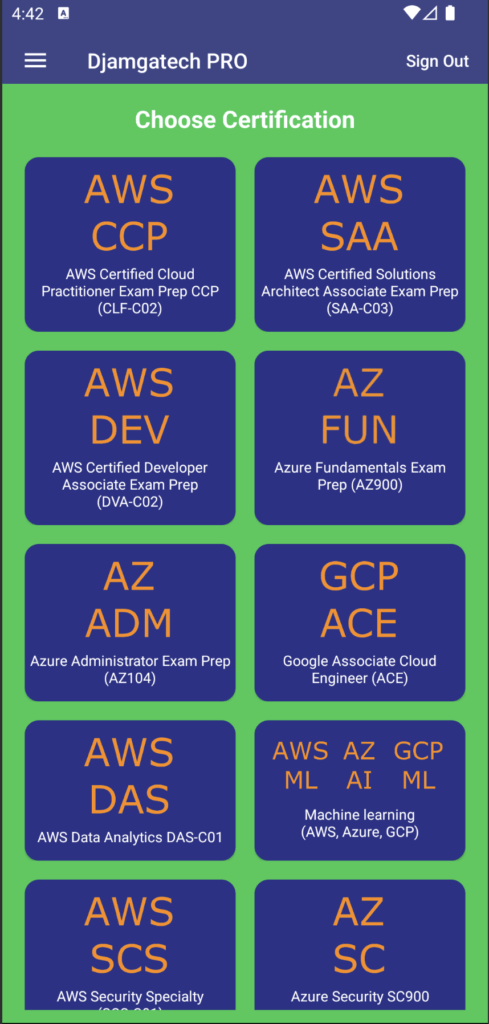

FREE 10000+ Quiz Trivia and and Brain Teasers for All Topics including Cloud Computing, General Knowledge, History, Television, Music, Art, Science, Movies, Films, US History, Soccer Football, World Cup, Data Science, Machine Learning, Geography, etc....

List of Freely available programming books - What is the single most influential book every Programmers should read
- Bjarne Stroustrup - The C++ Programming Language
- Brian W. Kernighan, Rob Pike - The Practice of Programming
- Donald Knuth - The Art of Computer Programming
- Ellen Ullman - Close to the Machine
- Ellis Horowitz - Fundamentals of Computer Algorithms
- Eric Raymond - The Art of Unix Programming
- Gerald M. Weinberg - The Psychology of Computer Programming
- James Gosling - The Java Programming Language
- Joel Spolsky - The Best Software Writing I
- Keith Curtis - After the Software Wars
- Richard M. Stallman - Free Software, Free Society
- Richard P. Gabriel - Patterns of Software
- Richard P. Gabriel - Innovation Happens Elsewhere
- Code Complete (2nd edition) by Steve McConnell
- The Pragmatic Programmer
- Structure and Interpretation of Computer Programs
- The C Programming Language by Kernighan and Ritchie
- Introduction to Algorithms by Cormen, Leiserson, Rivest & Stein
- Design Patterns by the Gang of Four
- Refactoring: Improving the Design of Existing Code
- The Mythical Man Month
- The Art of Computer Programming by Donald Knuth
- Compilers: Principles, Techniques and Tools by Alfred V. Aho, Ravi Sethi and Jeffrey D. Ullman
- Gödel, Escher, Bach by Douglas Hofstadter
- Clean Code: A Handbook of Agile Software Craftsmanship by Robert C. Martin
- Effective C++
- More Effective C++
- CODE by Charles Petzold
- Programming Pearls by Jon Bentley
- Working Effectively with Legacy Code by Michael C. Feathers
- Peopleware by Demarco and Lister
- Coders at Work by Peter Seibel
- Surely You're Joking, Mr. Feynman!
- Effective Java 2nd edition
- Patterns of Enterprise Application Architecture by Martin Fowler
- The Little Schemer
- The Seasoned Schemer
- Why's (Poignant) Guide to Ruby
- The Inmates Are Running The Asylum: Why High Tech Products Drive Us Crazy and How to Restore the Sanity
- The Art of Unix Programming
- Test-Driven Development: By Example by Kent Beck
- Practices of an Agile Developer
- Don't Make Me Think
- Agile Software Development, Principles, Patterns, and Practices by Robert C. Martin
- Domain Driven Designs by Eric Evans
- The Design of Everyday Things by Donald Norman
- Modern C++ Design by Andrei Alexandrescu
- Best Software Writing I by Joel Spolsky
- The Practice of Programming by Kernighan and Pike
- Pragmatic Thinking and Learning: Refactor Your Wetware by Andy Hunt
- Software Estimation: Demystifying the Black Art by Steve McConnel
- The Passionate Programmer (My Job Went To India) by Chad Fowler
- Hackers: Heroes of the Computer Revolution
- Algorithms + Data Structures = Programs
- Writing Solid Code
- JavaScript - The Good Parts
- Getting Real by 37 Signals
- Foundations of Programming by Karl Seguin
- Computer Graphics: Principles and Practice in C (2nd Edition)
- Thinking in Java by Bruce Eckel
- The Elements of Computing Systems
- Refactoring to Patterns by Joshua Kerievsky
- Modern Operating Systems by Andrew S. Tanenbaum
- The Annotated Turing
- Things That Make Us Smart by Donald Norman
- The Timeless Way of Building by Christopher Alexander
- The Deadline: A Novel About Project Management by Tom DeMarco
- The C++ Programming Language (3rd edition) by Stroustrup
- Patterns of Enterprise Application Architecture
- Computer Systems - A Programmer's Perspective
- Agile Principles, Patterns, and Practices in C# by Robert C. Martin
- Growing Object-Oriented Software, Guided by Tests
- Framework Design Guidelines by Brad Abrams
- Object Thinking by Dr. David West
- Advanced Programming in the UNIX Environment by W. Richard Stevens
- Hackers and Painters: Big Ideas from the Computer Age
- The Soul of a New Machine by Tracy Kidder
- CLR via C# by Jeffrey Richter
- The Timeless Way of Building by Christopher Alexander
- Design Patterns in C# by Steve Metsker
- Alice in Wonderland by Lewis Carol
- Zen and the Art of Motorcycle Maintenance by Robert M. Pirsig
- About Face - The Essentials of Interaction Design
- Here Comes Everybody: The Power of Organizing Without Organizations by Clay Shirky
- The Tao of Programming
- Computational Beauty of Nature
- Writing Solid Code by Steve Maguire
- Philip and Alex's Guide to Web Publishing
- Object-Oriented Analysis and Design with Applications by Grady Booch
- Effective Java by Joshua Bloch
- Computability by N. J. Cutland
- Masterminds of Programming
- The Tao Te Ching
- The Productive Programmer
- The Art of Deception by Kevin Mitnick
- The Career Programmer: Guerilla Tactics for an Imperfect World by Christopher Duncan
- Paradigms of Artificial Intelligence Programming: Case studies in Common Lisp
- Masters of Doom
- Pragmatic Unit Testing in C# with NUnit by Andy Hunt and Dave Thomas with Matt Hargett
- How To Solve It by George Polya
- The Alchemist by Paulo Coelho
- Smalltalk-80: The Language and its Implementation
- Writing Secure Code (2nd Edition) by Michael Howard
- Introduction to Functional Programming by Philip Wadler and Richard Bird
- No Bugs! by David Thielen
- Rework by Jason Freid and DHH
- JUnit in Action
#BlackOwned #BlackEntrepreneurs #BlackBuniness #AWSCertified #AWSCloudPractitioner #AWSCertification #AWSCLFC02 #CloudComputing #AWSStudyGuide #AWSTraining #AWSCareer #AWSExamPrep #AWSCommunity #AWSEducation #AWSBasics #AWSCertified #AWSMachineLearning #AWSCertification #AWSSpecialty #MachineLearning #AWSStudyGuide #CloudComputing #DataScience #AWSCertified #AWSSolutionsArchitect #AWSArchitectAssociate #AWSCertification #AWSStudyGuide #CloudComputing #AWSArchitecture #AWSTraining #AWSCareer #AWSExamPrep #AWSCommunity #AWSEducation #AzureFundamentals #AZ900 #MicrosoftAzure #ITCertification #CertificationPrep #StudyMaterials #TechLearning #MicrosoftCertified #AzureCertification #TechBooks
Top 1000 Canada Quiz and trivia: CANADA CITIZENSHIP TEST- HISTORY - GEOGRAPHY - GOVERNMENT- CULTURE - PEOPLE - LANGUAGES - TRAVEL - WILDLIFE - HOCKEY - TOURISM - SCENERIES - ARTS - DATA VISUALIZATION

Top 1000 Africa Quiz and trivia: HISTORY - GEOGRAPHY - WILDLIFE - CULTURE - PEOPLE - LANGUAGES - TRAVEL - TOURISM - SCENERIES - ARTS - DATA VISUALIZATION

Exploring the Pros and Cons of Visiting All Provinces and Territories in Canada.


Exploring the Advantages and Disadvantages of Visiting All 50 States in the USA

Health Health, a science-based community to discuss health news and the coronavirus (COVID-19) pandemic
- ‘Dangerous message’: Experts slam anti-sunscreen claims circulating onlineby /u/globalnewsca on April 23, 2024 at 8:10 pm
submitted by /u/globalnewsca [link] [comments]
- Monkeypox virus: dangerous strain gains ability to spread through sex, new data suggestby /u/maxkozlov on April 23, 2024 at 7:10 pm
submitted by /u/maxkozlov [link] [comments]
- 7 halal meat outlets closed in Calgary as RCMP investigate unlawful slaughter and saleby /u/boppinmule on April 23, 2024 at 3:31 pm
submitted by /u/boppinmule [link] [comments]
- Watchdog group asks 5 attorneys general to investigate crisis pregnancy center privacy practicesby /u/nbcnews on April 23, 2024 at 3:11 pm
submitted by /u/nbcnews [link] [comments]
- Less burnout for doctors, better clinical trials, among the benefits of AI in health careby /u/FJO1989 on April 23, 2024 at 1:48 pm
submitted by /u/FJO1989 [link] [comments]
Today I Learned (TIL) You learn something new every day; what did you learn today? Submit interesting and specific facts about something that you just found out here.
- TIL that Dennis Hof, who owned several brothels, won a Nevada election despite dying a month priorby /u/NightDreamer33 on April 24, 2024 at 2:07 am
submitted by /u/NightDreamer33 [link] [comments]
- TIL the alligator from Happy Gilmore is alive and thriving in Coloradoby /u/Mw4810 on April 24, 2024 at 2:03 am
submitted by /u/Mw4810 [link] [comments]
- TIL when President McKinley was asked by his personal secretary to cancel his planned visit to the Temple of Music for safety reasons, McKinley asked his secretary why anyone would want to hurt him. McKinley would later get shot at the Temple of Music.by /u/IllustriousDudeIDK on April 24, 2024 at 12:04 am
submitted by /u/IllustriousDudeIDK [link] [comments]
- TIL In Albertville, French Alps, cheese generates electricity. Using whey from beaufort cheese production, a plant produces biogas, powering a turbine that generates 2.8 million kilowatt-hours per year, enough for 1,500 people.by /u/BiancaMonroe6814td on April 23, 2024 at 9:57 pm
submitted by /u/BiancaMonroe6814td [link] [comments]
- TIL several US cases of "mad cow disease" may have come instead from eating squirrel brains. Popular recipes apparently include scrambled brains 'n eggs, and a brains 'n veggie stew called "burgoo".by /u/DramaGuy23 on April 23, 2024 at 9:24 pm
submitted by /u/DramaGuy23 [link] [comments]
Reddit Science This community is a place to share and discuss new scientific research. Read about the latest advances in astronomy, biology, medicine, physics, social science, and more. Find and submit new publications and popular science coverage of current research.
- New research has found that Gender non-contentedness, while being relatively common during early adolescence, in general decreases with age and appears to be associated with a poorer self-concept and mental health throughout development.by /u/Penkre on April 24, 2024 at 12:51 am
submitted by /u/Penkre [link] [comments]
- Quantum-mechanical effects in photoluminescence from thin crystalline gold filmsby /u/TurretLauncher on April 23, 2024 at 11:39 pm
submitted by /u/TurretLauncher [link] [comments]
- Using a novel bioluminescent sensor, a recent study shows that oxygen fluctuates both temporally and spatially throughout the mouse cortex.by /u/amesydragon on April 23, 2024 at 10:33 pm
submitted by /u/amesydragon [link] [comments]
- A study of genetic data from more than one million people, the largest data set used so far to investigate the underpinnings of PTSD, reveals 80 new sites in the genome linked to the disorder and 43 genes that might help to explain its cause.by /u/MistWeaver80 on April 23, 2024 at 10:06 pm
submitted by /u/MistWeaver80 [link] [comments]
- Researchers found that stress and discrimination levels among immigrants in the US varied significantly. Under President Donald Trump, non-White immigrants experienced considerably higher levels of stress and discrimination, a disparity that was not evident during President Joe Biden’s term.by /u/mvea on April 23, 2024 at 9:07 pm
submitted by /u/mvea [link] [comments]
Reddit Sports Sports News and Highlights from the NFL, NBA, NHL, MLB, MLS, and leagues around the world.
- Jayden Daniels’ mom provided impermissible benefits at Arizona State; Herm Edwards gets show-causeby /u/Responsible-Lunch815 on April 24, 2024 at 2:24 am
submitted by /u/Responsible-Lunch815 [link] [comments]
- USADA wants WADA overhaul after Chinese swimming scandalby /u/PrincessBananas85 on April 24, 2024 at 1:30 am
submitted by /u/PrincessBananas85 [link] [comments]
- Timberwolves dispute between Taylor and Lore, Rodriguez over ownership moves to mediationby /u/kundu123 on April 24, 2024 at 12:15 am
submitted by /u/kundu123 [link] [comments]
- 'I'm committed': Oilers fan won't cut hair until Stanley Cup comes to Edmontonby /u/Majano57 on April 23, 2024 at 11:57 pm
submitted by /u/Majano57 [link] [comments]
- 76ers' Maxey wins Most Improved Playerby /u/SpiritedSuccess5675 on April 23, 2024 at 11:11 pm
submitted by /u/SpiritedSuccess5675 [link] [comments]