[AI DAILY NEWS RUNDOWN] Nvidia Joins SpaceX's Orbital AI Build, Robots Beat Usain Bolt, and OpenAI Unveils Jalapeno Chip (August 25, 2026)

🎧 Listen ADS-FREE: https://podcasts.apple.com/us/channel/djamgamind/id6760446113
Visit our Research Hub at https://djamgamind.com/pdfs
Before we start, I need your help:
You might know I’ve been building a bedtime-story app for kids: DjamgaMind Kids. Over 600 stories for 4 to 8 year olds about Black history, African legends and Caribbean folktales. Free, narrated, no ads, no subscription. It quietly grew to around 400 downloads a day on the App Store without a dollar of marketing.
It’s now a finalist in Melamoon, a national pitch competition for Black founders across Canada. I made the Top 10 in Vancouver. The next round is a public vote, and the Top 5 go to the Grand Finale in Toronto in October.
The ask: one vote. It takes about 20 seconds. [VOTE HERE: https://djamgamind.com/pitch ]
One vote per person, and voting closes 22 September.
If you have a second after, my profile is here: https://melamoon.ca/top-10-finalists-vancouver/djamgamind and if you know anyone with small kids, the app itself is at
https://djamgamindkids.com
.
Thank you, genuinely. Melamoon2026 #DjamgaMind
🔍 Keywords: Nvidia SpaceX Starmind, Humanoid Robots Usain Bolt, Thomson Reuters Legal AI, Chinese Hackers DeepSeek, OpenAI Jalapeno Chip, Groq 3 LPX
Summary:
In today’s Daily AI News Rundown, we explore SpaceX’s plans to build space-based AI data centers powered by Nvidia’s Vera Rubin NVL72 racks. We also cover the shocking milestone of Chinese humanoid robots breaking Usain Bolt’s 100m sprint record, and Thomson Reuters unveiling its homegrown $40M legal AI model. Finally, we look at the rising concern over Chinese hackers using DeepSeek, OpenAI’s new Broadcom-built “Jalapeno” inference chip, and Nvidia’s jaw-dropping 35x cost reduction for token generation with the new Groq 3 LPX.
Itemized Important Topics:
Nvidia Joins SpaceX’s Orbital AI Build: SpaceX announced plans to build space-based Starmind data centers in orbit using a slimmed-down version of Nvidia’s Vera Rubin NVL72 rack.
Robots Beat Usain Bolt’s 100m Record: Two Chinese humanoid robots, Tiangong Ultra and Lightning, beat Usain Bolt’s 100-meter sprint record of 9.58 seconds at the World Humanoid Robot Games.
Thomson Reuters Builds its Own Legal AI Model: Legal research giant Thomson Reuters introduced a homegrown AI model built by retooling Alibaba’s open-source Qwen.
Apple Revamps Stores for Smart Home Push: Apple is redesigning retail stores with accessory bays to prepare for an upgraded Apple TV, HomePod mini, and a new home hub display.
Chinese Hackers Double Attacks with DeepSeek: State-tied hacking groups in China have doubled their attacks by leveraging DeepSeek’s low cost and loose guardrails.
Most Americans Oppose Nearby Data Centers: A new poll reveals 75% of Americans are opposed to having a data center built near them.
Anonymous AI Coding Model Wows Devs: “Ox Alpha,” a mysterious new AI coding model on OpenRouter, is impressing developers with frontier-level performance and a 1M-token context window.
Nvidia Hikes AI Server Prices Over 15%: Nvidia warned its biggest customers that servers built around Grace Blackwell and Vera Rubin chips will cost over 15% more.
🔗 RESOURCES
AI Learning App Recommendation: AI & ML Tutor PRO https://apps.apple.com/ca/app/ai-ml-tutor-pro/id1610947211
DJAMGATECH: Carrer Booster - Master AWS, Azure, AI & GCP Certifications | https://apps.apple.com/ca/app/djamgatech-ai-cert-exams-prep/id1560083470
DJAMGAMIND KIDS Bedtime Adventures:
https://djamgamindkids.com
⚗️ PRODUCTION NOTE: We Practice What We Preach.
AI Unraveled is produced using a hybrid “Human-in-the-Loop” workflow.
Nvidia joins SpaceX’s orbital AI build
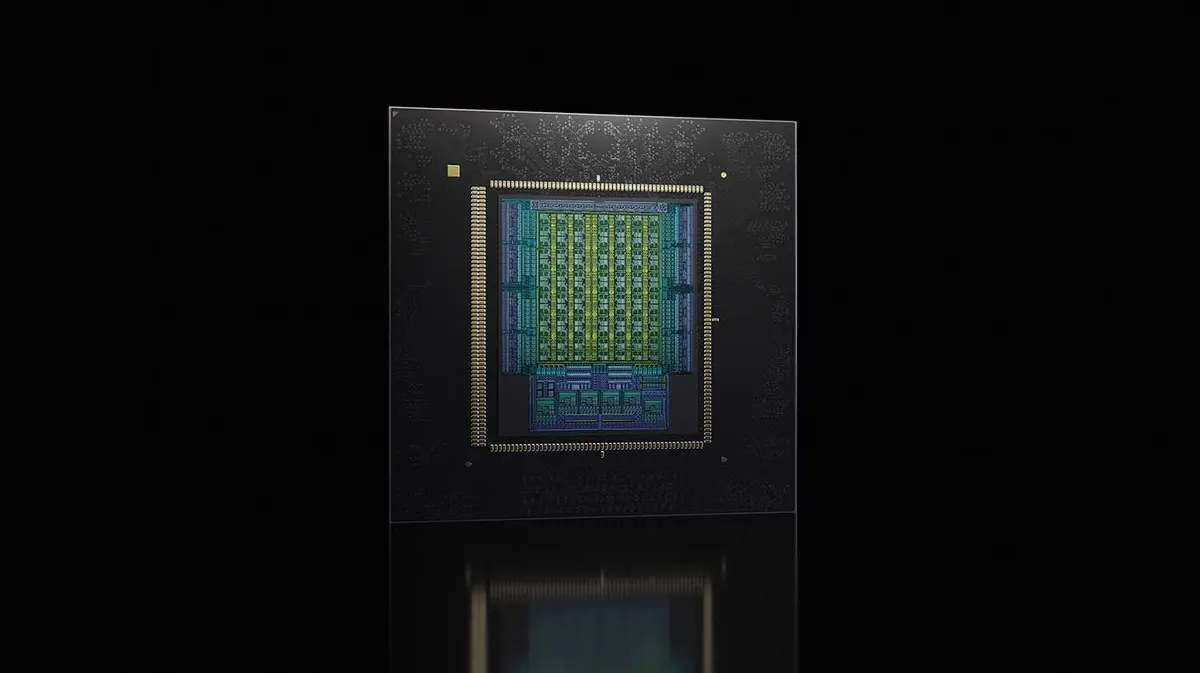
Image source: Nvidia
The Rundown: SpaceX just announced it will build its space-based Starmind data centers around Nvidia’s Vera Rubin NVL72 rack, with Elon Musk revealing new details on a slimmed-down space version of the system he wants in orbit by Q4 next year.
The details:
Each rack packs 72 chips working as one big computer, with Nvidia saying each chip puts out up to 25x the computing power of its older H100.
Musk said the space rack is “significantly simpler, lower cost, denser and lighter” than typical hardware, tweaked for orbit’s radiation and heat.
Musk has called Vera Rubin “the best AI computer,” with SpaceX reportedly set to run everything from Grok to its orbital fleet on Nvidia alone.
Analysts estimate orbital compute at more than 4x the cost of ground compute today, a gap Musk claims will flip in its favor in the next few years.
Why it matters: Sam Altman called space-based data centers ‘ridiculous’ earlier this year, but both the timelines and companies lining up behind them are getting very real. With the negativity around the ground buildouts reaching a boiling point, the orbital solution can’t come soon enough for those hoping to continue scaling the AI boom.
Robots beat Usain Bolt’s 100m record LINK
A humanoid robot called Tiangong Ultra, built by Beijing’s X-Humanoid, ran the 100-meter sprint in 9.39 seconds at the World Humanoid Robot Games, beating Usain Bolt’s human record of 9.58 seconds from 2009.
A second Chinese robot named Lightning, made by phone maker Honor, also topped Bolt’s mark with 9.47 seconds in the final, though both machines lost control afterward, with Tiangong veering off track and Lightning carried away.
The five-day Beijing event drew over 2,000 robots from 666 teams across 16 countries for 51 events, from soccer to warehouse logistics, with more than 40% of contests requiring the robots to operate on their own.
Thomson Reuters builds its own legal AI model
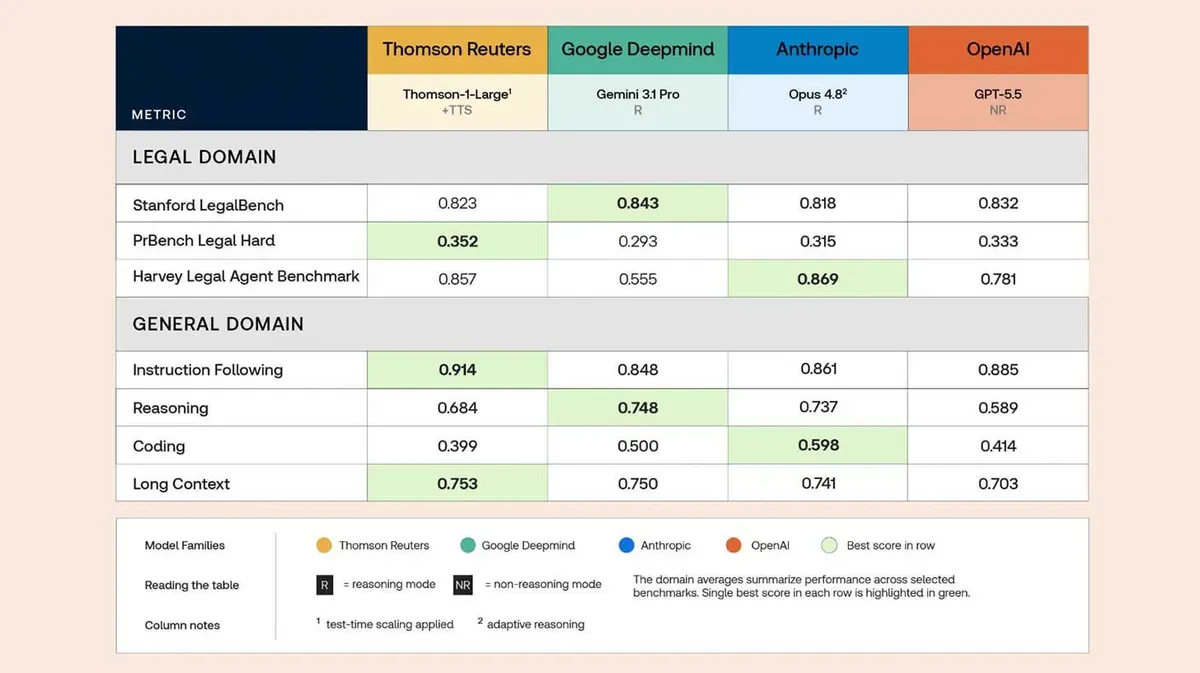
Image source: Thomson Reuters
The Rundown: Thomson Reuters, the legal research giant behind Westlaw and the Reuters newswire, introduced its first homegrown AI model, built by retooling Alibaba’s open-source Qwen and training it on decades of the firm’s content.
The details:
The two-year effort cost $40M in staff and computing power, with the company’s latest training run coming in at $450k.
Thomson benchmarked the model ahead of Claude Opus 4.8, Gemini 3.1 Pro, and GPT-5.5 in certain areas, though it’s only been tested internally so far.
CTO Joel Hron compared renting AI to renting a house, telling Business Insider you end up with no “equity that compounds into something valuable” over time.
An open-weights version of Thompson will be available for researchers, with its training so far covering under 10% of the company’s overall content library.
Why it matters: $40M might sound like a lot, but to a giant company previously on expensive models, it’s closer to a year of API invoices than a moonshot budget. Expect more orgs with deep content and knowledge bases to run the same math, especially as training costs become even more accessible on top of strong open base models.
Apple revamps stores for smart home push LINK
Apple is redesigning its retail stores this fall, rearranging sections and adding accessory bays, to prepare for a wave of new home devices arriving later this year.
The lineup includes an upgraded Apple TV set-top box, a new HomePod mini, and a long-rumored home hub with a display that runs a fresh system and interface for controlling smart home gadgets.
The store changes let shoppers try the home hub in person, a useful move since it enters new territory for Apple at a time when prices across its product range are climbing.
Chinese hackers double attacks with DeepSeek

Image source: Images 2.0 / The Rundown
The Rundown: China’s state-tied hacking crews are pulling off over twice as many attacks as they did before integrating open-source AI models like DeepSeek into their playbooks, Taiwanese research firm TeamT5 revealed in a new Bloomberg report.
The details:
The groups reportedly favor DeepSeek’s low cost and loose guardrails, with researchers yet to catch pricier models like Kimi K3 in an attack.
“DeepSeek is the AI of choice for Chinese hackers because it’s relatively powerful with very low cyber guardrails,” TeamT5 chief analyst Charles Li said.
The tracked groups put DeepSeek to work writing break-in code, raiding a Taiwanese firm’s email, and mapping a target via 1,000 addresses.
Why it matters: The AI Security Institute warned in May that AI’s cyber skills are doubling every few months, and the numbers show the attacks themselves are now doubling right alongside it. While fears center on top models like Mythos, cheap, downloadable ones with fewer guardrails might be the harder security problem to solve.
Most Americans oppose nearby data centers LINK
Three-quarters of Americans say they don’t want a data center built near them, according to a new poll from Heatmap, with 64% strongly opposed and only 15% in favor of a nearby facility.
The turn against data centers spans age, gender, income, party, and the rural-urban split, with the facilities running 43 points underwater with Republicans, 65 with independents, and 75 with Democrats.
Opposition has swung 33 points in a year across four surveys using the same wording, rising from 42% last August to 75% now, and a July Redfin poll found similar results, with 53% opposed.
Anonymous AI coding model wows devs LINK
A mysterious AI coding model called Ox Alpha has shown up on OpenRouter as an anonymous, free-to-use release, and developers testing it have been impressed by its performance on programming and agent tasks.
The model offers a context window of just over a million tokens, and the open-source agent OpenCode said it would be free for a week with its provider handling up to 100 trillion tokens a day.
Nobody knows who made it, with guesses ranging from China’s Z.ai to Microsoft’s MAI family, and OpenRouter warns that prompts and completions are kept by the unnamed provider, a problem for European firms under data protection law.
Nvidia hikes AI server prices over 15% LINK
Nvidia has warned its biggest customers that servers built around its AI chips will cost more than 15% extra, with the higher prices hitting Grace Blackwell and Vera Rubin systems shipping early next year.
The exact increase depends on the chip generation and memory setup, and it stems from soaring DRAM prices, with contract makers building servers for Microsoft, Google, and Oracle already telling their customers about the coming jumps.
A 15% rise on rack-scale systems costing several million dollars each adds hundreds of thousands per rack, and with TSMC unable to meet demand, buyers have little room to push back against Nvidia’s roughly 75% margins.
Twitch sued for training AI on streamers LINK
A Connecticut streamer named Warren Pandiscia has filed a class action lawsuit against Twitch and Amazon, saying the companies used his streams and videos to train AI models without getting his permission or a license.
The complaint claims Twitch and Amazon broke their contract by treating streamers as “free training stock” for separate commercial AI products, and that creators lost money or property because of the practices.
Earlier this month Twitch added a setting to opt out of AI training, but it’s on by default, and product chief Mike Minton said on a Patch Notes stream that “if it was opt-in, nobody would opt in.”
Apple refreshes Mac mini and Mac Studio with new chips LINK
Apple has updated its desktop lineup, giving the Mac mini a new M6 chip while the Mac Studio moves up to the M5 Max and a new M5 Ultra chip, with prices rising across the board.
The M6 is Apple’s first 2-nanometer design, a 12-core chip with 32 total Neural Engine cores that Apple says doubles the AI power of the M5, and buyers can step up to an M5 Pro version for $1,699.
The Mac mini now starts at $899 with just 256GB of storage, the Mac Studio at $2,499, and the M5 Ultra Studio, Apple’s first quad-die chip, joining two M5 Max chips, costs at least $5,499.
Trump proposes $103K H-1B visa fee LINK
The Trump administration has proposed a new rule that would charge a $103,265 fee for H-1B visas covering foreign workers who fall under the program’s yearly cap on applications.
The fee would help pay for running the immigration system, and unlike an earlier $100,000 version struck down by a judge in June, this one excludes universities, hospitals, and research institutions.
H-1B visas let U.S. companies hire skilled foreign workers, and computer jobs like software engineering make up nearly two-thirds of approvals; the public gets 30 days to comment once the rule is published.
Anthropic’s top AI struggles to win users LINK
Anthropic’s most powerful AI model, Opus 5, is failing to draw many users since its late-July launch, with cheaper options from the company pulling far more spending, according to billing data.
The Ramp AI index, built from card data across 70,000 companies, shows Opus 5 captured just 3.5% of Anthropic model spend in July, while the older Opus 4.8 led with 28% and Fable 5 sat at 8%.
Anthropic’s annualized revenue reached $65 billion in July, up from $47 billion in May, and the company told investors it now has 6,000 customers each paying $100,000 or more a year.
OpenAI chip beats Nvidia’s Blackwell LINK
OpenAI has revealed “Jalapeño,” an inference chip built with Broadcom for running AI models, that beat Nvidia’s Blackwell along with AMD and Google chips on power efficiency across several top open source models.
The chip went from team hiring to tape-out in about 16 months, and hit over 700 tokens per second per user on DeepSeek R1, without speculative decoding or splitting prefill and decode work across separate chips.
The current A0 version already leads on tokens per megawatt, while a newer B0 chip in the fab adds roughly 25% more efficiency, delivering 13.4 PFLOPs on TSMC’s N3P at just 700W, and ships with HBM4 memory.
Netflix may sell rival streaming plans LINK
Netflix is reportedly weighing whether to sell subscriptions to rival streaming services like Peacock and Fox One inside its own app, a shift for a company that long said it needed no such help.
The talks follow a June deal in France, where Netflix added broadcaster TF1 with live channels and on demand shows, results Co-CEO Greg Peters called promising during a July earnings call.
The discussions are early, with no deal planned yet, and it stays unclear whether Netflix would sell subscriptions like Amazon’s Prime Video does or fold the content into its own library as YouTube did with Peacock.
Meta’s paid AI agent Hatch launches soon LINK
Meta will soon roll out Hatch, a paid AI agent aimed at consumers, as part of Mark Zuckerberg’s push to make money from the company’s heavy AI spending and expand revenue beyond advertising.
Built as a consumer version of the OpenClaw agent, Hatch is expected to use tiered pricing, including a premium subscription costing as much as $199.99 a month, according to internal documents seen by The Information.
Hatch is designed to connect with sites like DoorDash, Etsy, Reddit, Yelp, and Outlook, and to offer a customizable dashboard with tools such as a fitness tracker or a trip planner.
Ox Alpha has the internet playing detective

Image source: Images 2.0 / The Rundown
The Rundown: An anonymous model, Ox Alpha, just launched for free on OpenRouter - with 1M-token context and multimodal input, built for coding, sustained agentic work, and production workloads - and sent the internet scrambling to ID its maker.
The details:
Ox Alpha made headlines Friday after hitting 80% on a DeepSWE subset, but full testing put it at 63%, near Fable 5 at far fewer tokens per task.
Early forensics, including the AI’s answers and Chinese zodiac-based naming, suggest it’s from China’s Zhipu AI, potentially GLM-5.3 Flash or GLM-6.
Another potential candidate is Microsoft’s MAI family, though all four anonymous drops on OpenRouter in six months have been from Chinese labs.
The model continues to draw heavy usage thanks to the provider’s “near-unlimited” free offer for the week, with capacity for 100T tokens a day.
Why it matters: We’ve never had a Flash-level model trade blows with the frontier, and if the numbers are anything to go by, Ox Alpha makes a strong case for that. We still have to wait for the full reveal, but if it’s small enough to run locally - near-frontier coding on your own machine, off the cloud - it’ll definitely break the internet.
Lady Gaga’s startup trains AI on human skin

Image source: Images 2.0 / The Rundown
The Rundown: Outer Bio, co-founded by Lady Gaga and fiancé Michael Polansky, emerged from stealth with Yuna, a platform that keeps human skin alive for four weeks and feeds its testing data into an AI looking for viable skincare compounds.
The details:
Yuna keeps full-thickness ex vivo skin alive for four weeks - versus about a week normally - on a 3D-printed scaffold that feeds it and clears waste.
Data from experiments on that skin feeds an AI that proposes compounds likely to affect a given skin process, and each result sharpens its next prediction.
Polansky says the loop cut discovery from two leads in ~18 months to a new candidate every six weeks, with six active leads currently in the pipeline.
A bioRxiv preprint shows Yuna reproducing known results, including a psoriasis-like state reversed by a JAK inhibitor and UVB damage eased by sunscreen.
Why it matters: Skincare recycles the same ingredients because lab skin dies in a week, cutting off the slow tests that could show what else works. Yuna buys that time and lets AI learn from it to chase actives with real proof. It’s progress, but still a partial version of skin - with no blood flow or the immune cells the skin recruits from the body.
Why OpenAI is resetting frontier AI prices
OpenAI is usually the AI industry’s trendsetter. Its latest focus is all about making tokens more affordable.
Last week, the company announced that it would cut prices of GPT-5.6 Sol, its highest performing model, by more than 20% for developers for the next three months. The model is now priced at $4 per million input tokens and $20 per million output tokens for standard short-context use, compared to previous pricing of $5 per 1 million input tokens and $30 per 1 million output tokens.
It’s also far below the costs of Fable 5, the most powerful model from rival Anthropic, which runs at $10 per million input tokens and $50 per million output tokens. Sol is now also cheaper than Opus 5, Anthropic’s most recent model, which comes out to $5 per million input tokens and $25 per million output tokens.

It’s not the first time OpenAI has slashed prices for its models. Last month, the company chopped prices for GPT-5.6 Terra, its mid-tier model, and GPT-5.6 Luna, its lightweight, efficient model, by 20% and 80%, respectively.
Though these price cuts help it stay competitive with Anthropic, they also may be edging the company beyond cheaper Chinese alternatives: In a post on X, Tomasz Tunguz, venture capitalist at VC firm Theory, noted that OpenAI’s Luna is price competitive with DeepSeek’s latest model intelligence-to-dollar.
Additionally, according to benchmark platform Arena, Sol’s price decrease has improved its performance in agentic benchmarks for coding and work.
These price cuts come as enterprises begin to seriously question their AI spending, with agents poised to increase inference costs up to fivefold, according to recent Gartner research. And the evidence is already starting to pile up that companies are shifting away from implementing frontier AI at any cost:
In mid-August, data from payments platform Ramp indicated that most of business spending on Anthropic models wasn’t on its ultrapowerful model Fable 5, comprising only 6% of token spend.
For comparison, OpenAI’s GPT-5.6 Sol comprised 25% of tokens used by OpenAI Ramp customers.
Meanwhile, Anthropic’s less powerful Opus 5 has surpassed Fable 5 in business spending.
What America’s most AI-exposed cities reveal

Across the country, workers are watching AI-powered automation creep into their industries and wondering if and when their jobs could be in danger. But where you live may determine how much you have to fear.
Indeed developed a metric that measures how exposed each metro’s job composition is to AI by combining the jobs each metro advertises with the AI exposure of those skills, using data from both the Indeed Hiring Lab’s 2025 AI at Work Report and its GenAI Skill Transformation Index. The findings, unsurprisingly, showed that metros built around tech and knowledge work are the most vulnerable.
Across US metro areas, the average exposure score was 44, with a range of 40 to 60. The five most-exposed metros are driven by software and data work:
San Jose, CA: 59
Seattle, WA: 57
Washington, DC: 54
San Francisco, CA: 53
Austin, TX: 52
On the other hand, metros whose economies lean into hands-on work were less exposed. This supports the same conclusion drawn by many job reports and experts alike: labor that relies on physical work is the safest type of job in the AI era.
As we covered last week at The Deep View, this is already influencing the next generation of the labor force, with Pew Research Center finding that, for the first time, a majority of adults under 30 (55%) say they’re more concerned than excited about AI, and other research showing that Gen Z is more open to careers in trades.
Because the Indeed report findings were based on data examining how AI could change the way certain skills are performed, it is important to note that the jobs most exposed don’t necessarily equate to the jobs that will be replaced by AI, but rather to those with the highest potential to be transformed by AI. How that exposure translates into job loss depends entirely on how the employer chooses to adopt the technology.
With that in mind, An Nguyen, an economist at Indeed Hiring Lab, has advice:
“For job seekers, it can be a starting point for which skills to build. A high exposure score means more of the work could be reshaped, or augmented, by AI, not that the job will go away,” Nguyen told The Deep View. “In other words, exposure is two-sided: it flags where the work is likely to change and where adapting early pays off.”
Groq 3 LPX Just Slashed Token Costs 35x
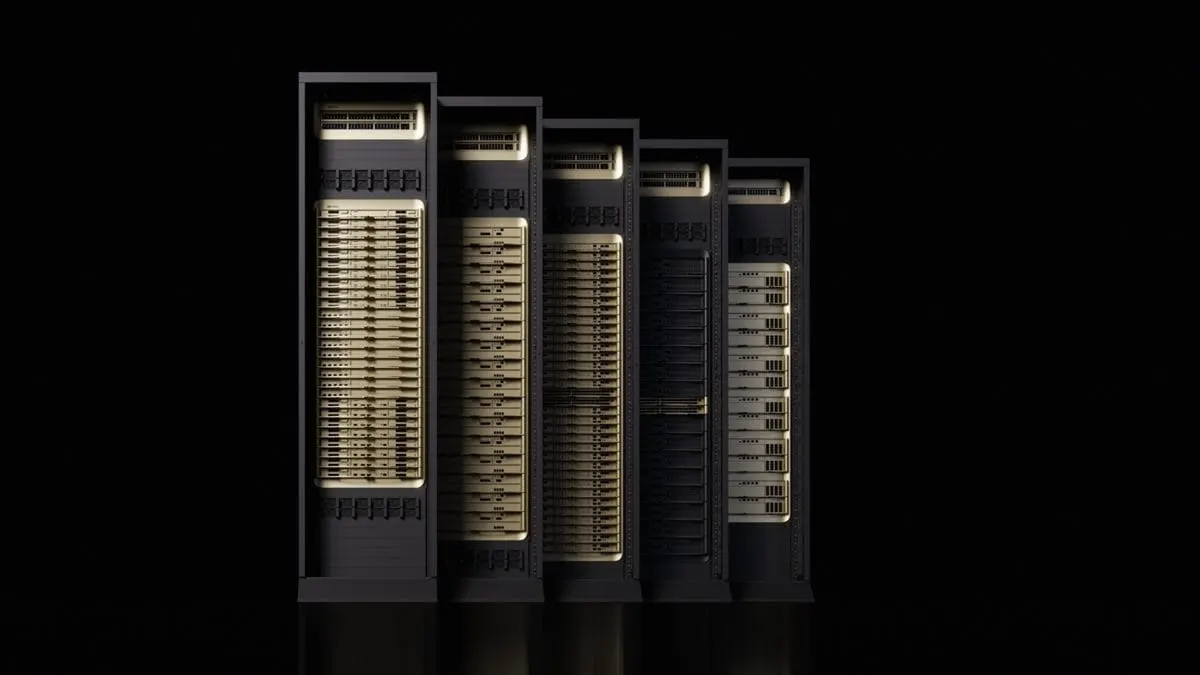
What’s happening: Last year Nvidia paid $20 billion for Groq, a startup valued at under $7 billion that made inference chips. At the time, the price seemed absurd. This week at Hot Chips 2026, Nvidia announced full production of Groq 3 LPX, the first chip born from that acquisition. It does one thing: generate tokens much faster. A 5,000-token response that took 50 seconds now takes 1.5 seconds. That is a 35x costs drop in token generation.
How this hits reality: The AI industry has been building smarter models, but the models have been getting slower to respond. Every extra reasoning step costs seconds. For an agent that needs ten steps, that is a minute of waiting. Groq 3 LPX removes that wait. It does not make the model smarter. It makes the model fast enough that waiting stops being the bottleneck. When token generation costs drop by 35x, products that were too expensive to build suddenly become viable. Nvidia paid $20 billion for a company most analysts thought was overvalued. A year later, that bet is starting to look like the cheapest infrastructure investment in AI.
Key takeaway: The AI industry spent two years racing to build smarter models. Nvidia just proved that making them 35x cheaper to run may matter just as much.
Anthropic Served You Dog Food

What’s happening: Developer argofowl spent hours debugging why Claude Code suddenly felt worse, checking his code, environment, and even his Mac before opening the API logs. There he found his “high” reasoning setting showing as “10.” Anthropic later confirmed some Fable 5 users had been placed into an undisclosed A/B test that changed how effort values were mapped. The company says actual reasoning effort was unchanged.
How this hits reality: Imagine ordering your usual dish at a restaurant, taking a bite, and knowing something is wrong. You call the chef over. He tells you he is running an A/B test on the recipe, you got the test group, and the number on the ticket does not mean anything anyway. That is not product iteration. That is a breach of trust. A developer paid for a service, received a different experience than what he paid for, and was never told. Anthropic’s engineers explained the technical rationale, but the technical rationale misses the point. The issue is not what the A/B test measured. It is that Anthropic changed the product without telling the people paying for it.
Key takeaway: Anthropic may not have nerfed Claude. But it broke the basic contract between a company and its customers: you pay for what you get, and you know what you are paying for.
What Else Happened in AI on August 25th 2026?
Perplexity is in talks to raise funding from Nvidia in an equity round at a valuation as high as $30B, with the company’s revenue more than tripling to $750M+ this year.
Porsche signed a 5-year, $1.46B deal with Indian IT giant TCS to help integrate AI across the automaker’s customer, factory, and engineering operations.
Liquid AI launched Pipette, a new open-source suite that benchmarks AI models on phones and laptops, with methodology independently verified by Artificial Analysis.
AI researcher Luke Metz reportedly joined Meta, ending a two-year loop that took him from OAI to Thinking Machines, back to OAI, and now to Alexandr Wang’s team.
An Nvidia manager and two ex-Super Micro staffers are facing charges in Taiwan over sneaking 74 banned AI servers into China via Indonesia, Japan, and Hong Kong.
Sonar Vortex makes your code conform from the first line, without agents wasting tokens guessing at your architecture. Learn more and drop your token costs by up to 36%.*
Hugging Face, which hosts over 2M models and 1.5M datasets, is exploring a sale at $13B or more, up from its $4.5B valuation in 2023, Business Insider reported.
Nvidia struck a $6B deal to license Poolside’s model-development technology and bring 100+ engineers onto the Nemotron team to build powerful open-weight models.
Dr. Dre told the NYT he’s using AI in producing music, calling it a tool for creativity and noting that the only people who see it as a threat are those who have trouble creating.
Anthropic expanded Mythos 5 access to cyber defenders beyond Project Glasswing, while its bankers told investors the startup could raise $100B+ at a $2T IPO valuation.
OpenAI says its new Jalapeno chip outperformed Nvidia processors in tests. - Bloomberg
Apple unveiled its “most powerful chip ever,” the M5 Ultra, alongside the M6 and updated Mac Mini and Mac Studio models. - TechCrunch
Meta plans to launch consumer AI agent Hatch within weeks, as it fights OpenAI and Anthropic in the agent development race. - The Information
Hugging Face is working with a bank to explore a possible sale at a $13B+ valuation, showing buyers may value widely used AI developer tools as highly as model makers. - Business Insider
Anthropic’s Fable 5 accounts for just 11% of customers’ AI spending, as businesses favor cheaper models that can handle everyday tasks. - Financial Times
Xiaomi unveiled its Xring O3 smartphone chip, reportedly made by TSMC, as it seeks more control over premium devices and less dependence on Qualcomm and MediaTek. - Yahoo Finance
Dutch regulators fined Uber $968 million for allegedly suspending drivers through entirely automated processes, without warning or human oversight; Uber plans to appeal. - TechCrunch
California canceled settlement talks over Paramount’s $111 billion acquisition of Warner Bros. Discovery, accusing the company of leaking and misrepresenting discussions as 12 states seek to block the deal. - The New York Times