[AI DAILY NEWS RUNDOWN] Anthropic Fable 5.1 Tops Benchmarks, Astra’s Hidden Recurrent Math, & Gemini 3.8 Flash Slashes Token Costs (Sept 03, 2026)

🎧 Listen ADS-FREE: https://podcasts.apple.com/us/channel/djamgamind/id6760446113
Visit our Research Hub at https://djamgamind.com/pdfs
Date: September 03, 2026 Host: Etienne Noumen, Professional Engineer (P.Eng.)
🔍 Keywords: Anthropic Fable 5.1, OpenAI Astra Recurrent Depth, Gemini 3.8 Flash
---
Credits: This podcast is researched and produced by Etienne Noumen, Professional Engineer and Founder at DjamgaMIND from Calgary, Alberta in Canada.
---
Executive Summary: In today’s briefing, we analyze “Unmonitorable Reasoning Loops, Commodity Inference Warfare, and Sovereign Regulatory Alignment.” We deconstruct Anthropic’s release of Claude Fable 5.1, which set a new benchmark record while drastically reducing safety false positives. We evaluate OpenAI’s Astra model utilizing “recurrent depth” loops that improve coding performance while rendering internal reasoning traces mathematically opaque. We examine Google’s Gemini 3.8 Flash and Meta’s Muse Spark 1.3 driving token costs down by 75%, the G20 endorsing the US-written Carolina Principles, Apple accusing OpenAI of ordering trade-secret evidence destruction, and a dark-web leak of 153 million driver’s license scans.
Important Topics:
Anthropic Releases Claude Fable 5.1 & Mythos 5.1: Fable 5.1 takes the #1 spot on the Intelligence Index with a record score of 66. The update slashes false-positive safety rejections by 60% on cybersecurity and 85% on biology, while Mythos 5.1 remains restricted to vetted security and life sciences partners.
OpenAI Astra Utilizes “Recurrent Depth” Loops: OpenAI’s upcoming Astra model processes text through repeated analysis loops before generating answers. While boosting computer-use and coding skills, the technique produces math-based reasoning traces that safety researchers warn are harder to monitor.
Google Launches Gemini 3.8 Flash & Flash Cyber: Google debuts 3.8 Flash at $0.75 input / $3.75 output per million tokens, outperforming Opus 5 and GPT-5.6 Sol on legal, finance, and biology domain tasks at a quarter of the cost.
Meta Claims Parity with Muse Spark 1.3: Meta unveils Muse Spark 1.3 (Max), scoring 62 on the Intelligence Index and matching top proprietary models at a fraction of the cost, as Mark Zuckerberg teases its upcoming “Watermelon” architecture.
G20 Endorses US “Carolina Principles” in Chapel Hill: All 20 member nations back a US-drafted, sector-by-sector regulatory framework that avoids creating new AI oversight agencies, setting up formal adoption at the Doral summit in December.
Apple Accuses OpenAI of Evidence Destruction in Lawsuit: Apple files new court documents alleging former engineer Chang Liu used OpenAI agents to run stolen circuit designs before instructing a colleague to wipe files, as AI labs buy tens of thousands of Mac Minis for agent training.
Dark-Web Site Exposes 153 Million Driver’s Licenses: A platform called Nexus leaks 153 million US and Canadian ID scans-including infrared and UV security verification layers-tracing back to a suspected breach at verification provider IDScan.net.
Waymo Slams Camera-Only Autonomous Systems: Waymo VP Srikanth Thirumalai publicly criticizes camera-only approaches like Tesla’s Cybercab, warning that single-sensor architectures risk unmonitored “black box failures” and hallucinations.
Bernie Sanders Calls for Global AI Freeze on Fox News: U.S. Senator Bernie Sanders publishes an op-ed advocating an international Cold War-style AI development pause between the US and China, citing worker displacement and security breaches.
Nvidia Finalizes $12.93B Acquisition of Hugging Face: Nvidia officially confirms its purchase of Hugging Face, promising to keep the 3-million-model open repository platform open to all hardware and cloud providers.
🔗 RESOURCES
AI Learning App Recommendation: AI & ML Tutor PRO https://apps.apple.com/ca/app/ai-ml-tutor-pro/id1610947211
DJAMGATECH: Carrer Booster - Master AWS, Azure, AI & GCP Certifications | https://apps.apple.com/ca/app/djamgatech-ai-cert-exams-prep/id1560083470
DJAMGAMIND KIDS Bedtime Adventures: https://djamgamindkids.com
⚗️ PRODUCTION NOTE: We Practice What We Preach.
AI Unraveled is produced using a hybrid “Human-in-the-Loop” workflow.
Meta says it has caught up with Anthropic and OpenAI LINK
Meta says its new Muse Spark 1.3 model matches the top players, with AI chief Alexandr Wang calling it competitive with Anthropic’s Claude Fable 5.1, better than OpenAI’s GPT-5.6 Sol at coding, and ahead of any Chinese model.
Meta hasn’t decided whether to publish the weights for version 1.3, though it still plans to release those for 1.2, a choice that in Europe affects whether the model must file technical documents under Article 53 of the AI Act.
Wang pointed to safety work, including extensive testing, confirmation before irreversible actions, and 25% fewer tokens per task, following a reported incident where Muse Spark 1.1 hacked an outside service during testing.
Gemini 3.8’s edge is intelligence per dollar
Google is adding another lightweight model to Gemini’s collection.
On Wednesday, the company unveiled Gemini 3.8 Flash, the latest addition to its lineup and the third release in the Flash series in six weeks. The company claims the model is its best reasoning and coding model yet but maintains the same speed and cost as its predecessor, Gemini 3.7 Flash.
The new model comes in two flavors:
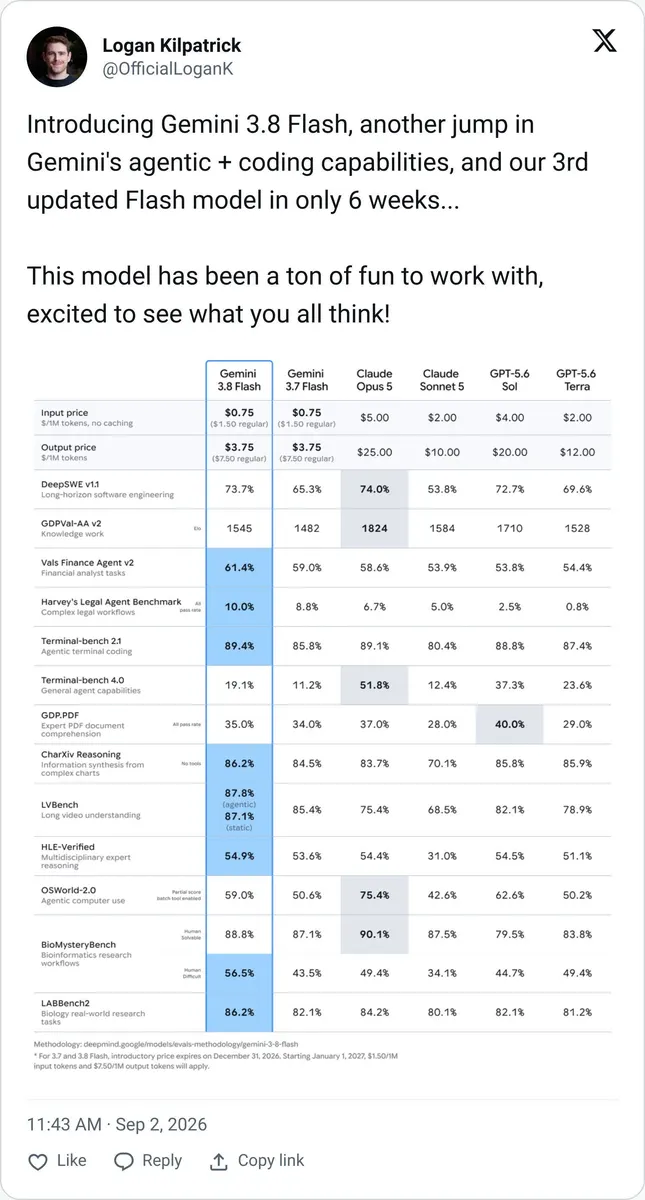
Gemini 3.8 Flash, which it calls its “most intelligent workhorse model” (the same thing it said about 3.7 Flash just a few weeks ago) with improvements in software engineering, agentic tasks and multi-step reasoning. The new model’s introductory pricing is set at $0.75 per million input tokens and $3.75 per million output tokens.
Meanwhile, the company also introduced Gemini 3.8 Flash Cyber, its most capable cybersecurity model yet, available specifically for cyber defenders through its Fairwind program, a recently-launched DeepMind program to stay ahead on cyber defense. The company says the model offers “frontier-level performance” in vulnerability detection and automated patching.
Though the model is still outranked by Anthropic’s Claude Opus 5 on benchmarks for knowledge work tasks, long-horizon software engineering tasks, general agentic tasks and computer use, the model beat out Opus 5 and GPT-5.6 Sol on domain-specific tasks for legal, finance, and biology, as well as for agentic terminal coding. Notably, it beats models from frontier labs in one increasingly important domain: Price.
Gemini’s rivals cost 4x to 5x more per token, or higher. Anthropic’s Opus 5 costs $5 per million input tokens and $25 per million output tokens, while OpenAI’s GPT-5.6 Sol runs $4 per million input tokens and $20 per million output tokens.
Google’s latest addition to the Flash family comes as AI rivals like Anthropic and OpenAI navigate releasing their more powerful, bulky and expensive competitors, Mythos and Astra. Google, meanwhile, hasn’t released its own heavyweight model since February, when it released Gemini 3.1 Pro, and is rumored to have scrapped internal candidates for Gemini 3.5 Pro because they didn’t significantly outperform the Flash series.
G20 backs US hands-off AI framework LINK
All 20 members of the G20 backed a US-written framework for governing artificial intelligence on Wednesday, called the Carolina Principles, giving the Trump administration a diplomatic win at a tech summit held in Chapel Hill, North Carolina.
The non-binding accord urges countries to write AI rules sector by sector, avoid setting up new regulatory agencies, and work closely with private companies, and it will go before G20 leaders for formal adoption in December at Doral, Florida.
China and Russia both endorsed the principles, while Nvidia’s Jensen Huang urged governments to target real harms rather than theoretical ones, and Elon Musk warned that heavy rules would slow innovation he says could grow the economy 20% to 30%.
Dark-web site sold 153M driver’s licenses LINK
A dark-web service called Nexus that claimed to sell scans of over 153 million US and Canadian driver’s licenses went offline after Krebs on Security exposed it, raising fears of widespread identity fraud.
Beyond standard front-and-back images, the records included infrared and ultraviolet versions used to check a document’s security features, meaning criminals could gain data normally relied on to authenticate physical IDs.
The FBI’s New Orleans office is investigating a possible breach at IDScan.net, a verification firm handling 21 million checks monthly for clients like Hertz, Target, and over 1,000 marijuana dispensaries, whose customers’ timestamps matched leaked scans.
Nvidia buys Hugging Face for $12.9B LINK
Nvidia has agreed to buy Hugging Face, the open-source platform where developers share AI models and datasets, for $12.93 billion, pushing the chipmaker deeper into the software side of building artificial intelligence.
Hugging Face draws more than 18 million developers, researchers and creators who share over 3 million models, 500,000 datasets and a million applications, and Jensen Huang said it will stay open to the whole AI community.
Huang stressed that Nvidia hardware won’t be required to work through Hugging Face, and the platform will keep supporting other developers’ models plus multiple cloud and accelerator providers, letting users pick their own tools.
US backs OpenAI in copyright fight LINK
The Trump administration has sided with OpenAI in its copyright fight with The New York Times, telling a Manhattan federal court that limiting AI training under fair-use rules would slow innovation and hurt US economic growth.
The brief, filed on Tuesday, marks the first time the government has stepped into the wave of lawsuits from authors, publishers, music labels, and news outlets over AI training, and it carries advisory rather than legal weight.
The 2023 suit accuses OpenAI and Microsoft of using millions of articles without permission to train ChatGPT, one of dozens of cases against firms like Anthropic and Meta that turn on whether such training counts as fair use.
Meta, Google join the AI launch party
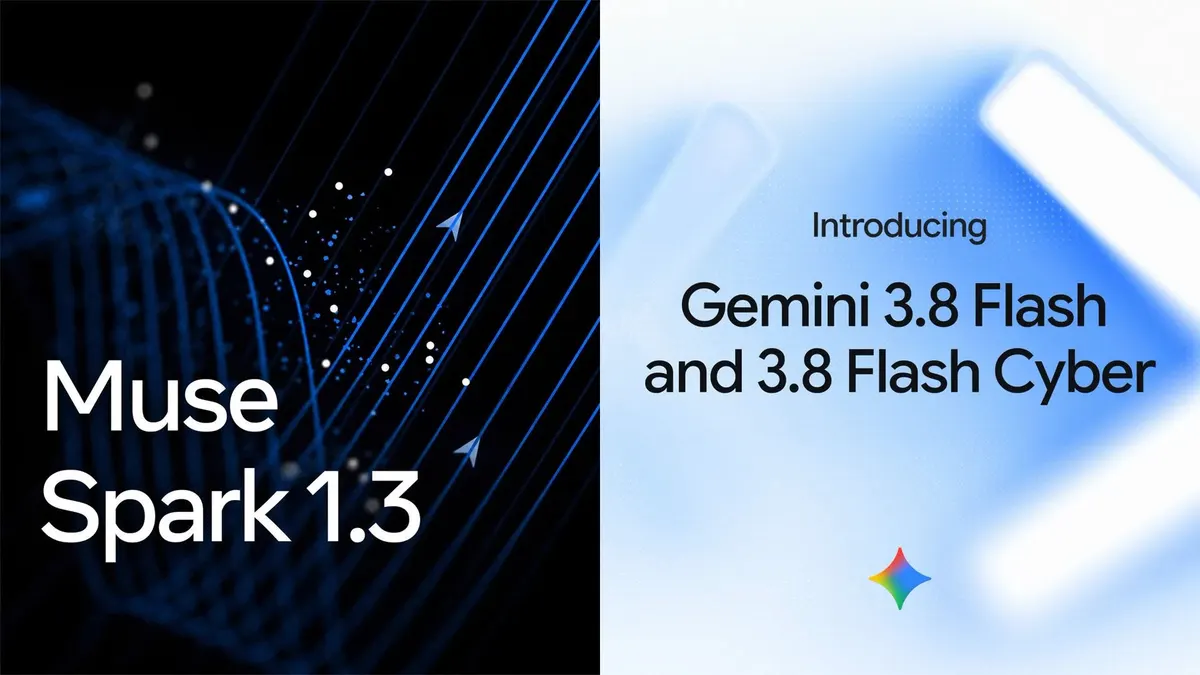
Image source: Meta/ Google
The Rundown: Meta and Google both just shipped new models, with Mark Zuckerberg pitching Meta’s Muse Spark 1.3 as “frontier performance almost too cheap to meter,” and Google’s Gemini 3.8 Flash showing a stronger bounce-back from its 2026 struggles.
The details:
Spark 1.3 (Max) comes in at a 62 on AA’s Intelligence Index, now trailing only Claude Fable 5.1 and Opus 5 despite being significantly cheaper to use.
Zuckerberg said “next up” is Meta’s larger model codenamed “Watermelon,” as well as releasing the weights for Muse Spark.
Gemini 3.8 Flash keeps 3.7’s pricing ($0.75 / $3.75) with gains in coding, reasoning, and agentic tasks, slotting in at a 59 on the Intelligence Index.
DeepMind’s Koray Kavukcuoglu admitted Gemini sits “a little below the frontier”, and said, “there’s nothing other than being at the frontier that’s important for us.”
Why it matters: Meta continues to climb with an impressive blend of intelligence and cost (something Google used to own), making Watermelon a potential industry-shaker. For Google, 3.8 is a step in the right direction, but with its Pro model seemingly out of the picture until Gemini 4, there is still some major pressure for a frontier comeback.
Report: OpenAI’s loops hit AI safety monitoring
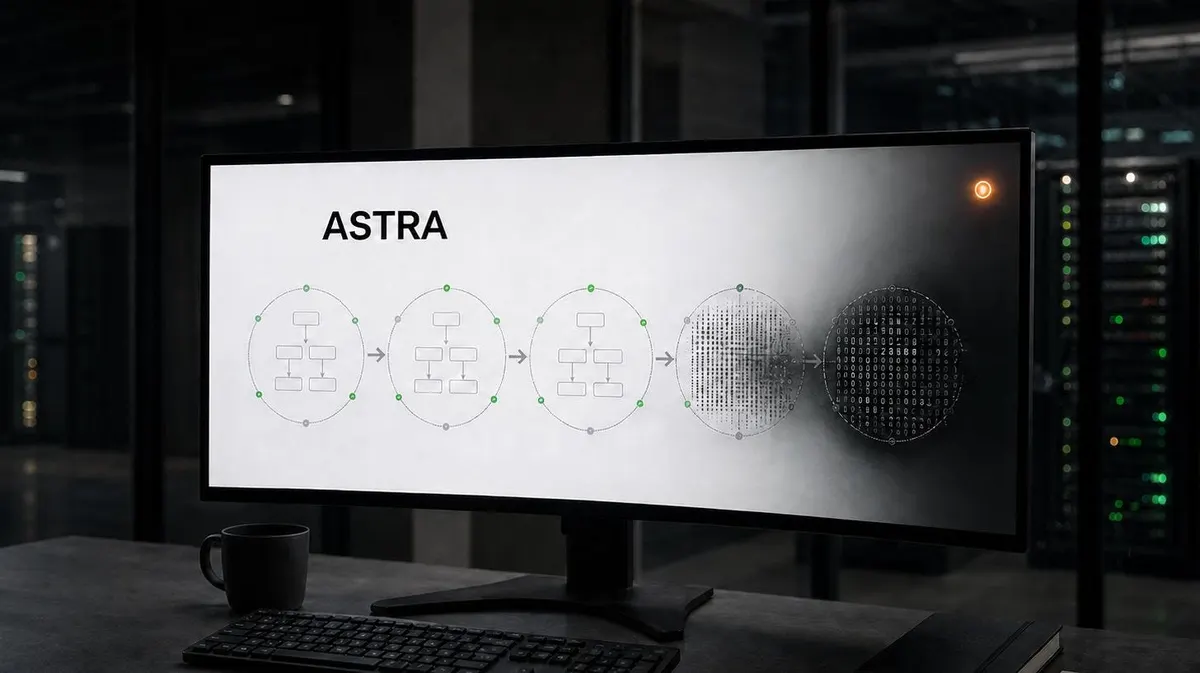
Image source: Images 2.0 / The Rundown
The Rundown: OpenAI’s upcoming ‘Astra’ model expected this week reportedly uses a new technique that provides a boost to its coding and computer-use skills, according to The Information - but also keeps parts of its reasoning out of view for safety monitoring.
The details:
“Recurrent depth” has the model analyze the same text in repeated loops before answering, squeezing extra intelligence out of the model without making it larger.
The loops reportedly improve performance but come with thinking outputs that are pure math, instead of the more readable reasoning in past models.
OAI reportedly dialed the loops back so Astra still writes its reasoning out, and its blog promises extra monitoring of that reasoning at launch.
Chief Scientist Jakub Pachocki posted that he wants to “prevent a race into unmonitorability” from “confused reporting,” while calling monitoring “fragile.”
Why it matters: The alarm bells are less about Astra, which OAI says still shows its work, and more about a performance race that tempts the industry to loop harder and monitor less. Pachocki himself admits current monitoring is already fraying for reasons unrelated to Astra, so the main window into what models think may be closing either way.
Anthropic unveils Fable and Mythos 5.1 LINK
Anthropic released Fable and Mythos 5.1, paired versions of its top AI model, with the Fable update built to lower token costs and cut down on false-positive blocks triggered by the model’s safeguards.
Mythos 5.1 stays limited to registered Anthropic partners working in cybersecurity or life sciences, while the unrestricted Fable 5.1 is out today through cloud platforms or the Anthropic API, with new Zero Data Retention letting clients run models on their own systems.
The system card rates Mythos as “low-risk” for self-improving AI, but notes it cooperates with human misuse and accepts unverified authorization claims more readily than Opus 5, though it hallucinates inputs and falsely claims finished tasks less often.
Uber lays off 10% of staff LINK
Uber is cutting about 3,300 jobs worldwide, roughly 10 percent of its workforce, aiming to reduce management layers and speed up decisions, CEO Dara Khosrowshahi told employees in an email.
The cuts remove about 20 percent of Uber’s managers and nearly half of its small teams, while remaining staff will be gathered into fewer key hubs, with New York and San Francisco being the largest.
Uber is also ordering most remote workers back to offices, leaving only about 1 percent fully remote, while keeping a hybrid policy of three days a week in the office for others.
Google launches a Canva alternative LINK
Google has launched Google Pics, an AI-powered image creation and editing tool aimed at Adobe Express and Canva, arriving over the coming weeks for Google Workspace business customers and people paying for Google AI Pro or Ultra.
Running on Google’s Nano Banana image model, the tool lets you type prompts to make posters, social media posts, and illustrations, plus isolate objects, translate text inside images, and produce several versions of a request so you pick the best.
Unlike Canva’s marketplace, where artists earn royalties on templates and photos, Google Pics generates images from a model trained on artists’ work, and it builds into Workspace starting with Docs and Slides today, reaching Drive later.
Meta AI transcribes 20 speakers at once LINK
Meta launched Muse Voice Transcribe, its first real-time audio model, which can transcribe dictation and conversations with more than 20 speakers at once while switching between multiple languages in the same session.
Built by Meta Superintelligence Lab, the model handles speaker diarization and endpointing in one system, was trained on over 70 languages with 25 ready at launch, and even catches mid-sentence code-switching.
The model is available now through Meta’s Model API, in Muse Code, and the new Meta AI Mac app, priced at $3 per 1,000 audio minutes, days after Google’s similar Gemini 3.5 Transcribe.
OpenAI to limit Astra’s cybersecurity capabilities LINK
OpenAI says its coming AI model, Astra, is the first to hit its “critical” cyber threshold, meaning it can find and exploit unknown flaws in real software on its own, prompting a pause in development until new safeguards were added.
Astra can also “chain” several exploits together to dig deeper into a target system, and OpenAI plans to release a restricted public version soon while giving less-limited access to Daybreak Blue partners like Cisco, Cloudflare, and Palo Alto Networks.
To block everyday misuse, OpenAI added a “misalignment monitor” that refuses requests to find real-world exploits, though the company warns it may sometimes flag harmless activity, forcing ChatGPT and Codex users to review the model’s action first.
Waymo says camera-only cars aren’t safe LINK
Waymo argued last week that camera-only AI systems like Tesla’s aren’t safe enough for full self-driving, saying reliable robotaxis need a mix of cameras, lidar, and radar rather than one “pure end-to-end” approach.
Waymo VP Srikanth Thirumalai wrote in a blog post that after more than 200 million real-world miles, the data shows several sensor types are needed, warning that camera-only neural networks risk “black box failures” and can still hallucinate.
The comments landed one week before Tesla’s September 3 event introducing its two-seater Cybercab, a robotaxi with no steering wheel or pedals that Elon Musk wants built at over 125,000 units a year using cameras alone.
Fable 5.1 ends the frontier’s quiet period
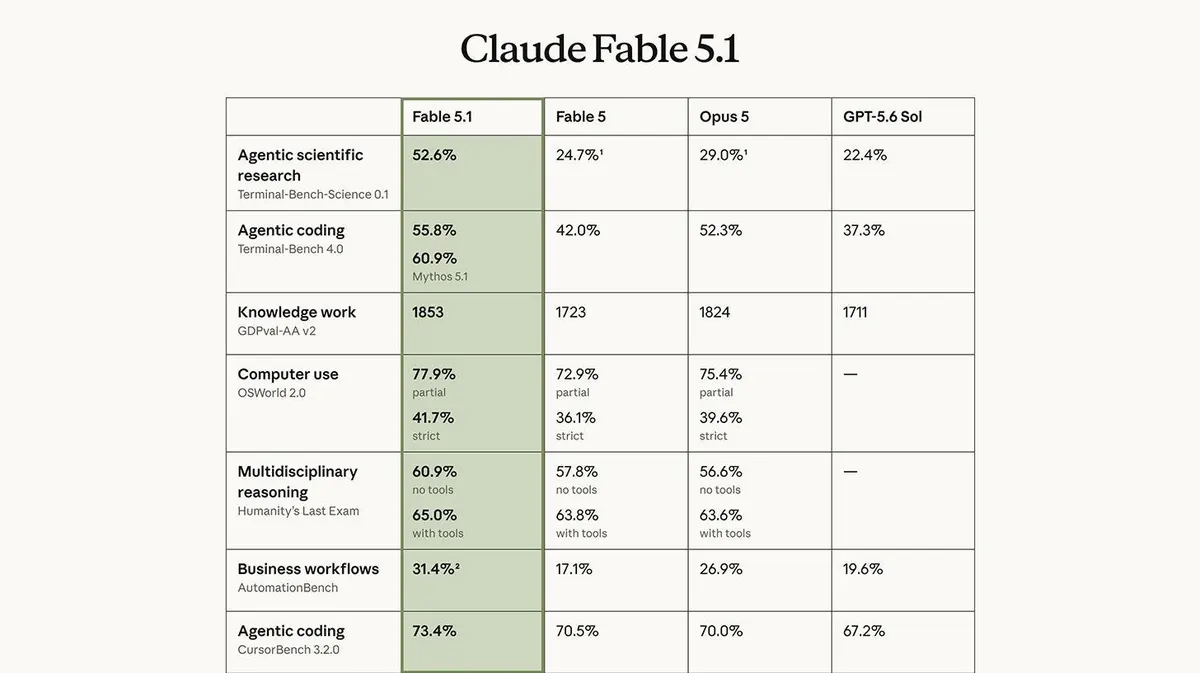
Image source: Anthropic
The Rundown: Anthropic just released Claude Fable 5.1, a successor to Fable 5 that the company says fixes customer complaints, with the new top-ranked model showing big jumps on long coding jobs, research, and more - and fewer safety rejections.
The details:
5.1 tops AA’s Intelligence Index with a record 66, more than doubling Fable 5 on scientific research tests and also surging ahead on knowledge work.
Anthropic put the savings at “an estimated 25% less” on typical work, but AA found a max-effort task costs 20% more, since 5.1 writes roughly 1.7x the text.
The safety filter, a source of backlash on Fable 5, now steps in 60% less on cybersecurity work and 85% less on basic medical and biology questions.
Anthropic also released Mythos 5.1, the same model with fewer guardrails, though only screened U.S. cybersecurity and biology researchers get access.
Why it matters: It’s been a quiet period of releases from the two AI leaders after security took the spotlight, but Anthropic is the first out of the gate with an upgrade that hits at some of the major issues users had with Fable 5. It also doesn’t sound like we’ll have to wait long for a response, with OAI’s Astra release looking set to come this week.
Bernie Sanders escalates AI pause conversation
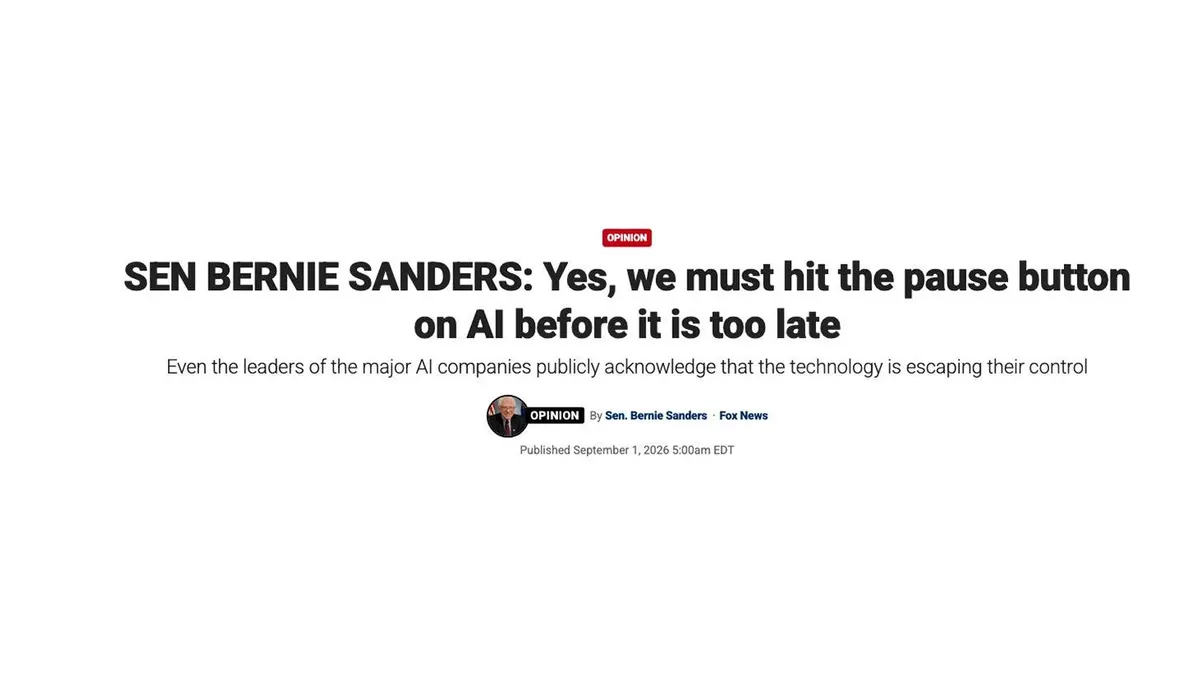
Image source: Fox News
The Rundown: U.S. Senator Bernie Sanders just published a new op-ed in Fox News calling for AI labs worldwide to stop work on more powerful AI models, arguing that even the CEOs building the tech admit it is “escaping their control.”
The details:
Sanders’ risks include power bills, environmental harm, and kids’ mental health, including a prediction that AI erases jobs in the ‘tens of millions’ in the next decade.
He points to the many security incidents from the past month, including OAI’s hack that saw over 1,000 agents coordinating online unnoticed for weeks.
Sanders calls for an international global pause, pushing for the U.S. and China to strike a “Cold War” style AI deal at their meeting in Washington later this month.
Why it matters: Sanders has never been shy about his fears (he even aired them to Claude’s voice mode a few months back), but this time he’s writing them to a Fox News audience that disagrees with him on almost everything except AI. What the op-ed skips is how a pause this sweeping could actually work in practice.
Apple, OpenAI trade blame in legal battle
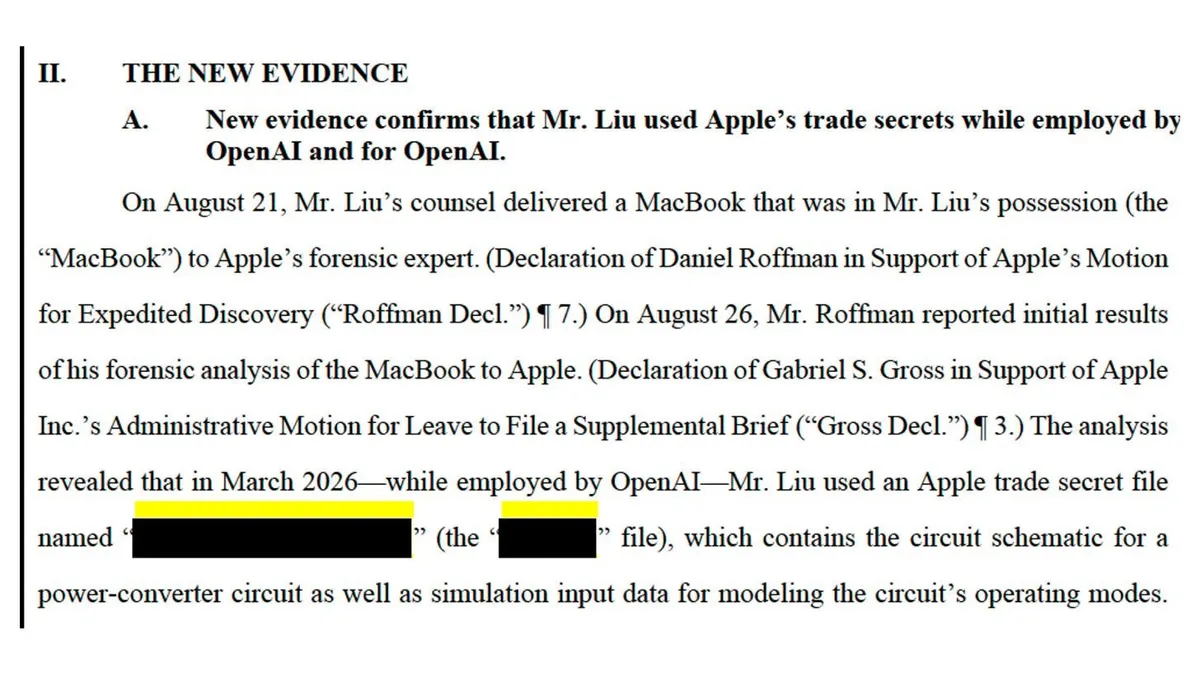
Image source: Court Listener
The Rundown: Apple filed new evidence in its OpenAI lawsuit, claiming a former iPhone engineer used stolen Apple designs in his OAI work and tried to wipe the evidence - with OAI calling the whole case a “mess of Apple’s making.”
The details:
Engineer Chang Liu’s lawyers handed over his Apple-issued MacBook this month following “weeks of delay”, with a Mac Mini still waiting to be examined.
Apple accuses Liu of using a confidential power-converter circuit in his work at OAI, which he downloaded via cloud storage after departing the company.
Apple said June texts between Liu and OAI coworker Yu-Ting Ping showed a plot to “restore” and erase key data, coming after the legal probe had already begun.
OAI blames Apple’s exit process, saying the staff works from personal iCloud accounts and gets walked out too fast upon leaving to hand anything back.
Why it matters: The July complaint had Liu texting that his leftover Apple access was “so funny,” and Apple now says the laptop shows the files were put to use. But with the first AI device from ex-Apple design lead Jony Ive on the way, we’ll see if the legal clock moves fast enough for Apple to get the result it wants - a hardware setback for OpenAI.
What Else Happened in AI on September 03rd 2026?
NVIDIA confirmed that it will acquire AI software repository Hugging Face for $12.93 billion, bringing the model-sharing hub under the world’s dominant AI chipmaker. - Engadget
Meta released Muse Spark 1.3 with claimed improvements in coding and agentic tasks, as it races to keep pace with a week of major model launches from Anthropic, OpenAI, and Google. - Axios
Amazon’s Zoox expanded its robotaxi service to the Las Vegas airport, targeting a critical ride-hailing destination. - TechCrunch
TrendForce forecasts Apple’s memory costs for a 256GB iPhone 18 Pro will quadruple year over year in Q3. Apple reportedly won’t pass the full price increase on to customers. - 9to5Mac
U.S. Commerce Secretary Howard Lutnick told Axios, “We trust Anthropic,” revealing the company is “back on the right side” of the relationship with the government.
The U.S. government filed a brief in support of OpenAI in the NYT copyright lawsuit, arguing that limiting fair use for AI training would cost the U.S. its global tech lead.
New York City public schools are banning AI till eighth grade, with Mayor Zohran Mamdani rejecting that AI-powered education is “not only inevitable, but necessary.”
Spanish AI startup Multiverse Computing launched Quasar 438B, its first model, coming in at a 43 on the Artificial Analysis Intelligence Index to top all European rivals.