Educational mobile apps ideas that leverage generative AI.
Here are a few innovative educational mobile app ideas that leverage generative AI, offering functionalities beyond what ChatGPT provides:

AI-Based Customized Learning Path Creator:
- Concept: An app that uses generative AI to analyze a student’s learning style, strengths, and weaknesses, and then creates a personalized learning path with tailored resources and activities.
- Unique Feature: Unlike ChatGPT, which primarily responds to queries, this app actively assesses and guides the user’s educational journey.
- While ChatGPT can suggest learning resources, a dedicated app can provide a more structured and personalized learning path, continuously adapting to the user’s progress.
Interactive AI Tutor for Problem Solving:
- Concept: This app focuses on STEM subjects, using generative AI to create unique problem sets and provide step-by-step solutions with explanations. The AI can generate new problems based on the student’s progress.
- Unique Feature: The app would offer an interactive problem-solving experience, adapting the difficulty and type of problems in real-time.
- ChatGPT can help with problem-solving, but an app designed specifically for STEM education can offer a more interactive and subject-focused approach, with features like visual aids, interactive simulations, and progress tracking.
AI-Driven Language Learning Companion:
- Concept: An app that uses AI to generate conversational scenarios in various languages, helping users practice speaking and comprehension in a simulated real-world context.
- Unique Feature: It focuses on verbal interaction and contextual learning, providing a more immersive language learning experience than typical chat-based apps.
- ChatGPT can assist in language learning, but a dedicated app can create immersive scenarios, use speech recognition for pronunciation practice, and provide a more structured language learning program.
Generative AI Storytelling for Creative Writing:
- Concept: This app helps students enhance their creative writing skills by generating story prompts, character ideas, or even continuing a story based on the student’s input.
- Unique Feature: It focuses on creativity and storytelling, aiding in the development of writing skills through AI-generated content.
- While ChatGPT can generate story prompts, a specialized app could offer a more comprehensive suite of creative writing tools, including workshops, peer review, and guided writing exercises.
AI Music Composition and Theory Teaching Tool:
- Concept: An app that teaches music theory by generating music sheets or compositions based on AI algorithms. Users can input specific genres, moods, or instruments, and the AI creates music pieces accordingly.
- Unique Feature: Unlike ChatGPT, this app focuses on music education, leveraging AI to compose and demonstrate music theory concepts.
- ChatGPT might assist in some aspects of music theory, but an app focused on music education could integrate AI-generated music with interactive learning modules, listening exercises, and more complex composition tools.
Generative Art History and Appreciation App:
- Concept: This app uses AI to generate art pieces in the style of various historical periods or artists. It also provides educational content about art history and techniques.
- Unique Feature: It combines art creation with educational content, making art history interactive and engaging.
- ChatGPT can provide information on art history, but an app can offer a more visual and interactive experience, with virtual art gallery tours, style emulation, and detailed analyses of art techniques.
AI-Enhanced Public Speaking and Presentation Trainer:
- Concept: The app uses AI to analyze speech patterns and content, offering tips and exercises to improve public speaking skills.
- Unique Feature: It’s a speech improvement tool that provides real-time feedback and tailored coaching, unlike typical text-based AI applications.
- While ChatGPT can offer tips on public speaking, a dedicated app can use speech recognition to provide real-time feedback on aspects like pacing, tone, and filler word usage.
Each of these app ideas leverages generative AI in unique ways, focusing on different aspects of education and learning, and providing experiences that go beyond the capabilities of a standard AI chatbot like ChatGPT.
Are you eager to expand your understanding of artificial intelligence? Look no further than the essential book “AI Unraveled: Demystifying Frequently Asked Questions on Artificial Intelligence,” available at Etsy, Shopify, Apple, Google, or Amazon

Educational mobile apps ideas that leverage generative AI: Podcast Transcript
Welcome to AI Unraveled, the podcast that demystifies frequently asked questions on artificial intelligence and keeps you up to date with the latest AI trends. In today’s episode, we’ll cover innovative educational mobile app ideas that leverage generative AI, including customized learning paths, interactive problem-solving, immersive language learning, creative writing support, music education, art history, and public speaking training, as well as the book “AI Unraveled” that answers frequently asked questions about artificial intelligence.
So, today I want to share with you some really cool educational mobile app ideas that go beyond what ChatGPT can do. These ideas leverage the power of generative AI to offer unique functionalities and experiences. Let’s dive right in!
The first app idea is an AI-Based Customized Learning Path Creator. This app would use generative AI to analyze a student’s learning style, strengths, and weaknesses, and then create a personalized learning path with tailored resources and activities. Unlike ChatGPT, which primarily responds to queries, this app would actively assess and guide the user’s educational journey. While ChatGPT can suggest learning resources, a dedicated app can provide a more structured and personalized learning path, continuously adapting to the user’s progress.
Next up, we have an Interactive AI Tutor for Problem Solving. This app would focus on STEM subjects and use generative AI to create unique problem sets and provide step-by-step solutions with explanations. The AI could even generate new problems based on the student’s progress. What sets this app apart is its interactive problem-solving experience, adapting the difficulty and type of problems in real-time. While ChatGPT can help with problem-solving, an app designed specifically for STEM education can offer a more interactive and subject-focused approach. Imagine visual aids, interactive simulations, and progress tracking to enhance the learning experience.
Now, let’s talk about an AI-Driven Language Learning Companion. This app would use AI to generate conversational scenarios in various languages, helping users practice speaking and comprehension in a simulated real-world context. What makes it unique is its focus on verbal interaction and contextual learning. By providing a more immersive language learning experience than typical chat-based apps, this dedicated app can take language learning to a whole new level. Picture speech recognition for pronunciation practice, structured language programs, and even immersive scenarios to practice your skills in a real-world context.
Moving on, we have Generative AI Storytelling for Creative Writing. This app aims to help students enhance their creative writing skills by generating story prompts, character ideas, or even continuing a story based on the student’s input. It’s all about creativity and storytelling! While ChatGPT can generate story prompts, a specialized app would offer a broader range of creative writing tools. Think workshops, peer review features, and guided writing exercises to truly develop your writing skills through AI-generated content.
Now, let’s explore an AI Music Composition and Theory Teaching Tool. This app would teach music theory by generating music sheets or compositions based on AI algorithms. Users could input specific genres, moods, or instruments, and the AI would create music pieces accordingly. It’s all about making music education more accessible! While ChatGPT might assist in some aspects of music theory, an app focused on music education could integrate AI-generated music with interactive learning modules, listening exercises, and even more complex composition tools.
Next, we have the Generative Art History and Appreciation App. This app would use AI to generate art pieces in the style of various historical periods or artists while also providing educational content about art history and techniques. By combining art creation with educational content, this app would make art history interactive and engaging. While ChatGPT can provide information on art history, imagine being able to take virtual art gallery tours, emulate different styles, and dive into detailed analyses of art techniques, all in one app.
Advertise with us - Post Your Good Content Here
We are ranked in the Top 20 on Google
AI Dashboard is available on the Web, Apple, Google, and Microsoft, PRO version
Last but not least, let’s talk about an AI-Enhanced Public Speaking and Presentation Trainer. This app would use AI to analyze speech patterns and content, offering tips and exercises to improve public speaking skills. Its unique feature lies in providing real-time feedback and tailored coaching, unlike typical text-based AI applications. While ChatGPT can offer general tips on public speaking, a dedicated app can go the extra mile by utilizing speech recognition to provide real-time feedback on aspects like pacing, tone, and filler word usage. Imagine having a personal speech coach right in your pocket!
So, as you can see, each of these app ideas leverages generative AI in unique ways, focusing on different aspects of education and learning. They provide experiences that go beyond the capabilities of a standard AI chatbot like ChatGPT. From customized learning paths and interactive problem-solving to immersive language learning and creative writing assistance, the possibilities are endless with generative AI in the educational mobile app space.

Are you ready to dive into the fascinating world of artificial intelligence? Well, I’ve got just the thing for you! It’s an incredible book called “AI Unraveled: Demystifying Frequently Asked Questions on Artificial Intelligence.” Trust me, this book is an absolute gem!
Now, you might be wondering where you can get your hands on this treasure trove of knowledge. Look no further, my friend. You can find “AI Unraveled” at popular online platforms like Etsy, Shopify, Apple, Google, and of course, our old faithful, Amazon.
This book is a must-have for anyone eager to expand their understanding of AI. It takes those complicated concepts and breaks them down into easily digestible chunks. No more scratching your head in confusion or getting lost in a sea of technical terms. With “AI Unraveled,” you’ll gain a clear and concise understanding of artificial intelligence.
So, if you’re ready to embark on this incredible journey of unraveling the mysteries of AI, go ahead and grab your copy of “AI Unraveled” today. Trust me, you won’t regret it!
In this episode, we explored innovative educational mobile app ideas incorporating generative AI and discussed the book “AI Unraveled” that tackles common questions about artificial intelligence. Join us next time on AI Unraveled as we continue to demystify frequently asked questions on artificial intelligence and bring you the latest trends in AI, including ChatGPT advancements and the exciting collaboration between Google Brain and DeepMind. Stay informed, stay curious, and don’t forget to subscribe for more!

- Paul Christiano updating to 50% chance of fast takeoffby /u/Maxie445 (Artificial Intelligence) on July 26, 2024 at 4:24 am
submitted by /u/Maxie445 [link] [comments]
- One-Minute Daily AI News 7/25/2024by /u/Excellent-Target-847 (Artificial Intelligence) on July 26, 2024 at 3:19 am
OpenAI announces SearchGPT, its AI-powered search engine.[1] Lawmaker uses AI voice clone to address Congress.[2] Announcing Phi-3 fine-tuning, new generative AI models, and other Azure AI updates to empower organizations to customize and scale AI applications.[3] Runway’s AI video generator trained on thousands of scraped YouTube videos.[4] Sources: [1] ~https://www.theverge.com/2024/7/25/24205701/openai-searchgpt-ai-search-engine-google-perplexity-rival~ [2] ~https://www.bbc.com/news/videos/c728q850e5do~ [3] ~https://azure.microsoft.com/en-us/blog/announcing-phi-3-fine-tuning-new-generative-ai-models-and-other-azure-ai-updates-to-empower-organizations-to-customize-and-scale-ai-applications/~ [4] ~https://www.theverge.com/2024/7/25/24206120/runway-ai-video-generator-scraped-youtube-videos-report~ submitted by /u/Excellent-Target-847 [link] [comments]
- OpenAI tweets in 2024 visualised - is it all about safety now?by /u/Time-Winter-4319 (OpenAI) on July 25, 2024 at 7:38 pm
https://reddit.com/link/1ec3vv7/video/0txsi0lowped1/player submitted by /u/Time-Winter-4319 [link] [comments]
- It is officially been one month since the delay announcement for the ‘Advanced Voice Mode Alpha’. The clock is now ticking for OpenAIby /u/debugdr (OpenAI) on July 25, 2024 at 7:19 pm
I’ve taken a personal decision if after five days of the alpha not being released before the end of this month in five days, I will be canceling my subscription and going with Claude AI as well as using Meta’s Llama 3.1. What do you guys think? submitted by /u/debugdr [link] [comments]
- July is almost over and no one has access to the new voice.by /u/Grand0rk (OpenAI) on July 25, 2024 at 7:10 pm
This just proves that whatever they showed back then was fake. submitted by /u/Grand0rk [link] [comments]
- Did OpenAI just kill Perplexity?by /u/bongingnaut (OpenAI) on July 25, 2024 at 6:33 pm
SearchGPT seems to be exactly what Perplexity is trying to accomplish. But it's actually made by openai so many more people will use it. Do you think this will replace Google search? submitted by /u/bongingnaut [link] [comments]
- OpenAI Enters Search Arena with SearchGPTby /u/Altruistic_Gibbon907 (OpenAI) on July 25, 2024 at 6:24 pm
OpenAI has unveiled SearchGPT, an AI-powered search engine prototype that aims to provide fast, conversational answers with clear source attribution. Initially available to 10,000 test users, SearchGPT combines GPT-4 capabilities with real-time web information. The tool features direct responses, follow-up questions, and prominent links to sources, emphasizing publisher partnerships and content discovery. Limited release to 10,000 users with plans for ChatGPT integration Powered by GPT-4 models with real-time web access Collaborations with major news partner organizations like WSJ and AP Publishers can manage appearances and opt out of AI training while remaining in search results No current monetization strategy despite high compute costs (estimated $7 billion for OpenAI in 2024) Includes visual responses with images and video Competes directly with Perplexity, the AI "answer engine" startup Source: OpenAI https://preview.redd.it/pc9ovc91wped1.png?width=642&format=png&auto=webp&s=0432ead57b32d1fa48782a542be66ea7da1fc538 submitted by /u/Altruistic_Gibbon907 [link] [comments]
- OpenAI - Announcing SearchGPT, new AI search features that give you fast and timely answersby /u/-FoodOfTheGods- (OpenAI) on July 25, 2024 at 6:12 pm
submitted by /u/-FoodOfTheGods- [link] [comments]
- What a complete s*!t show DallE 3 has become, try to go through this in your own chat and see. No creativity, no coherence, no nothingby /u/ShooBum-T (OpenAI) on July 25, 2024 at 4:35 pm
submitted by /u/ShooBum-T [link] [comments]
- Sam Altman | Who will control the future of AI?by /u/elec-tronic (OpenAI) on July 25, 2024 at 3:41 pm
https://www.washingtonpost.com/opinions/2024/07/25/sam-altman-ai-democracy-authoritarianism-future/ submitted by /u/elec-tronic [link] [comments]
- Paul Christiano updating to 50% chance of fast takeoffby /u/Maxie445 (Artificial Intelligence) on July 26, 2024 at 4:24 am
submitted by /u/Maxie445 [link] [comments]
- One-Minute Daily AI News 7/25/2024by /u/Excellent-Target-847 (Artificial Intelligence) on July 26, 2024 at 3:19 am
OpenAI announces SearchGPT, its AI-powered search engine.[1] Lawmaker uses AI voice clone to address Congress.[2] Announcing Phi-3 fine-tuning, new generative AI models, and other Azure AI updates to empower organizations to customize and scale AI applications.[3] Runway’s AI video generator trained on thousands of scraped YouTube videos.[4] Sources: [1] ~https://www.theverge.com/2024/7/25/24205701/openai-searchgpt-ai-search-engine-google-perplexity-rival~ [2] ~https://www.bbc.com/news/videos/c728q850e5do~ [3] ~https://azure.microsoft.com/en-us/blog/announcing-phi-3-fine-tuning-new-generative-ai-models-and-other-azure-ai-updates-to-empower-organizations-to-customize-and-scale-ai-applications/~ [4] ~https://www.theverge.com/2024/7/25/24206120/runway-ai-video-generator-scraped-youtube-videos-report~ submitted by /u/Excellent-Target-847 [link] [comments]
- OpenAI tweets in 2024 visualised - is it all about safety now?by /u/Time-Winter-4319 (OpenAI) on July 25, 2024 at 7:38 pm
https://reddit.com/link/1ec3vv7/video/0txsi0lowped1/player submitted by /u/Time-Winter-4319 [link] [comments]
- It is officially been one month since the delay announcement for the ‘Advanced Voice Mode Alpha’. The clock is now ticking for OpenAIby /u/debugdr (OpenAI) on July 25, 2024 at 7:19 pm
I’ve taken a personal decision if after five days of the alpha not being released before the end of this month in five days, I will be canceling my subscription and going with Claude AI as well as using Meta’s Llama 3.1. What do you guys think? submitted by /u/debugdr [link] [comments]
- July is almost over and no one has access to the new voice.by /u/Grand0rk (OpenAI) on July 25, 2024 at 7:10 pm
This just proves that whatever they showed back then was fake. submitted by /u/Grand0rk [link] [comments]
- Did OpenAI just kill Perplexity?by /u/bongingnaut (OpenAI) on July 25, 2024 at 6:33 pm
SearchGPT seems to be exactly what Perplexity is trying to accomplish. But it's actually made by openai so many more people will use it. Do you think this will replace Google search? submitted by /u/bongingnaut [link] [comments]
- OpenAI Enters Search Arena with SearchGPTby /u/Altruistic_Gibbon907 (OpenAI) on July 25, 2024 at 6:24 pm
OpenAI has unveiled SearchGPT, an AI-powered search engine prototype that aims to provide fast, conversational answers with clear source attribution. Initially available to 10,000 test users, SearchGPT combines GPT-4 capabilities with real-time web information. The tool features direct responses, follow-up questions, and prominent links to sources, emphasizing publisher partnerships and content discovery. Limited release to 10,000 users with plans for ChatGPT integration Powered by GPT-4 models with real-time web access Collaborations with major news partner organizations like WSJ and AP Publishers can manage appearances and opt out of AI training while remaining in search results No current monetization strategy despite high compute costs (estimated $7 billion for OpenAI in 2024) Includes visual responses with images and video Competes directly with Perplexity, the AI "answer engine" startup Source: OpenAI https://preview.redd.it/pc9ovc91wped1.png?width=642&format=png&auto=webp&s=0432ead57b32d1fa48782a542be66ea7da1fc538 submitted by /u/Altruistic_Gibbon907 [link] [comments]
- OpenAI - Announcing SearchGPT, new AI search features that give you fast and timely answersby /u/-FoodOfTheGods- (OpenAI) on July 25, 2024 at 6:12 pm
submitted by /u/-FoodOfTheGods- [link] [comments]
- What a complete s*!t show DallE 3 has become, try to go through this in your own chat and see. No creativity, no coherence, no nothingby /u/ShooBum-T (OpenAI) on July 25, 2024 at 4:35 pm
submitted by /u/ShooBum-T [link] [comments]
- Sam Altman | Who will control the future of AI?by /u/elec-tronic (OpenAI) on July 25, 2024 at 3:41 pm
https://www.washingtonpost.com/opinions/2024/07/25/sam-altman-ai-democracy-authoritarianism-future/ submitted by /u/elec-tronic [link] [comments]
Active Hydrating Toner, Anti-Aging Replenishing Advanced Face Moisturizer, with Vitamins A, C, E & Natural Botanicals to Promote Skin Balance & Collagen Production, 6.7 Fl Oz



Age Defying 0.3% Retinol Serum, Anti-Aging Dark Spot Remover for Face, Fine Lines & Wrinkle Pore Minimizer, with Vitamin E & Natural Botanicals
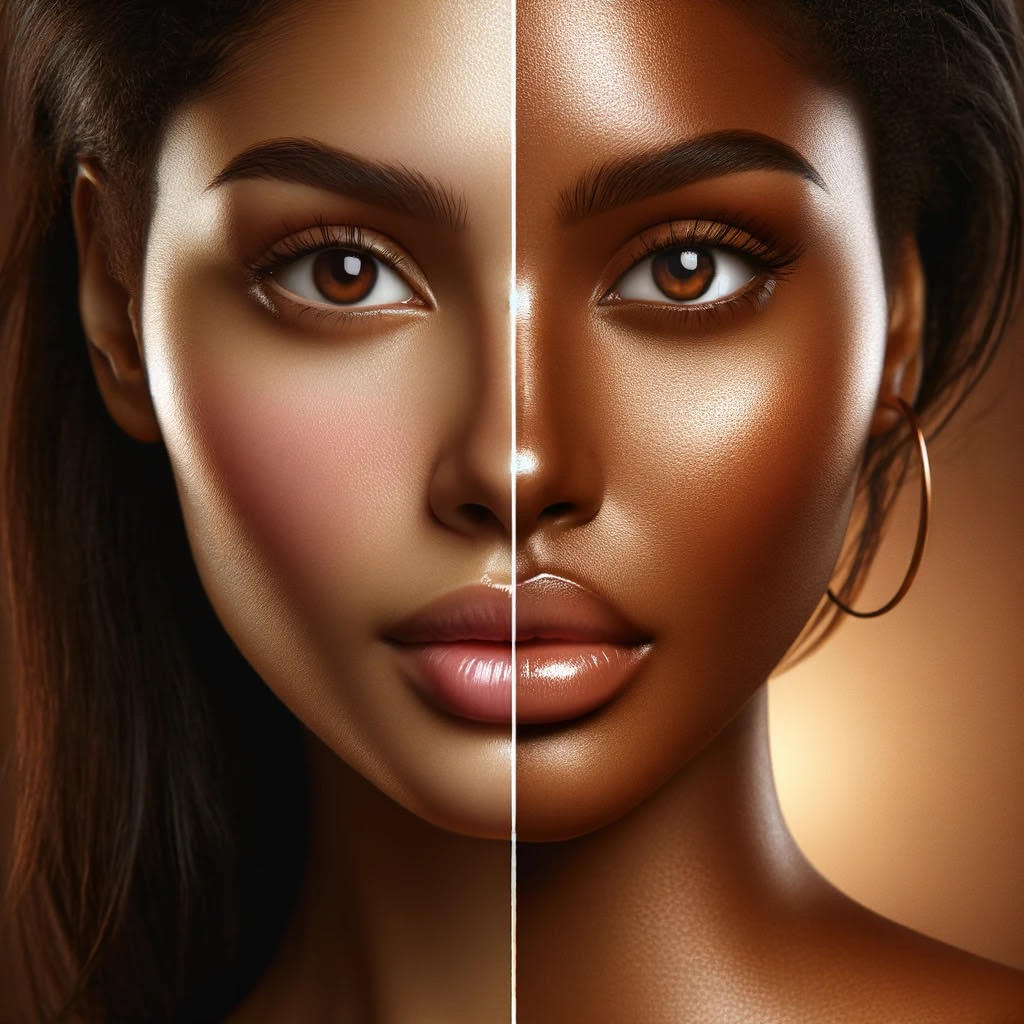

Firming Moisturizer, Advanced Hydrating Facial Replenishing Cream, with Hyaluronic Acid, Resveratrol & Natural Botanicals to Restore Skin's Strength, Radiance, and Resilience, 1.75 Oz

Skin Stem Cell Serum


Smartphone 101 - Pick a smartphone for me - android or iOS - Apple iPhone or Samsung Galaxy or Huawei or Xaomi or Google Pixel
Can AI Really Predict Lottery Results? We Asked an Expert.



Djamgatech

Read Photos and PDFs Aloud for me iOS
Read Photos and PDFs Aloud for me android
Read Photos and PDFs Aloud For me Windows 10/11
Read Photos and PDFs Aloud For Amazon
Get 20% off Google Workspace (Google Meet) Business Plan (AMERICAS): M9HNXHX3WC9H7YE (Email us for more)
Get 20% off Google Google Workspace (Google Meet) Standard Plan with the following codes: 96DRHDRA9J7GTN6(Email us for more)



FREE 10000+ Quiz Trivia and and Brain Teasers for All Topics including Cloud Computing, General Knowledge, History, Television, Music, Art, Science, Movies, Films, US History, Soccer Football, World Cup, Data Science, Machine Learning, Geography, etc....

List of Freely available programming books - What is the single most influential book every Programmers should read
- Bjarne Stroustrup - The C++ Programming Language
- Brian W. Kernighan, Rob Pike - The Practice of Programming
- Donald Knuth - The Art of Computer Programming
- Ellen Ullman - Close to the Machine
- Ellis Horowitz - Fundamentals of Computer Algorithms
- Eric Raymond - The Art of Unix Programming
- Gerald M. Weinberg - The Psychology of Computer Programming
- James Gosling - The Java Programming Language
- Joel Spolsky - The Best Software Writing I
- Keith Curtis - After the Software Wars
- Richard M. Stallman - Free Software, Free Society
- Richard P. Gabriel - Patterns of Software
- Richard P. Gabriel - Innovation Happens Elsewhere
- Code Complete (2nd edition) by Steve McConnell
- The Pragmatic Programmer
- Structure and Interpretation of Computer Programs
- The C Programming Language by Kernighan and Ritchie
- Introduction to Algorithms by Cormen, Leiserson, Rivest & Stein
- Design Patterns by the Gang of Four
- Refactoring: Improving the Design of Existing Code
- The Mythical Man Month
- The Art of Computer Programming by Donald Knuth
- Compilers: Principles, Techniques and Tools by Alfred V. Aho, Ravi Sethi and Jeffrey D. Ullman
- Gödel, Escher, Bach by Douglas Hofstadter
- Clean Code: A Handbook of Agile Software Craftsmanship by Robert C. Martin
- Effective C++
- More Effective C++
- CODE by Charles Petzold
- Programming Pearls by Jon Bentley
- Working Effectively with Legacy Code by Michael C. Feathers
- Peopleware by Demarco and Lister
- Coders at Work by Peter Seibel
- Surely You're Joking, Mr. Feynman!
- Effective Java 2nd edition
- Patterns of Enterprise Application Architecture by Martin Fowler
- The Little Schemer
- The Seasoned Schemer
- Why's (Poignant) Guide to Ruby
- The Inmates Are Running The Asylum: Why High Tech Products Drive Us Crazy and How to Restore the Sanity
- The Art of Unix Programming
- Test-Driven Development: By Example by Kent Beck
- Practices of an Agile Developer
- Don't Make Me Think
- Agile Software Development, Principles, Patterns, and Practices by Robert C. Martin
- Domain Driven Designs by Eric Evans
- The Design of Everyday Things by Donald Norman
- Modern C++ Design by Andrei Alexandrescu
- Best Software Writing I by Joel Spolsky
- The Practice of Programming by Kernighan and Pike
- Pragmatic Thinking and Learning: Refactor Your Wetware by Andy Hunt
- Software Estimation: Demystifying the Black Art by Steve McConnel
- The Passionate Programmer (My Job Went To India) by Chad Fowler
- Hackers: Heroes of the Computer Revolution
- Algorithms + Data Structures = Programs
- Writing Solid Code
- JavaScript - The Good Parts
- Getting Real by 37 Signals
- Foundations of Programming by Karl Seguin
- Computer Graphics: Principles and Practice in C (2nd Edition)
- Thinking in Java by Bruce Eckel
- The Elements of Computing Systems
- Refactoring to Patterns by Joshua Kerievsky
- Modern Operating Systems by Andrew S. Tanenbaum
- The Annotated Turing
- Things That Make Us Smart by Donald Norman
- The Timeless Way of Building by Christopher Alexander
- The Deadline: A Novel About Project Management by Tom DeMarco
- The C++ Programming Language (3rd edition) by Stroustrup
- Patterns of Enterprise Application Architecture
- Computer Systems - A Programmer's Perspective
- Agile Principles, Patterns, and Practices in C# by Robert C. Martin
- Growing Object-Oriented Software, Guided by Tests
- Framework Design Guidelines by Brad Abrams
- Object Thinking by Dr. David West
- Advanced Programming in the UNIX Environment by W. Richard Stevens
- Hackers and Painters: Big Ideas from the Computer Age
- The Soul of a New Machine by Tracy Kidder
- CLR via C# by Jeffrey Richter
- The Timeless Way of Building by Christopher Alexander
- Design Patterns in C# by Steve Metsker
- Alice in Wonderland by Lewis Carol
- Zen and the Art of Motorcycle Maintenance by Robert M. Pirsig
- About Face - The Essentials of Interaction Design
- Here Comes Everybody: The Power of Organizing Without Organizations by Clay Shirky
- The Tao of Programming
- Computational Beauty of Nature
- Writing Solid Code by Steve Maguire
- Philip and Alex's Guide to Web Publishing
- Object-Oriented Analysis and Design with Applications by Grady Booch
- Effective Java by Joshua Bloch
- Computability by N. J. Cutland
- Masterminds of Programming
- The Tao Te Ching
- The Productive Programmer
- The Art of Deception by Kevin Mitnick
- The Career Programmer: Guerilla Tactics for an Imperfect World by Christopher Duncan
- Paradigms of Artificial Intelligence Programming: Case studies in Common Lisp
- Masters of Doom
- Pragmatic Unit Testing in C# with NUnit by Andy Hunt and Dave Thomas with Matt Hargett
- How To Solve It by George Polya
- The Alchemist by Paulo Coelho
- Smalltalk-80: The Language and its Implementation
- Writing Secure Code (2nd Edition) by Michael Howard
- Introduction to Functional Programming by Philip Wadler and Richard Bird
- No Bugs! by David Thielen
- Rework by Jason Freid and DHH
- JUnit in Action
#BlackOwned #BlackEntrepreneurs #BlackBuniness #AWSCertified #AWSCloudPractitioner #AWSCertification #AWSCLFC02 #CloudComputing #AWSStudyGuide #AWSTraining #AWSCareer #AWSExamPrep #AWSCommunity #AWSEducation #AWSBasics #AWSCertified #AWSMachineLearning #AWSCertification #AWSSpecialty #MachineLearning #AWSStudyGuide #CloudComputing #DataScience #AWSCertified #AWSSolutionsArchitect #AWSArchitectAssociate #AWSCertification #AWSStudyGuide #CloudComputing #AWSArchitecture #AWSTraining #AWSCareer #AWSExamPrep #AWSCommunity #AWSEducation #AzureFundamentals #AZ900 #MicrosoftAzure #ITCertification #CertificationPrep #StudyMaterials #TechLearning #MicrosoftCertified #AzureCertification #TechBooks
Top 1000 Canada Quiz and trivia: CANADA CITIZENSHIP TEST- HISTORY - GEOGRAPHY - GOVERNMENT- CULTURE - PEOPLE - LANGUAGES - TRAVEL - WILDLIFE - HOCKEY - TOURISM - SCENERIES - ARTS - DATA VISUALIZATION

Top 1000 Africa Quiz and trivia: HISTORY - GEOGRAPHY - WILDLIFE - CULTURE - PEOPLE - LANGUAGES - TRAVEL - TOURISM - SCENERIES - ARTS - DATA VISUALIZATION
Exploring the Pros and Cons of Visiting All Provinces and Territories in Canada.


Exploring the Advantages and Disadvantages of Visiting All 50 States in the USA

Health Health, a science-based community to discuss health news and the coronavirus (COVID-19) pandemic
- US infant mortality increased in 2022 for the first time in decades, CDC report showsby /u/cnn on July 25, 2024 at 6:37 pm
submitted by /u/cnn [link] [comments]
- Study raises hopes that shingles vaccine may delay onset of dementia | Dementia | The Guardianby /u/chilladipa on July 25, 2024 at 3:38 pm
submitted by /u/chilladipa [link] [comments]
- How fit is your city? New rankings by the American College of Sports Medicineby /u/idc2011 on July 25, 2024 at 3:35 pm
submitted by /u/idc2011 [link] [comments]
- Twice-Yearly Lenacapavir or Daily F/TAF for HIV Prevention in Cisgender Women | New England Journal of Medicineby /u/chilladipa on July 25, 2024 at 3:30 pm
submitted by /u/chilladipa [link] [comments]
- Biden Made a Healthy Decisionby /u/theatlantic on July 25, 2024 at 3:15 pm
submitted by /u/theatlantic [link] [comments]
Today I Learned (TIL) You learn something new every day; what did you learn today? Submit interesting and specific facts about something that you just found out here.
- TIL actor John Larroquette was the uncredited narrator of the prologue to the 1974 horror movie Texas Chainsaw Massacre. In lieu of cash, he was paid by the Director Tobe Hooper in Marijuana.by /u/openletter8 on July 25, 2024 at 6:56 pm
submitted by /u/openletter8 [link] [comments]
- TIL that the every Shakopee Mdewakanton Sioux indian receives a payout of around $1 million per year from casino profits.by /u/friendlystranger4u on July 25, 2024 at 6:22 pm
submitted by /u/friendlystranger4u [link] [comments]
- TIL Motorcycles in China are dictated by law to be decommissioned and destroyed in 13 years after registration regardless of the conditionsby /u/Easy_Piece_592 on July 25, 2024 at 5:56 pm
submitted by /u/Easy_Piece_592 [link] [comments]
- TIL a man named Jonathan Riches has filed more than 2,600 lawsuits since 2006. He even sued Guinness World Records to try to stop them from titling him as "the most litigious man in history".by /u/doopityWoop22 on July 25, 2024 at 5:03 pm
submitted by /u/doopityWoop22 [link] [comments]
- TIL that in 2018, an American half-pipe skier qualified for the Olympics despite minimal experience. Olympic requirements stated that an athlete needed to place in the top 30 at multiple events. She simply sought out events with fewer than 30 participants, showed up, and skied down without falling.by /u/ctdca on July 25, 2024 at 4:28 pm
submitted by /u/ctdca [link] [comments]
Reddit Science This community is a place to share and discuss new scientific research. Read about the latest advances in astronomy, biology, medicine, physics, social science, and more. Find and submit new publications and popular science coverage of current research.
- Abstinence-only sex education linked to higher pornography use among women | This finding adds to the ongoing conversation about the effectiveness and impacts of different sexuality education approaches.by /u/chrisdh79 on July 25, 2024 at 6:49 pm
submitted by /u/chrisdh79 [link] [comments]
- AlphaProof and AlphaGeometry 2 AI models achieve silver medal standard in solving International Mathematical Olympiad problemsby /u/Big_Profit9076 on July 25, 2024 at 5:59 pm
submitted by /u/Big_Profit9076 [link] [comments]
- Scientists have described a new species of chordate, Nuucichthys rhynchocephalus, the first soft-bodied vertebrate from the Drumian Marjum Formation of the American Great Basin.by /u/grimisgreedy on July 25, 2024 at 5:55 pm
submitted by /u/grimisgreedy [link] [comments]
- Secularists revealed as a unique political force in America, with an intriguing divergence from liberals. Unlike nonreligiosity, which denotes a lack of religious affiliation or belief, secularism involves an active identification with principles grounded in empirical evidence and rational thought.by /u/mvea on July 25, 2024 at 5:40 pm
submitted by /u/mvea [link] [comments]
- New shingles vaccine could reduce risk of dementia. The study found at least a 17% reduction in dementia diagnoses in the six years after the new recombinant shingles vaccination, equating to 164 or more additional days lived without dementia.by /u/Wagamaga on July 25, 2024 at 4:48 pm
submitted by /u/Wagamaga [link] [comments]
Reddit Sports Sports News and Highlights from the NFL, NBA, NHL, MLB, MLS, and leagues around the world.
- A's place their lone all-star, Mason Miller, on IL with fractured finger after hitting training tableby /u/Oldtimer_2 on July 25, 2024 at 8:15 pm
submitted by /u/Oldtimer_2 [link] [comments]
- Flyers sign All-Star Travis Konecny to an 8-year extension worth $70 millionby /u/Oldtimer_2 on July 25, 2024 at 7:45 pm
submitted by /u/Oldtimer_2 [link] [comments]
- Bills’ Von Miller says he believes domestic assault case to be closed, with no charges filedby /u/Oldtimer_2 on July 25, 2024 at 7:43 pm
submitted by /u/Oldtimer_2 [link] [comments]
- Padres' Dylan Cease throws no-hitter vs. Nationalsby /u/Oldtimer_2 on July 25, 2024 at 7:41 pm
submitted by /u/Oldtimer_2 [link] [comments]
- Appeal denied in Valieva case; U.S. skaters to get gold in Parisby /u/PrincessBananas85 on July 25, 2024 at 6:18 pm
submitted by /u/PrincessBananas85 [link] [comments]