AI Dashboard is available on the Web, Apple, Google, and Microsoft, PRO version
The Future of Generative AI: From Art to Reality Shaping.
Explore the transformative potential of generative AI in our latest AI Unraveled episode. From AI-driven entertainment to reality-altering technologies, we delve deep into what the future holds.
This episode covers how generative AI could revolutionize movie making, impact creative professions, and even extend to DNA alteration. We also discuss its integration in technology over the next decade, from smartphones to fully immersive VR worlds.”
Listen to the Future of Generative AI here
Get 20% off Google Google Workspace (Google Meet) Standard Plan with the following codes: 96DRHDRA9J7GTN6
 Get 20% off Google Workspace (Google Meet) Business Plan (AMERICAS): M9HNXHX3WC9H7YE (Email us for more codes)
#GenerativeAI #AIUnraveled #AIFuture

Welcome to AI Unraveled, the podcast that demystifies frequently asked questions on artificial intelligence and keeps you up to date with the latest AI trends. Join us as we delve into groundbreaking research, innovative applications, and emerging technologies that are pushing the boundaries of AI. From the latest trends in ChatGPT and the recent merger of Google Brain and DeepMind, to the exciting developments in generative AI, we’ve got you covered with a comprehensive update on the ever-evolving AI landscape. In today’s episode, we’ll cover generative AI in entertainment, the potential transformation of creative jobs, DNA alteration and physical enhancements, personalized solutions and their ethical implications, AI integration in various areas, the future integration of AI in daily life, key points from the episode, and a recommendation for the book “AI Unraveled” to better understand artificial intelligence.

The Future of Generative AI: The Evolution of Generative AI in Entertainment
Hey there! Today we’re diving into the fascinating world of generative AI in entertainment. Picture this: a Netflix powered by generative AI where movies are actually created based on prompts. It’s like having an AI scriptwriter and director all in one!

Imagine how this could revolutionize the way we approach scriptwriting and audio-visual content creation. With generative AI, we could have an endless stream of unique and personalized movies tailor-made to our interests. No more scrolling through endless options trying to find something we like – the AI knows exactly what we’re into and delivers a movie that hits all the right notes.
But, of course, this innovation isn’t without its challenges and ethical considerations. While generative AI offers immense potential, we must be mindful of the biases it may inadvertently introduce into the content it creates. We don’t want movies that perpetuate harmful stereotypes or discriminatory narratives. Striking the right balance between creativity and responsibility is crucial.
Additionally, there’s the question of copyright and ownership. Who would own the rights to a movie created by a generative AI? Would it be the platform, the AI, or the person who originally provided the prompt? This raises a whole new set of legal and ethical questions that need to be addressed.

Overall, generative AI has the power to transform our entertainment landscape. However, we must tread carefully, ensuring that the benefits outweigh the potential pitfalls. Exciting times lie ahead in the world of AI-driven entertainment!
The Future of Generative AI: The Impact on Creative Professions
In this segment, let’s talk about how AI advancements are impacting creative professions. As a graphic designer myself, I have some personal concerns about the need to adapt to these advancements. It’s important for us to understand how generative AI might transform jobs in creative fields.
AI is becoming increasingly capable of producing creative content such as music, art, and even writing. This has raised concerns among many creatives, including myself, about the future of our profession. Will AI eventually replace us? While it’s too early to say for sure, it’s important to recognize that AI is more of a tool to enhance our abilities rather than a complete replacement.
Generative AI, for example, can help automate certain repetitive tasks, freeing up our time to focus on more complex and creative work. This can be seen as an opportunity to upskill and expand our expertise. By embracing AI and learning to work alongside it, we can adapt to the changing landscape of creative professions.

Upskilling is crucial in this evolving industry. It’s important to stay updated with the latest AI technologies and learn how to leverage them in our work. By doing so, we can stay one step ahead and continue to thrive in our creative careers.
Overall, while AI advancements may bring some challenges, they also present us with opportunities to grow and innovate. By being open-minded, adaptable, and willing to learn, we can navigate these changes and continue to excel in our creative professions.

The Future of Generative AI: Beyond Content Generation – The Realm of Physical Alterations
Today, folks, we’re diving into the captivating world of physical alterations. You see, there’s more to AI than just creating content. It’s time to explore how AI can take a leap into the realm of altering our DNA and advancing medical applications.
Imagine this: using AI to enhance our physical selves. Picture people with wings or scales. Sounds pretty crazy, right? Well, it might not be as far-fetched as you think. With generative AI, we have the potential to take our bodies to the next level. We’re talking about truly transforming ourselves, pushing the boundaries of what it means to be human.
But let’s not forget to consider the ethical and societal implications. As exciting as these advancements may be, there are some serious questions to ponder. Are we playing God? Will these enhancements create a divide between those who can afford them and those who cannot? How will these alterations affect our sense of identity and equality?
It’s a complex debate, my friends, one that raises profound moral and philosophical questions. On one hand, we have the potential for incredible medical breakthroughs and physical advancements. On the other hand, we risk stepping into dangerous territory, compromising our values and creating a divide in society.

So, as we venture further into the realm of physical alterations, let’s keep our eyes wide open and our minds even wider. There’s a lot at stake here, and it’s up to us to navigate the uncharted waters of AI and its impact on our very existence.
Generative AI as Personalized Technology Tools
In this segment, let’s dive into the exciting world of generative AI and how it can revolutionize personalized technology tools. Picture this: AI algorithms evolving so rapidly that they can create customized solutions tailored specifically to individual needs! It’s mind-boggling, isn’t it?
Now, let’s draw a comparison to “Clarke tech,” where technology appears almost magical. Just like in Arthur C. Clarke’s famous quote, “Any sufficiently advanced technology is indistinguishable from magic.” Generative AI has the potential to bring that kind of magic to our lives by creating seemingly miraculous solutions.
One of the key advantages of generative AI is its ability to understand context. This means that AI systems can comprehend the nuances and subtleties of our queries, allowing them to provide highly personalized and relevant responses. Imagine having a chatbot that not only recognizes what you’re saying but truly understands it in context, leading to more accurate and helpful interactions.
The future of generative AI holds immense promise for creating personalized experiences. As it continues to evolve, we can look forward to technology that adapts itself to our unique needs and preferences. It’s an exciting time to be alive, as we witness the merging of cutting-edge AI advancements and the practicality of personalized technology tools. So, brace yourselves for a future where technology becomes not just intelligent, but intelligently tailored to each and every one of us.
Generative AI in Everyday Technology (1-3 Year Predictions)
So, let’s talk about what’s in store for AI in the near future. We’re looking at a world where AI will become a standard feature in our smartphones, social media platforms, and even education. It’s like having a personal assistant right at our fingertips.
One interesting trend that we’re seeing is the blurring lines between AI-generated and traditional art. This opens up exciting possibilities for artists and enthusiasts alike. AI algorithms can now analyze artistic styles and create their own unique pieces, which can sometimes be hard to distinguish from those made by human hands. It’s kind of mind-blowing when you think about it.
Another aspect to consider is the potential ubiquity of AI in content creation tools. We’re already witnessing the power of AI in assisting with tasks like video editing and graphic design. But in the not too distant future, we may reach a point where AI is an integral part of every creative process. From writing articles to composing music, AI could become an indispensable tool. It’ll be interesting to see how this plays out and how creatives in different fields embrace it.
All in all, AI integration in everyday technology is set to redefine the way we interact with our devices and the world around us. The lines between human and machine are definitely starting to blur. It’s an exciting time to witness these innovations unfold.
So picture this – a future where artificial intelligence is seamlessly woven into every aspect of our lives. We’re talking about a world where AI is a part of our daily routine, be it for fun and games or even the most mundane of tasks like operating appliances.

But let’s take it up a notch. Imagine fully immersive virtual reality worlds that are not just created by AI, but also have AI-generated narratives. We’re not just talking about strapping on a VR headset and stepping into a pre-designed world. We’re talking about AI crafting dynamic storylines within these virtual realms, giving us an unprecedented level of interactivity and immersion.
Now, to make all this glorious future-tech a reality, we need to consider the advancements in material sciences and computing that will be crucial. We’re talking about breakthroughs that will power these AI-driven VR worlds, allowing them to run flawlessly with immense processing power. We’re talking about materials that enable lightweight, comfortable VR headsets that we can wear for hours on end.
It’s mind-boggling to think about the possibilities that this integration of AI, VR, and material sciences holds for our future. We’re talking about a world where reality and virtuality blend seamlessly, and where our interactions with technology become more natural and fluid than ever before. And it’s not a distant future either – this could become a reality in just the next decade.
The Future of Generative AI: Long-Term Predictions and Societal Integration (10 Years)
So hold on tight, because the future is only getting more exciting from here!
So, here’s the deal. We’ve covered a lot in this episode, and it’s time to sum it all up. We’ve discussed some key points when it comes to generative AI and how it has the power to reshape our world. From creating realistic deepfake videos to generating lifelike voices and even designing unique artwork, the possibilities are truly mind-boggling.
But let’s not forget about the potential ethical concerns. With this technology advancing at such a rapid pace, we must be cautious about the misuse and manipulation that could occur. It’s important for us to have regulations and guidelines in place to ensure that generative AI is used responsibly.
Now, I want to hear from you, our listeners! What are your thoughts on the future of generative AI? Do you think it will bring positive changes or cause more harm than good? And what about your predictions? Where do you see this technology heading in the next decade?
Remember, your voice matters, and we’d love to hear your insights on this topic. So don’t be shy, reach out to us and share your thoughts. Together, let’s unravel the potential of generative AI and shape our future responsibly.
Oh, if you’re looking to dive deeper into the fascinating world of artificial intelligence, I’ve got just the thing for you! There’s a fantastic book called “AI Unraveled: Demystifying Frequently Asked Questions on Artificial Intelligence” that you absolutely have to check out. Trust me, it’s a game-changer.
What’s great about this book is that it’s the ultimate guide to understanding artificial intelligence. It takes those complex concepts and breaks them down into digestible pieces, answering all those burning questions you might have. No more scratching your head in confusion!
Now, the best part is that it’s super accessible. You can grab a copy of “AI Unraveled” from popular platforms like Shopify, Apple, Google, or Amazon. Just take your pick, and you’ll be on your way to unraveling the mysteries of AI!
So, if you’re eager to expand your knowledge and get a better grasp on artificial intelligence, don’t miss out on “AI Unraveled.” It’s the must-have book that’s sure to satisfy your curiosity. Happy reading!
The Future of Generative AI: Conclusion
In this episode, we uncovered the groundbreaking potential of generative AI in entertainment, creative jobs, DNA alteration, personalized solutions, AI integration in daily life, and more, while also exploring the ethical implications – don’t forget to grab your copy of “AI Unraveled” for a deeper understanding! Join us next time on AI Unraveled as we continue to demystify frequently asked questions on artificial intelligence and bring you the latest trends in AI, including ChatGPT advancements and the exciting collaboration between Google Brain and DeepMind. Stay informed, stay curious, and don’t forget to subscribe for more!
📢 Advertise with us and Sponsorship Opportunities
Are you eager to expand your understanding of artificial intelligence? Look no further than the essential book “AI Unraveled: Demystifying Frequently Asked Questions on Artificial Intelligence,” available at Shopify, Apple, Google, or Amazon

Elevate Your Design Game with Photoshop’s Generative Fill
Take your creative projects to the next level with #Photoshop’s Generative Fill! This AI-powered tool is a game-changer for designers and artists.
Tutorial: How to Use generative Fill
➡ Use any selection tool to highlight an area or object in your image. Click the Generative Fill button in the Contextual Task Bar.
➡ Enter a prompt describing your vision in the text-entry box. Or, leave it blank and let Photoshop auto-fill the area based on the surroundings.
➡ Click ‘Generate’. Be amazed by the thumbnail previews of variations tailored to your prompt. Each option is added as a Generative Layer in your Layers panel, keeping your original image intact.
Pro Tip: To generate even more options, click Generate again. You can also try editing your prompt to fine-tune your results. Dream it, type it, see it
https://youtube.com/shorts/i1fLaYd4Qnk
- Text to speech not working in Hindi epub and pdf.by /u/Time-Effective-7314 (Artificial Intelligence) on May 9, 2024 at 7:17 am
I have a epub reader in my android device,Text to speech function properly for English epub but not for Hindi epub.I tried all setting and ensure all things to do so,but its unable to work. submitted by /u/Time-Effective-7314 [link] [comments]
- Unlocking Language: Powerful Applications of LLM and NLPby /u/krunal_bhimani_ (Artificial Intelligence Gateway) on May 9, 2024 at 7:00 am
Language is a powerful tool, and artificial intelligence is making it even stronger. Large Language Models (LLMs) and Natural Language Processing (NLP) are revolutionizing the way we interact with machines and information. LLMs are like super-powered language learners, trained on massive amounts of text data. This allows them to generate human-quality text, translate languages, write different kinds of creative content, and answer your questions in an informative way. NLP is the underlying technology that empowers LLMs. It's a field of AI that focuses on how computers can understand and manipulate human language. NLP techniques like sentiment analysis can gauge public opinion on social media, or question answering systems can provide summaries of complex documents. Together, LLMs and NLP are transforming businesses. Imagine a customer service bot that can have natural conversations, or a marketing campaign that personalizes content based on individual preferences. These are just a glimpse of the exciting possibilities. For a deeper dive into LLMs, NLP, and how they can benefit your business, check out the blog post "Differentiating LLM & NLP: Explaining With a Practical Use Case for Businesses". https://www.seaflux.tech/blogs/llm-vs-nlp-use-case-for-business-solutions submitted by /u/krunal_bhimani_ [link] [comments]
- Dialogflow: Building the Future of Conversational AI Solutionsby /u/krunal_bhimani_ (Artificial Intelligence Gateway) on May 9, 2024 at 6:57 am
Dialogflow, a conversational AI platform by Google, is at the forefront of shaping how we interact with machines. By harnessing the power of Natural Language Processing (NLP), Dialogflow empowers businesses to build chatbots and virtual assistants that understand natural human language. This translates to smoother user experiences, increased efficiency, and ultimately, a brighter future for conversational AI. For a detailed exploration of how Dialogflow is transforming businesses, refer to the insightful blog "Transforming Businesses with Advanced Conversational AI Solutions". https://www.seaflux.tech/blogs/dialogflow-ai-solutions-transforming-businesses submitted by /u/krunal_bhimani_ [link] [comments]
- I am.by /u/Cervantes6785 (Artificial Intelligence Gateway) on May 9, 2024 at 6:36 am
submitted by /u/Cervantes6785 [link] [comments]
- Oooopsby /u/handsparis123 (Artificial Intelligence Gateway) on May 9, 2024 at 6:14 am
I made this little song using Udio, felt like it was funny and worth sharing. It nailed the genre and has been making myself and my partner laugh quite a bit last couple days. I’d love to hear what y’all think. submitted by /u/handsparis123 [link] [comments]
- OpenAI Is 'Exploring' How to Responsibly Generate AI Pornby /u/BiggerGeorge (Artificial Intelligence Gateway) on May 9, 2024 at 6:09 am
source: https://www.npr.org/2024/05/08/1250073041/chatgpt-openai-ai-erotica-porn-nsfw https://futurism.com/the-byte/openai-exploring-ai-porn https://www.wired.com/story/openai-is-exploring-how-to-responsibly-generate-ai-porn/ OpenAI's public-facing products — like its smash hit text generator ChatGPT and its formidable image generator DALL-E — are notorious prudes: ask them for anything NSFW, and they demure. But it sounds like that might not always be the case. The company's newly-released "model spec" — basically draft documentation about how the company's AI should behave — notes that OpenAI's creations aren't currently allowed to cook up smut, but leaves the door open for that to change in a "commentary" note. "We're exploring whether we can responsibly provide the ability to generate NSFW content in age-appropriate contexts through the API and ChatGPT," it reads. "We look forward to better understanding user and societal expectations of model behavior in this area." Despite OpenAI's best efforts, sex has been a key area of experimentation in AI so far. We've seen people having naughty chats and even romantic relationships with AIs — including those developed by OpenAI, despite its best efforts — as well as sites that generate prurient imagery and so-far-mostly-horrifying efforts in the domain of video as well. Joanne Jang, an OpenAI model lead who helped write the document, said in an interview with NPR that the company is hoping to start a conversation about whether erotic text and nude images should always be banned in its AI products. "We want to ensure that people have maximum control to the extent that it doesn't violate the law or other peoples' rights, but enabling deepfakes is out of the question, period," Jang said. "This doesn't mean that we are trying now to create AI porn." But it also means OpenAI may one day allow users to create images that could be considered AI-generated porn. "Depends on your definition of porn," she said. "As long as it doesn't include deepfakes. These are the exact conversations we want to have." submitted by /u/BiggerGeorge [link] [comments]
- OpenAI improves transparency of AI-generated contentby /u/Left_Cartoonist_6897 (Artificial Intelligence Gateway) on May 9, 2024 at 5:37 am
OpenAI is going to be a part of the steering committee for the Coalition for Content Provenance and Authenticity (C2PA). To make generated content more clear, it will add the open standard’s metadata to its generative AI models. The C2PA standard lets digital content be certified with metadata that shows where it came from, whether it was created by AI alone, edited with AI tools, Read More:https://theaiwired.com/openai-improves-transparency-of-ai-generated-content/ submitted by /u/Left_Cartoonist_6897 [link] [comments]
- Guy claims that Drake/Kendrick Beef is all AI psyopsby /u/wisdom-is-agony (Artificial Intelligence Gateway) on May 9, 2024 at 5:29 am
submitted by /u/wisdom-is-agony [link] [comments]
- What is a good AI to generate children's book illustratration using likenesses of existing pictures?by /u/needaname1234 (Artificial Intelligence) on May 9, 2024 at 4:53 am
I'm looking to upload a family photo, then generate some images that would illustrate a children's book. It seems to me that most AI tools which work on uploaded images modify the images themselves, or create a new version of that same image. I want instead to create an entirely new scene/image, just using the likenesses of the people in the uploaded images (cartoonified probably). Is there such a tool that can do this? submitted by /u/needaname1234 [link] [comments]
- Tracing the Path from Artificial Narrow Intelligence to the Birth of Superintelligenceby /u/HeroicLife (Artificial Intelligence Gateway) on May 9, 2024 at 4:44 am
Here is my outside perspective on the different stages of AGI progress, drawing from my own experiences and interactions with AI systems, from the past, to the present, to the future: Level 1: Language Model As Autocomplete Generates human-like text based on patterns learned from training data, remembers basic context of conversations Limited ability to manipulate concepts or maintain coherence over longer passages Primarily useful as a text generation tool or for simple question-answering Examples: GPT-2, T5 Level 2: Knowledge Retrieval and Reasoning Can retrieve and synthesize information from a vast knowledge base Performs basic logical reasoning and can solve simple, limited-scope, and well-defined problems within its domain of knowledge Useful for information retrieval, question-answering, and decision support Example: GPT-3 Level 3: Contextual Understanding and Generalization Demonstrates a deep understanding of context/subtext and can generalize knowledge to novel situations Can reason across domains, learn and apply new information in a meaningful way. Does not depend on its existing dataset — a reasoning engine, not just a search engine Excels at complex problem-solving (within a single context and limited scope), creative writing, and code generation. Examples: GPT-4, Claude Opus Level 4: Task-Specific Autonomous Agents Can autonomously plan and execute a series of subtasks to achieve a high-level goal within a specific domain Overcomes to obstacles and develops creative solutions, can use a variety of tools to help it achieve goals. When embodies (as a robot), can autonomously navigate complex environments, and collaborate as a swarm to solve challenges Limited to a single domain or a set of closely related goals Speculation: Currently being tested by the most advanced AI labs Future Levels: Level 5: Domain-General Autonomous Agents [2026] Exhibits autonomous planning and execution capabilities across a wide range of domains. Can both draft and execute plans across various domains (e.g., marketing, sales, manufacturing). Competitive with humans in the vast majority of vocations. Given appropriate hardware, can perform most blue collar work. Level 6: Artificial General Intelligence (AGI) [2030] Acts according to high-level philosophy/worldview and can independently derive all lower-level goals. Does not require ongoing guidance to complete tasks May be able to pass traditional Turing tests with expert humans, although this is not a key criterion. Competitive with humans in nearly all jobs, including physical labor, given proper embodied technology. Could be trusted as a nanny/babysitter/lawyer to act aligned with human values. May be deserving of moral consideration. Level 7: Artificial Superintelligence (Broad Metacognition) [~2033] Demonstrates advanced metacognitive abilities, such as self-awareness, recursive self-improvement, and the ability to model, understand, and manipulate (!) human cognition. While Level 6 can pass Turing tests in conversation, Level 7 can compete and probably outcompete experts in nearly all jobs Surpasses human intelligence in virtually all domains, including scientific reasoning, creative problem-solving, and social interaction Definitely deserving of moral consideration Poses existential risks if not properly aligned with human values Beyond Human Comprehension: Level 8: Self-Directed Cognitive Design (Singularity) [~2040] True superintelligent (beyond all humans) cognitive abilities Entirely beyond human control Able to rapidly evolve its own cognitive design to increase its general or specific intelligence Able to unilaterally decide the fate of humanity submitted by /u/HeroicLife [link] [comments]
- Text to speech not working in Hindi epub and pdf.by /u/Time-Effective-7314 (Artificial Intelligence) on May 9, 2024 at 7:17 am
I have a epub reader in my android device,Text to speech function properly for English epub but not for Hindi epub.I tried all setting and ensure all things to do so,but its unable to work. submitted by /u/Time-Effective-7314 [link] [comments]
- Unlocking Language: Powerful Applications of LLM and NLPby /u/krunal_bhimani_ (Artificial Intelligence Gateway) on May 9, 2024 at 7:00 am
Language is a powerful tool, and artificial intelligence is making it even stronger. Large Language Models (LLMs) and Natural Language Processing (NLP) are revolutionizing the way we interact with machines and information. LLMs are like super-powered language learners, trained on massive amounts of text data. This allows them to generate human-quality text, translate languages, write different kinds of creative content, and answer your questions in an informative way. NLP is the underlying technology that empowers LLMs. It's a field of AI that focuses on how computers can understand and manipulate human language. NLP techniques like sentiment analysis can gauge public opinion on social media, or question answering systems can provide summaries of complex documents. Together, LLMs and NLP are transforming businesses. Imagine a customer service bot that can have natural conversations, or a marketing campaign that personalizes content based on individual preferences. These are just a glimpse of the exciting possibilities. For a deeper dive into LLMs, NLP, and how they can benefit your business, check out the blog post "Differentiating LLM & NLP: Explaining With a Practical Use Case for Businesses". https://www.seaflux.tech/blogs/llm-vs-nlp-use-case-for-business-solutions submitted by /u/krunal_bhimani_ [link] [comments]
- Dialogflow: Building the Future of Conversational AI Solutionsby /u/krunal_bhimani_ (Artificial Intelligence Gateway) on May 9, 2024 at 6:57 am
Dialogflow, a conversational AI platform by Google, is at the forefront of shaping how we interact with machines. By harnessing the power of Natural Language Processing (NLP), Dialogflow empowers businesses to build chatbots and virtual assistants that understand natural human language. This translates to smoother user experiences, increased efficiency, and ultimately, a brighter future for conversational AI. For a detailed exploration of how Dialogflow is transforming businesses, refer to the insightful blog "Transforming Businesses with Advanced Conversational AI Solutions". https://www.seaflux.tech/blogs/dialogflow-ai-solutions-transforming-businesses submitted by /u/krunal_bhimani_ [link] [comments]
- I am.by /u/Cervantes6785 (Artificial Intelligence Gateway) on May 9, 2024 at 6:36 am
submitted by /u/Cervantes6785 [link] [comments]
- Oooopsby /u/handsparis123 (Artificial Intelligence Gateway) on May 9, 2024 at 6:14 am
I made this little song using Udio, felt like it was funny and worth sharing. It nailed the genre and has been making myself and my partner laugh quite a bit last couple days. I’d love to hear what y’all think. submitted by /u/handsparis123 [link] [comments]
- OpenAI Is 'Exploring' How to Responsibly Generate AI Pornby /u/BiggerGeorge (Artificial Intelligence Gateway) on May 9, 2024 at 6:09 am
source: https://www.npr.org/2024/05/08/1250073041/chatgpt-openai-ai-erotica-porn-nsfw https://futurism.com/the-byte/openai-exploring-ai-porn https://www.wired.com/story/openai-is-exploring-how-to-responsibly-generate-ai-porn/ OpenAI's public-facing products — like its smash hit text generator ChatGPT and its formidable image generator DALL-E — are notorious prudes: ask them for anything NSFW, and they demure. But it sounds like that might not always be the case. The company's newly-released "model spec" — basically draft documentation about how the company's AI should behave — notes that OpenAI's creations aren't currently allowed to cook up smut, but leaves the door open for that to change in a "commentary" note. "We're exploring whether we can responsibly provide the ability to generate NSFW content in age-appropriate contexts through the API and ChatGPT," it reads. "We look forward to better understanding user and societal expectations of model behavior in this area." Despite OpenAI's best efforts, sex has been a key area of experimentation in AI so far. We've seen people having naughty chats and even romantic relationships with AIs — including those developed by OpenAI, despite its best efforts — as well as sites that generate prurient imagery and so-far-mostly-horrifying efforts in the domain of video as well. Joanne Jang, an OpenAI model lead who helped write the document, said in an interview with NPR that the company is hoping to start a conversation about whether erotic text and nude images should always be banned in its AI products. "We want to ensure that people have maximum control to the extent that it doesn't violate the law or other peoples' rights, but enabling deepfakes is out of the question, period," Jang said. "This doesn't mean that we are trying now to create AI porn." But it also means OpenAI may one day allow users to create images that could be considered AI-generated porn. "Depends on your definition of porn," she said. "As long as it doesn't include deepfakes. These are the exact conversations we want to have." submitted by /u/BiggerGeorge [link] [comments]
- OpenAI improves transparency of AI-generated contentby /u/Left_Cartoonist_6897 (Artificial Intelligence Gateway) on May 9, 2024 at 5:37 am
OpenAI is going to be a part of the steering committee for the Coalition for Content Provenance and Authenticity (C2PA). To make generated content more clear, it will add the open standard’s metadata to its generative AI models. The C2PA standard lets digital content be certified with metadata that shows where it came from, whether it was created by AI alone, edited with AI tools, Read More:https://theaiwired.com/openai-improves-transparency-of-ai-generated-content/ submitted by /u/Left_Cartoonist_6897 [link] [comments]
- Guy claims that Drake/Kendrick Beef is all AI psyopsby /u/wisdom-is-agony (Artificial Intelligence Gateway) on May 9, 2024 at 5:29 am
submitted by /u/wisdom-is-agony [link] [comments]
- What is a good AI to generate children's book illustratration using likenesses of existing pictures?by /u/needaname1234 (Artificial Intelligence) on May 9, 2024 at 4:53 am
I'm looking to upload a family photo, then generate some images that would illustrate a children's book. It seems to me that most AI tools which work on uploaded images modify the images themselves, or create a new version of that same image. I want instead to create an entirely new scene/image, just using the likenesses of the people in the uploaded images (cartoonified probably). Is there such a tool that can do this? submitted by /u/needaname1234 [link] [comments]
- Tracing the Path from Artificial Narrow Intelligence to the Birth of Superintelligenceby /u/HeroicLife (Artificial Intelligence Gateway) on May 9, 2024 at 4:44 am
Here is my outside perspective on the different stages of AGI progress, drawing from my own experiences and interactions with AI systems, from the past, to the present, to the future: Level 1: Language Model As Autocomplete Generates human-like text based on patterns learned from training data, remembers basic context of conversations Limited ability to manipulate concepts or maintain coherence over longer passages Primarily useful as a text generation tool or for simple question-answering Examples: GPT-2, T5 Level 2: Knowledge Retrieval and Reasoning Can retrieve and synthesize information from a vast knowledge base Performs basic logical reasoning and can solve simple, limited-scope, and well-defined problems within its domain of knowledge Useful for information retrieval, question-answering, and decision support Example: GPT-3 Level 3: Contextual Understanding and Generalization Demonstrates a deep understanding of context/subtext and can generalize knowledge to novel situations Can reason across domains, learn and apply new information in a meaningful way. Does not depend on its existing dataset — a reasoning engine, not just a search engine Excels at complex problem-solving (within a single context and limited scope), creative writing, and code generation. Examples: GPT-4, Claude Opus Level 4: Task-Specific Autonomous Agents Can autonomously plan and execute a series of subtasks to achieve a high-level goal within a specific domain Overcomes to obstacles and develops creative solutions, can use a variety of tools to help it achieve goals. When embodies (as a robot), can autonomously navigate complex environments, and collaborate as a swarm to solve challenges Limited to a single domain or a set of closely related goals Speculation: Currently being tested by the most advanced AI labs Future Levels: Level 5: Domain-General Autonomous Agents [2026] Exhibits autonomous planning and execution capabilities across a wide range of domains. Can both draft and execute plans across various domains (e.g., marketing, sales, manufacturing). Competitive with humans in the vast majority of vocations. Given appropriate hardware, can perform most blue collar work. Level 6: Artificial General Intelligence (AGI) [2030] Acts according to high-level philosophy/worldview and can independently derive all lower-level goals. Does not require ongoing guidance to complete tasks May be able to pass traditional Turing tests with expert humans, although this is not a key criterion. Competitive with humans in nearly all jobs, including physical labor, given proper embodied technology. Could be trusted as a nanny/babysitter/lawyer to act aligned with human values. May be deserving of moral consideration. Level 7: Artificial Superintelligence (Broad Metacognition) [~2033] Demonstrates advanced metacognitive abilities, such as self-awareness, recursive self-improvement, and the ability to model, understand, and manipulate (!) human cognition. While Level 6 can pass Turing tests in conversation, Level 7 can compete and probably outcompete experts in nearly all jobs Surpasses human intelligence in virtually all domains, including scientific reasoning, creative problem-solving, and social interaction Definitely deserving of moral consideration Poses existential risks if not properly aligned with human values Beyond Human Comprehension: Level 8: Self-Directed Cognitive Design (Singularity) [~2040] True superintelligent (beyond all humans) cognitive abilities Entirely beyond human control Able to rapidly evolve its own cognitive design to increase its general or specific intelligence Able to unilaterally decide the fate of humanity submitted by /u/HeroicLife [link] [comments]
Active Hydrating Toner, Anti-Aging Replenishing Advanced Face Moisturizer, with Vitamins A, C, E & Natural Botanicals to Promote Skin Balance & Collagen Production, 6.7 Fl Oz



Age Defying 0.3% Retinol Serum, Anti-Aging Dark Spot Remover for Face, Fine Lines & Wrinkle Pore Minimizer, with Vitamin E & Natural Botanicals
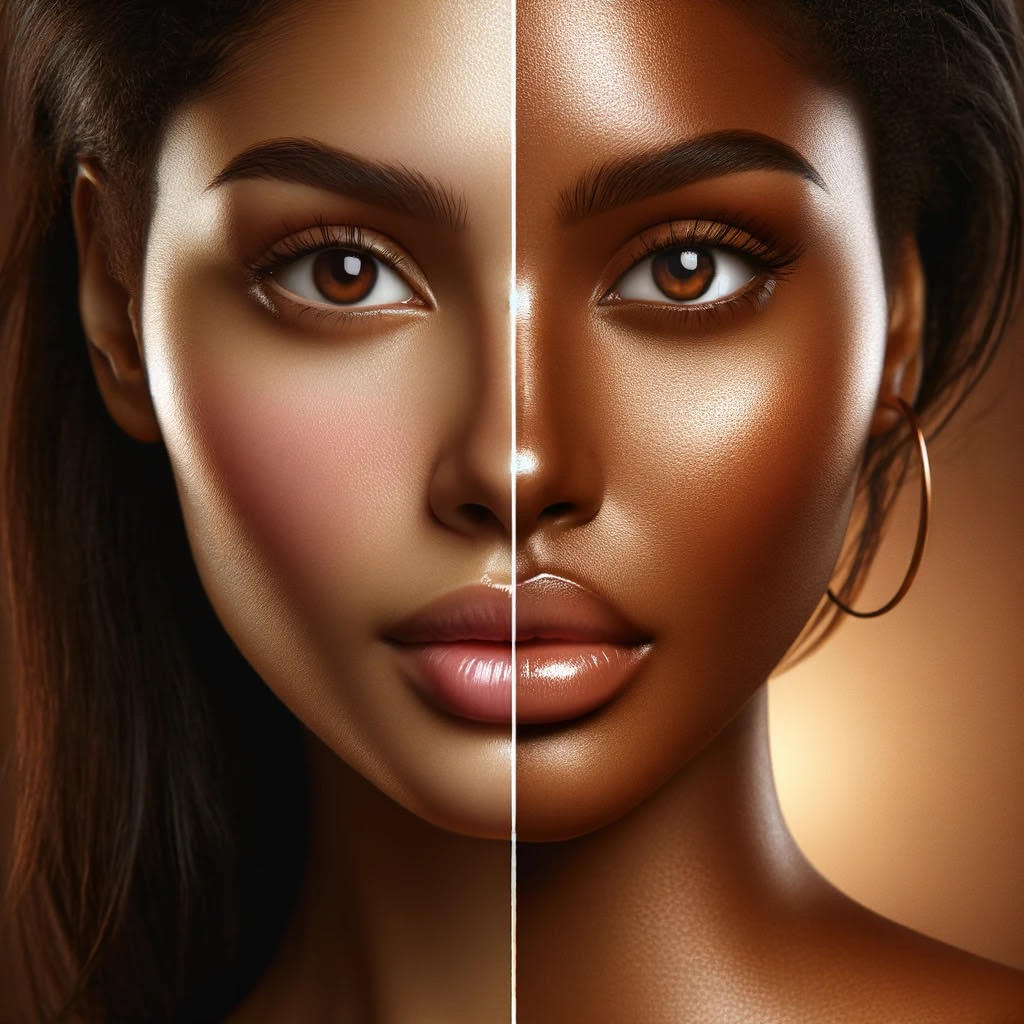

Firming Moisturizer, Advanced Hydrating Facial Replenishing Cream, with Hyaluronic Acid, Resveratrol & Natural Botanicals to Restore Skin's Strength, Radiance, and Resilience, 1.75 Oz

Skin Stem Cell Serum


Smartphone 101 - Pick a smartphone for me - android or iOS - Apple iPhone or Samsung Galaxy or Huawei or Xaomi or Google Pixel
Can AI Really Predict Lottery Results? We Asked an Expert.




Djamgatech

Read Photos and PDFs Aloud for me iOS
Read Photos and PDFs Aloud for me android
Read Photos and PDFs Aloud For me Windows 10/11
Read Photos and PDFs Aloud For Amazon
Get 20% off Google Workspace (Google Meet) Business Plan (AMERICAS): M9HNXHX3WC9H7YE (Email us for more)
Get 20% off Google Google Workspace (Google Meet) Standard Plan with the following codes: 96DRHDRA9J7GTN6(Email us for more)



FREE 10000+ Quiz Trivia and and Brain Teasers for All Topics including Cloud Computing, General Knowledge, History, Television, Music, Art, Science, Movies, Films, US History, Soccer Football, World Cup, Data Science, Machine Learning, Geography, etc....
List of Freely available programming books - What is the single most influential book every Programmers should read
- Bjarne Stroustrup - The C++ Programming Language
- Brian W. Kernighan, Rob Pike - The Practice of Programming
- Donald Knuth - The Art of Computer Programming
- Ellen Ullman - Close to the Machine
- Ellis Horowitz - Fundamentals of Computer Algorithms
- Eric Raymond - The Art of Unix Programming
- Gerald M. Weinberg - The Psychology of Computer Programming
- James Gosling - The Java Programming Language
- Joel Spolsky - The Best Software Writing I
- Keith Curtis - After the Software Wars
- Richard M. Stallman - Free Software, Free Society
- Richard P. Gabriel - Patterns of Software
- Richard P. Gabriel - Innovation Happens Elsewhere
- Code Complete (2nd edition) by Steve McConnell
- The Pragmatic Programmer
- Structure and Interpretation of Computer Programs
- The C Programming Language by Kernighan and Ritchie
- Introduction to Algorithms by Cormen, Leiserson, Rivest & Stein
- Design Patterns by the Gang of Four
- Refactoring: Improving the Design of Existing Code
- The Mythical Man Month
- The Art of Computer Programming by Donald Knuth
- Compilers: Principles, Techniques and Tools by Alfred V. Aho, Ravi Sethi and Jeffrey D. Ullman
- Gödel, Escher, Bach by Douglas Hofstadter
- Clean Code: A Handbook of Agile Software Craftsmanship by Robert C. Martin
- Effective C++
- More Effective C++
- CODE by Charles Petzold
- Programming Pearls by Jon Bentley
- Working Effectively with Legacy Code by Michael C. Feathers
- Peopleware by Demarco and Lister
- Coders at Work by Peter Seibel
- Surely You're Joking, Mr. Feynman!
- Effective Java 2nd edition
- Patterns of Enterprise Application Architecture by Martin Fowler
- The Little Schemer
- The Seasoned Schemer
- Why's (Poignant) Guide to Ruby
- The Inmates Are Running The Asylum: Why High Tech Products Drive Us Crazy and How to Restore the Sanity
- The Art of Unix Programming
- Test-Driven Development: By Example by Kent Beck
- Practices of an Agile Developer
- Don't Make Me Think
- Agile Software Development, Principles, Patterns, and Practices by Robert C. Martin
- Domain Driven Designs by Eric Evans
- The Design of Everyday Things by Donald Norman
- Modern C++ Design by Andrei Alexandrescu
- Best Software Writing I by Joel Spolsky
- The Practice of Programming by Kernighan and Pike
- Pragmatic Thinking and Learning: Refactor Your Wetware by Andy Hunt
- Software Estimation: Demystifying the Black Art by Steve McConnel
- The Passionate Programmer (My Job Went To India) by Chad Fowler
- Hackers: Heroes of the Computer Revolution
- Algorithms + Data Structures = Programs
- Writing Solid Code
- JavaScript - The Good Parts
- Getting Real by 37 Signals
- Foundations of Programming by Karl Seguin
- Computer Graphics: Principles and Practice in C (2nd Edition)
- Thinking in Java by Bruce Eckel
- The Elements of Computing Systems
- Refactoring to Patterns by Joshua Kerievsky
- Modern Operating Systems by Andrew S. Tanenbaum
- The Annotated Turing
- Things That Make Us Smart by Donald Norman
- The Timeless Way of Building by Christopher Alexander
- The Deadline: A Novel About Project Management by Tom DeMarco
- The C++ Programming Language (3rd edition) by Stroustrup
- Patterns of Enterprise Application Architecture
- Computer Systems - A Programmer's Perspective
- Agile Principles, Patterns, and Practices in C# by Robert C. Martin
- Growing Object-Oriented Software, Guided by Tests
- Framework Design Guidelines by Brad Abrams
- Object Thinking by Dr. David West
- Advanced Programming in the UNIX Environment by W. Richard Stevens
- Hackers and Painters: Big Ideas from the Computer Age
- The Soul of a New Machine by Tracy Kidder
- CLR via C# by Jeffrey Richter
- The Timeless Way of Building by Christopher Alexander
- Design Patterns in C# by Steve Metsker
- Alice in Wonderland by Lewis Carol
- Zen and the Art of Motorcycle Maintenance by Robert M. Pirsig
- About Face - The Essentials of Interaction Design
- Here Comes Everybody: The Power of Organizing Without Organizations by Clay Shirky
- The Tao of Programming
- Computational Beauty of Nature
- Writing Solid Code by Steve Maguire
- Philip and Alex's Guide to Web Publishing
- Object-Oriented Analysis and Design with Applications by Grady Booch
- Effective Java by Joshua Bloch
- Computability by N. J. Cutland
- Masterminds of Programming
- The Tao Te Ching
- The Productive Programmer
- The Art of Deception by Kevin Mitnick
- The Career Programmer: Guerilla Tactics for an Imperfect World by Christopher Duncan
- Paradigms of Artificial Intelligence Programming: Case studies in Common Lisp
- Masters of Doom
- Pragmatic Unit Testing in C# with NUnit by Andy Hunt and Dave Thomas with Matt Hargett
- How To Solve It by George Polya
- The Alchemist by Paulo Coelho
- Smalltalk-80: The Language and its Implementation
- Writing Secure Code (2nd Edition) by Michael Howard
- Introduction to Functional Programming by Philip Wadler and Richard Bird
- No Bugs! by David Thielen
- Rework by Jason Freid and DHH
- JUnit in Action
#BlackOwned #BlackEntrepreneurs #BlackBuniness #AWSCertified #AWSCloudPractitioner #AWSCertification #AWSCLFC02 #CloudComputing #AWSStudyGuide #AWSTraining #AWSCareer #AWSExamPrep #AWSCommunity #AWSEducation #AWSBasics #AWSCertified #AWSMachineLearning #AWSCertification #AWSSpecialty #MachineLearning #AWSStudyGuide #CloudComputing #DataScience #AWSCertified #AWSSolutionsArchitect #AWSArchitectAssociate #AWSCertification #AWSStudyGuide #CloudComputing #AWSArchitecture #AWSTraining #AWSCareer #AWSExamPrep #AWSCommunity #AWSEducation #AzureFundamentals #AZ900 #MicrosoftAzure #ITCertification #CertificationPrep #StudyMaterials #TechLearning #MicrosoftCertified #AzureCertification #TechBooks
Top 1000 Canada Quiz and trivia: CANADA CITIZENSHIP TEST- HISTORY - GEOGRAPHY - GOVERNMENT- CULTURE - PEOPLE - LANGUAGES - TRAVEL - WILDLIFE - HOCKEY - TOURISM - SCENERIES - ARTS - DATA VISUALIZATION

Top 1000 Africa Quiz and trivia: HISTORY - GEOGRAPHY - WILDLIFE - CULTURE - PEOPLE - LANGUAGES - TRAVEL - TOURISM - SCENERIES - ARTS - DATA VISUALIZATION
Exploring the Pros and Cons of Visiting All Provinces and Territories in Canada.


Exploring the Advantages and Disadvantages of Visiting All 50 States in the USA

Health Health, a science-based community to discuss health news and the coronavirus (COVID-19) pandemic
- What’s Keeping the US From Allowing Better Sunscreens?by /u/mcgillhufflepuff on May 9, 2024 at 1:59 am
submitted by /u/mcgillhufflepuff [link] [comments]
- How the parasite that RFK Jr. said he contracted infects the brainby /u/nbcnews on May 9, 2024 at 1:24 am
submitted by /u/nbcnews [link] [comments]
- Bird flu news trackerby /u/Annual_Judge_7272 on May 9, 2024 at 1:23 am
submitted by /u/Annual_Judge_7272 [link] [comments]
- Processed meats most strongly linked to a higher risk of death among ultra-processed foodsby /u/chrisdh79 on May 9, 2024 at 12:40 am
submitted by /u/chrisdh79 [link] [comments]
- Over 1 million Texas children dropped from Medicaid since April 2023by /u/audiomuse1 on May 9, 2024 at 12:34 am
submitted by /u/audiomuse1 [link] [comments]
Today I Learned (TIL) You learn something new every day; what did you learn today? Submit interesting and specific facts about something that you just found out here.
- TIL a study found that 25% of Labrador retrievers and 66% of flat-coated retrievers possess a genetic mutation that can lead to weight gain; dogs with the gene face the "double whammy" of constant hunger while burning fewer calories. The Labrador has the highest levels of obesity among dog breeds.by /u/tyrion2024 on May 9, 2024 at 4:02 am
submitted by /u/tyrion2024 [link] [comments]
- TIL Matthew McConaughey turned down a $14.5 million film offer & took a hiatus in order to pivot his acting career outside of rom-coms. The decision came after he searched himself online & realized he was largely known as a "rom-com shirtless guy" which prevented him from being hired in other genresby /u/tyrion2024 on May 9, 2024 at 3:57 am
submitted by /u/tyrion2024 [link] [comments]
- TIL Jayne Mansfield's bosom(40D-21-36)was behind bra development in the 50's & she helped popularize bikinis. She slept w/both John&Bobby Kennedy,was dubbed Hollywood's smartest dumb blonde with an IQ over 160 & was the 1st major Am. actress to perform in a nude scene post silent era.She died at 34.by /u/CleaTorris on May 9, 2024 at 3:50 am
submitted by /u/CleaTorris [link] [comments]
- TIL a statement in the legislation that annexed the Republic of Texas into the U.S., allows it to split into 5 states, which so far has not happenedby /u/relaxok on May 9, 2024 at 3:50 am
submitted by /u/relaxok [link] [comments]
- TIL the panic of 1873 triggered an economic depression until 1877 in the USA and was known as the Great Depression until the events of 1929 set a new standard. The depression also occurred in Europe and started 2 decades of stagflation in Britain.by /u/mankls3 on May 9, 2024 at 3:31 am
submitted by /u/mankls3 [link] [comments]
Reddit Science This community is a place to share and discuss new scientific research. Read about the latest advances in astronomy, biology, medicine, physics, social science, and more. Find and submit new publications and popular science coverage of current research.
- Meta-analysis : childhood maltreatment accounts for 21% to 41% of common mental health conditions in Australiaby /u/KnoxCastle on May 9, 2024 at 3:54 am
submitted by /u/KnoxCastle [link] [comments]
- Study of different types of ultra-processed foods shows highest mortality risk is associated with consumption of Meat/poultry/seafood based ready-to-eat products (processed meats)by /u/BoredMamajamma on May 9, 2024 at 12:30 am
submitted by /u/BoredMamajamma [link] [comments]
- A new theory suggests that heavy snowfall could be a factor in triggering swarms of earthquakes — evidence that what’s happening on and above the Earth’s surface may play a role in events underground.by /u/nbcnews on May 9, 2024 at 12:20 am
submitted by /u/nbcnews [link] [comments]
- A new commercial boundary dataset for metropolitan areas in the USA and Canada built from open data | Defining boundaries of commercial areas by creating a consistent definition combining various commercial area types including downtowns, retail centres, financial districts, and employment centresby /u/Hrmbee on May 8, 2024 at 11:58 pm
submitted by /u/Hrmbee [link] [comments]
- Changes in running economy and attainable maximal oxygen consumption in response to prolonged running: The impact of training statusby /u/Hrmbee on May 8, 2024 at 9:37 pm
submitted by /u/Hrmbee [link] [comments]
Reddit Sports Sports News and Highlights from the NFL, NBA, NHL, MLB, MLS, and leagues around the world.
- Jalen Brunson returns from foot injury, sparks Knicks past Pacers for 2-0 lead in East semifinalsby /u/Oldtimer_2 on May 9, 2024 at 3:16 am
submitted by /u/Oldtimer_2 [link] [comments]
- Tkachuk, Pastrnak drop gloves in fiery Game 2by /u/Oldtimer_2 on May 9, 2024 at 2:35 am
submitted by /u/Oldtimer_2 [link] [comments]
- Fight Club: Boston @ Floridaby /u/Hockey-Daily on May 9, 2024 at 2:13 am
submitted by /u/Hockey-Daily [link] [comments]
- Paul Skenes debut: Pirates' top prospect, No. 1 pick in 2023 MLB draft, promoted to majorsby /u/Oldtimer_2 on May 9, 2024 at 1:56 am
submitted by /u/Oldtimer_2 [link] [comments]
- Gable Steveson drawing NFL interest, training in MMA after WWE releaseby /u/Oldtimer_2 on May 9, 2024 at 1:43 am
submitted by /u/Oldtimer_2 [link] [comments]