Facebook, Instagram, Apple and Google Apps Search Ads Secrets – Make Money From Your Products
A bit about search ads first.
There are billions of Apps and products out there and it is becoming harder and harder to stand out. You don’t want to spend countless of hours developing your dream app or products just to have close to zero sale per month.
This blog is an aggregate of the best secrets of Apple and Google Apps search ads for successful App developers.
This blog also includes tips and tricks for successful Google Search Ads, Facebook Search Ads and Instagram Search Ads for any product.
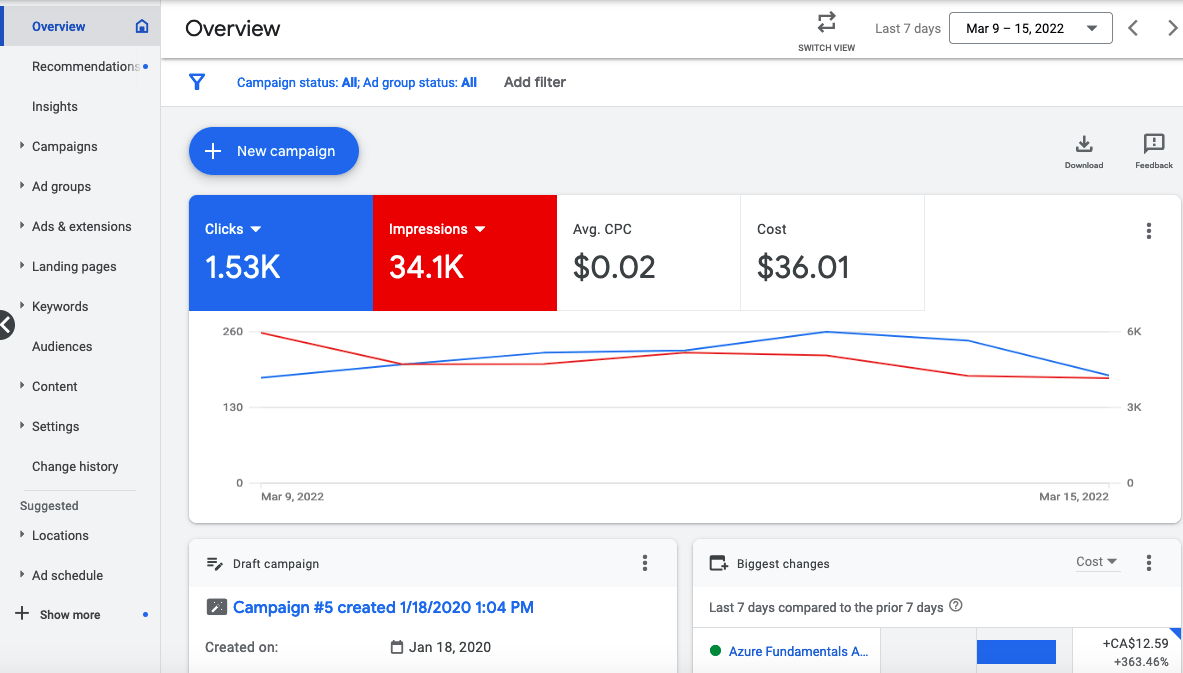
Apple Search Ads uses a Cost-Per-Tap (CPT) model, meaning that advertisers need to pay Apple every time someone “taps” on a Search Ad listing after performing a keyword search. While on other traditional mobile ad networks such as Google UAC or Facebook Ads, the advertiser usually pays per app install (Cost-Per Install model, or CPI) after a user saw or interacted with an ad.
Apple offers 2 types of search ads – basic and advanced. Which one should you choose?
I guess it depends upon the type of app and installs you want. Basic is CPI based vs Advanced is CPT based. This might make you think that Basic is better because you only pay when you get an install BUT that’s not the best way of looking at it. Basic has a much higher cost per install CPI than the cost per tap CPT you have from the advanced one. So unless your user either buys an IAP or paid app which makes more money than the CPI you paid to acquire that user, you might lose money.
Also, advanced lets your focus on specific keywords whereas Basic is mostly Apple’s own hidden algorithm showing your ads. Focusing on specific keywords is important because you don’t just want user to download the app, you want them to open and use it too. Since we don’t know how Apple will show your ad for basic, you have no clue whether your app is getting perfectly targeted.
So you may or may not be paying more money for the install using Basic vs Advanced as advanced can get you a lot more impressions of the ad (and more downloads if your metadata is on point).
Apple Search Ads is an intent-based channel
This is important in the post-IDFA era because Apple looks at the context of a particular search to target ads based on keywords. By its very nature, ASA does not rely on IDs to target individuals. Attribution models already have an advantage over other channels that rely on IDs for individual behavioural targeting.

With Apple Search Ads, you can tap into user intent signals that match your offerings and attract higher-quality users. That’s why Apple claims such impressive performance numbers, such as 50 percent average conversion rates and 65 percent download rates.
A bit about search ads first.
I personally would never run Basic for a free app (even if it has IAP) as the CPI is very high and unless I have a high conversion rate for the IAP, I would be losing money. For a paid app, it might work well though.
I have mostly tested Advanced. I did run Basic but the CPI was way too high so I stopped it. For advanced, I would advice:
Start small but not too small. Like don’t set a daily budget of under $5 or over $20. Start with lets say $10 and keep it like that for 1-2 weeks and see how it works. Adjust the keywords in the search ad, adjust your screenshots, icon and other metadata to make it look more attractive if you notice people are clicking on the ad but not tapping the download button etc.
Before running search ads, make sure you have your freemium app monetization and DAU (active users) absolutely down. Like if you only have banner ads in the app and no way for user to buy the in app purchase, don’t bother with search ads yet if your cost per acquisition is too high. For example if your CPA is $2 in an extremely competitive app category, and you spend $2 to acquire a new user or you waste $2 on a user who taps on the ad but doesn’t hit download. You may never make your money back from your ads in the app. Banner ads aren’t even worth it imo unless you have thousands of active users. They hardly make a few pennies per 1000 impressions. Interstitial ads are better and make more money and Rewarded ads are even better. But still, you need to look at numbers to see whether you are at least breaking even.
Apple and Google gives you $100 credit for free to try it out, so use that to test it out and look at numbers, make changes etc.
Set the search ad settings correctly. There is an option for targeting audience – whom would you like to see your ad and options are “People who already have your app“, “People who don’t have your app” etc. Of course you don’t want to select the first option because they already have your app. You want to acquire new users. You can also choose the age of the audience. So for example, if you have an app which you is meant for people who own houses, you don’t want to target people under 25 or even 30 years old because most of them won’t own houses.
Advertise with us - Post Your Good Content Here
We are ranked in the Top 20 on Google
AI Dashboard is available on the Web, Apple, Google, and Microsoft, PRO version
If you are getting taps (you spend money per tap) but not conversions (downloads), that means people are finding something on your app store page which they don’t like. This could be bad or missing reviews, bad screenshots, bad metadata etc. So get honest opinion from non-friends to see what they think of your app store page.
Search ads for paid apps OR apps with in app purchases is different than search ads for free apps. You should make sure your paid app OR IAP is priced right so that you can at least break even and preferably make a profit for every cost per acquiring the customer. For example – if your cost per acquisition is $5 (this can be pretty high for paid apps as a lot of people will often click and ad but then decide not to download the app maybe because of the pricing or some other metadata) and you have priced your app at $2.99, you are just burning money. Be intelligent.

Using keywords of other app names in same category might work for you. But I won’t suggest setting keywords for trademarked apps OR of popular apps which have nothing to do with your app category. This can get you called out for IP/Copyright/Trademark violation. This also won’t convert well because when people are search for a specific app (let’s say Facebook) and your calculator app shows up in the ad, no body is going to click on it as the user obviously is only looking to download Facebook.
I personally don’t like running ads in developing countries as – Admob pays very little in those countries, people don’t buy IAP much, people don’t buy paid apps much.
Don’t bid for keywords which have high competition OR very high CPT. Companies with deep pockets will kill you.
I am not a fan of the option “Search Match” (Automatically match my ad to relevant searches) which Apple gives you. I always disable that option.
Search ads are good if you can afford it and if you have an app which fits the profile. It may or may not work for every app. Always look at numbers.

I’m guessing search ads are the ads you see in the App Store when you are searching for specific apps?
Yes, search ads are for the app store search. So if someone searches for a keyword which you have targeted your ad towards and you win the bidding battle for the ad space for the same keyword against someone else, your app’s ad gets shown.
Is there an average price per click that you pay?
Yes, Apple search ads are CPT based. Cost per tap. So if someone taps your ad, you pay what you won the bid for against some other person’s ads bid. For example – If you bid for a keyword “car” and you have set the maximum CPT at $0.20 and Bob who is also an app developer and is running ads and has set his “car” keyword at a CPT of $0.10, you will pay $0.11 because that’s what it took to win. Of course there are more factors – level of competition for that keyword, higher levels of CPT being bid by others etc which can drive the average CPT higher for you. That’s why you get to set the maximum you are willing to pay per keyword.
How many people searching for apps, see my game as an ad, and click on it per day for $10?
There is no general range of how many people might. You can use the maximum CPT to control the amount you spend per tap and you can also set an optional CPA (cost per acquisition) to ensure you don’t run at a loss. However, the first 2 weeks should usually be experimental and test it out with low budgets.
A very important thing to remember – you pay per tap – NOT per download. So if someone taps your ad and notices your screenshots look like crap and doesn’t download your app, you just lost money. This is why you need the metadata to be perfect and use the CPA field after 2 weeks to make sure you don’t run at loss.
Along with that, do you only pay for clicks? Do you pay more if they download your app after the click?
Yes you pay per click (tap to be technically correct). You don’t pay more if they download.
I’m assuming you are constantly tracking How many active users you have and how much revenue you are generally getting to be able to ball-park any change in these numbers based off your ads being displayed.
Yes, I always monitor my ad spend and compare it to how many downloads I got (if this is for a paid app) or how many people bought the IAP and how much revenue I am making per day via Admob. I do this every morning. Unfortunately, Apple doesn’t seem to let me track how many of those ad conversions converted into buying the in app purchase. So this throws me off a bit.
So, your CPA. Is this your cost for running the ads per download?
Regarding CPA. They let you set an optional CPA goal when running your ad campaign. Determining it is a bit of work. Like when I am starting out, I don’t have any numbers to look at, so I leave the CPA blank or set it as the same price as my IAP or paid app price. Basically I don’t want the cost per acquisition to exceed the IAP or paid app price because that would mean I am burning money and running at a loss instead of profit. However after running the campaign for 1-2 weeks and looking at the numbers for each day, I can guess a better CPA and if I think I definitely don’t want to exceed a certain number because it would make me lose money instead of break even/profit, I will set it. You don’t want to set the CPA too low – at least initially because then you won’t even get any impressions of your ads. For example: Looking at one of my ad campaigns right now, I have default CPT of $0.10 (cost per tap as you pay every time someone taps your ad – doesn’t matter whether they download or not). They let you set CPT on a per keyword basis too which overrides the default CPT. NOTE that CPT is the maximum amount you are willing to pay for the tap. This means that if you are at a battle with someone else who also wants the same ad space, you can win the battle if your CPT is even a cent higher. You only pay whatever amount it takes to win the battle, not the highest one which you have set your CPT at. So often, your Average CPT will be lesser than what you set it at which is good. So for this campaign, my default CPT is $0.10 and I have a few keywords with custom CPT of $0.20. After looking at my numbers for the past few weeks, I see that for most of my keywords, I have Average CPT of $0.15, $0.16, $0.19 and average CPA of $0.15, $0.33, $0.29. So if I want, after testing it for couple weeks, I can lower the CPA to $0.50 so that I never run it at a loss.
So if I spend 10 dollars in 1 day and 5 people downloaded the app, that would be a $2 CPA? Yes.
And I will repeat my previous statement: I always monitor my ad spend and compare it to how many downloads I got (if this is for a paid app) or how many people bought the IAP and how much revenue I am making per day via Admob. I compare and set the CPA based off of these. I do this every morning. Unfortunately, Apple doesn’t seem to let me track how many of those ad conversions converted into buying the in app purchase. So this throws me off a bit.
Have you been able to verify your numbers and whether or not you are profiting based off these ads? Why not bump your ad spending even higher?
I have made money from certain types of apps and lost money by doing stupid stuff (running ad campaigns for a free with ads app but not having an IAP to remove ads, running ad campaigns for apps with only poverty banner ads and no full screen/interstitial/rewarded video ads which at least make some money, running ad campaigns for apps with generic keywords which are very high competition and gets out-bid by much bigger players with much deeper pockets, running ads where my CPA was higher than the money I was making off of the IAP or Paid app, running ad campaigns with a keyword which was for an app not even in my category which made users tap my ad, lose money and then they won’t download, running campaign with a keyword which was trademarked etc).
Basically, be intelligent, research, start slow and experiment with the $100 credit Apple gives you.
A few people asked me about rewarded ads vs interstitial ads for monetization. This is a bit off topic but I will throw this in.
Rewarded ads have a higher eCPM than regular interstitial ads, meaning you get paid more. Of course how high depends upon the type of app, number of users, placement of ads etc. I use Admob’s rewarded ads to mostly unlock features or number of XXX item usage in the app. There are other companies which offer them too. You can read a few points here for example:

source: reddit
The high eCPM is good. What’s even better about them than regular interstitial is that they just provide a better user experience and less negative reviews. This is because the user is willingly choosing to watch an ad instead of their game getting randomly interrupted. And in return, the user gets some type of in app reward – more coins, unlock some feature etc. So this is a win win for the developer and the user.
How do you determine your CPA for an app with IAPs? (Like does iTunes Connect tell you this information?)
They let you set an optional CPA goal when running your ad campaign. Determining it is a bit of work. Like when I am starting out, I don’t have any numbers to look at, so I leave the CPA blank or set it as the same price as my IAP or paid app price. Basically I don’t want the cost per acquisition to exceed the IAP or paid app price because that would mean I am burning money and running at a loss instead of profit.
However after running the campaign for 1-2 weeks and looking at the numbers for each day, I can guess a better CPA and if I think I definitely don’t want to exceed a certain number because it would make me lose money instead of break even/profit, I will set it.
You don’t want to set the CPA too low – at least initially because then you won’t even get any impressions of your ads.
For example:
Looking at one of my ad campaigns right now, I have default CPT of $0.10 (cost per tap as you pay every time someone taps your ad – doesn’t matter whether they download or not). They let you set CPT on a per keyword basis too which overrides the default CPT. NOTE that CPT is the maximum amount you are willing to pay for the tap. This means that if you are at a battle with someone else who also wants the same ad space, you can win the battle if your CPT is even a cent higher. You only pay whatever amount it takes to win the battle, not the highest one which you have set your CPT at. So often, your Average CPT will be lesser than what you set it at which is good.

So for this campaign, my default CPT is $0.10 and I have a few keywords with custom CPT of $0.20.
After looking at my numbers for the past few weeks, I see that for most of my keywords, I have Average CPT of $0.15, $0.16, $0.19 and average CPA of $0.15, $0.33, $0.29.
So if I want, after testing it for couple weeks, I can lower the CPA to $0.50 so that I never run it at a loss.
So essentially with $2,000 its possible to have 10,000+ people click on your ad? That seems like a solid conversion rate if at least 1/10th of them download the app.
Depending upon the type of app, your CPT can vary. For me most of them have been about 20 cents. So yes, 10000 taps from $2000 is a good estimate. However – these are taps – not downloads. For downloads, you need to make sure your metadata is on point! Also you need to have monetization is place – IAP, paid apps etc to make sure you are actually making money off of these users which you are spending money to acquire.
How long did it take for you to start seeing impressions? We have pretty competitive keywords so i’m using extremely high CPT. $10+ and i’m still not seeing any impressions. It’s been 24 hours.

If you haven’t setup scheduled ads, it should be quick. I had mine within an hour if I remember right. I would suggest trying for less competitive keywords though.
What’s your experience and tips for driving iOS game app downloads via paid ads platforms like Facebook Ads, Apple Search Ads, Youtube ads, etc…?
No experience but as a iPhone user i often see myself downloading apps while browsing instagram. So I’d assume you’ll be spot on with instagram/snapchat/tiktok or maybe even youtube shorts.
App Store search ads keyword match types
Search Ads involve three different types of keyword matches.

They are ways for you to tell Apple whether you want to bid on keywords exactly as you enter them or more broadly. This is influenced by campaign goals and will ultimately determine campaign results. So you must first understand the different types of keyword matches Apple offers.
Broad Match
Broad match is the default keyword match type. By selecting broad match, you are telling Apple that you want to bid on the keywords you select and other keywords that are broadly related to them.
Broad match includes misspellings, plurals, closely related words, synonyms, related searches, related phrases, and translations.
For example, when you type “Friends,” Apple also considers variations of “Friend,” “Amigo,” “Freind,” and more.
Exact match
Exact match helps you narrow your ad bid spread. By choosing exact match, you’re telling Apple that you want to bid exactly as entered for the selected keyword.
Common misspellings and plural forms will also be taken into account.
For example, when you type “friends,” Apple will consider “friends” and “friends.
Search matching
Search matches are best suited for keyword discovery. By selecting Search Match, you allow Apple to use its metadata to automatically match your app to relevant keywords and search terms.
For Search Match to work, your app’s metadata needs to be up to date and optimized. This means that App Store optimizations have been completed and recently updated. In this way, Apple can easily pull information about your app and generate the best and most relevant keywords.
App Store Search campaign types
When creating an account to start keyword bidding, ASA best practice is to split your keywords into four different campaign types: Generic, Branded and Competitor, and Discovery.
Generic Campaigns
Typically set to broad match, generic campaigns use keywords that are relevant to your app. For example, if you have a fitness app, you should include keywords such as “fitness” or “exercise” in this campaign. The purpose of the general campaign is to attract high intent app store visitors.
Branded campaigns
You will want to use a brand campaign to reach a more specific audience searching for your brand in the App Store, drive reinstalls and brand protection. Your keywords in this campaign will be keywords related to your brand name or a variation thereof. By bidding generously on your branded keywords, you ensure that your competitors don’t take this valuable space away from you.
Competitor activity
Set up exact matches, competitor campaigns to target App Store users who are searching for competitors. Keywords for these types of campaigns include your direct competitor’s name or a variation of their name.
Discovery campaigns
You need to set up a discovery campaign to discover new keywords or find alternative keywords that you are not using in other campaigns.
To maximize the effectiveness of a Discovery campaign, new keywords from Discovery should be added as exact match keywords to the other three campaign types, and all keywords from branded, generic, and competitor campaigns should be added as negative keywords in Discovery.
Best practices for using Apple Search Ads
Getting started with Apple Search Ads isn’t a problem. But you need to make sure you adopt some best practices that will ultimately help you make the most of your investment. Here are some App Store advertising best practices you should follow when using Apple Search Ads.
Review app metadata before launching a campaign
Before launching a new campaign, you’ll want to visit App Store Connect and take a closer look at app metadata. The appearance of your ads will be based on your app’s metadata, and you won’t be able to change it later. Keep in mind that the same ad is unlikely to be shown to every user. Some people may get a simple description of the app, while others will see screenshots and preview videos.
USP-based targeted keywords
This is very important for marketers using ASA Advanced. You need to do some research and identify keywords that will increase installs. For example, if you have a fitness tracking app, use keywords like “fitness tracker” or “diet plan” as keywords. You must understand the search patterns of your audience because it can greatly improve your conversion rate.
You can always expect higher competition with general keywords, but if you can find more specific keywords, they will not only be cheaper to bid on, but will also have a higher conversion rate.
Tip: Use the keyword research in your ASO strategy to understand your options and sync your goals!
Use the 80/20 budget allocation method for App Store promotions
When comparing keywords, you must split your keywords between broad match and exact match. 80% of your spend should go to exact match and the remaining 20% should go to broad match. Both will be used primarily for discovery campaigns to identify keywords that perform better than others.
Exact match keywords will allow you to attract and convert interested users. They will be easier to convert and more likely to generate more revenue. They may cost more, but they will also pay off. Ideally, you should allocate an 80/20 budget to get the maximum return. Once you start generating interest, you can also reduce your budget allocation.
How to leverage your app business within ASO and ASA on iOS app store?
The great thing about Apple Search Ads is that you can use the search match feature to identify new keywords. When Search Match is enabled, your ads are automatically matched to new search terms based on metadata in your App Store listings, information about similar apps of the same type, and other available search data.
The ability to check keyword relevancy is an invaluable part of Apple Search Ads. In just a few hours, you can run a small test campaign to collect data and get a complete picture of which keywords to optimize for in your ASO efforts. By analyzing Tap Through Rate (similar to Click Through Rate on the web), in-store conversion rates, and actual downloads, you can begin to develop a more effective ASO strategy. In addition, you can use attribution tools to explore the LTV of each keyword for campaign analysis.
ASA can help you narrow down your ASO strategy, but it’s not a gold mine; ASO is a long-term strategy, and your goal should be to keep increasing natural downloads. A key learning point is to look at ASA data from a longer-term perspective so you can see the true trends and performance of each keyword.
Apple Search Ads only work if you know how to properly target your keywords. To ensure maximum app visibility and download rates, you need to target specific and general keywords and carefully determine how much you are willing to bid for each keyword. An easy way to find keywords is to use a tool that automatically compiles a list of targeted keywords. You should increase your bids until you reach your cost-per-acquisition target and start winning downloads from popular keywords related to your niche.
Unfortunately, simply outbidding your competitors for high-volume keywords isn’t enough to win the number one spot, because Apple also considers the relevance of your app to the keyword. To ensure you always rank #1, you need to combine winning bids with ASO optimization. Factors that affect your ASO include app name, URL, description, reviews, and ratings.
Source: How to Leverage ASA to Boost Your App Visibility?
So, how should you optimize your Search Ads campaigns for profitability?
1. Cost-Per-Acquisition (CPA) Goal:
The first thing you need to determine is how much you can afford to spend for every Search Ads install, so how much your target CPI (Cost-Per-Install) or Cost-Per-Acquisition (CPA) Goal — as Apple names it — should be. Note the difference in naming here: unlike other networks, Apple uses the word “Acquisition” and not “Install” because they actually only measure when users hit download and not when they have actually fully installed the game (we will hear more on that important difference later in this article).
To do this, if you are already running campaigns on other networks, you know your customer LTV (lifetime value), or how much every user will spend on average in your game.
Let’s say your game net LTV is $6 for iOS users in the United States.
On Apple Search Ads, you can either set your bids based on a Max CPT (Cost-Per-Tap) you are willing to pay or choose a CPA Goal, which means Apple will try to display your ads automatically and maximize conversions. But we don’t recommend that option because, while it will make sure you don’t go above your target CPA, it will limit your impressions quite a lot so you will miss out on several opportunities to convert.
So, for Max CPT, we usually apply a 30% ratio of the LTV of the game we’re promoting, because we normally observe an average 30% conversion rate (from taps to installs) on Search Ads.
In that case, we would be using:
Max CPT Bid = $6 x 30% = $2
Source: Medium
Measuring your ROAS:
Now comes the most important part: What’s the revenue generated from your Search Ads campaigns?
Apple doesn’t track (or share) any detailed activity coming from the Search Ads installs they have provided you. So you will have to use your MMP for that.
Depending on the LTV curve of your game, you’d be looking at your Day 7, 15, 30 etc. ROAS (Return on Ad Spend) on a campaign, ad group or keyword level.
Cohort Reports for Search Ads Campaigns in Adjust
Let’s say you use Day-7 as a goal, you will then be doing this calculation:
Day-7 ROAS = Day-7 MMP Revenue / Search Ads Spend
And then compare that your Day-7 ROAS goal. If it’s above that, that’s a good sign and you should keep your campaigns/ad-groups active but make sure you monitor the retention of these users in the long run to validate their good performance.
If it’s below your goal, let’s say by more than 25%, then you should consider pausing or reducing the spend on these ad groups or campaigns.
That’s the formal way of assigning and reporting revenue coming from Search Ads.
But you have to take into consideration the installs that are not seen by your MMP and which may have also generated revenue.
ROAS = ((Revenue) * (1 + LAT Rate x 50%)) / Search Ads Spend
Bid Optimization:
Once you have launched your campaigns, give it a few days and then look at the performance of the ad groups you have created.
The first thing you need to check is if the keywords you have selected convert to installs. If there are ad groups with a Conversion Rate below 25%-20% it means that the keywords you have chosen are either too broad or not relevant. You should then consider pausing or reducing the bid on these ad groups.
On the contrary, for ad groups and keywords that have a high Conversion Rate, for example anything above 30%, you should increase your bid for as long as it’s aligned with your projected ROAS. In order to know how much is necessary, in the Search Ads interface, Apple suggests a bid range to have an indication of how much you should spend to match or beat your competitors. You should adjust your bids for every keyword that are are below the suggested bid ranges (as long as it stays within your target CPA goals).
Many factors affect how your Apple Search Ads Basic app promotions perform, including relevancy, your maximum cost-per-install (max CPI) amount compared to your competitors, and user response to your ad. The following best practices can help improve your app promotion results.
- Review your metadata in App Store Connect to ensure it’s the best representation of your app. Your app title, descriptions, and keywords are all considerations Apple Search Ads uses to assess your app’s relevance for specific search queries, so you should take great care in crafting them. Apple Search Ads Basic also uses the app name, subtitle, description, preview videos, and screenshots approved for your App Store product page to create your ad. Take the time to review your app metadata in App Store Connect before you start using Apple Search Ads Basic.
Review App Store metadata best practices
Note that if you change your App Store metadata, it can take up to 24 hours to be reflected in the ad preview within your account, and up to two hours to be reflected in your ad on the App Store. - Take a look at your ad creative. It can play a key role in your app promotion performance. Because Apple Search Ads uses the app name, subtitle, description, preview videos, and up to the first three screenshots approved for your App Store product page to create your ad, you may want to consider adjusting these assets if your ad isn’t performing well.
- Consider your product page, too, as it can also help drive installs. With three app previews, 10 screenshots, and new text fields, product pages offer more opportunities to showcase your work.
- If your ad isn’t delivering results, try raising your max CPI to increase the likelihood of your ad being shown. You can use the suggested max CPI in your dashboard as a guide to help determine the right amount.
- Consider running your app promotion in all the countries and regions where your app is available. This will give you more opportunities to reach interested customers. Check your monthly budget to make sure you’re reaching as many customers as possible. You may need to increase your budget, especially if you’re running app promotions in multiple countries and regions.
- Make sure you’re using the right business model. The right business model for your app balances your goals with the expectations of key audiences, and can also affect the performance of your app in App Store search, including with Apple Search Ads. If you’ve tried the above and still aren’t seeing results, it’s a good idea to review App Store best practices. Learn more here…
Google Search Ads Optimization Techniques
Tips for Scaling a performing Google Search Campaign
Don’t dedicate an entire campaign for a top-performing keywords.
How long did you “test[ed] simply raising budget” for? Are we talking about a week, month, multiple months?
Here are some other options for you:
- Review your Impression Share and top of page rate metrics (Impr. (Top) % and Impr. (Abs. Top) %). Are these trending in the right direction? Are you losing out due to budget on high-performing campaigns? How do your ads perform when you’re placing above organic search results vs below (aka “Other”)?
- Look at 30-, 60-, and 90-day windows for things like audiences, demographics, and locations. Are there options here that are high-spending but underperforming, and could be excluded? This would allow, moving forward, al of the budget to be spent on better-performing targeting options.
- Consider testing new ad copy. If you can achieve stronger CTR, this allows you to generate traffic within the existing impression volume.
- My preferred setup is to group keywords by a shared intent. I have B2B SaaS clients, so the majority of my campaigns are all focused on very high-intent searches that contain both context (around my clients’ services/solutions/vertical) and intent (keywords matching to search terms including “software”, “platform”, “solutions”, etc). To scale traffic, I’ve created a separate campaign that bids on keywords that contain just the contextual terms, but not the software-intent, with lower (manual) bids, using negative keywords to appropriately filter traffic. Considering splitting out your campaigns/ad groups by high-intent vs low-intent keywords, with budget given to higher performers.
- Example: Let’s say your client offers a software for enterprise businesses to manage their cybersecurity. A high-intent keyword would be something like “enterprise cybersecurity software”, whereas a low-intent keyword would be just “enterprise cybersecurity”. We still require the user to use “enterprise cybersecurity” in some context, but that short-tail keyword does not require any specific intent like looking for a third-party tool/platform.
The keyword “enterprise cybersecurity software” will likely be significantly more expensive, and likely lower search volume/impressions, but has a clear, higher intent. The shorter-tail keyword will get you a larger number of impressions, but has a higher likelihood of leading to potentially lower-quality searches and clicks. I’d recommend starting out with trying to capture the high-intent searches first, but when you’re looking to scale, that’s where I’d add in the low-intent keywords, but separated into their own campaign, or at least a separate ad group.
On average, you spend a good amount of money on Google Ads, but still not worth the money results. So, spending the money without having the proper knowledge is a waste! And spending money with no results hurts, right? Don’t worry! We will tell you how you can get the value of your money. We will discuss tips and tricks to improve your Goggle Ads conversion rates.
Follow the ways below to improve your Google Ads Conversion Rates:
• Lead With an Attractive Offer or Value
The book cover is the Book’s first impression. And, you might have heard- “don’t judge a book by its cover”. Well, that’s exactly what we all do. We take a look at the book cover if it doesn’t please our eyes, we move on to the next.
Similarly, the headline is the first impression of your content. If it doesn’t please the eyes of your visitor, he/she won’t take an action on it. Hence, use some catchy phrases to create an attractive headline that will lead your content.
• Refine your CTAs
You need to tell your visitors what to do, otherwise, they won’t turn act! Yes, that’s true! It’s you who have to direct your website to take an action by generating a need for it.
Studies show that the most used CTAs by top-notch brands are- “get”, “buy”, and “shop”. Phrases like these, create an urge to take action, and that’s what improves your conversion rate.
• Boost your CTRs
Create content copy that can convince a reader to click right through your product. Write blogs or Ad copies that can convince your visitors to click. And for this, understand your audience. Convince them that they are missing something big and your product can fulfill that crack.
Don’t try to hurry them up to buy your product. Remember, in this step you just have to convince them to walk through your content and not buy your product. Use soft tone phrases like “get a quote”, “get more details”, etc.
• Align your Ad with an Accurate Landing Page
The general mistake we do sometimes is not checking up on our landing page. Whether we aligned our ad to the right landing page or not! Or, is the ad redirecting to the correct landing page or order! If you won’t do this right, you can lose a large audience.
For example, Your ad is about American diamond earrings, but the ad is aligned to a bangles landing page. This is not fulfilling the purpose of your Ad, and you will lose your potential customer here only.
Create a landing page for every segment and align them with the Ad properly.
• Work on your Quality Score
When you create or run a Google Ad, your Ad gets a ranking which is called Quality Score. This score is given based on the performance of your product. How much your Ad is impacting the audience, how it is performing in the market, how effective it is, and what value it’s giving out!
All these factors decide your Ad’s quality score.
According to studies, the more the quality score the lesser the overall CTR cost. This quality score can be improved by three factors- the landing page, the CTR, and Ad relevance.
• Don’t Miss out on your Social Proofs
People trust reviews. They are afraid of being the first one to use or buy anything. They look for the assurance and experience of others to rely on! Hence, putting out your social proofs is very important. Include the brands or firms you have worked with, put their reviews, and that will make you look authentic and preferred. This will attract and convince the visitors to be your potential loyal customers.
• Step-On your Competitors
Sometimes, not getting enough conversions via Google can be a targeting issue. And to sort that, you should focus on the audience’s intent. Like, what they are looking to buy, what is their need, etc. And, a clear way of doing this is branded keyword search.
Branded keyword search is when a person looks for something brand specific.
For example: “dresses on Myntra”, “Sports shoes on Reebok”, etc.
When a person will search the above keywords, he/she will not only get the results for the brands above but the Ads of alternatives too. That’s what stepping on your competitors is! Run your Ads on the brand keyword research of other competitive brands. I know, it’s something that sounds illegal but isn’t!
• Enhance your Landing Page
Optimizing Ads is not just enough! You need to work on everything else. One of the major things is the landing page. By having visitors directed to your landing page, you will have a task to fulfill what a visitor is expecting from you. Your landing page should have all the information needed in an organized manner. Don’t fill it heavily, but keep it on point.
Put product videos or video testimonials of the product or service, they tend to have greater chances to hook your visitors. And, the videos can help you better with conversion rates.
• Run Mobile-Friendly Ads
With the world going mobile, it’s important that you run mobile-friendly Ads. Keep the dimensions of your posters or Ad copies that can fit a mobile screen efficiently. Make it easy to access for the visitors. The only-desktop specific Ads will not look good on the mobile screen, and you might lose a great set of audience as most people access things through their mobiles.
Hence, move with the trend.
• Use Remarketing
We often forget how important remarketing is! Many times, a customer leaves the product in the cart or wishlist and forgets about it! Remarketing can help you catch back such customers. Look for Ads that performed great and are older. Run then again, they will lead your old visitors as well as create new leads as well.
Google Ads can be a whooping asset to convert your visitors into customers. You just need to do things right! If you will implement the above tips in the right manner the Google Ads conversion rate will definitely go up!
If anyone of you bright people has more tips to add, please feel free to add your opinions and suggestions. It’s always great to learn.
Read More: Conversion Rate Optimization Services
Another way to get good quality score on your ads these days is to write really awkward headlines that include the keywords, and then pinning any discounts. Kinda sucks but it’s been working better for me than traditional CTAs.
Quiz1: Jim Has Created A Google Search Ad With A Bid Of $5. Two Other Advertisers In An Auction Have Bids Of $2.50 And $2. How Much Would Jim Pay For The First Spot In The Auction?
Answer1: $2.51
Quiz2: True Or False? Google Audiences Are Updated On Every Impression, So Advertisers Can Reach Only The Most Relevant Consumers On YouTube Answer.
Answer2: True
Quiz3: On which social network should you share content most frequently? Correct Answer
Answer3: Twitter
Quiz4: You Want To Find New, High-Value Customers Using Their Data. Which Audience Solution Should You Use
Answer4: Similar Audiences
Meaning of key terms used in this blog:
Avg CPA: The average amount you’ve been charged for a conversion from your ad. Average cost per action (CPA) is calculated by dividing the total cost of conversions by the total number of conversions.
- For example, if your ad receives 2 conversions, one costing $2.00 and one costing $4.00, your average CPA for those conversions is $3.00.
- Average CPA is based on your actual CPA (the actual amount you’re charged for a conversion from your ad), which might be different than your target CPA (the amount you’ve set as your desired average CPA if using Target CPA bidding).
- Use performance targets to set an average CPA target for all campaign in a campaign group.
Avg CPT: This is the maximum amount you’re willing to pay for a tap on your ad.
Your default max CPT bid applies across all keywords in your ad group unless you specify a max CPT bid at the keyword level.
When calculating the amount of your max CPT bid:
- Decide what amount you can afford to spend on a new customer or action. Let’s say it’s $2.50 (U.S.).
- Estimate the percentage of customers who tap your ad and who you think will download your app or take your desired action. In this case, you estimate 40%.
- Calculate what you can afford to pay up to 40% of $2.50 (U.S.) — or $1.00 (U.S.) — for each tap. Therefore, set your starting default maximum CPT bid to $1.00 (U.S.).
Avg CPM: Average cost-per-thousand-impressions (CPM) is the average amount you pay per one thousand ad impressions on the App Store.
CR: The conversion rate (CR) is the total number of installs received within a period divided by total number of taps within the same period.
Dimensions: A dimension is an element of your Apple Search Ads campaign that can be included in a custom report. For example, campaign ID or CPT bid. Dimensions appear as rows in your custom reports.
Impression Share: The share of impressions your ad(s) received from the total impressions served on the same search terms or keywords, in the same countries and regions. Impression share is displayed as a percentage range, such as 0-10%, 11-20%, and so on. This metric is only available in predefined Impression Share custom reports and on the Recommendations page.
Impressions: The number of times your ad appeared in App Store search results within the reporting time period.
Installs: The total number of conversions from new downloads and redownloads resulting from an ad within the reporting period. Apple Search Ads installs are attributed within a 30-day tap-through window. Note that total installs may not match totals of LAT Off and LAT On installs, as additional downloads may come from customers using iOS 14 or later.
LAT Off Installs: Downloads from users who are using iOS 13 or earlier and have not enabled Limit Ad Tracking (LAT) on their device.
LAT On Installs: Downloads from users who are using iOS 13 or earlier and have enabled Limit Ad Tracking (LAT) on their device.
Match Source: This identifies whether your impression was the result of Search Match or a bidded keyword.
New Downloads: These represent app downloads from new users who have never before downloaded your app.
Rank: How your app ranks in terms of impression share compared to other apps in the same countries and regions. Rank is displayed as numbers from 1 to 5 or >5, with 1 being the highest rank. This metric is only available in predefined Impression Share reports and on the Recommendations page.
Redownloads: Redownloads occur when a user downloads your app, deletes it, and downloads the same app again following a tap on an ad on the App Store, or downloads the same app on an additional device.
Search Popularity: The popularity of a keyword, based on App Store searches. Search popularity is displayed as numbers from 1 to 5, with 5 being the most popular.
Search Term: Search terms are keywords and phrases that people have used to find the particular type of app they’re looking for.
Spend: The sum of the cost of each customer tap on your ad over the period of time set for your reporting.
Taps: The number of times your ad was tapped by users within the reporting time period.
TTR: The tap-through rate (TTR) is the number of times your ad was tapped by customers divided by the total impressions your ad received.
Keywords: Keywords are relevant words or terms someone may use when searching for an app like yours on the App Store. With Apple Search Ads Advanced, you bid on keywords to trigger and include your ad within relevant App Store search results — so when an App Store customer types in a search query that uses one of your keywords, your ad could appear.
Apple Search Ads knows a lot about your app and its genre, and will provide a list of keyword recommendations to save you time when you add keywords to a search results ad group. You can also add keywords of your own, and Apple Search Ads will suggest a further set of keywords related to the ones you’ve provided. To add any of them to your ad group, simply click the plus sign next to them.
I’ve managed +$10M in paid media over the last 8 years. Here are a few “less mainstream” FREE tools/websites/extensions I use. Hope this helps!
1. Adveronix
Adveronix is a handy Google Sheets add-on that allows you to export data from Facebook Ads, Google Ads, or any other channel automatically into a spreadsheet daily. You can then connect this spreadsheet to Google Data Studio and have a free connector for most media channels.
Polymer Search has been one of my latest finds and a beneficial tool for creative analysis (and a few other things). For example, I usually test new creatives on Facebook Ads using dynamic creative testing campaigns.
I can then simply export my Facebook Ads data into a spreadsheet, connect it to Polymer Search, and immediately see which creative elements are working the best and which ones aren’t. The Auto-Explainer tool uses AI to immediately sort “Above Average” and “Below Average” creatives.
There’s also a ton more this tool can do – massive potential for media buyers.
3. BuiltWith
Before taking on any new client, one of my first steps is always to look at their website.
Suppose I don’t see anything like Klaviyo, Google Analytics, the Facebook Pixel, or any other marketing-related tech. In that case, this is usually a sign the client might be in a too early stage for me to help them out.
BuiltWith also helps you look into competitors and see what sorts of software they’re using.
The Ad Creative Bank is one of my top sources to find creative inspiration for new ads. It’s pretty simple: just look into the type of ads you want to create and browse through their well-organized library of great-looking ads.
5. Unicord Ads
Same as above, with the difference that you can sort by different industry/niche.
I find the ad quality slightly lower than Ad Creative Bank, but still a great library of ads to discover new brands and find inspiration for yourself!
6. One Click Extensions Manager
If you’re anything like me, your Google Chrome browser has +10 extensions cluttering your view. In short, One Click Extensions Manager allows you to organize all extensions into one single icon near your search tab, which makes everything feel a little more organized.
VidTao.com YouTube ads searchable by adspend over time. Perfect for modelling and competitive research.
And not forgetting:
Facebook Ad Library : Shouldn’t be overlooked.
Surferseo – it have free tier with a bit of tools
lsigraph.com – when you have no idea of keywords
I’ve audited a dozen Facebook campaigns this month. Here’s the common mistakes I’m seeing people make:
Most of these mistakes were from ad accounts that are in the early testing stage and spending under $100/day. The majority of these mistakes are related to what NOT to do during the testing stage in an ad account. I had a few people get audits that were spending higher amounts ($500/day and above) but their situation was very specific and the solution I provided was also specific so it most likely wouldn’t add much value to share that scenario.
- Multiple interests and/or behaviors in one ad set (aka stacked audiences)
Doing this defeats the purpose of testing because you don’t know which interest is bringing in the results. Many other reasons to not do this during testing including you could have a great interest stacked with a bad one and that could skew the potential results. There are some instances where maybe it would be okay to have 2 stacked interests if the audiences are very small, but what I was seeing people do often is stack over 10 interests and behaviors into a single ad set.
2. Using CBO (campaign budget optimization) too early
CBO is not recommended for testing stage in Facebook ads. I’ve seen a couple of people do fine with CBO for testing but it logically doesn’t make sense because you don’t have much control over the budget allocation. This is why ad set budget is better for testing because when you want to put $20/day into one and set and $20/day into another, you know that the test is even. CBO will most likely not even out that budget. Even with setting ad set budget minimums and all of those constraints, which is sort of redundant. Facebook will recommend doing CBO by giving you messages inside of the ads manager but most of what Facebook says in their ads manager is not based off your current situation. They don’t know that you are in a testing phase and don’t have enough data to do a CBO, they just see that you are trying to spend a certain amount per day and they recommend CBO. Facebook’s ad manager isn’t smart enough to say “I see you are testing headline combinations – you should switch to ad set budget” or “I see you are trying to scale your store – you should use a CBO campaign”. You should use CBO once you’ve properly tested at least 4 audiences with ad set budget optimization.
3. Creating Lookalike audiences with low-quality data as a hail Mary
Yes, lookalike audiences are pretty neat. When you don’t have enough purchases, there are other source data pools that you can create them with. Video views, website traffic, page engagement, etc. The problem is you are pretty much creating a lookalike audience based on people who DON’T buy. Especially if you don’t have anyone buying your product. There is probably something wrong with your targeting as it is and you need to stick to interest targeting and optimizing for purchase conversions. I’ve seen people run a traffic campaign, get a few hundred clicks, and zero sales. This is because you are getting very low-quality traffic from Facebook and creating a lookalike is just going to find more people similar to that low-quality data. If you have a sort of “niche product” and you think that you can’t target them based on interests then you are not thinking outside of the box enough to find interests to test (more on finding the right interests in a later section).
4. Spreading too little per ad set and running multiple ad sets (I’ve seen as little as $3/day budgets)
For the campaigns that I audited, I gave them each a different recommended daily spend per ad set depending on their budget, niche, etc. so I don’t want to say that you should spend X amount per ad set, but $3/day is way too low. If you have a small budget, then you are better off testing less and spending more per ad set. So if you are doing $3/day to over 10 different ad sets to try and test 10 different audiences, you are going to get better data from spreading that same amount across 2-3 different audiences.
5. Interests narrowing and exclusions
I’ve seen some exclusions that make sense like excluding AliBaba and dropshipping whenever they were getting comments on the ads, but I’ve seen this done where the audience they were targeting needed to have interest in fashion AND apparel. Doing this is trying to target better than Facebook which is usually not a good idea to do unless you’ve tested both audiences on their own and if they are different categories of interests (music taste w/ hobby, industry interest w/ behavior targeting, etc.). At a testing stage this will cause CPM to be higher than needed.
6. Trying to target high-income people
This is on par with the previous mistake, but I wanted to make this its own blurb. Just because someone has a lot of money doesn’t mean they are going to shop at your store. You aren’t going to have better luck targeting the top 10% of zip codes based on income for your $20 sunglasses. Higher income people resonate better with name brand products that have credibility behind them so you would probably need to build up credibility, stellar branding, and high-quality products before attempting to target high-income people on Facebook.
7. Targeting interests that are too obvious
Your target demographic has many layers to their personality and social media behavior. When you sell a certain product and you only target the interest that is literally named the same thing that your product is, then you are limiting yourself to interests that your competition is probably targeting as well. Some of the best interests I’ve ran ads towards with Facebook ads are two or three degrees of separation from the product. I’ve sold supplements that were geared towards people who engage in certain activity, so instead of just targeting “supplement” I targeted “activity” interests. I’ve targeted music interests based on certain elements of a product that I’ve ran ads for, and the product wasn’t a music related product at all but people who liked that product typically listened to a certain type of music as well.
8. Focusing on cheap link clicks instead of purchases
The amount that you pay for a click does not matter if you are getting little to no sales. You want to pay more for expensive clicks from people that Facebook deems as likely to make a purchase or whatever action you are wanting them to do. I’ve audited a few campaigns where they ran two ad sets and the owner of the ad account concluded that “Ad Set 1” was better than “Ad Set 2” because it got clicks for half the cost. But neither of them got a sale, so neither is better than the other. Or I’ve audited campaigns where the store owner says “this ad did well, it got over 1,000 clicks” but it got zero sales. Typically this was done with an improper campaign setup anyway so none of those clicks were going to convert either way.
9. Not testing ads/audiences long enough
One campaign that I audited turned off an ad after just a few hours of letting it run because Facebook was spending the money too fast. I recommend letting a test run for at least 5 days. If the ad is setup properly then you will have some good days, some bad days, and some okay days. I’ve seen many times where the best day ever is right after a very bad day. Know that a bad day is still data for Facebook because it is learning what NOT to do.
10. Hanging on to an audience that stopped working
Audiences, ads, and campaigns can eventually stop working after a certain amount of time, regardless of how well they worked at one time. There are many reasons for this to happen which would be a whole post on its own, but if you’re struggling to get an audience to work then just move on and try again in the future. I audited a campaign that was running ads to a specific lookalike audience that was setup very odd and it wasn’t producing them very good results recently anyway, so I obviously recommended that they turn it off and try setting it up a different way that would be more likely to work. The user did not take the advice because that was their best performing audience many months ago. This is why you want to be diverse with your targeting so that when an audience stops working, you don’t cling onto it like overly attached girlfriend meme.
11. Setting up a funnel that is filled with low quality data
Running traffic campaigns is just going to get you a ton of traffic that is most likely not going to turn into a purchase. You are more likely to get a purchase from 100 high quality clicks than you would 1,000 low-quality clicks. Traffic campaigns give you the absolute bottom of the barrel traffic that Facebook has to offer. What I see people do is setup a funnel with traffic campaigns at the top, and retargeting at the bottom with a campaign optimized for conversions. This makes sense in theory, but in practice you are just continuing to retarget the low-quality traffic. And it just costs too much money to spend going after those low-quality clicks over and over again when you could just go straight for the purchase conversions campaign traffic. Those are the ones that are more likely to purchase without needing to see the ads 5 times. There are a lot of impulse buyers within those campaigns. Do this even if your store has zero purchases.
12. Worrying about 4 steps ahead when they are still on step 1
“I’m spending $50/day but what should I expect when I am scaling and spending $1,000/day?” That is going to be different for everybody but this is one of those situations where they are trying to solve a problem that hasn’t even happened yet and you’re essentially taking focus away from the step you are at right now and projecting it into a future scenario that may or may not happen.
13. Thinking the cost per purchase that they got on their own is what they’ll continue to see
If you are doing things incorrectly with Facebook ads, then you should expect to see results that are not very good. It’s one thing to have a frame of mind like “I’m not getting good results on my own but I think they could be better” as compared to “I’ve been running ads for two weeks with little to no experience and I’m paying too much to get a customer so Facebook isn’t worth it”.
3 Lessons After Spending $350K Since iOS 14.5 Hit
1. Account Structure
For me, it feels as if Facebook likes to have the account even more structured than previously. I rarely ever now use Cost Caps because of the delayed sales coming in and generally tend to have an account structure like this:
1 – TOF Scaling Campaign
2 – TOF Testing Campaign
3 – MOF/BOF Campaign (Try combining MOF/BOF in 1 Campaign if possible)
All in all, I try to consolidate my spend into as few campaigns as possible, and I still leverage Broad Targeting (No targeting at all). It has been working quite well for me on most accounts.
If you’re spending less than $500/d, I’d say Look a likes also are impacted. They are not getting as many data points as they were getting before, and therefore generally now have a lower value than before.
If you’re at the sub $500/d range, try Big Interests or just Broad Targeting if your look a like audiences are struggling.
2. Retargeting
Retargeting has changed a lot for me.
Especially at lower budget accounts, I broadened that retargeting window. Where I previously had 14D ATC, it is now 60 days. I also often combine multiple retargeting audiences, such as Add to Cart and View Content.
All in all, I try to have as few exclusions as possible since even if you e.g., exclude purchasers, those people see the ads. I’ve noticed this because a lot of new TOF Ads are getting comments from people who bought within the last 1-2 weeks from the brand.
So, with exclusions not being as effective, you want to prevent overlaps in retargeting audiences, which is why I consolidate.
3. Patience
Overall, tracking purchases has never been more challenging, and it feels to me as if Facebook is only tracking 40%-60% of all purchases from Facebook. This is why it is now super essential to look at your overall ROAS (Revenue / Ad Spend)
If your revenue increases when you scale up, but your ads manager is not showing up any purchases, they most likely come from your ads (Unless you’re running a big email promotion, got featured on a big magazine, or something like that, of course)
Purchases tend to show up in bulk for me in the ads manager after a few days, so don’t freak out if you see a low ROAS on your side, as long as the revenue is there. Make fewer day-to-day changes and keep an eye on results for a longer time.
Insights From Doing $150K+ a Day in Revenue on Facebook Ads
March 2022 Update on this: For those just seeing this now, Facebook has become significantly harder, but the general strategy here still works. And that’s testing LOTS of creatives, not fancy hacks. We’ve since started spending over $10K+ per day on Tik Tok as well and it’s doing WAY better than facebook for us.
What’s up everyone! Just wanted to drop in and share some insights into what it takes to manage $20K-60K+ a day in spend on facebook in DTC ecom. (I’ve done $150K-250K revenue days on facebook, personal best in terms of ROAS was a bit over $200K in revenue at about $60K in spend on a single one of our brands, not including black friday which was insane)
Just a caveat here, how I run ads might not work for you, especially if you’re super low in spend. Different brands require different strategies, and most importantly, my own strategies are constantly developing. How I test and scale on facebook now is completely different than how it was 6 months ago for example. Also another caveat, some of the tactics we use are really only necessary at a super high level as you’ll see here, if you’re a mom and pop shop they won’t be necessary (for example running multiple facebook pages which I’ll get into).
When I first got started in online advertising, I was always searching for the ‘perfect’ way to run ads through shitty gurus, and honestly there is NO perfect way. I recommend learning the basics and devising your own strategy, which is what I ended up doing. Another thing, at lowish spend (less than $5K-10K+ a day I would say, you’re usually going to get decent fluctuations in performance day to day on facebook. Consistency on facebook comes from high spend and feeding the algo as many data points as possible.
I’m fortunate enough to be in a network of the most elite DTC brand owners so I’ve accumulated a ton of knowledge about what works at this level of scale, but this game still requires constant learning! This isn’t set in stone but its just what I’ve found works for me, so here it goes.
Consistent naming conventions are super important for analyzing data in ad reporting at a glance. You can figure out your own but here are mine if you’re looking for a quick idea:
TOF: Prospecting (Top of Funnel)
BOF: Retargeting
T: Testing
S: Scaling
SS: Super Scaling (these campaigns are typically $2K-10K daily budget)
X.XX numbers at the end of campaign names or ad sets names: date of launch, i.e. 5.15 is May 15
Campaign name example: SS – TOF – CBO – Beast – 6.05
Targeting – Countries – Age – Placement – Attribution – Date of launch
E.g. Broad – US + CA – 18+ – Auto – 7dc1dv – 3.15
e.g. INT – Theme parks – US – 18+ – Auto – 7dc – 3.24
E.g. LLA – Lookalike (US, 10%) – 2+ Purchase 180 Days – US – 18+ – Auto – 7dc – 2.16
Brand – FB Page – video/image number – ad copy number – lander/advertorial number – post ID – date of launch
E.g.
PP – vv100 – adc49 – lp3 – 123434341834813 – 8.08
PP – p3 – vv100 – adc72 – lp53 – 123434341834813 – 8.08
Testing random interests found in facebook audience insights, similar interests to winning interests, etc using best 2-4 post ID’s to “feed” the pixel data
Audience insights is phasing out so this might not be useful in the future
Small budget ad sets of $30-50
Can dupe winners out 2x in same campaign at slightly higher budget of $50-60
I do this with lookalikes too but I do not run interests or lookalikes with any real budget whatsoever nowadays. I literally run all creative testing and scaling with completely wide open targeting
Phase 1 testing campaign
All new videos/images get launched here
I like to do them in batches of 3-4 new videos/images at a time in a single broad ad set with the budget set to 1.5-2x AOV
Broad targeting (US + CA, 18+ so we determine how effective the creatives truly are without being skewed by very good lookalikes/interests etc. In the case of more niche products, can try broad interest targeting, like interest ‘fitness’ if selling fitness apparel or ‘coffee’ if selling coffee product, with detailed targeting expansion checked ON)
Using best copy variation, best offer, best lander/advertorial
Winners graduate to testing phase 2
Phase 2 testing campaign
Take each winning winning creative from phase 1 and put it into its own broad ad set in this second campaign, testing 4-5 different ad copy angles (separate ad), still using best lander
E.g. ad set naming convention:
img192 – Broad – US + CA – 18+ – Auto – 7dc – 3.02
Means img192 is the constant image across the 4 ads, with 4 different copy
Winning ad copy variants graduates to step 3
Phase 3 testing campaign
Here’s what differentiates us from most ecom brands. We test a TON of advertorials, like 3-5 new advertorials a month focused on different angles. Seriously at scale this is what separates winners from losers. In this campaign I’ll also test running direct to our top sales lander as well as one of the ads. We NEVER run direct to a shopify store, we have a subdomain with dedicated landing pages/advertorials that we run to with custom checkout that converts MUCH higher and has a much higher AOV with it’s upsells.
Take winning video/images + copy combo and test 3-5 different landers/advertorials as mentioned
E.g. ad set naming convention:
vv65 – adc220 – Broad – US + CA – 18+ – Auto – 7dc – 3.21
Denotes that vv5 and adc220 were the winning variables from previous test, now testing 3-4 different landers/adverts with these two winning combos
By now the creative has run through 3 different testing campaigns/phases. If still performing, it can be moved to bigger budget testing to see its scaling potential
Can also be moved to optional step 4 for generating more winning post ID’s
Also optional: Winner of this test can be moved back to step 2, testing more ad copy focused around the advertorial if a specific advertorial won during this test
Optional step 4
This is another tactic that I don’t see many bigger brands using. In this campaign I’ll take the winning ads from the previous steps, and re-create them on 3-4 different facebook pages that aren’t our main brand page. These are ‘blog’ style pages. For example the name of one of the pages if you own a furniture store might be “Home Decor Insider”. What you don’t want to do is create fake influencer pages like “Katie’s Home’s” or something like that as that’s not allowed.
Take the winning video/image + copy + lander/advert combo and test it on 3-4 different facebook pages to generate more winning post ID’s as mentioned.
The point of this is multi-fold:
Generate as many winning post id’s as possible because at scale you’ll need them
Distributes negative feedback score away from your main brand page (negative feedback can become an issue at scale, especially last year with covid shipping delays)
Different pages perform differently in the auction, some page names may resonate with people more and get cheaper cpc’s and cpm’s.
As you can see here the point in all this testing is generating as many winning post ID’s as possible.
BPA meaning best performing ads
This campaign is for testing all the winning post ID’s from steps 1-4 at higher budgets.
Like to do them in ad sets with batches of 2-4 ads
Also broad ad sets, but can also try with different LLA’s or broad interests
Budget 1.5-3x AOV, and scale it but dupe. I.e. start the ad set at $300, if doing well over the course of 3 days or so, dupe out at double $600. From here you’ll get a sense of how it does at higher budgets. Sometimes it can do very well in the smaller 1-4 step testing, but falls flat here. If it was getting decent metrics in testing, but falls flat here, you can try duplicating the ad set and trying it again, or testing with a couple different audiences.
DCT seems to work better with lower CPA products, or requires a very high budget for higher CPA products
I haven’t had much success with dynamic creatives for testing, and especially now with the ios update facebook doesn’t show in breakdowns which creative variables are getting the purchases so they seem essentially worthless.
If i were to do creative testing for DCT I would do something like:
One broad ad set for each new video/image
$100-300 budget
1x new video/image, 2 best copy + 1 new copy, 1 best headline + 1 new headline
Pull winning post ID’s out, follow testing steps 3-4 above to test different landers/adverts/offers/fb pages
What i DO like dynamic creative for lately is time sensitive sales, like black friday where I don’t have a ton of time to test stuff. What I usually do is toss in a ton of my existing winning videos/images/copy/headlines (I might just add a black friday sale specific line to the top of the ad copy) running to my best advertorial/lander and let it rip at about $1000 a day budget. If it does good after 1 day I’ll duplicate it out into a cost cap/bid cap at $5K-10K a day or whatever
This is a CBO with 5-7 ad sets, each ad set is a separate angle containing winning ads from the above campaigns, that get added to their respective angle ad set. Budget is about $1K per day for me. All ad sets wide open broad targeting
Here’s the fun part. My methods of scaling nowadays have evolved with what works on facebook. The good thing is with this level of spend I learn quickly what is or what does not work on facebook anymore so it keeps me current. I have a few different scaling campaign structures that I’m currently running simultaneously. This is what I’m finding works right now:
Lowest cost CBO -> 1 ad set (completely Broad) -> Best 6-10 post ID’s from testing campaigns. I’ll add new post ID’s/turn off ads if performance is on a decline over a week period. I will increase the budget by 20-30% a day if performance has been consistently good over a 2-3 day period.
Same as above, except this campaign is made up entirely of non-brand page post ID’s from the page testing campaigns
^ These campaigns are both often running at $2-5K+ a day
I duplicate the best ad sets 3x from the CBO angle testing campaign into a separate ABO campaign, each running at a different bid. Ad set one’s bid cap is set to target CPA + 25%. So if my target cpa for example is $50, the bid cap would be set to $62.5. Ad set two is set to +50% ($75) and ad set 3 is set to +100% ($99.99, I round down in this case as my theory is if i set the bid to $100, I’ll be put into a higher tiered auction pool and may get outbid, dont quote me on this lol)
I set budgets at about $1K-5K per ad set here. And because you can have one of these campaigns for each angle, you can see how quickly scale can build up here.
Same as above, but the cost caps for this campaign will be +15%, +25% and +50%
4 completely broad ad sets duplicate of each other, all with the same cost cap. This campaign contains the best 6-12 post ID’s overall from all testing campaigns. You’ll have to play with the cost cap here to get it to spend properly. This campaign is generally a big one for me usually with a $10K daily budget. I’ll also have a minimum ad set spend of about 3-5x the CPA set for each ad set
The point in having so many scaling campaigns is multi-fold:
Prevents reliance on a single scaling campaign on poor days. For example one or two of these campaigns might do mediocre one day, but the rest are crushing and make up for it
Optimizes differently and hits different points in the auction by utilizing both CBO and ABO
If you want to go crazy you can also take these exact scaling campaigns and scale them across multiple accounts as well. For that $200K day I had $10K+ cost cap campaigns scaled across like 4 different accounts.
And that’s it! Like I said this is not end all be all of running ads, just what I’ve evolved to do after spending high budget day in and day out for single brands
The most important thing about scaling with this level of spend and what separates the brands who do great online and those who don’t is content. We’re testing about 10-15 NEW video ads per WEEK + variations of winning videos on top of that (different hooks for example)
Audience “hacking” is no longer really a thing and hasn’t been for a while. I don’t run any interests at scale for the most part and lookalikes I barely use nowadays either (they worked great last year up until Q3-Q4). literally just wide open 18+ targeting. broad targeting might not work as well if you have a super niche brand
It’s true that nowadays facebook has certainly become a lot more difficult. We aren’t spending as much on it compared to last year (though still a lot and it’s our primary DTC revenue driver still), we’re trying to crack other traffic sources to diversify for cold traffic, especially with Tik Tok, Youtube, GDN and Snapchat. Snap is spending about $3K-5K a day at so-so ROAS.
How to structure your entire Facebook ad campaign (From prospecting to retargeting)
Having a defined structure and strategy is essential to a successful Facebook ad campaign.
I run an ads agency and one of the biggest mistakes I see with Facebook ads is a complete lack of structure. Many business owners and advertisers treat Facebook ads like darts, throwing hail Mary’s at the board and hoping for a favorable outcome. This is especially apparent when it comes to scaling, I think this is what people struggle with most.
In this post I will give a complete overview of how to structure your Facebook ads, from TOF prospecting to BOF retargeting.
Quick disclaimer, this is just a general overview of strategy and structure. Every ad account should be approached differently and it’s important to tailor your strategy to your brand.
This is what it should look like from a birds-eye view:
TOF – 1 Testing Campaign & 1 Scaling Campaign
MOF- Retargeting Campaign for Soft Interest (Landing page view, video views etc)
BOF – Retargeting Campaign for Heavy Interest (ATC, IC etc)
BOF Post Purchase (Optional) – This is brand dependent and isn’t applicable for all. This is post-purchase retargeting.
TOF – Testing and Scaling
This stage of the funnel should ideally be split into two campaigns, it may require more with bigger accounts.
This entire stage of the funnel only involves cold audiences, a majority of your budget should be allocated to TOF.
Testing
The first campaign is the testing campaign. It’s important to test EVERYTHING. This campaign should be ABO and every ad set should be allocated an equal daily spend. Test audiences and creatives for 1 week, kill ad sets that aren’t performing, winning ad sets and and creatives will be moved to the scaling campaign.
It’s also possible to scale ad sets vertically in the testing campaign. However, be careful to not get overzealous as you risk sending the ad set back into learning. To scale vertically, slowly increase the ad set budget by 10%-20% every couple of days.
Scaling
All your winning ad sets from the testing campaign must be duplicated into the scaling campaign. Sometimes ad sets will perform vastly different when duplicated so this is why we also scale vertically in the testing campaign. Sometimes it may just be a matter of duplicating the ad set twice before it performs. This is a result of Facebook’s learning phase always being different.
Now, this campaign should ideally be CBO as your goal is to maximise results. You should still be introducing new ad sets from your testing campaign, some people even introduce new ad sets directly to the scaling campaign. At this stage of the funnel, keep an eye on frequency as you don’t want to risk audience fatigue. It’s important to keep introducing new creatives to combat audience fatigue.
The TOF campaign should include both cold interest audiences and cold LLA audiences. As I said, test everything. It’s also important to start with logical audiences. Once you start getting traction you can begin introducing some more obscure interests.
Your copy at this stage should also be problem/solution focused, you are selling your product at this stage.
MOF – Retargeting Soft Interest
This stage of the funnel will only be effective if your cold campaigns were optimised for purchases, otherwise, you will be wasting money retargeting low-quality audiences.
The targeting for this stage is simple. It’s important that you exclude audiences that you will be targeting later down the funnel, such as ATCs, ICs, and Purchases.
The copy is really important at this stage of the funnel. You have already somewhat sold them on the product, hence why they clicked. I’ve found that trust-building copy and creatives are effective. Customer reviews/testimonials can be leveraged to build trust with your audience and convince them that your product delivers on what it promises, or at least, has a real customer base. People like to follow the herd, convince them that the herd buys your product.
Some advertisers skip this stage of the funnel completely, or combine it with the bottom of funnel retargeting. This is ok, but I like structure and separating the campaigns is much more orderly. It also allows you to ensure copy and creative is consistent with the funnel stage.
BOF – Retargeting Heavy Interest
This is the campaign that should provide you with the best results in terms of ROAS and CPA. However, as the audience will be much smaller, the daily ad spend will be relatively low.
It’s important that you exclude the MOF audiences, as well as purchasers.
Creative and copy should involve a strong CTA. This audience has already been involved in the purchase process and thus, have shown strong interest in your product. We often use discount codes at this stage as a CTA.
You can also get creative with your copy. Remember, this audience already knows your brand and product.
BOF Post Purchase – Optional
This is only applicable for brands with multiple products for sale. Only a very small budget should be allocated to this campaign.
Again, this audience is already very familiar with your brand so use this to your advantage.
As mentioned in the beginning, this is just a basic structure and there are many variations. It’s important that you take your own situation into account when setting up your Facebook ads.
I hope this post has been helpful, it’s not as granular as my previous posts but I think it’s important that people understand how to structure an entire Facebook ad strategy.
Top 10 CPM’s most expensive/cheapest Facebook
Here are the top 10 most expensive CPM’s for February-March 2022:
Australia – $19.57
Denmark – $18.98
Norway – $18.19
United States – $17.26
Singapore – $15.43
Israel – $14.68
New Zealand – $14.23
United Kingdom – $12.40
Canada – $11.86
Sweden – $11.71
Here are the top 10 cheapest CPM’s for February-March 2022:
Uzbekistan – $0.06
Belarus – $0.09
Kyrgyzstan – $0.16
Tajikistan – $0.16
Turkmenistan – $0.21
Kazakhstan – $0.22
Guinea-Bissau – $0.41
India – $0.41
Azerbaijan – $0.42
Wallis and Futuna – $0.43

Your poor performing Facebook Ads is not as simple to fix as you probably think it is…
If you are experiencing poor results with your Facebook Ads and have a “quick fix” in mind, please read this post before you attempt to fix it.
When you create Facebook ad campaigns, you know that there are just so many different ways that it can be set up.
Like a dozen different campaign objectives… Many conversion optimization options… Hundreds (maybe thousands, idk) of interest you can target… Lookalike audiences… The different platforms you can place your ad on… Video vs. image… Square vs. rectangle… Long copy vs. short copy…
And the list goes on and on.
So whenever you launch a campaign on Facebook and it isn’t working after 5-7 days, you can see how many different things can be adjusted in an attempt to fix it.
I’ve worked on hundreds of ad campaigns on Facebook and have had thousands of conversations about Facebook ads with either my clients or with people who are needing help running their ads and they come to me for consulting or to have me personally launch and scale their ads properly. Sometimes they will tell me what they think is causing their issues and what they say ALWAYS falls into two categories. They either say “I have no idea” or they say that they think the fix is just one thing like “I just need better targeting” or “my ads don’t get enough likes” or “I’m just not sure how much my daily budget is, that’s my main problem”
And I’ve made the mistake of taking their word for it so when I dive into their ad account, I go in with the expectation of just making that easy fix and everything else in the ad account being setup properly. Just fix their targeting or budgeting and it’ll all be smooth sailing from here. Nope. There are always many more problems I see as I go in their ad strategy and setup.
I’m going to go a bit deep here… people often emulate this type of thinking with a lot of things in life that are big problems but think the solution is super simple. When people need to lose weight, they’ll say “If I could afford healthy food and a gym membership, I would be in great shape” but there are so many other problems like their consistency or workout routine… their opinion of what “healthy food” is could be inaccurate. Get them free unlimited healthy food and free gym membership and they’ll still be out of shape. And people think “if I had a million dollars, I would be happy with my life” but then they win the lottery and are still miserable.
Maybe there is some sort of psychological pattern that people do to themselves to feel less overwhelmed with their problems? I’m not an expert in that area!
Here’s the point I’m trying to make: the fix for your low performing ads is MUCH more than just one single small little fix. It’s either a lot more little fixes or one big fix.
If I dive into your Facebook ad account and I see horrible campaign structure, improper budgeting, confusing ads, and terrible targeting… turning on “target people connected to Wi-Fi” is NOT going to fix your campaign. Find the “perfect interest” to target won’t fix it either. But this is the type of thinking that people have that I talk to with broken ads.
When it comes to fixing broken Facebook campaigns, all of the solutions fall into two main categories, each having their own criteria that MUST be met.
The categories
Campaign structure
Product (or offer)
The criteria that both must be met for a winning ad campaign
The campaign structure must cater to what Facebook prefers
The product must cater to what your target demographic prefers
Some things do overlap a little bit into both categories. For example, the ad design needs to be social media friendly so that Facebook doesn’t throttle your reach with high CPM and your ad must cater to your target demographic by being easy for them to understand what you are selling. So that’s a little bit of both Facebook and target demographic in that situation. And then in the scenario where your product can’t go against Facebook’s ad policy is clearly something that must cater to Facebook’s preferences.
I could write a book going over all of the things that fall into these categories that will fix a failing ad campaign, but here are a few real examples I’ve seen inside of ad campaigns over the last few weeks.
1. Budget spread too thin among ad sets and/or ads
An ad account I started working on last week was using dynamic ads with as many ad variations as possible. Maxed out number of creatives, maxed out number of ad copy, and headlines. The amount that they were spending on this dynamic ad was about $100 per day, however because they had so many dynamic options, they basically had like 200+ ads in one ad set. Put $100/day into that and you’ve got 50 cents per day per ad. That’s not nearly enough budget to give Facebook with any ad. If you are going to use dynamic ads or multiple ads in one ad set, try to give each ad a range of $5-15 per day.
2. Ad talks more about the business or brand instead of the product
This one broke the rule of having the ad and product cater to the target demographic. Especially for newly established brands, your best target demographic are impulse buyers. They don’t typically care about how long you’ve been in business or how your product is made. Now I’m not saying you should never put that into an ad, but I would recommend talking about the product or special offer at the top of the text in the ad and in the headline which is the first thing that a viewer will read.
3. Targeting is far too restricted and narrowed down
A rule of thumb when it comes to Facebook’s targeting is you want to make it easy for Facebook to find who it is you are looking for. When you add too many constraints on your targeting, it requires Facebook to work extra hard on figuring out who to put your ad in front of and Facebook makes you pay for that extra work it has to do by raising your CPM substantially. The ad account I worked on had 5 interests in the first level that were entertainment based, then narrowed down to 3 more interests that were hobby based that must match, and then finally was narrowed down again towards engaged shoppers. So when Facebook finds someone in that first level of audience, it needs to check if they match the second level, and then the third as well. For best results, just test out one or two interests in each ad set starting out.
4. Creative is not social media friendly
Your ad doesn’t need to be “good” as much as it needs to be designed in a way that Facebook prefers so that it shows the ad to a lot of people. This is the first warning sign that I encounter when I look at an ad in the ads library for a Facebook page. I was on the phone with someone consulting them on their Facebook strategy and they said “My biggest problem is the targeting. I have no idea what interest is the right one,” but then I look at their ads in the ad library and it doesn’t matter who they target with that ad, Facebook doesn’t like the ad. Too much text on the ad and low quality image is the common one I see for this one. The 20% text rule is no longer in effect, however if you put too much text on an ad it will throttle the reach and increase the CPMs (usually by a TON to where it is nearly impossible to counter) If you have some big bold text you want to put on the creative, just put that in the headline of the ad instead.
And there are many more errors that I have witnessed but I’m sure that a lot of people who read this post are making similar errors to just the few examples I’ve mentioned and I hope this can help them fix their ad account at least a little bit.
How to leave less money on the table with your FB ads
I’ve audited hundreds of ad campaigns, from huge organization like Greenpeace to startup drop shippers.
There are 9 areas I pay attention to when doing these audits:
Structure
Objectives
Targeting
Placements
Customer Avatar / Personas
Copywriting
Visuals
Landing Pages
Funnel / Strategy
Here are the most common mistakes I see businesses make with each of those Pillars, that hold them back from the ROI they need if they are to grow.
Biggest Mistake: Not using clear naming protocols.
Explanation: This is possibly the least sexy area of FB ads, but if you don’t name your campaigns, ad sets and ads consistently, you end up with unclear names for things and everything takes longer when trying to find your way around your account, look back at results, or compare performance of two campaigns/ad sets. Look at this example…How to avoid making the same mistake: The naming convention I recommend is as follows:Campaign:Objective | description | date i.e. “Guide download | Overwhelm | Jun 2019” Ad Set:Description | date | testing variable i.e.ad set 1: “Overwhelm | Jun 2019 | email lookalike” ad set 2: “Overwhelm | Jun 2019 | Interest: Moz” Ads:Description | date | testing variable | creative variable i.e.ad 1: “Overwhelm | Jun 2019 | email LLA | H1C1V1“ ad 1: “Overwhelm | Jun 2019 | email LLA | H1C1V2“ (H= headline, C= ad copy, V= visual)
Biggest Mistake: Not using the conversion objective
Explanation: I think this comes down to people not quite understanding how Facebook’s targeting and objectives work.
Here’s an (over-simplified for the sake of clarity) overview:
There are two main factors that affect who sees your ads, your targeting and your objective. By choosing targeting options, you narrow down your potential audience from ‘Everyone who uses Facebook’ down to (for example) ‘people who like pages related to surfing’ or ‘women over 40 within 10 miles of my business’.
Then Facebook takes that group of people, and ranks them in order of ‘most likely to complete the objective you’ve chosen’ based on the huge amount of historical data they have on everyone. This means that if you’ve selected an audience of 100’000 people, and chosen the ‘traffic’ objective, then Facebook will decide who of those 100’000 people are most likely to click your ad (based on things like how relevant they think this ad is to them, and how often they’ve historically clicked on things like this), and show it to them in rough order, from person 1 to person 100’000.If you chose the ‘video views’ objective, then Facebook will decide who of those 100’000 people are most likely to watch your video (based on things like how often they watch videos like yours), and show it to them in rough order, from person 1 to person 100’000.So…
By choosing different objectives – your ads will show to different groups of people within your audience. This isn’t a big deal if you have an audience of 30’000 because your ad will likely show to all of them in a short timeframe, but if you’ve got an audience of 2 million people, then you want to show it to the people most likely to do the thing you want. And typically, when you’re sending someone to your website, it’s because you want them to do something when they’re there – i.e. download a guide, or buy a product, or book an appointment. So by not choosing the ‘conversion’ you are likely getting worse results than you could be.
How to avoid making the same mistake:
Read through the following paragraphs to learn when to use the most common objectives:
Traffic – Use this when you’re sending people to your website but don’t have an action for them to do when they get there, or can’t track what they do when they get there – I.e. a blog post/ press release/ new thing you’re doing, or when promoting third party content (where you don’t have access to a tracking pixel on the end site).
Conversions – Use this when you want to send someone to your website AND have them do an action – i.e. getting them to buy something, sign up for an event, or download your awesome guide.
Within conversions – you can set up different objectives. Best practice is to start with the end goal you want, i.e. purchases, and then move back along the customer journey (purchase > initiate checkout > add to basket > view content > view landing page) if you don’t get results.
Page Post Engagement (PPE) (This is the same as boosting a post) – Use this when you want to get comments/likes/shares on a post – i.e. content that doesn’t require an action/ for a competition/ getting people to tag their friends. These are also great when you have a messenger bot setup, triggered by a comment.
Video views – If you’re building an audience of people to retarget, then video is likely to be the cheapest route, because you can track anyone who watches 3 seconds or more of your video. Also if you want to get cheap awareness of something that doesn’t include a direct action you want someone to take.
Lead Generation (Lead Forms) – These seem undervalued by many advertisers, probably because getting the leads from the form into anywhere useful like your CRM, isn’t as easy as it should be* – but if you want to get people to sign up for something, or give you their details, and you they are already qualified, then Lead forms can work great. For local businesses who want leads (i.e. gyms or cleaners), lead forms consistently get me the best results. * Use Zapier to easily get the info people fill in sent to your email/phone instantly.
Reach – Using the reach objective is telling Facebook to not worry about any end objective, but rather to just show your ads to everyone in your chosen audience. This is useful when you’re targeting a small number of people (e.g. retargeting the 2000 people who’ve watched a specific video of yours), or if targeting a small geographical area (e.g the 5km radius around your business)
Brand Awareness – An underused objective – presumably because it doesn’t produce a very measurable end ‘result’ but brand awareness ads are actually very powerful. Facebook will choose who to show your ads to based on who is likely to remember your brand in a couple of days time. This means it can be very useful for ads going out to a broad cold audience, with a view to retargeting them. HOWEVER – I’ve also found it to be one of the most profitable objectives to use for retargeting in multi-tiered campaigns (i.e people who’ve visited your website but not signed up for your course yet)
Biggest Mistake (Non-Local): Ignoring custom audiences. Explanation: The following order of targeting options are (broadly speaking) the preferred, because they go from warmest to coldest:
Custom audiences
Lookalike Audiences (LLA’s)
Interest targeting
Location
Age & Gender
And obviously, the warmer the audience, the more likely they are to buy from you.
Yet I see a lot of businesses just constantly pumping out ads to a cold audience, and ignoring the people who have already watched their videos / been to their website / added a product to their cart. In – businesses, a retargeting campaign, going out to people who have added something to cart but not bought is the highest ROI campaign 9 times out of 10, and it’s the same no matter what you sell.
How to avoid making the same mistake: Plan out a proper customer journey. What are all the different steps that someone goes through between first coming across your business and becoming a long-term customer?
Downloading a guide and getting on your email list?
Watch a video of you explaining how your process is ideal for them?
Browsing your website?
Scheduling a call with you personally?
And then create ads for each relevant stage to help guide them along that path. Remember, as they become more familiar with you, you will also speak to them differently.
Biggest mistake: Wasting money on the audience network.
Explanation: There are over a dozen different places where your ads can show. But not all of them tend to be equally effective, and Facebook will often push a high amount of traffic to the audience network because it is less saturated. The audience network is a huge number of websites and apps where Facebook also show ads. There are times and places when the audience network is great – I’ve seen it work well for link clicks to blog posts, and as part of a retargeting campaign, allowing you to ‘be everywhere’, but too often it’s not the right choice.
In recent times (since sometime in 2019) Facebook’s ability to choose the right placement has seemed to massively improve, to the point where I often leave placements on ‘automatic’ because I end up with a better end ROAS, but the audience network is the most common culprit for wasted spend, especially if you’re looking to get video views from a cold audience.
How to avoid making the same mistake:
Go to the ‘Performance and Clicks’ pulldown menu in ads manager, and then use ‘Placements’ in the ‘Breakdown’ pulldown menu to see if there are any Placements which are performing above or below the average.
If you see that you’re spending lots on the audience network and not getting results, then you might want to turn it off in future.
You do this at the ad set level, select the ‘Edit placements’ radio button instead of ‘Automatic’ and untick the placements you don’t want. Caveat – As mentioned, this is an area that I am encouraging people to play around with a bit less recently – it’s worth testing, but I’ve seen many examples of CPM’s increasing significantly when you remove too many placements.
When it comes to defining their customer clearly (if you don’t know who you’re selling to, it’s hard to speak to them in an appealing way) there are two related/intertwined mistakes I see made most often.
Biggest Mistake: They don’t define their target customer at all in the first place, and just use generic language that (sort of) appeals to everyone.
If they have defined an avatar, they’ve lumped everyone in together, to some amalgamation of all their customers.
Explanation: Generic language speaks to (and disqualifies) nobody. Buying is first and foremost an emotional decision, and if we don’t trust the person selling to us, we’re not going to buy, so you need to show that you UNDERSTAND THEM, and UNDERSTAND THEIR PROBLEMS.
How to avoid making the same mistake: First, define all the different groups of people that buy from you, there should be at least 3, but if you’ve got loads, then just identify the biggest few. Each of these personas will have different opinions/goals/pains etc, so once you’ve done that, ask yourself the following questions for each one:
For each one we want to know the basic demographics that define them:
age,
gender,
location,
income…
Then the psychographics that relate to what you’re selling:
What do they want?
What do they care about?
Who are their enemies?
What are their dreams?
What do they believe?
What are their suspicions?
How have they failed before?
What are they afraid of?
Then when you create an ad campaign, create it for just one persona at a time, and craft your message and your offer to match them.
Biggest Mistake: Copywriting is a huge topic, but you don’t have to be a world-class copywriter to get results from Facebook ads – the biggest mistake I see being made is talking about you, not about your clients.
Explanation: This follows on from the above customer persona section – because if you don’t have a clear picture of who your ad is for, then you can’t write for them. But you need to write for them, because talking about yourself is NOT going to appeal to them. “We are the biggest supplier of…”“I am a skilled teacher and can do…”This isn’t interesting to the reader, and will not get them to click.
How to avoid making the same mistake: WIIFM – Every time you write a sentence, read it back and ask yourself (from your reader’s POV) “What’s In It For Me?” If you have a clearly defined picture of who you’re writing for, then you can go through everything you write and make sure that it’s relevant to them, their hopes, dreams, goals, objections, fears…
Biggest Mistake: Not testing them.
Explanation: The PRIMARY job of the image/video that you use is to get enough attention to stop someone scrolling for a split second, so that they can scan the ad copy to see if it’s relevant/interesting.
If you just chuck up one photo and never try anything else, who knows how much money you’re leaving on the table.
How to avoid making the same mistake: Effective attention-getting-visuals tend to fit into one of 3 categories:
The target market Show an image/video of the type of person you’re speaking to – they will pay attention because it’s relevant to them. For example – if you run a food truck, then a photo of your customers eating an awesome looking burger in front of a recognizable place/landmark in your town.
The problem/solution/aspirations Demonstrate either the issue at hand, or your product/service solving that issue – again, people will pay attention because it’s relevant. For example – If you sell waterproof hiking shoes, you could show someone with wet socks looking miserable.
A pattern interrupt. Something that just seems out of place will get attention (read Purple Cow by Seth Godin), but beware using ‘wacky’ but irrelevant images/videos for the sake of it. these might get people to stop/click, but it’s likely doing nothing to qualify the right people. For example – I saw a FB ad a while back that was just a picture of a cute dog, with a headline along the line of “Instead of you seeing a boring advert, I’m paying to show you this pup” – it got my attention, but that was that.”
So find (or create) a bunch of images and video that fit those categories and see which gets the best Click-Through-Rates and the most conversions.
Caveat- you can of course, also use the video in your ads to teach/inspire/sell directly, but remember that without getting initial attention, your efforts will be passed over, and you still need to be testing different variations.
Biggest Mistake: S L O W loading times.
Explanation: Your landing page is the page that you send people to if they click on your ad. It could be a simple blog post, a product page on an e-commerce store, a booking page for a cafe, or an opt-in page where someone can give their info in exchange for a download/course/freebie.
Landing pages are consistently given less attention than they need especially compared to the ads sending people there, which is crazy because it can easily increase/decrease the ROI on your ads by 100-500% or more. and the biggest culprit is loading speed – how long it takes for your website to load for the viewer. According to Neil Patel “Nearly half of web users expect a site to load in 2 seconds or less, and they tend to abandon a site that isn’t loaded within 3 seconds.”
How to avoid making the same mistake: Google ‘pagespeed insights’ and click the top link, then enter your website/page. All those things that appear, they are all costing you money. ‘Eliminate render-blocking resources’ ‘Defer unused CSS’ ‘Properly size images’ – it’s all geeky stuff, and it all counts – so find a website developer and pay them to fix it. The great thing about speeding up your site is that it’s going to pay for itself over and over and over. If you’re paying money every month to run ads, then it’s worth paying a one-off fee to increase your conversion rate overnight.
Biggest Mistake: Randomness
Explanation: To put it bluntly – most businesses don’t have a plan when it comes to FB ads. They tried a couple of ads that worked, but now they aren’t working so well, and they just keep throwing things up without much of a clue.
How to avoid making the same mistake: It’s not complicated, not groundbreaking. but it is effective. You find an established business like yours, that’s already running ads, and you ‘model’ what they’re doing.
And the great thing that came from Facebook’s privacy stuff is that all this info is publicly available. Here’s how to you find it:
– Find known successful companies on FB – OR search keywords for your niche – Look for the ‘Page Transparency’ box on the right.
– And if they’re running ads, Facebook will tell you.
– You click on ‘Go to Ad Library’
– And there you go, all the ads that they’re currently running.
– You can click on them, follow their funnel, see what they’re doing.
– And model it for your business.
This isn’t perfect, and you can’t just copy/paste a funnel from another business, but it gives you a starting point, and if you model what a similar business is doing, adapt it to your own products & clients, then test from there, you’re likely going in the right direction, rather than driving around without a map.
There you go – avoid these 9 mistakes and you’re probably halfway there.
The hardest part of working on Facebook is working with Facebook.
Set your conversion objective for business goal, even if you can’t exit “Learning Limited”. Cheaper results.
You can get incredible results if you go “Broad” targeting. This means no targeting parameters. But first you have to groom your Pixel Metadata with Lookalikes, retargeting, etc.
Videos are gold.
Play it white hat. The “gurus” who teach you “scaling tactics” with duping and running small ad sets either haven’t advertised in 3 years or they are just saying what someone else told them.
These 5 rules will help any budding FB Advertiser.
What’s your favorite FB hack?
Before running an ad for my target country, I run the same ad for low-cost countries like African and Asian countries to gather insane amount of Likes, Shares, and Comments.
Then I use the same ad to run for my target country. The likes and shares serve as a social proof that the ad is worth watching.
This is a common strategy 🙂 But you don’t have to run the ad to third world countries – you can simply run it optimized for Engagement in the US (or wherever your target market is). Engagement-optimized campaign CPMs go as low as under $1.
It’s always better to accumulate social proof (especially comments) from your native country’s users.
How I Scaled An Ecom Brand From $45K To $120K In 30 Days
Your Landing Page/Purchase Flow and your offer.
I rarely see people testing landing pages, and even rarer, I see people talking about offers.
But changing these 2 things allowed me to scale an ecom brand from $45K/m to $120K/m within 30 days.
How?
Improving both Landing Page and Offer resulted in a conversion rate increase from 1.38% to 3.35%.
Let’s dive right into it, and hopefully, you can get something valuable out of this post:
Landing Page/Purchase Flow:
What is the purchase flow?
The purchase flow is each step that a customer has to take to buy the product.
A standard purchase flow usually looks like this:
Product Page – Add to Cart – Cart Page – Checkout – Purchase.
—-
In the brand I’m using in this example, the purchase flow looked like this:
Homepage – Offer $120 AOV Product Bundle (they have the option to add to cart here) – Product Page – Add to Cart – Cart Page – Checkout – Purchase
—–
Which in itself is a rather long flow with a high AOV. Generally speaking, you want to keep your purchase flow as short as possible to prevent drop-offs.
How a short purchase flow may look like:
Product Page – Add to Cart Button – Checkout (Skip cart page) – Purchase
Note: You might want to add upsells on the cart page, so this flow is not always ideal. It could also very well be that you need to explain your product to convince people to buy it, which is why e.g., sending people to a homepage or specific landing page can also be better than sending them straight to the product page. You need to test here.
So, the landing page from people who came from Facebook was the homepage combined with a relatively high AOV product bundle (2 products) for $120.
This did a decent job at selling the product, and the conversion rate was 1.38%, with an AOV of $120.
So our revenue from 100 visitors looked like this:
(100*0.0138)*120 = $165
So, our RPV (Revenue per visitor) was $1.65 ($165/100)
This offer was not profitable for the client. The overall ROAS was way below the ROAS Targets, and I knew I needed to change something. However, on the ads side of things, everything looked great.
So, here’s what I changed:
Landing Page
First of all, I started by redirecting the traffic to the product page to see if this affects the conversion rate.
This, however, wasn’t a success because the conversion rate didn’t increase significantly. In addition, the Facebook Ads were still unprofitable, and I knew a greater change needed to come. So, I built my specific landing page for that product bundle.
Since I’m not the greatest at building landing pages or writing landing page copy, here are two excellent guides where I learned a lot:
How My Landing Page Structure Looked Like In Order:
Hero Banner (With a button that automatically scrolls to buy section)
“Featured In” Part
Why “Product” Part
Reviews Part
Guarantee
Product Buy Section
Reviews
—
How The Purchase Flow Looked Like:
Landing Page – Scroll Down – Add to Cart – Cart Page /w new Upsell – Checkout
—
I follow the structure from the 2 guides above, so if you’re interested in building your own landing page, I highly suggest you check them out!
Note: I always use GemPages for landing pages, so if you’re a Shopify store owner, I’d suggest you use GemPages to build your Landing pages. ShoGun is also pretty good, but I prefer GemPages.
While the new landing page did a slightly better job selling (Conversion Rate increased from 1.38% to 1.7%) than either the product page or homepage, this still meant the Facebook Ads were just barely even profitable. So a more significant change needed to be made.
I changed the offer.
2. The Offer
Before, we were selling a product bundle upfront for a $120 AOV with now a 1.7% CV Rate, which meant we were getting a $2.04 RPV (Revenue per visitor)
Here’s what I changed:
I advertised a lower-priced AOV product with a discount on the landing page (core product) and instead created an in-cart upsell with the old 2nd bundle product. So if customers bought these 2 products, it was basically the same bundle as before.
How the numbers changed:
AOV: Decreased by 10% (which was to be expected) from $120 to $108.
CV Rate: Increased from 1.7% to 3.15%
RPV: Increased from $2.04 to $3.78, which is a huge change.
So from the start ($1.65 per visitor) to the end ($3.78 per visitor), I was able to increase the revenue per visitor by $2.13, which is an increase of 129% just by changing the landing page and offer.
TL;DR: By changing the Landing Page and offer from a brand I was able to increase their revenue per visitor by 129%.
I hope I could show you with this post that it’s not only your Facebook Ads you need to work on. In the end, your ads + homepage are connected, and even something as simple as the offer can have a significant impact on your conversion rate.
Facebook Ads: How iOS 14 will affect your campaigns
Campaigns will be affected in a variety of ways including:
Delayed Reporting: Real-time reporting for iOS devices will not be supported, and data may be delayed up to 3 days.
No support for breakdowns: For both app and web conversions, delivery and action breakdowns, such as age, gender, region, and placement will not be supported.
Attribution Changes: The attribution window for all new or active ad campaigns will be set at the ad set level, rather than at the account level. Additionally, going forward, 28-day click-through, 28-day view-through, and 7-day view-through attribution windows will not be supported for active campaigns.
Targeting Limitations: As more people opt out of tracking on iOS 14 devices, the size of your app connections, app activity Custom Audiences, and website Custom Audiences may decrease.
Dynamic Ads Limitations: As more devices update to iOS 14, the size of your retargeting audiences may decrease.
Limited to 8 conversion events per domain: You’ll be restricted to configuring up to 8 unique conversion events per website domain, and ad sets optimizing for a conversion event that’s no longer available will be paused when Facebook implements Apple’s AppTrackingTransparency framework. Businesses that use more than 8 conversion events per domain for optimization or reporting should create an action plan for how to operate with 8 events maximum. (Note: Facebook will automatically configure the events most relevant based on our activity)
(There’s more, especially for mobile campaigns, but you can read about it at the link at the bottom of my post)
Action Items:
We’ll want to preemptively verify our domain ownership in Business Manager. This will allow us to have authority over which conversion events are eligible for our domain should we choose to do so: Apple dev verification
We’ll have to be vigilant in terms of keeping these changes in mind when assessing campaign performance. For example, our FB ROAS will likely appear to be lower in the coming days and we may not be able to simply look at yesterday’s data when assessing performance. Instead, we may need a 3-day window.
This will likely affect Google Ads as well, but I have not seen Google release a document outlining the specific impacts this will have. For now, we can assume that what’s happening to Facebook will be the same for Google.
How to Make a Good Landing Page: The PPC Advertiser’s Guide
Knowing how to make a good landing page makes a massive difference to your pay-per-click (PPC) advertising campaigns. When you design a landing page that offers a better user experience, you’ll see marked improvements in key metrics, including your Ad Rank (Quality Score & CPC), bounce rate, and conversion rate. As these factors improve, your costs will fall, ultimately helping you earn a higher return on investment (ROI).
In this guide, we’ll show you how to make a good landing page, covering each vital step to make it easy for you to deliver an experience people won’t forget.
When you’re learning how to make a good landing page, you should focus on the following:
Relevancy of landing page
Define your unique selling point (USP)
Show your product/service in action
Tell people what they need to know
Make your landing page mobile-friendly
Simplicity
Make your call to action clear
Remove distractions
Provide transparent policies
Leverage social proof
Minimize loading times
Build engagement
Optimize for voice search
Social Sharing & Feeds.
Test and update
Let’s look at each one in more detail.
Here’s a common mistake in PPC advertising:
You promise one thing in your ad, but when people click it, your landing page fails to deliver that promise. For example, your ad may offer a 10% discount on brake pads, but when people arrive on the landing page, it offers a 5% discount on brake discs.
This inconsistency will deter users, and your business will lose out on possible leads and conversions. You must create relevant landing pages that align with your ads — and with user intent.
Is your ad and landing page closely aligned now?
Good. Now, it’s time to define your unique selling proposition, which is how you differentiate your offer from your competition.
Your ad may address a problem that your target audience needs to solve. With a strong USP, you can show prospects that your product or service is the best solution available.
For example, if you are a quality pizza delivering company and you are best at coping with your delivery time you must emphasize your quality and your delivery time on the landing page.
Humans are visual creatures. If they see products or services in action, their appreciation and desire to have it will increase.
You can experiment with these ideas to improve engagement on your landing page:
Still photos
Animated explainer video
User tutorial video
Carousel shots that highlight specific features
Infographic
Also, it gives you a chance to explain the product or service in more detail, answering any common queries, and dispelling doubts before they arise. For example: if your landing page is having steps to complete by the user, escort them in a way that keeps the interest active for the user. Like:
Step 1: Fill the form
Step 2: Get the offer
Step 3: Get Paid
Nowadays, there is zero room for fluffy content, especially in paid advertising. Your ads and landing pages must get to the point – fast!
Use your landing page to explain only vital information that prospects need to know, such as:
Benefits of your product or service
Pricing and purchasing options
Business contact details including physical location and phone number
Social media channels and email address
Focus on the essential information to maintain interest and build credibility with your landing pages.
In the mobile age, nobody wants to deal with confusing websites. Therefore, you must create landing pages that offer smooth and straightforward navigation, right to the point of sign-up.
Make your landing pages mobile-responsive, so users on smartphones and tablets can quickly scan through the page, and complete any action that’s required.
Here are a few pointers:
Compact images – Make your images small (in dimensions and file size). This will speed up your loading times and make pages easier to view.
Reduce typing demands – Keep things simple for users.
Avoid auto-downloads – This annoys users by taking up space in their device.
Avoid auto-play videos – Intrusive audio can embarrass or annoy users, especially if they are watching videos in a public place.
Minimize animations – Use color effects and GIFs sparingly to speed up loading times. Provide animation if it is really required to show some demo otherwise don’t use it.
Learning how to make a good landing page may seem scary, but here’s the best tip of them all:
Keep it simple.
Here’s how:
Simple and direct copy
Clear, direct headlines
Minimalist design with plenty of white space to enhance the information rather than hiding it.
A clear call-to-action (CTA) that tells users what you want.
Fewer colors
High-readability
Here is the example of clutter vs. simple and clean landing pages.
Keeping it simple will lead to better results in terms of engagement, clicks, and conversions.
No landing page is complete without a strong CTA.
Whatever your product or service is, and however you make your offer, you need CTAs at decision points on the page to drive action.
Consider these strategies for better CTAs:
It’s a good idea to avoid having too many CTAs. It may be best to use just one at the very bottom of the page. That being said, having another CTA above-the-fold is a popular choice.
If you decide on that, make sure you also include vital information above-the-fold, so users have those details to guide their decision.
Have you ever seen an action button with the word “submit” on it?
This is a common choice, but not a great one because it lacks strength and inspiration. Instead, you want to incite action.
Create a stronger CTA that gets people to react. For example, “Don’t miss out on your FREE download” is better than “download now.”
Outline how easy your visitors will find your product or service to use. With clear, easy-to-follow directions, the value of your offer becomes undeniable — and often, irresistible.
Here’s something you should keep in mind when you want to know how to make a good landing page:
You must focus on a single conversion goal. Just one.
Therefore, anything else that distracts from your goal is surplus. Get rid of all distractions, external links, and unnecessary CTAs, images, or information that dilutes your message or invites users away from your landing page.
Ideally, you want to streamline the journey on your landing page to funnel leads to your final CTA.
As we move into 2020, consumer privacy matters are at an all-time high. The data breach scandals of Facebook, Yahoo, and Quora caused panic, and the General Data Protection (GDPR) regulations have taken effect across the globe.
Now, you must be transparent with the processes and practices you use for collecting, storing, and sharing consumer data. If people can’t trust your brand, you’ll never make a sale.
Follow these tips to nurture trust with people:
Use cookies toolbar to notify people that you track on-site behavioral data.
Use terms and conditions page to outline what your business is responsible for, and what it’s not.
Share your privacy policy, so people understand how you use consumer data.
Publish an FAQ page that answers common questions people may have about your brand, and your products and services.
Imagine your company provides analytics services to major corporations. Once you have one or two big clients in your portfolio, you can leverage those relationships to convince others to convert.
By getting positive reviews, you’ll have strong social proof from happy customers — that pay well. That can be enough to sway other top-tier clients.
To maximize this strategy, try to get video testimonials. Video content is much more engaging, and it will be a high-impact addition to your landing page.
Speed is crucial in the customer journey. Nobody wants to wait around for a slow website to load, especially on mobile.
Here are some tips to slash your loading times:
Use Accelerated Mobile Pages (AMP), as this is an important ranking factor of Google’s Mobile and Desktop Indexes.
Use compact-sized images and files.
Minify your HTML, CSS, and JavaScript files.
Opt for client-side scripting rather than server-side.
Use CDNs (content delivery networks)
Reduce redirects
Enable compressions
Shoppers have a lot to choose from online. You need to work hard to convert prospective new customers, tailoring your marketing tools and techniques to engage your site visitors in ways that they appreciate.
For instance, you can harness data insights with a live chatbot feature, or utilize pop-up discounts that cater to each visitor’s interests.
These techniques keep people on your page and make them consider your offer or brand as an option.
In 2019, voice search enjoyed significant growth, primarily driven by the improvements in voice-enabled technology. Alexa, Siri, Cortana, and Google Assistant are battling it out to be king in voice-enabled devices, and with it, they are changing search engine optimization.
How?
Well, people who use voice search tend to do things a little differently than those who do a regular text-based search.
So, when you’re thinking of how to make a good landing page in 2020 and beyond, you should think about the following:
When people use voice search, they usually have a particular need, such as:
The address or opening hours of a store.
The price of a specific product.
Whether a business offers a specific type of service etc.
Keep user intent in mind to create content that answers specific questions, providing answers to things people want to know.
Google may be a smart search engine, but it needs all the help it can get. The better you optimize your content, the easier it will be for Google to analyze it — and promote it.
Schema markup makes it easier for search engines to comprehend the content of a webpage. Consider your website, your audience, and the CRM editing capabilities to use the right schema markup that will help you get noticed by voice searchers.
Voice search queries are typically conversational in style, often framed as questions or full, grammatically-correct sentences.
You can incorporate these long-tail, conversational keyword phrases into your landing page content to attract targeted traffic. As a bonus, this defined traffic is often cheaper.
Show your social feeds and tweets on your landing page to show your presence on social media. Once visitor purchase or do some conversion, make it easy for them to brag about their purchase and share their experiences by adding links to all types of social media. It will increase your credibility and presence on social platforms.
Like everything else in PPC advertising, your landing pages are not a set-and-forget task. Once you publish your landing pages, you must keep an eye on the analytics to gauge their performance.
Try A/B testing several ideas to determine the most effective version of your landing page. For example, you could test out two versions with different:
Headlines
Benefits
Images
CTAs
CTA positions
Run variants for a while, gather the data, and then analyze it to identify which version generates more clicks, leads, and conversions.
This process of testing and monitoring should be ongoing, helping you continually update and improve your landing pages, eliminating flaws, and optimizing strong points to create the best possible user experience.
Remember only to change and test one aspect at a time. This makes it easier to determine the impact of the change. For example, test images one week, then pick the best image. Next week, test headlines, then select the best headline. The following week, test CTAs, etc.
So, now you know how to make a good landing page. By analyzing these areas and putting in the time and effort to optimize each one, you’re sure to see dramatic improvements.
PPC advertising requires patience and strategy, more so than a big budget. Learning how to optimize your landing pages is crucial to maximizing your ROI.
Is Organic Search Traffic from Blog Posts superior to Google Ads?
From my experience Google ads cost me $0.80 per click. Of course it depends on the niche. So it might vary.
Now for $10 I can find someone on Upwork who writes me a 1000 word blog post. Again it depends on the niche. But that’s been my experience.
So $10 spent on Google ads will give me 12 clicks. Wouldn’t a $10 blog post give me much more traffic than 12 clicks over the years? Assuming it has a good headline and maybe some tags.
If I had to bet, I would bet that the blog post over time would far outperform the Google ads. But I don’t yet have the data. So I’m curious what you think about that?
Answer:
The blog probably would get more unique visitors, yeah. But are they qualified, are you selling them in the blog post, does your $10/article writer understand their needs and have experience on writing copy that converts?
With ads you can filter your keywords to find customers who are warm and are actively looking for a solution, it’s a little harder for articles on that front. E.g. a search for ‘welders in hackney’ would be a solid term to target with ads, but an article written on that topic probably wouldn’t rank well enough without a lot of research on the companies, finding out their pricing, services offered and enough unique and smart content to rank above those services own websites.
If your plan is to replace every advert keyword you’re targeting with a $10 blog post, you’ll end up with hundreds of really low quality articles that Google will recognize as low-effort and out of sync with the searcher’s intent and you won’t rank for anything.
Blog post with SEO included that ranks for specific keywords will have a good roi. But just make sure it is quality content as $10 content is likely to be worth exactly that.
What advice would you give someone wanting to learn google ads in 2022?
Working on an actual account will teach you more thing s than a course
Take a course only to cover the basics for developing strategies work on an actual account
Always look out for new features in ads manager, as Google is often biased towards new features and provides results at cheaper costs
Courses are a great start but nothing beats just running ads. Personally I think there is more than enough free info on YouTube to last a lifetime…..and good info too.
Learn the basics. Understand each feature in the dashboard. You’re general marketing experience with FB will help you.
I would recommend taking a client up on the offer or running ads for yourself to learn.
- The best way to learn google ads is by doing so. Do not buy a course! Google has some beginner courses (skillshop) take some of these and than ask an ngo if you can work for them. For ngo‘s google ads is free so it is a nice why to get to know the interface and everything around. And after than maybe you are able to go to an agency, there you could learn a lot.
- Max conversion value with for lead genby /u/Beginning-Mud8860 (Ads on Google, Meta, Microsoft, etc.) on July 25, 2024 at 9:13 pm
We’re a lead gen and e-commerce company in one so that means we track online purchases and offline calls and enquiries, we were initially running our campaign on maximise converison however we noticed that we’re getting more enquiries than calls and less online purchase as Google was optimising towards easiest conversion where it can get the most conversion. We’ve since changed our strategy by adding static value to the offline conversions (calls and enquiries) and chose max conversion value bidding strategy, still early days but results are promising. Anybody else test this and experienced positive results? submitted by /u/Beginning-Mud8860 [link] [comments]
- I am looking for publishers with type-in, N2S, D2S trafficby /u/nowiambestbd (Ads on Google, Meta, Microsoft, etc.) on July 25, 2024 at 9:01 pm
I am looking for publishers with type-in, N2S, D2S traffic. Our team is constantly working for revenue growth for both sides. We provide: premium BHS, YHS and GHS feeds / N2S feeds contact me here or by Skype n2s #N2SFeed #BHS #YHS #GHS #D2S #Search_arbitrage submitted by /u/nowiambestbd [link] [comments]
- how can i promote adult product on snap ads ?by /u/Wild_Independence920 (Ads on Google, Meta, Microsoft, etc.) on July 25, 2024 at 8:45 pm
submitted by /u/Wild_Independence920 [link] [comments]
- Massive SKAG structure in new accountsby /u/unlikely_beetroot (Ads on Google, Meta, Microsoft, etc.) on July 25, 2024 at 8:43 pm
I recently started working for a company within the travel/holiday industry. The paid search budgets are massive, a few million a month during peak season across 8 accounts. We work with an agency specialised in performance marketing with 4FTEs working on this account alone. I have a performance marketing and agency background in paid search. So I was absolutely shocked to find that they were only running very granular exact match campaigns, but on tROAS The argument they give me is that this way they have more control over the messaging and matching etc. The headlines were all pinned to either 1/2/3. And that they have the manpower to run the account this way. The negative lists are very long and there is hardly any cross matching. Which by itself is impressive. I feel that an agency should inspire me and always look for ways to improve and innovate. Instead I feel like I went back in time. Is there ever, ever, still a use case for running an account this way? submitted by /u/unlikely_beetroot [link] [comments]
- Doubt about Meta Ads "Purchase" event set upby /u/aamm29 (Ads on Google, Meta, Microsoft, etc.) on July 25, 2024 at 8:32 pm
Hello everyone, I'm currently running a Sales campaign for my Stan Store online course. I installed the pixel properly, but when I added the Purchase event in the landing page, I noticed that it fires even when no payment method is added, so basically it fires every time a click is done on the button. What should I do? To setup the event in the final purchase confirmation page, not adding the event manually and let Meta do it by itself when the first purchase is generated, or what? Thanks a lot! submitted by /u/aamm29 [link] [comments]
- Improve Google Ads Lead To Customer Conversion Rate With Your CRMby /u/UrbanMend (Ads on Google, Meta, Microsoft, etc.) on July 25, 2024 at 8:08 pm
Been getting a lot of questions/dms about this so If you're getting low-quality leads, there's a really simple fix: use your CRM to set up a lead scoring system based on form responses. If you're using a CRM like GoHighLevel or HubSpot, you can set up a lead scoring system based on form responses. Score leads higher for positive answers to qualifying questions, ensuring only high-scoring leads are prioritized for follow-up. This method helps focus your sales efforts on the most promising prospects. Integrate with Google Ads: Push these high-scoring leads back as conversions in Google Ads. This enables better targeting and optimization of your ad campaigns, ensuring you spend ad dollars more effectively. Lead Scoring Resources: HubSpot Lead Scoring Guide GHL Contact Engagement score Google Ads Integrations Resources: Create and sync ad conversion events with your Google Ads account GHL How to set up Google Ad Conversion Actions submitted by /u/UrbanMend [link] [comments]
- How to exceed max character limitby /u/lumberrzack (Ads on Google, Meta, Microsoft, etc.) on July 25, 2024 at 7:00 pm
I saw an add that exceeded the 90 character limit. How does one do this? Here is the ad: "Designed by Harvard Grads — Studies show it improves test scores, GPA, and engagement and reduce behavioral incidents. Teach 20 EF skills with less than 3 minutes of prep and minimal class time." submitted by /u/lumberrzack [link] [comments]
- What Are the Most Critical Ingredients for Maximizing Conversions?by /u/JunaidRaza648 (Entrepreneur) on July 25, 2024 at 6:36 pm
I know it's hard to say one thing is most important since every ingredient plays its role. Still, you can think of a few things that influence you a lot on the page or site, or that you think had a great impact on your conversions. What are those ingredients you found to be most critical for conversions? submitted by /u/JunaidRaza648 [link] [comments]
- If the service/product is a good fit and they compensate you for your time, would you take a Zoom meeting?by /u/harsh5161 (Entrepreneur) on July 25, 2024 at 6:32 pm
I recently launched a marketplace and I have been offering CEO's in USA as much as 500 dollars to take meetings with me, still 1% booking rate on emails, linkedin ads. Curious, why or why wont you take a meeting if I am willing to compensate for your time and make you a relevant sales pitch (something that you would need)? submitted by /u/harsh5161 [link] [comments]
- Thoughts on Zuck’s New Look?by /u/Terrible_Pangolin_83 (Entrepreneur) on July 25, 2024 at 6:24 pm
What do you think of Zuck’s new look? I think styling himself is something that he always wanted before. But more importantly, what can we learn from this as an entrepreneur? I’m curious to hear your thoughts. submitted by /u/Terrible_Pangolin_83 [link] [comments]
- Looking for a sales partnerby /u/devilliers99 (Entrepreneur) on July 25, 2024 at 6:21 pm
Hello everyone, I work as a Demand Generation Manager for a Software Development Company inWe’re on the lookout for Sales Partners in the U.S(refer leads to us), in exchange for a lucrative monthly retainer till the end of the engagement. Happy to share marketing material and collateral via DM! Let me know if anyone is interested! ✌️ submitted by /u/devilliers99 [link] [comments]
- Roast My Landing Page: Looking for Brutally Honest Feedback for Our Startup!by /u/Fun-Relation-4624 (Ads on Google, Meta, Microsoft, etc.) on July 25, 2024 at 6:18 pm
Hey everyone, We're a startup called Parts Pass, and we've been working hard to create a website that makes it easier for DIYers and automotive professionals to find quality car parts at discounted prices. Our site, PartsPass.app, offers an extensive inventory of over 4 million parts. We're at a stage where customer feedback is invaluable, and we believe that Reddit's community is perfect for giving us the honest, no-holds-barred critique we need to improve. We're looking for feedback on everything—design, user experience, content, and functionality. Please check out our landing page and let us know: What’s your first impression? Is the value proposition clear? How's the navigation and overall usability? Any suggestions for improvement? We're open to all types of feedback, so don't hold back! Whether it's about the design, the copy, or anything else, we're here to listen and improve. Thanks in advance for your help! We also have a mobile option for Android and Apple! submitted by /u/Fun-Relation-4624 [link] [comments]
- Organizationby /u/Frosty_Specialist734 (Entrepreneur) on July 25, 2024 at 6:01 pm
My boyfriend owns a moving company that he started last year. We have 10 trucks now. He hired me as his assistant and secretary recently and I am STRUGGLING with his organization and getting things done correctly and efficiently. He’s making a lot of money but things could be way better. We just got a warehouse FINALLY so things should start to get more organized. But I need tips. We use WhatsApp for communicating, google calendar for the jobs that we have done/have to do, but I have to click each section to see when they’re ready to be delivered. I’m trying to help him out and his company. What things/tools/supplies/applications have you found helps you stay way more organized and efficient? submitted by /u/Frosty_Specialist734 [link] [comments]
- Print on demand for a brandby /u/Comprehensive-Set-77 (Entrepreneur) on July 25, 2024 at 5:28 pm
I have tried printful once. But I did not like the quality, also the print became washed-out pretty fast. Any suggestions? Also is it even possible to create a real brand using print on demand services? submitted by /u/Comprehensive-Set-77 [link] [comments]
- Insights needed from clothing brands and manufacturers.. how do you go about your catalog photoshoots?by /u/Ok_Actuary_7800 (Entrepreneur) on July 25, 2024 at 5:25 pm
Hello folks! I'm a product designer now diving into entrepreneurship and would love some advice from experienced industry professionals. I’m currently building an AI solution designed for fashion brands to convert product images into model photoshoots (and eventually into videos). People we have shown our outputs to clearly see the value in it. To enhance our solution, I'm eager to understand the process, costs and challenges associated with photoshoots at companies of different scale. Your input would greatly help us improve our solution. 🙂 Please reach out. submitted by /u/Ok_Actuary_7800 [link] [comments]
- Entrepreneurs that started a brick and mortar or a startup with high upfront costs(~100k), how did you go about funding?by /u/Mysterious-Boat1277 (Entrepreneur) on July 25, 2024 at 5:21 pm
Good afternoon entrepreneurs! Looking for some guidance on the funding side of my startup. A little bit of backstory and my current situation: I am 21 years old and a college dropout. I have been working on a few online startups(some may call them side hustles) with my business partner for the last 2 years. We have a sales job/company that we currently are using to pay the bills. It is all high ticket sales so a deal a month total gets both of us by and at this point we get 2 deals a month passively through referrals. We have stepped away from actively doing this as for the last year we have been putting together a plan for a brick and mortar startup and meeting with investors/consultants regularly. Point of telling you all of this is that we are able to get by and dedicate all of our time to our startup. Biggest roadblock we have seen however is getting funding for our store. We have a few investors who are willing to go in but we also prefer to give as little equity away as we need to and would much rather take on sbas with interest rates. Then there has been the issue however of finding banks that will give sbas to 21 and 22 yr olds. Simply put, looking for any sort of advice/recommendations that might open our eyes to other options we hadnt even thought of! submitted by /u/Mysterious-Boat1277 [link] [comments]
- Bing bid strategyby /u/_mavricks (Ads on Google, Meta, Microsoft, etc.) on July 25, 2024 at 5:07 pm
Hey everyone, what’s the best bid strategy to use for Ecom on bing? Currently running manual cpc and not seeing amazing results submitted by /u/_mavricks [link] [comments]
- Roast my Go-To-Market strategy for my B2B SaaSby /u/gabe_herotools (Entrepreneur) on July 25, 2024 at 5:05 pm
Hey everyone, we're building an AI tool targeted towards product managers and other knowledge managers. Does this make sense as our go-to-market strategy? This is the first time I'm trying to take a proper approach to customer acquisition. Focus on content & product marketing Post to X daily Post on Reddit daily Post on LinkedIn twice weekly ( I don't think I can stomach doing more than this ) Cold outreach - our ICP is best found on LinkedIn Using Apollo to identify leads based on ICP criteria Exporting leads to Attio to manage sales funnel Cold emailing + cold LinkedIn outreach Experiment with Ads Google Search X LinkedIn (don't know too much about this) Product led growth tactics Easy onboarding 7-day free trial Referrals Launching on Product Hunt for initial traction and user feedback We're thinking of just biting the bullet and launching our beta version to PH to see if we can get some early traction. Contact domain relevant newsletters and "top voices" to help spread the word. Is there anything you would add / remove? or am I thinking about this completely wrong? submitted by /u/gabe_herotools [link] [comments]
- Is it a good idea to duplicate the same facebook creatives and put them in a new campaign?by /u/Iwek44 (Ads on Google, Meta, Microsoft, etc.) on July 25, 2024 at 5:02 pm
I sell one product that has no competitors at all in my country and I advertise the store on Facebook. Since it is a country with 7 million inhabitants, I don't use interests at all, but I put Ad set broad and advantage + audience. Roas is currently X6.5 after 7 days and I want to test 7 more video creatives. Is it smarter to leave this campaign as it is and just add new ads or create a completely different campaign with new ad creatives? What will happen if the current hells are also in the new campaign? Is it harmful? submitted by /u/Iwek44 [link] [comments]
- Bing Shopping listings - show specification tableby /u/Jolly_Janner (Ads on Google, Meta, Microsoft, etc.) on July 25, 2024 at 4:52 pm
I've noticed some free listings on Bing Shopping include a specification table like in this screenshot. How are they doing this? I've checked the source code of the destination page and its not in any schema markup. Are they using custom fields in their data feed? I couldn't see anything in documentation. Screenshot submitted by /u/Jolly_Janner [link] [comments]
- Target Impression Share Campaign Goal: top of page or anywhere on page?by /u/Traditional-Ad-392 (Ads on Google, Meta, Microsoft, etc.) on July 25, 2024 at 4:34 pm
I am running a target impression share campaign for the first time. I have had the goal set to Top of Results Page with an 80% impression share goal. We are currently showing up at the top of the results page 94% and absolute top of the page 68% of the time. This is a competitive niche space and we have a generous CPC limit. Our competitors are beating us on overall impression share (around 38%). We have seen very few conversions come in from this campaign. Our overall goal here is still to drive conversions. Im wondering, does it make more sense to optimize for overall impression share (vs top of page) and to change the goal from Top of Results Page to Anywhere on Results Page or Ad Placement? Curious to hear from anyone who has experience with max impression campaigns. submitted by /u/Traditional-Ad-392 [link] [comments]
- I’m an engineering co-founder and could use your feedback on effective demo videos for software platformsby /u/datanerd13579 (Entrepreneur) on July 25, 2024 at 4:28 pm
Hey everybody, I’m an engineering focused startup co-founder and have been developing a team based AI powered knowledge management and research platform (my primary technical passion) that I intend to ultimately release as an open source project with the goal of creating a "Wordpress for Knowledge Management and Research", and I have been actively learning video editing to showcase the platform. I have the misfortune of sucking at sales and marketing and my team is made up of technologists. But I’m doing my best with advice from folks that have been kind enough to provide guidance this far. So far I’m thinking my platform outreach efforts will initially be aimed at CEOs and senior executives of smaller to mid-size businesses, so if this is you I'd love to hear what you like to see. I am fixing to start reaching out to companies who might like to support, use, or contribute in various ways to this project. If you would be willing to take a look at the demo video sequence I have so far and provide specific feedback or share general feedback you have for effective demo videos I'd be really grateful. If you are open to reviewing what I have so far, happy to send you the Youtube link but don't plan to post it here or in the comments, so as to avoid getting banned for self promotion. Thanks! submitted by /u/datanerd13579 [link] [comments]
- Personalized single image ad - LinkedIn - How did they do it???by /u/cczerb (Ads on Google, Meta, Microsoft, etc.) on July 25, 2024 at 4:19 pm
I've seen an ad multiple times on my LinkedIn feed that is personalized (has my company name/logo in the ad). It is a single image ad (so not text/dynamic ad on the side of the feed). How is this company creating this ad? Is it from an outside technology? My company is small so they couldn't have built an audience around our company. Could it be that they used LinkedIn Matched Audience and then used a third-party tool to dynamically personalize the creative elements? Any help is appreciated. submitted by /u/cczerb [link] [comments]
- Looking for feedback regarding a new idea!by /u/Shaggay1 (Entrepreneur) on July 25, 2024 at 4:18 pm
Hello everyone! We are a group of students who recently took part in an entrepreneurship competition in our country and received a 10,000 euro grant. It's a fantastic opportunity and one we are not willing to waste. But what is our idea? An indoor self-sustaining garden made of three vertical levels. The idea behind this product is to tackle the issue of space becoming a growing concern in Malta, with aim to sell abroad as well. 52% of the Maltese population live in apartments without the ability to grow their own plants in gardens, plots of soil, etc. What are the features? Self-watering and Self-lighting which caters to specific plant needs. A soil-based system ensures that both seedlings and mature plants are both able to grow. App integration allows features to be turned off should one wish to have a more personal experience with their plants. The use of an A.I assistant with a chat interface to help new and inexperienced gardeners solve problems and offer advice and insight. Who will we be selling to? We have the focus of selling primarily to consumers who are inexperienced in gardening but wish to start, those without the space to have a garden on the B2C side. As for B2B, we have identified a unique niche in selling to primary schools, teaching children about the importance of plants and the idea that the tower could serve as a hands-on learning experience for the children involved, being able to see the fruits of their labour as their plants grow. We are aware of a few competitors in this space such as Aerogarden and Click2Grow, however we plan on positioning ourselves in engaging more in the B2B sector, as well as nurturing wishful gardeners into restarting or finding a new hobby We are still in very early days and working on getting prototypes in order to assess the feasibility and ease of assembly, but any useful tips and feedback would be greatly appreciated! submitted by /u/Shaggay1 [link] [comments]
- Does the remodeling space usually have low search volume? What’s a good strategy for this niche?by /u/yungirving99 (Ads on Google, Meta, Microsoft, etc.) on July 25, 2024 at 4:17 pm
From what I’ve been seeing in the keyword planner, it doesn’t look like search volume is super high unless you have a very large service area or in/around a major city. How should I tackle this? My initial approach would be to: - go all phrase match - maximize clicks until I get ~10 leads - consistently update my negative keyword list - use themed ad groups - align landing page messaging with ads - start with budget of $4k/mo I feel like this is a pretty basic strategy so I’m wondering if in low search volume industries I should take some sort of “special” approach submitted by /u/yungirving99 [link] [comments]
- Meta Strategy/Learning Phaseby /u/Odd-Dot1930 (Ads on Google, Meta, Microsoft, etc.) on July 25, 2024 at 4:15 pm
Hi all - if I'm running Meta campaigns and want to implement new strategies for lower performing campaigns, how long should I wait before I should expect results from the new edits/how spread out should my edits be as to not have the campaigns constantly learning/processing? Thanks! submitted by /u/Odd-Dot1930 [link] [comments]
- Looking for advice on how to prioritize.by /u/xxPhilosxx (Entrepreneur) on July 25, 2024 at 4:05 pm
This goes out to those who have started a business, primarily in the software space: In the initial months have an idea and can code a bit), should the priority be creating a business plan and pitching the idea / networking, or is it more effective to work on a prototype that can be demoed? Current working as a backend engineer about 50h a week. am starting to build a clunky first pass on the idea on my own since nobody wants to work more after working for "free"/'equity". Don't have too much time to work on it because of work and caretaker responsibilities, but I do what can. Just hoping to get the most "bang" out of the limited hours have available. submitted by /u/xxPhilosxx [link] [comments]
- SaaS adviceby /u/Bremly52 (Entrepreneur) on July 25, 2024 at 3:50 pm
What software do you use when doing a lot of cold calling? I need it to be able to take voicemails. Currently I'm using MyPhoner - it's great but it doesn't allow an inbound caller to leave a voicemail which is SOOO annoying. Also I can't use google voice as it's not available in Australia submitted by /u/Bremly52 [link] [comments]
- Changing half the landing pages in the feed, would that impact the performance of the other half?by /u/Wayforyouknow (Ads on Google, Meta, Microsoft, etc.) on July 25, 2024 at 3:40 pm
Hi folks, as the question states: let's imagine I change half the SKUs in the feed to SKUs on a different landing page. Would I then be able to use the remaining SKUs as a test group. I'm asking because I do SEO and it has some similarities with the feed. You give Google data which is funneled through a black box leading to your pages appearing in the SERPs. If I were to change half of the pages on my website, I would absolutely expect to see an impact on the unchanged pages. I've seen posts here about invisible quality scores - do those apply to the whole feed? Any Evidence? I see there is a scorecard for the whole site in Merchant center which hints that at least some things are looked at wholistically. submitted by /u/Wayforyouknow [link] [comments]
- Google more than doubles our CPCs for no apparent good reasonby /u/doives (Ads on Google, Meta, Microsoft, etc.) on July 25, 2024 at 3:06 pm
We’ve noticed this with several accounts in our MCC. Compared to the previous months, CPC has more than doubled, resulting in a 50%+ drop in impressions and clicks (and conversions). This has also lead to a dramatic increase in Search Top IS, so the few clicks our clients did get, were all worse quality. Auction insights shows no change (and no new competitors). The consequence is that we’ve had to switch those accounts to different bidding strategies so that we can set a max CPC. But these accounts were performing fine, before Google decided to increase the ad rank for no reason (other than its bottom line?). Has anyone else noticed this? submitted by /u/doives [link] [comments]
- Google Performance Max Questionby /u/Routine-Location-541 (Ads on Google, Meta, Microsoft, etc.) on July 25, 2024 at 2:50 pm
Is it possible to remove the site retarget feature from Performance Max campaigns? We understand the campaign would be significantly impacted, but we are asking for a "friend." submitted by /u/Routine-Location-541 [link] [comments]
- Need suggestions for limiting spam leads from Performance Max campaignsby /u/Toxic_trident (Ads on Google, Meta, Microsoft, etc.) on July 25, 2024 at 2:49 pm
Lately, I've seen a significant influx of spam leads from one of my Performance Max campaigns, and it's starting to significantly impact my pipeline's MQL:SQL conversion rate from Google Ads as a whole (4.5% vs. 7.9% with spam leads removed). I don't want to pull the plug on this particular campaign as 1) it historically has generated SQLs and 2) my other Performance Max campaign generates almost no spam leads (though this is heavily a remarketing focused audience, to an extent). If you're experience something similar, what have you tried & found success with to limit the number of spam leads that Performance Max campaigns produce? I've already removed problematic country targeting, removed Google-defined audiences, and have implemented some placement restrictions. I do not have a CAPTCHA on my website as I don't want to impact form submissions (though since this is a standard practice nowadays, I don't know that that's an awful idea). Thoughts? submitted by /u/Toxic_trident [link] [comments]
- Idea now whatby /u/JanesThoughts (Entrepreneur) on July 25, 2024 at 2:49 pm
I have an idea… now how do I find someone to trust to help me … submitted by /u/JanesThoughts [link] [comments]
- Is sub-domain use the best policy for avoiding GMC issues?by /u/bullett007 (Ads on Google, Meta, Microsoft, etc.) on July 25, 2024 at 2:45 pm
This is my first post so my apologies in advance if you've seen a lot of these types of questions, however, I'm trying to get the advice of other humans regarding my misrepresentation disapproval with Google Merchant Center (GMC), and I've seen a lot of good feedback within this Reddit. I've started an e-commerce store and initially, I was using OP_Store.com, which is priced in USD for the US market. To keep things simple, I purchased OP_Store.co.uk and set this up for the UK market, priced in GBP. I think this was a mistake. I went with this option as I had initially tried to put my products into GMC priced in GBP, however, the ads looked awful and prices were being displayed as "£x.xx + TAX" in Google Shopping. A separate domain meant I was able to display my ads with correctly formatted prices. I've since discovered sub-accounts within GMC, which I believe should fix my pricing issues when advertising as I can now use 1 x USD and 1 x GBP feed within each sub-account. If you have any experience with the above issues, is using a sub-domain for my non-dominant markets the best way forward? Finally, would this also mean that my current Search Ads campaign, which is targeted towards the US, could simply be expanded to include the UK as a location? submitted by /u/bullett007 [link] [comments]
- How to check if Consent Mode is setby /u/nomarsnop (Ads on Google, Meta, Microsoft, etc.) on July 25, 2024 at 2:16 pm
Any idea? submitted by /u/nomarsnop [link] [comments]
- Seeking Automation Expert for Email Marketing Agencyby /u/Beast-UltraJ (Entrepreneur) on July 25, 2024 at 2:06 pm
Hi everyone! I'm helping an email marketing agency find an automation expert skilled with Make. The main tasks involve automating client onboarding and streamlining workflows. We're looking for someone who: Has strong expertise in Make. Has a proven track record in automating processes like client onboarding, task management, and data integration. If you're good at creating efficient automations and want a new challenge, we'd love to hear from you! DM me or comment with your experience and relevant projects. Looking forward to connecting! Cheers! submitted by /u/Beast-UltraJ [link] [comments]
- How to validate product features using Reddit scraped databy /u/asya_stepko (Entrepreneur) on July 25, 2024 at 2:04 pm
Hey everyone, I wanted to share one of my approaches to validating product ideas and prioritizing development: using web scraping to gather and analyze data from Reddit. It might not be new, but not many people are utilizing it effectively. Reddit is a treasure trove of opinions from diverse communities. By scraping relevant subreddits, you can identify what people talk about the most related to your topic, their biggest pains, their needs, and how they discuss these matters (which you can use for marketing and positioning later). Plan you can follow: Find the relevant subreddits Scrape it (ping me in the comments if you have no idea how to do it; I promise you can get it done without hiring a developer, 100% no-code). Analyze all the data by identifying the most popular keywords. This will help to quantify your results as well Create hypotheses or make decisions based on the results Example Use Case: Imagine you’re developing a new project management tool. You could scrape subreddits like r/projectmanagement, r/productivity, and even the current one where I’m making this post to: • Identify common pain points project managers face • Understand what features are most valued in existing tools • Discover trends in project management I’ve gone through this cycle for different products I’m working on and have seen significant improvements in those much-needed metrics. I don’t want to make this post too long and I won’t share links here (to avoid getting banned). Let’s jump into the discussion in the comments. submitted by /u/asya_stepko [link] [comments]
- Entrepreneurs who failed : What were the primary reasons for the failure of your recent business? What are the key lessons from that failure?by /u/productflight (Entrepreneur) on July 25, 2024 at 1:55 pm
Optional : Feel free to add the backstory of your business, so people can get a holistic view and can learn from it. submitted by /u/productflight [link] [comments]
- How do you keep clients and founders on the same page when deadlines are insane?by /u/livingasaadhi (Entrepreneur) on July 25, 2024 at 12:57 pm
I'm working on a project with tight deadlines and it's been a challenge to keep everyone on the same page. Any tips on maintaining clear communication with clients and founders while managing expectations and handling unexpected challenges? submitted by /u/livingasaadhi [link] [comments]
- Doing my first Product Hunt launch tomorrow and getting nervous. Any last minute tips?by /u/rocket_emoji_ (Entrepreneur) on July 25, 2024 at 12:16 pm
We are launching Stageset tomorrow on Product Hunt and so far we mostly activated friends and customers. Where did successful PH launches advertise? What do I need to expect in terms of engagement tomorrow? How much time will I need to set aside to answer questions? Thanks for your help! submitted by /u/rocket_emoji_ [link] [comments]
- First Time Marketing a Korean Fried Chicken Restaurant – Grateful for Any Advice and Tips!by /u/NoIdeaYouFucks (Entrepreneur) on July 25, 2024 at 12:09 pm
Hello everyone, A friend of mine is opening a Korean fried chicken restaurant in about a month, and he's asked me to handle the marketing. While I have some theoretical knowledge and a few certifications, this will be my first time putting my skills into practice. I'm excited about the opportunity to gain experience and build my portfolio, but I also want to ensure I do the best job possible for my friend's business. I've been searching for a job in marketing for a long time, but due to my lack of professional experience, I've had difficulty finding one. This opportunity is incredibly important to me, and I'm very grateful for the chance to prove myself and gain valuable experience. I'm looking for any advice, strategies, or tips on marketing a new restaurant, particularly one specializing in Korean fried chicken. Any insights on effective social media campaigns, local marketing tactics, or launch event ideas would be greatly appreciated. Additionally, if there are any common pitfalls I should avoid, I'd love to hear about those as well. I plan to focus heavily on organic marketing via Instagram and running awareness campaigns on Meta, but I'm unsure if this is the right approach. Any feedback on these tactics would be incredibly helpful. I want to mention that I am doing this project for free as a favor to my friend, and English is not my first language. I apologize if any part of my message is unclear. Thank you in advance for your help! submitted by /u/NoIdeaYouFucks [link] [comments]
- Please Help! My Clicks and impressions just took a huge nose dive in the past 10 days for no apparent reason!by /u/Ok-Pick-3630 (Ads on Google, Meta, Microsoft, etc.) on July 25, 2024 at 11:32 am
Hello Everyone, I run google ads for a small vehicle inspection startup and our ads had been performing adequately for a couple of months until on July 16th 2024, our numbers just took a sharp nose dive going from 70-90 clicks per day to 0 and 3-6k impressions to now 3-5. No changes were made to the campaign at all. I only increased the target CPA from PKR 32 to 40, and that too on the 22nd, 6 days after, but that made no difference what-so-ever in the following days with impressions and clicks still at 0 or near 0. Could really use your help here for possible causes and remedies. Thank you so much, please help if you can, my livelihood depends on these ads P.S i am new to reddit and haven't really figured out posting so I'm not sure how to attach screenshots here, once i figure out how to I'll add them to the post EDIT: Added that I adjusted the target CPA on the 22nd, 6 days after the drop in impressions and clicks submitted by /u/Ok-Pick-3630 [link] [comments]
- What businesses or products have barely changed over time but still print money?by /u/aihomie (Entrepreneur) on July 25, 2024 at 11:20 am
So I was thinking about how much emphasis there is on innovation in business these days. But then it hit me - there are quite a few products out there that have barely changed in forever, yet they're still raking in the cash. It got me wondering... Toothpicks (I read somewhere that the toothpick industry is surprisingly substantial, with a market size of approximately $2.5 billion in 2023, which is crazy because there's essentially a monopoly there.)- Scissors Candles Paper Paper clips. Zippo lighters..... Why do these things keep selling without major updates? Of course I don't see a downside to playing it safe like this - if it ain't broke, don't fix it, right? submitted by /u/aihomie [link] [comments]
- can google ads credit be used for Google shopping ads?by /u/aztastic16 (Ads on Google, Meta, Microsoft, etc.) on July 25, 2024 at 10:50 am
just starting a client on Shopping ads. We've normally managed search and display ads so it will be our first time doing google shopping. Can the first time advertiser credit be used for shopping ads? submitted by /u/aztastic16 [link] [comments]
- Best bid strategy for smaller budgets on Google Adsby /u/JAGcomms2020 (Ads on Google, Meta, Microsoft, etc.) on July 25, 2024 at 10:41 am
I tend to work with really small budgets on Google Ads (one of them is only about 6 quid a day, another one is about 25.) I was wondering what the advice would be in terms of bid strategy? Is it best to set a low max bid and target lower cost keywords, focusing on clicks? And could some of these cheaper clicks potentially generate leads? Or should I target more expensive terms and spend an entire day's budget on one click and hope for conversions that way? submitted by /u/JAGcomms2020 [link] [comments]
- Website individual Page Viewsby /u/Time-Garage9048 (Ads on Google, Meta, Microsoft, etc.) on July 25, 2024 at 9:28 am
How do i check the stats of the number of views of individual pages in the blog section of my website? Inside the Pages and Screen section of Engagement part, I get to see only the viewership of sections- like the blogs, home, contact us etc. Not getting to see the inner pages of them. I am new to GA. Please excuse if the doubt is silly. submitted by /u/Time-Garage9048 [link] [comments]
- Thank you Thursday! - July 25, 2024by /u/AutoModerator (Entrepreneur) on July 25, 2024 at 9:00 am
Your opportunity to thank the /r/Entrepreneur community by offering free stuff, contests, discounts, electronic courses, ebooks and the best deals you know of. Please consolidate such offers here! Since this thread can fill up quickly, consider sorting the comments by "new" (instead of "best" or "top") to see the newest posts. submitted by /u/AutoModerator [link] [comments]
- We made a Chrome Extension for YouTube, how do we grow our users?by /u/Fun_Possibility_9537 (Entrepreneur) on July 25, 2024 at 8:57 am
My partner and I created a Chrome Extension for YouTube that auto-skips skippable ads and overlays a game over unskippable ads or lets you mute and blur the ad. The extension has received a positive response and constructive feedback which validates future updates that are planned. This is a free chrome extension that we created as a hobby project and are hoping to learn key entrepreneurship skills from i.e. marketing, product management, word-of-mouth advertising, retaining users etc. We have posted about it on: - linkedin - reddit - r/webdev - r/sideproject - r/youtube We have 47 to 60 users (webstore analytics do not seem to be accurate and have a lag time of a day or two). How do we grow our user base more and spread the word? Our target audience: 18 to 35 year older who watch youtube on their laptops and are sick of ads. Potentially people who enjoy gaming and would rather enjoy other entertainment than watch an ad. You can check out the extension by searching 'AdBreak' on the Chrome Store. (No link to avoid self-promotion issues) Any feedback, ideas or help in other forms would be much appreciated! Thank you! submitted by /u/Fun_Possibility_9537 [link] [comments]
- What AI marketing tool do you WISH existed?by /u/algerdy87 (Entrepreneur) on July 25, 2024 at 6:40 am
Hello, redditors! What marketing process could be a game-changer if completely automated by AI right now? What should be automated in the first place? What are your thoughts? For context: I’m the owner and CEO of Marketowl, a company that creates marketing solutions based on AI. We have already created autoposting solution that posts on LinkedIn and Twitter and effective B2B AI Lead generator. We have quite an impressive roadmap. You can see it on our site if google. submitted by /u/algerdy87 [link] [comments]
- What is success to you?by /u/Kariz_Ali (Entrepreneur) on July 25, 2024 at 5:33 am
What is the definition of success for you? I believe it's different for every person. submitted by /u/Kariz_Ali [link] [comments]
Djamga – ShowUpAndPlaySports
What is Djamga – ShowUpAndPlaySports?

I have been playing soccer or football ever since I could walk. I played everywhere, in the streets growing up, in High school, in college, everywhere I go, I always figure out a way to play the beautiful game.
I also work as a Software Engineer and I started ShowUpAndPlaySports in 2009 to help people play pick up games in Calgary,AB, Canada. I then recreated the experience a few years later in Edmonton, AB, Canada. I started with 3 players and I now have more than 2400 players and counting in both cities.
Hard working professionals need to play team sports to stay active, network and just enjoy the beautiful games.
I was surprised how hard it was to find a pick up games in most cities in North America. So I decided to fix it.
After creating 2 successful Organized pick up sports league in Calgary and Edmonton, I wanted to help everybody in the world to find a place to play anytime. I have therefore created the App Djamga to do just that. You can use Djamga to find the following Pick Up or Drop in games around the world:
- Pick Up Soccer or football or footy or futebol
- Pick Up Hockey or Shinny
- Pick Up Basketball or Hoops or Hoopz
- Pick Up Football also called (Futebol or Futbol or kick about or Pelada or Damba, etc.)
- Pick Up Volleyball or Beach Volley ball,
- Pick Up Badmindton, Dodgeball, Pickketball,
- Pick Up Cricket
- and many more pick up games types
See android version below |
See iOs version below |
Download Android version below:  |
| Download iPhone version below:  |
Active Hydrating Toner, Anti-Aging Replenishing Advanced Face Moisturizer, with Vitamins A, C, E & Natural Botanicals to Promote Skin Balance & Collagen Production, 6.7 Fl Oz



Age Defying 0.3% Retinol Serum, Anti-Aging Dark Spot Remover for Face, Fine Lines & Wrinkle Pore Minimizer, with Vitamin E & Natural Botanicals


Firming Moisturizer, Advanced Hydrating Facial Replenishing Cream, with Hyaluronic Acid, Resveratrol & Natural Botanicals to Restore Skin's Strength, Radiance, and Resilience, 1.75 Oz

Skin Stem Cell Serum


Smartphone 101 - Pick a smartphone for me - android or iOS - Apple iPhone or Samsung Galaxy or Huawei or Xaomi or Google Pixel
Can AI Really Predict Lottery Results? We Asked an Expert.




Djamgatech

Read Photos and PDFs Aloud for me iOS
Read Photos and PDFs Aloud for me android
Read Photos and PDFs Aloud For me Windows 10/11
Read Photos and PDFs Aloud For Amazon
Get 20% off Google Workspace (Google Meet) Business Plan (AMERICAS): M9HNXHX3WC9H7YE (Email us for more)
Get 20% off Google Google Workspace (Google Meet) Standard Plan with the following codes: 96DRHDRA9J7GTN6(Email us for more)

FREE 10000+ Quiz Trivia and and Brain Teasers for All Topics including Cloud Computing, General Knowledge, History, Television, Music, Art, Science, Movies, Films, US History, Soccer Football, World Cup, Data Science, Machine Learning, Geography, etc....


List of Freely available programming books - What is the single most influential book every Programmers should read
- Bjarne Stroustrup - The C++ Programming Language
- Brian W. Kernighan, Rob Pike - The Practice of Programming
- Donald Knuth - The Art of Computer Programming
- Ellen Ullman - Close to the Machine
- Ellis Horowitz - Fundamentals of Computer Algorithms
- Eric Raymond - The Art of Unix Programming
- Gerald M. Weinberg - The Psychology of Computer Programming
- James Gosling - The Java Programming Language
- Joel Spolsky - The Best Software Writing I
- Keith Curtis - After the Software Wars
- Richard M. Stallman - Free Software, Free Society
- Richard P. Gabriel - Patterns of Software
- Richard P. Gabriel - Innovation Happens Elsewhere
- Code Complete (2nd edition) by Steve McConnell
- The Pragmatic Programmer
- Structure and Interpretation of Computer Programs
- The C Programming Language by Kernighan and Ritchie
- Introduction to Algorithms by Cormen, Leiserson, Rivest & Stein
- Design Patterns by the Gang of Four
- Refactoring: Improving the Design of Existing Code
- The Mythical Man Month
- The Art of Computer Programming by Donald Knuth
- Compilers: Principles, Techniques and Tools by Alfred V. Aho, Ravi Sethi and Jeffrey D. Ullman
- Gödel, Escher, Bach by Douglas Hofstadter
- Clean Code: A Handbook of Agile Software Craftsmanship by Robert C. Martin
- Effective C++
- More Effective C++
- CODE by Charles Petzold
- Programming Pearls by Jon Bentley
- Working Effectively with Legacy Code by Michael C. Feathers
- Peopleware by Demarco and Lister
- Coders at Work by Peter Seibel
- Surely You're Joking, Mr. Feynman!
- Effective Java 2nd edition
- Patterns of Enterprise Application Architecture by Martin Fowler
- The Little Schemer
- The Seasoned Schemer
- Why's (Poignant) Guide to Ruby
- The Inmates Are Running The Asylum: Why High Tech Products Drive Us Crazy and How to Restore the Sanity
- The Art of Unix Programming
- Test-Driven Development: By Example by Kent Beck
- Practices of an Agile Developer
- Don't Make Me Think
- Agile Software Development, Principles, Patterns, and Practices by Robert C. Martin
- Domain Driven Designs by Eric Evans
- The Design of Everyday Things by Donald Norman
- Modern C++ Design by Andrei Alexandrescu
- Best Software Writing I by Joel Spolsky
- The Practice of Programming by Kernighan and Pike
- Pragmatic Thinking and Learning: Refactor Your Wetware by Andy Hunt
- Software Estimation: Demystifying the Black Art by Steve McConnel
- The Passionate Programmer (My Job Went To India) by Chad Fowler
- Hackers: Heroes of the Computer Revolution
- Algorithms + Data Structures = Programs
- Writing Solid Code
- JavaScript - The Good Parts
- Getting Real by 37 Signals
- Foundations of Programming by Karl Seguin
- Computer Graphics: Principles and Practice in C (2nd Edition)
- Thinking in Java by Bruce Eckel
- The Elements of Computing Systems
- Refactoring to Patterns by Joshua Kerievsky
- Modern Operating Systems by Andrew S. Tanenbaum
- The Annotated Turing
- Things That Make Us Smart by Donald Norman
- The Timeless Way of Building by Christopher Alexander
- The Deadline: A Novel About Project Management by Tom DeMarco
- The C++ Programming Language (3rd edition) by Stroustrup
- Patterns of Enterprise Application Architecture
- Computer Systems - A Programmer's Perspective
- Agile Principles, Patterns, and Practices in C# by Robert C. Martin
- Growing Object-Oriented Software, Guided by Tests
- Framework Design Guidelines by Brad Abrams
- Object Thinking by Dr. David West
- Advanced Programming in the UNIX Environment by W. Richard Stevens
- Hackers and Painters: Big Ideas from the Computer Age
- The Soul of a New Machine by Tracy Kidder
- CLR via C# by Jeffrey Richter
- The Timeless Way of Building by Christopher Alexander
- Design Patterns in C# by Steve Metsker
- Alice in Wonderland by Lewis Carol
- Zen and the Art of Motorcycle Maintenance by Robert M. Pirsig
- About Face - The Essentials of Interaction Design
- Here Comes Everybody: The Power of Organizing Without Organizations by Clay Shirky
- The Tao of Programming
- Computational Beauty of Nature
- Writing Solid Code by Steve Maguire
- Philip and Alex's Guide to Web Publishing
- Object-Oriented Analysis and Design with Applications by Grady Booch
- Effective Java by Joshua Bloch
- Computability by N. J. Cutland
- Masterminds of Programming
- The Tao Te Ching
- The Productive Programmer
- The Art of Deception by Kevin Mitnick
- The Career Programmer: Guerilla Tactics for an Imperfect World by Christopher Duncan
- Paradigms of Artificial Intelligence Programming: Case studies in Common Lisp
- Masters of Doom
- Pragmatic Unit Testing in C# with NUnit by Andy Hunt and Dave Thomas with Matt Hargett
- How To Solve It by George Polya
- The Alchemist by Paulo Coelho
- Smalltalk-80: The Language and its Implementation
- Writing Secure Code (2nd Edition) by Michael Howard
- Introduction to Functional Programming by Philip Wadler and Richard Bird
- No Bugs! by David Thielen
- Rework by Jason Freid and DHH
- JUnit in Action
#BlackOwned #BlackEntrepreneurs #BlackBuniness #AWSCertified #AWSCloudPractitioner #AWSCertification #AWSCLFC02 #CloudComputing #AWSStudyGuide #AWSTraining #AWSCareer #AWSExamPrep #AWSCommunity #AWSEducation #AWSBasics #AWSCertified #AWSMachineLearning #AWSCertification #AWSSpecialty #MachineLearning #AWSStudyGuide #CloudComputing #DataScience #AWSCertified #AWSSolutionsArchitect #AWSArchitectAssociate #AWSCertification #AWSStudyGuide #CloudComputing #AWSArchitecture #AWSTraining #AWSCareer #AWSExamPrep #AWSCommunity #AWSEducation #AzureFundamentals #AZ900 #MicrosoftAzure #ITCertification #CertificationPrep #StudyMaterials #TechLearning #MicrosoftCertified #AzureCertification #TechBooks
Top 1000 Canada Quiz and trivia: CANADA CITIZENSHIP TEST- HISTORY - GEOGRAPHY - GOVERNMENT- CULTURE - PEOPLE - LANGUAGES - TRAVEL - WILDLIFE - HOCKEY - TOURISM - SCENERIES - ARTS - DATA VISUALIZATION

Top 1000 Africa Quiz and trivia: HISTORY - GEOGRAPHY - WILDLIFE - CULTURE - PEOPLE - LANGUAGES - TRAVEL - TOURISM - SCENERIES - ARTS - DATA VISUALIZATION

Exploring the Pros and Cons of Visiting All Provinces and Territories in Canada.


Exploring the Advantages and Disadvantages of Visiting All 50 States in the USA

Health Health, a science-based community to discuss health news and the coronavirus (COVID-19) pandemic
- US infant mortality increased in 2022 for the first time in decades, CDC report showsby /u/cnn on July 25, 2024 at 6:37 pm
submitted by /u/cnn [link] [comments]
- Study raises hopes that shingles vaccine may delay onset of dementia | Dementia | The Guardianby /u/chilladipa on July 25, 2024 at 3:38 pm
submitted by /u/chilladipa [link] [comments]
- How fit is your city? New rankings by the American College of Sports Medicineby /u/idc2011 on July 25, 2024 at 3:35 pm
submitted by /u/idc2011 [link] [comments]
- Twice-Yearly Lenacapavir or Daily F/TAF for HIV Prevention in Cisgender Women | New England Journal of Medicineby /u/chilladipa on July 25, 2024 at 3:30 pm
submitted by /u/chilladipa [link] [comments]
- Biden Made a Healthy Decisionby /u/theatlantic on July 25, 2024 at 3:15 pm
submitted by /u/theatlantic [link] [comments]
Today I Learned (TIL) You learn something new every day; what did you learn today? Submit interesting and specific facts about something that you just found out here.
- TIL actor John Larroquette was the uncredited narrator of the prologue to the 1974 horror movie Texas Chainsaw Massacre. In lieu of cash, he was paid by the Director Tobe Hooper in Marijuana.by /u/openletter8 on July 25, 2024 at 6:56 pm
submitted by /u/openletter8 [link] [comments]
- TIL that the every Shakopee Mdewakanton Sioux indian receives a payout of around $1 million per year from casino profits.by /u/friendlystranger4u on July 25, 2024 at 6:22 pm
submitted by /u/friendlystranger4u [link] [comments]
- TIL Motorcycles in China are dictated by law to be decommissioned and destroyed in 13 years after registration regardless of the conditionsby /u/Easy_Piece_592 on July 25, 2024 at 5:56 pm
submitted by /u/Easy_Piece_592 [link] [comments]
- TIL a man named Jonathan Riches has filed more than 2,600 lawsuits since 2006. He even sued Guinness World Records to try to stop them from titling him as "the most litigious man in history".by /u/doopityWoop22 on July 25, 2024 at 5:03 pm
submitted by /u/doopityWoop22 [link] [comments]
- TIL that in 2018, an American half-pipe skier qualified for the Olympics despite minimal experience. Olympic requirements stated that an athlete needed to place in the top 30 at multiple events. She simply sought out events with fewer than 30 participants, showed up, and skied down without falling.by /u/ctdca on July 25, 2024 at 4:28 pm
submitted by /u/ctdca [link] [comments]
Reddit Science This community is a place to share and discuss new scientific research. Read about the latest advances in astronomy, biology, medicine, physics, social science, and more. Find and submit new publications and popular science coverage of current research.
- Abstinence-only sex education linked to higher pornography use among women | This finding adds to the ongoing conversation about the effectiveness and impacts of different sexuality education approaches.by /u/chrisdh79 on July 25, 2024 at 6:49 pm
submitted by /u/chrisdh79 [link] [comments]
- AlphaProof and AlphaGeometry 2 AI models achieve silver medal standard in solving International Mathematical Olympiad problemsby /u/Big_Profit9076 on July 25, 2024 at 5:59 pm
submitted by /u/Big_Profit9076 [link] [comments]
- Scientists have described a new species of chordate, Nuucichthys rhynchocephalus, the first soft-bodied vertebrate from the Drumian Marjum Formation of the American Great Basin.by /u/grimisgreedy on July 25, 2024 at 5:55 pm
submitted by /u/grimisgreedy [link] [comments]
- Secularists revealed as a unique political force in America, with an intriguing divergence from liberals. Unlike nonreligiosity, which denotes a lack of religious affiliation or belief, secularism involves an active identification with principles grounded in empirical evidence and rational thought.by /u/mvea on July 25, 2024 at 5:40 pm
submitted by /u/mvea [link] [comments]
- New shingles vaccine could reduce risk of dementia. The study found at least a 17% reduction in dementia diagnoses in the six years after the new recombinant shingles vaccination, equating to 164 or more additional days lived without dementia.by /u/Wagamaga on July 25, 2024 at 4:48 pm
submitted by /u/Wagamaga [link] [comments]
Reddit Sports Sports News and Highlights from the NFL, NBA, NHL, MLB, MLS, and leagues around the world.
- A's place their lone all-star, Mason Miller, on IL with fractured finger after hitting training tableby /u/Oldtimer_2 on July 25, 2024 at 8:15 pm
submitted by /u/Oldtimer_2 [link] [comments]
- Flyers sign All-Star Travis Konecny to an 8-year extension worth $70 millionby /u/Oldtimer_2 on July 25, 2024 at 7:45 pm
submitted by /u/Oldtimer_2 [link] [comments]
- Bills’ Von Miller says he believes domestic assault case to be closed, with no charges filedby /u/Oldtimer_2 on July 25, 2024 at 7:43 pm
submitted by /u/Oldtimer_2 [link] [comments]
- Padres' Dylan Cease throws no-hitter vs. Nationalsby /u/Oldtimer_2 on July 25, 2024 at 7:41 pm
submitted by /u/Oldtimer_2 [link] [comments]
- Appeal denied in Valieva case; U.S. skaters to get gold in Parisby /u/PrincessBananas85 on July 25, 2024 at 6:18 pm
submitted by /u/PrincessBananas85 [link] [comments]