2022 AWS Certified Developer Associate Exam Preparation: Questions and Answers Dump.
Welcome to AWS Certified Developer Associate Exam Preparation:
Definition and Objectives, Top 100 Questions and Answers dump, White papers, Courses, Labs and Training Materials, Exam info and details, References, Jobs, Others AWS Certificates

What is the AWS Certified Developer Associate Exam?
This AWS Certified Developer-Associate Examination is intended for individuals who perform a Developer role. It validates an examinee’s ability to:
- Demonstrate an understanding of core AWS services, uses, and basic AWS architecture best practices
- Demonstrate proficiency in developing, deploying, and debugging cloud-based applications by using AWS
Recommended general IT knowledge
The target candidate should have the following:
– In-depth knowledge of at least one high-level programming language
– Understanding of application lifecycle management
– The ability to write code for serverless applications
– Understanding of the use of containers in the development process
Recommended AWS knowledge
The target candidate should be able to do the following:
- Use the AWS service APIs, CLI, and software development kits (SDKs) to write applications
- Identify key features of AWS services
- Understand the AWS shared responsibility model
- Use a continuous integration and continuous delivery (CI/CD) pipeline to deploy applications on AWS
- Use and interact with AWS services
- Apply basic understanding of cloud-native applications to write code
- Write code by using AWS security best practices (for example, use IAM roles instead of secret and access keys in the code)
- Author, maintain, and debug code modules on AWS
What is considered out of scope for the target candidate?
The following is a non-exhaustive list of related job tasks that the target candidate is not expected to be able to perform. These items are considered out of scope for the exam:
– Design architectures (for example, distributed system, microservices)
– Design and implement CI/CD pipelines
- Administer IAM users and groups
- Administer Amazon Elastic Container Service (Amazon ECS)
- Design AWS networking infrastructure (for example, Amazon VPC, AWS Direct Connect)
- Understand compliance and licensing
Exam content
Response types
There are two types of questions on the exam:
– Multiple choice: Has one correct response and three incorrect responses (distractors)
– Multiple response: Has two or more correct responses out of five or more response options
Select one or more responses that best complete the statement or answer the question. Distractors, or incorrect answers, are response options that a candidate with incomplete knowledge or skill might choose.
Distractors are generally plausible responses that match the content area.
Unanswered questions are scored as incorrect; there is no penalty for guessing. The exam includes 50 questions that will affect your score.
Unscored content
The exam includes 15 unscored questions that do not affect your score. AWS collects information about candidate performance on these unscored questions to evaluate these questions for future use as scored questions. These unscored questions are not identified on the exam.
Exam results
The AWS Certified Developer – Associate (DVA-C01) exam is a pass or fail exam. The exam is scored against a minimum standard established by AWS professionals who follow certification industry best practices and guidelines.
Your results for the exam are reported as a scaled score of 100–1,000. The minimum passing score is 720.
Your score shows how you performed on the exam as a whole and whether you passed. Scaled scoring models help equate scores across multiple exam forms that might have slightly different difficulty levels.
Your score report could contain a table of classifications of your performance at each section level. This information is intended to provide general feedback about your exam performance. The exam uses a compensatory scoring model, which means that you do not need to achieve a passing score in each section. You need to pass only the overall exam.
Each section of the exam has a specific weighting, so some sections have more questions than other sections have. The table contains general information that highlights your strengths and weaknesses. Use caution when interpreting section-level feedback.

Content outline
This exam guide includes weightings, test domains, and objectives for the exam. It is not a comprehensive listing of the content on the exam. However, additional context for each of the objectives is available to help guide your preparation for the exam. The following table lists the main content domains and their weightings. The table precedes the complete exam content outline, which includes the additional context.
The percentage in each domain represents only scored content.
Domain 1: Deployment 22%
Domain 2: Security 26%
Domain 3: Development with AWS Services 30%
Domain 4: Refactoring 10%
Domain 5: Monitoring and Troubleshooting 12%
Domain 1: Deployment
1.1 Deploy written code in AWS using existing CI/CD pipelines, processes, and patterns.
– Commit code to a repository and invoke build, test and/or deployment actions
– Use labels and branches for version and release management
– Use AWS CodePipeline to orchestrate workflows against different environments
– Apply AWS CodeCommit, AWS CodeBuild, AWS CodePipeline, AWS CodeStar, and AWS
CodeDeploy for CI/CD purposes
– Perform a roll back plan based on application deployment policy
1.2 Deploy applications using AWS Elastic Beanstalk.
– Utilize existing supported environments to define a new application stack
– Package the application
– Introduce a new application version into the Elastic Beanstalk environment
– Utilize a deployment policy to deploy an application version (i.e., all at once, rolling, rolling with batch, immutable)
– Validate application health using Elastic Beanstalk dashboard
– Use Amazon CloudWatch Logs to instrument application logging
1.3 Prepare the application deployment package to be deployed to AWS.
– Manage the dependencies of the code module (like environment variables, config files and static image files) within the package
– Outline the package/container directory structure and organize files appropriately
– Translate application resource requirements to AWS infrastructure parameters (e.g., memory, cores)
1.4 Deploy serverless applications.
– Given a use case, implement and launch an AWS Serverless Application Model (AWS SAM) template
– Manage environments in individual AWS services (e.g., Differentiate between Development, Test, and Production in Amazon API Gateway)
Domain 2: Security
2.1 Make authenticated calls to AWS services.
– Communicate required policy based on least privileges required by application.
– Assume an IAM role to access a service
– Use the software development kit (SDK) credential provider on-premises or in the cloud to access AWS services (local credentials vs. instance roles)
2.2 Implement encryption using AWS services.
– Encrypt data at rest (client side; server side; envelope encryption) using AWS services
– Encrypt data in transit
Advertise with us - Post Your Good Content Here
We are ranked in the Top 20 on Google
AI Dashboard is available on the Web, Apple, Google, and Microsoft, PRO version
2.3 Implement application authentication and authorization.
– Add user sign-up and sign-in functionality for applications with Amazon Cognito identity or user pools
– Use Amazon Cognito-provided credentials to write code that access AWS services.
– Use Amazon Cognito sync to synchronize user profiles and data
– Use developer-authenticated identities to interact between end user devices, backend
authentication, and Amazon Cognito
Domain 3: Development with AWS Services
3.1 Write code for serverless applications.
– Compare and contrast server-based vs. serverless model (e.g., micro services, stateless nature of serverless applications, scaling serverless applications, and decoupling layers of serverless applications)
– Configure AWS Lambda functions by defining environment variables and parameters (e.g., memory, time out, runtime, handler)
– Create an API endpoint using Amazon API Gateway
– Create and test appropriate API actions like GET, POST using the API endpoint
– Apply Amazon DynamoDB concepts (e.g., tables, items, and attributes)
– Compute read/write capacity units for Amazon DynamoDB based on application requirements
– Associate an AWS Lambda function with an AWS event source (e.g., Amazon API Gateway, Amazon CloudWatch event, Amazon S3 events, Amazon Kinesis)
– Invoke an AWS Lambda function synchronously and asynchronously

3.2 Translate functional requirements into application design.
– Determine real-time vs. batch processing for a given use case
– Determine use of synchronous vs. asynchronous for a given use case
– Determine use of event vs. schedule/poll for a given use case
– Account for tradeoffs for consistency models in an application design
Domain 4: Refactoring
4.1 Optimize applications to best use AWS services and features.
Implement AWS caching services to optimize performance (e.g., Amazon ElastiCache, Amazon API Gateway cache)
Apply an Amazon S3 naming scheme for optimal read performance
4.2 Migrate existing application code to run on AWS.
– Isolate dependencies
– Run the application as one or more stateless processes
– Develop in order to enable horizontal scalability
– Externalize state
Domain 5: Monitoring and Troubleshooting
5.1 Write code that can be monitored.
– Create custom Amazon CloudWatch metrics
– Perform logging in a manner available to systems operators
– Instrument application source code to enable tracing in AWS X-Ray

5.2 Perform root cause analysis on faults found in testing or production.
– Interpret the outputs from the logging mechanism in AWS to identify errors in logs
– Check build and testing history in AWS services (e.g., AWS CodeBuild, AWS CodeDeploy, AWS CodePipeline) to identify issues
– Utilize AWS services (e.g., Amazon CloudWatch, VPC Flow Logs, and AWS X-Ray) to locate a specific faulty component
Which key tools, technologies, and concepts might be covered on the exam?
The following is a non-exhaustive list of the tools and technologies that could appear on the exam.
This list is subject to change and is provided to help you understand the general scope of services, features, or technologies on the exam.
The general tools and technologies in this list appear in no particular order.
AWS services are grouped according to their primary functions. While some of these technologies will likely be covered more than others on the exam, the order and placement of them in this list is no indication of relative weight or importance:
– Analytics
– Application Integration
– Containers
– Cost and Capacity Management
– Data Movement
– Developer Tools
– Instances (virtual machines)
– Management and Governance
– Networking and Content Delivery
– Security
– Serverless
AWS services and features
Analytics:
– Amazon Elasticsearch Service (Amazon ES)
– Amazon Kinesis
Application Integration:
– Amazon EventBridge (Amazon CloudWatch Events)
– Amazon Simple Notification Service (Amazon SNS)
– Amazon Simple Queue Service (Amazon SQS)
– AWS Step Functions
Compute:
– Amazon EC2
– AWS Elastic Beanstalk
– AWS Lambda
Containers:
– Amazon Elastic Container Registry (Amazon ECR)
– Amazon Elastic Container Service (Amazon ECS)
– Amazon Elastic Kubernetes Services (Amazon EKS)
Database:
– Amazon DynamoDB
– Amazon ElastiCache
– Amazon RDS
Developer Tools:
– AWS CodeArtifact
– AWS CodeBuild
– AWS CodeCommit
– AWS CodeDeploy
– Amazon CodeGuru
– AWS CodePipeline
– AWS CodeStar
– AWS Fault Injection Simulator
– AWS X-Ray
Management and Governance:
– AWS CloudFormation
– Amazon CloudWatch
Networking and Content Delivery:
– Amazon API Gateway
– Amazon CloudFront
– Elastic Load Balancing
Security, Identity, and Compliance:
– Amazon Cognito
– AWS Identity and Access Management (IAM)
– AWS Key Management Service (AWS KMS)
Storage:
– Amazon S3
Out-of-scope AWS services and features
The following is a non-exhaustive list of AWS services and features that are not covered on the exam.
These services and features do not represent every AWS offering that is excluded from the exam content.
Services or features that are entirely unrelated to the target job roles for the exam are excluded from this list because they are assumed to be irrelevant.
Out-of-scope AWS services and features include the following:
– AWS Application Discovery Service
– Amazon AppStream 2.0
– Amazon Chime
– Amazon Connect
– AWS Database Migration Service (AWS DMS)
– AWS Device Farm
– Amazon Elastic Transcoder
– Amazon GameLift
– Amazon Lex
– Amazon Machine Learning (Amazon ML)
– AWS Managed Services
– Amazon Mobile Analytics
– Amazon Polly
– Amazon QuickSight
– Amazon Rekognition
– AWS Server Migration Service (AWS SMS)
– AWS Service Catalog
– AWS Shield Advanced
– AWS Shield Standard
– AWS Snow Family
– AWS Storage Gateway
– AWS WAF
– Amazon WorkMail
– Amazon WorkSpaces
To succeed with the real exam, do not memorize the answers below. It is very important that you understand why a question is right or wrong and the concepts behind it by carefully reading the reference documents in the answers.
AWS Certified Developer – Associate Practice Questions And Answers Dump
Q0: Your application reads commands from an SQS queue and sends them to web services hosted by your
partners. When a partner’s endpoint goes down, your application continually returns their commands to the queue. The repeated attempts to deliver these commands use up resources. Commands that can’t be delivered must not be lost.
How can you accommodate the partners’ broken web services without wasting your resources?
- A. Create a delay queue and set DelaySeconds to 30 seconds
- B. Requeue the message with a VisibilityTimeout of 30 seconds.
- C. Create a dead letter queue and set the Maximum Receives to 3.
- D. Requeue the message with a DelaySeconds of 30 seconds.

Top

Q1: A developer is writing an application that will store data in a DynamoDB table. The ratio of reads operations to write operations will be 1000 to 1, with the same data being accessed frequently.
What should the Developer enable on the DynamoDB table to optimize performance and minimize costs?
- A. Amazon DynamoDB auto scaling
- B. Amazon DynamoDB cross-region replication
- C. Amazon DynamoDB Streams
- D. Amazon DynamoDB Accelerator
Top
Q2: You are creating a DynamoDB table with the following attributes:
- PurchaseOrderNumber (partition key)
- CustomerID
- PurchaseDate
- TotalPurchaseValue
One of your applications must retrieve items from the table to calculate the total value of purchases for a
particular customer over a date range. What secondary index do you need to add to the table?
- A. Local secondary index with a partition key of CustomerID and sort key of PurchaseDate; project the
TotalPurchaseValue attribute - B. Local secondary index with a partition key of PurchaseDate and sort key of CustomerID; project the
TotalPurchaseValue attribute - C. Global secondary index with a partition key of CustomerID and sort key of PurchaseDate; project the
TotalPurchaseValue attribute - D. Global secondary index with a partition key of PurchaseDate and sort key of CustomerID; project the
TotalPurchaseValue attribute

Top
The Cloud is the future: Get Certified now.
The AWS Certified Solution Architect Average Salary is: US $149,446/year. Get Certified with the App below:

Q3: When referencing the remaining time left for a Lambda function to run within the function’s code you would use:
- A. The event object
- B. The timeLeft object
- C. The remains object
- D. The context object

Top
Q4: What two arguments does a Python Lambda handler function require?
- A. invocation, zone
- B. event, zone
- C. invocation, context
- D. event, context
Q5: Lambda allows you to upload code and dependencies for function packages:
- A. Only from a directly uploaded zip file
- B. Only via SFTP
- C. Only from a zip file in AWS S3
- D. From a zip file in AWS S3 or uploaded directly from elsewhere
The Cloud is the future: Get Certified now.
The AWS Certified Solution Architect Average Salary is: US $149,446/year. Get Certified with the App below:

Q6: A Lambda deployment package contains:
- A. Function code, libraries, and runtime binaries
- B. Only function code
- C. Function code and libraries not included within the runtime
- D. Only libraries not included within the runtime
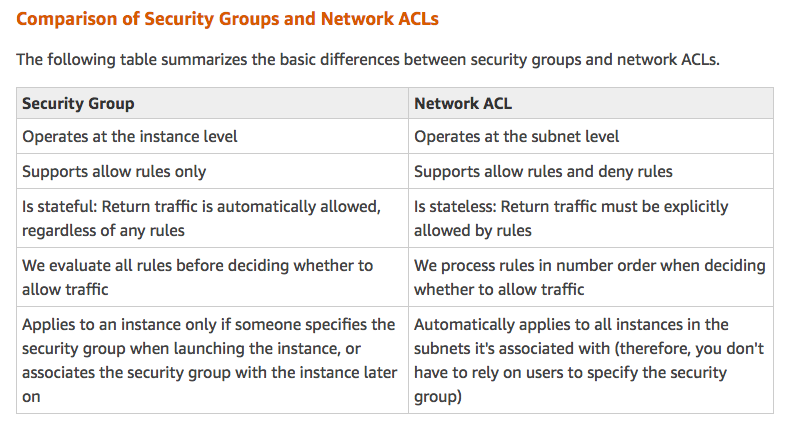
Q7: You are attempting to SSH into an EC2 instance that is located in a public subnet. However, you are currently receiving a timeout error trying to connect. What could be a possible cause of this connection issue?
- A. The security group associated with the EC2 instance has an inbound rule that allows SSH traffic, but does not have an outbound rule that allows SSH traffic.
- B. The security group associated with the EC2 instance has an inbound rule that allows SSH traffic AND has an outbound rule that explicitly denies SSH traffic.
- C. The security group associated with the EC2 instance has an inbound rule that allows SSH traffic AND the associated NACL has both an inbound and outbound rule that allows SSH traffic.
- D. The security group associated with the EC2 instance does not have an inbound rule that allows SSH traffic AND the associated NACL does not have an outbound rule that allows SSH traffic.
Top

Q8: You have instances inside private subnets and a properly configured bastion host instance in a public subnet. None of the instances in the private subnets have a public or Elastic IP address. How can you connect an instance in the private subnet to the open internet to download system updates?
- A. Create and assign EIP to each instance
- B. Create and attach a second IGW to the VPC.
- C. Create and utilize a NAT Gateway
- D. Connect to a VPN
Top
Q9: What feature of VPC networking should you utilize if you want to create “elasticity” in your application’s architecture?
- A. Security Groups
- B. Route Tables
- C. Elastic Load Balancer
- D. Auto Scaling
Top
Q10: Lambda allows you to upload code and dependencies for function packages:
- A. Only from a directly uploaded zip file
- B. Only from a directly uploaded zip file
- C. Only from a zip file in AWS S3
- D. From a zip file in AWS S3 or uploaded directly from elsewhere
Q11: You’re writing a script with an AWS SDK that uses the AWS API Actions and want to create AMIs for non-EBS backed AMIs for you. Which API call should occurs in the final process of creating an AMI?
- A. RegisterImage
- B. CreateImage
- C. ami-register-image
- D. ami-create-image
Q12: When dealing with session state in EC2-based applications using Elastic load balancers which option is generally thought of as the best practice for managing user sessions?
- A. Having the ELB distribute traffic to all EC2 instances and then having the instance check a caching solution like ElastiCache running Redis or Memcached for session information
- B. Permenantly assigning users to specific instances and always routing their traffic to those instances
- C. Using Application-generated cookies to tie a user session to a particular instance for the cookie duration
- D. Using Elastic Load Balancer generated cookies to tie a user session to a particular instance
Q13: Which API call would best be used to describe an Amazon Machine Image?
- A. ami-describe-image
- B. ami-describe-images
- C. DescribeImage
- D. DescribeImages
Q14: What is one key difference between an Amazon EBS-backed and an instance-store backed instance?
- A. Autoscaling requires using Amazon EBS-backed instances
- B. Virtual Private Cloud requires EBS backed instances
- C. Amazon EBS-backed instances can be stopped and restarted without losing data
- D. Instance-store backed instances can be stopped and restarted without losing data
The Cloud is the future: Get Certified now.
The AWS Certified Solution Architect Average Salary is: US $149,446/year. Get Certified with the App below:
Q15: After having created a new Linux instance on Amazon EC2, and downloaded the .pem file (called Toto.pem) you try and SSH into your IP address (54.1.132.33) using the following command.
ssh -i my_key.pem ec2-user@52.2.222.22
However you receive the following error.
@@@@@@@@ WARNING: UNPROTECTED PRIVATE KEY FILE! @ @@@@@@@@@@@@@@@@@@@
What is the most probable reason for this and how can you fix it?
- A. You do not have root access on your terminal and need to use the sudo option for this to work.
- B. You do not have enough permissions to perform the operation.
- C. Your key file is encrypted. You need to use the -u option for unencrypted not the -i option.
- D. Your key file must not be publicly viewable for SSH to work. You need to modify your .pem file to limit permissions.
Q16: You have an EBS root device on /dev/sda1 on one of your EC2 instances. You are having trouble with this particular instance and you need to either Stop/Start, Reboot or Terminate the instance but you do NOT want to lose any data that you have stored on /dev/sda1. However, you are unsure if changing the instance state in any of the aforementioned ways will cause you to lose data stored on the EBS volume. Which of the below statements best describes the effect each change of instance state would have on the data you have stored on /dev/sda1?
- A. Whether you stop/start, reboot or terminate the instance it does not matter because data on an EBS volume is not ephemeral and the data will not be lost regardless of what method is used.
- B. If you stop/start the instance the data will not be lost. However if you either terminate or reboot the instance the data will be lost.
- C. Whether you stop/start, reboot or terminate the instance it does not matter because data on an EBS volume is ephemeral and it will be lost no matter what method is used.
- D. The data will be lost if you terminate the instance, however the data will remain on /dev/sda1 if you reboot or stop/start the instance because data on an EBS volume is not ephemeral.
Q17: EC2 instances are launched from Amazon Machine Images (AMIs). A given public AMI:
- A. Can only be used to launch EC2 instances in the same AWS availability zone as the AMI is stored
- B. Can only be used to launch EC2 instances in the same country as the AMI is stored
- C. Can only be used to launch EC2 instances in the same AWS region as the AMI is stored
- D. Can be used to launch EC2 instances in any AWS region
Q18: Which of the following statements is true about the Elastic File System (EFS)?
- A. EFS can scale out to meet capacity requirements and scale back down when no longer needed
- B. EFS can be used by multiple EC2 instances simultaneously
- C. EFS cannot be used by an instance using EBS
- D. EFS can be configured on an instance before launch just like an IAM role or EBS volumes
The Cloud is the future: Get Certified now.
The AWS Certified Solution Architect Average Salary is: US $149,446/year. Get Certified with the App below:
Q19: IAM Policies, at a minimum, contain what elements?
- A. ID
- B. Effects
- C. Resources
- D. Sid
- E. Principle
- F. Actions
The Cloud is the future: Get Certified now.
The AWS Certified Solution Architect Average Salary is: US $149,446/year. Get Certified with the App below:
Q20: What are the main benefits of IAM groups?
- A. The ability to create custom permission policies.
- B. Assigning IAM permission policies to more than one user at a time.
- C. Easier user/policy management.
- D. Allowing EC2 instances to gain access to S3.
Q21: What are benefits of using AWS STS?
- A. Grant access to AWS resources without having to create an IAM identity for them
- B. Since credentials are temporary, you don’t have to rotate or revoke them
- C. Temporary security credentials can be extended indefinitely
- D. Temporary security credentials can be restricted to a specific region
Q22: What should the Developer enable on the DynamoDB table to optimize performance and minimize costs?
- A. Amazon DynamoDB auto scaling
- B. Amazon DynamoDB cross-region replication
- C. Amazon DynamoDB Streams
- D. Amazon DynamoDB Accelerator
Top
Q23: A Developer has been asked to create an AWS Elastic Beanstalk environment for a production web application which needs to handle thousands of requests. Currently the dev environment is running on a t1 micro instance. How can the Developer change the EC2 instance type to m4.large?
- A. Use CloudFormation to migrate the Amazon EC2 instance type of the environment from t1 micro to m4.large.
- B. Create a saved configuration file in Amazon S3 with the instance type as m4.large and use the same during environment creation.
- C. Change the instance type to m4.large in the configuration details page of the Create New Environment page.
- D. Change the instance type value for the environment to m4.large by using update autoscaling group CLI command.
Q24: What statements are true about Availability Zones (AZs) and Regions?
- A. There is only one AZ in each AWS Region
- B. AZs are geographically separated inside a region to help protect against natural disasters affecting more than one at a time.
- C. AZs can be moved between AWS Regions based on your needs
- D. There are (almost always) two or more AZs in each AWS Region
The Cloud is the future: Get Certified now.
The AWS Certified Solution Architect Average Salary is: US $149,446/year. Get Certified with the App below:
Q25: An AWS Region contains:
- A. Edge Locations
- B. Data Centers
- C. AWS Services
- D. Availability Zones
Top
Q26: Which read request in DynamoDB returns a response with the most up-to-date data, reflecting the updates from all prior write operations that were successful?
- A. Eventual Consistent Reads
- B. Conditional reads for Consistency
- C. Strongly Consistent Reads
- D. Not possible
Top
Q27: You’ ve been asked to move an existing development environment on the AWS Cloud. This environment consists mainly of Docker based containers. You need to ensure that minimum effort is taken during the migration process. Which of the following step would you consider for this requirement?
- A. Create an Opswork stack and deploy the Docker containers
- B. Create an application and Environment for the Docker containers in the Elastic Beanstalk service
- C. Create an EC2 Instance. Install Docker and deploy the necessary containers.
- D. Create an EC2 Instance. Install Docker and deploy the necessary containers. Add an Autoscaling Group for scalability of the containers.
Top
Q28: You’ve written an application that uploads objects onto an S3 bucket. The size of the object varies between 200 – 500 MB. You’ve seen that the application sometimes takes a longer than expected time to upload the object. You want to improve the performance of the application. Which of the following would you consider?
- A. Create multiple threads and upload the objects in the multiple threads
- B. Write the items in batches for better performance
- C. Use the Multipart upload API
- D. Enable versioning on the Bucket
The Cloud is the future: Get Certified now.
The AWS Certified Solution Architect Average Salary is: US $149,446/year. Get Certified with the App below:
Top
Q29: A security system monitors 600 cameras, saving image metadata every 1 minute to an Amazon DynamoDb table. Each sample involves 1kb of data, and the data writes are evenly distributed over time. How much write throughput is required for the target table?
- A. 6000
- B. 10
- C. 3600
- D. 600
The Cloud is the future: Get Certified now.
The AWS Certified Solution Architect Average Salary is: US $149,446/year. Get Certified with the App below:
Q30: What two arguments does a Python Lambda handler function require?
- A. invocation, zone
- B. event, zone
- C. invocation, context
- D. event, context
Top
Q31: Lambda allows you to upload code and dependencies for function packages:
- A. Only from a directly uploaded zip file
- B. Only via SFTP
- C. Only from a zip file in AWS S3
- D. From a zip file in AWS S3 or uploaded directly from elsewhere
Top
Q32: A Lambda deployment package contains:
- A. Function code, libraries, and runtime binaries
- B. Only function code
- C. Function code and libraries not included within the runtime
- D. Only libraries not included within the runtime
Top
Q33: You have instances inside private subnets and a properly configured bastion host instance in a public subnet. None of the instances in the private subnets have a public or Elastic IP address. How can you connect an instance in the private subnet to the open internet to download system updates?
- A. Create and assign EIP to each instance
- B. Create and attach a second IGW to the VPC.
- C. Create and utilize a NAT Gateway
- D. Connect to a VPN
Top
Q34: What feature of VPC networking should you utilize if you want to create “elasticity” in your application’s architecture?
- A. Security Groups
- B. Route Tables
- C. Elastic Load Balancer
- D. Auto Scaling
Top
Q30: Lambda allows you to upload code and dependencies for function packages:
- A. Only from a directly uploaded zip file
- B. Only from a directly uploaded zip file
- C. Only from a zip file in AWS S3
- D. From a zip file in AWS S3 or uploaded directly from elsewhere
Answer:
Top
Q31: An organization is using an Amazon ElastiCache cluster in front of their Amazon RDS instance. The organization would like the Developer to implement logic into the code so that the cluster only retrieves data from RDS when there is a cache miss. What strategy can the Developer implement to achieve this?
- A. Lazy loading
- B. Write-through
- C. Error retries
- D. Exponential backoff
Answer:
Top
Q32: A developer is writing an application that will run on Ec2 instances and read messages from SQS queue. The nessages will arrive every 15-60 seconds. How should the Developer efficiently query the queue for new messages?
- A. Use long polling
- B. Set a custom visibility timeout
- C. Use short polling
- D. Implement exponential backoff
Top
Q33: You are using AWS SAM to define a Lambda function and configure CodeDeploy to manage deployment patterns. With new Lambda function working as per expectation which of the following will shift traffic from original Lambda function to new Lambda function in the shortest time frame?
- A. Canary10Percent5Minutes
- B. Linear10PercentEvery10Minutes
- C. Canary10Percent15Minutes
- D. Linear10PercentEvery1Minute
Top
Q34: You are using AWS SAM templates to deploy a serverless application. Which of the following resource will embed application from Amazon S3 buckets?
- A. AWS::Serverless::Api
- B. AWS::Serverless::Application
- C. AWS::Serverless::Layerversion
- D. AWS::Serverless::Function
Top
Q35: You are using AWS Envelope Encryption for encrypting all sensitive data. Which of the followings is True with regards to Envelope Encryption?
- A. Data is encrypted be encrypting Data key which is further encrypted using encrypted Master Key.
- B. Data is encrypted by plaintext Data key which is further encrypted using encrypted Master Key.
- C. Data is encrypted by encrypted Data key which is further encrypted using plaintext Master Key.
- D. Data is encrypted by plaintext Data key which is further encrypted using plaintext Master Key.
Top
Q36: You are developing an application that will be comprised of the following architecture –
- A set of Ec2 instances to process the videos.
- These (Ec2 instances) will be spun up by an autoscaling group.
- SQS Queues to maintain the processing messages.
- There will be 2 pricing tiers.
How will you ensure that the premium customers videos are given more preference?
- A. Create 2 Autoscaling Groups, one for normal and one for premium customers
- B. Create 2 set of Ec2 Instances, one for normal and one for premium customers
- C. Create 2 SQS queus, one for normal and one for premium customers
- D. Create 2 Elastic Load Balancers, one for normal and one for premium customers.
Top
Q37: You are developing an application that will interact with a DynamoDB table. The table is going to take in a lot of read and write operations. Which of the following would be the ideal partition key for the DynamoDB table to ensure ideal performance?
- A. CustomerID
- B. CustomerName
- C. Location
- D. Age
Top
Q38: A developer is making use of AWS services to develop an application. He has been asked to develop the application in a manner to compensate any network delays. Which of the following two mechanisms should he implement in the application?
- A. Multiple SQS queues
- B. Exponential backoff algorithm
- C. Retries in your application code
- D. Consider using the Java sdk.
Top
Q39: An application is being developed that is going to write data to a DynamoDB table. You have to setup the read and write throughput for the table. Data is going to be read at the rate of 300 items every 30 seconds. Each item is of size 6KB. The reads can be eventual consistent reads. What should be the read capacity that needs to be set on the table?
- A. 10
- B. 20
- C. 6
- D. 30
Top
Q40: You are in charge of deploying an application that will be hosted on an EC2 Instance and sit behind an Elastic Load balancer. You have been requested to monitor the incoming connections to the Elastic Load Balancer. Which of the below options can suffice this requirement?
- A. Use AWS CloudTrail with your load balancer
- B. Enable access logs on the load balancer
- C. Use a CloudWatch Logs Agent
- D. Create a custom metric CloudWatch lter on your load balancer
Top
Q41: A static web site has been hosted on a bucket and is now being accessed by users. One of the web pages javascript section has been changed to access data which is hosted in another S3 bucket. Now that same web page is no longer loading in the browser. Which of the following can help alleviate the error?
- A. Enable versioning for the underlying S3 bucket.
- B. Enable Replication so that the objects get replicated to the other bucket
- C. Enable CORS for the bucket
- D. Change the Bucket policy for the bucket to allow access from the other bucket
Top
Q42: Your mobile application includes a photo-sharing service that is expecting tens of thousands of users at launch. You will leverage Amazon Simple Storage Service (S3) for storage of the user Images, and you must decide how to authenticate and authorize your users for access to these images. You also need to manage the storage of these images. Which two of the following approaches should you use? Choose two answers from the options below
- A. Create an Amazon S3 bucket per user, and use your application to generate the S3 URL for the appropriate content.
- B. Use AWS Identity and Access Management (IAM) user accounts as your application-level user database, and offload the burden of authentication from your application code.
- C. Authenticate your users at the application level, and use AWS Security Token Service (STS)to grant token-based authorization to S3 objects.
- D. Authenticate your users at the application level, and send an SMS token message to the user. Create an Amazon S3 bucket with the same name as the SMS message token, and move the user’s objects to that bucket.
Top
Q43: Your current log analysis application takes more than four hours to generate a report of the top 10 users of your web application. You have been asked to implement a system that can report this information in real time, ensure that the report is always up to date, and handle increases in the number of requests to your web application. Choose the option that is cost-effective and can fulfill the requirements.
- A. Publish your data to CloudWatch Logs, and congure your application to Autoscale to handle the load on demand.
- B. Publish your log data to an Amazon S3 bucket. Use AWS CloudFormation to create an Auto Scaling group to scale your post-processing application which is congured to pull down your log les stored an Amazon S3
- C. Post your log data to an Amazon Kinesis data stream, and subscribe your log-processing application so that is congured to process your logging data.
- D. Create a multi-AZ Amazon RDS MySQL cluster, post the logging data to MySQL, and run a map reduce job to retrieve the required information on user counts.
Answer:
Top
Q44: You’ve been instructed to develop a mobile application that will make use of AWS services. You need to decide on a data store to store the user sessions. Which of the following would be an ideal data store for session management?
- A. AWS Simple Storage Service
- B. AWS DynamoDB
- C. AWS RDS
- D. AWS Redshift
Answer:
Top
Q45: Your application currently interacts with a DynamoDB table. Records are inserted into the table via the application. There is now a requirement to ensure that whenever items are updated in the DynamoDB primary table , another record is inserted into a secondary table. Which of the below feature should be used when developing such a solution?
- A. AWS DynamoDB Encryption
- B. AWS DynamoDB Streams
- C. AWS DynamoDB Accelerator
- D. AWSTable Accelerator
Top
Q46: An application has been making use of AWS DynamoDB for its back-end data store. The size of the table has now grown to 20 GB , and the scans on the table are causing throttling errors. Which of the following should now be implemented to avoid such errors?
- A. Large Page size
- B. Reduced page size
- C. Parallel Scans
- D. Sequential scans
Top
Q47: Which of the following is correct way of passing a stage variable to an HTTP URL ? (Select TWO.)
- A. http://example.com/${}/prod
- B. http://example.com/${stageVariables.}/prod
- C. http://${stageVariables.}.example.com/dev/operation
- D. http://${stageVariables}.example.com/dev/operation
- E. http://${}.example.com/dev/operation
- F. http://example.com/${stageVariables}/prod
Top
Q48: Your company is planning on creating new development environments in AWS. They want to make use of their existing Chef recipes which they use for their on-premise configuration for servers in AWS. Which of the following service would be ideal to use in this regard?
- A. AWS Elastic Beanstalk
- B. AWS OpsWork
- C. AWS Cloudformation
- D. AWS SQS
Top
Q49: Your company has developed a web application and is hosting it in an Amazon S3 bucket configured for static website hosting. The users can log in to this app using their Google/Facebook login accounts. The application is using the AWS SDK for JavaScript in the browser to access data stored in an Amazon DynamoDB table. How can you ensure that API keys for access to your data in DynamoDB are kept secure?
- A. Create an Amazon S3 role in IAM with access to the specific DynamoDB tables, and assign it to the bucket hosting your website
- B. Configure S3 bucket tags with your AWS access keys for your bucket hosing your website so that the application can query them for access.
- C. Configure a web identity federation role within IAM to enable access to the correct DynamoDB resources and retrieve temporary credentials
- D. Store AWS keys in global variables within your application and configure the application to use these credentials when making requests.
Top
Q50: Your application currently makes use of AWS Cognito for managing user identities. You want to analyze the information that is stored in AWS Cognito for your application. Which of the following features of AWS Cognito should you use for this purpose?
- A. Cognito Data
- B. Cognito Events
- C. Cognito Streams
- D. Cognito Callbacks
Top
Q51: You’ve developed a set of scripts using AWS Lambda. These scripts need to access EC2 Instances in a VPC. Which of the following needs to be done to ensure that the AWS Lambda function can access the resources in the VPC. Choose 2 answers from the options given below
- A. Ensure that the subnet ID’s are mentioned when conguring the Lambda function
- B. Ensure that the NACL ID’s are mentioned when conguring the Lambda function
- C. Ensure that the Security Group ID’s are mentioned when conguring the Lambda function
- D. Ensure that the VPC Flow Log ID’s are mentioned when conguring the Lambda function
Top
Q52: You’ve currently been tasked to migrate an existing on-premise environment into Elastic Beanstalk. The application does not make use of Docker containers. You also can’t see any relevant environments in the beanstalk service that would be suitable to host your application. What should you consider doing in this case?
- A. Migrate your application to using Docker containers and then migrate the app to the Elastic Beanstalk environment.
- B. Consider using Cloudformation to deploy your environment to Elastic Beanstalk
- C. Consider using Packer to create a custom platform
- D. Consider deploying your application using the Elastic Container Service
Top
Q53: Company B is writing 10 items to the Dynamo DB table every second. Each item is 15.5Kb in size. What would be the required provisioned write throughput for best performance? Choose the correct answer from the options below.
- A. 10
- B. 160
- C. 155
- D. 16
Top
Q54: Which AWS Service can be used to automatically install your application code onto EC2, on premises systems and Lambda?
- A. CodeCommit
- B. X-Ray
- C. CodeBuild
- D. CodeDeploy
Top
Q55: Which AWS service can be used to compile source code, run tests and package code?
- A. CodePipeline
- B. CodeCommit
- C. CodeBuild
- D. CodeDeploy
Top
Q56: How can your prevent CloudFormation from deleting your entire stack on failure? (Choose 2)
- A. Set the Rollback on failure radio button to No in the CloudFormation console
- B. Set Termination Protection to Enabled in the CloudFormation console
- C. Use the –disable-rollback flag with the AWS CLI
- D. Use the –enable-termination-protection protection flag with the AWS CLI
Q57: Which of the following practices allows multiple developers working on the same application to merge code changes frequently, without impacting each other and enables the identification of bugs early on in the release process?
- A. Continuous Integration
- B. Continuous Deployment
- C. Continuous Delivery
- D. Continuous Development
Q58: When deploying application code to EC2, the AppSpec file can be written in which language?
- A. JSON
- B. JSON or YAML
- C. XML
- D. YAML
Q59: Part of your CloudFormation deployment fails due to a mis-configuration, by defaukt what will happen?
- A. CloudFormation will rollback only the failed components
- B. CloudFormation will rollback the entire stack
- C. Failed component will remain available for debugging purposes
- D. CloudFormation will ask you if you want to continue with the deployment
Top
Q60: You want to receive an email whenever a user pushes code to CodeCommit repository, how can you configure this?
- A. Create a new SNS topic and configure it to poll for CodeCommit eveents. Ask all users to subscribe to the topic to receive notifications
- B. Configure a CloudWatch Events rule to send a message to SES which will trigger an email to be sent whenever a user pushes code to the repository.
- C. Configure Notifications in the console, this will create a CloudWatch events rule to send a notification to a SNS topic which will trigger an email to be sent to the user.
- D. Configure a CloudWatch Events rule to send a message to SQS which will trigger an email to be sent whenever a user pushes code to the repository.
Top
Q61: Which AWS service can be used to centrally store and version control your application source code, binaries and libraries
- A. CodeCommit
- B. CodeBuild
- C. CodePipeline
- D. ElasticFileSystem
Top
Q62: You are using CloudFormation to create a new S3 bucket, which of the following sections would you use to define the properties of your bucket?
- A. Conditions
- B. Parameters
- C. Outputs
- D. Resources
Top
Q63: You are deploying a number of EC2 and RDS instances using CloudFormation. Which section of the CloudFormation template would you use to define these?
- A. Transforms
- B. Outputs
- C. Resources
- D. Instances
Top
Q64: Which AWS service can be used to fully automate your entire release process?
- A. CodeDeploy
- B. CodePipeline
- C. CodeCommit
- D. CodeBuild
Top
Q65: You want to use the output of your CloudFormation stack as input to another CloudFormation stack. Which sections of the CloudFormation template would you use to help you configure this?
- A. Outputs
- B. Transforms
- C. Resources
- D. Exports
Top
Q66: You have some code located in an S3 bucket that you want to reference in your CloudFormation template. Which section of the template can you use to define this?
- A. Inputs
- B. Resources
- C. Transforms
- D. Files
Top
Q67: You are deploying an application to a number of Ec2 instances using CodeDeploy. What is the name of the file
used to specify source files and lifecycle hooks?
- A. buildspec.yml
- B. appspec.json
- C. appspec.yml
- D. buildspec.json
Q68: Which of the following approaches allows you to re-use pieces of CloudFormation code in multiple templates, for common use cases like provisioning a load balancer or web server?
- A. Share the code using an EBS volume
- B. Copy and paste the code into the template each time you need to use it
- C. Use a cloudformation nested stack
- D. Store the code you want to re-use in an AMI and reference the AMI from within your CloudFormation template.
Q69: In the CodeDeploy AppSpec file, what are hooks used for?
- A. To reference AWS resources that will be used during the deployment
- B. Hooks are reserved for future use
- C. To specify files you want to copy during the deployment.
- D. To specify, scripts or function that you want to run at set points in the deployment lifecycle
Q70: Which command can you use to encrypt a plain text file using CMK?
- A. aws kms-encrypt
- B. aws iam encrypt
- C. aws kms encrypt
- D. aws encrypt
Q72: Which of the following is an encrypted key used by KMS to encrypt your data
- A. Custmoer Mamaged Key
- B. Encryption Key
- C. Envelope Key
- D. Customer Master Key
Q73: Which of the following statements are correct? (Choose 2)
- A. The Customer Master Key is used to encrypt and decrypt the Envelope Key or Data Key
- B. The Envelope Key or Data Key is used to encrypt and decrypt plain text files.
- C. The envelope Key or Data Key is used to encrypt and decrypt the Customer Master Key.
- D. The Customer MasterKey is used to encrypt and decrypt plain text files.
Q74: Which of the following statements is correct in relation to kMS/ (Choose 2)
- A. KMS Encryption keys are regional
- B. You cannot export your customer master key
- C. You can export your customer master key.
- D. KMS encryption Keys are global
Q75: A developer is preparing a deployment package for a Java implementation of an AWS Lambda function. What should the developer include in the deployment package? (Select TWO.)
A. Compiled application code
B. Java runtime environment
C. References to the event sources
D. Lambda execution role
E. Application dependencies
Q76: A developer uses AWS CodeDeploy to deploy a Python application to a fleet of Amazon EC2 instances that run behind an Application Load Balancer. The instances run in an Amazon EC2 Auto Scaling group across multiple Availability Zones. What should the developer include in the CodeDeploy deployment package?
A. A launch template for the Amazon EC2 Auto Scaling group
B. A CodeDeploy AppSpec file
C. An EC2 role that grants the application access to AWS services
D. An IAM policy that grants the application access to AWS services
Q76: A company is working on a project to enhance its serverless application development process. The company hosts applications on AWS Lambda. The development team regularly updates the Lambda code and wants to use stable code in production. Which combination of steps should the development team take to configure Lambda functions to meet both development and production requirements? (Select TWO.)
A. Create a new Lambda version every time a new code release needs testing.
B. Create two Lambda function aliases. Name one as Production and the other as Development. Point the Production alias to a production-ready unqualified Amazon Resource Name (ARN) version. Point the Development alias to the $LATEST version.
C. Create two Lambda function aliases. Name one as Production and the other as Development. Point the Production alias to the production-ready qualified Amazon Resource Name (ARN) version. Point the Development alias to the variable LAMBDA_TASK_ROOT.
D. Create a new Lambda layer every time a new code release needs testing.
E. Create two Lambda function aliases. Name one as Production and the other as Development. Point the Production alias to a production-ready Lambda layer Amazon Resource Name (ARN). Point the Development alias to the $LATEST layer ARN.
Q77: Each time a developer publishes a new version of an AWS Lambda function, all the dependent event source mappings need to be updated with the reference to the new version’s Amazon Resource Name (ARN). These updates are time consuming and error-prone. Which combination of actions should the developer take to avoid performing these updates when publishing a new Lambda version? (Select TWO.)
A. Update event source mappings with the ARN of the Lambda layer.
B. Point a Lambda alias to a new version of the Lambda function.
C. Create a Lambda alias for each published version of the Lambda function.
D. Point a Lambda alias to a new Lambda function alias.
E. Update the event source mappings with the Lambda alias ARN.
Q78: A company wants to store sensitive user data in Amazon S3 and encrypt this data at rest. The company must manage the encryption keys and use Amazon S3 to perform the encryption. How can a developer meet these requirements?
A. Enable default encryption for the S3 bucket by using the option for server-side encryption with customer-provided encryption keys (SSE-C).
B. Enable client-side encryption with an encryption key. Upload the encrypted object to the S3 bucket.
C. Enable server-side encryption with Amazon S3 managed encryption keys (SSE-S3). Upload an object to the S3 bucket.
D. Enable server-side encryption with customer-provided encryption keys (SSE-C). Upload an object to the S3 bucket.
Q79: A company is developing a Python application that submits data to an Amazon DynamoDB table. The company requires client-side encryption of specific data items and end-to-end protection for the encrypted data in transit and at rest. Which combination of steps will meet the requirement for the encryption of specific data items? (Select TWO.)
A. Generate symmetric encryption keys with AWS Key Management Service (AWS KMS).
B. Generate asymmetric encryption keys with AWS Key Management Service (AWS KMS).
C. Use generated keys with the DynamoDB Encryption Client.
D. Use generated keys to configure DynamoDB table encryption with AWS managed customer master keys (CMKs).
E. Use generated keys to configure DynamoDB table encryption with AWS owned customer master keys (CMKs).
Q80: A company is developing a REST API with Amazon API Gateway. Access to the API should be limited to users in the existing Amazon Cognito user pool. Which combination of steps should a developer perform to secure the API? (Select TWO.)
A. Create an AWS Lambda authorizer for the API.
B. Create an Amazon Cognito authorizer for the API.
C. Configure the authorizer for the API resource.
D. Configure the API methods to use the authorizer.
E. Configure the authorizer for the API stage.
Q81: A developer is implementing a mobile app to provide personalized services to app users. The application code makes calls to Amazon S3 and Amazon Simple Queue Service (Amazon SQS). Which options can the developer use to authenticate the app users? (Select TWO.)
A. Authenticate to the Amazon Cognito identity pool directly.
B. Authenticate to AWS Identity and Access Management (IAM) directly.
C. Authenticate to the Amazon Cognito user pool directly.
D. Federate authentication by using Login with Amazon with the users managed with AWS Security Token Service (AWS STS).
E. Federate authentication by using Login with Amazon with the users managed with the Amazon Cognito user pool.
Question: A company is implementing several order processing workflows. Each workflow is implemented by using AWS Lambda functions for each task. Which combination of steps should a developer follow to implement these workflows? (Select TWO.)
A. Define a AWS Step Functions task for each Lambda function.
B. Define a AWS Step Functions task for each workflow.
C. Write code that polls the AWS Step Functions invocation to coordinate each workflow.
D. Define an AWS Step Functions state machine for each workflow.
E. Define an AWS Step Functions state machine for each Lambda function.
Answer: A. D.
Notes: Step Functions is based on state machines and tasks. A state machine is a workflow. Tasks perform work by coordinating with other AWS services, such as Lambda. A state machine is a workflow. It can be used to express a workflow as a number of states, their relationships, and their input and output. You can coordinate individual tasks with Step Functions by expressing your workflow as a finite state machine, written in the Amazon States Language.
ReferenceText: Getting Started with AWS Step Functions.
ReferenceUrl: https://aws.amazon.com/step-functions/getting-started/
Category: Development
Welcome to AWS Certified Developer Associate Exam Preparation: Definition and Objectives, Top 100 Questions and Answers dump, White papers, Courses, Labs and Training Materials, Exam info and details, References, Jobs, Others AWS Certificates
What is the AWS Certified Developer Associate Exam?
This AWS Certified Developer-Associate Examination is intended for individuals who perform a Developer role. It validates an examinee’s ability to:
- Demonstrate an understanding of core AWS services, uses, and basic AWS architecture best practices
- Demonstrate proficiency in developing, deploying, and debugging cloud-based applications by using AWS
Recommended general IT knowledge
The target candidate should have the following:
– In-depth knowledge of at least one high-level programming language
– Understanding of application lifecycle management
– The ability to write code for serverless applications
– Understanding of the use of containers in the development process
Recommended AWS knowledge
The target candidate should be able to do the following:
- Use the AWS service APIs, CLI, and software development kits (SDKs) to write applications
- Identify key features of AWS services
- Understand the AWS shared responsibility model
- Use a continuous integration and continuous delivery (CI/CD) pipeline to deploy applications on AWS
- Use and interact with AWS services
- Apply basic understanding of cloud-native applications to write code
- Write code by using AWS security best practices (for example, use IAM roles instead of secret and access keys in the code)
- Author, maintain, and debug code modules on AWS
What is considered out of scope for the target candidate?
The following is a non-exhaustive list of related job tasks that the target candidate is not expected to be able to perform. These items are considered out of scope for the exam:
– Design architectures (for example, distributed system, microservices)
– Design and implement CI/CD pipelines
- Administer IAM users and groups
- Administer Amazon Elastic Container Service (Amazon ECS)
- Design AWS networking infrastructure (for example, Amazon VPC, AWS Direct Connect)
- Understand compliance and licensing
Exam content
Response types
There are two types of questions on the exam:
– Multiple choice: Has one correct response and three incorrect responses (distractors)
– Multiple response: Has two or more correct responses out of five or more response options
Select one or more responses that best complete the statement or answer the question. Distractors, or incorrect answers, are response options that a candidate with incomplete knowledge or skill might choose.
Distractors are generally plausible responses that match the content area.
Unanswered questions are scored as incorrect; there is no penalty for guessing. The exam includes 50 questions that will affect your score.
Unscored content
The exam includes 15 unscored questions that do not affect your score. AWS collects information about candidate performance on these unscored questions to evaluate these questions for future use as scored questions. These unscored questions are not identified on the exam.
Exam results
The AWS Certified Developer – Associate (DVA-C01) exam is a pass or fail exam. The exam is scored against a minimum standard established by AWS professionals who follow certification industry best practices and guidelines.
Your results for the exam are reported as a scaled score of 100–1,000. The minimum passing score is 720.
Your score shows how you performed on the exam as a whole and whether you passed. Scaled scoring models help equate scores across multiple exam forms that might have slightly different difficulty levels.
Your score report could contain a table of classifications of your performance at each section level. This information is intended to provide general feedback about your exam performance. The exam uses a compensatory scoring model, which means that you do not need to achieve a passing score in each section. You need to pass only the overall exam.
Each section of the exam has a specific weighting, so some sections have more questions than other sections have. The table contains general information that highlights your strengths and weaknesses. Use caution when interpreting section-level feedback.
Content outline
This exam guide includes weightings, test domains, and objectives for the exam. It is not a comprehensive listing of the content on the exam. However, additional context for each of the objectives is available to help guide your preparation for the exam. The following table lists the main content domains and their weightings. The table precedes the complete exam content outline, which includes the additional context.
The percentage in each domain represents only scored content.
Domain 1: Deployment 22%
Domain 2: Security 26%
Domain 3: Development with AWS Services 30%
Domain 4: Refactoring 10%
Domain 5: Monitoring and Troubleshooting 12%
Domain 1: Deployment
1.1 Deploy written code in AWS using existing CI/CD pipelines, processes, and patterns.
– Commit code to a repository and invoke build, test and/or deployment actions
– Use labels and branches for version and release management
– Use AWS CodePipeline to orchestrate workflows against different environments
– Apply AWS CodeCommit, AWS CodeBuild, AWS CodePipeline, AWS CodeStar, and AWS
CodeDeploy for CI/CD purposes
– Perform a roll back plan based on application deployment policy
1.2 Deploy applications using AWS Elastic Beanstalk.
– Utilize existing supported environments to define a new application stack
– Package the application
– Introduce a new application version into the Elastic Beanstalk environment
– Utilize a deployment policy to deploy an application version (i.e., all at once, rolling, rolling with batch, immutable)
– Validate application health using Elastic Beanstalk dashboard
– Use Amazon CloudWatch Logs to instrument application logging
1.3 Prepare the application deployment package to be deployed to AWS.
– Manage the dependencies of the code module (like environment variables, config files and static image files) within the package
– Outline the package/container directory structure and organize files appropriately
– Translate application resource requirements to AWS infrastructure parameters (e.g., memory, cores)
1.4 Deploy serverless applications.
– Given a use case, implement and launch an AWS Serverless Application Model (AWS SAM) template
– Manage environments in individual AWS services (e.g., Differentiate between Development, Test, and Production in Amazon API Gateway)
Domain 2: Security
2.1 Make authenticated calls to AWS services.
– Communicate required policy based on least privileges required by application.
– Assume an IAM role to access a service
– Use the software development kit (SDK) credential provider on-premises or in the cloud to access AWS services (local credentials vs. instance roles)
2.2 Implement encryption using AWS services.
– Encrypt data at rest (client side; server side; envelope encryption) using AWS services
– Encrypt data in transit
2.3 Implement application authentication and authorization.
– Add user sign-up and sign-in functionality for applications with Amazon Cognito identity or user pools
– Use Amazon Cognito-provided credentials to write code that access AWS services.
– Use Amazon Cognito sync to synchronize user profiles and data
– Use developer-authenticated identities to interact between end user devices, backend
authentication, and Amazon Cognito
Domain 3: Development with AWS Services
3.1 Write code for serverless applications.
– Compare and contrast server-based vs. serverless model (e.g., micro services, stateless nature of serverless applications, scaling serverless applications, and decoupling layers of serverless applications)
– Configure AWS Lambda functions by defining environment variables and parameters (e.g., memory, time out, runtime, handler)
– Create an API endpoint using Amazon API Gateway
– Create and test appropriate API actions like GET, POST using the API endpoint
– Apply Amazon DynamoDB concepts (e.g., tables, items, and attributes)
– Compute read/write capacity units for Amazon DynamoDB based on application requirements
– Associate an AWS Lambda function with an AWS event source (e.g., Amazon API Gateway, Amazon CloudWatch event, Amazon S3 events, Amazon Kinesis)
– Invoke an AWS Lambda function synchronously and asynchronously
3.2 Translate functional requirements into application design.
– Determine real-time vs. batch processing for a given use case
– Determine use of synchronous vs. asynchronous for a given use case
– Determine use of event vs. schedule/poll for a given use case
– Account for tradeoffs for consistency models in an application design
Domain 4: Refactoring
4.1 Optimize applications to best use AWS services and features.
Implement AWS caching services to optimize performance (e.g., Amazon ElastiCache, Amazon API Gateway cache)
Apply an Amazon S3 naming scheme for optimal read performance
4.2 Migrate existing application code to run on AWS.
– Isolate dependencies
– Run the application as one or more stateless processes
– Develop in order to enable horizontal scalability
– Externalize state
Domain 5: Monitoring and Troubleshooting
5.1 Write code that can be monitored.
– Create custom Amazon CloudWatch metrics
– Perform logging in a manner available to systems operators
– Instrument application source code to enable tracing in AWS X-Ray
5.2 Perform root cause analysis on faults found in testing or production.
– Interpret the outputs from the logging mechanism in AWS to identify errors in logs
– Check build and testing history in AWS services (e.g., AWS CodeBuild, AWS CodeDeploy, AWS CodePipeline) to identify issues
– Utilize AWS services (e.g., Amazon CloudWatch, VPC Flow Logs, and AWS X-Ray) to locate a specific faulty component
Which key tools, technologies, and concepts might be covered on the exam?
The following is a non-exhaustive list of the tools and technologies that could appear on the exam.
This list is subject to change and is provided to help you understand the general scope of services, features, or technologies on the exam.
The general tools and technologies in this list appear in no particular order.
AWS services are grouped according to their primary functions. While some of these technologies will likely be covered more than others on the exam, the order and placement of them in this list is no indication of relative weight or importance:
– Analytics
– Application Integration
– Containers
– Cost and Capacity Management
– Data Movement
– Developer Tools
– Instances (virtual machines)
– Management and Governance
– Networking and Content Delivery
– Security
– Serverless
AWS services and features
Analytics:
– Amazon Elasticsearch Service (Amazon ES)
– Amazon Kinesis
Application Integration:
– Amazon EventBridge (Amazon CloudWatch Events)
– Amazon Simple Notification Service (Amazon SNS)
– Amazon Simple Queue Service (Amazon SQS)
– AWS Step Functions
Compute:
– Amazon EC2
– AWS Elastic Beanstalk
– AWS Lambda
Containers:
– Amazon Elastic Container Registry (Amazon ECR)
– Amazon Elastic Container Service (Amazon ECS)
– Amazon Elastic Kubernetes Services (Amazon EKS)
Database:
– Amazon DynamoDB
– Amazon ElastiCache
– Amazon RDS
Developer Tools:
– AWS CodeArtifact
– AWS CodeBuild
– AWS CodeCommit
– AWS CodeDeploy
– Amazon CodeGuru
– AWS CodePipeline
– AWS CodeStar
– AWS Fault Injection Simulator
– AWS X-Ray
Management and Governance:
– AWS CloudFormation
– Amazon CloudWatch
Networking and Content Delivery:
– Amazon API Gateway
– Amazon CloudFront
– Elastic Load Balancing
Security, Identity, and Compliance:
– Amazon Cognito
– AWS Identity and Access Management (IAM)
– AWS Key Management Service (AWS KMS)
Storage:
– Amazon S3
Out-of-scope AWS services and features
The following is a non-exhaustive list of AWS services and features that are not covered on the exam.
These services and features do not represent every AWS offering that is excluded from the exam content.
Services or features that are entirely unrelated to the target job roles for the exam are excluded from this list because they are assumed to be irrelevant.
Out-of-scope AWS services and features include the following:
– AWS Application Discovery Service
– Amazon AppStream 2.0
– Amazon Chime
– Amazon Connect
– AWS Database Migration Service (AWS DMS)
– AWS Device Farm
– Amazon Elastic Transcoder
– Amazon GameLift
– Amazon Lex
– Amazon Machine Learning (Amazon ML)
– AWS Managed Services
– Amazon Mobile Analytics
– Amazon Polly
– Amazon QuickSight
– Amazon Rekognition
– AWS Server Migration Service (AWS SMS)
– AWS Service Catalog
– AWS Shield Advanced
– AWS Shield Standard
– AWS Snow Family
– AWS Storage Gateway
– AWS WAF
– Amazon WorkMail
– Amazon WorkSpaces
To succeed with the real exam, do not memorize the answers below. It is very important that you understand why a question is right or wrong and the concepts behind it by carefully reading the reference documents in the answers.
AWS Certified Developer – Associate Practice Questions And Answers Dump
Q0: Your application reads commands from an SQS queue and sends them to web services hosted by your
partners. When a partner’s endpoint goes down, your application continually returns their commands to the queue. The repeated attempts to deliver these commands use up resources. Commands that can’t be delivered must not be lost.
How can you accommodate the partners’ broken web services without wasting your resources?
- A. Create a delay queue and set DelaySeconds to 30 seconds
- B. Requeue the message with a VisibilityTimeout of 30 seconds.
- C. Create a dead letter queue and set the Maximum Receives to 3.
- D. Requeue the message with a DelaySeconds of 30 seconds.

Top
Q1: A developer is writing an application that will store data in a DynamoDB table. The ratio of reads operations to write operations will be 1000 to 1, with the same data being accessed frequently.
What should the Developer enable on the DynamoDB table to optimize performance and minimize costs?
- A. Amazon DynamoDB auto scaling
- B. Amazon DynamoDB cross-region replication
- C. Amazon DynamoDB Streams
- D. Amazon DynamoDB Accelerator
Top
Q2: You are creating a DynamoDB table with the following attributes:
- PurchaseOrderNumber (partition key)
- CustomerID
- PurchaseDate
- TotalPurchaseValue
One of your applications must retrieve items from the table to calculate the total value of purchases for a
particular customer over a date range. What secondary index do you need to add to the table?
- A. Local secondary index with a partition key of CustomerID and sort key of PurchaseDate; project the
TotalPurchaseValue attribute - B. Local secondary index with a partition key of PurchaseDate and sort key of CustomerID; project the
TotalPurchaseValue attribute - C. Global secondary index with a partition key of CustomerID and sort key of PurchaseDate; project the
TotalPurchaseValue attribute - D. Global secondary index with a partition key of PurchaseDate and sort key of CustomerID; project the
TotalPurchaseValue attribute
Top
The Cloud is the future: Get Certified now.
The AWS Certified Solution Architect Average Salary is: US $149,446/year. Get Certified with the App below:
Q3: When referencing the remaining time left for a Lambda function to run within the function’s code you would use:
- A. The event object
- B. The timeLeft object
- C. The remains object
- D. The context object
Top
Q4: What two arguments does a Python Lambda handler function require?
- A. invocation, zone
- B. event, zone
- C. invocation, context
- D. event, context
Q5: Lambda allows you to upload code and dependencies for function packages:
- A. Only from a directly uploaded zip file
- B. Only via SFTP
- C. Only from a zip file in AWS S3
- D. From a zip file in AWS S3 or uploaded directly from elsewhere
The Cloud is the future: Get Certified now.
The AWS Certified Solution Architect Average Salary is: US $149,446/year. Get Certified with the App below:
Q6: A Lambda deployment package contains:
- A. Function code, libraries, and runtime binaries
- B. Only function code
- C. Function code and libraries not included within the runtime
- D. Only libraries not included within the runtime
Q7: You are attempting to SSH into an EC2 instance that is located in a public subnet. However, you are currently receiving a timeout error trying to connect. What could be a possible cause of this connection issue?
- A. The security group associated with the EC2 instance has an inbound rule that allows SSH traffic, but does not have an outbound rule that allows SSH traffic.
- B. The security group associated with the EC2 instance has an inbound rule that allows SSH traffic AND has an outbound rule that explicitly denies SSH traffic.
- C. The security group associated with the EC2 instance has an inbound rule that allows SSH traffic AND the associated NACL has both an inbound and outbound rule that allows SSH traffic.
- D. The security group associated with the EC2 instance does not have an inbound rule that allows SSH traffic AND the associated NACL does not have an outbound rule that allows SSH traffic.
Top
Q8: You have instances inside private subnets and a properly configured bastion host instance in a public subnet. None of the instances in the private subnets have a public or Elastic IP address. How can you connect an instance in the private subnet to the open internet to download system updates?
- A. Create and assign EIP to each instance
- B. Create and attach a second IGW to the VPC.
- C. Create and utilize a NAT Gateway
- D. Connect to a VPN
Top
Q9: What feature of VPC networking should you utilize if you want to create “elasticity” in your application’s architecture?
- A. Security Groups
- B. Route Tables
- C. Elastic Load Balancer
- D. Auto Scaling
Top
Q10: Lambda allows you to upload code and dependencies for function packages:
- A. Only from a directly uploaded zip file
- B. Only from a directly uploaded zip file
- C. Only from a zip file in AWS S3
- D. From a zip file in AWS S3 or uploaded directly from elsewhere
Q11: You’re writing a script with an AWS SDK that uses the AWS API Actions and want to create AMIs for non-EBS backed AMIs for you. Which API call should occurs in the final process of creating an AMI?
- A. RegisterImage
- B. CreateImage
- C. ami-register-image
- D. ami-create-image
Q12: When dealing with session state in EC2-based applications using Elastic load balancers which option is generally thought of as the best practice for managing user sessions?
- A. Having the ELB distribute traffic to all EC2 instances and then having the instance check a caching solution like ElastiCache running Redis or Memcached for session information
- B. Permenantly assigning users to specific instances and always routing their traffic to those instances
- C. Using Application-generated cookies to tie a user session to a particular instance for the cookie duration
- D. Using Elastic Load Balancer generated cookies to tie a user session to a particular instance
Q13: Which API call would best be used to describe an Amazon Machine Image?
- A. ami-describe-image
- B. ami-describe-images
- C. DescribeImage
- D. DescribeImages
Q14: What is one key difference between an Amazon EBS-backed and an instance-store backed instance?
- A. Autoscaling requires using Amazon EBS-backed instances
- B. Virtual Private Cloud requires EBS backed instances
- C. Amazon EBS-backed instances can be stopped and restarted without losing data
- D. Instance-store backed instances can be stopped and restarted without losing data
The Cloud is the future: Get Certified now.
The AWS Certified Solution Architect Average Salary is: US $149,446/year. Get Certified with the App below:
Q15: After having created a new Linux instance on Amazon EC2, and downloaded the .pem file (called Toto.pem) you try and SSH into your IP address (54.1.132.33) using the following command.
ssh -i my_key.pem ec2-user@52.2.222.22
However you receive the following error.
@@@@@@@@ WARNING: UNPROTECTED PRIVATE KEY FILE! @ @@@@@@@@@@@@@@@@@@@
What is the most probable reason for this and how can you fix it?
- A. You do not have root access on your terminal and need to use the sudo option for this to work.
- B. You do not have enough permissions to perform the operation.
- C. Your key file is encrypted. You need to use the -u option for unencrypted not the -i option.
- D. Your key file must not be publicly viewable for SSH to work. You need to modify your .pem file to limit permissions.
Q16: You have an EBS root device on /dev/sda1 on one of your EC2 instances. You are having trouble with this particular instance and you need to either Stop/Start, Reboot or Terminate the instance but you do NOT want to lose any data that you have stored on /dev/sda1. However, you are unsure if changing the instance state in any of the aforementioned ways will cause you to lose data stored on the EBS volume. Which of the below statements best describes the effect each change of instance state would have on the data you have stored on /dev/sda1?
- A. Whether you stop/start, reboot or terminate the instance it does not matter because data on an EBS volume is not ephemeral and the data will not be lost regardless of what method is used.
- B. If you stop/start the instance the data will not be lost. However if you either terminate or reboot the instance the data will be lost.
- C. Whether you stop/start, reboot or terminate the instance it does not matter because data on an EBS volume is ephemeral and it will be lost no matter what method is used.
- D. The data will be lost if you terminate the instance, however the data will remain on /dev/sda1 if you reboot or stop/start the instance because data on an EBS volume is not ephemeral.
Q17: EC2 instances are launched from Amazon Machine Images (AMIs). A given public AMI:
- A. Can only be used to launch EC2 instances in the same AWS availability zone as the AMI is stored
- B. Can only be used to launch EC2 instances in the same country as the AMI is stored
- C. Can only be used to launch EC2 instances in the same AWS region as the AMI is stored
- D. Can be used to launch EC2 instances in any AWS region
Q18: Which of the following statements is true about the Elastic File System (EFS)?
- A. EFS can scale out to meet capacity requirements and scale back down when no longer needed
- B. EFS can be used by multiple EC2 instances simultaneously
- C. EFS cannot be used by an instance using EBS
- D. EFS can be configured on an instance before launch just like an IAM role or EBS volumes
The Cloud is the future: Get Certified now.
The AWS Certified Solution Architect Average Salary is: US $149,446/year. Get Certified with the App below:
Q19: IAM Policies, at a minimum, contain what elements?
- A. ID
- B. Effects
- C. Resources
- D. Sid
- E. Principle
- F. Actions
The Cloud is the future: Get Certified now.
The AWS Certified Solution Architect Average Salary is: US $149,446/year. Get Certified with the App below:
Q20: What are the main benefits of IAM groups?
- A. The ability to create custom permission policies.
- B. Assigning IAM permission policies to more than one user at a time.
- C. Easier user/policy management.
- D. Allowing EC2 instances to gain access to S3.
Q21: What are benefits of using AWS STS?
- A. Grant access to AWS resources without having to create an IAM identity for them
- B. Since credentials are temporary, you don’t have to rotate or revoke them
- C. Temporary security credentials can be extended indefinitely
- D. Temporary security credentials can be restricted to a specific region
Q22: What should the Developer enable on the DynamoDB table to optimize performance and minimize costs?
- A. Amazon DynamoDB auto scaling
- B. Amazon DynamoDB cross-region replication
- C. Amazon DynamoDB Streams
- D. Amazon DynamoDB Accelerator
Top
Q23: A Developer has been asked to create an AWS Elastic Beanstalk environment for a production web application which needs to handle thousands of requests. Currently the dev environment is running on a t1 micro instance. How can the Developer change the EC2 instance type to m4.large?
- A. Use CloudFormation to migrate the Amazon EC2 instance type of the environment from t1 micro to m4.large.
- B. Create a saved configuration file in Amazon S3 with the instance type as m4.large and use the same during environment creation.
- C. Change the instance type to m4.large in the configuration details page of the Create New Environment page.
- D. Change the instance type value for the environment to m4.large by using update autoscaling group CLI command.
Q24: What statements are true about Availability Zones (AZs) and Regions?
- A. There is only one AZ in each AWS Region
- B. AZs are geographically separated inside a region to help protect against natural disasters affecting more than one at a time.
- C. AZs can be moved between AWS Regions based on your needs
- D. There are (almost always) two or more AZs in each AWS Region
The Cloud is the future: Get Certified now.
The AWS Certified Solution Architect Average Salary is: US $149,446/year. Get Certified with the App below:
Q25: An AWS Region contains:
- A. Edge Locations
- B. Data Centers
- C. AWS Services
- D. Availability Zones
Top
Q26: Which read request in DynamoDB returns a response with the most up-to-date data, reflecting the updates from all prior write operations that were successful?
- A. Eventual Consistent Reads
- B. Conditional reads for Consistency
- C. Strongly Consistent Reads
- D. Not possible
Top
Q27: You’ ve been asked to move an existing development environment on the AWS Cloud. This environment consists mainly of Docker based containers. You need to ensure that minimum effort is taken during the migration process. Which of the following step would you consider for this requirement?
- A. Create an Opswork stack and deploy the Docker containers
- B. Create an application and Environment for the Docker containers in the Elastic Beanstalk service
- C. Create an EC2 Instance. Install Docker and deploy the necessary containers.
- D. Create an EC2 Instance. Install Docker and deploy the necessary containers. Add an Autoscaling Group for scalability of the containers.
Top
Q28: You’ve written an application that uploads objects onto an S3 bucket. The size of the object varies between 200 – 500 MB. You’ve seen that the application sometimes takes a longer than expected time to upload the object. You want to improve the performance of the application. Which of the following would you consider?
- A. Create multiple threads and upload the objects in the multiple threads
- B. Write the items in batches for better performance
- C. Use the Multipart upload API
- D. Enable versioning on the Bucket
The Cloud is the future: Get Certified now.
The AWS Certified Solution Architect Average Salary is: US $149,446/year. Get Certified with the App below:
Top
Q29: A security system monitors 600 cameras, saving image metadata every 1 minute to an Amazon DynamoDb table. Each sample involves 1kb of data, and the data writes are evenly distributed over time. How much write throughput is required for the target table?
- A. 6000
- B. 10
- C. 3600
- D. 600
The Cloud is the future: Get Certified now.
The AWS Certified Solution Architect Average Salary is: US $149,446/year. Get Certified with the App below:
Q30: What two arguments does a Python Lambda handler function require?
- A. invocation, zone
- B. event, zone
- C. invocation, context
- D. event, context
Top
Q31: Lambda allows you to upload code and dependencies for function packages:
- A. Only from a directly uploaded zip file
- B. Only via SFTP
- C. Only from a zip file in AWS S3
- D. From a zip file in AWS S3 or uploaded directly from elsewhere
Top
Q32: A Lambda deployment package contains:
- A. Function code, libraries, and runtime binaries
- B. Only function code
- C. Function code and libraries not included within the runtime
- D. Only libraries not included within the runtime
Top
Q33: You have instances inside private subnets and a properly configured bastion host instance in a public subnet. None of the instances in the private subnets have a public or Elastic IP address. How can you connect an instance in the private subnet to the open internet to download system updates?
- A. Create and assign EIP to each instance
- B. Create and attach a second IGW to the VPC.
- C. Create and utilize a NAT Gateway
- D. Connect to a VPN
Top
Q34: What feature of VPC networking should you utilize if you want to create “elasticity” in your application’s architecture?
- A. Security Groups
- B. Route Tables
- C. Elastic Load Balancer
- D. Auto Scaling
Top
Q30: Lambda allows you to upload code and dependencies for function packages:
- A. Only from a directly uploaded zip file
- B. Only from a directly uploaded zip file
- C. Only from a zip file in AWS S3
- D. From a zip file in AWS S3 or uploaded directly from elsewhere
Answer:
Top
Q31: An organization is using an Amazon ElastiCache cluster in front of their Amazon RDS instance. The organization would like the Developer to implement logic into the code so that the cluster only retrieves data from RDS when there is a cache miss. What strategy can the Developer implement to achieve this?
- A. Lazy loading
- B. Write-through
- C. Error retries
- D. Exponential backoff
Answer:
Top
Q32: A developer is writing an application that will run on Ec2 instances and read messages from SQS queue. The nessages will arrive every 15-60 seconds. How should the Developer efficiently query the queue for new messages?
- A. Use long polling
- B. Set a custom visibility timeout
- C. Use short polling
- D. Implement exponential backoff
Top
Q33: You are using AWS SAM to define a Lambda function and configure CodeDeploy to manage deployment patterns. With new Lambda function working as per expectation which of the following will shift traffic from original Lambda function to new Lambda function in the shortest time frame?
- A. Canary10Percent5Minutes
- B. Linear10PercentEvery10Minutes
- C. Canary10Percent15Minutes
- D. Linear10PercentEvery1Minute
Top
Q34: You are using AWS SAM templates to deploy a serverless application. Which of the following resource will embed application from Amazon S3 buckets?
- A. AWS::Serverless::Api
- B. AWS::Serverless::Application
- C. AWS::Serverless::Layerversion
- D. AWS::Serverless::Function
Top
Q35: You are using AWS Envelope Encryption for encrypting all sensitive data. Which of the followings is True with regards to Envelope Encryption?
- A. Data is encrypted be encrypting Data key which is further encrypted using encrypted Master Key.
- B. Data is encrypted by plaintext Data key which is further encrypted using encrypted Master Key.
- C. Data is encrypted by encrypted Data key which is further encrypted using plaintext Master Key.
- D. Data is encrypted by plaintext Data key which is further encrypted using plaintext Master Key.
Top
Q36: You are developing an application that will be comprised of the following architecture –
- A set of Ec2 instances to process the videos.
- These (Ec2 instances) will be spun up by an autoscaling group.
- SQS Queues to maintain the processing messages.
- There will be 2 pricing tiers.
How will you ensure that the premium customers videos are given more preference?
- A. Create 2 Autoscaling Groups, one for normal and one for premium customers
- B. Create 2 set of Ec2 Instances, one for normal and one for premium customers
- C. Create 2 SQS queus, one for normal and one for premium customers
- D. Create 2 Elastic Load Balancers, one for normal and one for premium customers.
Top
Q37: You are developing an application that will interact with a DynamoDB table. The table is going to take in a lot of read and write operations. Which of the following would be the ideal partition key for the DynamoDB table to ensure ideal performance?
- A. CustomerID
- B. CustomerName
- C. Location
- D. Age
Top
Q38: A developer is making use of AWS services to develop an application. He has been asked to develop the application in a manner to compensate any network delays. Which of the following two mechanisms should he implement in the application?
- A. Multiple SQS queues
- B. Exponential backoff algorithm
- C. Retries in your application code
- D. Consider using the Java sdk.
Top
Q39: An application is being developed that is going to write data to a DynamoDB table. You have to setup the read and write throughput for the table. Data is going to be read at the rate of 300 items every 30 seconds. Each item is of size 6KB. The reads can be eventual consistent reads. What should be the read capacity that needs to be set on the table?
- A. 10
- B. 20
- C. 6
- D. 30
Top
Q40: You are in charge of deploying an application that will be hosted on an EC2 Instance and sit behind an Elastic Load balancer. You have been requested to monitor the incoming connections to the Elastic Load Balancer. Which of the below options can suffice this requirement?
- A. Use AWS CloudTrail with your load balancer
- B. Enable access logs on the load balancer
- C. Use a CloudWatch Logs Agent
- D. Create a custom metric CloudWatch lter on your load balancer
Top
Q41: A static web site has been hosted on a bucket and is now being accessed by users. One of the web pages javascript section has been changed to access data which is hosted in another S3 bucket. Now that same web page is no longer loading in the browser. Which of the following can help alleviate the error?
- A. Enable versioning for the underlying S3 bucket.
- B. Enable Replication so that the objects get replicated to the other bucket
- C. Enable CORS for the bucket
- D. Change the Bucket policy for the bucket to allow access from the other bucket
Top
Q42: Your mobile application includes a photo-sharing service that is expecting tens of thousands of users at launch. You will leverage Amazon Simple Storage Service (S3) for storage of the user Images, and you must decide how to authenticate and authorize your users for access to these images. You also need to manage the storage of these images. Which two of the following approaches should you use? Choose two answers from the options below
- A. Create an Amazon S3 bucket per user, and use your application to generate the S3 URL for the appropriate content.
- B. Use AWS Identity and Access Management (IAM) user accounts as your application-level user database, and offload the burden of authentication from your application code.
- C. Authenticate your users at the application level, and use AWS Security Token Service (STS)to grant token-based authorization to S3 objects.
- D. Authenticate your users at the application level, and send an SMS token message to the user. Create an Amazon S3 bucket with the same name as the SMS message token, and move the user’s objects to that bucket.
Top
Q43: Your current log analysis application takes more than four hours to generate a report of the top 10 users of your web application. You have been asked to implement a system that can report this information in real time, ensure that the report is always up to date, and handle increases in the number of requests to your web application. Choose the option that is cost-effective and can fulfill the requirements.
- A. Publish your data to CloudWatch Logs, and congure your application to Autoscale to handle the load on demand.
- B. Publish your log data to an Amazon S3 bucket. Use AWS CloudFormation to create an Auto Scaling group to scale your post-processing application which is congured to pull down your log les stored an Amazon S3
- C. Post your log data to an Amazon Kinesis data stream, and subscribe your log-processing application so that is congured to process your logging data.
- D. Create a multi-AZ Amazon RDS MySQL cluster, post the logging data to MySQL, and run a map reduce job to retrieve the required information on user counts.
Answer:
Top
Q44: You’ve been instructed to develop a mobile application that will make use of AWS services. You need to decide on a data store to store the user sessions. Which of the following would be an ideal data store for session management?
- A. AWS Simple Storage Service
- B. AWS DynamoDB
- C. AWS RDS
- D. AWS Redshift
Answer:
Top
Q45: Your application currently interacts with a DynamoDB table. Records are inserted into the table via the application. There is now a requirement to ensure that whenever items are updated in the DynamoDB primary table , another record is inserted into a secondary table. Which of the below feature should be used when developing such a solution?
- A. AWS DynamoDB Encryption
- B. AWS DynamoDB Streams
- C. AWS DynamoDB Accelerator
- D. AWSTable Accelerator
Top
Q46: An application has been making use of AWS DynamoDB for its back-end data store. The size of the table has now grown to 20 GB , and the scans on the table are causing throttling errors. Which of the following should now be implemented to avoid such errors?
- A. Large Page size
- B. Reduced page size
- C. Parallel Scans
- D. Sequential scans
Top
Q47: Which of the following is correct way of passing a stage variable to an HTTP URL ? (Select TWO.)
- A. http://example.com/${}/prod
- B. http://example.com/${stageVariables.}/prod
- C. http://${stageVariables.}.example.com/dev/operation
- D. http://${stageVariables}.example.com/dev/operation
- E. http://${}.example.com/dev/operation
- F. http://example.com/${stageVariables}/prod
Top
Q48: Your company is planning on creating new development environments in AWS. They want to make use of their existing Chef recipes which they use for their on-premise configuration for servers in AWS. Which of the following service would be ideal to use in this regard?
- A. AWS Elastic Beanstalk
- B. AWS OpsWork
- C. AWS Cloudformation
- D. AWS SQS
Top
Q49: Your company has developed a web application and is hosting it in an Amazon S3 bucket configured for static website hosting. The users can log in to this app using their Google/Facebook login accounts. The application is using the AWS SDK for JavaScript in the browser to access data stored in an Amazon DynamoDB table. How can you ensure that API keys for access to your data in DynamoDB are kept secure?
- A. Create an Amazon S3 role in IAM with access to the specific DynamoDB tables, and assign it to the bucket hosting your website
- B. Configure S3 bucket tags with your AWS access keys for your bucket hosing your website so that the application can query them for access.
- C. Configure a web identity federation role within IAM to enable access to the correct DynamoDB resources and retrieve temporary credentials
- D. Store AWS keys in global variables within your application and configure the application to use these credentials when making requests.
Top
Q50: Your application currently makes use of AWS Cognito for managing user identities. You want to analyze the information that is stored in AWS Cognito for your application. Which of the following features of AWS Cognito should you use for this purpose?
- A. Cognito Data
- B. Cognito Events
- C. Cognito Streams
- D. Cognito Callbacks
Top
Q51: You’ve developed a set of scripts using AWS Lambda. These scripts need to access EC2 Instances in a VPC. Which of the following needs to be done to ensure that the AWS Lambda function can access the resources in the VPC. Choose 2 answers from the options given below
- A. Ensure that the subnet ID’s are mentioned when conguring the Lambda function
- B. Ensure that the NACL ID’s are mentioned when conguring the Lambda function
- C. Ensure that the Security Group ID’s are mentioned when conguring the Lambda function
- D. Ensure that the VPC Flow Log ID’s are mentioned when conguring the Lambda function
Top
Q52: You’ve currently been tasked to migrate an existing on-premise environment into Elastic Beanstalk. The application does not make use of Docker containers. You also can’t see any relevant environments in the beanstalk service that would be suitable to host your application. What should you consider doing in this case?
- A. Migrate your application to using Docker containers and then migrate the app to the Elastic Beanstalk environment.
- B. Consider using Cloudformation to deploy your environment to Elastic Beanstalk
- C. Consider using Packer to create a custom platform
- D. Consider deploying your application using the Elastic Container Service
Top
Q53: Company B is writing 10 items to the Dynamo DB table every second. Each item is 15.5Kb in size. What would be the required provisioned write throughput for best performance? Choose the correct answer from the options below.
- A. 10
- B. 160
- C. 155
- D. 16
Top
Q54: Which AWS Service can be used to automatically install your application code onto EC2, on premises systems and Lambda?
- A. CodeCommit
- B. X-Ray
- C. CodeBuild
- D. CodeDeploy
Top
Q55: Which AWS service can be used to compile source code, run tests and package code?
- A. CodePipeline
- B. CodeCommit
- C. CodeBuild
- D. CodeDeploy
Top
Q56: How can your prevent CloudFormation from deleting your entire stack on failure? (Choose 2)
- A. Set the Rollback on failure radio button to No in the CloudFormation console
- B. Set Termination Protection to Enabled in the CloudFormation console
- C. Use the –disable-rollback flag with the AWS CLI
- D. Use the –enable-termination-protection protection flag with the AWS CLI
Q57: Which of the following practices allows multiple developers working on the same application to merge code changes frequently, without impacting each other and enables the identification of bugs early on in the release process?
- A. Continuous Integration
- B. Continuous Deployment
- C. Continuous Delivery
- D. Continuous Development
Q58: When deploying application code to EC2, the AppSpec file can be written in which language?
- A. JSON
- B. JSON or YAML
- C. XML
- D. YAML
Q59: Part of your CloudFormation deployment fails due to a mis-configuration, by defaukt what will happen?
- A. CloudFormation will rollback only the failed components
- B. CloudFormation will rollback the entire stack
- C. Failed component will remain available for debugging purposes
- D. CloudFormation will ask you if you want to continue with the deployment
Top
Q60: You want to receive an email whenever a user pushes code to CodeCommit repository, how can you configure this?
- A. Create a new SNS topic and configure it to poll for CodeCommit eveents. Ask all users to subscribe to the topic to receive notifications
- B. Configure a CloudWatch Events rule to send a message to SES which will trigger an email to be sent whenever a user pushes code to the repository.
- C. Configure Notifications in the console, this will create a CloudWatch events rule to send a notification to a SNS topic which will trigger an email to be sent to the user.
- D. Configure a CloudWatch Events rule to send a message to SQS which will trigger an email to be sent whenever a user pushes code to the repository.
Top
Q61: Which AWS service can be used to centrally store and version control your application source code, binaries and libraries
- A. CodeCommit
- B. CodeBuild
- C. CodePipeline
- D. ElasticFileSystem
Top
Q62: You are using CloudFormation to create a new S3 bucket, which of the following sections would you use to define the properties of your bucket?
- A. Conditions
- B. Parameters
- C. Outputs
- D. Resources
Top
Q63: You are deploying a number of EC2 and RDS instances using CloudFormation. Which section of the CloudFormation template would you use to define these?
- A. Transforms
- B. Outputs
- C. Resources
- D. Instances
Top
Q64: Which AWS service can be used to fully automate your entire release process?
- A. CodeDeploy
- B. CodePipeline
- C. CodeCommit
- D. CodeBuild
Top
Q65: You want to use the output of your CloudFormation stack as input to another CloudFormation stack. Which sections of the CloudFormation template would you use to help you configure this?
- A. Outputs
- B. Transforms
- C. Resources
- D. Exports
Top
Q66: You have some code located in an S3 bucket that you want to reference in your CloudFormation template. Which section of the template can you use to define this?
- A. Inputs
- B. Resources
- C. Transforms
- D. Files
Top
Q67: You are deploying an application to a number of Ec2 instances using CodeDeploy. What is the name of the file
used to specify source files and lifecycle hooks?
- A. buildspec.yml
- B. appspec.json
- C. appspec.yml
- D. buildspec.json
Q68: Which of the following approaches allows you to re-use pieces of CloudFormation code in multiple templates, for common use cases like provisioning a load balancer or web server?
- A. Share the code using an EBS volume
- B. Copy and paste the code into the template each time you need to use it
- C. Use a cloudformation nested stack
- D. Store the code you want to re-use in an AMI and reference the AMI from within your CloudFormation template.
Q69: In the CodeDeploy AppSpec file, what are hooks used for?
- A. To reference AWS resources that will be used during the deployment
- B. Hooks are reserved for future use
- C. To specify files you want to copy during the deployment.
- D. To specify, scripts or function that you want to run at set points in the deployment lifecycle
Q70: Which command can you use to encrypt a plain text file using CMK?
- A. aws kms-encrypt
- B. aws iam encrypt
- C. aws kms encrypt
- D. aws encrypt
Q72: Which of the following is an encrypted key used by KMS to encrypt your data
- A. Custmoer Mamaged Key
- B. Encryption Key
- C. Envelope Key
- D. Customer Master Key
Q73: Which of the following statements are correct? (Choose 2)
- A. The Customer Master Key is used to encrypt and decrypt the Envelope Key or Data Key
- B. The Envelope Key or Data Key is used to encrypt and decrypt plain text files.
- C. The envelope Key or Data Key is used to encrypt and decrypt the Customer Master Key.
- D. The Customer MasterKey is used to encrypt and decrypt plain text files.
Q74: Which of the following statements is correct in relation to kMS/ (Choose 2)
- A. KMS Encryption keys are regional
- B. You cannot export your customer master key
- C. You can export your customer master key.
- D. KMS encryption Keys are global
Q75: A developer is preparing a deployment package for a Java implementation of an AWS Lambda function. What should the developer include in the deployment package? (Select TWO.)
A. Compiled application code
B. Java runtime environment
C. References to the event sources
D. Lambda execution role
E. Application dependencies
Q76: A developer uses AWS CodeDeploy to deploy a Python application to a fleet of Amazon EC2 instances that run behind an Application Load Balancer. The instances run in an Amazon EC2 Auto Scaling group across multiple Availability Zones. What should the developer include in the CodeDeploy deployment package?
A. A launch template for the Amazon EC2 Auto Scaling group
B. A CodeDeploy AppSpec file
C. An EC2 role that grants the application access to AWS services
D. An IAM policy that grants the application access to AWS services
Q76: A company is working on a project to enhance its serverless application development process. The company hosts applications on AWS Lambda. The development team regularly updates the Lambda code and wants to use stable code in production. Which combination of steps should the development team take to configure Lambda functions to meet both development and production requirements? (Select TWO.)
A. Create a new Lambda version every time a new code release needs testing.
B. Create two Lambda function aliases. Name one as Production and the other as Development. Point the Production alias to a production-ready unqualified Amazon Resource Name (ARN) version. Point the Development alias to the $LATEST version.
C. Create two Lambda function aliases. Name one as Production and the other as Development. Point the Production alias to the production-ready qualified Amazon Resource Name (ARN) version. Point the Development alias to the variable LAMBDA_TASK_ROOT.
D. Create a new Lambda layer every time a new code release needs testing.
E. Create two Lambda function aliases. Name one as Production and the other as Development. Point the Production alias to a production-ready Lambda layer Amazon Resource Name (ARN). Point the Development alias to the $LATEST layer ARN.
Q77: Each time a developer publishes a new version of an AWS Lambda function, all the dependent event source mappings need to be updated with the reference to the new version’s Amazon Resource Name (ARN). These updates are time consuming and error-prone. Which combination of actions should the developer take to avoid performing these updates when publishing a new Lambda version? (Select TWO.)
A. Update event source mappings with the ARN of the Lambda layer.
B. Point a Lambda alias to a new version of the Lambda function.
C. Create a Lambda alias for each published version of the Lambda function.
D. Point a Lambda alias to a new Lambda function alias.
E. Update the event source mappings with the Lambda alias ARN.
Q78: A company wants to store sensitive user data in Amazon S3 and encrypt this data at rest. The company must manage the encryption keys and use Amazon S3 to perform the encryption. How can a developer meet these requirements?
A. Enable default encryption for the S3 bucket by using the option for server-side encryption with customer-provided encryption keys (SSE-C).
B. Enable client-side encryption with an encryption key. Upload the encrypted object to the S3 bucket.
C. Enable server-side encryption with Amazon S3 managed encryption keys (SSE-S3). Upload an object to the S3 bucket.
D. Enable server-side encryption with customer-provided encryption keys (SSE-C). Upload an object to the S3 bucket.
Q79: A company is developing a Python application that submits data to an Amazon DynamoDB table. The company requires client-side encryption of specific data items and end-to-end protection for the encrypted data in transit and at rest. Which combination of steps will meet the requirement for the encryption of specific data items? (Select TWO.)
A. Generate symmetric encryption keys with AWS Key Management Service (AWS KMS).
B. Generate asymmetric encryption keys with AWS Key Management Service (AWS KMS).
C. Use generated keys with the DynamoDB Encryption Client.
D. Use generated keys to configure DynamoDB table encryption with AWS managed customer master keys (CMKs).
E. Use generated keys to configure DynamoDB table encryption with AWS owned customer master keys (CMKs).
Q80: A company is developing a REST API with Amazon API Gateway. Access to the API should be limited to users in the existing Amazon Cognito user pool. Which combination of steps should a developer perform to secure the API? (Select TWO.)
A. Create an AWS Lambda authorizer for the API.
B. Create an Amazon Cognito authorizer for the API.
C. Configure the authorizer for the API resource.
D. Configure the API methods to use the authorizer.
E. Configure the authorizer for the API stage.
Q81: A developer is implementing a mobile app to provide personalized services to app users. The application code makes calls to Amazon S3 and Amazon Simple Queue Service (Amazon SQS). Which options can the developer use to authenticate the app users? (Select TWO.)
A. Authenticate to the Amazon Cognito identity pool directly.
B. Authenticate to AWS Identity and Access Management (IAM) directly.
C. Authenticate to the Amazon Cognito user pool directly.
D. Federate authentication by using Login with Amazon with the users managed with AWS Security Token Service (AWS STS).
E. Federate authentication by using Login with Amazon with the users managed with the Amazon Cognito user pool.
Q82: A company is implementing several order processing workflows. Each workflow is implemented by using AWS Lambda functions for each task. Which combination of steps should a developer follow to implement these workflows? (Select TWO.)
A. Define a AWS Step Functions task for each Lambda function.
B. Define a AWS Step Functions task for each workflow.
C. Write code that polls the AWS Step Functions invocation to coordinate each workflow.
D. Define an AWS Step Functions state machine for each workflow.
E. Define an AWS Step Functions state machine for each Lambda function.
Q83: A company is migrating a web service to the AWS Cloud. The web service accepts requests by using HTTP (port 80). The company wants to use an AWS Lambda function to process HTTP requests. Which application design will satisfy these requirements?
A. Create an Amazon API Gateway API. Configure proxy integration with the Lambda function.
B. Create an Amazon API Gateway API. Configure non-proxy integration with the Lambda function.
C. Configure the Lambda function to listen to inbound network connections on port 80.
D. Configure the Lambda function as a target in the Application Load Balancer target group.
Q84: A company is developing an image processing application. When an image is uploaded to an Amazon S3 bucket, a number of independent and separate services must be invoked to process the image. The services do not have to be available immediately, but they must process every image. Which application design satisfies these requirements?
A. Configure an Amazon S3 event notification that publishes to an Amazon Simple Queue Service (Amazon SQS) queue. Each service pulls the message from the same queue.
B. Configure an Amazon S3 event notification that publishes to an Amazon Simple Notification Service (Amazon SNS) topic. Each service subscribes to the same topic.
C. Configure an Amazon S3 event notification that publishes to an Amazon Simple Queue Service (Amazon SQS) queue. Subscribe a separate Amazon Simple Notification Service (Amazon SNS) topic for each service to an Amazon SQS queue.
D. Configure an Amazon S3 event notification that publishes to an Amazon Simple Notification Service (Amazon SNS) topic. Subscribe a separate Simple Queue Service (Amazon SQS) queue for each service to the Amazon SNS topic.
Q85: A developer wants to implement Amazon EC2 Auto Scaling for a Multi-AZ web application. However, the developer is concerned that user sessions will be lost during scale-in events. How can the developer store the session state and share it across the EC2 instances?
A. Write the sessions to an Amazon Kinesis data stream. Configure the application to poll the stream.
B. Publish the sessions to an Amazon Simple Notification Service (Amazon SNS) topic. Subscribe each instance in the group to the topic.
C. Store the sessions in an Amazon ElastiCache for Memcached cluster. Configure the application to use the Memcached API.
D. Write the sessions to an Amazon Elastic Block Store (Amazon EBS) volume. Mount the volume to each instance in the group.
Q86: A developer is integrating a legacy web application that runs on a fleet of Amazon EC2 instances with an Amazon DynamoDB table. There is no AWS SDK for the programming language that was used to implement the web application. Which combination of steps should the developer perform to make an API call to Amazon DynamoDB from the instances? (Select TWO.)
A. Make an HTTPS POST request to the DynamoDB API endpoint for the AWS Region. In the request body, include an XML document that contains the request attributes.
B. Make an HTTPS POST request to the DynamoDB API endpoint for the AWS Region. In the request body, include a JSON document that contains the request attributes.
C. Sign the requests by using AWS access keys and Signature Version 4.
D. Use an EC2 SSH key to calculate Signature Version 4 of the request.
E. Provide the signature value through the HTTP X-API-Key header.
Q87: A developer has written several custom applications that read and write to the same Amazon DynamoDB table. Each time the data in the DynamoDB table is modified, this change should be sent to an external API. Which combination of steps should the developer perform to accomplish this task? (Select TWO.)
A. Configure an AWS Lambda function to poll the stream and call the external API.
B. Configure an event in Amazon EventBridge (Amazon CloudWatch Events) that publishes the change to an Amazon Managed Streaming for Apache Kafka (Amazon MSK) data stream.
C. Create a trigger in the DynamoDB table to publish the change to an Amazon Kinesis data stream.
D. Deliver the stream to an Amazon Simple Notification Service (Amazon SNS) topic and subscribe the API to the topic.
E. Enable DynamoDB Streams on the table.
Q88: A company is migrating the create, read, update, and delete (CRUD) functionality of an existing Java web application to AWS Lambda. Which minimal code refactoring is necessary for the CRUD operations to run in the Lambda function?
A. Implement a Lambda handler function.
B. Import an AWS X-Ray package.
C. Rewrite the application code in Python.
D. Add a reference to the Lambda execution role.
Q89: A company plans to use AWS log monitoring services to monitor an application that runs on premises. Currently, the application runs on a recent version of Ubuntu Server and outputs the logs to a local file. Which combination of steps should a developer perform to accomplish this goal? (Select TWO.)
A. Update the application code to include calls to the agent API for log collection.
B. Install the Amazon Elastic Container Service (Amazon ECS) container agent on the server.
C. Install the unified Amazon CloudWatch agent on the server.
D. Configure the long-term AWS credentials on the server to enable log collection by the agent.
E. Attach an IAM role to the server to enable log collection by the agent.
Q90: A developer wants to monitor invocations of an AWS Lambda function by using Amazon CloudWatch Logs. The developer added a number of print statements to the function code that write the logging information to the stdout stream. After running the function, the developer does not see any log data being generated. Why does the log data NOT appear in the CloudWatch logs?
A. The log data is not written to the stderr stream.
B. Lambda function logging is not automatically enabled.
C. The execution role for the Lambda function did not grant permissions to write log data to CloudWatch Logs.
D. The Lambda function outputs the logs to an Amazon S3 bucket.
Q91: Which of the following are best practices you should implement into ongoing deployments of your application? (Select THREE.)
A. Use stage variables to manage secrets across environments
B. Create account-specific AWS SAM templates for each environment
C. Use an AutoPublish alias
D. Use traffic shifting with pre- and post-deployment hooks
E. Test throughout the pipeline
Q92: You are handing off maintenance of your new serverless application to an incoming team lead. Which recommendations would you make? (Select THREE.)
A. Keep up to date with the quotas and payload sizes for each AWS service you are using
B. Analyze production access patterns to identify potential improvements
C. Design your services to extend their life as long as possible
D. Minimize changes to your production application
E. Compare the value of using the latest first-class integrations versus using Lambda between AWS services
Top
Q56: How can your prevent CloudFormation from deleting your entire stack on failure? (Choose 2)
- A. Set the Rollback on failure radio button to No in the CloudFormation console
- B. Set Termination Protection to Enabled in the CloudFormation console
- C. Use the –disable-rollback flag with the AWS CLI
- D. Use the –enable-termination-protection protection flag with the AWS CLI
Q57: Which of the following practices allows multiple developers working on the same application to merge code changes frequently, without impacting each other and enables the identification of bugs early on in the release process?
- A. Continuous Integration
- B. Continuous Deployment
- C. Continuous Delivery
- D. Continuous Development
Q58: When deploying application code to EC2, the AppSpec file can be written in which language?
- A. JSON
- B. JSON or YAML
- C. XML
- D. YAML
Q59: Part of your CloudFormation deployment fails due to a mis-configuration, by defaukt what will happen?
- A. CloudFormation will rollback only the failed components
- B. CloudFormation will rollback the entire stack
- C. Failed component will remain available for debugging purposes
- D. CloudFormation will ask you if you want to continue with the deployment
Top
Q60: You want to receive an email whenever a user pushes code to CodeCommit repository, how can you configure this?
- A. Create a new SNS topic and configure it to poll for CodeCommit eveents. Ask all users to subscribe to the topic to receive notifications
- B. Configure a CloudWatch Events rule to send a message to SES which will trigger an email to be sent whenever a user pushes code to the repository.
- C. Configure Notifications in the console, this will create a CloudWatch events rule to send a notification to a SNS topic which will trigger an email to be sent to the user.
- D. Configure a CloudWatch Events rule to send a message to SQS which will trigger an email to be sent whenever a user pushes code to the repository.
Top
Q61: Which AWS service can be used to centrally store and version control your application source code, binaries and libraries
- A. CodeCommit
- B. CodeBuild
- C. CodePipeline
- D. ElasticFileSystem
Top
Q62: You are using CloudFormation to create a new S3 bucket, which of the following sections would you use to define the properties of your bucket?
- A. Conditions
- B. Parameters
- C. Outputs
- D. Resources
Top
Q63: You are deploying a number of EC2 and RDS instances using CloudFormation. Which section of the CloudFormation template would you use to define these?
- A. Transforms
- B. Outputs
- C. Resources
- D. Instances
Top
Q64: Which AWS service can be used to fully automate your entire release process?
- A. CodeDeploy
- B. CodePipeline
- C. CodeCommit
- D. CodeBuild
Top
Q65: You want to use the output of your CloudFormation stack as input to another CloudFormation stack. Which sections of the CloudFormation template would you use to help you configure this?
- A. Outputs
- B. Transforms
- C. Resources
- D. Exports
Top
Q66: You have some code located in an S3 bucket that you want to reference in your CloudFormation template. Which section of the template can you use to define this?
- A. Inputs
- B. Resources
- C. Transforms
- D. Files
Top
Q67: You are deploying an application to a number of Ec2 instances using CodeDeploy. What is the name of the file
used to specify source files and lifecycle hooks?
- A. buildspec.yml
- B. appspec.json
- C. appspec.yml
- D. buildspec.json
Q68: Which of the following approaches allows you to re-use pieces of CloudFormation code in multiple templates, for common use cases like provisioning a load balancer or web server?
- A. Share the code using an EBS volume
- B. Copy and paste the code into the template each time you need to use it
- C. Use a cloudformation nested stack
- D. Store the code you want to re-use in an AMI and reference the AMI from within your CloudFormation template.
Q69: In the CodeDeploy AppSpec file, what are hooks used for?
- A. To reference AWS resources that will be used during the deployment
- B. Hooks are reserved for future use
- C. To specify files you want to copy during the deployment.
- D. To specify, scripts or function that you want to run at set points in the deployment lifecycle
Q70: Which command can you use to encrypt a plain text file using CMK?
- A. aws kms-encrypt
- B. aws iam encrypt
- C. aws kms encrypt
- D. aws encrypt
Q72: Which of the following is an encrypted key used by KMS to encrypt your data
- A. Custmoer Mamaged Key
- B. Encryption Key
- C. Envelope Key
- D. Customer Master Key
Q73: Which of the following statements are correct? (Choose 2)
- A. The Customer Master Key is used to encrypt and decrypt the Envelope Key or Data Key
- B. The Envelope Key or Data Key is used to encrypt and decrypt plain text files.
- C. The envelope Key or Data Key is used to encrypt and decrypt the Customer Master Key.
- D. The Customer MasterKey is used to encrypt and decrypt plain text files.
Q74: Which of the following statements is correct in relation to kMS/ (Choose 2)
- A. KMS Encryption keys are regional
- B. You cannot export your customer master key
- C. You can export your customer master key.
- D. KMS encryption Keys are global
Q75: A developer is preparing a deployment package for a Java implementation of an AWS Lambda function. What should the developer include in the deployment package? (Select TWO.)
A. Compiled application code
B. Java runtime environment
C. References to the event sources
D. Lambda execution role
E. Application dependencies
Q76: A developer uses AWS CodeDeploy to deploy a Python application to a fleet of Amazon EC2 instances that run behind an Application Load Balancer. The instances run in an Amazon EC2 Auto Scaling group across multiple Availability Zones. What should the developer include in the CodeDeploy deployment package?
A. A launch template for the Amazon EC2 Auto Scaling group
B. A CodeDeploy AppSpec file
C. An EC2 role that grants the application access to AWS services
D. An IAM policy that grants the application access to AWS services
Q76: A company is working on a project to enhance its serverless application development process. The company hosts applications on AWS Lambda. The development team regularly updates the Lambda code and wants to use stable code in production. Which combination of steps should the development team take to configure Lambda functions to meet both development and production requirements? (Select TWO.)
A. Create a new Lambda version every time a new code release needs testing.
B. Create two Lambda function aliases. Name one as Production and the other as Development. Point the Production alias to a production-ready unqualified Amazon Resource Name (ARN) version. Point the Development alias to the $LATEST version.
C. Create two Lambda function aliases. Name one as Production and the other as Development. Point the Production alias to the production-ready qualified Amazon Resource Name (ARN) version. Point the Development alias to the variable LAMBDA_TASK_ROOT.
D. Create a new Lambda layer every time a new code release needs testing.
E. Create two Lambda function aliases. Name one as Production and the other as Development. Point the Production alias to a production-ready Lambda layer Amazon Resource Name (ARN). Point the Development alias to the $LATEST layer ARN.
Q77: Each time a developer publishes a new version of an AWS Lambda function, all the dependent event source mappings need to be updated with the reference to the new version’s Amazon Resource Name (ARN). These updates are time consuming and error-prone. Which combination of actions should the developer take to avoid performing these updates when publishing a new Lambda version? (Select TWO.)
A. Update event source mappings with the ARN of the Lambda layer.
B. Point a Lambda alias to a new version of the Lambda function.
C. Create a Lambda alias for each published version of the Lambda function.
D. Point a Lambda alias to a new Lambda function alias.
E. Update the event source mappings with the Lambda alias ARN.
Q78: A company wants to store sensitive user data in Amazon S3 and encrypt this data at rest. The company must manage the encryption keys and use Amazon S3 to perform the encryption. How can a developer meet these requirements?
A. Enable default encryption for the S3 bucket by using the option for server-side encryption with customer-provided encryption keys (SSE-C).
B. Enable client-side encryption with an encryption key. Upload the encrypted object to the S3 bucket.
C. Enable server-side encryption with Amazon S3 managed encryption keys (SSE-S3). Upload an object to the S3 bucket.
D. Enable server-side encryption with customer-provided encryption keys (SSE-C). Upload an object to the S3 bucket.
Q79: A company is developing a Python application that submits data to an Amazon DynamoDB table. The company requires client-side encryption of specific data items and end-to-end protection for the encrypted data in transit and at rest. Which combination of steps will meet the requirement for the encryption of specific data items? (Select TWO.)
A. Generate symmetric encryption keys with AWS Key Management Service (AWS KMS).
B. Generate asymmetric encryption keys with AWS Key Management Service (AWS KMS).
C. Use generated keys with the DynamoDB Encryption Client.
D. Use generated keys to configure DynamoDB table encryption with AWS managed customer master keys (CMKs).
E. Use generated keys to configure DynamoDB table encryption with AWS owned customer master keys (CMKs).
Q80: A company is developing a REST API with Amazon API Gateway. Access to the API should be limited to users in the existing Amazon Cognito user pool. Which combination of steps should a developer perform to secure the API? (Select TWO.)
A. Create an AWS Lambda authorizer for the API.
B. Create an Amazon Cognito authorizer for the API.
C. Configure the authorizer for the API resource.
D. Configure the API methods to use the authorizer.
E. Configure the authorizer for the API stage.
Q81: A developer is implementing a mobile app to provide personalized services to app users. The application code makes calls to Amazon S3 and Amazon Simple Queue Service (Amazon SQS). Which options can the developer use to authenticate the app users? (Select TWO.)
A. Authenticate to the Amazon Cognito identity pool directly.
B. Authenticate to AWS Identity and Access Management (IAM) directly.
C. Authenticate to the Amazon Cognito user pool directly.
D. Federate authentication by using Login with Amazon with the users managed with AWS Security Token Service (AWS STS).
E. Federate authentication by using Login with Amazon with the users managed with the Amazon Cognito user pool.
Question: A company is implementing several order processing workflows. Each workflow is implemented by using AWS Lambda functions for each task. Which combination of steps should a developer follow to implement these workflows? (Select TWO.)
A. Define a AWS Step Functions task for each Lambda function.
B. Define a AWS Step Functions task for each workflow.
C. Write code that polls the AWS Step Functions invocation to coordinate each workflow.
D. Define an AWS Step Functions state machine for each workflow.
E. Define an AWS Step Functions state machine for each Lambda function.
Answer: A. D.
Notes: Step Functions is based on state machines and tasks. A state machine is a workflow. Tasks perform work by coordinating with other AWS services, such as Lambda. A state machine is a workflow. It can be used to express a workflow as a number of states, their relationships, and their input and output. You can coordinate individual tasks with Step Functions by expressing your workflow as a finite state machine, written in the Amazon States Language.
ReferenceText: Getting Started with AWS Step Functions.
ReferenceUrl: https://aws.amazon.com/step-functions/getting-started/
Category: Development
Welcome to AWS Certified Developer Associate Exam Preparation: Definition and Objectives, Top 100 Questions and Answers dump, White papers, Courses, Labs and Training Materials, Exam info and details, References, Jobs, Others AWS Certificates
What is the AWS Certified Developer Associate Exam?
This AWS Certified Developer-Associate Examination is intended for individuals who perform a Developer role. It validates an examinee’s ability to:
- Demonstrate an understanding of core AWS services, uses, and basic AWS architecture best practices
- Demonstrate proficiency in developing, deploying, and debugging cloud-based applications by using AWS
Recommended general IT knowledge
The target candidate should have the following:
– In-depth knowledge of at least one high-level programming language
– Understanding of application lifecycle management
– The ability to write code for serverless applications
– Understanding of the use of containers in the development process
Recommended AWS knowledge
The target candidate should be able to do the following:
- Use the AWS service APIs, CLI, and software development kits (SDKs) to write applications
- Identify key features of AWS services
- Understand the AWS shared responsibility model
- Use a continuous integration and continuous delivery (CI/CD) pipeline to deploy applications on AWS
- Use and interact with AWS services
- Apply basic understanding of cloud-native applications to write code
- Write code by using AWS security best practices (for example, use IAM roles instead of secret and access keys in the code)
- Author, maintain, and debug code modules on AWS
What is considered out of scope for the target candidate?
The following is a non-exhaustive list of related job tasks that the target candidate is not expected to be able to perform. These items are considered out of scope for the exam:
– Design architectures (for example, distributed system, microservices)
– Design and implement CI/CD pipelines
- Administer IAM users and groups
- Administer Amazon Elastic Container Service (Amazon ECS)
- Design AWS networking infrastructure (for example, Amazon VPC, AWS Direct Connect)
- Understand compliance and licensing
Exam content
Response types
There are two types of questions on the exam:
– Multiple choice: Has one correct response and three incorrect responses (distractors)
– Multiple response: Has two or more correct responses out of five or more response options
Select one or more responses that best complete the statement or answer the question. Distractors, or incorrect answers, are response options that a candidate with incomplete knowledge or skill might choose.
Distractors are generally plausible responses that match the content area.
Unanswered questions are scored as incorrect; there is no penalty for guessing. The exam includes 50 questions that will affect your score.
Unscored content
The exam includes 15 unscored questions that do not affect your score. AWS collects information about candidate performance on these unscored questions to evaluate these questions for future use as scored questions. These unscored questions are not identified on the exam.
Exam results
The AWS Certified Developer – Associate (DVA-C01) exam is a pass or fail exam. The exam is scored against a minimum standard established by AWS professionals who follow certification industry best practices and guidelines.
Your results for the exam are reported as a scaled score of 100–1,000. The minimum passing score is 720.
Your score shows how you performed on the exam as a whole and whether you passed. Scaled scoring models help equate scores across multiple exam forms that might have slightly different difficulty levels.
Your score report could contain a table of classifications of your performance at each section level. This information is intended to provide general feedback about your exam performance. The exam uses a compensatory scoring model, which means that you do not need to achieve a passing score in each section. You need to pass only the overall exam.
Each section of the exam has a specific weighting, so some sections have more questions than other sections have. The table contains general information that highlights your strengths and weaknesses. Use caution when interpreting section-level feedback.
Content outline
This exam guide includes weightings, test domains, and objectives for the exam. It is not a comprehensive listing of the content on the exam. However, additional context for each of the objectives is available to help guide your preparation for the exam. The following table lists the main content domains and their weightings. The table precedes the complete exam content outline, which includes the additional context.
The percentage in each domain represents only scored content.
Domain 1: Deployment 22%
Domain 2: Security 26%
Domain 3: Development with AWS Services 30%
Domain 4: Refactoring 10%
Domain 5: Monitoring and Troubleshooting 12%
Domain 1: Deployment
1.1 Deploy written code in AWS using existing CI/CD pipelines, processes, and patterns.
– Commit code to a repository and invoke build, test and/or deployment actions
– Use labels and branches for version and release management
– Use AWS CodePipeline to orchestrate workflows against different environments
– Apply AWS CodeCommit, AWS CodeBuild, AWS CodePipeline, AWS CodeStar, and AWS
CodeDeploy for CI/CD purposes
– Perform a roll back plan based on application deployment policy
1.2 Deploy applications using AWS Elastic Beanstalk.
– Utilize existing supported environments to define a new application stack
– Package the application
– Introduce a new application version into the Elastic Beanstalk environment
– Utilize a deployment policy to deploy an application version (i.e., all at once, rolling, rolling with batch, immutable)
– Validate application health using Elastic Beanstalk dashboard
– Use Amazon CloudWatch Logs to instrument application logging
1.3 Prepare the application deployment package to be deployed to AWS.
– Manage the dependencies of the code module (like environment variables, config files and static image files) within the package
– Outline the package/container directory structure and organize files appropriately
– Translate application resource requirements to AWS infrastructure parameters (e.g., memory, cores)
1.4 Deploy serverless applications.
– Given a use case, implement and launch an AWS Serverless Application Model (AWS SAM) template
– Manage environments in individual AWS services (e.g., Differentiate between Development, Test, and Production in Amazon API Gateway)
Domain 2: Security
2.1 Make authenticated calls to AWS services.
– Communicate required policy based on least privileges required by application.
– Assume an IAM role to access a service
– Use the software development kit (SDK) credential provider on-premises or in the cloud to access AWS services (local credentials vs. instance roles)
2.2 Implement encryption using AWS services.
– Encrypt data at rest (client side; server side; envelope encryption) using AWS services
– Encrypt data in transit
2.3 Implement application authentication and authorization.
– Add user sign-up and sign-in functionality for applications with Amazon Cognito identity or user pools
– Use Amazon Cognito-provided credentials to write code that access AWS services.
– Use Amazon Cognito sync to synchronize user profiles and data
– Use developer-authenticated identities to interact between end user devices, backend
authentication, and Amazon Cognito
Domain 3: Development with AWS Services
3.1 Write code for serverless applications.
– Compare and contrast server-based vs. serverless model (e.g., micro services, stateless nature of serverless applications, scaling serverless applications, and decoupling layers of serverless applications)
– Configure AWS Lambda functions by defining environment variables and parameters (e.g., memory, time out, runtime, handler)
– Create an API endpoint using Amazon API Gateway
– Create and test appropriate API actions like GET, POST using the API endpoint
– Apply Amazon DynamoDB concepts (e.g., tables, items, and attributes)
– Compute read/write capacity units for Amazon DynamoDB based on application requirements
– Associate an AWS Lambda function with an AWS event source (e.g., Amazon API Gateway, Amazon CloudWatch event, Amazon S3 events, Amazon Kinesis)
– Invoke an AWS Lambda function synchronously and asynchronously
3.2 Translate functional requirements into application design.
– Determine real-time vs. batch processing for a given use case
– Determine use of synchronous vs. asynchronous for a given use case
– Determine use of event vs. schedule/poll for a given use case
– Account for tradeoffs for consistency models in an application design
Domain 4: Refactoring
4.1 Optimize applications to best use AWS services and features.
Implement AWS caching services to optimize performance (e.g., Amazon ElastiCache, Amazon API Gateway cache)
Apply an Amazon S3 naming scheme for optimal read performance
4.2 Migrate existing application code to run on AWS.
– Isolate dependencies
– Run the application as one or more stateless processes
– Develop in order to enable horizontal scalability
– Externalize state
Domain 5: Monitoring and Troubleshooting
5.1 Write code that can be monitored.
– Create custom Amazon CloudWatch metrics
– Perform logging in a manner available to systems operators
– Instrument application source code to enable tracing in AWS X-Ray
5.2 Perform root cause analysis on faults found in testing or production.
– Interpret the outputs from the logging mechanism in AWS to identify errors in logs
– Check build and testing history in AWS services (e.g., AWS CodeBuild, AWS CodeDeploy, AWS CodePipeline) to identify issues
– Utilize AWS services (e.g., Amazon CloudWatch, VPC Flow Logs, and AWS X-Ray) to locate a specific faulty component
Which key tools, technologies, and concepts might be covered on the exam?
The following is a non-exhaustive list of the tools and technologies that could appear on the exam.
This list is subject to change and is provided to help you understand the general scope of services, features, or technologies on the exam.
The general tools and technologies in this list appear in no particular order.
AWS services are grouped according to their primary functions. While some of these technologies will likely be covered more than others on the exam, the order and placement of them in this list is no indication of relative weight or importance:
– Analytics
– Application Integration
– Containers
– Cost and Capacity Management
– Data Movement
– Developer Tools
– Instances (virtual machines)
– Management and Governance
– Networking and Content Delivery
– Security
– Serverless
AWS services and features
Analytics:
– Amazon Elasticsearch Service (Amazon ES)
– Amazon Kinesis
Application Integration:
– Amazon EventBridge (Amazon CloudWatch Events)
– Amazon Simple Notification Service (Amazon SNS)
– Amazon Simple Queue Service (Amazon SQS)
– AWS Step Functions
Compute:
– Amazon EC2
– AWS Elastic Beanstalk
– AWS Lambda
Containers:
– Amazon Elastic Container Registry (Amazon ECR)
– Amazon Elastic Container Service (Amazon ECS)
– Amazon Elastic Kubernetes Services (Amazon EKS)
Database:
– Amazon DynamoDB
– Amazon ElastiCache
– Amazon RDS
Developer Tools:
– AWS CodeArtifact
– AWS CodeBuild
– AWS CodeCommit
– AWS CodeDeploy
– Amazon CodeGuru
– AWS CodePipeline
– AWS CodeStar
– AWS Fault Injection Simulator
– AWS X-Ray
Management and Governance:
– AWS CloudFormation
– Amazon CloudWatch
Networking and Content Delivery:
– Amazon API Gateway
– Amazon CloudFront
– Elastic Load Balancing
Security, Identity, and Compliance:
– Amazon Cognito
– AWS Identity and Access Management (IAM)
– AWS Key Management Service (AWS KMS)
Storage:
– Amazon S3
Out-of-scope AWS services and features
The following is a non-exhaustive list of AWS services and features that are not covered on the exam.
These services and features do not represent every AWS offering that is excluded from the exam content.
Services or features that are entirely unrelated to the target job roles for the exam are excluded from this list because they are assumed to be irrelevant.
Out-of-scope AWS services and features include the following:
– AWS Application Discovery Service
– Amazon AppStream 2.0
– Amazon Chime
– Amazon Connect
– AWS Database Migration Service (AWS DMS)
– AWS Device Farm
– Amazon Elastic Transcoder
– Amazon GameLift
– Amazon Lex
– Amazon Machine Learning (Amazon ML)
– AWS Managed Services
– Amazon Mobile Analytics
– Amazon Polly
– Amazon QuickSight
– Amazon Rekognition
– AWS Server Migration Service (AWS SMS)
– AWS Service Catalog
– AWS Shield Advanced
– AWS Shield Standard
– AWS Snow Family
– AWS Storage Gateway
– AWS WAF
– Amazon WorkMail
– Amazon WorkSpaces
To succeed with the real exam, do not memorize the answers below. It is very important that you understand why a question is right or wrong and the concepts behind it by carefully reading the reference documents in the answers.
AWS Certified Developer – Associate Practice Questions And Answers Dump
Q0: Your application reads commands from an SQS queue and sends them to web services hosted by your
partners. When a partner’s endpoint goes down, your application continually returns their commands to the queue. The repeated attempts to deliver these commands use up resources. Commands that can’t be delivered must not be lost.
How can you accommodate the partners’ broken web services without wasting your resources?
- A. Create a delay queue and set DelaySeconds to 30 seconds
- B. Requeue the message with a VisibilityTimeout of 30 seconds.
- C. Create a dead letter queue and set the Maximum Receives to 3.
- D. Requeue the message with a DelaySeconds of 30 seconds.
Top
Q1: A developer is writing an application that will store data in a DynamoDB table. The ratio of reads operations to write operations will be 1000 to 1, with the same data being accessed frequently.
What should the Developer enable on the DynamoDB table to optimize performance and minimize costs?
- A. Amazon DynamoDB auto scaling
- B. Amazon DynamoDB cross-region replication
- C. Amazon DynamoDB Streams
- D. Amazon DynamoDB Accelerator
Top
Q2: You are creating a DynamoDB table with the following attributes:
- PurchaseOrderNumber (partition key)
- CustomerID
- PurchaseDate
- TotalPurchaseValue
One of your applications must retrieve items from the table to calculate the total value of purchases for a
particular customer over a date range. What secondary index do you need to add to the table?
- A. Local secondary index with a partition key of CustomerID and sort key of PurchaseDate; project the
TotalPurchaseValue attribute - B. Local secondary index with a partition key of PurchaseDate and sort key of CustomerID; project the
TotalPurchaseValue attribute - C. Global secondary index with a partition key of CustomerID and sort key of PurchaseDate; project the
TotalPurchaseValue attribute - D. Global secondary index with a partition key of PurchaseDate and sort key of CustomerID; project the
TotalPurchaseValue attribute
Top
The Cloud is the future: Get Certified now.
The AWS Certified Solution Architect Average Salary is: US $149,446/year. Get Certified with the App below:
Q3: When referencing the remaining time left for a Lambda function to run within the function’s code you would use:
- A. The event object
- B. The timeLeft object
- C. The remains object
- D. The context object
Top
Q4: What two arguments does a Python Lambda handler function require?
- A. invocation, zone
- B. event, zone
- C. invocation, context
- D. event, context
Q5: Lambda allows you to upload code and dependencies for function packages:
- A. Only from a directly uploaded zip file
- B. Only via SFTP
- C. Only from a zip file in AWS S3
- D. From a zip file in AWS S3 or uploaded directly from elsewhere
The Cloud is the future: Get Certified now.
The AWS Certified Solution Architect Average Salary is: US $149,446/year. Get Certified with the App below:
Q6: A Lambda deployment package contains:
- A. Function code, libraries, and runtime binaries
- B. Only function code
- C. Function code and libraries not included within the runtime
- D. Only libraries not included within the runtime
Q7: You are attempting to SSH into an EC2 instance that is located in a public subnet. However, you are currently receiving a timeout error trying to connect. What could be a possible cause of this connection issue?
- A. The security group associated with the EC2 instance has an inbound rule that allows SSH traffic, but does not have an outbound rule that allows SSH traffic.
- B. The security group associated with the EC2 instance has an inbound rule that allows SSH traffic AND has an outbound rule that explicitly denies SSH traffic.
- C. The security group associated with the EC2 instance has an inbound rule that allows SSH traffic AND the associated NACL has both an inbound and outbound rule that allows SSH traffic.
- D. The security group associated with the EC2 instance does not have an inbound rule that allows SSH traffic AND the associated NACL does not have an outbound rule that allows SSH traffic.
Top
Q8: You have instances inside private subnets and a properly configured bastion host instance in a public subnet. None of the instances in the private subnets have a public or Elastic IP address. How can you connect an instance in the private subnet to the open internet to download system updates?
- A. Create and assign EIP to each instance
- B. Create and attach a second IGW to the VPC.
- C. Create and utilize a NAT Gateway
- D. Connect to a VPN
Top
Q9: What feature of VPC networking should you utilize if you want to create “elasticity” in your application’s architecture?
- A. Security Groups
- B. Route Tables
- C. Elastic Load Balancer
- D. Auto Scaling
Top
Q10: Lambda allows you to upload code and dependencies for function packages:
- A. Only from a directly uploaded zip file
- B. Only from a directly uploaded zip file
- C. Only from a zip file in AWS S3
- D. From a zip file in AWS S3 or uploaded directly from elsewhere
Q11: You’re writing a script with an AWS SDK that uses the AWS API Actions and want to create AMIs for non-EBS backed AMIs for you. Which API call should occurs in the final process of creating an AMI?
- A. RegisterImage
- B. CreateImage
- C. ami-register-image
- D. ami-create-image
Q12: When dealing with session state in EC2-based applications using Elastic load balancers which option is generally thought of as the best practice for managing user sessions?
- A. Having the ELB distribute traffic to all EC2 instances and then having the instance check a caching solution like ElastiCache running Redis or Memcached for session information
- B. Permenantly assigning users to specific instances and always routing their traffic to those instances
- C. Using Application-generated cookies to tie a user session to a particular instance for the cookie duration
- D. Using Elastic Load Balancer generated cookies to tie a user session to a particular instance
Q13: Which API call would best be used to describe an Amazon Machine Image?
- A. ami-describe-image
- B. ami-describe-images
- C. DescribeImage
- D. DescribeImages
Q14: What is one key difference between an Amazon EBS-backed and an instance-store backed instance?
- A. Autoscaling requires using Amazon EBS-backed instances
- B. Virtual Private Cloud requires EBS backed instances
- C. Amazon EBS-backed instances can be stopped and restarted without losing data
- D. Instance-store backed instances can be stopped and restarted without losing data
The Cloud is the future: Get Certified now.
The AWS Certified Solution Architect Average Salary is: US $149,446/year. Get Certified with the App below:
Q15: After having created a new Linux instance on Amazon EC2, and downloaded the .pem file (called Toto.pem) you try and SSH into your IP address (54.1.132.33) using the following command.
ssh -i my_key.pem ec2-user@52.2.222.22
However you receive the following error.
@@@@@@@@ WARNING: UNPROTECTED PRIVATE KEY FILE! @ @@@@@@@@@@@@@@@@@@@
What is the most probable reason for this and how can you fix it?
- A. You do not have root access on your terminal and need to use the sudo option for this to work.
- B. You do not have enough permissions to perform the operation.
- C. Your key file is encrypted. You need to use the -u option for unencrypted not the -i option.
- D. Your key file must not be publicly viewable for SSH to work. You need to modify your .pem file to limit permissions.
Q16: You have an EBS root device on /dev/sda1 on one of your EC2 instances. You are having trouble with this particular instance and you need to either Stop/Start, Reboot or Terminate the instance but you do NOT want to lose any data that you have stored on /dev/sda1. However, you are unsure if changing the instance state in any of the aforementioned ways will cause you to lose data stored on the EBS volume. Which of the below statements best describes the effect each change of instance state would have on the data you have stored on /dev/sda1?
- A. Whether you stop/start, reboot or terminate the instance it does not matter because data on an EBS volume is not ephemeral and the data will not be lost regardless of what method is used.
- B. If you stop/start the instance the data will not be lost. However if you either terminate or reboot the instance the data will be lost.
- C. Whether you stop/start, reboot or terminate the instance it does not matter because data on an EBS volume is ephemeral and it will be lost no matter what method is used.
- D. The data will be lost if you terminate the instance, however the data will remain on /dev/sda1 if you reboot or stop/start the instance because data on an EBS volume is not ephemeral.
Q17: EC2 instances are launched from Amazon Machine Images (AMIs). A given public AMI:
- A. Can only be used to launch EC2 instances in the same AWS availability zone as the AMI is stored
- B. Can only be used to launch EC2 instances in the same country as the AMI is stored
- C. Can only be used to launch EC2 instances in the same AWS region as the AMI is stored
- D. Can be used to launch EC2 instances in any AWS region
Q18: Which of the following statements is true about the Elastic File System (EFS)?
- A. EFS can scale out to meet capacity requirements and scale back down when no longer needed
- B. EFS can be used by multiple EC2 instances simultaneously
- C. EFS cannot be used by an instance using EBS
- D. EFS can be configured on an instance before launch just like an IAM role or EBS volumes
The Cloud is the future: Get Certified now.
The AWS Certified Solution Architect Average Salary is: US $149,446/year. Get Certified with the App below:
Q19: IAM Policies, at a minimum, contain what elements?
- A. ID
- B. Effects
- C. Resources
- D. Sid
- E. Principle
- F. Actions
The Cloud is the future: Get Certified now.
The AWS Certified Solution Architect Average Salary is: US $149,446/year. Get Certified with the App below:
Q20: What are the main benefits of IAM groups?
- A. The ability to create custom permission policies.
- B. Assigning IAM permission policies to more than one user at a time.
- C. Easier user/policy management.
- D. Allowing EC2 instances to gain access to S3.
Q21: What are benefits of using AWS STS?
- A. Grant access to AWS resources without having to create an IAM identity for them
- B. Since credentials are temporary, you don’t have to rotate or revoke them
- C. Temporary security credentials can be extended indefinitely
- D. Temporary security credentials can be restricted to a specific region
Q22: What should the Developer enable on the DynamoDB table to optimize performance and minimize costs?
- A. Amazon DynamoDB auto scaling
- B. Amazon DynamoDB cross-region replication
- C. Amazon DynamoDB Streams
- D. Amazon DynamoDB Accelerator
Top
Q23: A Developer has been asked to create an AWS Elastic Beanstalk environment for a production web application which needs to handle thousands of requests. Currently the dev environment is running on a t1 micro instance. How can the Developer change the EC2 instance type to m4.large?
- A. Use CloudFormation to migrate the Amazon EC2 instance type of the environment from t1 micro to m4.large.
- B. Create a saved configuration file in Amazon S3 with the instance type as m4.large and use the same during environment creation.
- C. Change the instance type to m4.large in the configuration details page of the Create New Environment page.
- D. Change the instance type value for the environment to m4.large by using update autoscaling group CLI command.
Q24: What statements are true about Availability Zones (AZs) and Regions?
- A. There is only one AZ in each AWS Region
- B. AZs are geographically separated inside a region to help protect against natural disasters affecting more than one at a time.
- C. AZs can be moved between AWS Regions based on your needs
- D. There are (almost always) two or more AZs in each AWS Region
The Cloud is the future: Get Certified now.
The AWS Certified Solution Architect Average Salary is: US $149,446/year. Get Certified with the App below:
Q25: An AWS Region contains:
- A. Edge Locations
- B. Data Centers
- C. AWS Services
- D. Availability Zones
Top
Q26: Which read request in DynamoDB returns a response with the most up-to-date data, reflecting the updates from all prior write operations that were successful?
- A. Eventual Consistent Reads
- B. Conditional reads for Consistency
- C. Strongly Consistent Reads
- D. Not possible
Top
Q27: You’ ve been asked to move an existing development environment on the AWS Cloud. This environment consists mainly of Docker based containers. You need to ensure that minimum effort is taken during the migration process. Which of the following step would you consider for this requirement?
- A. Create an Opswork stack and deploy the Docker containers
- B. Create an application and Environment for the Docker containers in the Elastic Beanstalk service
- C. Create an EC2 Instance. Install Docker and deploy the necessary containers.
- D. Create an EC2 Instance. Install Docker and deploy the necessary containers. Add an Autoscaling Group for scalability of the containers.
Top
Q28: You’ve written an application that uploads objects onto an S3 bucket. The size of the object varies between 200 – 500 MB. You’ve seen that the application sometimes takes a longer than expected time to upload the object. You want to improve the performance of the application. Which of the following would you consider?
- A. Create multiple threads and upload the objects in the multiple threads
- B. Write the items in batches for better performance
- C. Use the Multipart upload API
- D. Enable versioning on the Bucket
The Cloud is the future: Get Certified now.
The AWS Certified Solution Architect Average Salary is: US $149,446/year. Get Certified with the App below:
Top
Q29: A security system monitors 600 cameras, saving image metadata every 1 minute to an Amazon DynamoDb table. Each sample involves 1kb of data, and the data writes are evenly distributed over time. How much write throughput is required for the target table?
- A. 6000
- B. 10
- C. 3600
- D. 600
The Cloud is the future: Get Certified now.
The AWS Certified Solution Architect Average Salary is: US $149,446/year. Get Certified with the App below:
Q30: What two arguments does a Python Lambda handler function require?
- A. invocation, zone
- B. event, zone
- C. invocation, context
- D. event, context
Top
Q31: Lambda allows you to upload code and dependencies for function packages:
- A. Only from a directly uploaded zip file
- B. Only via SFTP
- C. Only from a zip file in AWS S3
- D. From a zip file in AWS S3 or uploaded directly from elsewhere
Top
Q32: A Lambda deployment package contains:
- A. Function code, libraries, and runtime binaries
- B. Only function code
- C. Function code and libraries not included within the runtime
- D. Only libraries not included within the runtime
Top
Q33: You have instances inside private subnets and a properly configured bastion host instance in a public subnet. None of the instances in the private subnets have a public or Elastic IP address. How can you connect an instance in the private subnet to the open internet to download system updates?
- A. Create and assign EIP to each instance
- B. Create and attach a second IGW to the VPC.
- C. Create and utilize a NAT Gateway
- D. Connect to a VPN
Top
Q34: What feature of VPC networking should you utilize if you want to create “elasticity” in your application’s architecture?
- A. Security Groups
- B. Route Tables
- C. Elastic Load Balancer
- D. Auto Scaling
Top
Q30: Lambda allows you to upload code and dependencies for function packages:
- A. Only from a directly uploaded zip file
- B. Only from a directly uploaded zip file
- C. Only from a zip file in AWS S3
- D. From a zip file in AWS S3 or uploaded directly from elsewhere
Answer:
Top
Q31: An organization is using an Amazon ElastiCache cluster in front of their Amazon RDS instance. The organization would like the Developer to implement logic into the code so that the cluster only retrieves data from RDS when there is a cache miss. What strategy can the Developer implement to achieve this?
- A. Lazy loading
- B. Write-through
- C. Error retries
- D. Exponential backoff
Answer:
Top
Q32: A developer is writing an application that will run on Ec2 instances and read messages from SQS queue. The nessages will arrive every 15-60 seconds. How should the Developer efficiently query the queue for new messages?
- A. Use long polling
- B. Set a custom visibility timeout
- C. Use short polling
- D. Implement exponential backoff
Top
Q33: You are using AWS SAM to define a Lambda function and configure CodeDeploy to manage deployment patterns. With new Lambda function working as per expectation which of the following will shift traffic from original Lambda function to new Lambda function in the shortest time frame?
- A. Canary10Percent5Minutes
- B. Linear10PercentEvery10Minutes
- C. Canary10Percent15Minutes
- D. Linear10PercentEvery1Minute
Top
Q34: You are using AWS SAM templates to deploy a serverless application. Which of the following resource will embed application from Amazon S3 buckets?
- A. AWS::Serverless::Api
- B. AWS::Serverless::Application
- C. AWS::Serverless::Layerversion
- D. AWS::Serverless::Function
Top
Q35: You are using AWS Envelope Encryption for encrypting all sensitive data. Which of the followings is True with regards to Envelope Encryption?
- A. Data is encrypted be encrypting Data key which is further encrypted using encrypted Master Key.
- B. Data is encrypted by plaintext Data key which is further encrypted using encrypted Master Key.
- C. Data is encrypted by encrypted Data key which is further encrypted using plaintext Master Key.
- D. Data is encrypted by plaintext Data key which is further encrypted using plaintext Master Key.
Top
Q36: You are developing an application that will be comprised of the following architecture –
- A set of Ec2 instances to process the videos.
- These (Ec2 instances) will be spun up by an autoscaling group.
- SQS Queues to maintain the processing messages.
- There will be 2 pricing tiers.
How will you ensure that the premium customers videos are given more preference?
- A. Create 2 Autoscaling Groups, one for normal and one for premium customers
- B. Create 2 set of Ec2 Instances, one for normal and one for premium customers
- C. Create 2 SQS queus, one for normal and one for premium customers
- D. Create 2 Elastic Load Balancers, one for normal and one for premium customers.
Top
Q37: You are developing an application that will interact with a DynamoDB table. The table is going to take in a lot of read and write operations. Which of the following would be the ideal partition key for the DynamoDB table to ensure ideal performance?
- A. CustomerID
- B. CustomerName
- C. Location
- D. Age
Top
Q38: A developer is making use of AWS services to develop an application. He has been asked to develop the application in a manner to compensate any network delays. Which of the following two mechanisms should he implement in the application?
- A. Multiple SQS queues
- B. Exponential backoff algorithm
- C. Retries in your application code
- D. Consider using the Java sdk.
Top
Q39: An application is being developed that is going to write data to a DynamoDB table. You have to setup the read and write throughput for the table. Data is going to be read at the rate of 300 items every 30 seconds. Each item is of size 6KB. The reads can be eventual consistent reads. What should be the read capacity that needs to be set on the table?
- A. 10
- B. 20
- C. 6
- D. 30
Top
Q40: You are in charge of deploying an application that will be hosted on an EC2 Instance and sit behind an Elastic Load balancer. You have been requested to monitor the incoming connections to the Elastic Load Balancer. Which of the below options can suffice this requirement?
- A. Use AWS CloudTrail with your load balancer
- B. Enable access logs on the load balancer
- C. Use a CloudWatch Logs Agent
- D. Create a custom metric CloudWatch lter on your load balancer
Top
Q41: A static web site has been hosted on a bucket and is now being accessed by users. One of the web pages javascript section has been changed to access data which is hosted in another S3 bucket. Now that same web page is no longer loading in the browser. Which of the following can help alleviate the error?
- A. Enable versioning for the underlying S3 bucket.
- B. Enable Replication so that the objects get replicated to the other bucket
- C. Enable CORS for the bucket
- D. Change the Bucket policy for the bucket to allow access from the other bucket
Top
Q42: Your mobile application includes a photo-sharing service that is expecting tens of thousands of users at launch. You will leverage Amazon Simple Storage Service (S3) for storage of the user Images, and you must decide how to authenticate and authorize your users for access to these images. You also need to manage the storage of these images. Which two of the following approaches should you use? Choose two answers from the options below
- A. Create an Amazon S3 bucket per user, and use your application to generate the S3 URL for the appropriate content.
- B. Use AWS Identity and Access Management (IAM) user accounts as your application-level user database, and offload the burden of authentication from your application code.
- C. Authenticate your users at the application level, and use AWS Security Token Service (STS)to grant token-based authorization to S3 objects.
- D. Authenticate your users at the application level, and send an SMS token message to the user. Create an Amazon S3 bucket with the same name as the SMS message token, and move the user’s objects to that bucket.
Top
Q43: Your current log analysis application takes more than four hours to generate a report of the top 10 users of your web application. You have been asked to implement a system that can report this information in real time, ensure that the report is always up to date, and handle increases in the number of requests to your web application. Choose the option that is cost-effective and can fulfill the requirements.
- A. Publish your data to CloudWatch Logs, and congure your application to Autoscale to handle the load on demand.
- B. Publish your log data to an Amazon S3 bucket. Use AWS CloudFormation to create an Auto Scaling group to scale your post-processing application which is congured to pull down your log les stored an Amazon S3
- C. Post your log data to an Amazon Kinesis data stream, and subscribe your log-processing application so that is congured to process your logging data.
- D. Create a multi-AZ Amazon RDS MySQL cluster, post the logging data to MySQL, and run a map reduce job to retrieve the required information on user counts.
Answer:
Top
Q44: You’ve been instructed to develop a mobile application that will make use of AWS services. You need to decide on a data store to store the user sessions. Which of the following would be an ideal data store for session management?
- A. AWS Simple Storage Service
- B. AWS DynamoDB
- C. AWS RDS
- D. AWS Redshift
Answer:
Top
Q45: Your application currently interacts with a DynamoDB table. Records are inserted into the table via the application. There is now a requirement to ensure that whenever items are updated in the DynamoDB primary table , another record is inserted into a secondary table. Which of the below feature should be used when developing such a solution?
- A. AWS DynamoDB Encryption
- B. AWS DynamoDB Streams
- C. AWS DynamoDB Accelerator
- D. AWSTable Accelerator
Top
Q46: An application has been making use of AWS DynamoDB for its back-end data store. The size of the table has now grown to 20 GB , and the scans on the table are causing throttling errors. Which of the following should now be implemented to avoid such errors?
- A. Large Page size
- B. Reduced page size
- C. Parallel Scans
- D. Sequential scans
Top
Q47: Which of the following is correct way of passing a stage variable to an HTTP URL ? (Select TWO.)
- A. http://example.com/${}/prod
- B. http://example.com/${stageVariables.}/prod
- C. http://${stageVariables.}.example.com/dev/operation
- D. http://${stageVariables}.example.com/dev/operation
- E. http://${}.example.com/dev/operation
- F. http://example.com/${stageVariables}/prod
Top
Q48: Your company is planning on creating new development environments in AWS. They want to make use of their existing Chef recipes which they use for their on-premise configuration for servers in AWS. Which of the following service would be ideal to use in this regard?
- A. AWS Elastic Beanstalk
- B. AWS OpsWork
- C. AWS Cloudformation
- D. AWS SQS
Top
Q49: Your company has developed a web application and is hosting it in an Amazon S3 bucket configured for static website hosting. The users can log in to this app using their Google/Facebook login accounts. The application is using the AWS SDK for JavaScript in the browser to access data stored in an Amazon DynamoDB table. How can you ensure that API keys for access to your data in DynamoDB are kept secure?
- A. Create an Amazon S3 role in IAM with access to the specific DynamoDB tables, and assign it to the bucket hosting your website
- B. Configure S3 bucket tags with your AWS access keys for your bucket hosing your website so that the application can query them for access.
- C. Configure a web identity federation role within IAM to enable access to the correct DynamoDB resources and retrieve temporary credentials
- D. Store AWS keys in global variables within your application and configure the application to use these credentials when making requests.
Top
Q50: Your application currently makes use of AWS Cognito for managing user identities. You want to analyze the information that is stored in AWS Cognito for your application. Which of the following features of AWS Cognito should you use for this purpose?
- A. Cognito Data
- B. Cognito Events
- C. Cognito Streams
- D. Cognito Callbacks
Top
Q51: You’ve developed a set of scripts using AWS Lambda. These scripts need to access EC2 Instances in a VPC. Which of the following needs to be done to ensure that the AWS Lambda function can access the resources in the VPC. Choose 2 answers from the options given below
- A. Ensure that the subnet ID’s are mentioned when conguring the Lambda function
- B. Ensure that the NACL ID’s are mentioned when conguring the Lambda function
- C. Ensure that the Security Group ID’s are mentioned when conguring the Lambda function
- D. Ensure that the VPC Flow Log ID’s are mentioned when conguring the Lambda function
Top
Q52: You’ve currently been tasked to migrate an existing on-premise environment into Elastic Beanstalk. The application does not make use of Docker containers. You also can’t see any relevant environments in the beanstalk service that would be suitable to host your application. What should you consider doing in this case?
- A. Migrate your application to using Docker containers and then migrate the app to the Elastic Beanstalk environment.
- B. Consider using Cloudformation to deploy your environment to Elastic Beanstalk
- C. Consider using Packer to create a custom platform
- D. Consider deploying your application using the Elastic Container Service
Top
Q53: Company B is writing 10 items to the Dynamo DB table every second. Each item is 15.5Kb in size. What would be the required provisioned write throughput for best performance? Choose the correct answer from the options below.
- A. 10
- B. 160
- C. 155
- D. 16
Top
Q54: Which AWS Service can be used to automatically install your application code onto EC2, on premises systems and Lambda?
- A. CodeCommit
- B. X-Ray
- C. CodeBuild
- D. CodeDeploy
Top
Q55: Which AWS service can be used to compile source code, run tests and package code?
- A. CodePipeline
- B. CodeCommit
- C. CodeBuild
- D. CodeDeploy
Top
Q56: How can your prevent CloudFormation from deleting your entire stack on failure? (Choose 2)
- A. Set the Rollback on failure radio button to No in the CloudFormation console
- B. Set Termination Protection to Enabled in the CloudFormation console
- C. Use the –disable-rollback flag with the AWS CLI
- D. Use the –enable-termination-protection protection flag with the AWS CLI
Q57: Which of the following practices allows multiple developers working on the same application to merge code changes frequently, without impacting each other and enables the identification of bugs early on in the release process?
- A. Continuous Integration
- B. Continuous Deployment
- C. Continuous Delivery
- D. Continuous Development
Q58: When deploying application code to EC2, the AppSpec file can be written in which language?
- A. JSON
- B. JSON or YAML
- C. XML
- D. YAML
Q59: Part of your CloudFormation deployment fails due to a mis-configuration, by defaukt what will happen?
- A. CloudFormation will rollback only the failed components
- B. CloudFormation will rollback the entire stack
- C. Failed component will remain available for debugging purposes
- D. CloudFormation will ask you if you want to continue with the deployment
Top
Q60: You want to receive an email whenever a user pushes code to CodeCommit repository, how can you configure this?
- A. Create a new SNS topic and configure it to poll for CodeCommit eveents. Ask all users to subscribe to the topic to receive notifications
- B. Configure a CloudWatch Events rule to send a message to SES which will trigger an email to be sent whenever a user pushes code to the repository.
- C. Configure Notifications in the console, this will create a CloudWatch events rule to send a notification to a SNS topic which will trigger an email to be sent to the user.
- D. Configure a CloudWatch Events rule to send a message to SQS which will trigger an email to be sent whenever a user pushes code to the repository.
Top
Q61: Which AWS service can be used to centrally store and version control your application source code, binaries and libraries
- A. CodeCommit
- B. CodeBuild
- C. CodePipeline
- D. ElasticFileSystem
Top
Q62: You are using CloudFormation to create a new S3 bucket, which of the following sections would you use to define the properties of your bucket?
- A. Conditions
- B. Parameters
- C. Outputs
- D. Resources
Top
Q63: You are deploying a number of EC2 and RDS instances using CloudFormation. Which section of the CloudFormation template would you use to define these?
- A. Transforms
- B. Outputs
- C. Resources
- D. Instances
Top
Q64: Which AWS service can be used to fully automate your entire release process?
- A. CodeDeploy
- B. CodePipeline
- C. CodeCommit
- D. CodeBuild
Top
Q65: You want to use the output of your CloudFormation stack as input to another CloudFormation stack. Which sections of the CloudFormation template would you use to help you configure this?
- A. Outputs
- B. Transforms
- C. Resources
- D. Exports
Top
Q66: You have some code located in an S3 bucket that you want to reference in your CloudFormation template. Which section of the template can you use to define this?
- A. Inputs
- B. Resources
- C. Transforms
- D. Files
Top
Q67: You are deploying an application to a number of Ec2 instances using CodeDeploy. What is the name of the file
used to specify source files and lifecycle hooks?
- A. buildspec.yml
- B. appspec.json
- C. appspec.yml
- D. buildspec.json
Q68: Which of the following approaches allows you to re-use pieces of CloudFormation code in multiple templates, for common use cases like provisioning a load balancer or web server?
- A. Share the code using an EBS volume
- B. Copy and paste the code into the template each time you need to use it
- C. Use a cloudformation nested stack
- D. Store the code you want to re-use in an AMI and reference the AMI from within your CloudFormation template.
Q69: In the CodeDeploy AppSpec file, what are hooks used for?
- A. To reference AWS resources that will be used during the deployment
- B. Hooks are reserved for future use
- C. To specify files you want to copy during the deployment.
- D. To specify, scripts or function that you want to run at set points in the deployment lifecycle
Q70: Which command can you use to encrypt a plain text file using CMK?
- A. aws kms-encrypt
- B. aws iam encrypt
- C. aws kms encrypt
- D. aws encrypt
Q72: Which of the following is an encrypted key used by KMS to encrypt your data
- A. Custmoer Mamaged Key
- B. Encryption Key
- C. Envelope Key
- D. Customer Master Key
Q73: Which of the following statements are correct? (Choose 2)
- A. The Customer Master Key is used to encrypt and decrypt the Envelope Key or Data Key
- B. The Envelope Key or Data Key is used to encrypt and decrypt plain text files.
- C. The envelope Key or Data Key is used to encrypt and decrypt the Customer Master Key.
- D. The Customer MasterKey is used to encrypt and decrypt plain text files.
Q74: Which of the following statements is correct in relation to kMS/ (Choose 2)
- A. KMS Encryption keys are regional
- B. You cannot export your customer master key
- C. You can export your customer master key.
- D. KMS encryption Keys are global
Q75: A developer is preparing a deployment package for a Java implementation of an AWS Lambda function. What should the developer include in the deployment package? (Select TWO.)
A. Compiled application code
B. Java runtime environment
C. References to the event sources
D. Lambda execution role
E. Application dependencies
Q76: A developer uses AWS CodeDeploy to deploy a Python application to a fleet of Amazon EC2 instances that run behind an Application Load Balancer. The instances run in an Amazon EC2 Auto Scaling group across multiple Availability Zones. What should the developer include in the CodeDeploy deployment package?
A. A launch template for the Amazon EC2 Auto Scaling group
B. A CodeDeploy AppSpec file
C. An EC2 role that grants the application access to AWS services
D. An IAM policy that grants the application access to AWS services
Q76: A company is working on a project to enhance its serverless application development process. The company hosts applications on AWS Lambda. The development team regularly updates the Lambda code and wants to use stable code in production. Which combination of steps should the development team take to configure Lambda functions to meet both development and production requirements? (Select TWO.)
A. Create a new Lambda version every time a new code release needs testing.
B. Create two Lambda function aliases. Name one as Production and the other as Development. Point the Production alias to a production-ready unqualified Amazon Resource Name (ARN) version. Point the Development alias to the $LATEST version.
C. Create two Lambda function aliases. Name one as Production and the other as Development. Point the Production alias to the production-ready qualified Amazon Resource Name (ARN) version. Point the Development alias to the variable LAMBDA_TASK_ROOT.
D. Create a new Lambda layer every time a new code release needs testing.
E. Create two Lambda function aliases. Name one as Production and the other as Development. Point the Production alias to a production-ready Lambda layer Amazon Resource Name (ARN). Point the Development alias to the $LATEST layer ARN.
Q77: Each time a developer publishes a new version of an AWS Lambda function, all the dependent event source mappings need to be updated with the reference to the new version’s Amazon Resource Name (ARN). These updates are time consuming and error-prone. Which combination of actions should the developer take to avoid performing these updates when publishing a new Lambda version? (Select TWO.)
A. Update event source mappings with the ARN of the Lambda layer.
B. Point a Lambda alias to a new version of the Lambda function.
C. Create a Lambda alias for each published version of the Lambda function.
D. Point a Lambda alias to a new Lambda function alias.
E. Update the event source mappings with the Lambda alias ARN.
Q78: A company wants to store sensitive user data in Amazon S3 and encrypt this data at rest. The company must manage the encryption keys and use Amazon S3 to perform the encryption. How can a developer meet these requirements?
A. Enable default encryption for the S3 bucket by using the option for server-side encryption with customer-provided encryption keys (SSE-C).
B. Enable client-side encryption with an encryption key. Upload the encrypted object to the S3 bucket.
C. Enable server-side encryption with Amazon S3 managed encryption keys (SSE-S3). Upload an object to the S3 bucket.
D. Enable server-side encryption with customer-provided encryption keys (SSE-C). Upload an object to the S3 bucket.
Q79: A company is developing a Python application that submits data to an Amazon DynamoDB table. The company requires client-side encryption of specific data items and end-to-end protection for the encrypted data in transit and at rest. Which combination of steps will meet the requirement for the encryption of specific data items? (Select TWO.)
A. Generate symmetric encryption keys with AWS Key Management Service (AWS KMS).
B. Generate asymmetric encryption keys with AWS Key Management Service (AWS KMS).
C. Use generated keys with the DynamoDB Encryption Client.
D. Use generated keys to configure DynamoDB table encryption with AWS managed customer master keys (CMKs).
E. Use generated keys to configure DynamoDB table encryption with AWS owned customer master keys (CMKs).
Q80: A company is developing a REST API with Amazon API Gateway. Access to the API should be limited to users in the existing Amazon Cognito user pool. Which combination of steps should a developer perform to secure the API? (Select TWO.)
A. Create an AWS Lambda authorizer for the API.
B. Create an Amazon Cognito authorizer for the API.
C. Configure the authorizer for the API resource.
D. Configure the API methods to use the authorizer.
E. Configure the authorizer for the API stage.
Q81: A developer is implementing a mobile app to provide personalized services to app users. The application code makes calls to Amazon S3 and Amazon Simple Queue Service (Amazon SQS). Which options can the developer use to authenticate the app users? (Select TWO.)
A. Authenticate to the Amazon Cognito identity pool directly.
B. Authenticate to AWS Identity and Access Management (IAM) directly.
C. Authenticate to the Amazon Cognito user pool directly.
D. Federate authentication by using Login with Amazon with the users managed with AWS Security Token Service (AWS STS).
E. Federate authentication by using Login with Amazon with the users managed with the Amazon Cognito user pool.
Q82: A company is implementing several order processing workflows. Each workflow is implemented by using AWS Lambda functions for each task. Which combination of steps should a developer follow to implement these workflows? (Select TWO.)
A. Define a AWS Step Functions task for each Lambda function.
B. Define a AWS Step Functions task for each workflow.
C. Write code that polls the AWS Step Functions invocation to coordinate each workflow.
D. Define an AWS Step Functions state machine for each workflow.
E. Define an AWS Step Functions state machine for each Lambda function.
Q83: A company is migrating a web service to the AWS Cloud. The web service accepts requests by using HTTP (port 80). The company wants to use an AWS Lambda function to process HTTP requests. Which application design will satisfy these requirements?
A. Create an Amazon API Gateway API. Configure proxy integration with the Lambda function.
B. Create an Amazon API Gateway API. Configure non-proxy integration with the Lambda function.
C. Configure the Lambda function to listen to inbound network connections on port 80.
D. Configure the Lambda function as a target in the Application Load Balancer target group.
Q84: A company is developing an image processing application. When an image is uploaded to an Amazon S3 bucket, a number of independent and separate services must be invoked to process the image. The services do not have to be available immediately, but they must process every image. Which application design satisfies these requirements?
A. Configure an Amazon S3 event notification that publishes to an Amazon Simple Queue Service (Amazon SQS) queue. Each service pulls the message from the same queue.
B. Configure an Amazon S3 event notification that publishes to an Amazon Simple Notification Service (Amazon SNS) topic. Each service subscribes to the same topic.
C. Configure an Amazon S3 event notification that publishes to an Amazon Simple Queue Service (Amazon SQS) queue. Subscribe a separate Amazon Simple Notification Service (Amazon SNS) topic for each service to an Amazon SQS queue.
D. Configure an Amazon S3 event notification that publishes to an Amazon Simple Notification Service (Amazon SNS) topic. Subscribe a separate Simple Queue Service (Amazon SQS) queue for each service to the Amazon SNS topic.
Q85: A developer wants to implement Amazon EC2 Auto Scaling for a Multi-AZ web application. However, the developer is concerned that user sessions will be lost during scale-in events. How can the developer store the session state and share it across the EC2 instances?
A. Write the sessions to an Amazon Kinesis data stream. Configure the application to poll the stream.
B. Publish the sessions to an Amazon Simple Notification Service (Amazon SNS) topic. Subscribe each instance in the group to the topic.
C. Store the sessions in an Amazon ElastiCache for Memcached cluster. Configure the application to use the Memcached API.
D. Write the sessions to an Amazon Elastic Block Store (Amazon EBS) volume. Mount the volume to each instance in the group.
Q86: A developer is integrating a legacy web application that runs on a fleet of Amazon EC2 instances with an Amazon DynamoDB table. There is no AWS SDK for the programming language that was used to implement the web application. Which combination of steps should the developer perform to make an API call to Amazon DynamoDB from the instances? (Select TWO.)
A. Make an HTTPS POST request to the DynamoDB API endpoint for the AWS Region. In the request body, include an XML document that contains the request attributes.
B. Make an HTTPS POST request to the DynamoDB API endpoint for the AWS Region. In the request body, include a JSON document that contains the request attributes.
C. Sign the requests by using AWS access keys and Signature Version 4.
D. Use an EC2 SSH key to calculate Signature Version 4 of the request.
E. Provide the signature value through the HTTP X-API-Key header.
Q87: A developer has written several custom applications that read and write to the same Amazon DynamoDB table. Each time the data in the DynamoDB table is modified, this change should be sent to an external API. Which combination of steps should the developer perform to accomplish this task? (Select TWO.)
A. Configure an AWS Lambda function to poll the stream and call the external API.
B. Configure an event in Amazon EventBridge (Amazon CloudWatch Events) that publishes the change to an Amazon Managed Streaming for Apache Kafka (Amazon MSK) data stream.
C. Create a trigger in the DynamoDB table to publish the change to an Amazon Kinesis data stream.
D. Deliver the stream to an Amazon Simple Notification Service (Amazon SNS) topic and subscribe the API to the topic.
E. Enable DynamoDB Streams on the table.
Q88: A company is migrating the create, read, update, and delete (CRUD) functionality of an existing Java web application to AWS Lambda. Which minimal code refactoring is necessary for the CRUD operations to run in the Lambda function?
A. Implement a Lambda handler function.
B. Import an AWS X-Ray package.
C. Rewrite the application code in Python.
D. Add a reference to the Lambda execution role.
Q89: A company plans to use AWS log monitoring services to monitor an application that runs on premises. Currently, the application runs on a recent version of Ubuntu Server and outputs the logs to a local file. Which combination of steps should a developer perform to accomplish this goal? (Select TWO.)
A. Update the application code to include calls to the agent API for log collection.
B. Install the Amazon Elastic Container Service (Amazon ECS) container agent on the server.
C. Install the unified Amazon CloudWatch agent on the server.
D. Configure the long-term AWS credentials on the server to enable log collection by the agent.
E. Attach an IAM role to the server to enable log collection by the agent.
Q90: A developer wants to monitor invocations of an AWS Lambda function by using Amazon CloudWatch Logs. The developer added a number of print statements to the function code that write the logging information to the stdout stream. After running the function, the developer does not see any log data being generated. Why does the log data NOT appear in the CloudWatch logs?
A. The log data is not written to the stderr stream.
B. Lambda function logging is not automatically enabled.
C. The execution role for the Lambda function did not grant permissions to write log data to CloudWatch Logs.
D. The Lambda function outputs the logs to an Amazon S3 bucket.
Q91: Which of the following are best practices you should implement into ongoing deployments of your application? (Select THREE.)
A. Use stage variables to manage secrets across environments
B. Create account-specific AWS SAM templates for each environment
C. Use an AutoPublish alias
D. Use traffic shifting with pre- and post-deployment hooks
E. Test throughout the pipeline
Q92: You are handing off maintenance of your new serverless application to an incoming team lead. Which recommendations would you make? (Select THREE.)
A. Keep up to date with the quotas and payload sizes for each AWS service you are using
B. Analyze production access patterns to identify potential improvements
C. Design your services to extend their life as long as possible
D. Minimize changes to your production application
E. Compare the value of using the latest first-class integrations versus using Lambda between AWS services
Q93: You are handing off maintenance of your new serverless application to an incoming team lead. Which recommendations would you make? (Select THREE.)
A. Keep up to date with the quotas and payload sizes for each AWS service you are using
B. Analyze production access patterns to identify potential improvements
C. Design your services to extend their life as long as possible
D. Minimize changes to your production application
E. Compare the value of using the latest first-class integrations versus using Lambda between AWS services
Q94: Your application needs to connect to an Amazon RDS instance on the backend. What is the best recommendation to the developer whose function must read from and write to the Amazon RDS instance?
A. Initialize the number of connections you want outside of the handler
B. Use the database TTL setting to clean up connections
C. Use reserved concurrency to limit the number of concurrent functions that would try to write to the database
D. Use the database proxy feature to provide connection pooling for the functions
Question 95: A developer reports that a third-party library they need cannot be shared in the Lambda invocation environment. Which suggestion would you make?
A. Decrease the deployment package size
B. Set a provisioned concurrency of one so that the library doesn’t need to be shared across environments
C. Use reserved concurrency for the function that needs to use the library
D. Load the third-party library onto an Amazon EFS volume
AWS Certified Developer Associate exam: Whitepapers
AWS has provided whitepapers to help you understand the technical concepts. Below are the recommended whitepapers for the AWS Certified Developer – Associate Exam.
- Overview of Amazon Web Services
- Architecting for the Cloud: AWS Best Practices
- AWS Security Best Practices whitepaper, August 2016
- AWS Well-Architected Framework whitepaper, November 2017 Version 1.3 DVA-C01 Page |2
- Architecting for the Cloud AWS Best Practices whitepaper, February, 2016
- Practicing Continuous Integration and Continuous Delivery on AWS Accelerating Software Delivery with DevOps whitepaper, June 2017
- Microservices on AWS whitepaper, September 2017
- Serverless Architectures with AWS Lambda whitepaper, November 2017
- Optimizing Enterprise Economics with Serverless Architectures whitepaper, October 2017
- Running Containerized Microservices on AWS whitepaper, November 2017
- Blue/Green Deployments on AWS whitepaper, August 2016
Online Training and Labs for AWS Certified Developer Associates Exam
The Cloud is the future: Get Certified now.
The AWS Certified Solution Architect Average Salary is: US $149,446/year. Get Certified with the App below:
AWS Developer Associates Jobs
AWS Certified Developer-Associate Exam info and details, How To:
The Cloud is the future: Get Certified now.
The AWS Certified Solution Architect Average Salary is: US $149,446/year. Get Certified with the App below:
The AWS Certified Developer Associate exam is a multiple choice, multiple answer exam. Here is the Exam Overview:
- Certification Name: AWS Certified Developer Associate.
- Prerequisites for the Exam: None.
- Exam Pattern: Multiple Choice Questions
- The AWS Certified Developer-Associate Examination (DVA-C01) is a pass or fail exam. The examination is scored against a minimum standard established by AWS professionals guided by certification industry best practices and guidelines.
- Your results for the examination are reported as a score from 100 – 1000, with a minimum passing score of 720.
- Exam fees: US $150
- Exam Guide on AWS Website
- Available languages for tests: English, Japanese, Korean, Simplified Chinese
- Read AWS whitepapers
- Register for certification account here.
- Prepare for Certification Here
Exam Content Outline
Domain % of Examination Domain 1: Deployment (22%)
1.1 Deploy written code in AWS using existing CI/CD pipelines, processes, and patterns.
1.2 Deploy applications using Elastic Beanstalk.
1.3 Prepare the application deployment package to be deployed to AWS.
1.4 Deploy serverless applications22% Domain 2: Security (26%)
2.1 Make authenticated calls to AWS services.
2.2 Implement encryption using AWS services.
2.3 Implement application authentication and authorization.26% Domain 3: Development with AWS Services (30%)
3.1 Write code for serverless applications.
3.2 Translate functional requirements into application design.
3.3 Implement application design into application code.
3.4 Write code that interacts with AWS services by using APIs, SDKs, and AWS CLI.30% Domain 4: Refactoring
4.1 Optimize application to best use AWS services and features.
4.2 Migrate existing application code to run on AWS.10% Domain 5: Monitoring and Troubleshooting (10%)
5.1 Write code that can be monitored.
5.2 Perform root cause analysis on faults found in testing or production.10% TOTAL 100%
AWS Certified Developer Associate exam: Additional Information for reference
Below are some useful reference links that would help you to learn about AWS Certified Developer Associate Exam.
- Developing on AWS: An instructor-led live or virtual 3-day course
- https://aws.amazon.com/certification/faqs/
- AWS Digital Training: Application Services, Developer Tools, and other services covered on the exam
- Prepare for AWS Certification
- AWS EC2 Instance info
- AWS Certified Developer Associate Exam Guide
The Cloud is the future: Get Certified now.
The AWS Certified Solution Architect Average Salary is: US $149,446/year. Get Certified with the App below:
Other Relevant and Recommended AWS Certifications

The Cloud is the future: Get Certified now.
The AWS Certified Solution Architect Average Salary is: US $149,446/year. Get Certified with the App below:
- AWS Certified Cloud Practitioner
- AWS Certified Solutions Architect – Associate
- AAWS Certified Developer – Associate
- AWS Certified SysOps Administrator – Associate
- AWS Certified Solutions Architect – Professional
- AWS Certified DevOps Engineer – Professional
- AWS Certified Big Data Specialty
- AWS Certified Advanced Networking.
- AWS Certified Security – Specialty
Other AWS Facts and Summaries and Questions/Answers Dump
- AWS S3 facts and summaries and Q&A Dump
- AWS DynamoDB facts and summaries and Questions and Answers Dump
- AWS EC2 facts and summaries and Questions and Answers Dump
- AWS Serverless facts and summaries and Questions and Answers Dump
- AWS Developer and Deployment Theory facts and summaries and Questions and Answers Dump
- AWS IAM facts and summaries and Questions and Answers Dump
- AWS Lambda facts and summaries and Questions and Answers Dump
- AWS SQS facts and summaries and Questions and Answers Dump
- AWS RDS facts and summaries and Questions and Answers Dump
- AWS ECS facts and summaries and Questions and Answers Dump
- AWS CloudWatch facts and summaries and Questions and Answers Dump
- AWS SES facts and summaries and Questions and Answers Dump
- AWS EBS facts and summaries and Questions and Answers Dump
- AWS ELB facts and summaries and Questions and Answers Dump
- AWS Autoscaling facts and summaries and Questions and Answers Dump
- AWS VPC facts and summaries and Questions and Answers Dump
- AWS KMS facts and summaries and Questions and Answers Dump
- AWS Elastic Beanstalk facts and summaries and Questions and Answers Dump
- AWS CodeBuild facts and summaries and Questions and Answers Dump
- AWS CodeDeploy facts and summaries and Questions and Answers Dump
- AWS CodePipeline facts and summaries and Questions and Answers Dump
AWS Certified Developer Associate exam: Whitepapers
AWS has provided whitepapers to help you understand the technical concepts. Below are the recommended whitepapers for the AWS Certified Developer – Associate Exam.
- Overview of Amazon Web Services
- Architecting for the Cloud: AWS Best Practices
- AWS Security Best Practices whitepaper, August 2016
- AWS Well-Architected Framework whitepaper, November 2017 Version 1.3 DVA-C01 Page |2
- Architecting for the Cloud AWS Best Practices whitepaper, February, 2016
- Practicing Continuous Integration and Continuous Delivery on AWS Accelerating Software Delivery with DevOps whitepaper, June 2017
- Microservices on AWS whitepaper, September 2017
- Serverless Architectures with AWS Lambda whitepaper, November 2017
- Optimizing Enterprise Economics with Serverless Architectures whitepaper, October 2017
- Running Containerized Microservices on AWS whitepaper, November 2017
- Blue/Green Deployments on AWS whitepaper, August 2016
Online Training and Labs for AWS Certified Developer Associates Exam
The Cloud is the future: Get Certified now.
The AWS Certified Solution Architect Average Salary is: US $149,446/year. Get Certified with the App below:
AWS Developer Associates Jobs
AWS Certified Developer-Associate Exam info and details, How To:
The Cloud is the future: Get Certified now.
The AWS Certified Solution Architect Average Salary is: US $149,446/year. Get Certified with the App below:
The AWS Certified Developer Associate exam is a multiple choice, multiple answer exam. Here is the Exam Overview:
- Certification Name: AWS Certified Developer Associate.
- Prerequisites for the Exam: None.
- Exam Pattern: Multiple Choice Questions
- The AWS Certified Developer-Associate Examination (DVA-C01) is a pass or fail exam. The examination is scored against a minimum standard established by AWS professionals guided by certification industry best practices and guidelines.
- Your results for the examination are reported as a score from 100 – 1000, with a minimum passing score of 720.
- Exam fees: US $150
- Exam Guide on AWS Website
- Available languages for tests: English, Japanese, Korean, Simplified Chinese
- Read AWS whitepapers
- Register for certification account here.
- Prepare for Certification Here
Exam Content Outline
Domain % of Examination Domain 1: Deployment (22%)
1.1 Deploy written code in AWS using existing CI/CD pipelines, processes, and patterns.
1.2 Deploy applications using Elastic Beanstalk.
1.3 Prepare the application deployment package to be deployed to AWS.
1.4 Deploy serverless applications22% Domain 2: Security (26%)
2.1 Make authenticated calls to AWS services.
2.2 Implement encryption using AWS services.
2.3 Implement application authentication and authorization.26% Domain 3: Development with AWS Services (30%)
3.1 Write code for serverless applications.
3.2 Translate functional requirements into application design.
3.3 Implement application design into application code.
3.4 Write code that interacts with AWS services by using APIs, SDKs, and AWS CLI.30% Domain 4: Refactoring
4.1 Optimize application to best use AWS services and features.
4.2 Migrate existing application code to run on AWS.10% Domain 5: Monitoring and Troubleshooting (10%)
5.1 Write code that can be monitored.
5.2 Perform root cause analysis on faults found in testing or production.10% TOTAL 100%
In this AWS tutorial, we are going to discuss how we can make the best use of AWS services to build a highly scalable, and fault tolerant configuration of EC2 instances. The use of Load Balancers and Auto Scaling Groups falls under a number of best practices in AWS, including Performance Efficiency, Reliability and high availability.
Before we dive into this hands-on tutorial on how exactly we can build this solution, let’s have a brief recap on what an Auto Scaling group is, and what a Load balancer is.
Autoscaling group (ASG)
An Autoscaling group (ASG) is a logical grouping of instances which can scale up and scale down depending on pre-configured settings. By setting Scaling policies of your ASG, you can choose how many EC2 instances are launched and terminated based on your application’s load. You can do this based on manual, dynamic, scheduled or predictive scaling.
Elastic Load Balancer (ELB)
An Elastic Load Balancer (ELB) is a name describing a number of services within AWS designed to distribute traffic across multiple EC2 instances in order to provide enhanced scalability, availability, security and more. The particular type of Load Balancer we will be using today is an Application Load Balancer (ALB). The ALB is a Layer 7 Load Balancer designed to distribute HTTP/HTTPS traffic across multiple nodes – with added features such as TLS termination, Sticky Sessions and Complex routing configurations.
Getting Started
First of all, we open our AWS management console and head to the EC2 management console.
We scroll down on the left-hand side and select ‘Launch Templates’. A Launch Template is a configuration template which defines the settings for EC2 instances launched by the ASG.
Under Launch Templates, we will select “Create launch template”.
We specify the name ‘MyTestTemplate’ and use the same text in the description.
Under the ‘Auto Scaling guidance’ box, tick the box which says ‘Provide guidance to help me set up a template that I can use with EC2 Auto Scaling’ and scroll down to launch template contents.
When it comes to choosing our AMI (Amazon Machine Image) we can choose the Amazon Linux 2 under ‘Quick Start’.
The Amazon Linux 2 AMI is free tier eligible, and easy to use for our demonstration purposes.
Next, we select the ‘t2.micro’ under instance types, as this is also free tier eligible.
Under Network Settings, we create a new Security Group called ExampleSG in our default VPC, allowing HTTP access to everyone. It should look like this.
AWS Certified Developer Associate exam: Additional Information for reference
Below are some useful reference links that would help you to learn about AWS Certified Developer Associate Exam.
- Developing on AWS: An instructor-led live or virtual 3-day course
- https://aws.amazon.com/certification/faqs/
- AWS Digital Training: Application Services, Developer Tools, and other services covered on the exam
- Prepare for AWS Certification
- AWS EC2 Instance info
- AWS Certified Developer Associate Exam Guide
The Cloud is the future: Get Certified now.
The AWS Certified Solution Architect Average Salary is: US $149,446/year. Get Certified with the App below:
Other Relevant and Recommended AWS Certifications
The Cloud is the future: Get Certified now.
The AWS Certified Solution Architect Average Salary is: US $149,446/year. Get Certified with the App below:
- AWS Certified Cloud Practitioner
- AWS Certified Solutions Architect – Associate
- AAWS Certified Developer – Associate
- AWS Certified SysOps Administrator – Associate
- AWS Certified Solutions Architect – Professional
- AWS Certified DevOps Engineer – Professional
- AWS Certified Big Data Specialty
- AWS Certified Advanced Networking.
- AWS Certified Security – Specialty
Other AWS Facts and Summaries and Questions/Answers Dump
- AWS S3 facts and summaries and Q&A Dump
- AWS DynamoDB facts and summaries and Questions and Answers Dump
- AWS EC2 facts and summaries and Questions and Answers Dump
- AWS Serverless facts and summaries and Questions and Answers Dump
- AWS Developer and Deployment Theory facts and summaries and Questions and Answers Dump
- AWS IAM facts and summaries and Questions and Answers Dump
- AWS Lambda facts and summaries and Questions and Answers Dump
- AWS SQS facts and summaries and Questions and Answers Dump
- AWS RDS facts and summaries and Questions and Answers Dump
- AWS ECS facts and summaries and Questions and Answers Dump
- AWS CloudWatch facts and summaries and Questions and Answers Dump
- AWS SES facts and summaries and Questions and Answers Dump
- AWS EBS facts and summaries and Questions and Answers Dump
- AWS ELB facts and summaries and Questions and Answers Dump
- AWS Autoscaling facts and summaries and Questions and Answers Dump
- AWS VPC facts and summaries and Questions and Answers Dump
- AWS KMS facts and summaries and Questions and Answers Dump
- AWS Elastic Beanstalk facts and summaries and Questions and Answers Dump
- AWS CodeBuild facts and summaries and Questions and Answers Dump
- AWS CodeDeploy facts and summaries and Questions and Answers Dump
- AWS CodePipeline facts and summaries and Questions and Answers Dump
AWS Certifications Breaking News and Top Stories
- How much deep dive do you need to pass AWS Solution Architect Professional? Is Cantrill exam enough for content wise?by /u/IamOkei
I have the SAA, DVA, Security Specialty and SysOps certs from AWS. Currently, I am preparing my exam with Cantrill and TD. Can I know Cantrill videos are deep enough to pass the exam? submitted by /u/IamOkei [link] [comments]
- Release: A Discord Server With Free a Learning Method!by /u/IdoPIdo
Hello everyone, I am currently releasing (more as a beta test) my server and my bot. The bot which is called study bot can give you random questions from a pool of over 900 questions, create mock tests and track your stats. The usage of the bot is free, and due to the nature of discord you can do it anytime, anywhere. For example, you can use !question eks to get a question which includes EKS, !test sns sqs to get a mock test which contains primarily (if not exclusively!) questions regarding SNS and SQS. Give it a try, and feedback is always welcome. Invite link: https://discord.gg/tP6S8YbjJ8 submitted by /u/IdoPIdo [link] [comments]
- Passed SysOps Administrator. Associate (SOA-C02)by /u/TX_Wander
Took the exam Tuesday morning and had the results emailed a few hours later. This is my third AWS certification. I have: Solutions Architect Associate and Developer Associate. I’ve worked with AWS professionally for about 4 yrs. I used the Udemy course by Stephane Maarek, and the practice exams by Stephane Maarek and Abhishek Singh as the primary training. Studied for 2 weeks. The test was a lot more difficult than both the solutions architect and developer associate tests. If you want to pursue the SysOps Administrator cert, I’d definitely recommend doing at least solutions architect first to get some foundational knowledge. submitted by /u/TX_Wander [link] [comments]
- Should I cancel my associate data engineering test?by /u/Apart-Plankton9951
I have my test on August 31. I believe I can get a full refund as long as its 24 hour or further from the exam time from Pearson (correct me if I am wrong). I have no prior AWS experience, I have some azure experience from my associates degree and an Azure fundamentals cert I did 2 year ago. I have 2 years of experience as a python dev and I have worked with SQL as well. I have access to Stephen Maarek's course and 4 practice exams for free. My concern is that the amount of material is massive. I sat through Maarek's CCP course but this data engineering one is much heavier. How would you prepare if you were me? I can dedicate about 3-5 hours per day. At this point, is it even worth trying or should I save my money and cancel it? submitted by /u/Apart-Plankton9951 [link] [comments]
- If you are about to purchase any monthly subscription, a news for you. 50% off on Coursera Plus Subscription until 9th August 2024.by /u/ewan_m
submitted by /u/ewan_m [link] [comments]
- AWS Certified Machine Learning Engineer - Associateby /u/B_Copeland
Hello Everyone, I wanted to get your thoughts on this newest cert from Amazon. The website mentioned that more details are coming on the 13th of August, but in your experience, would 2 to 3 months be sufficient to train for this exam? Also, does anyone know of resources for this cert other than skill builder and tutorialsdojo? Thanks in advance for any advice. submitted by /u/B_Copeland [link] [comments]
- TDJ Changesby /u/pablobhz
Did anyone noticed that TDJ questions have been updated? I took a test there yesterday and I’ve noticed some questions about some stuff I’ve never studied / read about. Anyway, got 70% on this “new” test. Three questions I missed because I was sleepy. Most tests I’m doing there I’m getting 68% or more. I believe I’m almost ready to take the test next month 😀 submitted by /u/pablobhz [link] [comments]
- AWS and Azureby /u/quanta777
In case of multiple environments, in AWS we deploy them into each account and each account will have its own unique email which be its own root account. All the accounts will be managed by the Control tower/Organizations. In case of Azure we will have one account in which we will create multiple resource groups and deploy the environments. Is it technically correct to say AWS approach is more isolated while Azure is more integrated? submitted by /u/quanta777 [link] [comments]
- hosting a python teams bot on lambda?by /u/FlyingCatOfLol
how would I go about hosting a microsoft teams bot on lambda using an api gateway? I've already set up an app and bot on dev framework for the teams part, but unsure about what to do/use for this. submitted by /u/FlyingCatOfLol [link] [comments]
- Using DynamoDB as substitute for QLDBby /u/bjernie
Since QLDB is closing down in a year my company is looking at different ledger alternatives. We have talked about using DynamoDB as a replacement. It supports transactions, we can make our own optimistic locking to handle concurrent request, we can use DynamoDB streams to make our own history by creating a new item in another table every time an item is updated. So although DynamoDB isn't immutable, by saving the item every time its updated that kinda solves that issue. What would the downsides be of using DynamoDB as a replacement for QLDB? submitted by /u/bjernie [link] [comments]
- How to save LightSail Website back up to Laptop Local storageby /u/PreetKanwal
Hi Everyone, I have two back up of wordpress websites on lightsail server which are not being used anymore. I am looking for ways by which I can save them on my laptop so I wont have to pay fees every month. https://imgur.com/a/6x4SyDn submitted by /u/PreetKanwal [link] [comments]
- Failed AWS Advanced Networking part deuxby /u/newbietofx
This time got worst. 665 All domains I sucked. Less on dx and bgp. More on lb with EKS, cloud formation with pam, on premise dns but resource is using ip address from on premise so I can't tell if this is supposed to be inbound or outbound endpoint. Macsec. There is one on data flow. Like which one comes first. Gateway endpoint or gateway load balancer. I've setup an endpoint which comes before load balancer since I have to reference it via route table. Something about 7300 and 7100. I nvr quite understand why we use them. Many choose 2 or three. I'll make sure I max my time before I call it quits. Fk. This is harder than cissp or I never force myself. submitted by /u/newbietofx [link] [comments]
- Is Cantril SAP course + Tutorial Dojo enough to pass the exam? I don't wanna do extra courses from Davis or Maarekby /u/IamOkei
Can someone let me know if the Cantril course and ebook from TD enough to pass? submitted by /u/IamOkei [link] [comments]
- Serverless Architecture: Simplifying Web App Developmentby /u/anujtomar_17
submitted by /u/anujtomar_17 [link] [comments]
- Serverless Architecture: Simplifying Web App Developmentby /u/anujtomar_17
submitted by /u/anujtomar_17 [link] [comments]
- Microsoft SQL server and Lambdaby /u/HK_0066
I want to access my Microsoft SQL server database from a lambda to create apis for frontend i am facing driver issues have gone through multiple articles and documentation nothing is working let me know somthing which can help me, any resource any video link will be helpfull thanks <3 submitted by /u/HK_0066 [link] [comments]
- Passed AWS SAA-C03!by /u/Rocket_Job
I just want to thank this community for all the tips and tricks. I took the exam this morning, finished by 11 AM, and received the results by 6 PM. The exam was more difficult than I expected (which scared me, I thought I might fail). The resources I used included Stephane Maarek's course on Udemy, as well as his practice exam and TD's practice exams. Here's a breakdown of my practice exam scores, listed in the order I took them: Stephane Maarek's Practice Exams: Practice Test 1: 72% Practice Test 2: 69% Practice Test 3: 70% Practice Test 4: 76% Practice Test 5: 78% Practice Test 6: 55% (I'm not sure how this happened, lol) TD's Practice Exams: Timed Mode Set 1: 81.54% Timed Mode Set 2: 69.23% Timed Mode Set 3: 75.38% Timed Mode Set 4: 72.31% Review Mode Set 1: 83.08% Timed Mode Set 5: 66.15% Timed Mode Set 6: 67.69% Timed Mode Set 7: 63.08% Bonus Timed Mode Set 8: 77.78% I found that TD's questions were closer to the real exam. My final score was 810. I started Studying last May for 1-2 hrs everyday(on and off due to fulltime work) The explanations for each question in the practice tests really helped me understand and learn the services. submitted by /u/Rocket_Job [link] [comments]
- AWS RDS MariaDB : Do Queries Get Slower As DB Size Grows?by /u/kkatdare
I'm a solo developer who's not expert in databases. I've an application that has its database running on EC2 instance. The database gets few hundred - thousand inserts every day. It's a pure text database with no blobs. I have the indexing in place. My question is - do the database queries get slower as the DB size / row-count increases? At what point would this actually be a concern? submitted by /u/kkatdare [link] [comments]
- IAM role or IAM service role for EC2 instanceby /u/jesuisapprenant
I always thought that we have to use IAM roles for anything related to a service in AWS, but in my study guide, it says: INCORRECT: "Set up an IAM service role with permissions to list and write objects to the S3 bucket. Attach the IAM role to the EC2 instance which will enable it to retrieve temporary security credentials from the instance userdata and use that access to upload the photos to the S3 bucket" is incorrect because although it uses an IAM Role, the temporary security credentials should be retrieved from the instance metadata and not from the user data CORRECT: "Set up an IAM role with permissions to list and write objects to the S3 bucket. Attach the IAM role to the EC2 instance which will enable it to retrieve temporary security credentials from the instance metadata and use that access to upload the photos to the S3 bucket" is correct as it uses an IAM Role and fetches the temporary security credentials from the instance metadata. Is it correct to be using an IAM role for an EC2 instance? Thanks in advance! submitted by /u/jesuisapprenant [link] [comments]
- how to resolve this issue can anyone help ?by /u/InsideOwl5683
https://preview.redd.it/s6e94em9qmed1.png?width=969&format=png&auto=webp&s=2984f8bf48537bba9d9c8df6419caca5c4815bd7 submitted by /u/InsideOwl5683 [link] [comments]
- The most comprehensive guide on How to host WordPress on AWS using EC2, RDS & Caddyby /u/ShivamJoker
submitted by /u/ShivamJoker [link] [comments]
- AWS for interviewby /u/Mr-Robot-2022
Hello! Not sure if this is the right place to post this question. I have an interview coming up where I am required to have basic knowledge about AWS. I am completely clueless as to where to begin in order to learn. AWS seems to have a lot of services. What are the most important ones? How do I learn them? Can anyone help? submitted by /u/Mr-Robot-2022 [link] [comments]
- Hub and spoke architecture tipsby /u/DiFettoso
Hi, in my hub and spoke infrastructure (in separate accounts with transit gateway), I need to target from a balancer in the hub account, the workload machines that are in the spoke accounts. Now I create a balancer on the hub and associate to it a target group type ip address (of the machine in the spoke account) and this works. However I was told that the private addresses of the ec2 could change, is this true? in what case? do you know if there is any way the machines could lose their private ip address? submitted by /u/DiFettoso [link] [comments]
- CodeDeploy and CodeBuild are confusing the hell out of meby /u/SharMarvellous
so i was trying to deploy my static app code from commit to codebuild and then codedeploy. did the commit part, did the codebuild with artifact in s3, and also, did the deployment. but once i go to my ec2's public IPv4, all i could see was default apache 'It works', not my webapp. later, even the 'it works' page wasn't visible. and yeah i know the buildspec and appspec are important, i'll share them as well. buildspec.yml: version: 0.2 phases: install: runtime-versions: nodejs: 14 commands: - echo Installing dependencies... - yum update -y - yum install -y nodejs npm - npm install -g html-minifier-terser - npm install -g clean-css-cli - npm install -g uglify-js build: commands: - echo Build started on `date` - echo Minifying HTML files... - find . -name "*.html" -type f -exec html-minifier-terser --collapse-whitespace --remove-comments --minify-css true --minify-js true {} -o ./dist/{} \; - echo Minifying CSS... - cleancss -o ./dist/styles.min.css styles.css - echo Minifying JavaScript... - uglifyjs app.js -o ./dist/app.min.js post_build: commands: - echo Build completed on `date` - echo Copying appspec.yml and scripts... - cp appspec.yml ./dist/ - mkdir -p ./dist/scripts - cp scripts/* ./dist/scripts/ artifacts: files: - '**/*' base-directory: 'dist' appspec.yml: version: 0.0 os: linux files: - source: / destination: /var/www/html/ hooks: BeforeInstall: - location: scripts/before_install.sh timeout: 300 runas: root AfterInstall: - location: scripts/after_install.sh timeout: 300 runas: root ApplicationStart: - location: scripts/start_application.sh timeout: 300 runas: root ValidateService: - location: scripts/validate_service.sh timeout: 300 runas: root note: if i create the zip file and upload it in s3, it loads but public ipv4 shows apache default 'it works' (i was doing static app), but if i just create the build artifact, i am not getting any .zip file, only a folder and files inside that whole directory created. can you please help me out here. even if i try build process by choosing 'Artifacts packaging' as 'Zip', go to s3, copy its URL, and then create deployment, the publlic IPv4 is still showing the apache default 'it works'. Any kind of help would be highly appreciated here submitted by /u/SharMarvellous [link] [comments]
- AWS Resource Explorerby /u/VJeroen
How do I manage and organize resources in AWS. In my resource explorer I have over 500 resources not related to anything I have created in AWS like Redis caches, DataCatalog, security groups, subnets, etc. What if I create a resource and forget to add a tag. It's going to end up in this sea of garbage resources I have no control over. This is just agonising and depressing. I already tried to use a CLI tool like Cloud-Nuke to delete al this crap, but it is still there. Is it possible to have an overview of your resources in AWS like in Azure where everything is in resource groups even the resources that are created automatically because the main resource you actually want to use depends on them. And how do I then delete it when I have already deleted the main resource. submitted by /u/VJeroen [link] [comments]
- Federation: How to learn it without getting panic attacksby /u/jesuisapprenant
I always get these questions about different ways to federate: there are AssumeRolesWithSAML, AssumeRolesWithWebIdentity, SAML 2.0, IdP, Active Directories, LDAP, etc and etc., and even though I reviewed it a million times, I still can't get the questions right. Adding to this complexity is whether or not we need to create IAM roles or policies, if we need ARNs, and mapping IdP to IAM roles. I really just want to master it once and for all, all of this federation stuff. How to learn this? submitted by /u/jesuisapprenant [link] [comments]
- Database size restrictionby /u/Upper-Lifeguard-8478
Hi, Has anybody ever encountered a situation in which, if the database growing very close to the max storage limit of aurora postgres(which is ~128TB) and the growth rate suggests it will breach that limit soon. What are the possible options at hand? We have the big tables partitioned but , as I understand it doesn't have any out of the box partition compression strategy. There exists toast compression but that only kicks in when the row size becomes >2KB. But if the row size stays within 2KB and the table keep growing then there appears to be no option for compression. Some people saying to move historical data to S3 in parquet or avro and use athena to query the data, but i believe this only works if we have historical readonly data. Also not sure how effectively it will work for complex queries with joins, partitions etc. Is this a viable option? Or any other possible option exists which we should opt? submitted by /u/Upper-Lifeguard-8478 [link] [comments]
- How to use calculated fields in AWS QuickSight?by /u/LengthinessNo5837
I am using AWS QuickSight to create dashboards. In my dataset there is a "bmi" column. I want it to be in range like 0-10, 10-20 so on. I found a way to implement this using calculated fields in quicksight that creates another column that will have the range. ifelse( {bmi} >= 0 and {bmi} <= 14, '0-14', {bmi} >= 15 and {bmi} <= 19, '15-19', {bmi} >= 20 and {bmi} <= 24, '20-24', {bmi} >= 25 and {bmi} <= 29, '25-29', {bmi} >= 30 and {bmi} <= 34, '30-34', {bmi} >= 35 and {bmi} <= 39, '35-39', {bmi} >= 40 and {bmi} <= 44, '40-44', {bmi} >= 45 and {bmi} <= 49, '45-49', {bmi} >= 50, '50+', 'Unknown' ) But it says "The syntax of the calculated field expression is incorrect. Correct the syntax and choose Create again." It doesn't give more details about the errors. submitted by /u/LengthinessNo5837 [link] [comments]
- Why would someone choose AssumeRoleWithSAML over AssumeRoleWithWebIdentity?by /u/jesuisapprenant
For these two (AssumeRoleWithWebIdentity vs AssumeRoleWithSAML), if we are using an enterprise solution LDAP/Active Directory etc, we will be using AssumeRoleWithSAML right, and then if we are using social media, like Facebook, Google, via Cognito, it would be AssumeRoleWithWebIdentity? The thing is Cognito supports SAML as well, so why would someone choose AssumeRoleWithSAML over AssumeRoleWithWebIdentity? Thanks in advance PS: I'm having a lot of trouble with IAM federation and SAML and all these different "AssumeRole"s . What is the best way forward to understand all of this? Should I just memorize the below steps? 1. The user browses to your organization’s portal and selects the option to go to the AWS Management Console. In your organization, the portal is typically a function of your IdP that handles the exchange of trust between your organization and AWS. 2. The portal verifies the user’s identity in your organization. 3. The portal generates a SAML authentication response that includes assertions that identify the user and include attributes about the user. The portal sends this response to the client browser. 4. The client browser is redirected to the AWS single sign-on endpoint and posts the SAML assertion. 5. The endpoint requests temporary security credentials on behalf of the user and creates a console sign-in URL that uses those credentials. 6. AWS sends the sign-in URL back to the client as a redirect. 7. The client browser is redirected to the AWS Management Console. If the SAML authentication response includes attributes that map to multiple IAM roles, the user is first prompted to select the role for accessing the console submitted by /u/jesuisapprenant [link] [comments]
- Taking the Cloud Practitioner Exam in 3 monthsby /u/Ready_Manager2538
Hi, just wanted to hear some thoughts. I plan to take the AWS Cloud Practitioner in 3 months and I plan to study for it for a couple of hours per day around 2-3 hours and 5 days a week on top of my full-time job. I’m completely new to cloud and was wondering if it’s enough time for me to study? I’ve been hearing from some people that they studied for much longer for the exam and I’m worried because I want to pass it because the money i’ll spend is sponsored. Thank you in advance! submitted by /u/Ready_Manager2538 [link] [comments]
- The email specified is already associated with an AWS accountby /u/Big_Selection1004
submitted by /u/Big_Selection1004 [link] [comments]
- Constantly getting Error while fetching Metadata or CheckpointMetaData for AWS Glue + PySpark streaming jobby /u/ohoian
I have my checkpoint directory set to my s3 bucket, and it doesn’t change. The job itself is meant to start, read a kinesis stream and grab the past hour of data, divide it into 15 min segments, do some aggregating on each of them, and write the results to another s3 bucket of mine. I have no idea why this error is happening submitted by /u/ohoian [link] [comments]
- Need help with Cloud Practitioner CLF-C02by /u/keeponpushin1986
I've been through stephen maarke's course as well as a two practice tests from TD and I still failed my test. After looking at my weak areas for the exam, it seems to be centered around billing. How can I learn more on this topic without having to go through Maareks course again. Does anyone have any note cards by chance? Thanks in advance submitted by /u/keeponpushin1986 [link] [comments]
- Elastic beanstalk initial deployment works; NGINX errors after being deployed for sometimeby /u/angsous
Seeking some help on where to start on this issue. When I deploy my Elastic Beanstalk Django webserver, everything works great. Without changing anything, I come back the next day and trying to call the API results in 500 NGINX error: 172.31.8.174 - - [25/Jul/2024:00:44:58 +0000] "POST /admin/login/?next=/admin/ HTTP/1.1" 500 145 "https://[url]/admin/login/?next=/admin/" "Mozilla/5.0 (Windows NT 10.0; Win64; x64) AppleWebKit/537.36 (KHTML, like Gecko) Chrome/126.0.0.0 Safari/537.36" "76.93.92.197" I don't see any other logs related to this 500 error and Elastic beanstalk is supposed to handle the NGINX part for you, so I don't really know what setup to debug here. Anyone ever have a similar issue and have some advice on where to start? submitted by /u/angsous [link] [comments]
- Best AWS Certification For Skill Growthby /u/ASAP_Beet
I am searching for a way to boost my AWS skills, and am trying to decide between attending AWS ReInvent or starting a certification. As a disclaimer, I am not doing this in an attempt to get a job or resume build. I am already somewhere between intermediate and advanced with a decent amount of AWS tools and searching for a way to get closer to an expert in at least a few of these topics. For people here who have done some of the more advanced certifications, do you feel like they are a good tool to increase your skills, or are they more of a way to prove/quantify the skills you already have? Also, any recommendations for which certifications are best for advanced data engineering / DevOps would be much appreciated! submitted by /u/ASAP_Beet [link] [comments]
- Implementing Multi-Account AWS Management using Terraform, AWS Identity Center, and Okta SSOby /u/Famous_Tell
I am seeking advice on utilizing Terraform in conjunction with AWS Identity Center and AWS Organizations to administer over 20 separate AWS accounts. The primary focus is on managing AWS roles. Additionally, we intend to implement Okta as our Single Sign-On (SSO) solution. submitted by /u/Famous_Tell [link] [comments]
- Glue vs spark clusters on EC2 for distributed spark jobsby /u/naughty_thanos
I have a distributed workflow that is triggered when a notification is received in an SQS queue. The step function has a parallel state with 13 branches. Essentially, wash message triggers 13 runs of the same glue job with different job arguments. The glue jobs read data from different tables. The glue job config is as follows - Worker type - G.4X Number of workers - 12 So each job run uses 48 DPUs My glue script is as optimised as possible with parallelism, push down predicates and filtering where needed to reduce long data loads from catalog source. 11 out of the 13 job runs complete within 6-7 mins while the other 2 complete in 11-13 mins, roughly double (due to the large data load and transformations) One day would have 22 executions of the step function which means 22x13 glue job runs Estimated glue job runs are costing $500-600 per day based on DPU-hours Would it be cheaper to use spark clusters setup on an EC2 instance (maybe even if a higher compute) and run spark jobs instead of using glue? The whole idea to use glue was because of the serverless capabilities to avoid overpaying for EC2 instances. Using the setup with glue is costing roughly $15-16k per month. Surely EC2 computer would be cheaper (in the long run as the cost can be estimated and constant irrespective of compute load) Using EMR is not an option as it is not whitelisted in my organisation yet. EC2 and glue are my options. submitted by /u/naughty_thanos [link] [comments]
- Migration of 25 static websites to AWSby /u/TheFantasticFuture
Hi all, I want to migrate my static websites, some are also WordPress to AWS. Now I'm wondering which service to choose, Lightsail, EC2 or just S3? So far for me Lightsail with Plesk installation is leading, or just VPS Amazon Linux 2023 and ISPCongig control panel installation. Which option do you recommend, or a completely different combination of services at a reasonable price, I want to use AWS. Thanks for the ideas! submitted by /u/TheFantasticFuture [link] [comments]
- Best Way to prepare for This ?by /u/Bippity_Boppity69
I am planning to start the AWS cloud practitioner certificate, what are some resources available for free , to practice and get good idea of my potential result? Also, I have no cloud background but I am a Computer science student doing bachelors, how much time will it take for me to prepare ? submitted by /u/Bippity_Boppity69 [link] [comments]
- My AWS Cloud Practitioner Certificationby /u/Commercial-Suit-7693
https://preview.redd.it/lhm8f52dnied1.png?width=2000&format=png&auto=webp&s=8ba557a06b2eba22741f2f324e1bd07cd017704f I passed my exam Cloud Practitioner CLF-C02 exam 3 months ago. I was very excited and now I'm preparing for my other AWS Certification. All thanks to my youtube guides and to itexamshub for their source guide. submitted by /u/Commercial-Suit-7693 [link] [comments]
- AWS SSO Azure - It's not you, it's usby /u/RafikiYAh
Hi All, I`ve been trying to add AWS IAM Identity Center (successor to AWS Single Sign-On) to Entra ID to use SSO. The integration works (from EntraID`s part, all good, at least that is what is showing while hitting test connection). However connecting and logging in to AWS, it always gives "It's not you, it's us" page error and does not login. I`ve tried many online tutorials they all work out of the box for them, but for me it just does not work. what I`ve done so far: 1.add enterprise app to Entra 2.uploaded metadata from AWS to Entra uploaded Federation Metadata XML from Entra do AWS added same users created in aws into entra id+added users to Entra Enterprise app. In short, all these steps are all over the internet, videos and blogs, however, after multiple tries, I feel like I`m missing something, I checked the attributes and claims and tried many online variations and still no luck. Does someone have any info regarding this? I would greatly appreciate it, thanks! submitted by /u/RafikiYAh [link] [comments]
- How to stop EC2 and S3 resources after a budget alertby /u/PBerit
https://preview.redd.it/2c9q9fmcrged1.png?width=1706&format=png&auto=webp&s=c267a5f6b82d8ec28bbbc81da64c85abb262f0b0 Hi all, I have configured a budget limit for AWS. I noticed, that there is also the possibility to configure an action that stops resources when a budget alert is triggered. However, I have 2 problems as you can see on the screenshot of the budget alarm configuration menu in AWS: 1) There is only the possibility in my budget menu to stop EC2 instances. I also would like to stop S3 storage after a budget alarm. How can I do that? 2) Strangely, I can't choose and EC2 instances. When I click on it, there is a message "No instances found in this region"? Why do I get this message and how can I choose the EC2 resources? submitted by /u/PBerit [link] [comments]
- AWS Course For jobby /u/WhatsMueenUpto
Hey Cloud Guys Recommend me best course for AWS foundation and solution architecture for job I have 2 months to complete these courses submitted by /u/WhatsMueenUpto [link] [comments]
- AWS Certified AI Practitioner (AIF) resourcesby /u/madrasi2021
Note : This certification exam was just recently announced and is entering "BETA" in August. Last updated : 24-July-2024 Here is a master list of resources to help those who are interested in the new AWS Certified AI Practitioner exam. All my Exam Resource Posts : [CCP/CLF](https://www.reddit.com/r/AWSCertifications/comments/1d1xg1p/aws\_certified\_cloud\_practitioner\_clfc02\_ccp/) [SAA](https://www.reddit.com/r/AWSCertifications/comments/1d5kkuw/aws\_certified\_solutions\_architect\_associate/) [DVA](https://www.reddit.com/r/AWSCertifications/comments/1db1vhf/aws\_certified\_developer\_associate\_dvac02\_resources/) [DEA](https://www.reddit.com/r/AWSCertifications/comments/195sbcj/aws\_certified\_data\_engineer\_associate\_dea\_deac01/) [AIF] (this one!) If you find this post useful - upvote. This post is written for benefit of this community and hence I am happy to take feedback / suggestions / changes etc - please comment! tl;dr The exam was just announced and is not even live right now. It will open up in BETA from August 13. The official material behind the exam is yet to be published in detail. Even the "Exam Guide" (aka "Curriculum") is not yet out there and this means any training material is bound to change when its announced. However there are a lot of useful pointers / material we can generally get started on / watch out for and this post will be in "beta" mode itself till the exams are Generally Available. Exam Details The exam code is AIF-C01. AWS page with all the details : [https://aws.amazon.com/certification/certified-ai-practitioner/\](https://aws.amazon.com/certification/certified-ai-practitioner/) The first resource to usually read is the Exam Guide (tells you whats in / out of scope) : Yet to be published. Minimum Viable Path to Certification Most people usually need 2 things to pass the exam A single video based course introducing the exam curriculum Typically these are courses where someone reads from some slides, shows you the AWS console and how to use it and then gives you tips on what to remember. One good quality practice exam Note : do not fall for some random "dump" found on internet or any resource offerring you a Guarantee to pass. 1. Video Courses There aren't any video courses yet. Stephane Maarek and Andrew Brown have indicated they are preparing material. I will link to these when I hear of their release. There is an "Exam Prep" course from Skillbuilder but note that this just covers the high level domains but is not a comprehensive deep dive. [https://explore.skillbuilder.aws/learn/public/learning\_plan/view/2193/standard-exam-prep-plan-aws-certified-ai-practitioner-aif-c01\](https://explore.skillbuilder.aws/learn/public/learning\_plan/view/2193/standard-exam-prep-plan-aws-certified-ai-practitioner-aif-c01) Optional : There is a slightly extended version of this in the paid tier. Right now it seems to be identical to the free one but should be updated on 13th August with more (paid tier only) material. [https://explore.skillbuilder.aws/learn/public/learning\_plan/view/2194/enhanced-exam-prep-plan-aws-certified-ai-practitioner-aif-c01\](https://explore.skillbuilder.aws/learn/public/learning\_plan/view/2194/enhanced-exam-prep-plan-aws-certified-ai-practitioner-aif-c01) Please note that this course may not enough on its own to pass and you may want to try additional material below. 2. Practice Exams Official Practice exam : not yet published [Tutorialsdojo.com](http://Tutorialsdojo.com) seem to be working on some material here (as per threads where they broke the platform and said its because they are doing deployment to support the new question types) Alternative Gen AI learning material FREE courses on SkillBuilder Generative AI Learning Plan for Developers Amazon Bedrock - Getting Started Building Generative AI Applications using Amazon Bedrock AI Language Service Learning Plan Foundations of Prompt Engineering Subscription tier (paid) on Skillbuilder Cloud Quest - Gen AI is a game based learning platform - provides a digital badge on completion. You can follow the Twitch.tv video series aligned with this Quest for free here : https://pages.awscloud.com/GLOBAL-other-T2-Traincert-AWS-Cloud-Quest-Gen-AI-Season1-2024-reg.html [Simulearn - Gen AI](https://explore.skillbuilder.aws/learn/course/external/view/elearning/19378/aws-cloud-quest-generative-ai) is a Gen AI / Gamified learning platform that's new - its not free and does not provide a digital badge. FAQ What does BETA exams mean? BETA exams are actual certification exams but are discounted as they are new and may not be as polished as the final generally available exams. In return for the small discount and early access - test takers are basically providing feedback on the exam / exam questions in a way that allows AWS to then make it generally available for the public. This also allows content providers to take the exam and tailor their training / test material. Where can I find vouchers for the exam? The BETA exams are discounted by 33% during Beta phase. If you have a voucher for 50% off from passing another AWS exam or other source - you could try to see if that stacks on top - we would not for sure till someone has attempted this. When will I get my exam results. Unlike previous beta exams - these new one's are Does this exam format differ to the Cloud Practitioner exam? Yes - please see this post on new types of questions that you can expect on this exam https://www.reddit.com/r/AWSCertifications/comments/1ea16sa/new_question_types_for_new_exams Good Luck folks! submitted by /u/madrasi2021 [link] [comments]
- How long to pass AWS CLOUD PRACTITIONER?by /u/Theravrauli
I've been studying & it's relatively new to me, I was thinking when to book it. I've just learnt up to Amazon S3 on Stepehen Mareek's course but I really want to get my exam booked in & have a goal to focus to, any thoughts? submitted by /u/Theravrauli [link] [comments]
- Tutorial Dojo - SAA-C03by /u/jaron1978
We have a corporate Udemy account and I have seen a lot of people recommending the TD Practice Tests. Are they the Jon Bonso tests? Thanks submitted by /u/jaron1978 [link] [comments]
- Passed SAA-C03 yesterday!by /u/Pudge4tw
I used Kodekloud AWS Solutions Architect Associate Certification course for video och and hands-on training then I bought the practice tests at Tuturialsdojo. If anyone have questions regarding any of those just ask along! submitted by /u/Pudge4tw [link] [comments]
- Passed SAA-C03 yesterdayby /u/escape00000
Someone said there aren’t enough posts like this so… Barely passed. Don’t feel like the resources I used adequately prepared me for the exam, and I probably should have studied way harder. I’m a part of an AWS study group that is down to 2 members now. We’re deciding between data engineer or developer next. submitted by /u/escape00000 [link] [comments]
- Passed DEA-C01by /u/proliphery
This is my official “I passed DEA-C01” post. I was not planning to post, but it was requested by u/madrasi2021. His posts and comments have been very helpful, so I decided to post per his request. I found there were not as many resources available for DEA as for other certifications. I’m assuming this is because the cert is so new. I used a video course (Udemy - Maarek/Kane) that was pretty good but not as hands-on as Cantrill’s courses. (Unfortunately I don’t see DEA moving ahead on Cantrill’s roadmap. Maybe we can encourage him…) I also used practice tests from TutorialsDojo. There were only 3 practice test sets in TD for DEA (compared to 7 sets for SAA). The tests were still helpful, even though there were fewer questions to study. Now, I was able to pass the exam with these resources, but I didn’t think they covered the material as fully as other exams. Also, I have some background in data engineering, data analysis, and especially SQL going back several years, but only about a year experience with AWS services. Good luck to everyone who tackles this exam! submitted by /u/proliphery [link] [comments]
- Passed SAA-C03!by /u/Parking-Tomorrow-600
Hey Everyone! First off, super thankful for this community. I was browsing different posts here nonstop to find the best way to study and there were some super helpful posts. I only gave myself one month to study and take the exam. I just used TD and watched all their videos and did all their practice exams. I did it for a month every day and was able to pass the exam on my first try! I also heard back within a couple of hours after taking the exam that I passed. More than happy to answer any questions anyone has! submitted by /u/Parking-Tomorrow-600 [link] [comments]
Reference: https://enoumen.com/2019/06/23/aws-solution-architect-associate-exam-prep-facts-and-summaries-questions-and-answers-dump/
AWS Certified Developer Associate exam: Whitepapers
AWS has provided whitepapers to help you understand the technical concepts. Below are the recommended whitepapers for the AWS Certified Developer – Associate Exam.
- Overview of Amazon Web Services
- Architecting for the Cloud: AWS Best Practices
- AWS Security Best Practices whitepaper, August 2016
- AWS Well-Architected Framework whitepaper, November 2017 Version 1.3 DVA-C01 Page |2
- Architecting for the Cloud AWS Best Practices whitepaper, February, 2016
- Practicing Continuous Integration and Continuous Delivery on AWS Accelerating Software Delivery with DevOps whitepaper, June 2017
- Microservices on AWS whitepaper, September 2017
- Serverless Architectures with AWS Lambda whitepaper, November 2017
- Optimizing Enterprise Economics with Serverless Architectures whitepaper, October 2017
- Running Containerized Microservices on AWS whitepaper, November 2017
- Blue/Green Deployments on AWS whitepaper, August 2016
Online Training and Labs for AWS Certified Developer Associates Exam
The Cloud is the future: Get Certified now.
The AWS Certified Solution Architect Average Salary is: US $149,446/year. Get Certified with the App below:
AWS Developer Associates Jobs
AWS Certified Developer-Associate Exam info and details, How To:
The Cloud is the future: Get Certified now.
The AWS Certified Solution Architect Average Salary is: US $149,446/year. Get Certified with the App below:
The AWS Certified Developer Associate exam is a multiple choice, multiple answer exam. Here is the Exam Overview:
- Certification Name: AWS Certified Developer Associate.
- Prerequisites for the Exam: None.
- Exam Pattern: Multiple Choice Questions
- The AWS Certified Developer-Associate Examination (DVA-C01) is a pass or fail exam. The examination is scored against a minimum standard established by AWS professionals guided by certification industry best practices and guidelines.
- Your results for the examination are reported as a score from 100 – 1000, with a minimum passing score of 720.
- Exam fees: US $150
- Exam Guide on AWS Website
- Available languages for tests: English, Japanese, Korean, Simplified Chinese
- Read AWS whitepapers
- Register for certification account here.
- Prepare for Certification Here
Exam Content Outline
Domain % of Examination Domain 1: Deployment (22%)
1.1 Deploy written code in AWS using existing CI/CD pipelines, processes, and patterns.
1.2 Deploy applications using Elastic Beanstalk.
1.3 Prepare the application deployment package to be deployed to AWS.
1.4 Deploy serverless applications22% Domain 2: Security (26%)
2.1 Make authenticated calls to AWS services.
2.2 Implement encryption using AWS services.
2.3 Implement application authentication and authorization.26% Domain 3: Development with AWS Services (30%)
3.1 Write code for serverless applications.
3.2 Translate functional requirements into application design.
3.3 Implement application design into application code.
3.4 Write code that interacts with AWS services by using APIs, SDKs, and AWS CLI.30% Domain 4: Refactoring
4.1 Optimize application to best use AWS services and features.
4.2 Migrate existing application code to run on AWS.10% Domain 5: Monitoring and Troubleshooting (10%)
5.1 Write code that can be monitored.
5.2 Perform root cause analysis on faults found in testing or production.10% TOTAL 100%
AWS Certified Developer Associate exam: Additional Information for reference
Below are some useful reference links that would help you to learn about AWS Certified Developer Associate Exam.
- Developing on AWS: An instructor-led live or virtual 3-day course
- https://aws.amazon.com/certification/faqs/
- AWS Digital Training: Application Services, Developer Tools, and other services covered on the exam
- Prepare for AWS Certification
- AWS EC2 Instance info
- AWS Certified Developer Associate Exam Guide
The Cloud is the future: Get Certified now.
The AWS Certified Solution Architect Average Salary is: US $149,446/year. Get Certified with the App below:
Other Relevant and Recommended AWS Certifications
The Cloud is the future: Get Certified now.
The AWS Certified Solution Architect Average Salary is: US $149,446/year. Get Certified with the App below:
- AWS Certified Cloud Practitioner
- AWS Certified Solutions Architect – Associate
- AAWS Certified Developer – Associate
- AWS Certified SysOps Administrator – Associate
- AWS Certified Solutions Architect – Professional
- AWS Certified DevOps Engineer – Professional
- AWS Certified Big Data Specialty
- AWS Certified Advanced Networking.
- AWS Certified Security – Specialty
Other AWS Facts and Summaries and Questions/Answers Dump
- AWS S3 facts and summaries and Q&A Dump
- AWS DynamoDB facts and summaries and Questions and Answers Dump
- AWS EC2 facts and summaries and Questions and Answers Dump
- AWS Serverless facts and summaries and Questions and Answers Dump
- AWS Developer and Deployment Theory facts and summaries and Questions and Answers Dump
- AWS IAM facts and summaries and Questions and Answers Dump
- AWS Lambda facts and summaries and Questions and Answers Dump
- AWS SQS facts and summaries and Questions and Answers Dump
- AWS RDS facts and summaries and Questions and Answers Dump
- AWS ECS facts and summaries and Questions and Answers Dump
- AWS CloudWatch facts and summaries and Questions and Answers Dump
- AWS SES facts and summaries and Questions and Answers Dump
- AWS EBS facts and summaries and Questions and Answers Dump
- AWS ELB facts and summaries and Questions and Answers Dump
- AWS Autoscaling facts and summaries and Questions and Answers Dump
- AWS VPC facts and summaries and Questions and Answers Dump
- AWS KMS facts and summaries and Questions and Answers Dump
- AWS Elastic Beanstalk facts and summaries and Questions and Answers Dump
- AWS CodeBuild facts and summaries and Questions and Answers Dump
- AWS CodeDeploy facts and summaries and Questions and Answers Dump
- AWS CodePipeline facts and summaries and Questions and Answers Dump
AWS Certified Developer Associate exam: Whitepapers
AWS has provided whitepapers to help you understand the technical concepts. Below are the recommended whitepapers for the AWS Certified Developer – Associate Exam.
- Overview of Amazon Web Services
- Architecting for the Cloud: AWS Best Practices
- AWS Security Best Practices whitepaper, August 2016
- AWS Well-Architected Framework whitepaper, November 2017 Version 1.3 DVA-C01 Page |2
- Architecting for the Cloud AWS Best Practices whitepaper, February, 2016
- Practicing Continuous Integration and Continuous Delivery on AWS Accelerating Software Delivery with DevOps whitepaper, June 2017
- Microservices on AWS whitepaper, September 2017
- Serverless Architectures with AWS Lambda whitepaper, November 2017
- Optimizing Enterprise Economics with Serverless Architectures whitepaper, October 2017
- Running Containerized Microservices on AWS whitepaper, November 2017
- Blue/Green Deployments on AWS whitepaper, August 2016
Online Training and Labs for AWS Certified Developer Associates Exam
The Cloud is the future: Get Certified now.
The AWS Certified Solution Architect Average Salary is: US $149,446/year. Get Certified with the App below:
AWS Developer Associates Jobs
AWS Certified Developer-Associate Exam info and details, How To:
The Cloud is the future: Get Certified now.
The AWS Certified Solution Architect Average Salary is: US $149,446/year. Get Certified with the App below:
The AWS Certified Developer Associate exam is a multiple choice, multiple answer exam. Here is the Exam Overview:
- Certification Name: AWS Certified Developer Associate.
- Prerequisites for the Exam: None.
- Exam Pattern: Multiple Choice Questions
- The AWS Certified Developer-Associate Examination (DVA-C01) is a pass or fail exam. The examination is scored against a minimum standard established by AWS professionals guided by certification industry best practices and guidelines.
- Your results for the examination are reported as a score from 100 – 1000, with a minimum passing score of 720.
- Exam fees: US $150
- Exam Guide on AWS Website
- Available languages for tests: English, Japanese, Korean, Simplified Chinese
- Read AWS whitepapers
- Register for certification account here.
- Prepare for Certification Here
Exam Content Outline
Domain % of Examination Domain 1: Deployment (22%)
1.1 Deploy written code in AWS using existing CI/CD pipelines, processes, and patterns.
1.2 Deploy applications using Elastic Beanstalk.
1.3 Prepare the application deployment package to be deployed to AWS.
1.4 Deploy serverless applications22% Domain 2: Security (26%)
2.1 Make authenticated calls to AWS services.
2.2 Implement encryption using AWS services.
2.3 Implement application authentication and authorization.26% Domain 3: Development with AWS Services (30%)
3.1 Write code for serverless applications.
3.2 Translate functional requirements into application design.
3.3 Implement application design into application code.
3.4 Write code that interacts with AWS services by using APIs, SDKs, and AWS CLI.30% Domain 4: Refactoring
4.1 Optimize application to best use AWS services and features.
4.2 Migrate existing application code to run on AWS.10% Domain 5: Monitoring and Troubleshooting (10%)
5.1 Write code that can be monitored.
5.2 Perform root cause analysis on faults found in testing or production.10% TOTAL 100%
In this AWS tutorial, we are going to discuss how we can make the best use of AWS services to build a highly scalable, and fault tolerant configuration of EC2 instances. The use of Load Balancers and Auto Scaling Groups falls under a number of best practices in AWS, including Performance Efficiency, Reliability and high availability.
Before we dive into this hands-on tutorial on how exactly we can build this solution, let’s have a brief recap on what an Auto Scaling group is, and what a Load balancer is.
Autoscaling group (ASG)
An Autoscaling group (ASG) is a logical grouping of instances which can scale up and scale down depending on pre-configured settings. By setting Scaling policies of your ASG, you can choose how many EC2 instances are launched and terminated based on your application’s load. You can do this based on manual, dynamic, scheduled or predictive scaling.
Elastic Load Balancer (ELB)
An Elastic Load Balancer (ELB) is a name describing a number of services within AWS designed to distribute traffic across multiple EC2 instances in order to provide enhanced scalability, availability, security and more. The particular type of Load Balancer we will be using today is an Application Load Balancer (ALB). The ALB is a Layer 7 Load Balancer designed to distribute HTTP/HTTPS traffic across multiple nodes – with added features such as TLS termination, Sticky Sessions and Complex routing configurations.
Getting Started
First of all, we open our AWS management console and head to the EC2 management console.
We scroll down on the left-hand side and select ‘Launch Templates’. A Launch Template is a configuration template which defines the settings for EC2 instances launched by the ASG.
Under Launch Templates, we will select “Create launch template”.
We specify the name ‘MyTestTemplate’ and use the same text in the description.
Under the ‘Auto Scaling guidance’ box, tick the box which says ‘Provide guidance to help me set up a template that I can use with EC2 Auto Scaling’ and scroll down to launch template contents.
When it comes to choosing our AMI (Amazon Machine Image) we can choose the Amazon Linux 2 under ‘Quick Start’.
The Amazon Linux 2 AMI is free tier eligible, and easy to use for our demonstration purposes.
Next, we select the ‘t2.micro’ under instance types, as this is also free tier eligible.
Under Network Settings, we create a new Security Group called ExampleSG in our default VPC, allowing HTTP access to everyone. It should look like this.
AWS Certified Developer Associate exam: Additional Information for reference
Below are some useful reference links that would help you to learn about AWS Certified Developer Associate Exam.
- Developing on AWS: An instructor-led live or virtual 3-day course
- https://aws.amazon.com/certification/faqs/
- AWS Digital Training: Application Services, Developer Tools, and other services covered on the exam
- Prepare for AWS Certification
- AWS EC2 Instance info
- AWS Certified Developer Associate Exam Guide
The Cloud is the future: Get Certified now.
The AWS Certified Solution Architect Average Salary is: US $149,446/year. Get Certified with the App below:
Other Relevant and Recommended AWS Certifications
The Cloud is the future: Get Certified now.
The AWS Certified Solution Architect Average Salary is: US $149,446/year. Get Certified with the App below:
- AWS Certified Cloud Practitioner
- AWS Certified Solutions Architect – Associate
- AAWS Certified Developer – Associate
- AWS Certified SysOps Administrator – Associate
- AWS Certified Solutions Architect – Professional
- AWS Certified DevOps Engineer – Professional
- AWS Certified Big Data Specialty
- AWS Certified Advanced Networking.
- AWS Certified Security – Specialty
Other AWS Facts and Summaries and Questions/Answers Dump
- AWS S3 facts and summaries and Q&A Dump
- AWS DynamoDB facts and summaries and Questions and Answers Dump
- AWS EC2 facts and summaries and Questions and Answers Dump
- AWS Serverless facts and summaries and Questions and Answers Dump
- AWS Developer and Deployment Theory facts and summaries and Questions and Answers Dump
- AWS IAM facts and summaries and Questions and Answers Dump
- AWS Lambda facts and summaries and Questions and Answers Dump
- AWS SQS facts and summaries and Questions and Answers Dump
- AWS RDS facts and summaries and Questions and Answers Dump
- AWS ECS facts and summaries and Questions and Answers Dump
- AWS CloudWatch facts and summaries and Questions and Answers Dump
- AWS SES facts and summaries and Questions and Answers Dump
- AWS EBS facts and summaries and Questions and Answers Dump
- AWS ELB facts and summaries and Questions and Answers Dump
- AWS Autoscaling facts and summaries and Questions and Answers Dump
- AWS VPC facts and summaries and Questions and Answers Dump
- AWS KMS facts and summaries and Questions and Answers Dump
- AWS Elastic Beanstalk facts and summaries and Questions and Answers Dump
- AWS CodeBuild facts and summaries and Questions and Answers Dump
- AWS CodeDeploy facts and summaries and Questions and Answers Dump
- AWS CodePipeline facts and summaries and Questions and Answers Dump
AWS Certifications Breaking News and Top Stories
- How much deep dive do you need to pass AWS Solution Architect Professional? Is Cantrill exam enough for content wise?by /u/IamOkei
I have the SAA, DVA, Security Specialty and SysOps certs from AWS. Currently, I am preparing my exam with Cantrill and TD. Can I know Cantrill videos are deep enough to pass the exam? submitted by /u/IamOkei [link] [comments]
- Release: A Discord Server With Free a Learning Method!by /u/IdoPIdo
Hello everyone, I am currently releasing (more as a beta test) my server and my bot. The bot which is called study bot can give you random questions from a pool of over 900 questions, create mock tests and track your stats. The usage of the bot is free, and due to the nature of discord you can do it anytime, anywhere. For example, you can use !question eks to get a question which includes EKS, !test sns sqs to get a mock test which contains primarily (if not exclusively!) questions regarding SNS and SQS. Give it a try, and feedback is always welcome. Invite link: https://discord.gg/tP6S8YbjJ8 submitted by /u/IdoPIdo [link] [comments]
- Passed SysOps Administrator. Associate (SOA-C02)by /u/TX_Wander
Took the exam Tuesday morning and had the results emailed a few hours later. This is my third AWS certification. I have: Solutions Architect Associate and Developer Associate. I’ve worked with AWS professionally for about 4 yrs. I used the Udemy course by Stephane Maarek, and the practice exams by Stephane Maarek and Abhishek Singh as the primary training. Studied for 2 weeks. The test was a lot more difficult than both the solutions architect and developer associate tests. If you want to pursue the SysOps Administrator cert, I’d definitely recommend doing at least solutions architect first to get some foundational knowledge. submitted by /u/TX_Wander [link] [comments]
- Should I cancel my associate data engineering test?by /u/Apart-Plankton9951
I have my test on August 31. I believe I can get a full refund as long as its 24 hour or further from the exam time from Pearson (correct me if I am wrong). I have no prior AWS experience, I have some azure experience from my associates degree and an Azure fundamentals cert I did 2 year ago. I have 2 years of experience as a python dev and I have worked with SQL as well. I have access to Stephen Maarek's course and 4 practice exams for free. My concern is that the amount of material is massive. I sat through Maarek's CCP course but this data engineering one is much heavier. How would you prepare if you were me? I can dedicate about 3-5 hours per day. At this point, is it even worth trying or should I save my money and cancel it? submitted by /u/Apart-Plankton9951 [link] [comments]
- If you are about to purchase any monthly subscription, a news for you. 50% off on Coursera Plus Subscription until 9th August 2024.by /u/ewan_m
submitted by /u/ewan_m [link] [comments]
- AWS Certified Machine Learning Engineer - Associateby /u/B_Copeland
Hello Everyone, I wanted to get your thoughts on this newest cert from Amazon. The website mentioned that more details are coming on the 13th of August, but in your experience, would 2 to 3 months be sufficient to train for this exam? Also, does anyone know of resources for this cert other than skill builder and tutorialsdojo? Thanks in advance for any advice. submitted by /u/B_Copeland [link] [comments]
- TDJ Changesby /u/pablobhz
Did anyone noticed that TDJ questions have been updated? I took a test there yesterday and I’ve noticed some questions about some stuff I’ve never studied / read about. Anyway, got 70% on this “new” test. Three questions I missed because I was sleepy. Most tests I’m doing there I’m getting 68% or more. I believe I’m almost ready to take the test next month 😀 submitted by /u/pablobhz [link] [comments]
- AWS and Azureby /u/quanta777
In case of multiple environments, in AWS we deploy them into each account and each account will have its own unique email which be its own root account. All the accounts will be managed by the Control tower/Organizations. In case of Azure we will have one account in which we will create multiple resource groups and deploy the environments. Is it technically correct to say AWS approach is more isolated while Azure is more integrated? submitted by /u/quanta777 [link] [comments]
- hosting a python teams bot on lambda?by /u/FlyingCatOfLol
how would I go about hosting a microsoft teams bot on lambda using an api gateway? I've already set up an app and bot on dev framework for the teams part, but unsure about what to do/use for this. submitted by /u/FlyingCatOfLol [link] [comments]
- Using DynamoDB as substitute for QLDBby /u/bjernie
Since QLDB is closing down in a year my company is looking at different ledger alternatives. We have talked about using DynamoDB as a replacement. It supports transactions, we can make our own optimistic locking to handle concurrent request, we can use DynamoDB streams to make our own history by creating a new item in another table every time an item is updated. So although DynamoDB isn't immutable, by saving the item every time its updated that kinda solves that issue. What would the downsides be of using DynamoDB as a replacement for QLDB? submitted by /u/bjernie [link] [comments]
I Passed AWS Developer Associate Certification DVA-C01 Testimonials
Passed DVA-C01
Passed the certified developer associate this week.
Primary study was Stephane Maarek’s course on Udemy.
I also used the Practice Exams by Stephane Maarek and Abhishek Singh.
I used Stephane’s course and practice exams for the Solutions Architect Associate as well, and find his course does a good job preparing you to pass the exams.
The practice exams were more challenging than the actual exam, so they are a good gauge to see if you are ready for the exam.
Haven’t decided if I’ll do another associate level certification next or try for the solutions architect professional.
Cleared AWS Certified Developer – Associate (DVA-C01)
I cleared Developer associate exam yesterday. I scored 873.
Actual Exam Exp: More questions were focused on mainly on Lambda, API, Dynamodb, cloudfront, cognito(must know proper difference between user pool and identity pool)
3 questions I found were just for redis vs memecached (so maybe you can focus more here also to know exact use case& difference.) other topic were cloudformation, beanstalk, sts, ec2. Exam was mix of too easy and too tough for me. some questions were one liner and somewhere too long.
Resources: The main resources I used was udemy. Course of Stéphane Maarek and practice exams of Neal Davis and Stéphane Maarek. These exams proved really good and they even helped me in focusing the area which I lacked. And they are up to the level to actual exam, I found 3-4 exact same questions in actual exam(This might be just luck ! ). so I feel, the course of stephane is more than sufficient and you can trust it. I have achieved solution architect associate previously so I knew basic things, so I took around 2 weeks for preparation and revised the Stephen’s course as much as possible. Parallelly I gave the mentioned exams as well, which guided me where to focus more.
Thanks to all of you and feel free to comment/DM me, if you think I can help you in anyway for achieving the same.
Passed the Developer Associate. My Notes.

There was more SNS “fan out” options. None of the Udemy or Tutorial Dojo tests had that.
They aren’t joking about the 30 min check I and expiring your exam if you don’t check in at least 15 mins before hand.
When you finish do a pass over review for multi select questions and check the number required.
Review again and look for gotcha phrases like “least operational cost”, “fastest solution”, “most secure”, and “least expensive”. Change your answers of you put on what “you” would do.
Watch out for questions that mention services that don’t really have anything to do with the problem.
Look at every service mentioned in the question. You can probably think of a better stack for the solution but just adhere to what the present.
If you are clueless of an answer start by ruling out the ones you KNOW are wrong and then guess.
Take as many practice exams like tutorial dojo as you can. On review filter out the review for “incorrect”. Open another tab on the subject and read up or book mark it.
I would get 50-60% first pass at each exam. Then 85-95% after reading the answer and the open tabs and book marks.
If taking the Pearson proctored online test down load the OnVue App as soon as you can. Installing that thing made me miss the 15 min window and I had to rebook and pay. Their checkin is confusing between all the cert portals and their own site. Just use the “Manage Pearson Exams” from the aws cert portal to force auth to theirs.
New versions of the Developer (Associate) and DevOps Engineer (Professional) exams in Feb/March 2023
AWS Certified Developer – Associate
Current version: DVA-C01
New version: DVA-C02
Last day to take the current exam: 2023-02-27
Registration open for the updated exam: 2023-01-31
First day to take the updated exam: 2023-02-28
AWS Certified DevOps Engineer – Professional
Current version: DOP-C01
New version: DOP-C02
Last day to take the current exam: 2023-03-06
Registration open for the updated exam: 2023-01-31
First day to take the updated exam: 2023-03-07
Both updates were posted on 2022-10-04 on https://aws.amazon.com/certification/coming-soon/. The exam guides and practice questions are also available there.
Passed DVA-C01 scored 910
Past January as usual I chose some goals to achieve during 2022, including to obtain an AWS certification. In February I started studying using the Pluralsight platform. The course for developers is a good introduction but is messy sometimes. At the end of the course I had a big picture of the main AWS services but I was really confused by all the different topics. Pluralsight offers alsl some labs that allowed me to practice with AWS services because I my work wasn’t related to cloud.
Then a senior engineer suggested me to study using ACloudGuru platform and I loved their contents. They focus only on the details necessary for the exam. During the videos they show useful list to summarize services and tables to compare them. Moreover they offer a quite unrestricted playground where to put your hands. So i could try their labs but also try my first cloudformation scripts and lambdas. There are also 4 practice exams that are very similar to real questions. Even though their platform is buggy sometimes, the subscription was worth it.
At the same time I purchased the pack of practice questions from Jon Bonso on Udemy and indeed the answer explainations are very detailed and very useful.
For practicing more, I was adding wrong questions to the Anki desktop application but I was revising them on my phone whenever I could. I ended up with 150 different questions on Anki.
In the meantime, in August I left my software engineer job because my boss told me that I was not able to work with cloud technologies. In september I started a new job as cloud engineer in a new company. Finally, in October I passed the Developer Associate exam and I scored 910.
I put a lot of effort into prepare the exam and eventually i got it! However I believe this is just my first step and I want to keep studying. My next objective is the Solutions Architect Associate certification.

Top 100 AWS Solutions Architect Associate Certification Exam Questions and Answers Dump SAA-C03
Top 60 AWS Solution Architect Associate Exam Tips
Active Hydrating Toner, Anti-Aging Replenishing Advanced Face Moisturizer, with Vitamins A, C, E & Natural Botanicals to Promote Skin Balance & Collagen Production, 6.7 Fl Oz



Age Defying 0.3% Retinol Serum, Anti-Aging Dark Spot Remover for Face, Fine Lines & Wrinkle Pore Minimizer, with Vitamin E & Natural Botanicals


Firming Moisturizer, Advanced Hydrating Facial Replenishing Cream, with Hyaluronic Acid, Resveratrol & Natural Botanicals to Restore Skin's Strength, Radiance, and Resilience, 1.75 Oz

Skin Stem Cell Serum


Smartphone 101 - Pick a smartphone for me - android or iOS - Apple iPhone or Samsung Galaxy or Huawei or Xaomi or Google Pixel
Can AI Really Predict Lottery Results? We Asked an Expert.


Djamgatech

Read Photos and PDFs Aloud for me iOS
Read Photos and PDFs Aloud for me android
Read Photos and PDFs Aloud For me Windows 10/11
Read Photos and PDFs Aloud For Amazon
Get 20% off Google Workspace (Google Meet) Business Plan (AMERICAS): M9HNXHX3WC9H7YE (Email us for more)
Get 20% off Google Google Workspace (Google Meet) Standard Plan with the following codes: 96DRHDRA9J7GTN6(Email us for more)


FREE 10000+ Quiz Trivia and and Brain Teasers for All Topics including Cloud Computing, General Knowledge, History, Television, Music, Art, Science, Movies, Films, US History, Soccer Football, World Cup, Data Science, Machine Learning, Geography, etc....


List of Freely available programming books - What is the single most influential book every Programmers should read
- Bjarne Stroustrup - The C++ Programming Language
- Brian W. Kernighan, Rob Pike - The Practice of Programming
- Donald Knuth - The Art of Computer Programming
- Ellen Ullman - Close to the Machine
- Ellis Horowitz - Fundamentals of Computer Algorithms
- Eric Raymond - The Art of Unix Programming
- Gerald M. Weinberg - The Psychology of Computer Programming
- James Gosling - The Java Programming Language
- Joel Spolsky - The Best Software Writing I
- Keith Curtis - After the Software Wars
- Richard M. Stallman - Free Software, Free Society
- Richard P. Gabriel - Patterns of Software
- Richard P. Gabriel - Innovation Happens Elsewhere
- Code Complete (2nd edition) by Steve McConnell
- The Pragmatic Programmer
- Structure and Interpretation of Computer Programs
- The C Programming Language by Kernighan and Ritchie
- Introduction to Algorithms by Cormen, Leiserson, Rivest & Stein
- Design Patterns by the Gang of Four
- Refactoring: Improving the Design of Existing Code
- The Mythical Man Month
- The Art of Computer Programming by Donald Knuth
- Compilers: Principles, Techniques and Tools by Alfred V. Aho, Ravi Sethi and Jeffrey D. Ullman
- Gödel, Escher, Bach by Douglas Hofstadter
- Clean Code: A Handbook of Agile Software Craftsmanship by Robert C. Martin
- Effective C++
- More Effective C++
- CODE by Charles Petzold
- Programming Pearls by Jon Bentley
- Working Effectively with Legacy Code by Michael C. Feathers
- Peopleware by Demarco and Lister
- Coders at Work by Peter Seibel
- Surely You're Joking, Mr. Feynman!
- Effective Java 2nd edition
- Patterns of Enterprise Application Architecture by Martin Fowler
- The Little Schemer
- The Seasoned Schemer
- Why's (Poignant) Guide to Ruby
- The Inmates Are Running The Asylum: Why High Tech Products Drive Us Crazy and How to Restore the Sanity
- The Art of Unix Programming
- Test-Driven Development: By Example by Kent Beck
- Practices of an Agile Developer
- Don't Make Me Think
- Agile Software Development, Principles, Patterns, and Practices by Robert C. Martin
- Domain Driven Designs by Eric Evans
- The Design of Everyday Things by Donald Norman
- Modern C++ Design by Andrei Alexandrescu
- Best Software Writing I by Joel Spolsky
- The Practice of Programming by Kernighan and Pike
- Pragmatic Thinking and Learning: Refactor Your Wetware by Andy Hunt
- Software Estimation: Demystifying the Black Art by Steve McConnel
- The Passionate Programmer (My Job Went To India) by Chad Fowler
- Hackers: Heroes of the Computer Revolution
- Algorithms + Data Structures = Programs
- Writing Solid Code
- JavaScript - The Good Parts
- Getting Real by 37 Signals
- Foundations of Programming by Karl Seguin
- Computer Graphics: Principles and Practice in C (2nd Edition)
- Thinking in Java by Bruce Eckel
- The Elements of Computing Systems
- Refactoring to Patterns by Joshua Kerievsky
- Modern Operating Systems by Andrew S. Tanenbaum
- The Annotated Turing
- Things That Make Us Smart by Donald Norman
- The Timeless Way of Building by Christopher Alexander
- The Deadline: A Novel About Project Management by Tom DeMarco
- The C++ Programming Language (3rd edition) by Stroustrup
- Patterns of Enterprise Application Architecture
- Computer Systems - A Programmer's Perspective
- Agile Principles, Patterns, and Practices in C# by Robert C. Martin
- Growing Object-Oriented Software, Guided by Tests
- Framework Design Guidelines by Brad Abrams
- Object Thinking by Dr. David West
- Advanced Programming in the UNIX Environment by W. Richard Stevens
- Hackers and Painters: Big Ideas from the Computer Age
- The Soul of a New Machine by Tracy Kidder
- CLR via C# by Jeffrey Richter
- The Timeless Way of Building by Christopher Alexander
- Design Patterns in C# by Steve Metsker
- Alice in Wonderland by Lewis Carol
- Zen and the Art of Motorcycle Maintenance by Robert M. Pirsig
- About Face - The Essentials of Interaction Design
- Here Comes Everybody: The Power of Organizing Without Organizations by Clay Shirky
- The Tao of Programming
- Computational Beauty of Nature
- Writing Solid Code by Steve Maguire
- Philip and Alex's Guide to Web Publishing
- Object-Oriented Analysis and Design with Applications by Grady Booch
- Effective Java by Joshua Bloch
- Computability by N. J. Cutland
- Masterminds of Programming
- The Tao Te Ching
- The Productive Programmer
- The Art of Deception by Kevin Mitnick
- The Career Programmer: Guerilla Tactics for an Imperfect World by Christopher Duncan
- Paradigms of Artificial Intelligence Programming: Case studies in Common Lisp
- Masters of Doom
- Pragmatic Unit Testing in C# with NUnit by Andy Hunt and Dave Thomas with Matt Hargett
- How To Solve It by George Polya
- The Alchemist by Paulo Coelho
- Smalltalk-80: The Language and its Implementation
- Writing Secure Code (2nd Edition) by Michael Howard
- Introduction to Functional Programming by Philip Wadler and Richard Bird
- No Bugs! by David Thielen
- Rework by Jason Freid and DHH
- JUnit in Action
#BlackOwned #BlackEntrepreneurs #BlackBuniness #AWSCertified #AWSCloudPractitioner #AWSCertification #AWSCLFC02 #CloudComputing #AWSStudyGuide #AWSTraining #AWSCareer #AWSExamPrep #AWSCommunity #AWSEducation #AWSBasics #AWSCertified #AWSMachineLearning #AWSCertification #AWSSpecialty #MachineLearning #AWSStudyGuide #CloudComputing #DataScience #AWSCertified #AWSSolutionsArchitect #AWSArchitectAssociate #AWSCertification #AWSStudyGuide #CloudComputing #AWSArchitecture #AWSTraining #AWSCareer #AWSExamPrep #AWSCommunity #AWSEducation #AzureFundamentals #AZ900 #MicrosoftAzure #ITCertification #CertificationPrep #StudyMaterials #TechLearning #MicrosoftCertified #AzureCertification #TechBooks
Top 1000 Canada Quiz and trivia: CANADA CITIZENSHIP TEST- HISTORY - GEOGRAPHY - GOVERNMENT- CULTURE - PEOPLE - LANGUAGES - TRAVEL - WILDLIFE - HOCKEY - TOURISM - SCENERIES - ARTS - DATA VISUALIZATION

Top 1000 Africa Quiz and trivia: HISTORY - GEOGRAPHY - WILDLIFE - CULTURE - PEOPLE - LANGUAGES - TRAVEL - TOURISM - SCENERIES - ARTS - DATA VISUALIZATION

Exploring the Pros and Cons of Visiting All Provinces and Territories in Canada.


Exploring the Advantages and Disadvantages of Visiting All 50 States in the USA

Health Health, a science-based community to discuss health news and the coronavirus (COVID-19) pandemic
- US infant mortality increased in 2022 for the first time in decades, CDC report showsby /u/cnn on July 25, 2024 at 6:37 pm
submitted by /u/cnn [link] [comments]
- Study raises hopes that shingles vaccine may delay onset of dementia | Dementia | The Guardianby /u/chilladipa on July 25, 2024 at 3:38 pm
submitted by /u/chilladipa [link] [comments]
- How fit is your city? New rankings by the American College of Sports Medicineby /u/idc2011 on July 25, 2024 at 3:35 pm
submitted by /u/idc2011 [link] [comments]
- Twice-Yearly Lenacapavir or Daily F/TAF for HIV Prevention in Cisgender Women | New England Journal of Medicineby /u/chilladipa on July 25, 2024 at 3:30 pm
submitted by /u/chilladipa [link] [comments]
- Biden Made a Healthy Decisionby /u/theatlantic on July 25, 2024 at 3:15 pm
submitted by /u/theatlantic [link] [comments]
Today I Learned (TIL) You learn something new every day; what did you learn today? Submit interesting and specific facts about something that you just found out here.
- TIL actor John Larroquette was the uncredited narrator of the prologue to the 1974 horror movie Texas Chainsaw Massacre. In lieu of cash, he was paid by the Director Tobe Hooper in Marijuana.by /u/openletter8 on July 25, 2024 at 6:56 pm
submitted by /u/openletter8 [link] [comments]
- TIL that the every Shakopee Mdewakanton Sioux indian receives a payout of around $1 million per year from casino profits.by /u/friendlystranger4u on July 25, 2024 at 6:22 pm
submitted by /u/friendlystranger4u [link] [comments]
- TIL Motorcycles in China are dictated by law to be decommissioned and destroyed in 13 years after registration regardless of the conditionsby /u/Easy_Piece_592 on July 25, 2024 at 5:56 pm
submitted by /u/Easy_Piece_592 [link] [comments]
- TIL a man named Jonathan Riches has filed more than 2,600 lawsuits since 2006. He even sued Guinness World Records to try to stop them from titling him as "the most litigious man in history".by /u/doopityWoop22 on July 25, 2024 at 5:03 pm
submitted by /u/doopityWoop22 [link] [comments]
- TIL that in 2018, an American half-pipe skier qualified for the Olympics despite minimal experience. Olympic requirements stated that an athlete needed to place in the top 30 at multiple events. She simply sought out events with fewer than 30 participants, showed up, and skied down without falling.by /u/ctdca on July 25, 2024 at 4:28 pm
submitted by /u/ctdca [link] [comments]
Reddit Science This community is a place to share and discuss new scientific research. Read about the latest advances in astronomy, biology, medicine, physics, social science, and more. Find and submit new publications and popular science coverage of current research.
- Abstinence-only sex education linked to higher pornography use among women | This finding adds to the ongoing conversation about the effectiveness and impacts of different sexuality education approaches.by /u/chrisdh79 on July 25, 2024 at 6:49 pm
submitted by /u/chrisdh79 [link] [comments]
- AlphaProof and AlphaGeometry 2 AI models achieve silver medal standard in solving International Mathematical Olympiad problemsby /u/Big_Profit9076 on July 25, 2024 at 5:59 pm
submitted by /u/Big_Profit9076 [link] [comments]
- Scientists have described a new species of chordate, Nuucichthys rhynchocephalus, the first soft-bodied vertebrate from the Drumian Marjum Formation of the American Great Basin.by /u/grimisgreedy on July 25, 2024 at 5:55 pm
submitted by /u/grimisgreedy [link] [comments]
- Secularists revealed as a unique political force in America, with an intriguing divergence from liberals. Unlike nonreligiosity, which denotes a lack of religious affiliation or belief, secularism involves an active identification with principles grounded in empirical evidence and rational thought.by /u/mvea on July 25, 2024 at 5:40 pm
submitted by /u/mvea [link] [comments]
- New shingles vaccine could reduce risk of dementia. The study found at least a 17% reduction in dementia diagnoses in the six years after the new recombinant shingles vaccination, equating to 164 or more additional days lived without dementia.by /u/Wagamaga on July 25, 2024 at 4:48 pm
submitted by /u/Wagamaga [link] [comments]
Reddit Sports Sports News and Highlights from the NFL, NBA, NHL, MLB, MLS, and leagues around the world.
- A's place their lone all-star, Mason Miller, on IL with fractured finger after hitting training tableby /u/Oldtimer_2 on July 25, 2024 at 8:15 pm
submitted by /u/Oldtimer_2 [link] [comments]
- Flyers sign All-Star Travis Konecny to an 8-year extension worth $70 millionby /u/Oldtimer_2 on July 25, 2024 at 7:45 pm
submitted by /u/Oldtimer_2 [link] [comments]
- Bills’ Von Miller says he believes domestic assault case to be closed, with no charges filedby /u/Oldtimer_2 on July 25, 2024 at 7:43 pm
submitted by /u/Oldtimer_2 [link] [comments]
- Padres' Dylan Cease throws no-hitter vs. Nationalsby /u/Oldtimer_2 on July 25, 2024 at 7:41 pm
submitted by /u/Oldtimer_2 [link] [comments]
- Appeal denied in Valieva case; U.S. skaters to get gold in Parisby /u/PrincessBananas85 on July 25, 2024 at 6:18 pm
submitted by /u/PrincessBananas85 [link] [comments]