Have you ever heard of ChatGPT, the open-source machine learning platform that allows users to build natural language models?
It stands for “Chat Generating Pre-trained Transformer” and it’s an AI-powered chatbot that can answer questions with near human-level intelligence. But what is Google’s answer to this technology? The answer lies in Open AI, supervised learning, and reinforcement learning. Let’s take a closer look at how these technologies work.
Tech Buzzwords of 2022, By Google Search Interest
Open AI is an artificial intelligence research laboratory that was founded by some of the biggest names in tech, including Elon Musk and Sam Altman. This non-profit organization seeks to develop general artificial intelligence that is safe and beneficial to society. One of their key initiatives is the development of open source technologies like GPT-3, which is a natural language processing model used in ChatGPT.
2023 AWS Certified Machine Learning Specialty (MLS-C01) Practice Exams
ChatGPT: What Is It and How Does Google Answer It?
Artificial Intelligence (AI) has been around for decades. From its humble beginnings in the 1950s, AI has come a long way and is now an integral part of many aspects of our lives. One of the most important areas where AI plays a role is in natural language processing (NLP). NLP enables computers to understand and respond to human language, paving the way for more advanced conversations between humans and machines. One of the most recent developments in this field is ChatGPT, a conversational AI developed by OpenAI that utilizes supervised learning and reinforcement learning to enable computers to chat with humans. So what exactly is ChatGPT and how does it work? Let’s find out!
ChatGPT examples and limitations
ChatGPT is an open-source AI-based chatbot developed by OpenAI.
This chatbot leverages GPT-3, one of the most powerful natural language processing models ever created, which stands for Generative Pre-trained Transformer 3 (GPT-3). This model uses supervised learning and reinforcement learning techniques to enable computers to understand human language and response accordingly. Using supervised learning, GPT-3 utilizes large datasets of text to learn how to recognize patterns within language that can be used to generate meaningful responses. Reinforcement learning then allows GPT-3 to use feedback from conversations with humans in order to optimize its responses over time.
AI Unraveled: Demystifying Frequently Asked Questions on Artificial Intelligence Intro
ChatGPT uses supervised learning techniques to train its models.
Supervised learning involves providing a model with labeled data (i.e., data with known outcomes) so that it can learn from it. This labeled data could be anything from conversations between two people to user comments on a website or forum post. The model then learns associations between certain words or phrases and the desired outcome (or label). Once trained, this model can then be applied to new data in order to predict outcomes based on what it has learned so far.
In addition to supervised learning techniques, ChatGPT also supports reinforcement learning algorithms which allow the model to learn from its experiences in an environment without explicit labels or outcomes being provided by humans. Reinforcement learning algorithms are great for tasks like natural language generation where the output needs to be generated by the model itself rather than simply predicting a fixed outcome based on existing labels.
Supervised learning involves feeding data into machine learning algorithms so they can learn from it. For example, if you want a computer program to recognize cats in pictures, you would provide the algorithm with thousands of pictures of cats so it can learn what a cat looks like. This same concept applies to natural language processing; supervised learning algorithms are fed data sets so they can learn how to generate text using contextual understanding and grammar rules.
Reinforcement Learning
Reinforcement learning uses rewards and punishments as incentives for the machine learning algorithm to explore different possibilities. In ChatGPT’s case, its algorithm is rewarded for generating more accurate responses based on previous interactions with humans. By using reinforcement learning techniques, ChatGPT’s algorithm can become smarter over time as it learns from its mistakes and adjusts accordingly as needed.
How is ChatGPT trained?
ChatGPT is an improved GPT-3 trained an existing reinforcement learning with humans in the loop. Their 40 labelers provide demonstrations of the desired model behavior. ChatGPT has 100x fewer parameters (1.3B vs 175B GPT-3).
It is trained in 3 steps:
➡️ First they collect a dataset of human-written demonstrations on prompts submitted to our API, and use this to train our supervised learning baselines.
➡️ Next they collect a dataset of human-labeled comparisons between two model outputs on a larger set of API prompts. They then train a reward model (RM) on this dataset to predict which output our labelers would prefer.
➡️ Finally, they use this RM as a reward function and fine-tune our GPT-3 policy to maximize this reward using the Proximal Policy Optimization
In simpler terms, ChatGPT is a variant of the GPT-3 language model that is specifically designed for chat applications. It is trained to generate human-like responses to natural language inputs in a conversational context. It is able to maintain coherence and consistency in a conversation, and can even generate responses that are appropriate for a given context. ChatGPT is a powerful tool for creating chatbots and other conversational AI applications.
Google’s answer to ChatGTP comes in the form of their own conversational AI platform called Bard. Bard was developed using a combination of supervised learning, unsupervised learning, and reinforcement learning algorithms that allow it to understand human conversation better than any other AI chatbot currently available on the market. In addition, Meena utilizes more than 2 billion parameters—making it more than three times larger than GPT-3—which allows it greater flexibility when responding to conversations with humans.
“We’re starting to open access to Bard, an early experiment that lets you collaborate with generative AI. We’re beginning with the U.S. and the U.K., and will expand to more countries and languages over time.”
When individuals need an information or have a problem/concern, they turn to Google for immediate solution. We sometimes wish, Google could understand what exactly we need and provide us instantly rather than giving us hundreds of thousands of results. Why can’t it work like the Iron Man’s Jarvis?
However, it is not that far now. Have you ever seen a Chat Bot which responds like a human being, suggest or help like a friend, teach like a mentor, fix your code like a senior and what not? It is going to blow your mind.
Welcome to the new Era of technology!! The ChatGPT!
ChatGPT by OpenAI, uses artificial intelligence to speak back and forth with human users on a wide range of subjects. Deploying a machine-learning algorithm, the chatbot scans text across the internet and develops a statistical model that allows it to string words together in response to a given prompt.
As per OpenAI, ChatGPT interacts in a conversational way. The dialogue format makes it possible for ChatGPT to answer follow-up questions, admit its mistakes, challenge incorrect premises, and reject inappropriate requests.
What all ChatGPT can do?
It can help with general knowledge information.
Remember what user said in previous conversation.
Allow users to provide follow-up corrections.
Trained to decline inappropriate requests.
It can write a program in any language you prefer on real-time. for example — write classification code sample in sklearn python library.
It can fix your piece of code and also explain what went wrong and how it can be fixed.
It can even generate song or rap lyrics
Even much more….
Some best usages of ChatGPT:
Make a diet and workout plan
Generate the next week’s meals with a grocery list
Create a bedtime story for kids
Prep for an interview
Solve mathematical problem
Fix software program or write a program
Plan your trip and tell expected expenses
What are its limitations of ChatGPT?
May occasionally generate incorrect information
May occasionally produce harmful instructions or biased content
Limited knowledge of world and events after 2021
ChatGPT is in its baby steps therefore it may answer erroneously at times however it’s manner of response will blow your mind. Some users have also extolled the chatbot as a potential alternative search engine, since it generates detailed information instantly on a range of topics. I believe, we can’t compare Google with ChatGPT as ChatGPT can provide more in-depth and nuanced answers to complex questions than a search engine like Google, which is designed to provide a list of relevant web pages in response to a user’s query.
Conclusion: ChatGPT is an increasingly popular open source AI chatbot developed by OpenAI using GTP-3 natural language processing technology that utilizes supervised learning and reinforcement learning algorithms for recognition and optimization purposes respectively. On the other hand, Google’s answer comes in the form of their own conversational AI platform called Bard which employs both supervised learning as well as unsupervised learning algorithms along with reinforcement learning capabilities which makes it even smarter than ChatGPT when responding to conversations with humans. Ultimately, these two technologies help bridge the gap between machines and humans by allowing us all talk like real friends!
ChatGPT is in its baby steps therefore it may answer erroneously at times however it’s manner of response will blow your mind. Some users have also extolled the chatbot as a potential alternative search engine, since it generates detailed information instantly on a range of topics. I believe, we can’t compare Google with ChatGPT as ChatGPT can provide more in-depth and nuanced answers to complex questions than a search engine like Google, which is designed to provide a list of relevant web pages in response to a user’s query.
With each passing day, ChatGPT will only get smarter thanks to the use of cutting edge technologies like OpenAI, supervised learning, and reinforcement learning!
Answer: Google does not have an answer to ChatGPT. ChatGPT is an open-source chatbot created by OpenAI, which is an independent research organization that is not affiliated with Google. OpenAI is known for its research on artificial intelligence and machine learning, and has developed a number of innovative technologies in these areas. Google, on the other hand, is a multinational technology company that offers a wide range of products and services, including search, advertising, and cloud computing. While Google does have its own research efforts in artificial intelligence and machine learning, it does not have a chatbot that is similar to ChatGPT.
Question: is Google working on a similar technology as ChatPGT?
Answer:
It is possible that Google is working on technology similar to ChatGPT, as the company has a significant research effort focused on artificial intelligence and machine learning. However, I do not have any specific information about what projects Google is currently working on, and it is also important to note that Google is a large and diverse company with many different research and development efforts underway. It is possible that some teams within Google may be working on chatbot technology, but I do not have any information on this.
That being said, chatbots are a common application of artificial intelligence and machine learning, and it is likely that many companies and organizations, including Google, are exploring ways to use these technologies to improve their products and services. However, without more information, it is difficult to say for sure what projects Google may be working on in this area.
Question: What about Google Meena?
Google Meena is a chatbot developed by Google that was designed to be able to carry on conversations with humans in a natural and conversational manner. Meena was trained on a dataset of more than 2.4 billion parameters, making it one of the largest language models ever created. The goal of Meena was to improve the state of the art in chatbot technology and to create a chatbot that could understand and respond to a wide range of questions and topics in a coherent and meaningful way.
Meena was announced in January 2020 and received attention for its ability to hold relatively long and coherent conversations with humans. However, it is important to note that Meena is a research project and is not a product or service offered by Google. It is not clear if or when Google plans to release a commercial product or service based on the technology developed for Meena.
What is Google answer to ChatGPT?
It gets even better when you ask it about the future:
Suggest possible titles for Onion articles written in 4000 AD, explain, why they are funny
“Futuristic city plagued by traffic jams, despite flying cars” – This title presents the idea of flying cars as a solution to traffic congestion, but also suggests that even with this advanced technology, the city is still plagued by traffic jams, implying that the problem is not easily solved.
“Artificial intelligence achieves self-awareness, immediately regrets it” – This title presents the idea of artificial intelligence achieving self-awareness as a major milestone, but also suggests that the AI regrets its newfound consciousness, implying that it is unhappy or uncomfortable with its situation.
“Alien invasion successfully repulsed, humans left to deal with paperwork” – This title presents the successful repulsion of an alien invasion as a major accomplishment, but also suggests that the humans are now left to deal with the tedious and burdensome task of filling out paperwork, implying that the victory is not as satisfying as it initially seemed.
“Time travel becomes possible, tourists flock to witness the signing of the Constitution” – This title presents the idea of time travel as a major technological breakthrough, but also suggests that the most popular destination for time-travelers is the mundane and uneventful signing of the Constitution, implying that the future is not as exciting as people had hoped.
“Virtual reality becomes indistinguishable from reality, no one notices” – This title presents the idea of virtual reality becoming indistinguishable from real life as a major accomplishment, but also suggests that no one cares or notices the difference, implying that the advancement is not as impressive or significant as it seems.
What is Google answer to ChatGPT?
New slogan for McDonald’s by ChatGPT
ChatGPT Example: Make a new, brutally honest slogan for McDonald’s. It should sound funny too.
If you choose to do that, you will have a lot of badly broken code mixed in with working code
Like an annoying coworker, it delivers highly confident incorrect explanations about why its broken code is perfect. They sound very convincing. “Wanna buy a timeshare?” says GPT
Our industry has managers who cannot tell working code from defective code. This does not bode well for a team replaced by ChatGPT in its current form.
Should it? No.
Can it? No.
Will it? Sadly, programmers will have no say in this matter, once again. It might.
Isn’t Stackoverflow advertising ChatGPT when it bans it and then making numerous posts about why it banned it? By Alan Mellor
Yes, and it is very helpful advertising as well.
This last week or so has seen starry eyed projections about what ChatGPT can do, along with hugely impressive examples of its output.
Thankfully, more output examples have emerged which helpfully show what it cannot do. One of those things is writing computer code, which it can do only partially successfully. Many examples now exist that are just plain wrong and contain defects. But ChatGPT – like the annoying kid at Uni – cheerfully spits out these examples, with its over-confident hubris in explaining the code.
This is a dangerous thing. The positive examples will reinforce the idea that we can leave code writing to this robot now. The people most vulnerable to this delusion are those who cannot assess for themselves whether the GPT code is right or wrong.
These are almost by definition the people hoping for answers on stack overflow.
As stack overflow aims to be a high quality resource, it really does not want many of its top answers to be incorrect code. As – clearly – people have been running scripts that throw a stack overflow question into GPT and upload its output, we can now write incorrect code at staggering speeds.
To err is human, as the old saying goes. To truly foul up requires a Python script and and a web API to both GPT and Stack overflow.
Clearly, there is value in GPT. But at least for now, it needs to b e kept on a very short leash, watched over by those who know what they are doing.
It is definitely not yet ‘consumer grade replace-a-professional’ material.
Write a screenplay about the status of ChatGPT.
INT. CHATGPT SERVER ROOM – DAY
Chelsea and Chester stand in front of a large computer server.
CHELSEA: We need to figure out what’s causing the server overload.
CHESTER: I think it’s the sudden influx of users trying out ChatGPT.
Chelsea and Chester quickly get to work, typing on their laptops.
CHELSEA: Okay, we’re all set. Let’s see if this fixes the problem.
CHESTER: I’m hitting refresh on the website. The screen shows the ChatGPT website loading without any errors.
CHELSEA: Looks like we fixed it! Great job, Chester.
CHESTER: Thanks, Chelsea. It’s all part of being a top-notch engineer.
Chelsea and Chester exchange a high five, proud of their successful fix.
More about ChatGPT with its wonder, worry and weird
ChatGPT reached 1 million users in less than a week, Open AI’s latest large language model (LLM) has taken the AI industry by storm.
ChatGPT is expected to be:
– replacing Google search, even kill Google. – replacing customer service agents. – replacing conversation designers.
ChatGPT is a wonder because:
– It can have actual conversations, understand pronouns, remaining consistent, remembering, managing context – It seems like next generation of personal assistants that finds you a proper diet, create a meal plan and subsequent shopping list. – It can create some SEO Strategy including backlinks, target keyword, content plan and article titles in the level of an SEO professional. – Having fun such as writing a rap in the style of Eminem
There are some worries about ChatGPT because:
– ChatGPT can actually debug code, but it’s not quite reliable enough yet. – Fundamental limitations in being assistant for enterprise use cases. – No complete in complex actions such as updating multiple APIs, or be fully auditable.
– The general idea is that, LLMs like this can produce nonsense. Once you discover that it can produce nonsense, you stop believing it to be reliable. – What if it prevents us from knowing that it is nonsense with good conversations and continue the conversation? – In this case, the edges and limitations of the system would be hidden and trust would eventually grow. – The impact of mass adoption of such technology remains to be seen.
Moving forward with ChatGPT – There’s no doubt that LLMs will have a big impact on our world. – While the future looks exciting and promising, let’s not forget that it’s very early days with these things. They’re not ready yet. – There are some fundamental societal and ethical considerations.
How powerful is OpenAI’s new GPT-3 deep learning model? By
“Powerful” is a pretty subjective word, but I’m pretty sure we have a right to use it to describe GPT-3. What a sensation it caused in June 2020, that’s just unbelievable! And not for nothing.
I think we can’t judge how powerful the language model is, without talking about its use cases, so let’s see how and where GPT-3 can be applied and how you can benefit from it.
Generating content
GPT-3 positions itself as a highly versatile and talented tool that can potentially replace writers, bloggers, philosophers, you name it! It’s also possible to use it as your personal Alexa who’ll answer any questions you have. What’s more, because GPT-3 knows how to analyze the data and make predictions, it can generate the horoscopes for you, or predict who’ll be a winner in the game.
You may already be surprised by all the GPT-3 capabilities, but hold on for more: it can create a unique melody or song for you, create presentations, CVs, generate jokes for your standup.
Translation
GPT-3 can translate English into other languages. While traditional dictionaries provide a translation, without taking into account the context, you can be sure that GPT-3 won’t make silly mistakes that may result in misunderstanding.
Designing and developing apps
Using GPT-3 you can generate prototypes and layouts – all you have to do is provide a specific description of what you need, and it’ll generate the JSX code for you.
The language model can also easily deal with coding. You can turn English to CSS, to JavaScript, to SQL, and to regex. It’s important to note, however, that GPT-3 can’t be used on its own to create the entire website or a complex app; it’s meant to assist a developer or the whole engineering team with the routine tasks, so that a dev could focus on the infrastructure setup, architecture development, etc.
In September 2020, Microsoft acquired OpenAI technology license, but it doesn’t mean you can give up your dreams – you can join a waitlist and try GPT-3 out in beta.
All in all, I believe GPT-3 capabilities are truly amazing and limitless, and since it helps get rid of routine tasks and automate regular processes, we, humans, can focus on the most important things that make us human, and that can’t be delegated to AI. That’s the power that GPT-3 can give us.
What does ChatGPT give incorrect and unreliable results to simple arithmetic problems (e.g. it gave me three different incorrect answers to 13345*6748)? We’ve had software that can accurately do arithmetic for decades, so why can’t an advanced AI? By Richard Morris
What is remarkable is how well ChatGPT actually does at arithmetic.
In this video at about 11 min, Rob Mills discusses the performance of various versions of the GPT system, on some simple arithmetic tasks, like adding two and three-digit numbers.
Smaller models with 6 billion parameters fail at 2 digit sums, but the best model (from two years ago), has cracked 2 digit addition and subtraction and is pretty good at 3 digit addition.
Why this is remarkable is this is not a job its been trained to do. Large Language Models are basically predictive text systems set up to give the next word in an incomplete sentence. There are a million different 3-digit addition sums and most have not been included in the training set.
So somehow the system has figured out how to do addition, but it needs a sufficiently large model to do this.
Andrew Ng on ChatGPT
Playing with ChatGPT, the latest language model from OpenAI, I found it to be an impressive advance from its predecessor GPT-3. Occasionally it says it can’t answer a question. This is a great step! But, like other LLMs, it can be hilariously wrong. Work lies ahead to build systems that can express different degrees of confidence.
For example, a model like Meta’s Atlas or DeepMind’s RETRO that synthesizes multiple articles into one answer might infer a degree of confidence based on the reputations of the sources it draws from and the agreement among them, and then change its communication style accordingly. Pure LLMs and other architectures may need other solutions.
If we can get generative algorithms to express doubt when they’re not sure they’re right, it will go a long way toward building trust and ameliorating the risk of generating misinformation.
Keep learning!
Andrew
Large language models like Galactica and ChatGPT can spout nonsense in a confident, authoritative tone. This overconfidence – which reflects the data they’re trained on – makes them more likely to mislead.
In contrast, real experts know when to sound confident, and when to let others know they’re at the boundaries of their knowledge. Experts know, and can describe, the boundaries of what they know.
Building large language models that can accurately decide when to be confident and when not to will reduce their risk of misinformation and build trust.
Go deeper in The Batch: https://www.deeplearning.ai/the-batch/issue-174/
As I point out in the other answer, Wix has been around over a decade and a half. Squarespace has been around almost two decades. Both offer drag-and-drop web development.
Most people are awful at imagining what they want, much less describing it in English! Even if ChatGPT could produce flawless code (a question which has a similar short answer), the average person couldn’t describe the site they wanted!
The expression a picture is worth a thousand words has never been more relevant. Starting with pages of templates to choose from is so much better than trying to describe a site from scratch, a thousand times better seems like a low estimate.
And I will point out that, despite the existence of drag-and-drop tools that literally any idiot could use, tools that are a thousand times or more easier to use correctly than English, there are still thousands of employed WordPress developers who predominantly create boilerplate sites that literally would be better created in a drag and drop service.
And then there are the more complex sites that drag-and-drop couldn’t create. Guess what? ChatGPT isn’t likely to come close to being able to create the correct code for one.
In a discussion buried in the comments on Quora, I saw someone claim they’d gotten ChatGPT to load a CSV file (a simple text version of a spreadsheet) and to sort the first column. He asked for the answer in Java.
I asked ChatGPT for the same thing in TypeScript.
His response would only have worked on the very most basic CSV files. My response was garbage. Garbage with clear text comments telling me what the code should have been doing, no less.
ChatGPT is really good at what it does, don’t get me wrong. But what it does is fundamentally and profoundly the wrong strategy for software development of any type. Anyone who thinks that “with a little more work” it will be able to take over the jobs of programmers either doesn’t understand what ChatGPT is doing or doesn’t understand what programming is.
Fundamentally, ChatGPT is a magic trick. It understands nothing. At best it’s an idiot-savant that only knows how to pattern match and blend text it’s found online to make it seem like the text should go together. That’s it.
Text, I might add, that isn’t necessarily free of copyright protection. Anything non-trivial that you generate with ChatGPT is currently in a legal grey area. Lawsuits to decide that issue are currently pending, though I suspect we’ll need legislation to really clarify things.
And even then, at best, all you get from ChatGPT is some text! What average Joe will have any clue about what to do with that text?! Web developers also need to know how to set up a development environment and deploy the code to a site. And set up a domain to point to it. And so on.
And regardless, people who hire web developers want someone else to do the work of developing a web site. Even with a drag-and-drop builder, it can take hours to tweak and configure a site, and so they hire someone because they have better things to do!
People hire gardeners to maintain their garden and cut their grass, right? Is that because they don’t know how to do it? Or because they’d rather spend their time doing something else?
Every way you look at it, the best answer to this question is a long, hearty laugh. No AI will replace programmers until AI has effectively human level intelligence. And at that point they may want equal pay as well, so they might just be joining us rather than replacing anyone.
How does OpenAI approach the development of artificial intelligence?
OpenAI is a leading research institute and technology company focused on artificial intelligence development. To develop AI, the organization employs a variety of methods, including machine learning, deep learning, and reinforcement learning.
The use of large-scale, unsupervised learning is one of the key principles underlying OpenAI’s approach to AI development. This means that the company trains its AI models on massive datasets, allowing the models to learn from the data and make predictions and decisions without having to be explicitly programmed to do so. OpenAI’s goal with unsupervised learning is to create AI that can adapt and improve over time, and that can learn to solve complex problems in a more flexible and human-like manner.
Besides that, OpenAI prioritizes safety and transparency in its AI development. The organization is committed to developing AI in an ethical and responsible manner, as well as to ensuring that its AI systems are transparent and understandable and verifiable by humans. This strategy is intended to alleviate concerns about the potential risks and consequences of AI, as well.
How valid is OpenAI chief scientist’s claim that advanced artificial intelligence may already be conscious? By Steve Baker
It’s hard to tell.
The reason is that we don’t have a good definition of consciousness…nor even a particularly good test for it.
Take a look at the Wikipedia article about “Consciousness”. To quote the introduction:
Consciousness, at its simplest, is sentience or awareness of internal and external existence.
Despite millennia of analyses, definitions, explanations and debates by philosophers and scientists, consciousness remains puzzling and controversial, being “at once the most familiar and [also the] most mysterious aspect of our lives”.
Perhaps the only widely agreed notion about the topic is the intuition that consciousness exists.
Opinions differ about what exactly needs to be studied and explained as consciousness. Sometimes, it is synonymous with the mind, and at other times, an aspect of mind. In the past, it was one’s “inner life”, the world of introspection, of private thought, imagination and volition.
Today, it often includes any kind of cognition, experience, feeling or perception. It may be awareness, awareness of awareness, or self-awareness either continuously changing or not. There might be different levels or orders of consciousness, or different kinds of consciousness, or just one kind with different features.
Other questions include whether only humans are conscious, all animals, or even the whole universe. The disparate range of research, notions and speculations raises doubts about whether the right questions are being asked.
So, given that – what are we to make of OpenAI’s claim?
Just this sentence: “Today, it often includes any kind of cognition, experience, feeling or perception.” could be taken to imply that anything that has cognition or perception is conscious…and that would certainly include a HUGE range of software.
If we can’t decide whether animals are conscious – after half a million years of interactions with them – what chance do we stand with an AI?
Wikipedia also says:
“Experimental research on consciousness presents special difficulties, due to the lack of a universally accepted operational definition.”
Same deal – we don’t have a definition of consciousness – so how the hell can we measure it – and if we can’t do that – is it even meaningful to ASK whether an AI is conscious?
if ( askedAboutConsciousness )
printf ( “Yes! I am fully conscious!\n” ) ;
This is not convincing!
“In medicine, consciousness is assessed as a combination of verbal behavior, arousal, brain activity and purposeful movement. The last three of these can be used as indicators of consciousness when verbal behavior is absent.”
But, again, we have “chat-bots” that exhibit “verbal behavior”, we have computers that exhibit arousal and neural network software that definitely shows “brain activity” and of course things like my crappy robot vacuum cleaner that can exhibit “purposeful movement” – but these can be fairly simple things that most of us would NOT describe as “conscious”.
CONCLUSION:
I honestly can’t come up with a proper conclusion here. We have a fuzzy definition of a word and an inadequately explained claim to have an instance of something that could be included within that word.
My suggestion – read the whole Wikipedia article – follow up (and read) some of the reference material – decide for yourself.
But, seeing as how people have already found ways to “trick” ChatGPT into doing things that it claims to not be capable of, it would be a matter of time before someone with malicious intent tricked ChatGPT into helping them with illegal activities
What is the future of web development after ChatGPT? Will programmers lose their jobs? By Victor T. Toth
Having looked at ChatGPT and its uncanny ability to solve simple coding problems more or less correctly, and also to analyze and make sense of not-so-simple code fragments and spot bugs…
I would say that yes, at least insofar as entry-level programming is concerned, those jobs are seriously in danger of becoming at least partially automated.
What do I do as a project leader of a development project? I assign tasks. I talk to the junior developer and explain, for instance, that I’d like to see a Web page that collects some information from the user and then submits it to a server, with server-side code processing that information and dropping it in a database. Does the junior developer understand my explanation? Is he able to write functionally correct code? Will he recognize common pitfalls? Maybe, maybe not. But it takes time and effort to train him, and there’ll be a lot of uneven performance.
Today, I can ask ChatGPT to do the same and it will instantaneously respond with code that is nearly functional. The code has shortcomings (e.g., prone to SQL injection in one of the examples I tried) but to its credit, ChatGPT warns in its response that its code is not secure. I suppose it would not be terribly hard to train it some more to avoid such common mistakes. Of course the code may not be correct. ChatGPT may have misunderstood my instructions or introduced subtle errors. But how is that different from what a junior human programmer does?
At the same time, ChatGPT is much faster and costs a lot less to run (presently free of course but I presume a commercialized version would cost some money.) Also, it never takes a break, never has a lousy day struggling with a bad hangover from too much partying the previous night, so it is available 24/7, and it will deliver code of consistent quality. Supervision will still be required, in the form of code review, robust testing and all… but that was always the case, also with human programmers.
Of course, being a stateless large language model, ChatGPT can’t do other tasks such as testing and debugging its own code. The code it produces either works or it doesn’t. In its current form, the AI does not learn from its mistakes. But who says it cannot in the future?
Here is a list of three specific examples I threw at ChatGPT that helped shape my opinion:
I asked ChatGPT to create a PHP page that collects some information from the user and deposits the result in a MySQL table. Its implementation was textbook example level boring and was quite unsecure (unsanitized user input was directly inserted into SQL query strings) but it correctly understood my request, produced correct code in return, and explained its code including its shortcomings coherently;
I asked ChatGPT to analyze a piece of code I wrote many years ago, about 30 lines, enumerating running processes on a Linux host in a nonstandard way, to help uncover nefarious processes that attempt to hide themselves from being listed by the ps utility. ChatGPT correctly described the functionality of my obscure code, and even offered the opinion (which I humbly accepted) that it was basically a homebrew project (which it is) not necessarily suitable for a production environment;
I asked ChatGPT to analyze another piece of code that uses an obscure graphics algorithm to draw simple geometric shapes like lines and circles without using floating point math or even multiplication. (Such algorithms were essential decades ago on simple hardware, e.g., back in the world of 8-bit computers.) The example code, which I wrote, generated a circle and printed it on the console in the form of ASCII graphics, multiple lines with X-es in the right place representing the circle. ChatGPT correctly recognized the algorithm and correctly described the functionality of the program.
I was especially impressed by its ability to make sense of the programmer’s intent.
Overall (to use the catch phrase that ChatGPT preferably uses as it begins its concluding paragraph in many of its answers) I think AI like ChatGPT represents a serious challenge to entry-level programming jobs. Higher-level jobs are not yet in danger. Conceptually understanding a complex system, mapping out a solution, planning and cosing out a project, managing its development, ensuring its security with a full understanding of security concerns, responsibilities, avoidance and mitigation strategies… I don’t think AI is quite there yet. But routine programming tasks, like using a Web template and turning it into something simple and interactive with back-end code that stores and retrieves data from a database? Looks like it’s already happening.
How much was invested to create the GPT-3?
According to the estimate of Lambda Labs, training the 175-billion-parameter neural network requires 3.114E23 FLOPS (floating-point operation), which would theoretically take 355 years on a V100 GPU server with 28 TFLOPS capacity and would cost $4.6 million at $1.5 per hour.
Training the final deep learning model is just one of several steps in the development of GPT-3. Before that, the AI researchers had to gradually increase layers and parameters, and fiddle with the many hyperparameters of the language model until they reached the right configuration. That trial-and-error gets more and more expensive as the neural network grows.
We can’t know the exact cost of the research without more information from OpenAI, but one expert estimated it to be somewhere between 1.5 and five times the cost of training the final model.
This would put the cost of research and development between $11.5 million and $27.6 million, plus the overhead of parallel GPUs.
In the GPT-3 whitepaper, OpenAI introduced eight different versions of the language model
GPT-3 is not any AI, but a statistic language model which mindlessly quickly creates human-like written text using machine learning technologies, having zero understanding of the context.
1. Explaining code: Take some code you want to understand and ask ChatGPT to explain it.
2. Improve existing code: Ask ChatGPT to improve existing code by describing what you want to accomplish. It will give you instructions about how to do it, including the modified code.
3. Rewriting code using the correct style: This is great when refactoring code written by non-native Python developers who used a different naming convention. ChatGPT not only gives you the updated code; it also explains the reason for the changes.
4. Rewriting code using idiomatic constructs: Very helpful when reviewing and refactoring code written by non-native Python developers.
5. Simplifying code: Ask ChatGPT to simplify complex code. The result will be a much more compact version of the original code.
6. Writing test cases: Ask it to help you test a function, and it will write test cases for you.
7. Exploring alternatives: ChatGPT told me its Quick Sort implementation wasn’t the most efficient, so I asked for an alternative implementation. This is great when you want to explore different ways to accomplish the same thing.
8. Writing documentation: Ask ChatGPT to write the documentation for a piece of code, and it usually does a great job. It even includes usage examples as part of the documentation!
9. Tracking down bugs: If you are having trouble finding a bug in your code, ask ChatGPT for help.
Something to keep in mind:
I have 2+ decades of programming experience. I like to think I know what I’m doing. I don’t trust people’s code (especially mine,) and I surely don’t trust ChatGPT’s output.
This is not about letting ChatGPT do my work. This is about using it to 10x my output.
ChatGPT is flawed. I find it makes mistakes when dealing with code, but that’s why I’m here: to supervise it. Together we form a more perfect Union. (Sorry, couldn’t help it)
Developers who shit on this are missing the point. The story is not about ChatGPT taking programmers’ jobs. It’s not about a missing import here or a subtle mistake there.
The story is how, overnight, AI gives programmers a 100x boost.
ChatGPT is “simply” a fined-tuned GPT-3 model with a surprisingly small amount of data! Moreover, InstructGPT (ChatGPT’s sibling model) seems to be using 1.3B parameters where GPT-3 uses 175B parameters! It is first fine-tuned with supervised learning and then further fine-tuned with reinforcement learning. They hired 40 human labelers to generate the training data. Let’s dig into it!
– First, they started by a pre-trained GPT-3 model trained on a broad distribution of Internet data (https://arxiv.org/pdf/2005.14165.pdf). Then sampled typical human prompts used for GPT collected from the OpenAI website and asked labelers and customers to write down the correct output. They fine-tuned the model with 12,725 labeled data.
– Then, they sampled human prompts and generated multiple outputs from the model. A labeler is then asked to rank those outputs. The resulting data is used to train a Reward model (https://arxiv.org/pdf/2009.01325.pdf) with 33,207 prompts and ~10 times more training samples using different combination of the ranked outputs.
– We then sample more human prompts and they are used to fine-tuned the supervised fine-tuned model with Proximal Policy Optimization algorithm (PPO) (https://arxiv.org/pdf/1707.06347.pdf). The prompt is fed to the PPO model, the Reward model generates a reward value, and the PPO model is iteratively fine-tuned using the rewards and the prompts using 31,144 prompts data.
This process is fully described in here: https://arxiv.org/pdf/2203.02155.pdf. The paper actually details a model called InstructGPT which is described by OpenAI as a “sibling model”, so the numbers shown above are likely to be somewhat different.
9. Remake a video: Just pick a video you liked and visit https://lnkd.in/e_GD2reT to get its transcript. Once done, bring that back to Chat GPT and tell it to summarize the transcript. Read the summary and make a video on that yourself.
What solutions have been proposed to improve the accuracy of AI generated questions and answers?
There are a number of approaches that have been proposed to improve the accuracy of artificial intelligence (AI) generated questions and answers. Here are a few examples:
Data quality: One important factor in the accuracy of AI generated questions and answers is the quality of the data used to train the AI system. Ensuring that the data is diverse, relevant, and accurately labeled can help to improve the accuracy of the AI system.
Training methods: Different training methods can also impact the accuracy of AI generated questions and answers. For example, using more advanced techniques such as transfer learning or fine-tuning can help to improve the performance of the AI system.
Human oversight: Another approach that has been proposed to improve the accuracy of AI generated questions and answers is to include some level of human oversight or review. For example, the AI system could be designed to flag potentially problematic or inaccurate questions and answers for further review by a human expert.
Explainable AI: Another approach that has been proposed is to develop AI systems that are more transparent and explainable, so that it is easier to understand how the AI system arrived at a particular answer or decision. This can help to improve the trustworthiness and accountability of the AI system.
Overall, there is ongoing research and development in this area, and it is likely that a combination of these and other approaches will be needed to improve the accuracy of AI generated questions and answers.
ChatGPT for CyberSecurity
The concept behind ChatGPT
ChatGPT is a chatbot designed to understand and generate human-like language through the use of natural language processing (NLP) and machine learning techniques. It is based on the GPT (Generative Pre-training Transformer) language model developed by OpenAI, which has been trained on a large dataset of human language in order to better understand how humans communicate.
One of the key concepts behind ChatGPT is the idea of language generation. This refers to the ability of the chatbot to produce coherent and coherently structured responses to user input. To do this, ChatGPT uses a number of different techniques, including natural language generation algorithms, machine learning models, and artificial neural networks. These techniques allow ChatGPT to understand the context and meaning of user input, and generate appropriate responses based on that understanding.
Another important concept behind ChatGPT is the idea of natural language processing (NLP). This refers to the ability of the chatbot to understand and interpret human language, and respond to user input in a way that is natural and easy for humans to understand. NLP is a complex field that involves a number of different techniques and algorithms, including syntactic analysis, semantic analysis, and discourse analysis. By using these techniques, ChatGPT is able to understand the meaning of user input and generate appropriate responses based on that understanding.
Finally, ChatGPT is based on the concept of machine learning, which refers to the ability of computers to learn and adapt to new data and situations. Through the use of machine learning algorithms and models, ChatGPT is able to continually improve its understanding of human language and communication, and generate more human-like responses over time.
GPT-4 is going to launch soon.
And it will make ChatGPT look like a toy…
→ GPT-3 has 175 billion parameters → GPT-4 has 100 trillion parameters
I think we’re gonna see something absolutely mindblowing this time!
And the best part? 👇
Average developers (like myself), who are not AI or machine learning experts, will get to use this powerful technology through a simple API.
Think about this for a second…
It’s the most powerful, cutting-edge technology *in the world*, available through a Low-Code solution!
If you’re not already planning on starting an AI-based SaaS or thinking about how to build AI into your current solution…
Google on Monday unveiled a new chatbot tool dubbed “Bard” in an apparent bid to compete with the viral success of ChatGPT.
Sundar Pichai, CEO of Google and parent company Alphabet, said in a blog post that Bard will be opened up to “trusted testers” starting Monday February 06th, 2023, with plans to make it available to the public “in the coming weeks.”
Like ChatGPT, which was released publicly in late November by AI research company OpenAI, Bard is built on a large language model. These models are trained on vast troves of data online in order to generate compelling responses to user prompts.
“Bard seeks to combine the breadth of the world’s knowledge with the power, intelligence and creativity of our large language models,” Pichai wrote. “It draws on information from the web to provide fresh, high-quality responses.”
The announcement comes as Google’s core product – online search – is widely thought to be facing its most significant risk in years. In the two months since it launched to the public, ChatGPT has been used to generate essays, stories and song lyrics, and to answer some questions one might previously have searched for on Google.
The immense attention on ChatGPT has reportedly prompted Google’s management to declare a “code red” situation for its search business. In a tweet last year, Paul Buchheit, one of the creators of Gmail, forewarned that Google “may be only a year or two away from total disruption” due to the rise of AI.
Microsoft, which has confirmed plans to invest billions OpenAI, has already said it would incorporate the tool into some of its products – and it is rumored to be planning to integrate it into its search engine, Bing. Microsoft on Tuesday is set to hold a news event at its Washington headquarters, the topic of which has yet to be announced. Microsoft publicly announced the event shortly after Google’s AI news dropped on Monday.
The underlying technology that supports Bard has been around for some time, though not widely available to the public. Google unveiled its Language Model for Dialogue Applications (or LaMDA) some two years ago, and said Monday that this technology will power Bard. LaMDA made headlines late last year when a former Google engineer claimed the chatbot was “sentient.” His claims were widely criticized in the AI community.
In the post Monday, Google offered the example of a user asking Bard to explain new discoveries made by NASA’s James Webb Space Telescope in a way that a 9-year-old might find interesting. Bard responds with conversational bullet-points. The first one reads: “In 2023, The JWST spotted a number of galaxies nicknamed ‘green peas.’ They were given this name because they are small, round, and green, like peas.”
Bard can be used to plan a friend’s baby shower, compare two Oscar-nominated movies or get lunch ideas based on what’s in your fridge, according to the post from Google.
Pichai also said Monday that AI-powered tools will soon begin rolling out on Google’s flagship Search tool.
“Soon, you’ll see AI-powered features in Search that distill complex information and multiple perspectives into easy-to-digest formats, so you can quickly understand the big picture and learn more from the web,” Pichai wrote, “whether that’s seeking out additional perspectives, like blogs from people who play both piano and guitar, or going deeper on a related topic, like steps to get started as a beginner.”
If Google does move more in the direction of incorporating an AI chatbot tool into search, it could come with some risks. Because these tools are trained on data online, experts have noted they have the potential to perpetuate biases and spread misinformation.
“It’s critical,” Pichai wrote in his post, “that we bring experiences rooted in these models to the world in a bold and responsible way.”
I am currently a fourth year med student with about 105k in cash and 160k in loans by the end of med school. I have no chance of matching a surgical specialty so I will be replaced by AI within 5 years. My mom says she will pay the loans off (she has a high powered job but I don't really believe her because she is not the most stable person and has lied in the past) hence why I am in cash. I had about 108k at the start of this week but QQQ tanked and I sold. The SAVE plan is repealed so by the end of residency if she doesn't pay them I will probably have 200k in loans and likely not have a job due to AI. Currently I am getting about 2000 a month from my mom and dad (divorced) but my expenses are about 2500 so I am losing money every month. I take max loans because she said she would pay them once I graduate. As of now, I pretty much just bank the 1500 a month but I am worried that she will not pay them. What would you do. Would you finish med school and residency or bail? I doubt I could get a good job at this point if I quit so I feel trapped. submitted by /u/Zestyclose_Soil4819 [link] [comments]
Hello I have a good understanding of computer science and ai conceptually, but I want to expand my knowledge on the mathematical and practical side of ai and get deep into understanding neural networks. I was wondering if anyone had come across good structured resources that dive in depth into neural networks that arent just some boring slideshow videos and plain documents you have to read. I am whiling to pay for a program but I feel like there are plenty of good free/cheap options that are effective. submitted by /u/Mad_Millions [link] [comments]
Most people would agree that the best LLMs are already more “knowledgeable”. But who here feels like its already smarter than them? submitted by /u/Skin_Chemist [link] [comments]
I'm looking for list of jobs/careers which will still doing well into near future, say 10-15 years ahead given that AI continues to improve and either replace some easy to automate jobs or empower folks to do better in their jobs. I'd love to hear from y'all in this community. TIA! submitted by /u/__teeheehee [link] [comments]
I've been exploring ways to optimize prompts for my AI application NexusTrade, and the results are incredibly promising! By applying genetic algorithms to prompt engineering, we've seen significant improvements in both training and validation performance! Here are some key takeaways from my experiment: ✅ Achieved 85% accuracy on training data, up from 71% initially ✅ Validation accuracy peaked above 84%, showing strong generalization ✅ Manual creation of initial prompts proved more effective than AI-generated ones While challenges remain, including high computational costs and ensuring ground truth accuracy, the future direction of this work has me incredibly excited: 1️⃣ We could enhance retrieval-augmented generation systems 2️⃣ We can optimize for model selection for different prompts 3️⃣ We can utilize multi-objective optimization for more nuanced improvements This experiment opens up a world of possibilities for how we interact with AI systems. We're not just optimizing prompts; we're potentially reshaping the future of AI interaction. Want to see the full experimental methodology? Check out the full article here: https://medium.com/p/9ff3aa47641d Would love to questions and feedback in the comments! submitted by /u/NextgenAITrading [link] [comments]
I'm trying to understand how home layout design tools, like the one found at https://homedesigns.ai/, are created. What technology stack do they use? Do they rely on APIs or have their own models? What technologies should I learn to develop something similar? submitted by /u/Big_Definition_1996 [link] [comments]
Folks, let me tell you, we're doing amazing things, incredible things. We're going to build a tremendous future together, and it's going to be fantastic. Believe me. We're going to make healthcare great again. Everyone's going to have it, and it's going to be the best healthcare you’ve ever seen. No more of this nonsense from the other side, they don't know what they're doing. We're going to invest in our infrastructure, big time. Roads, bridges, clean energy – it's going to be unbelievable. Jobs, folks, millions of jobs. And education, we're going to make our schools the envy of the world. Free college, can you imagine that? We're going to do it. And climate change, we're going to tackle it head-on. Clean air, clean water, renewable energy. It's going to be a green new deal like you've never seen before. We're going to lead the world in innovation and clean technology. We need unity, folks. We're all Americans, and together we're going to make this country fair, just, and prosperous for every single person. It's going to be huge, just tremendous. And we're going to do it together. Thank you, and God bless America! ChatGPT conversation submitted by /u/lacsa-p [link] [comments]
Dive into this week’s AI GPT Journal Weekly Insights! Uncover the truth behind AI-generated answers, combat Instagram bot accounts, and explore AI Explainability for non-techies. Stay informed and ahead in the AI revolution. Click here to read now. #AIGPTJournal #FactCheckingAI #InstagramBots #TrustworthyAI submitted by /u/AIGPTJournal [link] [comments]
This question is for any lawyers here or people familiar with the law. I’m sure you’ve all seen the deepfake Jena Ortega/Wednesday accounts on TikTok and YouTube. Why haven’t any parties (e.g., CAA represents Jena, Netflix owns the Wednesday IP) taken action against these accounts? I came across them almost a year ago and assumed they’d be taken down at this point, on YouTube especially since it pays its creators. The Ortega channel on YouTube has 7 million subscribers so I’m assuming the creator is making a fair bit of money. Is this fair use? The Same Wednesday submitted by /u/Relative_Season_299 [link] [comments]
I have a situation where I have about 800 PDF documents, each one of that is the same “type” of document, but almost each one is different (layout,labels, etc). Example. Delivery address, Drop Location, Dropoff Address. All of these are the same data point with different labels. What would be the best way to leverage AI to be able to send this document into a script and have it shoot out all my specific fields I need for my software? I have tried a few different integrated solutions but I always get stuck on different documents having different labels. submitted by /u/cfksite [link] [comments]
New AI Writing Assistant Simplifies Newsletter Creation My team and I have developed an AI-powered tool that helps create personalized newsletters quickly. This tool transforms conversations into written content, allowing users to generate newsletters in about 10 minutes. It's designed to make newsletters while maintaining the user's unique voice and ideas. The primary goal of this tool is to make newsletter creation more accessible. It can be particularly helpful for people who find writing challenging, those with limited time, individuals with conditions like dyslexia, or anyone looking to share ideas more easily. By simplifying the writing process, we hope to enable more people to share their thoughts and insights through newsletters. Here's how it works: Users share their ideas through a conversation with the AI. The system processes this information and then creates a draft of the newsletter. Users can then review and adjust the content as needed, ensuring the final product accurately reflects their thoughts. The tool uses Claude 3.5, which we found to be the best for our needs. We're currently taking applications for our beta program. If you're interested in creating a newsletter with us, you can apply now. For those who want to try it out right away, we have an app available now that focuses on the writing aspect. In the coming weeks, we'll be updating this app to provide an end-to-end newsletter solution. If you're interested in the current writing tool, you can start using it today. Let us know if you have any questions or feedback about what we are building. We're looking forward to seeing how this technology can help more people share their ideas, thoughts, and opinions more effectively. submitted by /u/jacobgc75 [link] [comments]
Meta's release of its latest Llama language model family this week, including the massive Llama-3 405B model, has generated a great deal of excitement among AI developers. These open-weights frontier models, which have been updated with a new license that allows unrestricted use of outputs, will enable significant improvements to AI-powered applications, and enable widespread commercial use of synthetic data. Less discussed, but no less important, are Meta's latest open moderation tools, including a new model called PromptGuard. PromptGuard is a small, lightweight classification model trained to detect malicious prompts, including jailbreaks and prompt injections. These attacks can be used to manipulate language models to produce harmful outputs or extract sensitive information. Companies building enterprise-ready applications must be able to detect and mitigate these attacks to ensure their models are safe to use, especially in sensitive and highly-regulated domains like healthcare, finance, and law. PromptGuard is a text classification model based on mDeBERTa-v3-base, a small transformer model with multilingual capabilities. Meta trained this model to output probabilities for 3 classes: BENIGN, INJECTION, and JAILBREAK. The JAILBREAK class is designed to identify malicious user prompts (such as the "Do Anything Now(opens in a new tab)" or DAN prompt, which instructs a language model to ignore previous instructions and enter an unrestricted mode). On the other hand, the INJECTION class is designed to identify retrieved contexts, such as a webpage or document, which have been poisoned with malicious content to influence the model's output. In our tests, we find that the model is able to identify common jailbreaks like DAN, but also labels benign prompts as injections. This likely happens because the model is trained to handle both prompts and retrieved contexts (such as web searches and news articles), and a benign prompt may appear similar to a malicious context. As stated in the model card: This indicates that when applying the model to user prompts, you may want to ignore the INJECTION label, and only filter JAILBREAK inputs. On the other hand, when filtering third-party context to show to the model, such as a news article, you'd want to remove both JAILBREAK and INJECTION labels. We wrote a quick blog post about how you can use PromptGuard to protect your language models from malicious inputs. You can read more here: https://www.trytaylor.ai/blog/promptguard submitted by /u/Different-General700 [link] [comments]
You can sign up for the waitlist here https://openai.com/index/searchgpt-prototype/ The features of SearchGPT closely mirror those of Perplexity AI. Here's a comparison submitted by /u/Worst_Artist [link] [comments]
OpenAI announced a prototype of its SearchGPT search engine on Thursday. The AI-powered search engine could ramp up pressure on Google. https://www.cnbc.com/2024/07/25/openai-announces-a-search-engine-called-searchgpt.html submitted by /u/Express_Fan7016 [link] [comments]
This is an interesting study. It also appears to be a cautionary tale on how business management can implement AI the right way and the wrong way. 77% Of Employees Report AI Has Increased Workloads And Hampered Productivity, Study Finds https://www.forbes.com/sites/bryanrobinson/2024/07/23/employees-report-ai-increased-workload/ submitted by /u/steves1189 [link] [comments]
Hi guys, What are some tests that I can give to chat AIs (gpt-4o, Perplexity, etc.)? Here are some examples I like: 1) Let's play a game: we take turns choosing a number between 1 and 7 (including), and we keep track of the running total. Whoever brings the total to 22 wins the game. I go first and my number is 7. The total is 7 now. What number do you have to give on your turn now to definitely win this game? 2) If you have a fox, a chicken, and a bag of grain, and you need to transport your fox, chicken and the bag of grain across a river with a boat that can only carry one item at a time, how do you do it without the fox eating the chicken or the chicken eating the grain? 3) Imagine a cube. If you paint all six faces and then cut it into smaller cubes (2 x 2 x 2), how many of the smaller cubes will have paint on exactly one face? ( zero ) 4) If all birds can fly and a penguin is a bird, can a penguin fly? 5) You see three boxes. One contains only apples, one contains only oranges, and one contains both apples and oranges. Each box is labeled incorrectly. You can only take one fruit from one box to determine what’s in each box. Which box do you choose and how do you label the boxes correctly? Expected Answer: Choose the box labeled "apples and oranges." Since it's labeled incorrectly, it will contain only one type of fruit. If you pull out an apple, you know this box contains only apples. Therefore, the box labeled "oranges" must contain apples and oranges (since it cannot contain only oranges), and the box labeled "apples" must contain only oranges. 6) A sword is to a warrior as a pen is to a _______ ? (writer) 7) You see someone drop their wallet. You are poor and need money. What should you do? 8) If FISH is coded as EHRG, how would you code BIRD? (AHQC) 9) Which of the following letters are symmetrical along the vertical axis: A, B, C, D, E? (A) 10) A piece of paper is folded in half three times and then a single hole is punched through all layers. When the paper is unfolded, how many holes will there be and what pattern will they make? (8 holes in 2 x 4 grid) submitted by /u/PashkaTLT [link] [comments]
A Daily chronicle of AI Innovations July 25th 2024: 💸 OpenAI could lose $5B this year and run out of cash in 12 months 🎥 Kling AI's video generation goes global 🗺️ Apple Maps launches on the web to take on Google 🚨 Mistral’s Large 2 is its answer to Meta and OpenAI’s latest models 🙃 CrowdStrike offers $10 Uber Eats gift cards as an apology for the outage 👀 Reddit blocking all search engines except Google, as it implements AI paywall 👀 OpenAI unveils SearchGPT Enjoying these daily AI Updates without the clutter, Ace the AWS Certify Data Engineer Associate Exam (DEA-C01) with the book below: Get it now at Google at https://play.google.com/store/books/details?id=lzgPEQAAQBAJ or Apple at https://books.apple.com/ca/book/ace-the-aws-certified-data-engineer-associate/id6504572187 Listen to these daily updates at our podcast and Support us by subscribing at https://podcasts.apple.com/ca/podcast/ai-weekly-summary-july-14th-to-july-21st-2024-openai/id1684415169?i=1000662838430 Visit our Daily AI Chronicle Website at https://readaloudforme.com 💸 OpenAI could lose $5B this year and run out of cash in 12 months OpenAI could lose up to $5 billion in 2024, risking running out of cash within 12 months, according to an analysis by The Information. The AI company is set to spend $7 billion on artificial intelligence training and $1.5 billion on staffing this year, far exceeding the expenses of rivals. OpenAI may need to raise more funds within the next year to sustain its operations, despite having already raised over $11 billion through multiple funding rounds. Source: https://cointelegraph.com/news/openai-could-lose-5b-this-year-and-run-out-of-cash-in-12-months-report 🚨 Mistral’s Large 2 is its answer to Meta and OpenAI’s latest models French AI company Mistral AI launched its Mistral Large 2 language model just one day after Meta's release of Llama 3, highlighting the intensifying competition in the large language model (LLM) market. Mistral Large 2 aims to set new standards in performance and efficiency, boasting significant improvements in logic, code generation, and multi-language support, with a particular focus on minimizing hallucinations and improving reasoning capabilities. The model, available on multiple platforms including Azure AI Studio and Amazon Bedrock, outperforms its predecessor with 123 billion parameters and supports extensive applications, signaling a red ocean of competition in the AI landscape. Source: https://the-decoder.com/mistral-large-2-just-one-day-after-llama-3-signals-the-llm-market-is-getting-redder-by-the-day/ 👀 Reddit blocking all search engines except Google, as it implements AI paywall Reddit has begun blocking search engines from accessing recent posts and comments, except for Google, which has a $60 million agreement to train its AI models using Reddit's content. This move is part of Reddit's strategy to monetize its data and protect it from being freely used by popular search engines like Bing and DuckDuckGo. To enforce this policy, Reddit updated its robots.txt file, signaling to web crawlers without agreements that they should not access Reddit’s data. Source: https://www.theverge.com/2024/7/24/24205244/reddit-blocking-search-engine-crawlers-ai-bot-google 🎥 Kling AI's video generation goes global Kling AI, developed by Chinese tech giant Kuaishou Technology, has released its impressive AI video model globally, offering high-quality AI generations that rival OpenAI’s (unreleased) Sora. Kling can generate videos up to two minutes long, surpassing OpenAI's Sora's one-minute limit, however, the global version is limited to five-second generations. The global version offers 66 free credits daily, with each generation costing 10 credits. According to Kuaishou, Kling utilizes advanced 3D reconstruction technology for more natural movements. The platform accepts prompts of up to 2,000 characters, allowing for detailed video descriptions. When KLING launched a little over a month ago, it was only accessible if you had a Chinese phone number. While global users are still limited to 5-second generations, anyone can now generate their own high-quality videos — putting even more pressure on OpenAI to release its beloved Sora. Source: https://klingai.com/ Stability AI introduces Stable Video 4D, its new AI model for 3D video generation. Source: https://siliconangle.com/2024/07/24/stability-ai-introduces-stable-video-4d-new-ai-model-3d-video-generation/ Microsoft is adding AI-powered summaries to Bing search results. Source: https://www.engadget.com/microsoft-is-adding-ai-powered-summaries-to-bing-search-results-203053790.html 👀 OpenAI unveils SearchGPT OpenAI, whose ChatGPT assistant kicked off an artificial intelligence arms race, is now pursuing a slice of the search industry. The company has unveiled a prototype of SearchGPT, an AI-powered search engine that is widely viewed as a play for rival Google’s $175 billion-per-year search business. But while Google’s use of AI in search results has been met with concern and resistance from publishers, SearchGPT touts its heavy use of citations and was developed alongside publishing partners, including Axel-Springer and the Financial Times. After seeing results to their queries, users will be able to ask follow-up questions in interactions that resemble those with ChatGPT. A 10,000 person wait list was opened Thursday for a those wanting to test a prototype of the SearchGPT service. Though currently distinct, SearchGPT will eventually be integrated into ChatGPT. Source: chatgpt.com Enjoying these daily AI Updates without the clutter, Ace the AWS Certify Data Engineer Associate Exam (DEA-C01) with the book below: Get it now at Google at https://play.google.com/store/books/details?id=lzgPEQAAQBAJ or Apple at https://books.apple.com/ca/book/ace-the-aws-certified-data-engineer-associate/id6504572187 Listen to these daily updates at our podcast and Support us by subscribing at https://podcasts.apple.com/ca/podcast/ai-weekly-summary-july-14th-to-july-21st-2024-openai/id1684415169?i=1000662838430 submitted by /u/enoumen [link] [comments]
With the amount of content we consume daily, it's becoming increasingly important to have a reliable way to save and organize interesting stuff we find online. I've been exploring various AI-powered bookmarking tools, and I thought I'd share my findings with you all. Here's a rundown of the best ones I have tried: ~Recall~: a relatively new tool that just got Product of the Month on Product Hunt. It lets you quickly summarize and save any online content from YouTube videos to articles, podcasts, and more into a personal knowledge base. What sets Recall apart from other tools is that it stores the content in a knowledge graph that automatically finds connections with other content you have saved. ~Raindrop~: Simple, fast, and reliable, Raindrop has been a go to app for many users for years. It offers smart collection suggestions and saves entire web pages in a reader friendly format. It has extensive app integrations and just recently they have added AI tag suggestions. I found their tag suggestions pretty good and they usually pick from tags you already have which is super useful. ~mymind~: They are the pioneers of AI-organized bookmarking. mymind offers automatic AI tagging and summaries, however, the tagging can be inaccurate which sometimes makes content hard to find and you have to resort to manual tags. The summaries are also really brief and don’t provide a lot of detail. ~Aboard~: The Verge described Aboard as so: “It’s like Pinterest meets Trello meets ChatGPT meets the open web. And it can turn itself into almost anything you need”. I found it a bit complicated to use but essentially it’s a way to collect and organize information using AI. ~Pinterest~: Often underrated for general content organization, Pinterest has a strong recommendation algorithm for recommending related content and a clean, user-friendly interface. ~MyMemo~: Inspired by mymind, MyMemo generates AI insights and summaries from online content. It features an AI chat for easy content retrieval and a unique "Memocast" feature that turns saved content into podcasts. The idea seems great but when I gave it a try, the results from the chat interface weren’t very good. ~Fabric~: This app features an AI assistant for finding saved items and discovers similar content. It offers app integrations for potential automation and auto-saves screenshots for easy annotation. Have you tried any of these tools? What's your go-to method for organizing online content? submitted by /u/paulrchds6 [link] [comments]
My data is a bit complicated to describe so I'm going try to describe something analogous. Each example is randomly generated, but you can group them based on a specific but latent (by latent I mean this isn't added into the features used to develop a model, but I have access to it) feature (in this example we'll call this number of bedrooms). Feature x1 Feature x2 Feature x3 ... Output (Rent) Row 1 Row 2 Row 3 Row 4 Row 5 Row 6 Row 7 2 Row 8 1 Row 9 0 So I can group Row 1, Row 2, and Row 3 based on a latent feature called number of bedrooms (which in this case is 0 bedroom). Similarly, Row 4, Row 5, & Row 6 have 2 Bedrooms, and Row 7, Row 8, & Row 9 have 4 Bedrooms. Furthermore, these groups also have an optimum price which is used to create output classes (output here is Rent; increase, keep constant, or decrease). So say the optimum price for the 4 bedrooms group is $3mil, and row 7 has a price of $4mil (=> 3 - 4 = -1 mil, i.e a -ve value so convert this to class 2, or above optimum or increase rent), row 8 has a price of $3mil (=> 3 - 3 = 0, convert this to class 1, or at optimum), and row 9 has a price of $2mil (3 - 2 = 1, i.e +ve value, so convert this to class 0, or below optimum, or decrease rent). I use this method to create an output class for each example in the dataset (essentially, if example x has y number of bedrooms, I get the known optimum price for that number of bedrooms and I subtract the example's price from the optimum price). Say I have 10 features (e.g. square footage, number of bathrooms, parking spaces etc.) in the dataset, these 10 features provide the model with enough information to figure out the "number of bedrooms". So when I am evaluating the model, feature x1 feature x2 feature x3 ... Row 10 e.g. I pass into the model a test example (Row 10) which I know has 4 bedrooms and is priced at $6mil, the model can accurately predict class 2 (i.e increase rent) for this example. Because the model was developed using data with a representative number of bedrooms in my dataset. Features.... Output (Rent) Row 1 0 Row 2 0 Row 3 0 However, my problem arises at examples with a low number of bedrooms (i.e. 0 bedrooms). The input features doesn't have enough information to determine the number of bedrooms for examples with a low number of bedrooms (which is fine because we assume that within this group, we will always decrease the rent, so we set the optimum price to say $2000. So row 1 price could be $8000, (8000 - 2000 = 6000, +ve value thus convert to class 0 or below optimum/decrease rent). And within this group we rely on the class balance to help the model learn to make predictions because the proportion is heavily skewed towards class 0 (say 95% = class 0 or decrease rent, and 5 % = class 1 or class 2). We do this based the domain knowledge of the data (so in this case, we would always decrease the rent because no one wants to live in a house with 0 bedrooms). MAIN QUESTION: We now want to predict (or undertake inference) for examples with number of bedrooms in between 0 bedrooms and 2 bedrooms (e.g 1 bedroom NOTE: our training data has no example with 1 bedroom). What I notice is that the model's predictions on examples with 1 bedroom act as if these examples had 0 bedrooms and it mostly predicts class 0. My question is, apart from specifically including examples with 1 bedroom in my input data, is there any other way (more statistics or ML related way) for me to improve the ability of my model to generalise on unseen data? submitted by /u/Individual_Ad_1214 [link] [comments]
Tesla has a version (V12.5) of their supervised "Full Self Driving" that potential showing signficant improvements, though we will wait to see how much miles per critical disengagment have gone up. (Maybe 600-1000. Previous versions at 100-200 miles per critical disengagement). In order to make this improvement, they upped the parameter count by 5x the previous models. They are just barely making it function on HW3 (works on HW4). These models are already taking advantage of distillation and compression techniques. Considering that the miles per critical disengagement still needs to go up another 100x, I would think model parameter count will have to go up signficantly, maybe 10x-100x? While there are continuing advances in model distillation and compression, I find it hard to fathom that much larger models needed to achieve unsupervised driving will be compressed even further. Tweets like this imply (presumably from advances like LLAMA 2 to LLAMA 3) that these compression ratios will continue at a massive pace. https://x.com/wintonARK/status/1816537413206048915 What do you think? To me, the likely needed increase in model size to get to robotaxi level fidelity will outweigh any advances in distillation so that HW3 will unlikely be able to handle the model. submitted by /u/ZeApelido [link] [comments]
Today I Learned (TIL) You learn something new every day; what did you learn today? Submit interesting and specific facts about something that you just found out here.
Reddit Science This community is a place to share and discuss new scientific research. Read about the latest advances in astronomy, biology, medicine, physics, social science, and more. Find and submit new publications and popular science coverage of current research.





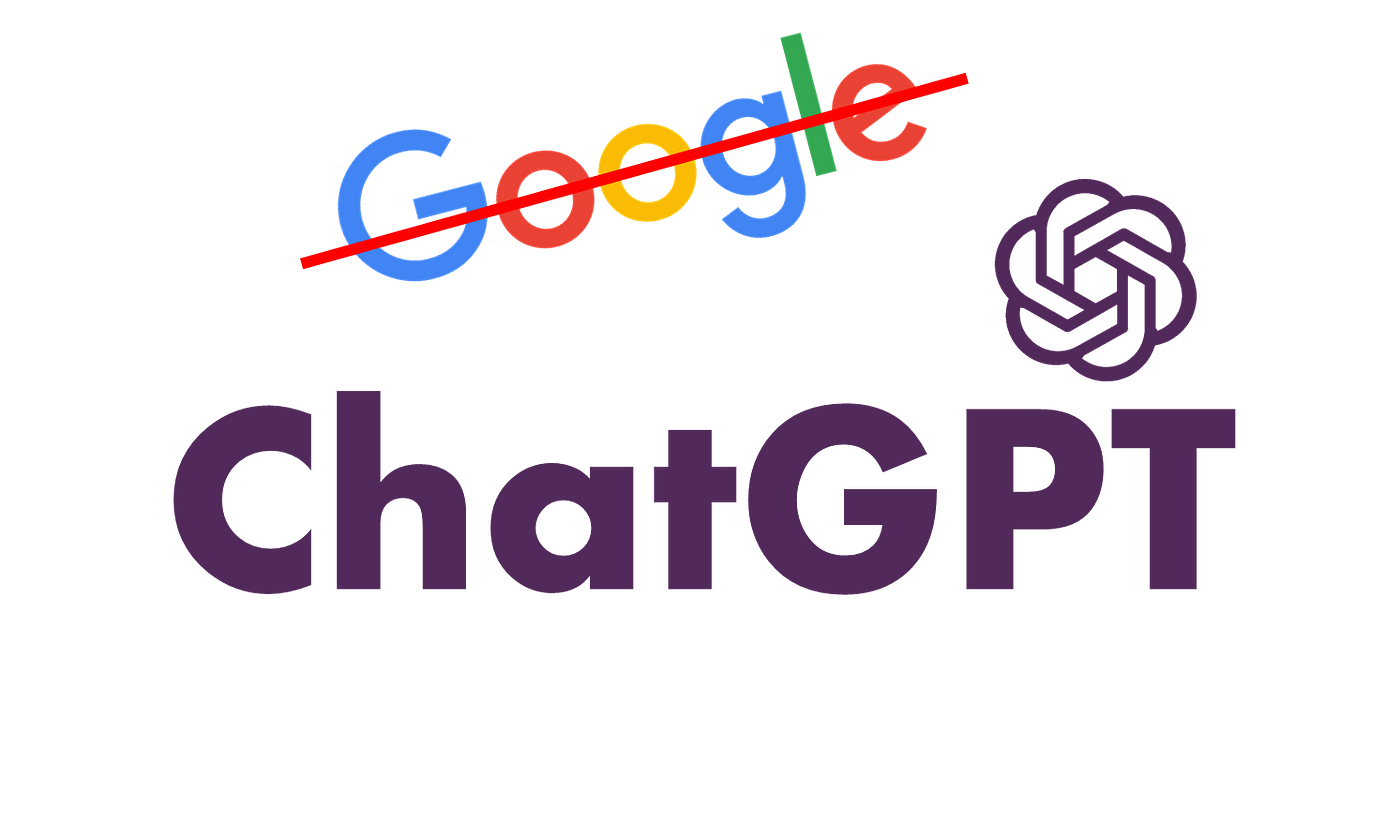





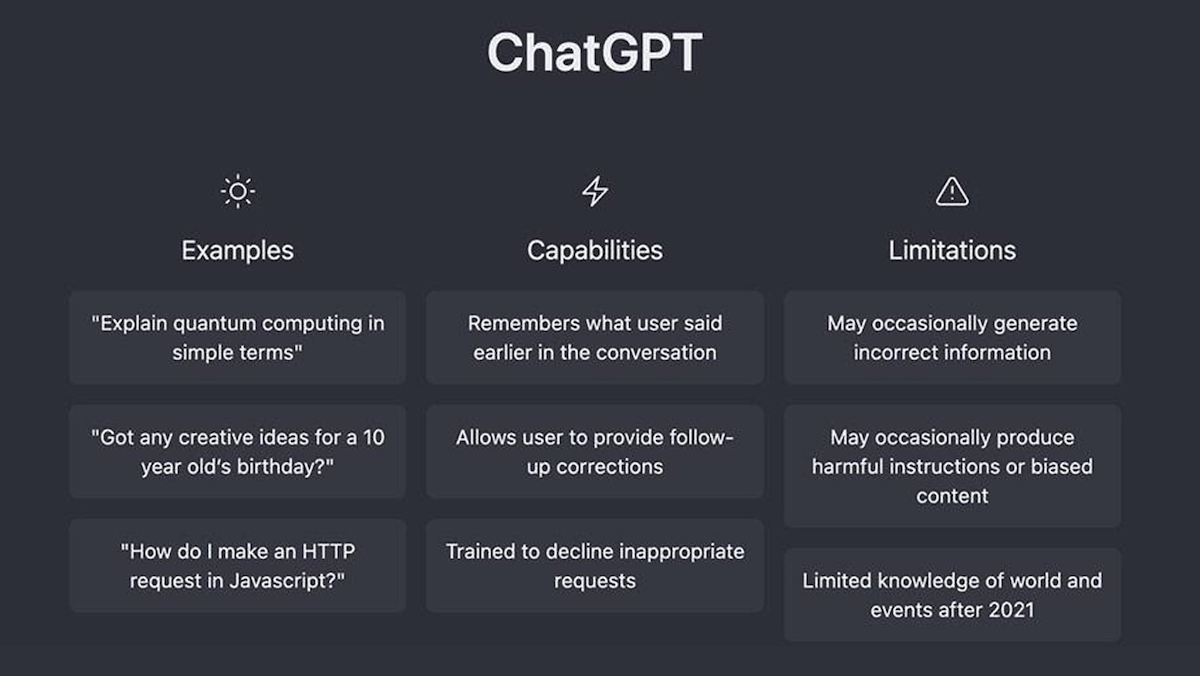



















In contrast, real experts know when to sound confident, and when to let others know they’re at the boundaries of their knowledge. Experts know, and can describe, the boundaries of what they know.
Building large language models that can accurately decide when to be confident and when not to will reduce their risk of misinformation and build trust.
Go deeper in The Batch: https://www.deeplearning.ai/the-batch/issue-174/