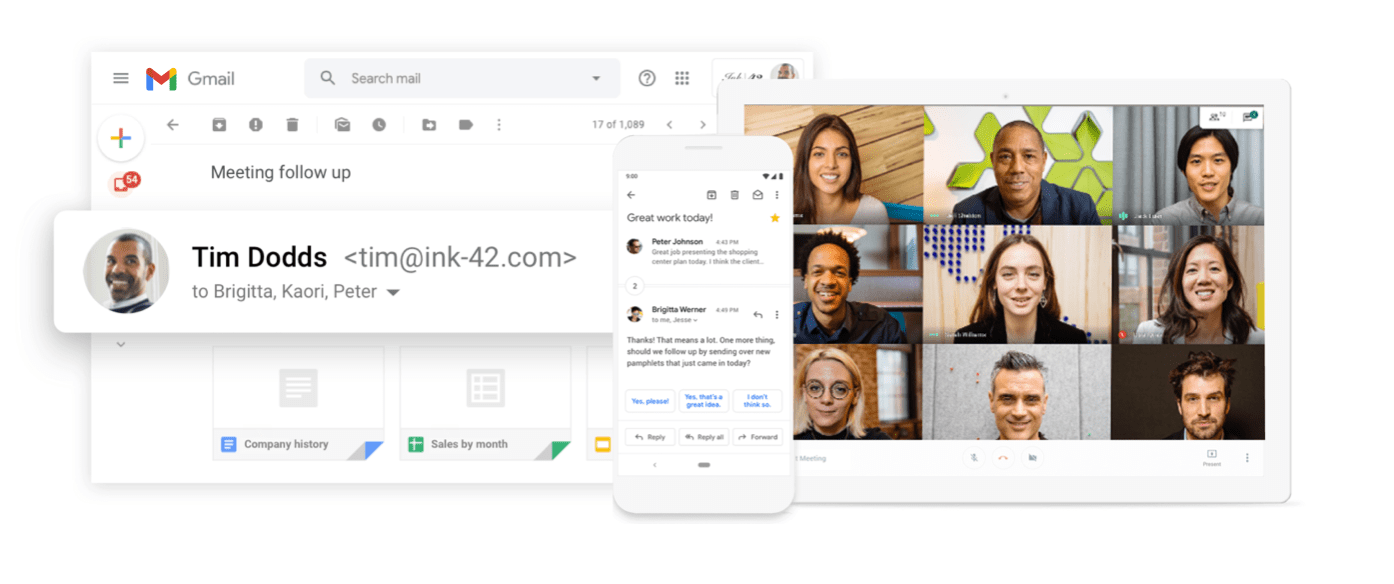
What are The Benefits and Drawbacks of Working Remotely in Africa?
Has Africa fully embraced hybrid teams, digital workspace and the use of remote workers?

The COVID-19 pandemic has forced many businesses to reevaluate the way they operate. For some, this has meant a shift to hybrid teams, with employees working remotely part of the time. For others, it’s meant a move to digital workspaces and an embrace of remote workers. But what does this mean for Africa? Has the continent fully embraced these changes? Let’s take a look.
Listen to Top 1000 Africa Quiz and Trivia Audible

The Pros of Working Remotely in Africa
There are a number of advantages to working remotely in Africa. First, it allows businesses to tap into a larger pool of talent. With more people working remotely, businesses can hire the best employees, regardless of location. Second, it can help reduce costs. With no need for office space or equipment, businesses can save money by having employees work remotely. Finally, it can promote a better work-life balance. With no need to commute, employees can have more time for family and hobbies.

The Cons of Working Remotely in Africa
However, there are also some drawbacks to working remotely in Africa. First, there is the issue of internet connectivity. While most African countries have access to high-speed internet, there are still some areas that do not. This can make it difficult for remote workers to stay connected and productive. Second, there is the issue of time zones. With workers in different time zones, it can be difficult to schedule meetings and conference calls. Finally, there is the issue of culture.
Working remotely can be isolating, and it can be difficult to build relationships with coworkers when you’re not in the same place.
The Benefits of Hybrid Teams
A hybrid team is a mix of full-time employees and freelancers or contractors who work together to achieve a common goal. This model offers a number of benefits for businesses, including increased flexibility, reduced costs, and improved access to skills and talent.
One of the biggest advantages of hybrid teams is that they offer businesses increased flexibility. With a hybrid team, businesses can scale up or down as needed, which is ideal in today’s ever-changing business landscape. Additionally, hybrid teams allow businesses to tap into a wider pool of skills and talent. And because freelancers and contractors are typically paid by the project, businesses can save money by only paying for the work that is completed.
The Digital Workspace
The digital workspace is a new way of working that enables employees to be productive from anywhere at any time. It includes cloud-based applications and services that allow employees to access their files and applications from any device with an internet connection.
The digital workspace offers a number of benefits for businesses, including increased productivity, reduced costs, and improved collaboration. Perhaps most importantly, it gives employees the freedom to work from anywhere at any time. This is especially beneficial for employees in Africa who may not have reliable access to electricity or internet connectivity.
Remote Workers in Africa
The COVID-19 pandemic has forced many businesses around the world to embrace remote work. In Africa, we are seeing a similar trend, with more and more businesses allowing employees to work from home or other remote locations. There are many reasons for this, but chief among them are increased productivity and reduced costs.
When done correctly, remote work can lead to increased productivity as employees are free to design their own schedules and work in environments that suit their needs. Additionally, remote work can help reduce costs by eliminating the need for office space and associated overhead costs.
The benefits of hybrid teams are well-documented. A study by Harvard Business Review found that companies with diverse teams are 35% more likely to outperform their peers. Another study by McKinsey & Company found that businesses with gender-diverse leadership teams are 21% more likely to generate above-average profits. In Africa, the benefits of hybrid teams are especially pronounced.
The African continent is home to a wide variety of cultures and languages. This diversity is an asset that can be leveraged by businesses to gain a competitive edge. By tapping into the talents of people from all corners of the continent, businesses can create products and services that appeal to a global market.
In addition, the use of remote workers allows businesses to tap into a wider pool of talent. By eliminating the need for employees to be physically present in an office, businesses can hire the best person for the job regardless of location. This has led to increased productivity and efficiency in the workplace.
Overall, working remotely in Africa has its pros and cons. However, with the right infrastructure and support in place, remote work can be a great option for businesses and employees alike.
The rise of hybrid teams has had a positive impact on Africa. By bringing together people with different skillsets and backgrounds, businesses have been able to create products and services that appeal to a global market. In addition, the use of remote workers has allowed businesses to tap into a wider pool of talent. This has led to increased productivity and efficiency in the workplace.
The COVID-19 pandemic has changed the way we live and work. In Africa, we are seeing a trend towards hybrid teams, the digital workspace, and remote workers. This new way of working offers a number of benefits for businesses, including increased flexibility, reduced costs, and improved access to skills and talent. As we continue to adapt to the new normal brought on by the pandemic, it is clear that these trends are here to stay.
Globle Wordle Africa: Wordle For Geography Africa
https://inRealTimeNow.com/Africa
Best Work From Home Job in Africa 2022 – 2023

HISTORY – GEOGRAPHY – CULTURE – PEOPLE – CUISINE – ECONOMICS – LANGUAGES – MUSIC – WILDLIFE – FOOTBALL – POLITICS – ANIMALS – TOURISM – SCIENCE – ENVIRONMENT
How well do you know Africa? Test your knowledge with this Africa history and geography quiz. Africa is the world’s second largest continent, and it is home to a stunning diversity of cultures, languages, and landscapes. From the Sahara Desert to the rainforests of the Congo Basin, Africa boasts a huge variety of geography. And its history is just as rich, from ancient civilizations like Egypt and Ethiopia to European colonization and the struggle for independence. So whether you’re an Africa expert or just getting started, this quiz will help you test your knowledge of this amazing continent.
Africa is a vast and fascinating continent with a rich history and diverse culture. To test your knowledge of Africa, take this Africa History and Geography Quiz. See how much you know about the people, places, and events that have shaped Africa over the centuries.
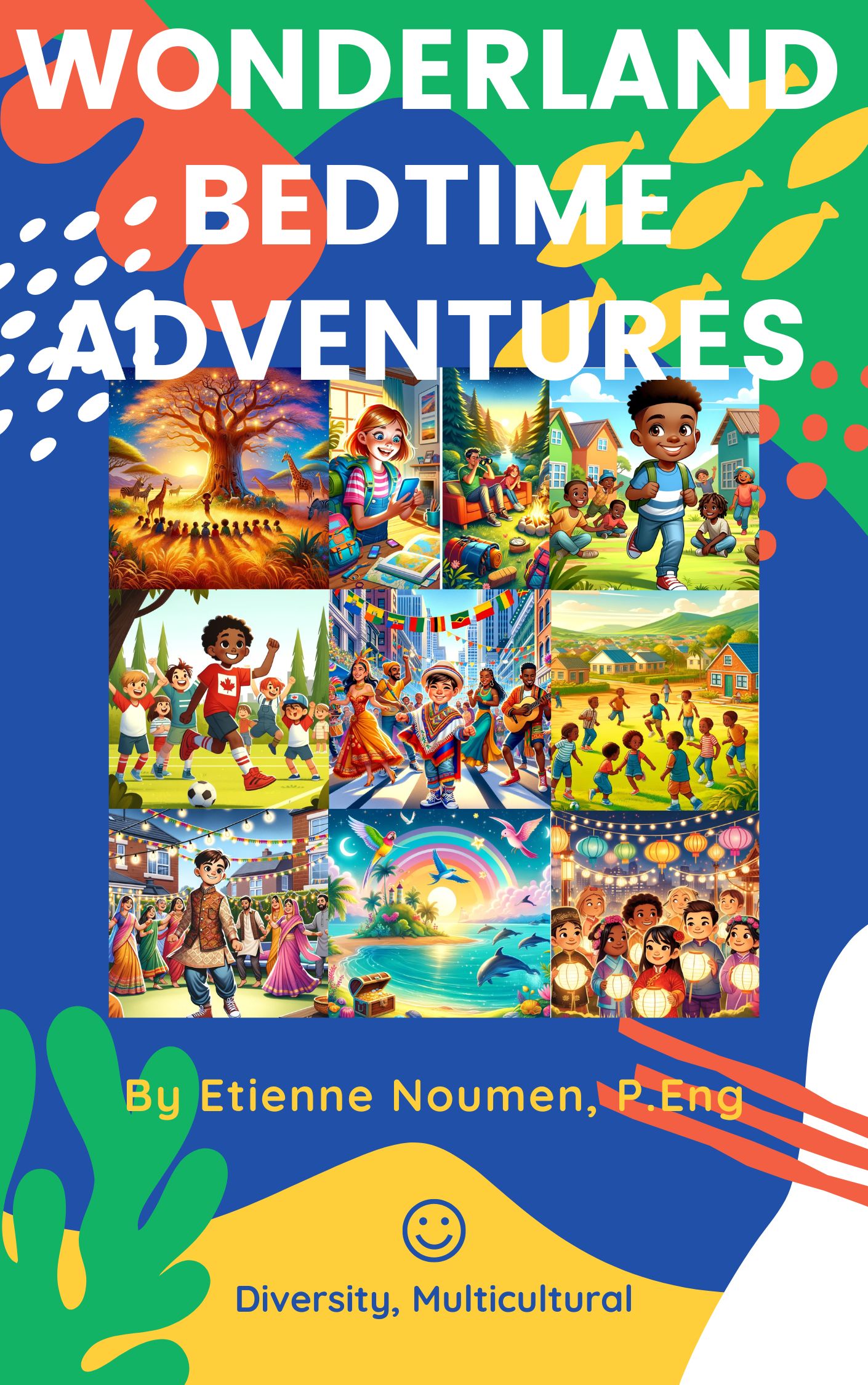
This book contains hundreds of quizzes with illustrations and answers about African History, Geography, Wildlife, Economics, Culture, Cuisine, Wildlife, Languages, Music and People and a lot more…
#africa #wakandaforever #quiz #africatourism #africageography #discoverafrica
https://play.google.com/store/
http://books.apple.com/us/
- Golfing Expats in Louga Premier Clubsby Expat Coffee (Africa on Medium) on July 27, 2024 at 1:00 am
Continue reading on Medium »
- Planning a Safari in Botswana?by MissBeast (Africa on Medium) on July 26, 2024 at 11:55 pm
Why Botswana?Continue reading on Medium »
- Planning a Safari in Kenya — Travel to Africaby MissBeast (Africa on Medium) on July 26, 2024 at 11:54 pm
Planning a Safari in Kenya — Travel to AfricaContinue reading on Medium »
- Golfing in Makeni A Haven for Expatsby Expat Coffee (Africa on Medium) on July 26, 2024 at 11:00 pm
Continue reading on Medium »
- How AI-Based Tech Can Improve Healthcare Across Africaby Aquamerge Inc. (Africa on Medium) on July 26, 2024 at 9:19 pm
Improving Access To Healthcare Across The ContinentContinue reading on Medium »
- Golfing in Bor Expat Expensesby Expat Coffee (Africa on Medium) on July 26, 2024 at 7:00 pm
Continue reading on Medium »
- Top 5 Problems with Affiliate Marketing And Their Solutions In Nigeria And Africaby Israel Anuoluwa Opadeyi | DR Copywriter | Traffic (Africa on Medium) on July 26, 2024 at 6:04 pm
Affiliate marketing, despite its proven track record as a legitimate business over the past decade, still presents hurdles for many…Continue reading on Medium »
- How to Start Affiliate Marketing in Nigeria: A Simple Step-by-Step Guideby Israel Anuoluwa Opadeyi | DR Copywriter | Traffic (Africa on Medium) on July 26, 2024 at 5:54 pm
Want to Start Affiliate Marketing today — then use these resources to guide you through every step of the process…Continue reading on Medium »
- Meta Takes Action: 63,000 Facebook Profiles Linked to Nigerian Sextortion Scams Removedby From Lagos To The World Powered By TTT Media (Africa on Medium) on July 26, 2024 at 5:51 pm
In a recent crackdown, Meta has removed approximately 63,000 Facebook profiles in Nigeria associated with financial sextortion scams.Continue reading on Medium »
- Top 5 Challenges in Affiliate Marketing and How to Overcome Them in Nigeria, Africaby Israel Anuoluwa Opadeyi | DR Copywriter | Traffic (Africa on Medium) on July 26, 2024 at 5:43 pm
Affiliate marketing is a dynamic field that promises lucrative rewards, but it’s not without its hurdles…Continue reading on Medium »
Active Hydrating Toner, Anti-Aging Replenishing Advanced Face Moisturizer, with Vitamins A, C, E & Natural Botanicals to Promote Skin Balance & Collagen Production, 6.7 Fl Oz



Age Defying 0.3% Retinol Serum, Anti-Aging Dark Spot Remover for Face, Fine Lines & Wrinkle Pore Minimizer, with Vitamin E & Natural Botanicals


Firming Moisturizer, Advanced Hydrating Facial Replenishing Cream, with Hyaluronic Acid, Resveratrol & Natural Botanicals to Restore Skin's Strength, Radiance, and Resilience, 1.75 Oz

Skin Stem Cell Serum


Smartphone 101 - Pick a smartphone for me - android or iOS - Apple iPhone or Samsung Galaxy or Huawei or Xaomi or Google Pixel
Can AI Really Predict Lottery Results? We Asked an Expert.




Djamgatech

Read Photos and PDFs Aloud for me iOS
Read Photos and PDFs Aloud for me android
Read Photos and PDFs Aloud For me Windows 10/11
Read Photos and PDFs Aloud For Amazon
Get 20% off Google Workspace (Google Meet) Business Plan (AMERICAS): M9HNXHX3WC9H7YE (Email us for more)
Get 20% off Google Google Workspace (Google Meet) Standard Plan with the following codes: 96DRHDRA9J7GTN6(Email us for more)

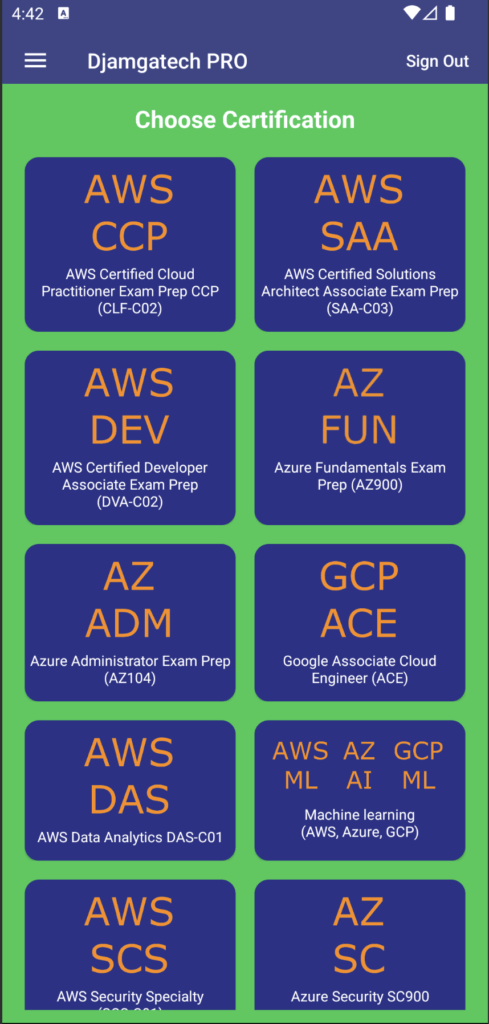

FREE 10000+ Quiz Trivia and and Brain Teasers for All Topics including Cloud Computing, General Knowledge, History, Television, Music, Art, Science, Movies, Films, US History, Soccer Football, World Cup, Data Science, Machine Learning, Geography, etc....

List of Freely available programming books - What is the single most influential book every Programmers should read
- Bjarne Stroustrup - The C++ Programming Language
- Brian W. Kernighan, Rob Pike - The Practice of Programming
- Donald Knuth - The Art of Computer Programming
- Ellen Ullman - Close to the Machine
- Ellis Horowitz - Fundamentals of Computer Algorithms
- Eric Raymond - The Art of Unix Programming
- Gerald M. Weinberg - The Psychology of Computer Programming
- James Gosling - The Java Programming Language
- Joel Spolsky - The Best Software Writing I
- Keith Curtis - After the Software Wars
- Richard M. Stallman - Free Software, Free Society
- Richard P. Gabriel - Patterns of Software
- Richard P. Gabriel - Innovation Happens Elsewhere
- Code Complete (2nd edition) by Steve McConnell
- The Pragmatic Programmer
- Structure and Interpretation of Computer Programs
- The C Programming Language by Kernighan and Ritchie
- Introduction to Algorithms by Cormen, Leiserson, Rivest & Stein
- Design Patterns by the Gang of Four
- Refactoring: Improving the Design of Existing Code
- The Mythical Man Month
- The Art of Computer Programming by Donald Knuth
- Compilers: Principles, Techniques and Tools by Alfred V. Aho, Ravi Sethi and Jeffrey D. Ullman
- Gödel, Escher, Bach by Douglas Hofstadter
- Clean Code: A Handbook of Agile Software Craftsmanship by Robert C. Martin
- Effective C++
- More Effective C++
- CODE by Charles Petzold
- Programming Pearls by Jon Bentley
- Working Effectively with Legacy Code by Michael C. Feathers
- Peopleware by Demarco and Lister
- Coders at Work by Peter Seibel
- Surely You're Joking, Mr. Feynman!
- Effective Java 2nd edition
- Patterns of Enterprise Application Architecture by Martin Fowler
- The Little Schemer
- The Seasoned Schemer
- Why's (Poignant) Guide to Ruby
- The Inmates Are Running The Asylum: Why High Tech Products Drive Us Crazy and How to Restore the Sanity
- The Art of Unix Programming
- Test-Driven Development: By Example by Kent Beck
- Practices of an Agile Developer
- Don't Make Me Think
- Agile Software Development, Principles, Patterns, and Practices by Robert C. Martin
- Domain Driven Designs by Eric Evans
- The Design of Everyday Things by Donald Norman
- Modern C++ Design by Andrei Alexandrescu
- Best Software Writing I by Joel Spolsky
- The Practice of Programming by Kernighan and Pike
- Pragmatic Thinking and Learning: Refactor Your Wetware by Andy Hunt
- Software Estimation: Demystifying the Black Art by Steve McConnel
- The Passionate Programmer (My Job Went To India) by Chad Fowler
- Hackers: Heroes of the Computer Revolution
- Algorithms + Data Structures = Programs
- Writing Solid Code
- JavaScript - The Good Parts
- Getting Real by 37 Signals
- Foundations of Programming by Karl Seguin
- Computer Graphics: Principles and Practice in C (2nd Edition)
- Thinking in Java by Bruce Eckel
- The Elements of Computing Systems
- Refactoring to Patterns by Joshua Kerievsky
- Modern Operating Systems by Andrew S. Tanenbaum
- The Annotated Turing
- Things That Make Us Smart by Donald Norman
- The Timeless Way of Building by Christopher Alexander
- The Deadline: A Novel About Project Management by Tom DeMarco
- The C++ Programming Language (3rd edition) by Stroustrup
- Patterns of Enterprise Application Architecture
- Computer Systems - A Programmer's Perspective
- Agile Principles, Patterns, and Practices in C# by Robert C. Martin
- Growing Object-Oriented Software, Guided by Tests
- Framework Design Guidelines by Brad Abrams
- Object Thinking by Dr. David West
- Advanced Programming in the UNIX Environment by W. Richard Stevens
- Hackers and Painters: Big Ideas from the Computer Age
- The Soul of a New Machine by Tracy Kidder
- CLR via C# by Jeffrey Richter
- The Timeless Way of Building by Christopher Alexander
- Design Patterns in C# by Steve Metsker
- Alice in Wonderland by Lewis Carol
- Zen and the Art of Motorcycle Maintenance by Robert M. Pirsig
- About Face - The Essentials of Interaction Design
- Here Comes Everybody: The Power of Organizing Without Organizations by Clay Shirky
- The Tao of Programming
- Computational Beauty of Nature
- Writing Solid Code by Steve Maguire
- Philip and Alex's Guide to Web Publishing
- Object-Oriented Analysis and Design with Applications by Grady Booch
- Effective Java by Joshua Bloch
- Computability by N. J. Cutland
- Masterminds of Programming
- The Tao Te Ching
- The Productive Programmer
- The Art of Deception by Kevin Mitnick
- The Career Programmer: Guerilla Tactics for an Imperfect World by Christopher Duncan
- Paradigms of Artificial Intelligence Programming: Case studies in Common Lisp
- Masters of Doom
- Pragmatic Unit Testing in C# with NUnit by Andy Hunt and Dave Thomas with Matt Hargett
- How To Solve It by George Polya
- The Alchemist by Paulo Coelho
- Smalltalk-80: The Language and its Implementation
- Writing Secure Code (2nd Edition) by Michael Howard
- Introduction to Functional Programming by Philip Wadler and Richard Bird
- No Bugs! by David Thielen
- Rework by Jason Freid and DHH
- JUnit in Action
#BlackOwned #BlackEntrepreneurs #BlackBuniness #AWSCertified #AWSCloudPractitioner #AWSCertification #AWSCLFC02 #CloudComputing #AWSStudyGuide #AWSTraining #AWSCareer #AWSExamPrep #AWSCommunity #AWSEducation #AWSBasics #AWSCertified #AWSMachineLearning #AWSCertification #AWSSpecialty #MachineLearning #AWSStudyGuide #CloudComputing #DataScience #AWSCertified #AWSSolutionsArchitect #AWSArchitectAssociate #AWSCertification #AWSStudyGuide #CloudComputing #AWSArchitecture #AWSTraining #AWSCareer #AWSExamPrep #AWSCommunity #AWSEducation #AzureFundamentals #AZ900 #MicrosoftAzure #ITCertification #CertificationPrep #StudyMaterials #TechLearning #MicrosoftCertified #AzureCertification #TechBooks
Top 1000 Canada Quiz and trivia: CANADA CITIZENSHIP TEST- HISTORY - GEOGRAPHY - GOVERNMENT- CULTURE - PEOPLE - LANGUAGES - TRAVEL - WILDLIFE - HOCKEY - TOURISM - SCENERIES - ARTS - DATA VISUALIZATION

Top 1000 Africa Quiz and trivia: HISTORY - GEOGRAPHY - WILDLIFE - CULTURE - PEOPLE - LANGUAGES - TRAVEL - TOURISM - SCENERIES - ARTS - DATA VISUALIZATION
Exploring the Pros and Cons of Visiting All Provinces and Territories in Canada.


Exploring the Advantages and Disadvantages of Visiting All 50 States in the USA

Health Health, a science-based community to discuss health news and the coronavirus (COVID-19) pandemic
- The pull-out method: Why this common contraceptive fails to deliverby /u/Kampala_Dispatch on July 26, 2024 at 7:51 pm
submitted by /u/Kampala_Dispatch [link] [comments]
- Health Canada data reveals surprising number of adverse cannabis reactions (spoiler: it's small)by /u/carajuana_readit on July 26, 2024 at 5:49 pm
submitted by /u/carajuana_readit [link] [comments]
- Online portals deliver scary health news before doctors can weigh inby /u/washingtonpost on July 26, 2024 at 4:37 pm
submitted by /u/washingtonpost [link] [comments]
- Vaccine 'sharply cuts risk of dementia' new study findsby /u/SubstantialSnow7114 on July 26, 2024 at 1:53 pm
submitted by /u/SubstantialSnow7114 [link] [comments]
- Calls to limit sexual partners as mpox makes a resurgence in Australiaby /u/boppinmule on July 26, 2024 at 12:31 pm
submitted by /u/boppinmule [link] [comments]
Today I Learned (TIL) You learn something new every day; what did you learn today? Submit interesting and specific facts about something that you just found out here.
- TIL that in Thailand, if your spouse cheats on you, you can legally sue their lover for damages and can receive up to 5,000,000 THB ($140,000 USD) or more under Section 1523 of the Thai Civil and Commercial Codeby /u/Mavrokordato on July 26, 2024 at 6:57 pm
submitted by /u/Mavrokordato [link] [comments]
- TIL that with a population of 170 million people, Bangladesh is the most populous country to have never won a medal at the Olympic Games.by /u/Blackraven2007 on July 26, 2024 at 6:49 pm
submitted by /u/Blackraven2007 [link] [comments]
- TIL a psychologist got himself admitted to a mental hospital by claiming he heard the words "empty", "hollow" and "thud" in his head. Then, it took him two months to convince them he was sane, after agreeing he was insane and accepting medication.by /u/Hadeverse-050 on July 26, 2024 at 6:44 pm
submitted by /u/Hadeverse-050 [link] [comments]
- TIL Senator John Edwards of NC, USA cheated on his wife and had a child with another woman. He tried to deny it but eventually caved and admitted his mistake. He used campaign funds and was indicted by a grand jury. His life story inspired the show "The Good Wife" by Robert & Michelle Kingby /u/AdvisorPast637 on July 26, 2024 at 6:09 pm
submitted by /u/AdvisorPast637 [link] [comments]
- TIL Zhang Shuhong was a Chinese businessman who committed suicide after toys made at his factory for Fisher-Price (a division of Mattel) were found to contain lead paintby /u/Hopeful-Candle-4884 on July 26, 2024 at 4:43 pm
submitted by /u/Hopeful-Candle-4884 [link] [comments]
Reddit Science This community is a place to share and discuss new scientific research. Read about the latest advances in astronomy, biology, medicine, physics, social science, and more. Find and submit new publications and popular science coverage of current research.
- Human decision makers who possess the authority to override ML predictions may impede the self-correction of discriminatory models and even induce initially unbiased models to become discriminatory with timeby /u/f1u82ypd on July 26, 2024 at 6:29 pm
submitted by /u/f1u82ypd [link] [comments]
- Study uses Game of Thrones (GOT) to advance understanding of face blindness: Psychologists have used the TV series GOT to understand how the brain enables us to recognise faces. Their findings provide new insights into prosopagnosia or face blindness, a condition that impairs facial recognition.by /u/AnnaMouse247 on July 26, 2024 at 5:14 pm
submitted by /u/AnnaMouse247 [link] [comments]
- Specific genes may be related to the trajectory of recovery for stroke survivors, study finds. Researchers say genetic variants were strongly associated with depression, PTSD and cognitive health outcomes. Findings may provide useful insights for developing targeted therapies.by /u/AnnaMouse247 on July 26, 2024 at 5:08 pm
submitted by /u/AnnaMouse247 [link] [comments]
- New experimental drug shows promise in clearing HIV from brain: originally developed to treat cancer, study finds that by targeting infected cells in the brain, drug may clear virus from hidden areas that have been a major challenge in HIV treatment.by /u/AnnaMouse247 on July 26, 2024 at 4:57 pm
submitted by /u/AnnaMouse247 [link] [comments]
- Rapid diagnosis sepsis tests could decrease result wait times from days to hours, researchers report in Natureby /u/Science_News on July 26, 2024 at 3:50 pm
submitted by /u/Science_News [link] [comments]
Reddit Sports Sports News and Highlights from the NFL, NBA, NHL, MLB, MLS, and leagues around the world.
- Charles Barkley leaves door open to post-TNT job optionsby /u/PrincessBananas85 on July 26, 2024 at 8:47 pm
submitted by /u/PrincessBananas85 [link] [comments]
- Report: Nuggets sign Westbrook to 2-year, $6.8M dealby /u/Oldtimer_2 on July 26, 2024 at 8:13 pm
submitted by /u/Oldtimer_2 [link] [comments]
- Dolphins signing Tua to 4-year, $212.4M extensionby /u/Oldtimer_2 on July 26, 2024 at 8:09 pm
submitted by /u/Oldtimer_2 [link] [comments]
- Rams cornerback Derion Kendrick suffers season-ending torn ACLby /u/Oldtimer_2 on July 26, 2024 at 8:06 pm
submitted by /u/Oldtimer_2 [link] [comments]
- Hosting the Olympics has become financially untenable, economists sayby /u/toaster_strudel_ on July 26, 2024 at 7:34 pm
submitted by /u/toaster_strudel_ [link] [comments]