AI Dashboard is available on the Web, Apple, Google, and Microsoft, PRO version
Welcome to the Top 100 AWS Certified Cloud Practitioner Exam Preparation Questions and Answers Dumps :
Table of Content:
Top 100 Questions and Answers Dumps,
Courses, Labs and Training Materials,
Get 20% off Google Google Workspace (Google Meet) Standard Plan with the following codes: 96DRHDRA9J7GTN6
 Get 20% off Google Workspace (Google Meet) Business Plan (AMERICAS): M9HNXHX3WC9H7YE (Email us for more codes)
Active Anti-Aging Eye Gel, Reduces Dark Circles, Puffy Eyes, Crow's Feet and Fine Lines & Wrinkles, Packed with Hyaluronic Acid & Age Defying Botanicals

Jobs,

AWS Cloud Support Engineer Job Interview Prep,
Top 20 AWS Training and Certification Q&A ,
Latest Products & Services at AWS RE:INVENT


The AWS Certified Cloud Practitioner average salary is — $131,465/year
What is the AWS Certified Cloud Practitioner Exam?
The AWS Certified Cloud Practitioner Exam (CLF-C02) is an introduction to AWS services and the intention is to examine the candidates ability to define what the AWS cloud is and its global infrastructure. It provides an overview of AWS core services security aspects, pricing and support services. The main objective is to provide an overall understanding about the Amazon Web Services Cloud platform. The course helps you get the conceptual understanding of the AWS and can help you know about the basics of AWS and cloud computing, including the services, cases and benefits [Get AWS CCP Practice Exam PDF Dumps here]

2023 AWS CCP CLF-C02 Practice Exam Course on – Top 250+ Questions and Detailed Answers – Success Guaranteed – Save 50% with this link


AWS CCP CLF-C02 on Android – AWS CCP CLF-C02 on iOS – AWS CCP CLF-C02 on Windows 10/11


To succeed with the real exam, do not memorize the answers below. It is very important that you understand why a question is right or wrong and the concepts behind it by carefully reading the reference documents in the answers.
AWS Certified Cloud Practitioner Exam Prep (CLF-C02) Questions and Answers

AWS Certified Cloud Practitioner Exam Certification Prep Quiz App
Download AWS Cloud Practitioner Exam Prep Pro App (No Ads, Full Version with Answers) for:
AWS CCP CLF-C02 on Android – AWS CCP CLF-C02 on iOS – AWS CCP CLF-C02 on Windows 10/11
Below we are providing you with:
- aws cloud practitioner exam questions
- aws cloud practitioner sample questions
- aws cloud practitioner exam dumps
- aws cloud practitioner practice questions and answers
- aws cloud practitioner practice exam questions and references
Q1: For auditing purposes, your company now wants to monitor all API activity for all regions in your AWS environment. What can you use to fulfill this new requirement?
- A. For each region, enable CloudTrail and send all logs to a bucket in each region.
- B. Enable CloudTrail for all regions.
- C. Ensure one CloudTrail is enabled for all regions.
- D. Use AWS Config to enable the trail for all regions.
Answer:
Top
Q2: What is the best solution to provide secure access to an S3 bucket not using the internet?
- A. Use a VPN connection.
- B. Use an Internet Gateway.
- C. Use a VPC Endpoint to access S3.
- D. Use a NAT Gateway.
Answer:
Top
Q3: In the AWS Shared Responsibility Model, which of the following are the responsibility of AWS?
- A. Securing Edge Locations
- B. Encrypting data
- C. Password policies
- D. Decomissioning data
Answer:

Top
Q4: You have EC2 instances running at 90% utilization and you expect this to continue for at least a year. What type of EC2 instance would you choose to ensure your cost stay at a minimum?
- A. Dedicated host instances
- B. On-demand instances
- C. Spot instances
- D. Reserved instances
Answer:
Top
Q5: What tool would you use to get an estimated monthly cost for your environment?
- A. TCO Calculator
- B. Simply Monthly Calculator
- C. Cost Explorer
- D. Consolidated Billing
Answer:
Top
Q6: How do you make sure your organization does not exceed its monthly budget?

AWS CCP CLF-C01 on Android – AWS CCP CLF-C01 on iOS – AWS CCP CLF-C01 on Windows 10/11
Get AWS Certified Cloud Practitioner Practice Exam CCP CLF-C02 eBook Print Book here
- A. Sign up for the free alert under filing preferences in the AWS Management Console.
- B. Set a schedule to regularly review the Billing an Cost Management dashboard each month.
- C. Create an email alert in AWS Budget
- D. In CloudWatch, create an alarm that triggers each time the limit is exceeded.
Answer:
Top
Q7: An Edge Location is a specialization AWS data centre that works with which services?
- A. Lambda
- B. CloudWatch
- C. CloudFront
- D. Route 53
Answer:
Top
Q8: What is the preferred method of linking 2 AWS accounts?
- A. AWS Organizations
- B. Cost Explorer
- C. VPC Peering
- D. Consolidated billing
Answer:
Top
Q9: Which of the following service is most useful when a Disaster Recovery method is triggered in AWS.
- A. Amazon Route 53
- B. Amazon SNS
- C. Amazon SQS
- D. Amazon Inspector
Answer:
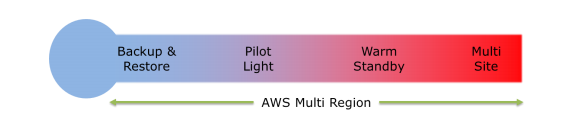
Q10: Which of the following disaster recovery deployment mechanisms that has the highest downtime
- A. Pilot light
- B. Warm standby
- C. Multi Site
- D. Backup and Restore
Answer: iOS – Android [Get AWS Certified Cloud Practitioner Exam Practice CCP CLF-C01 eBook Print Book here]
AWS CCP CLF-C01 on Android – AWS CCP CLF-C01 on iOS – AWS CCP CLF-C01 on Windows 10/11 [Get AWS CCP Practice Exam PDF Dumps here]
Q11: Your company is planning to host resources in the AWS Cloud. They want to use services which can be used to decouple resources hosted on the cloud. Which of the following services can help fulfil this requirement?
- A. AWS EBS Volumes
- B. AWS EBS Snapshots
- C. AWS Glacier
- D. AWS SQS
Answer:
Q12: If you have a set of frequently accessed files that are used on a daily basis, what S3 storage class should you store them in?
- A. Infrequent Access
- B. Fast Access
- C. Reduced Redundancy
- D. Standard
Answer:
AWS CCP CLF-C01 on Android – AWS CCP CLF-C01 on iOS – AWS CCP CLF-C01 on Windows 10/11 [Get AWS CCP Practice Exam PDF Dumps here]
Q13: What is the availability and durability rating of S3 Standard Storage Class?
Choose the correct answer:
- A. 99.999999999% Durability and 99.99% Availability
- B. 99.999999999% Availability and 99.90% Durability
- C. 99.999999999% Durability and 99.00% Availability
- D. 99.999999999% Availability and 99.99% Durability
Answer:
Q14: What AWS database is primarily used to analyze data using standard SQL formatting with compatibility for your existing business intelligence tools
- A. Redshift
- B. RDS
- C. DynamoDB
- D. ElastiCache
Answer:
Q15: What are the benefits of DynamoDB?
Choose the 3 correct answers:
- A. Single-digit millisecond latency.
- B. Supports multiple known NoSQL database engines like MariaDB and Oracle NoSQL.
- C. Supports both document and key-value store data models.
- D. Automatic scaling of throughput capacity.
Answer:
AWS CCP CLF-C01 on Android – AWS CCP CLF-C01 on iOS – AWS CCP CLF-C01 on Windows 10/11
[Get AWS CCP Practice Exam PDF Dumps here]
Q16: Which of the following are the benefits of AWS Organizations?
Choose the 2 correct answers:
- A. Analyze cost before migrating to AWS.
- B. Centrally manage access polices across multiple AWS accounts.
- C. Automate AWS account creation and management.
- D. Provide technical help (by AWS) for issues in your AWS account.
Answer: iOS – Android [Get AWS CCP Practice Exam PDF Dumps here]
Q17: There is a requirement hosting a set of servers in the Cloud for a short period of 3 months. Which of the following types of instances should be chosen to be cost effective.
- A. Spot Instances
- B. On-Demand
- C. No Upfront costs Reserved
- D. Partial Upfront costs Reserved
Answer:
Q18: Which of the following is not a disaster recovery deployment technique.
- A. Pilot light
- B. Warm standby
- C. Single Site
- D. Multi-Site
Answer:
Top
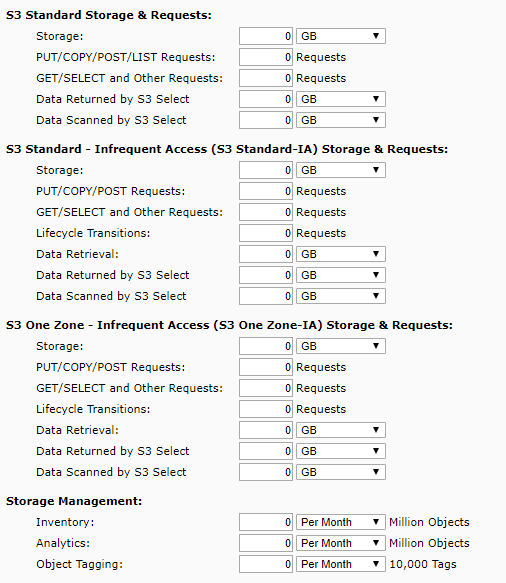
Q19: Which of the following are attributes to the costing for using the Simple Storage Service. Choose 2 answers from the options given below
- A. The storage class used for the objects stored.
- B. Number of S3 buckets.
- C. The total size in gigabytes of all objects stored.
- D. Using encryption in S3
Answer:
Q20: What endpoints are possible to send messages to with Simple Notification Service?
Choose the 3 correct answers:
- A. SQS
- B. SMS
- C. FTP
- D. Lambda
Answer:
Top
AWS CCP CLF-C01 on Android – AWS CCP CLF-C01 on iOS – AWS CCP CLF-C01 on Windows 10/11
Q21: What service helps you to aggregate logs from your EC2 instance? Choose one answer from the options below:
- A. SQS
- B. S3
- C. Cloudtrail
- D. Cloudwatch Logs
Answer:
Q22: A company is deploying a new two-tier web application in AWS. The company wants to store their most frequently used data so that the response time for the application is improved. Which AWS service provides the solution for the company’s requirements?
- A. MySQL Installed on two Amazon EC2 Instances in a single Availability Zone
- B. Amazon RDS for MySQL with Multi-AZ
- C. Amazon ElastiCache
- D. Amazon DynamoDB
Answer:
Top
Q23: You have a distributed application that periodically processes large volumes of data across multiple Amazon EC2 Instances. The application is designed to recover gracefully from Amazon EC2 instance failures. You are required to accomplish this task in the most cost-effective way. Which of the following will meet your requirements?
- A. Spot Instances
- B. Reserved Instances
- C. Dedicated Instances
On-Demand Instances
Answer:
Top
AWS CCP CLF-C01 on Android – AWS CCP CLF-C01 on iOS – AWS CCP CLF-C01 on Windows 10/11
Q24: Which of the following features is associated with a Subnet in a VPC to protect against Incoming traffic requests?
- A. AWS Inspector
- B. Subnet Groups
- C. Security Groups
- D. NACL
Answer:
Top
Q25: A company is deploying a two-tier, highly available web application to AWS. Which service provides durable storage for static content while utilizing Overall CPU resources for the web tier?
- A. Amazon EBC volume.
- B. Amazon S3
- C. Amazon EC2 instance store
- D. Amazon RDS instance
Answer:
Top
Q26: What are characteristics of Amazon S3?
Choose 2 answers from the options given below.
- A. S3 allows you to store objects of virtually unlimited size.
- B. S3 allows you to store unlimited amounts of data.
- C. S3 should be used to host relational database.
- D. Objects are directly accessible via a URL.
Answer:
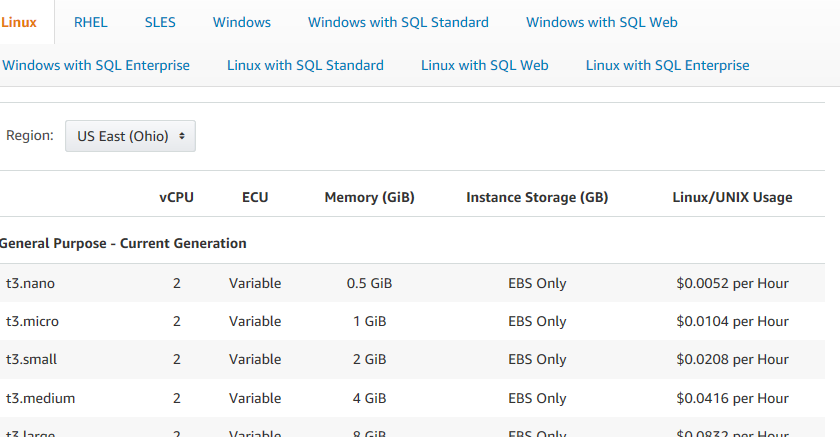
Q26: When working on the costing for on-demand EC2 instances , which are the following are attributes which determine the costing of the EC2 Instance. Choose 3 answers from the options given below
- A. Instance Type
- B. AMI Type
- C. Region
- D. Edge location
Answer:
Q27: You have a mission-critical application which must be globally available at all times. If this is the case, which of the below deployment mechanisms would you employ
- A. Deployment to multiple edge locations
- B. Deployment to multiple Availability Zones
- D. Deployment to multiple Data Centers
- D. Deployment to multiple Regions
Answer:
Q28: Which of the following are right principles when designing cloud based systems. Choose 2 answers from the options below
- A. Build Tightly-coupled components
- B. Build loosely-coupled components
- C. Assume everything will fail
- D. Use as many services as possible
Answer:
Q29: You have 2 accounts in your AWS account. One for the Dev and the other for QA. All are part of consolidated billing. The master account has purchase 3 reserved instances. The Dev department is currently using 2 reserved instances. The QA team is planning on using 3 instances which of the same instance type. What is the pricing tier of the instances that can be used by the QA Team?
- A. No Reserved and 3 on-demand
- B. One Reserved and 2 on-demand
- C. Two Reserved and 1 on-demand
- D. Three Reserved and no on-demand
Answer:
Q30: Which one of the following features is normally present in all of AWS Support plans
- A. 24/7 access to Customer Service
- B. Access to all features in the Trusted Advisor
- C. A technical Account Manager
- D. A dedicated support person
Answer:

Q31: Which of the following storage mechanisms can be used to store messages effectively which can be used across distributed systems?
- A. Amazon Glacier
- B. Amazon EBS Volumes
- C. Amazon EBS Snapshots
- D. Amazon SQS
Answer:
Q32: You are exploring what services AWS has off-hand. You have a large number of data sets that need to be processed. Which of the following services can help fulfil this requirement.
- A. EMR
- B. S3
- C. Glacier
- D. Storage Gateway
Answer:
Q33: Which of the following services allows you to analyze EC2 Instances against pre-defined security templates to check for vulnerabilities
- A. AWS Trusted Advisor
- B. AWS Inspector
- C. AWS WAF
- D. AWS Shield
Answer:
Top
Q34: Your company is planning to offload some of the batch processing workloads on to AWS. These jobs can be interrupted and resumed at any time. Which of the following instance types would be the most cost effective to use for this purpose.
- A. On-Demand
- B. Spot
- C. Full Upfront Reserved
- D. Partial Upfront Reserved
Answer:
AWS CCP CLF-C01 on Android – AWS CCP CLF-C01 on iOS – AWS CCP CLF-C01 on Windows 10/11
Q35: Which of the following is not a category recommendation given by the AWS Trusted Advisor?
- A. Security
- B. High Availability
- C. Performance
- D. Fault tolerance
Answer:

Q36: Which of the below cannot be used to get data onto Amazon Glacier.
- A. AWS Glacier API
- B. AWS Console
- C. AWS Glacier SDK
- D. AWS S3 Lifecycle policies
Answer:
Q37: Which of the following from AWS can be used to transfer petabytes of data from on-premise locations to the AWS Cloud.
- A. AWS Import/Export
- B. AWS EC2
- C. AWS Snowball
- D. AWS Transfer
Answer:
Q38: Which of the following services allows you to analyze EC2 Instances against pre-defined security templates to check for vulnerabilities
- A. AWS Trusted Advisor
- B. AWS Inspector
- C. AWS WAF
- D. AWS Shield
Answer:
Top
Q39: Your company wants to move an existing Oracle database to the AWS Cloud. Which of the following services can help facilitate this move.
- A. AWS Database Migration Service
- B. AWS VM Migration Service
- C. AWS Inspector
- D. AWS Trusted Advisor
Answer:
Top
AWS CCP CLF-C01 on Android – AWS CCP CLF-C01 on iOS – AWS CCP CLF-C01 on Windows 10/11
Q40: Which of the following features of AWS RDS allows for offloading reads of the database.
- A. Cross region replication
- B. Creating Read Replica’s
- C. Using snapshots
- D. Using Multi-AZ feature
Answer:
Top
Q41: Which of the following does AWS perform on its behalf for EBS volumes to make it less prone to failure?
- A. Replication of the volume across Availability Zones
- B. Replication of the volume in the same Availability Zone
- C. Replication of the volume across Regions
- D. Replication of the volume across Edge locations
Answer:
Q42: Your company is planning to host a large e-commerce application on the AWS Cloud. One of their major concerns is Internet attacks such as DDos attacks.
Which of the following services can help mitigate this concern. Choose 2 answers from the options given below
- A. A. Cloudfront
- B. AWS Shield
- C. C. AWS EC2
- D. AWS Config
Answer:
Q43: Which of the following are 2 ways that AWS allows to link accounts
- A. Consolidating billing
- B. AWS Organizations
- C. Cost Explorer
- D. IAM
Answer:
Q44: Which of the following helps in DDos protection. Choose 2 answers from the options given below
- A. Cloudfront
- B. AWS Shield
- C. AWS EC2
- D. AWS Config
Answer:
Q45: Which of the following can be used to call AWS services from programming languages
- A. AWS SDK
- B. AWS Console
- C. AWS CLI
- D. AWS IAM
Answer:
Q46: A company wants to host a self-managed database in AWS. How would you ideally implement this solution?
- A. Using the AWS DynamoDB service
- B. Using the AWS RDS service
- C. Hosting a database on an EC2 Instance
- D. Using the Amazon Aurora service
Answer:
Q47: When creating security groups, which of the following is a responsibility of the customer. Choose 2 answers from the options given below.
- A. Giving a name and description for the security group
- B. Defining the rules as per the customer requirements.
- C. Ensure the rules are applied immediately
- D. Ensure the security groups are linked to the Elastic Network interface
Answer:
Q48: There is a requirement to host a database server for a minimum period of one year. Which of the following would result in the least cost?
- A. Spot Instances
- B. On-Demand
- C. No Upfront costs Reserved
- D. Partial Upfront costs Reserved
Answer:
Q49: Which of the below can be used to import data into Amazon Glacier?
Choose 3 answers from the options given below:
- A. AWS Glacier API
- B. AWS Console
- C. AWS Glacier SDK
- D. AWS S3 Lifecycle policies
Answer:
Q50: Which of the following can be used to secure EC2 Instances hosted in AWS. Choose 2 answers
- A. Usage of Security Groups
- B. Usage of AMI’s
- C. Usage of Network Access Control Lists
- D. Usage of the Internet gateway
Answer:
Q51: Which of the following can be used to host virtual servers on AWS
- A. AWS IAM
- B. AWS Server
- C. AWS EC2
- D. AWS Regions
Answer:
Q52: You plan to deploy an application on AWS. This application needs to be PCI Compliant. Which of the below steps are needed to ensure the compliance? Choose 2 answers from the below list:
- A. Choose AWS services which are PCI Compliant
- B. Ensure the right steps are taken during application development for PCI Compliance
- C. Encure the AWS Services are made PCI Compliant
- D. Do an audit after the deployment of the application for PCI Compliance.
Answer:
Q54: The Trusted Advisor service provides insight regarding which four categories of an AWS account?
- A. Security, fault tolerance, high availability, performance and Service Limits
- B. Security, access control, high availability, performance and Service Limits
- C. Performance, cost optimization, Security, fault tolerance and Service Limits
- D. Performance, cost optimization, Access Control, Connectivity, and Service Limits
Answer:
Top
Q55: As per the AWS Acceptable Use Policy, penetration testing of EC2 instances
- A. May be performed by AWS, and will be performed by AWS upon customer request
- B. May be performed by AWS, and is periodically performed by AWS
- C. Are expressly prohibited under all circumtances
- D. May be performed by the customer on their own instances with prior authorization from AWS
- E. May be performed by the customer on their own instances, only if performed from EC2 instances
Answer:
Top
Q56: What is the AWS feature that enables fast, easy, and secure transfers of files over long distances between your client and your Amazon S3 bucket
- A. File Transfer
- B. HTTP Transfer
- C. Transfer Acceleration
- D. S3 Acceleration
Answer:
Top
Q56: What best describes an AWS region?
Choose the correct answer:
- A. The physical networking connections between Availability Zones.
- B. A specific location where an AWS data center is located.
- C. A collection of DNS servers.
- D. An isolated collection of AWS Availability Zones, of which there are many placed all around the world.
Answer:
Top
Q57: Which of the following is a factor when calculating Total Cost of Ownership (TCO) for the AWS Cloud?
- A. The number of servers migrated to AWS
- B. The number of users migrated to AWS
- C. The number of passwords migrated to AWS
- D. The number of keys migrated to AWS
Answer:
Q58: Which AWS Services can be used to store files? Choose 2 answers from the options given below:
- A. Amazon CloudWatch
- B. Amazon Simple Storage Service (Amazon S3)
- C. Amazon Elastic Block Store (Amazon EBS)
- D. AWS COnfig
- D. AWS Amazon Athena
Q59: What best describes Amazon Web Services (AWS)?
Choose the correct answer:
- A. AWS is the cloud.
- B. AWS only provides compute and storage services.
- C. AWS is a cloud services provider.
- D. None of the above.
Answer:
Q60: Which AWS service can be used as a global content delivery network (CDN) service?
- A. Amazon SES
- B. Amazon CouldTrail
- C. Amazon CloudFront
- D. Amazon S3
Answer:
Q61: What best describes the concept of fault tolerance?
Choose the correct answer:
- A. The ability for a system to withstand a certain amount of failure and still remain functional.
- B. The ability for a system to grow in size, capacity, and/or scope.
- C. The ability for a system to be accessible when you attempt to access it.
- D. The ability for a system to grow and shrink based on demand.
Answer:
AWS CCP CLF-C01 on Android – AWS CCP CLF-C01 on iOS – AWS CCP CLF-C01 on Windows 10/11
Q62: The firm you work for is considering migrating to AWS. They are concerned about cost and the initial investment needed. Which of the following features of AWS pricing helps lower the initial investment amount needed?
Choose 2 answers from the options given below:
- A. The ability to choose the lowest cost vendor.
- B. The ability to pay as you go
- C. No upfront costs
- D. Discounts for upfront payments
Answer:
Q63: What best describes the concept of elasticity?
Choose the correct answer:
- A. The ability for a system to grow in size, capacity, and/or scope.
- B. The ability for a system to grow and shrink based on demand.
- C. The ability for a system to withstand a certain amount of failure and still remain functional.
- D. ability for a system to be accessible when you attempt to access it.
Answer:
Q64: Your company has started using AWS. Your IT Security team is concerned with the security of hosting resources in the Cloud. Which AWS service provides security optimization recommendations that could help the IT Security team secure resources using AWS?
- A. AWS API Gateway
- B. Reserved Instances
- C. AWS Trusted Advisor
- D. AWS Spot Instances
Answer:
Q65: What is the relationship between AWS global infrastructure and the concept of high availability?
Choose the correct answer:
- A. AWS is centrally located in one location and is subject to widespread outages if something happens at that one location.
- B. AWS regions and Availability Zones allow for redundant architecture to be placed in isolated parts of the world.
- C. Each AWS region handles a different AWS services, and you must use all regions to fully use AWS.
- D. None of the above
Answer
Q66: You are hosting a number of EC2 Instances on AWS. You are looking to monitor CPU Utilization on the Instance. Which service would you use to collect and track performance metrics for AWS services?
- A. Amazon CloudFront
- B. Amazon CloudSearch
- C. Amazon CloudWatch
- D. AWS Managed Services
AWS CCP CLF-C01 on Android – AWS CCP CLF-C01 on iOS – AWS CCP CLF-C01 on Windows 10/11
Answer:
Q67: Which of the following support plans give access to all the checks in the Trusted Advisor service.
Choose 2 answers from the options given below:
- A. Basic
- B. Business
- C. Enterprise
- D. None
Answer:
Q68: Which of the following in AWS maps to a separate geographic location?
A. AWS Region
B. AWS Data Centers
C. AWS Availability Zone
Answer:
Q69: What best describes the concept of scalability?
Choose the correct answer:
- A. The ability for a system to grow and shrink based on demand.
- B. The ability for a system to grow in size, capacity, and/or scope.
- C. The ability for a system be be accessible when you attempt to access it.
- D. The ability for a system to withstand a certain amount of failure and still remain functional.
Answer
Q70: If you wanted to monitor all events in your AWS account, which of the below services would you use?
- A. AWS CloudWatch
- B. AWS CloudWatch logs
- C. AWS Config
- D. AWS CloudTrail
Answer:
Q71: What are the four primary benefits of using the cloud/AWS?
Choose the correct answer:
- A. Fault tolerance, scalability, elasticity, and high availability.
- B. Elasticity, scalability, easy access, limited storage.
- C. Fault tolerance, scalability, sometimes available, unlimited storage
- D. Unlimited storage, limited compute capacity, fault tolerance, and high availability.
Answer:
Q72: What best describes a simplified definition of the “cloud”?
Choose the correct answer:
- A. All the computers in your local home network.
- B. Your internet service provider
- C. A computer located somewhere else that you are utilizing in some capacity.
- D. An on-premise data center that your company owns.
Answer
Top
Q73: Your development team is planning to host a development environment on the cloud. This consists of EC2 and RDS instances. This environment will probably only be required for 2 months.
Which types of instances would you use for this purpose?
- A. On-Demand
- B. Spot
- C. Reserved
- D. Dedicated
Answer:
Q74: Which of the following can be used to secure EC2 Instances?
- A. Security Groups
- B. EC2 Lists
- C. AWS Configs
- D. AWS CloudWatch
AWS CCP CLF-C01 on Android – AWS CCP CLF-C01 on iOS – AWS CCP CLF-C01 on Windows 10/11
Answer:
Q75: What is the purpose of a DNS server?
Choose the correct answer:
- A. To act as an internet search engine.
- B. To protect you from hacking attacks.
- C. To convert common language domain names to IP addresses.
- D. To serve web application content.
Answer:
Q76:What best describes the concept of high availability?
Choose the correct answer:
- A. The ability for a system to grow in size, capacity, and/or scope.
- B. The ability for a system to withstand a certain amount of failure and still remain functional.
- C. The ability for a system to grow and shrink based on demand.
- D. The ability for a system to be accessible when you attempt to access it.
Answer:
Top
AWS CCP CLF-C01 on Android – AWS CCP CLF-C01 on iOS – AWS CCP CLF-C01 on Windows 10/11
Q77: What is the major difference between AWS’s RDS and DynamoDB database services?
Choose the correct answer:
- A. RDS offers NoSQL database options, and DynamoDB offers SQL database options.
- B. RDS offers one SQL database option, and DynamoDB offers many NoSQL database options.
- C. RDS offers SQL database options, and DynamoDB offers a NoSQL database option.
- D. None of the above
Answer:
Q78: What are two open source in-memory engines supported by ElastiCache?
Choose the 2 correct answers:
- A. CacheIt
- B. Aurora
- C. MemcacheD
- D. Redis
Answer:
Q79: What AWS database service is used for data warehousing of petabytes of data?
Choose the correct answer:
- A. RDS
- B. Elasticache
- C. Redshift
- D. DynamoDB
Answer:
Q80: Which AWS service uses a combination of publishers and subscribers?
Choose the correct answer:
- A. Lambda
- B. RDS
- C. EC2
- D. SNS
Answer:
Q81: What SQL database engine options are available in RDS?
Choose the 3 correct answers:
- A. MySQL
- B. MongoDB
- C. PostgreSQL
- D. MariaDB
Answer:
Q81: What is the name of AWS’s RDS SQL database engine?
Choose the correct answer:
- A. Lightsail
- B. Aurora
- C. MySQL
- D. SNS
Answer:
Q82: Under what circumstances would you choose to use the AWS service CloudTrail?
Choose the correct answer:
- A. When you want to log what actions various IAM users are taking in your AWS account.
- B. When you want a serverless compute platform.
- C. When you want to collect and view resource metrics.
- D. When you want to send SMS notifications based on events that occur in your account.
Answer:
Q83: If you want to monitor the average CPU usage of your EC2 instances, which AWS service should you use?
Choose the correct answer:
- A. CloudMonitor
- B. CloudTrail
- C. CloudWatch
- D. None of the above
Answer:
Q84: What is AWS’s relational database service?
Choose the correct answer:
- A. ElastiCache
- B. DymamoDB
- C. RDS
- D. Redshift
Answer:
Q85: If you want to have SMS or email notifications sent to various members of your department with status updates on resources in your AWS account, what service should you choose?
Choose the correct answer:
- A. SNS
- B. GetSMS
- C. RDS
- D. STS
Answer:
AWS CCP CLF-C01 on Android – AWS CCP CLF-C01 on iOS – AWS CCP CLF-C01 on Windows 10/11
Q86: Which AWS service can provide a Desktop as a Service (DaaS) solution?
A. EC2
B. AWS Systems Manager
C. Amazon WorkSpaces
D. Elastic Beanstalk
Q87: Your company has recently migrated large amounts of data to the AWS cloud in S3 buckets. But it is necessary to discover and protect the sensitive data in these buckets. Which AWS service can do that?
A. GuardDuty
B. Amazon Macie
C. CloudTrail
D. AWS Inspector
Q88: Your Finance Department has instructed you to save costs wherever possible when using the AWS Cloud. You notice that using reserved EC2 instances on a 1year contract will save money. What payment method will save the most money?
A: Deferred
B: Partial Upfront
C: All Upfront
D: No Upfront
Q89: A fantasy sports company needs to run an application for the length of a football season (5 months). They will run the application on an EC2 instance and there can be no interruption. Which purchasing option best suits this use case?
A. On-Demand
B. Reserved
C. Dedicated
D. Spot
Q90: Your company is considering migrating its data center to the cloud. What are the advantages of the AWS cloud over an on-premises data center?
A. Replace upfront operational expenses with low variable operational expenses.
B. Maintain physical access to the new data center, but share responsibility with AWS.
C. Replace low variable costs with upfront capital expenses.
D. Replace upfront capital expenses with low variable costs.
Q91: You are leading a pilot program to try the AWS Cloud for one of your applications. You have been instructed to provide an estimate of your AWS bill. Which service will allow you to do this by manually entering your planned resources by service?
A. AWS CloudTrail
B. AWS Cost and Usage Report
C. AWS Pricing Calculator
D. AWS Cost Explorer
Q92: Which AWS service would enable you to view the spending distribution in one of your AWS accounts?
A. AWS Spending Explorer
B. Billing Advisor
C. AWS Organizations
D. AWS Cost Explorer
Q93: You are managing the company’s AWS account. The current support plan is Basic, but you would like to begin using Infrastructure Event Management. What support plan (that already includes Infrastructure Event Management without an additional fee) should you upgrade to?
A. Upgrade to Enterprise plan.
B. Do nothing. It is included in the Basic plan.
C. Upgrade to Developer plan.
D. Upgrade to the Business plan. No other steps are necessary.
Q94: You have decided to use the AWS Cost and Usage Report to track your EC2 Reserved Instance costs. To where can these reports be published?
A. Trusted Advisor
B. An S3 Bucket that you own.
C. CloudWatch
D. An AWS owned S3 Bucket.
Q95: What can we do in AWS to receive the benefits of volume pricing for your multiple AWS accounts?
A. Use consolidated billing in AWS Organizations.
B. Purchase services in bulk from AWS Marketplace.
C. Use AWS Trusted Advisor
D. You will receive volume pricing by default.
Q96: A gaming company is using the AWS Developer Tool Suite to develop, build, and deploy their applications. Which AWS service can be used to trace user requests from end-to-end through the application?
A. AWS X-Ray
B. CloudWatch
C. AWS Inspector
D. CloudTrail
Q97: A company needs to use a Load Balancer which can serve traffic at the TCP, and UDP layers. Additionally, it needs to handle millions of requests per second at very low latencies. Which Load Balancer should they use?
A. TCP Load Balancer
B. Application Load Balancer
C. Classic Load Balancer
D. Network Load Balancer
Q98: Your company is migrating its services to the AWS cloud. The DevOps team has heard about infrastructure as code, and wants to investigate this concept. Which AWS service would they investigate?
A. AWS CloudFormation
B. AWS Lambda
C. CodeCommit
D. Elastic Beanstalk
Q99: You have a MySQL database that you want to migrate to the cloud, and you need it to be significantly faster there. You are looking for a speed increase up to 5 times the current performance. Which AWS offering could you use?
A. Elasticache
B. Amazon Aurora
C. DynamoDB
D. Amazon RDS MySQL
Q100:A developer is trying to programmatically retrieve information from an EC2 instance such as public keys, ip address, and instance id. From where can this information be retrieved?
A. Instance metadata
B. Instance Snapshot
C. CloudWatch Logs
D. Instance userdata
Q101: Why is AWS more economical than traditional data centers for applications with varying compute workloads?
A) Amazon EC2 costs are billed on a monthly basis.
B) Users retain full administrative access to their Amazon EC2 instances.
C) Amazon EC2 instances can be launched on demand when needed.
D) Users can permanently run enough instances to handle peak workloads.
Q102: Which AWS service would simplify the migration of a database to AWS?
A) AWS Storage Gateway
B) AWS Database Migration Service (AWS DMS)
C) Amazon EC2
D) Amazon AppStream 2.0
Q103: Which AWS offering enables users to find, buy, and immediately start using software solutions in their AWS environment?
A) AWS Config
B) AWS OpsWorks
C) AWS SDK
D) AWS Marketplace
Q104: Which AWS networking service enables a company to create a virtual network within AWS?
A) AWS Config
B) Amazon Route 53
C) AWS Direct Connect
D) Amazon Virtual Private Cloud (Amazon VPC)
Q105: Which component of the AWS global infrastructure does Amazon CloudFront use to ensure low-latency delivery?
A) AWS Regions
B) Edge locations
C) Availability Zones
D) Virtual Private Cloud (VPC)
Q106: How would a system administrator add an additional layer of login security to a user’s AWS Management Console?
A) Use Amazon Cloud Directory
B) Audit AWS Identity and Access Management (IAM) roles
C) Enable multi-factor authentication
D) Enable AWS CloudTrail
Q107: Which service can identify the user that made the API call when an Amazon EC2 instance is terminated?
A) AWS Trusted Advisor
B) AWS CloudTrail
C) AWS X-Ray
D) AWS Identity and Access Management (AWS IAM)
Q108: Which service would be used to send alerts based on Amazon CloudWatch alarms?
A) Amazon Simple Notification Service (Amazon SNS)
B) AWS CloudTrail
C) AWS Trusted Advisor
D) Amazon Route 53
Q109: Where can a user find information about prohibited actions on the AWS infrastructure?
A) AWS Trusted Advisor
B) AWS Identity and Access Management (IAM)
C) AWS Billing Console
D) AWS Acceptable Use Policy
Q110: Which of the following is an AWS responsibility under the AWS shared responsibility model?
A) Configuring third-party applications
B) Maintaining physical hardware
C) Securing application access and data
D) Managing guest operating systems
Q111: Which recommendations are included in the AWS Trusted Advisor checks? (Select TWO.)
AWS CCP Exam Topics:
The AWS Cloud Practitioner exam is broken down into 4 domains
- Cloud Concepts
- Security and Compliance
- Technology
- Billing and Pricing.
AWS Certified Cloud Practitioner Exam Whitepapers:
AWS has provided whitepapers to help you understand the technical concepts. Below are the recommended whitepapers.
- Overview of Amazon Web Services
- Architecting for the Cloud: AWS Best Practices
- How AWS Pricing works whitepaper.
- The Total Cost of (Non) Ownership of Web Application in the Cloud
- Compare AWS Support Plans
Online Training and Labs for AWS Cloud Certified Practitioner Exam
AWS Cloud Practitioners Jobs
AWS Certified Cloud Practitioner Exam info and details, How To:
The AWS Certified Cloud Practitioner Exam is a multiple choice, multiple answer exam. Here is the Exam Overview:
- Certification Name: AWS Certified Cloud Practitioner.
- Prerequisites for the Exam: None.
- Exam Pattern: Multiple Choice Questions
- Number of Questions: 65
- Duration: 90 mins
- Exam fees: US $100
- Exam Guide on AWS Website
- Available languages for tests: English, Japanese, Korean, Simplified Chinese
- Read AWS whitepapers
- Register for certification account here.
- Prepare for Certification Here
Additional Information for reference
Below are some useful reference links that would help you to learn about AWS Practitioner Exam.
- AWS certified cloud practitioner/
- certification faqs
- AWS Cloud Practitioner Certification Exam on Quora
Other Relevant and Recommended AWS Certifications

AWS Certified Cloud Practitioner
AWS Certified Solutions Architect – Associate
AWS Certified Solution Architect Exam Prep App: Free
AAWS Certified Developer – Associate
AWS Certified SysOps Administrator – Associate
AWS Certified Solutions Architect – Professional
AWS Certified DevOps Engineer – Professional
AWS Certified Big Data Specialty
AWS Certified Advanced Networking.
AWS Certified Security – Specialty
Other AWS Certification Exams Questions and Answers Dumps:
Top 20 AWS Certified Associate SysOps Administrator Practice Quiz – Questions and Answers Dumps
Big Data and Data Analytics 101 – Top 100 AWS Certified Data Analytics Specialty Certification Questions and Answers Dumps
CyberSecurity 101 and Top 25 AWS Certified Security Specialty Questions and Answers Dumps
Networking 101 and Top 20 AWS Certified Advanced Networking Specialty Questions and Answers Dumps
Other AWS Facts and Summaries and Questions/Answers Dump
- AWS S3 facts and summaries and Q&A Dump
- AWS DynamoDB facts and summaries and Questions and Answers Dump
- AWS EC2 facts and summaries and Questions and Answers Dump
- AWS Serverless facts and summaries and Questions and Answers Dump
- AWS Developer and Deployment Theory facts and summaries and Questions and Answers Dump
- AWS IAM facts and summaries and Questions and Answers Dump
- AWS Lambda facts and summaries and Questions and Answers Dump
- AWS SQS facts and summaries and Questions and Answers Dump
- AWS RDS facts and summaries and Questions and Answers Dump
- AWS ECS facts and summaries and Questions and Answers Dump
- AWS CloudWatch facts and summaries and Questions and Answers Dump
- AWS SES facts and summaries and Questions and Answers Dump
- AWS EBS facts and summaries and Questions and Answers Dump
- AWS ELB facts and summaries and Questions and Answers Dump
- AWS Autoscaling facts and summaries and Questions and Answers Dump
- AWS VPC facts and summaries and Questions and Answers Dump
- AWS KMS facts and summaries and Questions and Answers Dump
- AWS Elastic Beanstalk facts and summaries and Questions and Answers Dump
- AWS CodeBuild facts and summaries and Questions and Answers Dump
- AWS CodeDeploy facts and summaries and Questions and Answers Dump
- AWS CodePipeline facts and summaries and Questions and Answers Dump
- Pros and Cons of Cloud Computing
- Cloud Customer Insurance – Cloud Provider Insurance – Cyber Insurance
Below is a listing of AWS certification exam quiz apps for all platforms:
AWS CCP CLF-C01 on Android – AWS CCP CLF-C01 on iOS – AWS CCP CLF-C01 on Windows 10/11
AWS Certified Cloud practitioner Exam Prep FREE version: CCP, CLF-C01
Online Training and Labs for AWS Certified Solution Architect Associate Exam
AWS Certified Solution Architect Associate Jobs
AWS Certification and Training Apps for all platforms:
AWS Cloud practitioner FREE version:
AWS Certified Cloud practitioner for the web:pwa
AWS Certified Cloud practitioner Exam Prep App for iOS
AWS Certified Cloud practitioner Exam Prep App for Microsoft/Windows10
AWS Certified Cloud practitioner Exam Prep App for Android (Google Play Store)
AWS Certified Cloud practitioner Exam Prep App for Android (Amazon App Store)
AWS Certified Cloud practitioner Exam Prep App for Android (Huawei App Gallery)
AWS Solution Architect FREE version:
AWS Certified Solution Architect Associate Exam Prep App for iOS:
Solution Architect Associate for Android Google Play
AWS Certified Solution Architect Associate Exam Prep App :Pwa
AWS Certified Solution Architect Associate Exam Prep App for Amazon android
AWS Certified Cloud practitioner Exam Prep App for Microsoft/Windows10
AWS Certified Cloud practitioner Exam Prep App for Huawei App Gallery
AWS Cloud Practitioner PRO Versions:
AWS Certified Cloud practitioner PRO Exam Prep App for iOS
AWS Certified Cloud Practitioner PRO Associate Exam Prep App for android google
AWS Certified Cloud practitioner Exam Prep App for Amazon android
AWS Certified Cloud practitioner Exam Prep App for Windows 10
AWS Certified Cloud practitioner Exam Prep PRO App for Android (Huawei App Gallery)
AWS Solution Architect PRO
AWS Certified Solution Architect Associate PRO versions for iOS
AWS Certified Solution Architect Associate PRO Exam Prep App for Android google
AWS Certified Solution Architect Associate PRO Exam Prep App for Windows10
AWS Certified Solution Architect Associate PRO Exam Prep App for Amazon android
Huawei App Gallery: Coming soon
AWS Certified Developer Associates Free version:
AWS Certified Developer Associates for Android (Google Play)
AWS Certified Developer Associates Web/PWA
AWS Certified Developer Associates for iOs
AWS Certified Developer Associates for Android (Huawei App Gallery)
AWS Certified Developer Associates for windows 10 (Microsoft App store)
Amazon App Store: Coming soon
AWS Developer Associates PRO version
PRO version with mock exam for android (Google Play)
PRO version with mock exam ios
AWS Certified Developer Associates PRO for Android (Microsoft App Store)
AWS Certified Developer Associates PRO for Android (Huawei App Gallery): Coming soon
Latest Cloud AWS Cloud Training Questions and Answers from around the Web:
Jon Bonso vs Stephane Maarek CCP Practice Exam Differences
Tutorialsdojo.com are the best in the market IMO
They have a long standing reputation for quality.
I’ve used them, I’ve recommended them to friends and family and I recommend them to students of my AWS courses also.
And last but not least, the Djamgatech Apps for iOs and and android.
Practice on the web directly here via the AWS Cloud Practitioner Exam Perp App
I would also recommend checking: Exam Digest

What is the difference between Amazon EC2 Savings Plans and Spot Instances?
Amazon EC2 Savings Plans are ideal for workloads that involve a consistent amount of compute usage over a 1-year or 3-year term.
With Amazon EC2 Savings Plans, you can reduce your compute costs by up to 72% over On-Demand costs.
Spot Instances are ideal for workloads with flexible start and end times, or that can withstand interruptions. With Spot Instances, you can reduce your compute costs by up to 90% over On-Demand costs.
Unlike Amazon EC2 Savings Plans, Spot Instances do not require contracts or a commitment to a consistent amount of compute usage.
Amazon EBS vs Amazon EFS
An Amazon EBS volume stores data in a single Availability Zone.
To attach an Amazon EC2 instance to an EBS volume, both the Amazon EC2 instance and the EBS volume must reside within the same Availability Zone.
Amazon EFS is a regional service. It stores data in and across multiple Availability Zones.
The duplicate storage enables you to access data concurrently from all the Availability Zones in the Region where a file system is located. Additionally, on-premises servers can access Amazon EFS using AWS Direct Connect.
Which cloud deployment model allows you to connect public cloud resources to on-premises infrastructure?
Applications made available through hybrid deployments connect cloud resources to on-premises infrastructure and applications. For example, you might have an application that runs in the cloud but accesses data stored in your on-premises data center.
What is the difference between Amazon EC2 Savings Plans and Spot Instances?
Amazon EC2 Savings Plans are ideal for workloads that involve a consistent amount of compute usage over a 1-year or 3-year term.
With Amazon EC2 Savings Plans, you can reduce your compute costs by up to 72% over On-Demand costs.
Spot Instances are ideal for workloads with flexible start and end times, or that can withstand interruptions. With Spot Instances, you can reduce your compute costs by up to 90% over On-Demand costs.
Unlike Amazon EC2 Savings Plans, Spot Instances do not require contracts or a commitment to a consistent amount of compute usage.
Which benefit of cloud computing helps you innovate and build faster?
Agility: The cloud gives you quick access to resources and services that help you build and deploy your applications faster.
Which developer tool allows you to write code within your web browser?
Cloud9 is an integrated development environment (IDE) that allows you to write code within your web browser.
Which method of accessing an EC2 instance requires both a private key and a public key?
SSH allows you to access an EC2 instance from your local laptop using a key pair, which consists of a private key and a public key.
Which service allows you to track the name of the user making changes in your AWS account?
CloudTrail tracks user activity and API calls in your account, which includes identity information (the user’s name, source IP address, etc.) about the API caller.
Which analytics service allows you to query data in Amazon S3 using Structured Query Language (SQL)?
Athena is a query service that makes it easy to analyze data in Amazon S3 using SQL.
Which machine learning service helps you build, train, and deploy models quickly?
SageMaker helps you build, train, and deploy machine learning models quickly.
Which EC2 storage mechanism is recommended when running a database on an EC2 instance?
EBS is a storage device you can attach to your instances and is a recommended storage option when you run databases on an instance.
Which storage service is a scalable file system that only works with Linux-based workloads?
EFS is an elastic file system for Linux-based workloads.

Which AWS service provides a secure and resizable compute platform with choice of processor, storage, networking, operating system, and purchase model?
Amazon Elastic Compute Cloud (Amazon EC2) is a web service that provides secure, resizable compute capacity in the cloud. Amazon EC2 offers the broadest and deepest compute platform with choice of processor, storage, networking, operating system, and purchase model. Amazon EC2.
Which services allow you to build hybrid environments by connecting on-premises infrastructure to AWS?
Site-to-site VPN allows you to establish a secure connection between your on-premises equipment and the VPCs in your AWS account.
Direct Connect allows you to establish a dedicated network connection between your on-premises network and AWS.
What service could you recommend to a developer to automate the software release process?
CodePipeline is a developer tool that allows you to continuously automate the software release process.
Which service allows you to practice infrastructure as code by provisioning your AWS resources via scripted templates?
CloudFormation allows you to provision your AWS resources via scripted templates.
Which machine learning service allows you to add image analysis to your applications?
Rekognition is a service that makes it easy to add image analysis to your applications.
Which services allow you to run containerized applications without having to manage servers or clusters?
Fargate removes the need for you to interact with servers or clusters as it provisions, configures, and scales clusters of virtual machines to run containers for you.
ECS lets you run your containerized Docker applications on both Amazon EC2 and AWS Fargate.
EKS lets you run your containerized Kubernetes applications on both Amazon EC2 and AWS Fargate.
Amazon S3 offers multiple storage classes. Which storage class is best for archiving data when you want the cheapest cost and don’t mind long retrieval times?
S3 Glacier Deep Archive offers the lowest cost and is used to archive data. You can retrieve objects within 12 hours.

In the shared responsibility model, what is the customer responsible for?
You are responsible for patching the guest OS, including updates and security patches.
You are responsible for firewall configuration and securing your application.
A company needs phone, email, and chat access 24 hours a day, 7 days a week. The response time must be less than 1 hour if a production system has a service interruption. Which AWS Support plan meets these requirements at the LOWEST cost?
The Business Support plan provides phone, email, and chat access 24 hours a day, 7 days a week. The Business Support plan has a response time of less than 1 hour if a production system has a service interruption.
For more information about AWS Support plans, see Compare AWS Support Plans.
Which Amazon EC2 pricing model adjusts based on supply and demand of EC2 instances?
Spot Instances are discounted more heavily when there is more capacity available in the Availability Zones.
For more information about Spot Instances, see Amazon EC2 Spot Instances.
Which of the following is an advantage of consolidated billing on AWS?
Consolidated billing is a feature of AWS Organizations. You can combine the usage across all accounts in your organization to share volume pricing discounts, Reserved Instance discounts, and Savings Plans. This solution can result in a lower charge compared to the use of individual standalone accounts.
For more information about consolidated billing, see Consolidated billing for AWS Organizations.
A company requires physical isolation of its Amazon EC2 instances from the instances of other customers. Which instance purchasing option meets this requirement?
With Dedicated Hosts, a physical server is dedicated for your use. Dedicated Hosts provide visibility and the option to control how you place your instances on an isolated, physical server. For more information about Dedicated Hosts, see Amazon EC2 Dedicated Hosts.
A company is hosting a static website from a single Amazon S3 bucket. Which AWS service will achieve lower latency and high transfer speeds?
CloudFront is a web service that speeds up the distribution of your static and dynamic web content, such as .html, .css, .js, and image files, to your users. Content is cached in edge locations. Content that is repeatedly accessed can be served from the edge locations instead of the source S3 bucket. For more information about CloudFront, see Accelerate static website content delivery.
Which AWS service provides a simple and scalable shared file storage solution for use with Linux-based Amazon EC2 instances and on-premises servers?
Amazon EFS provides an elastic file system that lets you share file data without the need to provision and manage storage. It can be used with AWS Cloud services and on-premises resources, and is built to scale on demand to petabytes without disrupting applications. With Amazon EFS, you can grow and shrink your file systems automatically as you add and remove files, eliminating the need to provision and manage capacity to accommodate growth.
For more information about using Amazon EFS, see Walkthrough: Create and mount a file system on premises with AWS Direct Connect and VPN.
Which service allows you to generate encryption keys managed by AWS?
KMS allows you to generate and manage encryption keys. The keys generated by KMS are managed by AWS.
Which service can integrate with a Lambda function to automatically take remediation steps when it uncovers suspicious network activity when monitoring logs in your AWS account?
GuardDuty can perform automated remediation actions by leveraging Amazon CloudWatch Events and AWS Lambda. GuardDuty continuously monitors for threats and unauthorized behavior to protect your AWS accounts, workloads, and data stored in Amazon S3. GuardDuty analyzes multiple AWS data sources, such as AWS CloudTrail event logs, Amazon VPC Flow Logs, and DNS logs.
Which service allows you to create access keys for someone needing to access AWS via the command line interface (CLI)?
IAM allows you to create users and generate access keys for users needing to access AWS via the CLI.
Which service allows you to record software configuration changes within your Amazon EC2 instances over time?
Config helps with recording compliance and configuration changes over time for your AWS resources.
Which service assists with compliance and auditing by offering a downloadable report that provides the status of passwords and MFA devices in your account?
IAM provides a downloadable credential report that lists all users in your account and the status of their various credentials, including passwords, access keys, and MFA devices.
Which service allows you to locate credit card numbers stored in Amazon S3?
Macie is a data privacy service that helps you uncover and protect your sensitive data, such as personally identifiable information (PII) like credit card numbers, passport numbers, social security numbers, and more.
How do you manage permissions for multiple users at once using AWS Identity and Access Management (IAM)?
An IAM group is a collection of IAM users. When you assign an IAM policy to a group, all users in the group are granted permissions specified by the policy.
Which service protects your web application from cross-site scripting attacks?
Which AWS Trusted Advisor real-time guidance recommendations are available for AWS Basic Support and AWS Developer Support customers?
Basic and Developer Support customers get 50 service limit checks.
Basic and Developer Support customers get security checks for “Specific Ports Unrestricted” on Security Groups.
Basic and Developer Support customers get security checks on S3 Bucket Permissions.
Which service allows you to simplify billing by using a single payment method for all your accounts?
Organizations offers consolidated billing that provides 1 bill for all your AWS accounts. This also gives you access to volume discounts.
Which AWS service usage will always be free even after the 12-month free tier plan has expired?
One million Lambda requests are always free each month.
What is the easiest way for a customer on the AWS Basic Support plan to increase service limits?
The Basic Support plan allows 24/7 access to Customer Service via email and the ability to open service limit increase support cases.
Which types of issues are covered by AWS Support?
“How to” questions about AWS service and features
Problems detected by health checks
Which features of AWS reduce your total cost of ownership (TCO)?
Sharing servers with others allows you to save money.
Elastic computing allows you to trade capital expense for variable expense.
You pay only for the computing resources you use with no long-term commitments.
Which service allows you to select and deploy operating system and software patches automatically across large groups of Amazon EC2 instances?
Systems Manager allows you to automate operational tasks across your AWS resources.
Which service provides the easiest way to set up and govern a secure, multi-account AWS environment?
Control Tower allows you to centrally govern and enforce the best use of AWS services across your accounts.
Which cost management tool gives you the ability to be alerted when the actual or forecasted cost and usage exceed your desired threshold?
Budgets allow you to improve planning and cost control with flexible budgeting and forecasting. You can choose to be alerted when your budget threshold is exceeded.
Which tool allows you to compare your estimated service costs per Region?
The Pricing Calculator allows you to get an estimate for the cost of AWS services. Comparing service costs per Region is a common use case.
Who can assist with accelerating the migration of legacy contact center infrastructure to AWS?
Professional Services is a global team of experts that can help you realize your desired business outcomes with AWS.
The AWS Partner Network (APN) is a global community of partners that helps companies build successful solutions with AWS.
Which cost management tool allows you to view costs from the past 12 months, current detailed costs, and forecasts costs for up to 3 months?
Cost Explorer allows you to visualize, understand, and manage your AWS costs and usage over time.
Which service reduces the operational overhead of your IT organization?
Managed Services implements best practices to maintain your infrastructure and helps reduce your operational overhead and risk.
How do I set up Failover on Amazon AWS Route53?
How can a program running inside AWS EC2 determine which VPC and security group an incoming IP address or TCP connection belongs to, for application-layer firewalling?
I assume it is your subscription where the VPCs are located, otherwise you can’t really discover the information you are looking for. On the EC2 server you could use AWS CLI or Powershell based scripts that query the IP information. Based on IP you can find out what instance uses the network interface, what security groups are tied to it and in which VPC the instance is hosted. Read more here…What are some tips, tricks and gotchas when using AWS Lambda to connect to a VPC?
When using AWS Lambda inside your VPC, your Lambda function will be allocated private IP addresses, and only private IP addresses, from your specified subnets. This means that you must ensure that your specified subnets have enough free address space for your Lambda function to scale up to. Each simultaneous invocation needs its own IP. Read more here…
How do AWS step functions communicate with lambda functions which are in a VPC?
When a Lambda “is in a VPC”, it really means that its attached Elastic Network Interface is the customer’s VPC and not the hidden VPC that AWS manages for Lambda.
The ENI is not related to the AWS Lambda management system that does the invocation (the data plane mentioned here). The AWS Step Function system can go ahead and invoke the Lambda through the API, and the network request for that can pass through the underlying VPC and host infrastructure.
Those Lambdas in turn can invoke other Lambda directly through the API, or more commonly by decoupling them, such as through Amazon SQS used as a trigger. Read more ….
How do I invoke an AWS Lambda function programmatically?
public InvokeResult invoke(InvokeRequest request)
Invokes a Lambda function. You can invoke a function synchronously (and wait for the response), or asynchronously. To invoke a function asynchronously, set InvocationType to Event.
For synchronous invocation, details about the function response, including errors, are included in the response body and headers. For either invocation type, you can find more information in the execution log and trace.
When an error occurs, your function may be invoked multiple times. Retry behavior varies by error type, client, event source, and invocation type. For example, if you invoke a function asynchronously and it returns an error, Lambda executes the function up to two more times. For more information, see Retry Behavior.
For asynchronous invocation, Lambda adds events to a queue before sending them to your function. If your function does not have enough capacity to keep up with the queue, events may be lost. Occasionally, your function may receive the same event multiple times, even if no error occurs. To retain events that were not processed, configure your function with a dead-letter queue.
The status code in the API response doesn’t reflect function errors. Error codes are reserved for errors that prevent your function from executing, such as permissions errors, limit errors, or issues with your function’s code and configuration. For example, Lambda returns TooManyRequestsException if executing the function would cause you to exceed a concurrency limit at either the account level ( Concurrent Invocation Limit Exceeded) or function level ( Reserved Function Concurrent Invocation LimitExceeded).
For functions with a long timeout, your client might be disconnected during synchronous invocation while it waits for a response. Configure your HTTP client, SDK, firewall, proxy, or operating system to allow for long connections with timeout or keep-alive settings.
This operation requires permission for the lambda:InvokeFunction action. Read more…
What are the differences between default and non-default AWS VPCs?
Default VPC
- 1 per region
- a set VPC CIDR range … you can’t changed it
- has everything configured by default .. 1 subnet per AZ, an internet gateway, routes and subnets set to allocate IPv4 by default.
Custom VPCs
- As any as you want per region (within limits)
- Customisable CIDR range
- Customisable subnet structure
- Nothing configured by default, you have to configure everything
The subnet mask determines how many bits of the network address are relevant (and thus indirectly the size of the network block in terms of how many host addresses are available) –
192.0.2.0, subnet mask 255.255.255.0 means that 192.0.2 is the significant portion of the network number, and that there 8 bits left for host addresses (i.e. 192.0.2.0 thru 192.0.2.255)
192.0.2.0, subnet mask 255.255.255.128 means that 192.0.2.0 is the significant portion of the network number (first three octets and the most significant bit of the last octet), and that there 7 bits left for host addresses (i.e. 192.0.2.0 thru 192.0.2.127)
When in doubt, envision the network number and subnet mask in base 2 (i.e. binary) and it will become much clearer. Read more here…
What are some best practices securing my Amazon Virtual Private Cloud (VPC)?
IAM is the new perimeter.
Separate out the roles needed to do each job. (Assuming this is a corporate environment)
Have a role for EC2, another for Networking, another for IAM.
Everyone should not be admin. Everyone should not be able to add/remove IGW’s, NAT gateways, alter security groups and NACLS, or setup peering connections.
Also, another thing… lock down full internet access. Limit to what is needed and that’s it. Read more here….
Within a single VPC, the subnets’ route tables need to point to each other. This will already work without additional routes because VPC sets up the local target to point to the VPC subnet.
Security groups are not used here since they are attached to instances, and not networks.
See: Amazon Virtual Private Cloud
The NAT EC2 instance (server), or AWS-provided NAT gateway is necessary only if the private subnet internal addresses need to make outbound connections. The NAT will translate the private subnet internal addresses to the public subnet internal addresses, and the AWS VPC Internet Gateway will translate these to external IP addresses, which can then go out to the Internet. Read more here ….
What are the applications (or workloads) that cannot be migrated on to cloud (AWS or Azure or GCP)?
A good example of workloads that currently are not in public clouds are mobile and fixed core telecom networks for tier 1 service providers. This is despite the fact that these core networks are increasingly software based and have largely been decoupled from the hardware. There are a number of reasons for this such as the public cloud providers such as Azure and AWS do not offer the guaranteed availability required by telecom networks. These networks require 99.999% availability and is typically referred to as telecom grade.
The regulatory environment frequently restricts hosting of subscriber data outside the of the operators data centers or in another country and key network functions such as lawful interception cannot contractually be hosted off-prem. Read more here….
How many CIDRs can we add to my own created VPC?
You can add up to 5 IPv4 CIDR blocks, or 1 IPv6 block per VPC. You can further segment the network by utilizing up to 200 subnets per VPC. Amazon VPC Limits. Read more …
Why can’t a subnet’s CIDR be changed once it has been assigned?
Sure it can, but you’ll need to coordinate with the neighbors. You can merge two /25’s into a single /24 quite effortlessly if you control the entire range it covers. In practice you’ll see many tiny allocations in public IPv4 space, like /29’s and even smaller. Those are all assigned to different people. If you want to do a big shuffle there, you have a lot of coordinating to do.. or accept the fallout from the breakage you cause. Read more…
Can one VPC talk to another VPC?
AWS CCP CLF-C01 on Android – AWS CCP CLF-C01 on iOS – AWS CCP CLF-C01 on Windows 10/11
What questions to expect in cloud support engineer deployment roles at AWS?
Cloud Support Engineer (CSE) is a role which requires the following abilities:
- Wide range of technical skills
- Good communication and time management
- Good knowledge about the AWS services, and how to leverage them to solve simple to complex problems.
As your question is related to the deployment Pod, you will probably be asked about deployment methods (A/B testing like blue-green deployment) as well as pipelining strategies. You might be asked during this interview to reason about a simple task and to code it (like parsing a log file). Also review the TCP/IP stack in-depth as well as the tools to troubleshoot it for the networking round. You will eventually have some Linux questions, the range of questions can vary from common CLI tools to Linux internals like signals / syscalls / file descriptors and so on.
Last but not least the Leadership principles, I can only suggest you to prepare a story for each of them. You will quickly find what LP they are looking for and would be able to give the right signal to your interviewer.
Finally, remember that theres a debrief after the (usually 5) stages of your on site interview, and more senior and convincing interviewers tend to defend their vote so don’t screw up with them.
Be natural, focus on the question details and ask for confirmation, be cool but not too much. At the end of the day, remember that your job will be to understand customer issues and provide a solution, so treat your interviewers as if they were customers and they will see a successful CSE in you, be reassured and give you the job.
Expect questions on cloudformations, Teraform, Aws ec2/rds and stack related questions.
Its a high tech call center. You are expected to take calls, chats of customers and give them technical advice. You will not be doing any of the cool stuff you did earlier (if you are coming from engineering job or DBA). You will surely gain a very good knowledge of multiple AWS services and the one that you will be hired in, however most of the knowledge will be theoretical and nothing practical in day-to-day life.
It also depends on the support team you are being hired for. Networking or compute teams (Ec2) have different interview patterns vs database or big data support.
In any case, basics of OS, networking are critical to the interview. If you have a phone screen, we will be looking for basic/semi advance skills of these and your speciality. For example if you mention Oracle in your resume and you are interviewing for the database team, expect a flurry of those questions.
Other important aspect is the Amazon leadership principles. Half of your interview is based on LPs. If you fail to have scenarios where you do not demonstrate our LPs, you cannot expect to work here even though your technical skills are above average (Having extraordinary skills is a different thing).
The overall interview itself will have 1 phone screen if you are interviewing in the US and 1–2 if outside US. The onsite loop will be 4 rounds , 2 of which are technical (again divided into OS and networking and the specific speciality of the team you are interviewing for ) and 2 of them are leadership principles where we test your soft skills and management skills as they are very important in this job. You need to have a strong view point, disagree if it seems valid to do so, empathy and be a team player while showing the ability to pull off things individually as well. These skills will be critical for cracking LP interviews.
You will NOT be asked to code or write queries as its not part of the job, so you can concentrate on the theoretical part of the subject and also your resume. We will grill you on topics mentioned on your resume to start with.
Traditional monolithic architectures are hard to scale: TRUE
Monolithic architecture is something that build from single piece of material, historically from rock. Monolith term normally use for object made from single large piece of material.” – Non-Technical Definition. “Monolithic application has single code base with multiple modules.
Large Monolithic code-base (often spaghetti code) puts immense cognitive complexity on the developer’s head. As a result, the development velocity is poor. Granular scaling (i.e., scaling part of the application) is not possible. Polyglot programming or polyglot database is challenging.
Drawbacks of Monolithic Architecture
This simple approach has a limitation in size and complexity. Application is too large and complex to fully understand and made changes fast and correctly. The size of the application can slow down the start-up time. You must redeploy the entire application on each update.
18. Sticky Sessions help increase your application’s scability: FALSE
Sticky sessions, also known as session affinity, allow you to route a site user to the particular web server that is managing that individual user’s session. The session’s validity can be determined by a number of methods, including a client-side cookies or via configurable duration parameters that can be set at the load balancer which routes requests to the web servers.
Some advantages with utilizing sticky sessions are that it’s cost effective due to the fact you are storing sessions on the same web servers running your applications and that retrieval of those sessions is generally fast because it eliminates network latency. A drawback for using storing sessions on an individual node is that in the event of a failure, you are likely to lose the sessions that were resident on the failed node. In addition, in the event the number of your web servers change, for example a scale-up scenario, it’s possible that the traffic may be unequally spread across the web servers as active sessions may exist on particular servers. If not mitigated properly, this can hinder the scalability of your applications. Read more here …
AWS recommends replicating across Availability Zones for resiliency: TRUE
If you need to replicate your data or applications in an AWS Local Zone, AWS recommends that you use one of the following zones as the failover zone:
Another Local Zone
An Availability Zone in the Region that is not the parent zone. You can use the describe-availability-zones command to view the parent zone.
For more information about AWS Regions and Availability Zones, see AWS Global Infrastructure.
What are the benefits of AWS Cloud Computing?
- Trade Capital expenses for variable expenses
- Increase speed and agility
- Benefit from massive economies at scale
- Stop spending money on running and maintaining data centers
- Stop guessing capacity
- Go global in minutes
What is the default behavior for an EC2 instance when terminated?
After you terminate an instance, it remains visible in the console for a short while, and then the entry is automatically deleted. You cannot delete the terminated instance entry yourself. After an instance is terminated, resources such as tags and volumes are gradually disassociated from the instance, therefore may no longer be visible on the terminated instance after a short while.
When an instance terminates, the data on any instance store volumes associated with that instance is deleted.
By default, Amazon EBS root device volumes are automatically deleted when the instance terminates. However, by default, any additional EBS volumes that you attach at launch, or any EBS volumes that you attach to an existing instance persist even after the instance terminates. This behavior is controlled by the volume’s DeleteOnTermination attribute, which you can modify
For more information, please visit: Terminate Your Instance
How do Amazon EC2 EBS burst credits work?
The documentation on General Purpose SSD (gp2) EBS volumes can be found at this page: New SSD-Backed Elastic Block Storage
When you first launch an instance with gp2 volumes attached, you get an initial burst credit allowing for up to 30 minutes of 3,000 iops/sec.
After the first 30 minutes, your volume will accrue credits as follows (taken directly from AWS documentation):
Within the General Purpose (SSD) implementation is a Token Bucket model that works as follows
- Each token represents an “I/O credit” that pays for one read or one write.
- A bucket is associated with each General Purpose (SSD) volume, and can hold up to 5.4 million tokens.
- Tokens accumulate at a rate of 3 per configured GB per second, up to the capacity of the bucket.
- Tokens can be spent at up to 3000 per second per volume.
- The baseline performance of the volume is equal to the rate at which tokens are accumulated — 3 IOPS per GB per second.
In addition to this, gp2 volumes provide baseline performance of 3 iops per Gb, up to 1Tb (3000 iops). Volumes larger than 1Tb no longer work on the credit system, as they already provide a baseline of 3000 iops. Gp2 volumes have a cap of 10,000 iops regardless of the volume size (so the iops max out for volumes larger than 3.3Tb)
Is elastic IP service free if we associate it with any VM (EC2 server)?
Elastic IP addresses are free when you have them assigned to an instance, feel free to use one! Elastic IPs get disassociated when you stop an instance, so you will get charged in the mean time. The benefit is that you get to keep that IP allocated to your account though, instead of losing it like any other. Once you start the instance you just re-associate it back and you have your old IP again.
Here are the changes associated with the use of Elastic IP addresses
No cost for Elastic IP addresses while in use
* $0.01 per non-attached Elastic IP address per complete hour
* $0.00 per Elastic IP address remap – first 100 remaps / month
* $0.10 per Elastic IP address remap – additional remap / month over 100
If you require any additional information about pricing please reference the link below
Amazon EC2 Pricing – Amazon Web Services
The other cost are as outlined in the paragraph you have quoted.
How do I reduce my AWS EC2 cost? My AWS EC2 expenditure comprises 80% of my AWS bill.
The short answer to reducing your AWS EC2 costs – turn off your instances when you don’t need them.
Your AWS bill is just like any other utility bill, you get charged for however much you used that month. Don’t make the mistake of leaving your instances on 24/7 if you’re only using them during certain days and times (ex. Monday – Friday, 9 to 5).
To automatically start and stop your instances, AWS offers an “EC2 scheduler” solution. A better option would be a cloud cost management tool that not only stops and starts your instances automatically, but also tracks your usage and makes sizing recommendations to optimize your cloud costs and maximize your time and savings.
You could potentially save money using Reserved Instances. But, in non-production environments such as dev, test, QA, and training, Reserved Instances are not your best bet. Why is this the case? These environments are less predictable; you may not know how many instances you need and when you will need them, so it’s better to not waste spend on these usage charges. Instead, schedule such instances (preferably using ParkMyCloud). Scheduling instances to be only up 12 hours per day on weekdays will save you 65% – better than all but the most restrictive 3-year RIs!
You can also save money with:
- Spot Instances
- AWS Dedicated Hosts & Dedicated Instances
- Auto Scaling Groups
- Rightsizing
What is the difference between an Instance, AMI and Snaphots in AWS? What are they used for?
Well AWS is a web service provider which offers a set of services related to compute, storage, database, network and more to help the business scale and grow
All your concerns are related to AWS EC2 instance, so let me start with an instance
Instance:
- An EC2 instance is similar to a server where you can host your websites or applications to make it available Globally
- It is highly scalable and works on the pay-as-you-go model
- You can increase or decrease the capacity of these instances as per the requirement
AMI:
- AMI provides the information required to launch the EC2 instance
- AMI includes the pre-configured templates of the operating system that runs on the AWS
- Users can launch multiple instances with the same configuration from a single AMI
Snapshot:
- Snapshots are the incremental backups for the Amazon EBS
- Data in the EBS are stored in S3 by taking point-to-time snapshots
- Unique data are only deleted when a snapshot is deleted
- Multiple EBS can be created using these snapshots
What are the main differences between a VPNs, VPS and VPC?
They are definitely all chalk and cheese to one another.
A VPN (Virtual Private Network) is essentially an encrypted “channel” connecting two networks, or a machine to a network, generally over the public internet.
A VPS (Virtual Private Server) is a rented virtual machine running on someone else’s hardware. AWS EC2 can be thought of as a VPS, but the term is usually used to describe low-cost products offered by lots of other hosting companies.
A VPC (Virtual Private Cloud) is a virtual network in AWS (Amazon Web Services). It can be divided into private and public subnets, have custom routing rules, have internal connections to other VPCs, etc. EC2 instances and other resources are placed in VPCs similarly to how physical data centers have operated for a very long time.
AWS CCP CLF-C01 on Android – AWS CCP CLF-C01 on iOS – AWS CCP CLF-C01 on Windows 10/11
What is the use of elastic IP in AWS?
Elastic IP address is basically the static IP (IPv4) address that you can allocate to your resources.
Now, in case that you allocate IP to the resource (and the resource is running), you are not charged anything. On the other hand, if you create Elastic IP, but you do not allocate it to the resource (or the resource is not running), then you are charged some amount (should be around $0.005 per hour if I remember correctly)
Additional info about these:
You are limited to 5 Elastic IP addresses per region. If you require more than that, you can contact AWS support with a request for additional addresses. You need to have a good reason in order to be approved because IPv4 addresses are becoming a scarce resource.
In general, you should be good without Elastic IPs for most of the use-cases (as every EC2 instance has its own public IP, and you can use load balancers, as well as map most of the resources via Route 53).
One of the use-cases that I’ve seen where my client is using Elastic IP is to make it easier for him to access specific EC2 instance via RDP, as well as do deployment through Visual Studio, as he targets the Elastic IP, and thus does not have to watch for any changes in public IP (in case of stopping or rebooting).
Why would you choose not to use AWS Transit Gateway instead of VPC peering?
At this time, AWS Transit Gateway does not support inter region attachments. The transit gateway and the attached VPCs must be in the same region. VPC peering supports inter region peering.
Difference between AWS Workspace and AWS Ec2 VM?
- The EC2 instance is server instance whilst a Workspace is windows desktop instance
Both Windows Server and Windows workstation editions have desktops. Windows Server Core doesn’t not (and AWS doesn’t have an AMI for Windows Server Core that I could find).
It is possible to SSH into a Windows instance – this is done on port 22. You would not see a desktop when using SSH if you had enabled it. It is not enabled by default.
If you are seeing a desktop, I believe you’re “RDPing” to the Windows instance. This is done with the RDP protocol on port 3389.
- Two different protocols and two different ports.
- Workspaces doesn’t allow terminal or ssh services by default. You need to use Workspace client. You still can enable RDP or/and SSH but this is not recommended.
- Workspaces is a managed desktop service. AWS is taking care of pre-build AMIs, software licenses, joining to domain, scaling etc.
- What is Amazon EC2? Scalable, pay-as-you-go compute capacity in the cloud. Amazon Elastic Compute Cloud (Amazon EC2) is a web service that provides resizable compute capacity in the cloud. It is designed to make web-scale computing easier for developers.
- What is Amazon WorkSpaces? Easily provision cloud-based desktops that allow end-users to access applications and resources. With a few clicks in the AWS Management Console, customers can provision a high-quality desktop experience for any number of users at a cost that is highly competitive with traditional desktops and half the cost of most virtual desktop infrastructure (VDI) solutions. End-users can access the documents, applications and resources they need with the device of their choice, including laptops, iPad, Kindle Fire, or Android tablets.
- Amazon EC2 can be classified as a tool in the “Cloud Hosting” category, while Amazon WorkSpaces is grouped under “Virtual Desktop”.
Some of the features offered by Amazon EC2 are:
- Elastic – Amazon EC2 enables you to increase or decrease capacity within minutes, not hours or days. You can commission one, hundreds or even thousands of server instances simultaneously.
- Completely Controlled – You have complete control of your instances. You have root access to each one, and you can interact with them as you would any machine.
- Flexible – You have the choice of multiple instance types, operating systems, and software packages. Amazon EC2 allows you to select a configuration of memory, CPU, instance storage, and the boot partition size that is optimal for your choice of operating system and application.
On the other hand, Amazon WorkSpaces provides the following key features:
- Support Multiple Devices- Users can access their Amazon WorkSpaces using their choice of device, such as a laptop computer (Mac OS or Windows), iPad, Kindle Fire, or Android tablet.
- Keep Your Data Secure and Available- Amazon WorkSpaces provides each user with access to persistent storage in the AWS cloud. When users access their desktops using Amazon WorkSpaces, you control whether your corporate data is stored on multiple client devices, helping you keep your data secure.
- Choose the Hardware and Software you need- Amazon WorkSpaces offers a choice of bundles providing different amounts of CPU, memory, and storage so you can match your Amazon WorkSpaces to your requirements. Amazon WorkSpaces offers preinstalled applications (including Microsoft Office) or you can bring your own licensed software.
Amazon EBS vs Amazon EFS
An Amazon EBS volume stores data in a single Availability Zone.
To attach an Amazon EC2 instance to an EBS volume, both the Amazon EC2 instance and the EBS volume must reside within the same Availability Zone.
Amazon EFS is a regional service. It stores data in and across multiple Availability Zones.
The duplicate storage enables you to access data concurrently from all the Availability Zones in the Region where a file system is located. Additionally, on-premises servers can access Amazon EFS using AWS Direct Connect.
AWS CCP CLF-C01 on Android – AWS CCP CLF-C01 on iOS – AWS CCP CLF-C01 on Windows 10/11
AWS Services Cheat Sheet:
Compute
| Category | Service | Description |
| Instances (Virtual machines) | EC2 | Provides secure, resizable compute capacity in the cloud. It makes web-scale cloud computing easier for developers. EC2 |
| EC2 Spot | Run fault-tolerant workloads for up to 90% off. EC2Spot | |
| EC2 Autoscaling | Automatically add or remove compute capacity to meet changes in demand. EC2_AustoScaling | |
| Lightsail | Designed to be the easiest way to launch & manage a virtual private server with AWS. An easy-to-use cloud platform that offers everything need to build an application or website. Lightsail | |
| Batch | Enables developers, scientists, & engineers to easily & efficiently run hundreds of thousands of batch computing jobs on AWS. Fully managed batch processing at any scale. Batch | |
| Containers | Elastic Container Service (ECS) | Highly secure, reliable, & scalable way to run containers. ECS |
| Elastic Container Registry (ECR) | Easily store, manage, & deploy container images. ECR | |
| Elastic Kubernetes Service (EKS) | Fully managed Kubernetes service. EKS | |
| Fargate | Serverless compute for containers. Fargate | |
| Serverless | Lambda | Run code without thinking about servers. Pay only for the compute time you consume. Lamda |
| Edge and hybrid | Outposts | Run AWS infrastructure & services on premises for a truly consistent hybrid experience. Outposts |
| Snow Family | Collect and process data in rugged or disconnected edge environments. SnowFamily | |
| Wavelength | Deliver ultra-low latency application for 5G devices. Wavelenth | |
| VMware Cloud on AWS | Innovate faster, rapidly transition to the cloud, & work securely from any location. VMware_On_AWS | |
| Local Zones | Run latency sensitive applications closer to end-users. LocalZones |
Networking and Content Delivery
| Use cases | Functionality | Service | Description |
| Build a cloud network | Define and provision a logically isolated network for your AWS resources | VPC | VPC lets you provision a logically isolated section of the AWS Cloud where you can launch AWS resources in a virtual network that you define. VPC |
| Connect VPCs and on-premises networks through a central hub | Transit Gateway | Transit Gateway connects VPCs & on-premises networks through a central hub. This simplifies network & puts an end to complex peering relationships. TransitGateway | |
| Provide private connectivity between VPCs, services, and on-premises applications | PrivateLink | PrivateLink provides private connectivity between VPCs & services hosted on AWS or on-premises, securely on the Amazon network. PrivateLink | |
| Route users to Internet applications with a managed DNS service | Route 53 | Route 53 is a highly available & scalable cloud DNS web service. Route53 | |
| Scale your network design | Automatically distribute traffic across a pool of resources, such as instances, containers, IP addresses, and Lambda functions | Elastic Load Balancing | Elastic Load Balancing automatically distributes incoming application traffic across multiple targets, such as EC2’s, containers, IP addresses, & Lambda functions. ElasticLoadBalancing |
| Direct traffic through the AWS Global network to improve global application performance | Global Accelerator | Global Accelerator is a networking service that sends user’s traffic through AWS’s global network infrastructure, improving internet user performance by up to 60%. GlobalAccelerator | |
| Secure your network traffic | Safeguard applications running on AWS against DDoS attacks | Shield | Shield is a managed Distributed Denial of Service (DDoS) protection service that safeguards applications running on AWS. Shield |
| Protect your web applications from common web exploits | WAF | WAF is a web application firewall that helps protect your web applications or APIs against common web exploits that may affect availability, compromise security, or consume excessive resources. WAF | |
| Centrally configure and manage firewall rules | Firewall Manager | Firewall Manager is a security management service which allows to centrally configure & manage firewall rules across accounts & apps in AWS Organization. link text | |
| Build a hybrid IT network | Connect your users to AWS or on-premises resources using a Virtual Private Network | (VPN) – Client | VPN solutions establish secure connections between on-premises networks, remote offices, client devices, & the AWS global network. VPN |
| Create an encrypted connection between your network and your Amazon VPCs or AWS Transit Gateways | (VPN) – Site to Site | Site-to-Site VPN creates a secure connection between data center or branch office & AWS cloud resources. site_to_site | |
| Establish a private, dedicated connection between AWS and your datacenter, office, or colocation environment | Direct Connect | Direct Connect is a cloud service solution that makes it easy to establish a dedicated network connection from your premises to AWS. DirectConnect | |
| Content delivery networks | Securely deliver data, videos, applications, and APIs to customers globally with low latency, and high transfer speeds | CloudFront | CloudFront expedites distribution of static & dynamic web content. CloudFront |
| Build a network for microservices architectures | Provide application-level networking for containers and microservices | App Mesh | App Mesh makes it accessible to guide & control microservices operating on AWS. AppMesh |
| Create, maintain, and secure APIs at any scale | API Gateway | API Gateway allows the user to design & expand their own REST and WebSocket APIs at any scale. APIGateway | |
| Discover AWS services connected to your applications | Cloud Map | Cloud Map permits the name & handles the cloud resources. CloudMap |
AWS CCP CLF-C01 on Android – AWS CCP CLF-C01 on iOS – AWS CCP CLF-C01 on Windows 10/11
Storage
| Service | Description |
| AWS S3 | S3 is the storehouse for the internet i.e. object storage built to store & retrieve any amount of data from anywhere S3 |
| AWS Backup | AWS Backup is an externally-accessible backup provider that makes it easier to align & optimize the backup of data across AWS services in the cloud. AWS_Backup |
| Amazon EBS | Amazon Elastic Block Store is a web service that provides block-level storage volumes. EBS |
| Amazon EFS Storage | EFS offers file storage for the user’s Amazon EC2 instances. It’s kind of blob Storage. EFS |
| Amazon FSx | FSx supply fully managed 3rd-party file systems with the native compatibility & characteristic sets for workloads. It’s available as FSx for Windows server (Fully managed file storage built on Windows Server) & Lustre (Fully managed high-performance file system integrated with S3). FSx_Windows FSx_Lustre |
| AWS Storage Gateway | Storage Gateway is a service which connects an on-premises software appliance with cloud-based storage. Storage_Gateway |
| AWS DataSync | DataSync makes it simple & fast to move large amounts of data online between on-premises storage & S3, EFS, or FSx for Windows File Server. DataSync |
| AWS Transfer Family | The Transfer Family provides fully managed support for file transfers directly into & out of S3. Transfer_Family |
| AWS Snow Family | Highly-secure, portable devices to collect & process data at the edge, and migrate data into and out of AWS. Snow_Family |
Classification:
Object storage: S3
File storage services: Elastic File System, FSx for Windows Servers & FSx for Lustre
Block storage: EBS
Backup: AWS Backup
Data transfer:
Storage gateway –> 3 types: Tape, File, Volume.
Transfer Family –> SFTP, FTPS, FTP.
Edge computing and storage and Snow Family –> Snowcone, Snowball, Snowmobile
Databases
| Database type | Use cases | Service | Description |
| Relational | Traditional applications, ERP, CRM, e-commerce | Aurora, RDS, Redshift | RDS is a web service that makes it easier to set up, control, and scale a relational database in the cloud. Aurora RDS Redshift |
| Key-value | High-traffic web apps, e-commerce systems, gaming applications | DynamoDB | DynamoDB is a fully administered NoSQL database service that offers quick and reliable performance with integrated scalability. DynamoDB |
| In-memory | Caching, session management, gaming leaderboards, geospatial applications | ElastiCache for Memcached & Redis | ElastiCache helps in setting up, managing, and scaling in-memory cache conditions. Memcached Redis |
| Document | Content management, catalogs, user profiles | DocumentDB | DocumentDB (with MongoDB compatibility) is a quick, dependable, and fully-managed database service that makes it easy for you to set up, operate, and scale MongoDB-compatible databases.DocumentDB |
| Wide column | High scale industrial apps for equipment maintenance, fleet management, and route optimization | Keyspaces (for Apache Cassandra) | Keyspaces is a scalable, highly available, and managed Apache Cassandra–compatible database service. Keyspaces |
| Graph | Fraud detection, social networking, recommendation engines | Neptune | Neptune is a fast, reliable, fully managed graph database service that makes it easy to build and run applications that work with highly connected datasets. Neptune |
| Time series | IoT applications, DevOps, industrial telemetry | Timestream | Timestream is a fast, scalable, and serverless time series database service for IoT and operational applications that makes it easy to store and analyze trillions of events per day. Timestream |
| Ledger | Systems of record, supply chain, registrations, banking transactions | Quantum Ledger Database (QLDB) | QLDB is a fully managed ledger database that provides a transparent, immutable, and cryptographically verifiable transaction log owned by a central trusted authority. QLDB |
Developer Tools
| Service | Description |
| Cloud9 | Cloud9 is a cloud-based IDE that enables the user to write, run, and debug code. Cloud9 |
| CodeArtifact | CodeArtifact is a fully managed artifact repository service that makes it easy for organizations of any size to securely store, publish, & share software packages used in their software development process. CodeArtifact |
| CodeBuild | CodeBuild is a fully managed service that assembles source code, runs unit tests, & also generates artefacts ready to deploy. CodeBuild |
| CodeGuru | CodeGuru is a developer tool powered by machine learning that provides intelligent recommendations for improving code quality & identifying an application’s most expensive lines of code. CodeGuru |
| Cloud Development Kit | Cloud Development Kit (AWS CDK) is an open source software development framework to define cloud application resources using familiar programming languages. CDK |
| CodeCommit | CodeCommit is a version control service that enables the user to personally store & manage Git archives in the AWS cloud. CodeCommit |
| CodeDeploy | CodeDeploy is a fully managed deployment service that automates software deployments to a variety of compute services such as EC2, Fargate, Lambda, & on-premises servers. CodeDeploy |
| CodePipeline | CodePipeline is a fully managed continuous delivery service that helps automate release pipelines for fast & reliable app & infra updates. CodePipeline |
| CodeStar | CodeStar enables to quickly develop, build, & deploy applications on AWS. CodeStar |
| CLI | AWS CLI is a unified tool to manage AWS services & control multiple services from the command line & automate them through scripts. CLI |
| X-Ray | X-Ray helps developers analyze & debug production, distributed applications, such as those built using a microservices architecture. X-Ray |
Migration & Transfer services
| Service | Description |
| Migration Evaluator | Build a data-driven business case for AWS. ME |
| Migration Hub | Migration Hub provides a single location to track the progress of app migrations across multiple AWS & partner solutions. MigrationHub |
| Application Discovery Service | Application Discovery Service helps enterprise customers plan migration projects by gathering information about their on-premises data centers. ADS |
| Server Migration Service (SMS) | SMS is an agentless service which makes it easier & faster to migrate thousands of on-premises workloads to AWS. SMS |
| Database Migration Service (DMS) | DMS helps migrate databases to AWS quickly & securely. DMS |
| CloudEndure Migration | CloudEndure Migration simplifies, expedites, & reduces the cost of cloud migration by offering a highly automated lift-&-shift solution. CloudEndure |
| VMware Cloud on AWS | Refer compute section. |
| DataSync | Refer storage section. |
| Transfer Family | Refer storage section. |
| Snow Family | Refer storage section. |
AWS CCP CLF-C01 on Android – AWS CCP CLF-C01 on iOS – AWS CCP CLF-C01 on Windows 10/11
SDKs & Toolkits
| Service | Description |
| CDK | CDK uses the familiarity & expressive power of programming languages for modeling apps. CDK |
| Corretto | Corretto is a no-cost, multiplatform, production-ready distribution of the OpenJDK. Corretto |
| Crypto Tools | Cryptography is hard to do safely & correctly. The AWS Crypto Tools libraries are designed to help everyone do cryptography right, even without special expertise. Crypto Tools |
| Serverless Application Model (SAM) | SAM is an open-source framework for building serverless applications. It provides shorthand syntax to express functions, APIs, databases, & event source mappings. SAM |
| Tools for developing and managing applications on AWS |
Security, Identity, & Compliance
| Category | Use cases | Service | Description |
| Identity & access management | Securely manage access to services and resources | Identity & Access Management (IAM) | IAM is a web service for safely controlling access to AWS services. IAM |
| Securely manage access to services and resources | Single Sign-On | SSO helps in simplifying, managing SSO access to AWS accounts & business applications. SSO | |
| Identity management for apps | Cognito | Cognito lets you add user sign-up, sign-in, & access control to web & mobile apps quickly and easily. Cognito | |
| Managed Microsoft Active Directory | Directory Service | AWS Managed Microsoft Active Directory (AD) enables your directory-aware workloads & AWS resources to use managed Active Directory (AD) in AWS. DirectoryService | |
| Simple, secure service to share AWS resources | Resource Access Manager | Resource Access Manager (RAM) is a service that enables you to easily & securely share AWS resources with any AWS account or within AWS Organization. RAM | |
| Central governance and management across AWS accounts | Organizations | Organizations helps you centrally govern your environment as you grow and scale your workloads on AWS. Orgs | |
| Detection | Unified security and compliance center | Security Hub | Security Hub gives a comprehensive view of security alerts & security posture across AWS accounts. SecurityHub |
| Managed threat detection service | GuardDuty | GuardDuty is a threat detection service that continuously monitors for malicious activity & unauthorized behavior to protect AWS accounts, workloads, & data stored in S3. GuardDuty | |
| Analyze application security | Inspector | Inspector is a security vulnerability assessment service improves the security & compliance of the AWS resources. Inspector | |
| Record and evaluate configurations of your AWS resources | Config | Config is a service that enables to assess, audit, & evaluate the configurations of AWS resources. Config | |
| Track user activity and API usage | CloudTrail | CloudTrail is a service that enables governance, compliance, operational auditing, & risk auditing of AWS account. CloudTrail | |
| Security management for IoT devices | IoT Device Defender | IoT Device Defender is a fully managed service that helps secure fleet of IoT devices. IoTDD | |
| Infrastructure protection | DDoS protection | Shield | Shield is a managed DDoS protection service that safeguards apps running. It provides always-on detection & automatic inline mitigations that minimize application downtime & latency. Shield |
| Filter malicious web traffic | Web Application Firewall (WAF) | WAF is a web application firewall that helps protect web apps or APIs against common web exploits that may affect availability, compromise security, or consume excessive resources. WAF | |
| Central management of firewall rules | Firewall Manager | Firewall Manager eases the user AWS WAF administration & maintenance activities over multiple accounts & resources. FirewallManager | |
| Data protection | Discover and protect your sensitive data at scale | Macie | Macie is a fully managed data (security & privacy) service that uses ML & pattern matching to discover & protect sensitive data. Macie |
| Key storage and management | Key Management Service (KMS) | KMS makes it easy for to create & manage cryptographic keys & control their use across a wide range of AWS services & in your applications. KMS | |
| Hardware based key storage for regulatory compliance | CloudHSM | CloudHSM is a cloud-based hardware security module (HSM) that enables you to easily generate & use your own encryption keys. CloudHSM | |
| Provision, manage, and deploy public and private SSL/TLS certificates | Certificate Manager | Certificate Manager is a service that easily provision, manage, & deploy public and private SSL/TLS certs for use with AWS services & internal connected resources. ACM | |
| Rotate, manage, and retrieve secrets | Secrets Manager | Secrets Manager assist the user to safely encode, store, & recover credentials for any user’s database & other services. SecretsManager | |
| Incident response | Investigate potential security issues | Detective | Detective makes it easy to analyze, investigate, & quickly identify the root cause of potential security issues or suspicious activities. Detective |
| Fast, automated, cost- effective disaster recovery | CloudEndure Disaster Recovery | Provides scalable, cost-effective business continuity for physical, virtual, & cloud servers. CloudEndure | |
| Compliance | No cost, self-service portal for on-demand access to AWS’ compliance reports | Artifact | Artifact is a web service that enables the user to download AWS security & compliance records. Artifact |
Data Lakes & Analytics
| Category | Use cases | Service | Description |
| Analytics | Interactive analytics | Athena | Athena is an interactive query service that makes it easy to analyze data in S3 using standard SQL. Athena |
| Big data processing | EMR | EMR is the industry-leading cloud big data platform for processing vast amounts of data using open source tools such as Apache Spark, Hive, HBase,Flink, Hudi, & Presto. EMR | |
| Data warehousing | Redshift | The most popular & fastest cloud data warehouse. Redshift | |
| Real-time analytics | Kinesis | Kinesis makes it easy to collect, process, & analyze real-time, streaming data so one can get timely insights. Kinesis | |
| Operational analytics | Elasticsearch Service | Elasticsearch Service is a fully managed service that makes it easy to deploy, secure, & run Elasticsearch cost effectively at scale. ES | |
| Dashboards & visualizations | Quicksight | QuickSight is a fast, cloud-powered business intelligence service that makes it easy to deliver insights to everyone in organization. QuickSight | |
| Data movement | Real-time data movement | 1) Amazon Managed Streaming for Apache Kafka (MSK) 2) Kinesis Data Streams 3) Kinesis Data Firehose 4) Kinesis Data Analytics 5) Kinesis Video Streams 6) Glue | MSK is a fully managed service that makes it easy to build & run applications that use Apache Kafka to process streaming data. MSK KDS KDF KDA KVS Glue |
| Data lake | Object storage | 1) S3 2) Lake Formation | Lake Formation is a service that makes it easy to set up a secure data lake in days. A data lake is a centralized, curated, & secured repository that stores all data, both in its original form & prepared for analysis. S3 LakeFormation |
| Backup & archive | 1) S3 Glacier 2) Backup | S3 Glacier & S3 Glacier Deep Archive are a secure, durable, & extremely low-cost S3 cloud storage classes for data archiving & long-term backup. S3Glacier | |
| Data catalog | 1) Glue 2)) Lake Formation | Refer as above. | |
| Third-party data | Data Exchange | Data Exchange makes it easy to find, subscribe to, & use third-party data in the cloud. DataExchange | |
| Predictive analytics && machine learning | Frameworks & interfaces | Deep Learning AMIs | Deep Learning AMIs provide machine learning practitioners & researchers with the infrastructure & tools to accelerate deep learning in the cloud, at any scale. DeepLearningAMIs |
| Platform services | SageMaker | SageMaker is a fully managed service that provides every developer & data scientist with the ability to build, train, & deploy machine learning (ML) models quickly. SageMaker |
Containers
| Use cases | Service | Description |
| Store, encrypt, and manage container images | ECR | Refer compute section |
| Run containerized applications or build microservices | ECS | Refer compute section |
| Manage containers with Kubernetes | EKS | Refer compute section |
| Run containers without managing servers | Fargate | Fargate is a serverless compute engine for containers that works with both ECS & EKS. Fargate |
| Run containers with server-level control | EC2 | Refer compute section |
| Containerize and migrate existing applications | App2Container | App2Container (A2C) is a command-line tool for modernizing .NET & Java applications into containerized applications. App2Container |
| Quickly launch and manage containerized applications | Copilot | Copilot is a command line interface (CLI) that enables customers to quickly launch & easily manage containerized applications on AWS. Copilot |
Serverless
| Category | Service | Description |
| Compute | Lambda | Lambda lets you run code without provisioning or managing servers. You pay only for the compute time you consume. |
| Lambda@Edge | Lambda@Edge is a feature of Amazon CloudFront that lets you run code closer to users of your application, which improves performance & reduces latency. | |
| Fargate | Refer containers section | |
| Storage | S3 | Refer storage section |
| EFS | Refer storage section | |
| Data stores | DynamoDB | DynamoDB is a key-value & document database that delivers single-digit millisecond performance at any scale. |
| Aurora Serverless | Aurora Serverless is an on-demand, auto-scaling configuration for Amazon Aurora (MySQL & PostgreSQL-compatible editions), where the database will automatically start up, shut down, & scale capacity up or down based on your application’s needs. | |
| RDS Proxy | RDS Proxy is a fully managed, highly available database proxy for RDS that makes applications more scalable, resilient to database failures, & more secure. | |
| API Proxy | API Gateway | API Gateway is a fully managed service that makes it easy for developers to create, publish, maintain, monitor, & secure APIs at any scale. |
| Application integration | SNS | SNS is a fully managed messaging service for both system-to-system & app-to-person (A2P) communication. |
| SQS | SQS is a fully managed message queuing service that enables to decouple & scale microservices, distributed systems, & serverless applications. | |
| AppSync | AppSync is a fully managed service that makes it easy to develop GraphQL APIs by handling the heavy lifting of securely connecting to data sources like AWS DynamoDB, Lambda. | |
| EventBridge | EventBridge is a serverless event bus that makes it easy to connect applications together using data from apps, integrated SaaS apps, & AWS services. | |
| Orchestration | Step Functions | Step Functions is a serverless function orchestrator that makes it easy to sequence Lambda functions & multiple AWS services into business-critical applications. |
| Analytics | Kinesis | Kinesis makes it easy to collect, process, & analyze real-time, streaming data so one can get timely insights. |
| Athena | Athena is an interactive query service that makes it easy to analyze data in Amazon S3 using standard SQL. |
AWS CCP CLF-C01 on Android – AWS CCP CLF-C01 on iOS – AWS CCP CLF-C01 on Windows 10/11
Application Integration
| Category | Service | Description |
| Messaging | SNS | Reliable high throughput pub/sub, SMS, email, and mobile push notifications |
| SQS | Message queue that sends, stores, and receives messages between application components at any volume | |
| MQ | Message broker for Apache ActiveMQ that makes migration easy and enables hybrid architectures | |
| Workflows | Step Functions | Coordinate multiple AWS services into serverless workflows so you can build and update apps quickly |
| API management | API Gateway | Create, publish, maintain, monitor, & secure APIs at any scale for serverless workloads & web apps |
| AppSync | Create a flexible API to securely access, manipulate, & combine data from one or more data sources | |
| Event bus | EventBridge | Build an event-driven architecture that connects application data from your own apps, SaaS, & AWS services |
| AppFlow | Automate the flow of data between SaaS applications & AWS services at nearly any scale, without code. |
AWS CCP CLF-C01 on Android – AWS CCP CLF-C01 on iOS – AWS CCP CLF-C01 on Windows 10/11
Management & Governance Services
| Category | Service | Description |
| Enable | Control Tower | The easiest way to set up and govern a new, secure multi-account AWS environment. ControlTower |
| Organizations | Organizations helps centrally govern environment as you grow & scale workloads on AWS Organizations | |
| Well-Architected Tool | Well-Architected Tool helps review the state of workloads & compares them to the latest AWS architectural best practices. WATool | |
| Budgets | Budgets allows to set custom budgets to track cost & usage from the simplest to the most complex use cases. Budgets | |
| License Manager | License Manager makes it easier to manage software licenses from software vendors such as Microsoft, SAP, Oracle, & IBM across AWS & on-premises environments. LicenseManager | |
| Provision | CloudFormation | CloudFormation enables the user to design & provision AWS infrastructure deployments predictably & repeatedly. CloudFormation |
| Service Catalog | Service Catalog allows organizations to create & manage catalogs of IT services that are approved for use on AWS. ServiceCatalog | |
| OpsWorks | OpsWorks presents a simple and flexible way to create and maintain stacks and applications. OpsWorks | |
| Marketplace | Marketplace is a digital catalog with thousands of software listings from independent software vendors that make it easy to find, test, buy, & deploy software that runs on AWS. Marketplace | |
| Operate | CloudWatch | CloudWatch offers a reliable, scalable, & flexible monitoring solution that can easily start. CloudWatch |
| CloudTrail | CloudTrail is a service that enables governance, compliance, operational auditing, & risk auditing of AWS account. CloudTrail | |
| Config | Config | |
| Systems Manager | Systems Manager to plan, proctor, & automate administration tasks on the AWS resources. SystemsManager | |
| Cost & usage report | Refer cost management section | |
| Cost explorer | Refer cost management section | |
| Managed Services | Operate your AWS infrastructure on your behalf. ManagedServices | |
| X Ray | X-Ray |
AWS CCP CLF-C01 on Android – AWS CCP CLF-C01 on iOS – AWS CCP CLF-C01 on Windows 10/11
AWS Recommended security best practices
| Turn on multifactor authentication for the “root” account |
| Turn on CloudTrail log file validation. |
| Enable CloudTrail multi-region logging. |
| Integrate CloudTrail with CloudWatch. |
| Enable access logging for CloudTrail S3 buckets. |
| Enable access logging for Elastic Load Balancer (ELB). |
| Enable Redshift audit logging. |
| Enable Virtual Private Cloud (VPC) flow logging. |
| Require multifactor authentication (MFA) to delete CloudTrail buckets |
| Enable CloudTrail logging across all AWS. |
| Turn on multi-factor authentication for IAM users. |
| Enable IAM users for multi-mode access. |
| Attach IAM policies to groups or roles |
| Rotate IAM access keys regularly, and standardize on the selected number of days |
| Set up a strict password policy. |
| Set the password expiration period to 90 days and prevent reuseCustomer Visualforce pages with standard headers |
| Don’t use expired SSL/TLS certificates |
| User HTTPS for CloudFront distributions |
| Restrict access to CloudTrail bucket. |
| Encrypt CloudTrail log files at rest |
| Encrypt Elastic Block Store (EBS) database. |
| Provision access to resources using IAM roles. |
| Ensure EC2 security groups don’t have large ranges of ports open |
| Configure EC2 security groups to restrict inbound access to EC2. |
| Avoid using root user accounts. |
| Use secure SSL ciphers when connecting between the client and ELB. |
| Use secure SSL versions when connecting between client and ELB. |
| Use a standard naming (tagging) convention for EC2. |
| Encrypt RDS. |
| Ensure access keys are not being used with root accounts. |
| Use secure CloudFront SSL versions. |
| Enable the require_ssl parameter in all Redshift clusters. |
| Rotate SSH keys periodically. |
| Minimize the number of discrete security groups. |
| Reduce number of IAM groups. |
| Terminate unused access keys |
| Disable access for inactive or unused IAM users |
| Remove unused IAM access keys |
| Delete unused SSH Public Keys |
| Restrict access to AMIs. |
| Restrict access to EC2 security groups. |
| Restrict access to RDS instances. |
| Restrict access to Redshift clusters. |
| Restrict outbound access. |
| Disallow unrestricted ingress access on uncommon ports. |
| Restrict access to well-known ports such as CIFS, FTP, ICMP, SMTP, SSH, Remote desktop |
| Inventory & categorize all existing custom apps by the types of data stored, compliance requirements & possible threats they face. |
| Involve IT security throughout the development process. |
| Grant the fewest privileges as possible for application users |
| Enforce a single set of data loss prevention policies across custom applications and all other cloud services. |
| Encrypt highly sensitive data such as protected health information (PHI) or personally identifiable information (PII). |
AWS RE:INVENT 2021 – LATEST PRODUCTS AND SERVICES ANNOUNCED:
1- Read For Me
Read For Me launched at the 2021 AWS re:Invent Builders’ Fair in Las Vegas. A web application which helps the visually impaired ‘hear documents. With the help of AI services such as Amazon Textract, Amazon Comprehend, Amazon Translate and Amazon Polly utilizing an event-driven architecture and serverless technology, users upload a picture of a document, or anything with text, and within a few seconds “hear” that document in their chosen language.
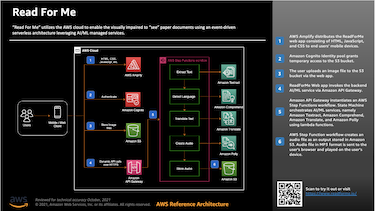

2- Delivering code and architectures through AWS Proton and Git
Infrastructure operators are looking for ways to centrally define and manage the architecture of their services, while developers need to find a way to quickly and safely deploy their code. In this session, learn how to use AWS Proton to define architectural templates and make them available to development teams in a collaborative manner. Also, learn how to enable development teams to customize their templates so that they fit the needs of their services.
3- Accelerate front-end web and mobile development with AWS Amplify
User-facing web and mobile applications are the primary touchpoint between organizations and their customers. To meet the ever-rising bar for customer experience, developers must deliver high-quality apps with both foundational and differentiating features. AWS Amplify helps front-end web and mobile developers build faster front to back. In this session, review Amplify’s core capabilities like authentication, data, and file storage and explore new capabilities, such as Amplify Geo and extensibility features for easier app customization with AWS services and better integration with existing deployment pipelines. Also learn how customers have been successful using Amplify to innovate in their businesses.
3- Train ML models at scale with Amazon SageMaker, featuring Aurora
Today, AWS customers use Amazon SageMaker to train and tune millions of machine learning (ML) models with billions of parameters. In this session, learn about advanced SageMaker capabilities that can help you manage large-scale model training and tuning, such as distributed training, automatic model tuning, optimizations for deep learning algorithms, debugging, profiling, and model checkpointing, so that even the largest ML models can be trained in record time for the lowest cost. Then, hear from Aurora, a self-driving vehicle technology company, on how they use SageMaker training capabilities to train large perception models for autonomous driving using massive amounts of images, video, and 3D point cloud data.
AWS RE:INVENT 2020 – LATEST PRODUCTS AND SERVICES ANNOUNCED:
1-Modernize log analytics with Amazon Elasticsearch Service
4- Amazon Location Service: Enable apps with location features
5- Automate, track, and manage tasks with Amazon Connect Tasks
6- Solve customer issues quickly with Amazon Connect Wisdom
7- Introducing Amazon Managed Service for Grafana:
Prometheus is a popular open-source monitoring and alerting solution optimized for container environments. Customers love Prometheus for its active open-source community and flexible query language, using it to monitor containers across AWS and on-premises environments. Amazon Managed Service for Prometheus is a fully managed Prometheus-compatible monitoring service. In this session, learn how you can use the same open-source Prometheus data model, existing instrumentation, and query language to monitor performance with improved scalability, availability, and security without having to manage the underlying infrastructure.
AWS CloudShell is a free, browser-based shell available from the AWS console that provides a simple way to interact with AWS resources through the AWS command-line interface (CLI). In this session, see an overview of both AWS CloudShell and the AWS CLI, which when used together are the fastest and easiest ways to automate tasks, write scripts, and explore new AWS services. Also, see a demo of both services and how to quickly and easily get started with each.
12-AWS Fault Injection Simulator: Fully managed chaos engineering service
Increase availability with AWS observability solutions
To provide access to critical resources when needed and also limit the potential financial impact of an application outage, a highly available application design is critical. In this session, learn how you can use Amazon CloudWatch and AWS X-Ray to increase the availability of your applications. Join this session to learn how AWS observability solutions can help you proactively detect, efficiently investigate, and quickly resolve operational issues. All of which help you manage and improve your application’s availability.
AWS CCP CLF-C01 on Android – AWS CCP CLF-C01 on iOS – AWS CCP CLF-C01 on Windows 10/11
Securing your Amazon EKS applications: Best practices
Security is critical for your Kubernetes-based applications. Join this session to learn about the security features and best practices for Amazon EKS. This session covers encryption and other configurations and policies to keep your containers safe.
Join Dr. Werner Vogels at 8:00AM (PST) as he goes behind the scenes to show how Amazon is solving today’s hardest technology problems. Based on his experience working with some of the largest and most successful applications in the world, Dr. Vogels shares his insights on building truly resilient architectures and what that means for the future of software development.
Containers
Getting an insight into your Kubernetes applications
Do you need to know what’s happening with your applications that run on Amazon EKS? In this session, learn how you can combine open-source tools, such as Prometheus and Grafana, with Amazon CloudWatch using CloudWatch Container Insights. Come to this session for a demo of Prometheus metrics with Container Insights.
AWS Copilot: Simplifying container development
The hard part is done. You and your team have spent weeks poring over pull requests, building microservices and containerizing them. Congrats! But what do you do now? How do you get those services on AWS? How do you manage multiple environments? How do you automate deployments? AWS Copilot is a new command line tool that makes building, developing, and operating containerized applications on AWS a breeze. In this session, learn how AWS Copilot can help you and your team manage your services and deploy them to production, safely and delightfully.
Securing your Amazon EKS applications: Best practices
Security is critical for your Kubernetes-based applications. Join this session to learn about the security features and best practices for Amazon EKS. This session covers encryption and other configurations and policies to keep your containers safe.
GitOps compliant: How CommBank multiplied Amazon EKS clusters
In this session, learn how the Commonwealth Bank of Australia (CommBank) built a platform to run containerized applications in a regulated environment and then replicated it across multiple departments using Amazon EKS, AWS CDK, and GitOps. This session covers how to manage multiple multi-team Amazon EKS clusters across multiple AWS accounts while ensuring compliance and observability requirements and integrating Amazon EKS with AWS Identity and Access Management, Amazon CloudWatch, AWS Secrets Manager, Application Load Balancer, Amazon Route 53, and AWS Certificate Manager.
Getting up and running with Amazon EKS
Amazon EKS is a fully managed service that makes it easy to deploy, manage, and scale containerized applications using Kubernetes on AWS. Join this session to learn about how Verizon runs its core applications on Amazon EKS at scale. Verizon also discusses how it worked with AWS to overcome several post-Amazon EKS migration challenges and ensured that the platform was robust.
Developing CI/CD pipelines with Amazon ECS and AWS Fargate
Containers have helped revolutionize modern application architecture. While managed container services have enabled greater agility in application development, coordinating safe deployments and maintainable infrastructure has become more important than ever. This session outlines how to integrate CI/CD best practices into deployments of your Amazon ECS and AWS Fargate services using pipelines and the latest in AWS developer tooling.
Securing your Amazon ECS applications: Best practices
With Amazon ECS, you can run your containerized workloads securely and with ease. In this session, learn how to utilize the full spectrum of Amazon ECS security features and its tight integrations with AWS security features to help you build highly secure applications.
Optimize costs and manage spend for containerized applications
Do you have to budget your spend for container workloads? Do you need to be able to optimize your spend in multiple services to reduce waste? If so, this session is for you. It walks you through how you can use AWS services and configurations to improve your cost visibility. You learn how you can select the best compute options for your containers to maximize utilization and reduce duplication. This combined with various AWS purchase options helps you ensure that you’re using the best options for your services and your budget.
AWS Fargate: Are serverless containers right for you?
You have a choice of approach when it comes to provisioning compute for your containers. Some users prefer to have more direct control of their instances, while others could do away with the operational heavy lifting. AWS Fargate removes the need to provision and manage servers, lets you specify and pay for resources per application, and improves security through application isolation by design. This session explores the benefits and considerations of running on Fargate or directly on Amazon EC2 instances. You hear about new and upcoming features and learn how Amenity Analytics benefits from the serverless operational model.
Containers at AWS: More options and power than ever before
Are you confused by the many choices of containers services that you can run on AWS? This session explores all your options and the advantages of each. Whether you are just beginning to learn Docker or are an expert with Kubernetes, join this session to learn how to pick the right services that would work best for you.
AWS CCP CLF-C01 on Android – AWS CCP CLF-C01 on iOS – AWS CCP CLF-C01 on Windows 10/11
Modernizing with containers
Leading containers migration and modernization initiatives can be daunting, but AWS is making it easier. This session explores architectural choices and common patterns, and it provides real-world customer examples. Learn about core technologies to help you build and operate container environments at scale. Discover how abstractions can reduce the pain for infrastructure teams, operators, and developers. Finally, hear the AWS vision for how to bring it all together with improved usability for more business agility.
Improving observability with AWS App Mesh and Amazon ECS
As the number of services grow within an application, it becomes difficult to pinpoint the exact location of errors, reroute traffic after failures, and safely deploy code changes. In this session, learn how to integrate AWS App Mesh with Amazon ECS to export monitoring data and implement consistent communications control logic across your application. This makes it easy to quickly pinpoint the exact locations of errors and automatically reroute network traffic, keeping your container applications highly available and performing well.
Best practices for containerizing legacy applications
Enterprises are continually looking to develop new applications using container technologies and leveraging modern CI/CD tools to automate their software delivery lifecycles. This session highlights the types of applications and associated factors that make a candidate suitable to be containerized. It also covers best practices that can be considered as you embark on your modernization journey.
Looking at Amazon EKS through a networking lens
Because of its security, reliability, and scalability capabilities, Amazon Elastic Kubernetes Service (Amazon EKS) is used by organization in their most sensitive and mission-critical applications. This session focuses on how Amazon EKS networking works with an Amazon VPC and how to expose your Kubernetes application using Elastic Load Balancing load balancers. It also looks at options for more efficient IP address utilization.
AWS networking best practices in large-scale migrations
Network design is a critical component in your large-scale migration journey. This session covers some of the real-world networking challenges faced when migrating to the cloud. You learn how to overcome these challenges by diving deep into topics such as establishing private connectivity to your on-premises data center and accelerating data migrations using AWS Direct Connect/Direct Connect gateway, centralizing and simplifying your networking with AWS Transit Gateway, and extending your private DNS into the cloud. The session also includes a discussion of related best practices.
Innovating on AWS in a 5G world
5G will be the catalyst for the next industrial revolution. In this session, come learn about key technical use cases for different industry segments that will be enabled by 5G and related technologies, and hear about the architectural patterns that will support these use cases. You also learn about AWS-enabled 5G reference architectures that incorporate AWS services.
AWS CCP CLF-C01 on Android – AWS CCP CLF-C01 on iOS – AWS CCP CLF-C01 on Windows 10/11
How to choose the right instance type for ML inference
AWS offers a breadth and depth of machine learning (ML) infrastructure you can use through either a do-it-yourself approach or a fully managed approach with Amazon SageMaker. In this session, explore how to choose the proper instance for ML inference based on latency and throughput requirements, model size and complexity, framework choice, and portability. Join this session to compare and contrast compute-optimized CPU-only instances, such as Amazon EC2 C4 and C5; high-performance GPU instances, such as Amazon EC2 G4 and P3; cost-effective variable-size GPU acceleration with Amazon Elastic Inference; and highest performance/cost with Amazon EC2 Inf1 instances powered by custom-designed AWS Inferentia chips.
Architectural patterns & best practices for workloads on VMware Cloud on AWS
When it comes to architecting your workloads on VMware Cloud on AWS, it is important to understand design patterns and best practices. Come join this session to learn how you can build well-architected cloud-based solutions for your VMware workloads. This session covers infrastructure designs with native AWS service integrations across compute, networking, storage, security, and operations. It also covers the latest announcements for VMware Cloud on AWS and how you can use these new features in your current architecture.
The cutover: Moving your traffic to the cloud
One of the most critical phases of executing a migration is moving traffic from your existing endpoints to your newly deployed resources in the cloud. This session discusses practices and patterns that can be leveraged to ensure a successful cutover to the cloud. The session covers preparation, tools and services, cutover techniques, rollback strategies, and engagement mechanisms to ensure a successful cutover.
AWS CCP CLF-C01 on Android – AWS CCP CLF-C01 on iOS – AWS CCP CLF-C01 on Windows 10/11
AWS DeepRacer is the fastest way to get rolling with machine learning. Developers of all skill levels can get hands-on, learning how to train reinforcement learning models in a cloud based 3D racing simulator. Attend a session to get started, and then test your skills by competing for prizes and glory in an exciting autonomous car racing experience throughout re:Invent!
AWS DeepRacer gives you an interesting and fun way to get started with reinforcement learning (RL). RL is an advanced machine learning (ML) technique that takes a very different approach to training models than other ML methods. Its super power is that it learns very complex behaviors without requiring any labeled training data, and it can make short-term decisions while optimizing for a longer-term goal. AWS DeepRacer makes it fast and easy to build models in Amazon SageMaker and train, test, and iterate quickly and easily on the track in the AWS DeepRacer 3D racing simulator.
Decoupling serverless workloads with Amazon EventBridge
Event-driven architecture can help you decouple services and simplify dependencies as your applications grow. In this session, you learn how Amazon EventBridge provides new options for developers who are looking to gain the benefits of this approach.
AWS CCP CLF-C01 on Android – AWS CCP CLF-C01 on iOS – AWS CCP CLF-C01 on Windows 10/11
Deep dive on Amazon Timestream
Amazon Timestream is a fast, scalable, and serverless time series database service for IoT and operational applications that makes it easy to store and analyze trillions of events per day at as little as one-tenth the cost of relational databases. In this session, dive deep on Amazon Timestream features and capabilities, including its serverless automatic scaling architecture, its storage tiering that simplifies your data lifecycle management, its purpose-built query engine that lets you access and analyze recent and historical data together, and its built-in time series analytics functions that help you identify trends and patterns in your data in near-real time.
Accelerating outcomes and migrations with Savings Plans
Savings Plans is a flexible pricing model that allows you to save up to 72 percent on Amazon EC2, AWS Fargate, and AWS Lambda. Many AWS users have adopted Savings Plans since its launch in November 2019 for the simplicity, savings, ease of use, and flexibility. In this session, learn how many organizations use Savings Plans to drive more migrations and business outcomes. Hear from Comcast on their compute transformation journey to the cloud and how it started with RIs. As their cloud usage evolved, they adopted Savings Plans to drive business outcomes such as new architecture patterns.
Learn how teams at Amazon rapidly release features at scale
The ability to deploy only configuration changes, separate from code, means you do not have to restart the applications or services that use the configuration and changes take effect immediately. In this session, learn best practices used by teams within Amazon to rapidly release features at scale. Learn about a pattern that uses AWS CodePipeline and AWS AppConfig that will allow you to roll out application configurations without taking applications out of service. This will help you ship features faster across complex environments or regions.
Top-paying Cloud certifications:
- Google Certified Professional Cloud Architect — $175,761/year
- AWS Certified Solutions Architect – Associate — $149,446/year
- Azure/Microsoft Cloud Solution Architect – $141,748/yr
- Google Cloud Associate Engineer – $145,769/yr
- AWS Certified Cloud Practitioner — $131,465/year
- Microsoft Certified: Azure Fundamentals — $126,653/year
- Microsoft Certified: Azure Administrator Associate — $125,993/year


AWS CCP CLF-C01 on Android – AWS CCP CLF-C01 on iOS – AWS CCP CLF-C01 on Windows 10/11


AWS Cloud Practitioner Breaking News – AWS CCP CLF-C01 Testimonials – AWS Top Stories
 A Twitter List by enoumen
 I Passed AWS CCP Testimonials
I just passed my AWS CCP!!!
(Source: r/AWSCertifications)
Study Materials and Timeline:
I watched (binged) the A Cloud Guru course in two days and did the 6 practice exams over a week. I originally was only getting 70%’s on the exams, but continued doing them on my free time (to the point where I’d have 15 minutes and knock one out on my phone lol) and started getting 90%’s. – A mix of knowledge vs memorization tbh. Just make sure you read why your answers are wrong.
I don’t really have a huge IT background, although will note I work in a DevOps (1 1/2 years) environment; so I do use AWS to host our infrastructure. However, the exam is very high level compared to what I do/services I use. I’m fairly certain with zero knowledge/experience, someone could pass this within two weeks. AWS is also currently promoting a “get certified” challenge and is offering 50% off.
Best!
Resources:
A Cloud Guru Course:
AWS – Get AWS Certified: Cloud Practitioner Challenge:
AWS CCP CLF-C01 on Android – AWS CCP CLF-C01 on iOS – AWS CCP CLF-C01 on Windows 10/11
Good Tool For AWS Certified Cloud Practitioner Exam Preparation

Went through the entire CloudAcademy course. Most of the info went out the other ear. Got a 67% on their final exam. Took the ExamPro free exam, got 69%.
Was going to take it last Saturday, but I bought TutorialDojo’s exams on Udemy. Did one Friday night, got a 50% and rescheduled it a week later to today Sunday.
Took 4 total TD exams. Got a 50%, 54%, 67%, and 64%. Even up until last night I hated the TD exams with a passion, I thought they were covering way too much stuff that didn’t even pop up in study guides I read. Their wording for some problems were also atrocious. But looking back, the bulk of my “studying” was going through their pretty well written explanations, and their links to the white papers allowed me to know what and where to read.
Not sure what score I got yet on the exam. As someone who always hated testing, I’m pretty proud of myself. I also had to take a dump really bad starting at around question 25. Thanks to TutorialsDojo Jon Bonso for completely destroying my confidence before the exam, forcing me to up my game. It’s better to walk in way over prepared than underprepared.
I would like to thank this community for recommendations about exam preparation. It was wayyyy easier than I expected (also way easier than TD practice exams scenario-based questions-a lot less wordy on real exam). I felt so unready before the exam that I rescheduled the exam twice. Quick tip: if you have limited time to prepare for this exam, I would recommend scheduling the exam beforehand so that you don’t procrastinate fully.
Resources:
-Stephane’s course on Udemy (I have seen people saying to skip hands-on videos but I found them extremely helpful to understand most of the concepts-so try to not skip those hands-on)
-Tutorials Dojo practice exams (I did only 3.5 practice tests out of 5 and already got 8-10 EXACTLY worded questions on my real exam)
Previous Aws knowledge:
-Very little to no experience (deployed my group’s app to cloud via Elastic beanstalk in college-had 0 clue at the time about what I was doing-had clear guidelines)
Preparation duration: -2 weeks (honestly watched videos for 12 days and then went over summary and practice tests on the last two days)
Links to resources:
https://www.udemy.com/course/aws-certified-cloud-practitioner-new/
https://tutorialsdojo.com/courses/aws-certified-cloud-practitioner-practice-exams/
I used Stephane Maarek on Udemy. Purchased his course and the 6 Practice Exams. Also got Neal Davis’ 500 practice questions on Udemy. I took Stephane’s class over 2 days, then spent the next 2 weeks going over the tests (3~4 per day) till I was constantly getting over 80% – passed my exam with a 882.
What an adventure, I’ve never really gieven though to getting a cert until one day it just dawned on me that it’s one of the few resources that are globally accepted. So you can approach any company and basically prove you know what’s up on AWS 😀
Passed with two weeks of prep (after work and weekends)
Resources Used:
This was just a nice structured presentation that also gives you the powerpoint slides plus cheatsheets and a nice overview of what is said in each video lecture.
Udemy – AWS Certified Cloud Practitioner Practice Exams, created by Jon Bonso**, Tutorials Dojo**
These are some good prep exams, they ask the questions in a way that actually make you think about the related AWS Service. With only a few “Bullshit! That was asked in a confusing way” questions that popped up.
I took CCP 2 days ago and got the pass notification right after submitting the answers. In about the next 3 hours I got an email from Credly for the badge. This morning I got an official email from AWS congratulating me on passing, the score is much higher than I expected. I took Stephane Maarek’s CCP course and his 6 demo exams, then Neal Davis’ 500 questions also. On all the demo exams, I took 1 fail and all passes with about 700-800. But in the real exam, I got 860. The questions in the real exam are kind of less verbose IMO, but I don’t truly agree with some people I see on this sub saying that they are easier.
Just a little bit of sharing, now I’ll find something to continue ^^
Good luck with your own exams.
Passed the exam! Spent 25 minutes answering all the questions. Another 10 to review. I might come back and update this post with my actual score.
Background
– A year of experience working with AWS (e.g., EC2, Elastic Beanstalk, Route 53, and Amplify).
– Cloud development on AWS is not my strong suit. I just Google everything, so my knowledge is very spotty. Less so now since I studied for this exam.
Study stats
– Spent three weeks studying for the exam.
– Studied an hour to two every day.
– Solved 800-1000 practice questions.
– Took 450 screenshots of practice questions and technology/service descriptions as reference notes to quickly swift through on my phone and computer for review. Screenshots were of questions that I either didn’t know, knew but was iffy on, or those I believed I’d easily forget.
– Made 15-20 pages of notes. Chill. Nothing crazy. This is on A4 paper. Free-form note taking. With big diagrams. Around 60-80 words per page.
– I was getting low-to-mid 70%s on Neal Davis’s and Stephane Maarek’s practice exams. Highest score I got was an 80%.
– I got a 67(?)% on one of Stephane Maarek’s exams. The only sub-70% I ever got on any practice test. I got slightly anxious. But given how much harder Maarek’s exams are compared to the actual exam, the anxiety was undue.
– Finishing the practice exams on time was never a problem for me. I would finish all of them comfortably within 35 minutes.
Resources used
– AWS Cloud Practitioner Essentials on the AWS Training and Certification Portal
– AWS Certified Cloud Practitioner Practice Tests (Book) by Neal Davis
– 6 Practice Exams | AWS Certified Cloud Practitioner CLF-C01 by Stephane Maarek*
– Certified Cloud Practitioner Course by Exam Pro (Paid Version)**
– One or two free practice exams found by a quick Google search
*Regarding Exam Pro: I went through about 40% of the video lectures. I went through all the videos in the first few sections but felt that watching the lectures was too slow and laborious even at 1.5-2x speed. (The creator, for the most part, reads off of the slides, adding brief comments here and there.) So, I decided to only watch the video lectures for sections I didn’t have a good grasp on. (I believe the video lectures provided in the course are just split versions of the full length course available for free on YouTube under the freeCodeCamp channel, here.) The online course provides five practice exams. I did not take any of them.
**Regarding Stephane Maarek: I only took his practice exams. I did not take his study guide course.
Notes
– My study regimen (i.e., an hour to two every day for three weeks) was overkill.
– The questions on the practice exams created by Neal Davis and Stephane Maarek were significantly harder than those on the actual exam. I believe I could’ve passed without touching any of these resources.
– I retook one or two practice exams out of the 10+ I’ve taken. I don’t think there’s a need to retake the exams as long as you are diligent about studying the questions and underlying concepts you got wrong. I reviewed all the questions I missed on every practice exam the day before.
What would I do differently?
– Focus on practice tests only. No video lectures.
– Focus on the technologies domain. You can intuit your way through questions in the other domains.
– Chill
I thank you all for helping me through this process! Couldn’t have done it without all of the recommendations and guidance on this page.
Background: I am a back-end developer that works 12 hours a day for corporate America, so no time to study (or do anything) but I made it work.
Could I have probably gone for SAA first? Yeah, but I wanted to prove to myself that I could do it. I studied for about a month. I used Maarek’s Udemy course at 1.5x speed and I couldn’t recommend it more. I also used his practice exams. I’ll be honest, I took 5 practice exams and got somehow managed to fail every single one in the mid 60’s lol. Cleared the exam with an 800. Practice exams WAY harder.
My 2 cents on must knows:
AWS Shared Security Model (who owns what)
Everything Billing (EC2 instance, S3, different support plans)
I had a few ML questions that caught me off guard
VPC concepts – i.e. subnets, NACL, Transit Gateway
I studied solidly for two weeks, starting with Tutorials Dojo (which was recommended somewhere on here). I turned all of their vocabulary words and end of module questions into note cards. I did the same with their final assessment and one free exam.
During my second week, I studied the cards for anywhere from one to two hours a day, and I’d randomly watch videos on common exam questions.
The last thing I did was watch a 3 hr long video this morning that walks you through setting up AWS Instances. The visual of setting things up filled in a lot of holes.
I had some PSI software problems, and ended up getting started late. I was pretty dejected towards the end of the exam, and was honestly (and pleasantly) surprised to see that I passed.
Hopefully this helps someone. Keep studying and pushing through – if you know it, you know it. Even if you have a bad start. Cheers 🍻
- AWS DataSync supports disabling task schedulesby aws@amazon.com (Recent Announcements) on April 24, 2024 at 6:44 pm
AWS DataSync now lets you enable and disable task schedules. Using this new feature, you can temporarily disable scheduled executions of your task to accommodate events such as maintenance on your storage systems. Once the event is complete, you can enable your task schedule to resume execution of your task at the next scheduled interval.
- AWS CodeBuild now supports managed GitHub Action runnersby aws@amazon.com (Recent Announcements) on April 24, 2024 at 6:40 pm
AWS CodeBuild now supports managed GitHub Action self-hosted runners. Customers can configure their CodeBuild projects to receive GitHub Actions workflow job events and run them on CodeBuild ephemeral hosts. AWS CodeBuild is a fully managed continuous integration service that compiles source code, runs tests, and produces software packages ready for deployment.
- NoSQL Workbench for Amazon DynamoDB launches a revamped operation builder user interfaceby aws@amazon.com (Recent Announcements) on April 24, 2024 at 6:23 pm
NoSQL Workbench for Amazon DynamoDB is a client-side application that provides data modeling and query development features to help you design, create, and work with DynamoDB tables. You can use the NoSQL Workbench operation builder to build and save operations for viewing, updating, and exploring your live datasets. You can even generate code in multiple programming languages. Today, we are pleased to announce quality enhancements to the operation builder to help customers better navigate, run operations, and browse their DynamoDB tables.
- Career Adviceby /u/ryuu_shogun (AWS Certified Experts) on April 24, 2024 at 5:01 pm
This might be unrelated but I don't know where else to ask. I have been working as a Windows Administrator for the past 2 years, recently I have been getting into learning AWS and am thinking about preparing for the SAA-C03 exam. But I have been told by some of my friends who are devops engineers or sysops admins that pivoting into a cloud architect now would be like starting from scratch since the job market wants cloud architects who also have experience into programming as well(which I don't have), basically asking for someone with devops skillset but working on a sysadmin's pay. Please suggest whether it would be a good idea for me to get into AWS now or pivot to something else. submitted by /u/ryuu_shogun [link] [comments]
- AWS Direct Connect adds 25 Gbps hosted connection capacitiesby aws@amazon.com (Recent Announcements) on April 24, 2024 at 5:00 pm
Today, AWS Direct Connect now enables AWS Direct Connect Service Delivery Partners (AWS Direct Connect Partners) to support 25 Gbps hosted connection capacity .
- Thinking of expanding careerby /u/ILoveSpring_4401 (AWS Certifications) on April 24, 2024 at 3:58 pm
Hi. I would like to ask some advice on career expansion.. I am currently in data analysis...and curious about cloud. No background nor prior knowledge of it. I was wondering if I can take the CCP without any of the comptia A+ or network certs etc. Read from a forum comment that one needs to have an understanding of these before foraying into cloud...what can u recommend.. Thank you. submitted by /u/ILoveSpring_4401 [link] [comments]
- Interested in SAA & SCS, need adviceby /u/HunnyBunnyBandit (AWS Certifications) on April 24, 2024 at 3:57 pm
hello, so i recently got laid off due to surplus as a software engineer 1 i am considering getting some AWS certs so i can apply for more cloud based roles and/or transition into security work as i don’t think i love being a developer should i pursue the professional track for SAA? is that worth it? are there any pre-reqs u suggest for SCS? i saw CCP is a pre-req but i read a lot about how that can be skipped. what resources do you recommend to study for these exams? i’d prefer resources that are affordable/free as i previously stated i just got laid off. i have heard about: adrian cantrill, udemy, tutorial dojo, plura insights if u have any experience or recommendations from these resources let me know i’m more so interested in purchasing just 1 course that would prep me for each test any recommendations for this hard time for me would be great as i am just wanting to possibly move into security or something else tech related that may have less developer/coding work thanks in advance submitted by /u/HunnyBunnyBandit [link] [comments]
- Passed my AWS sysops admin exam todayby /u/Weeeb111 (AWS Certifications) on April 24, 2024 at 12:11 pm
I passed my sysops admin exam with 890 score and I would say really exam is somewhat intense as 90% will be scenario based questions with more than 2 services being referred in question . There will be a couple of surprise questions but just understand the options and you’ll find correct one. I took Stephan’s course and then TD and ND practice exams . Td has best explanations although lengthy but ND practice test actually matches level of real exam. Took me me around 3 weeks in total to prepare and appear for final exam. submitted by /u/Weeeb111 [link] [comments]
- Aws educateby /u/PremKumarRK (AWS Certifications) on April 24, 2024 at 5:50 am
The badge of aws educate is actually worth it. Because, officially providing from aws. And it gives a credibility for the resume? submitted by /u/PremKumarRK [link] [comments]
- Passed my AWS SAA exam todayby /u/pmventura (AWS Certifications) on April 24, 2024 at 4:58 am
Hi happy to share i passed my AWS SAA exam w/ a 1 week full-time preparation. Any idea how hard is SAP to SAA, im planning to take it as my next goal. Shoutout to Stephane Maarek for his awesome udemy course and practice exam as only my resource throughout this journey. Cheers! submitted by /u/pmventura [link] [comments]
- Has anyone found the recent FreeCodeCamp for CLF-C02 enough prep to pass the exam?by /u/AFriendlyInternetGuy (AWS Certifications) on April 24, 2024 at 3:18 am
I am so fresh into the AWS cert world and have been doing research on where to begin, etc. I decided to obviously start with the Cloud Practitioner cert and saw many paid resources in terms of exam prep guides / practice exams. I saw a few mentions of the FCC video guide and am wondering if anyone used just this video and maybe another resource for practice exams and was able to pass the exam and get certified? My concern isn't as much about paying for resources as it is with just being overwhelmed with which resource to go for and put my time into. This video is 14 hours and seems comprehensive. The comments on the video also say that they passed the exam just by following the video but I think I trust Reddit more (lol). My current plan was to watch this entire video and take notes. Then take practice exams either on ExamPro or TD (or anything you all recommend) and then take the exam in a couple weeks. I just don't want to spend 14 hours watching this video and it ends up not being enough prep for the exam and then I have to look into other courses and end up over studying. Any advice or validation for this course would be appreciated! submitted by /u/AFriendlyInternetGuy [link] [comments]
- Amazon RDS Performance Insights provides execution plan for RDS SQL Serverby aws@amazon.com (Recent Announcements) on April 23, 2024 at 9:13 pm
Amazon RDS (Relational Database Service) Performance Insights now collects the query execution plans of the resource-intensive SQL queries in Amazon RDS for SQL Server, and stores them over time. It helps you identify if a change in the query execution plan is the cause of performance degradation or stalled query.
- myApplications is now available in 9 additional AWS Regionsby aws@amazon.com (Recent Announcements) on April 23, 2024 at 9:03 pm
Today, myApplications in the AWS Management Console has expanded the ability to create and manage your applications to 9 additional AWS Regions: Africa (Cape Town), Middle East (UAE), Asia Pacific (Hong Kong), Asia Pacific (Hyderabad), Asia Pacific (Melbourne), Europe (Milan), Israel (Tel Aviv), Europe (Spain), and Europe (Zurich).
- Amazon CloudWatch RUM is generally available in 5 additional AWS Regionsby aws@amazon.com (Recent Announcements) on April 23, 2024 at 8:39 pm
Amazon CloudWatch RUM, which enables customers to monitor their web applications by collecting client side performance and error data in real time, is generally available in the following 5 AWS Regions starting today: Asia Pacific (Hyderabad), Asia Pacific (Melbourne), Europe (Spain), Europe (Zurich), and Middle East (UAE).
- Attending an AWS Summit in person? Try Training & Certification area for possible 75% off vouchers!by /u/madrasi2021 (AWS Certifications) on April 23, 2024 at 8:14 pm
Possible 75% off AWS Certification Exam for AWS Summit attendees. Source : Noticed the card being held by Viktoria Semaan from AWS on her LinkedIn Post. Go to her profile at https://www.linkedin.com/in/semaan/ and find the "5 Reasons Why You'll Regret Missing Your Local AWS Summit" post and it has a picture of her holding a card saying "75% off". If I include the exact post url - reddit just pulls in the picture which I find a bit weird. Previous Summits have made similar offers / leaked some of the codes / signup pages (please do NOT post the codes etc online - it just ruins such offers for others) While the actual summit is free to register and go to - its only in select cities and there is no formal notice of how many vouchers etc I am gutted to not make the London summit myself tomorrow (24-Apr) due to work commitments - hope someone else going can confirm this offer / details (again - dont leak the code etc) submitted by /u/madrasi2021 [link] [comments]
- Passed AWS Certified Advanced Networking Specialty(ANS-C01).by /u/nitalaut (AWS Certifications) on April 23, 2024 at 7:57 pm
As with all my previous certifications: theoretical lessons by Adrian Cantrill and practical tests by TutorialDojo. Both resources are brilliant! Now I am certified in the following areas: AWS Certified Advanced Networking Specialist, AWS Certified DevOps Professional, AWS Certified Solutions Architect Associate, AWS Certified Security Specialist, AWS Certified SysOps Administrator Associate submitted by /u/nitalaut [link] [comments]
- Amazon RDS for Oracle supports Kerberos authentication in additional regionsby aws@amazon.com (Recent Announcements) on April 23, 2024 at 7:28 pm
Amazon RDS for Oracle now supports external authentication of database users using Kerberos and Microsoft Active Directory in additional regions. This feature provides the benefits of single sign-on and centralized authentication of Oracle Database users. Keeping all of your user credentials in the same Active Directory will save you time and effort as you will now have a centralized place for storing and managing them for multiple DB instances.
- Amazon ECS now integrates with CloudWatch alarms for deployment monitoring in the AWS GovCloud (US) Regionsby aws@amazon.com (Recent Announcements) on April 23, 2024 at 7:26 pm
Amazon Elastic Container Service (Amazon ECS) now lets you add automated safeguards for rolling updates of Amazon ECS services in the AWS GovCloud (US) Regions. You can now monitor and automatically react to changes during an Amazon ECS rolling update by using Amazon CloudWatch alarms. This allows you to more easily automate discovery and remediation for failed deployments and minimize the impact of a bad change.
- AWS IoT Core for LoRaWAN public network support now available in Spainby aws@amazon.com (Recent Announcements) on April 23, 2024 at 7:20 pm
Today, AWS IoT Core for LoRaWAN announced the expansion of the public network support in the Spain region. With this expansion, Internet of Things (IoT) customers that offer LoRaWAN-based systems and solutions in Spain can seamlessly connect their LoRaWAN-powered devices to AWS over a public network infrastructure. This public infrastructure is provided as a service and supported by Everynet - a global LoRaWAN network operator offering networks in the United States, United Kingdom, and Spain. Thanks to the publicly available network infrastructure, customers in Spain can realize improved savings in time and costs associated with managing a private network infrastructure for LoRaWAN-based solutions.
- is security specialty easier than saa?by /u/Internal_Piece6619 (AWS Certifications) on April 23, 2024 at 6:48 pm
Just passed my AWS SAA C03 exam today after a hard grind of about a month of studying. I am a cybersecurity analyst who is interested of applying security solutions on the cloud, so I am planning to take the AWS security specialty next. For those who have taken both, which one was easier to prepare for and how would you compare the two exams? Is the security exam as scenario-based as the SAA? or is it more so a definitions test like the CCP? submitted by /u/Internal_Piece6619 [link] [comments]
- Tutorials Dojo Practice Exams for SAA-CO3: Clarification Neededby /u/mouli_chaithanya (AWS Certifications) on April 23, 2024 at 6:40 pm
I've heard that Tutorials Dojo offers 5 practice exams for the SAA-CO3 (Solutions Architect Associate - Certified CO3) certification. However, when I checked their portal, I found 7 sets available. Can anyone confirm if the last two sets are repetitions of the previous ones? I want to make sure I'm utilizing the resources effectively. submitted by /u/mouli_chaithanya [link] [comments]
- Amazon OpenSearch Service adds support for Hebrew and HanLP language analyzersby aws@amazon.com (Recent Announcements) on April 23, 2024 at 6:16 pm
Amazon OpenSearch Service adds support for Hebrew and HanLP (Chinese NLP) language analyzer plugins. These are now available as optional plugins that you can associate with your Amazon OpenSearch Service clusters.
- Amazon QuickSight launches cross sheet filters and controlsby aws@amazon.com (Recent Announcements) on April 23, 2024 at 6:02 pm
Amazon QuickSight now includes cross-sheet filters and controls. This enables authors to create and manage filters and controls across an entire analysis or dashboard.
- AWS AppFabric now supports 1Passwordby aws@amazon.com (Recent Announcements) on April 23, 2024 at 5:52 pm
Today, AWS AppFabric announces support for 1Password. Starting now, IT administrators and security analysts can use AppFabric to quickly integrate with 26 supported SaaS applications, aggregate enriched and normalized SaaS audit logs, and audit end-user access across their SaaS apps.
- Finally Passed CLF-C02 Examby /u/Commercial-Suit-7693 (AWS Certifications) on April 23, 2024 at 5:46 pm
Finally I passed my CLF-C02 exam in my first attempt. I'm happy. there are some technical questions in the exam about AWS Cloud Adoption Framework, about Which Amazon service to be used for hosting a new Microsoft SQL server database on AWS, about Amazon services to inspect your AWS environment and making recommendations for lower expenditures and for good system perfommance. I was curious about my preparation for the exam but somehow I prepared from multiple resources like tutorial dojo and some conceptual videos from youtube but most reliable to me was a guide I got from itexamshub. Because after learning all the questions I was able to attempt most of the questions easily. Well I wish everyone will pass their exam with good marks. submitted by /u/Commercial-Suit-7693 [link] [comments]
- CloudWatch Container Insights now announces Accelerated Compute Observability on EKSby aws@amazon.com (Recent Announcements) on April 23, 2024 at 5:41 pm
Amazon CloudWatch Container Insights with Enhanced Observability for EKS now auto-discovers critical health metrics from your AWS accelerators Trainium and Inferentia, and AWS high performance network adapters (Elastic Fabric Adapters) as well as NVIDIA GPUs. You can visualize these out-of-the-box metrics in curated Container Insights dashboards to help monitor your accelerated infrastructure and optimize your AI workloads for operational excellence.
- Amazon CodeCatalyst adds task breakdown assistance for issues assigned to Amazon Qby aws@amazon.com (Recent Announcements) on April 23, 2024 at 5:02 pm
Today, we're excited to announce the availability of a new capability of Amazon Q to analyze issues for complexity and propose splitting the work into separate tasks.
- AWS Transfer Family now lists files from remote SFTP servers using SFTP connectorsby aws@amazon.com (Recent Announcements) on April 23, 2024 at 5:02 pm
AWS Transfer Family customers can now use SFTP connectors to list files stored in remote SFTP servers, enabling visibility into the contents of directories in remote SFTP file systems and transfer files when file names are not known in advance.
- I passed AWS SAA-C03by /u/Chilli_green (AWS Certifications) on April 23, 2024 at 2:39 pm
Hello, with the precious inputs from this group and carving out path, I have achieved my first ever AWS certification(796) after studying 8 weeks with being full time job. Studying thru ACloudGuru ( provisioned via employer) was like signing up for failure. Sorry AcloudGuru but you barely just touched upon topics. Thanks to Stephane Mareek and tutorial dojo for the preparation. Also thanks to people who posted questions about snapmirror, nitro,sagemaker etc. I did see those questions in exam and was able to navigate thru quickly. I saw very weird question about ACM. You dont want to use cloudfront default domain name and want to use your own domain name. Which cert will be cheapest? Options- Private cert in east Public cert in east Private cert in west Public cert in west I was blank at this question. Any insights are welcome. Rest - lot of questions on fargate, container , cost management console, tagging, gateway endpoint, vpc, storage choice, s3 etc…. submitted by /u/Chilli_green [link] [comments]
- Watermark detection for Amazon Titan Image Generator now available in Amazon Bedrockby aws@amazon.com (Recent Announcements) on April 23, 2024 at 12:38 pm
Amazon Titan Image Generator's new watermark detection feature is now generally available in Amazon Bedrock. All Amazon Titan-generated images contain an invisible watermark, by default. The watermark detection mechanism allows you to identify images generated by Amazon Titan Image Generator, a foundation model that allows users to create realistic, studio-quality images in large volumes and at low cost, using natural language prompts.
- Meta Llama 3 now available in Amazon Bedrockby aws@amazon.com (Recent Announcements) on April 23, 2024 at 12:29 pm
You can now access Meta’s Llama 3 models, Llama 3 8B and Llama 3 70B, in Amazon Bedrock. Meta Llama 3 is designed for you to build, experiment, and responsibly scale your generative artificial intelligence applications. You can now use these two new Llama 3 models in Amazon Bedrock enabling you to easily experiment with and evaluate even more top foundation models for your use case.
- Amazon Bedrock Agents simplifies agent creation and launches Return of Control capabilityby aws@amazon.com (Recent Announcements) on April 23, 2024 at 12:18 pm
Agents for Amazon Bedrock enable generative AI applications to automate multi-step tasks across company systems and data sources. Agents removes the undifferentiated lifting of orchestration, infrastructure hosting and management, and we’re making building Agents easier than ever.
- Model evaluation on Amazon Bedrock is now Generally Availableby aws@amazon.com (Recent Announcements) on April 23, 2024 at 12:10 pm
Model Evaluation on Amazon Bedrock allows you to evaluate, compare, and select the best foundation models for your use case. Amazon Bedrock offers a choice of automatic evaluation and human evaluation. You can use automatic evaluation with predefined algorithms for metrics such as accuracy, robustness, and toxicity. Additionally, for those metrics or subjective and custom metrics, such as friendliness, style, and alignment to brand voice, you can set up a human evaluation workflow with a few clicks. Human evaluation workflows can leverage your own employees or an AWS-managed team as reviewers. Model evaluation provides built-in curated datasets or you can bring your own datasets.
- should start with Cloud Practitioner or Solutions Architect Associateby /u/seyolas (AWS Certifications) on April 23, 2024 at 12:10 pm
i have 2 years experience as frontend dev. Which exam and hopefully certificate should i get first? submitted by /u/seyolas [link] [comments]
- Amazon Titan Image Generator model in Amazon Bedrock now generally availableby aws@amazon.com (Recent Announcements) on April 23, 2024 at 12:10 pm
Amazon Titan Image Generator enables content creators with rapid ideation and iteration resulting in high efficiency image generation. The Amazon Titan Image Generator model is now generally available in Amazon Bedrock, helping you easily build and scale generative AI applications with new image generation and image editing capabilities.
- Knowledge Bases for Amazon Bedrock now simplifies asking questions on a single documentby aws@amazon.com (Recent Announcements) on April 23, 2024 at 12:10 pm
Knowledge Bases for Amazon Bedrock allows you to connect foundation models (FMs) to internal company data sources to deliver more relevant, context-specific, and accurate responses. Knowledge Bases (KB) now provides a real-time, zero-setup, and low-cost method to securely chat with single documents.
- Knowledge Bases for Amazon Bedrock now supports multiple data sourcesby aws@amazon.com (Recent Announcements) on April 23, 2024 at 12:10 pm
Knowledge Bases for Amazon Bedrock is a fully managed Retrieval-Augmented Generation (RAG) capability that allows you to connect foundation models (FMs) to internal company data sources to deliver more relevant and accurate responses. Knowledge Bases now supports adding multiple data sources, across accounts.
- Custom Model Import for Amazon Bedrockby aws@amazon.com (Recent Announcements) on April 23, 2024 at 12:10 pm
We are excited to announce the preview of Custom Model Import for Amazon Bedrock. Now you can import customized models into Amazon Bedrock to accelerate your generative AI application development. This new feature allows you to leverage your prior model customization investments within Amazon Bedrock and consume them in the same fully-managed manner as Bedrock’s existing models. For supported architectures such as Llama, Mistral, or Flan T5, you can now import models customized anywhere and access them on-demand.
- Agents for Amazon Bedrock add support for Anthropic Claude 3 Haiku and Sonnetby aws@amazon.com (Recent Announcements) on April 23, 2024 at 12:09 pm
Agents for Amazon Bedrock enable developers to create generative AI-based applications that can complete complex tasks for a wide range of use cases and deliver answers based on company knowledge sources. In order to complete complex tasks, with high accuracy, reasoning capabilities of the underlying foundational model (FM) play a critical role.
- Guardrails for Amazon Bedrock is generally available with new safety & privacy controlsby aws@amazon.com (Recent Announcements) on April 23, 2024 at 12:09 pm
Today, we are announcing the general availability of Guardrails for Amazon Bedrock that enables customers to implement safeguards across large language models (LLMs) based on their use cases and responsible AI policies. Customers can create multiple guardrails tailored to different use cases and apply them on multiple LLMs, providing a consistent user experience and standardizing safety controls across generative AI applications.
- SysOps Administrator or Architect Associate as first certification?by /u/nousewindows (AWS Certifications) on April 22, 2024 at 9:56 pm
I am a Linux Systems Engineer with over 15 years of experience as Linux and Unix Systems Administrator and onprem infrastructure engineer. My AWS knowledge are limited to basic EC2, IAM and S3. Initially I was studying for the AWS Certified Cloud Practitioner certification but I just couldn't keep from falling asleep. Too much information about too many products I know nothing about. I just don't learn like that. I am self taught, I learn by doing things. I may not necessarily know every detail of the tech I am working with, but I can get stuff done. Provided what I just said, would it be easier for me to go for the AWS Architect Associate or SysOps Administrator certification? Thanks submitted by /u/nousewindows [link] [comments]
- Introducing Amazon Route 53 Profilesby aws@amazon.com (Recent Announcements) on April 22, 2024 at 9:50 pm
Today, AWS announced Amazon Route 53 Profiles, a new offering that allows you to define a standard DNS configuration, in the form of a Profile, that may include Route 53 private hosted zone (PHZ) associations, Route 53 Resolver forwarding rules, and Route 53 Resolver DNS Firewall rule groups, and apply this configuration to multiple VPCs in the same AWS Region. You can also share Profiles across AWS accounts using AWS Resource Access Manager (RAM).
- Announcing two new larger instance types for Amazon WorkSpaces Webby aws@amazon.com (Recent Announcements) on April 22, 2024 at 9:12 pm
Today, AWS End User Computing services announced availability of two larger, more powerful instance types for Amazon WorkSpaces Web. These new instance types provide higher performance options to help customers run demanding workloads, helping to deliver significant performance improvements for use cases like streaming audio or video, real-time collaboration, screen sharing, video conferencing, or processing large files. With this launch, WorkSpaces Web now offers a total of 3 different instance types: standard.regular, standard.large, and standard.xlarge.
- I passed SCS-C02by /u/Wide-Answer-2789 (AWS Certifications) on April 22, 2024 at 9:05 pm
Passed "AWS Security" today with a little above the minimum - 780. That was a really hard exam; I did not expect so hard after SA Pro . I used A Cantril, TutorialDojo and AWS Twitch Security podcast. And thanks,paper_recluse, for his list - EKS/ECS logging no one mentioned anywhere, in addition to his list to paying attention - the Encryption SDK and RAM (policy), and all sorts of policy evaluation (SCP especially). And yes, take your time, more than 1 month is needed for this exam to pass without hesitation. submitted by /u/Wide-Answer-2789 [link] [comments]
- Amazon Inspector agentless vulnerability assessments for Amazon EC2 are now Generally Available (GA)by aws@amazon.com (Recent Announcements) on April 22, 2024 at 8:51 pm
Amazon Inspector now offers continuous monitoring of your Amazon EC2 instances for software vulnerabilities without installing an agent or additional software. Currently, Inspector leverages the widely deployed AWS Systems Manager (SSM) agent to assess your EC2 instances for third-party software vulnerabilities. With this expansion, Inspector now offers two scan modes for EC2 scanning, hybrid scan mode and agent-based scan mode. In hybrid scan mode, Inspector relies on SSM agents to collect information from instances to perform vulnerability assessments and automatically switches to agentless scanning for instances that do not have SSM agents installed or configured. For agentless scanning, Inspector takes snapshots of EBS volumes to collect software application inventory from the instances to perform vulnerability assessments. For agent-based scan mode, Inspector only scans instances that have a SSM agent installed and configured. New customers enabling EC2 scanning are configured in hybrid mode by default, while existing customers can migrate to hybrid mode by simply visiting the EC2 settings page within the Inspector console. Once enabled, Inspector automatically discovers all your EC2 instances and starts evaluating them for software vulnerabilities.
- Workflow approvals for Amazon CodeCatalystby aws@amazon.com (Recent Announcements) on April 22, 2024 at 7:31 pm
Today Amazon CodeCatalyst announces support for approval gates within a workflow. Workflows provide an automated procedure for building, testing, and deploying code as part of a continuous integration and continuous delivery (CI/CD) system. Approval gates pause the workflow run at the gate so that a user can validate whether it should be allowed to proceed.
- Amazon Time Sync Service expands Microsecond-Accurate time to 87 additonal EC2 instance typesby aws@amazon.com (Recent Announcements) on April 22, 2024 at 5:04 pm
The Amazon Time Sync Service now supports clock synchronization within microseconds of UTC on 87 additional Amazon Elastic Compute Cloud (Amazon EC2) instance types in supported regions, including all C7i, M7i, R7i, C7a, M7a, R7a, and M7g instances.
- DOP-C02, is it worth it for the real world?by /u/Herrmadbeef (AWS Certifications) on April 22, 2024 at 11:25 am
Hello all I hope you can help me with answering this question. I have a fundamental question about the DOP-CO2 certification, and it is practical. I would like to know how many of you and your enterprises use code commit, code deploy and code pipeline VS different tools (GitHub, Jenkins, etc) AND Cloudformation vs Other Iac tool (Terraform/Ansible) Currently, where I work we do not use any AWS (code commit, deploy, pipeline and Cloudformation) and from what I have seen in re:Invent many tools replace this and it seems that everybody revolts around them I would appreciate it if you could share your thoughts. I really appreciate any help you can provide. submitted by /u/Herrmadbeef [link] [comments]
- Breaking into Cloud Computingby /u/Saheed-Toyin (AWS Certifications) on April 22, 2024 at 8:20 am
Hello community! I write to ask dear community for recommendation. I'm breaking into a new career in cloud computing ( Cloud Engineer ) but I completely have no idea where to start from. I check online and YouTube but the resources are overwhelming. I'll appreciate if someone can recommend a roadmap that will get me ready for entry level Cloud engineer job in few months. Thanks submitted by /u/Saheed-Toyin [link] [comments]
- I passed SAA-C03!by /u/GNFit (AWS Certifications) on April 22, 2024 at 7:45 am
Thanks to everyone who recommended their study resources here. A little background info: I am a computer science graduate who graduated in May of 2023 but found it hard to find a job due to the market. I decided that I would get a Solutions Architect Associate certification while waiting for the market to open up. This is how I studied: In January, I began watching Stephane Maarek's course on Udemy. I put in maybe 30 minutes every other day watching the course videos until I finally finished around late-March with everything. I recommend doing the hands-on activities up until you reach the section for S3. After that, I realized the hands-on videos aren't really needed for passing the exam. For the most part, I was able to get away with 2x speeding the videos and replaying something if Stephane's voice was too fast. By the time I reached the end of the course, I decided to take the practice test. I did it with internet assistance to look things up and ended up getting a 58%. I was kinda bummed out but realized I needed to fill in my knowledge gaps, so I ended up buying Jon Bonso's practice tests on TD. Honestly, doing the TD tests was frustrating at first because I kept on getting so many questions wrong. I felt like I knew nothing. To be honest, most of the time I got questions right, it was because I simply memorized the answer from a previous run, this wasn't necessarily a bad thing though, it allowed me to memorize the concepts by repeatedly seeing the same questions over and over. I first started by completing all four Section-based exams on TD. I did not track my scores but they were not good. I would probably get 2 out of every 5 questions right. Every time I did not know the answer or got it wrong, I would write down the concept and answer the question on a notes sheet. Review mode was also very helpful. I only ended up taking the first four review mode exams out of the seven because I was in a time crunch and needed to take the exam soon. I ended up averaging around 70% on all of them by the time I was ready to take the exam so I was a bit nervous that I was going to fail. The day before I took the exam, I reviewed my notes sheet and did topic-based questions on TD. Overall, the exam was easier compared to TD practice tests. I would say that it falls in the middle ground between Maarek's practice test and TD practice tests. Lots of questions about encryption. There was no single question where I felt overly stumped. I didn't feel like I scored horribly on the exam but I did have around 10 "second guess" questions in which I just always stuck to my first answer choice. I felt like I scored 75% on the exam and that's exactly what I got. Barely passed, but it is what it is, I'm certified now! Maarek's course gives a great overview of the AWS services and TD practice tests will show you how to answer how these services relate. If you are feeling like you aren't ready for the exam like I was, just give it a shot, you never know 😉 submitted by /u/GNFit [link] [comments]
Top 60 AWS Solution Architect Associate Exam Tips
Top 100 AWS Solutions Architect Associate Certification Exam Questions and Answers Dump SAA-C03
Active Hydrating Toner, Anti-Aging Replenishing Advanced Face Moisturizer, with Vitamins A, C, E & Natural Botanicals to Promote Skin Balance & Collagen Production, 6.7 Fl Oz



Age Defying 0.3% Retinol Serum, Anti-Aging Dark Spot Remover for Face, Fine Lines & Wrinkle Pore Minimizer, with Vitamin E & Natural Botanicals


Firming Moisturizer, Advanced Hydrating Facial Replenishing Cream, with Hyaluronic Acid, Resveratrol & Natural Botanicals to Restore Skin's Strength, Radiance, and Resilience, 1.75 Oz

Skin Stem Cell Serum


Smartphone 101 - Pick a smartphone for me - android or iOS - Apple iPhone or Samsung Galaxy or Huawei or Xaomi or Google Pixel
Can AI Really Predict Lottery Results? We Asked an Expert.



Djamgatech

Read Photos and PDFs Aloud for me iOS
Read Photos and PDFs Aloud for me android
Read Photos and PDFs Aloud For me Windows 10/11
Read Photos and PDFs Aloud For Amazon
Get 20% off Google Workspace (Google Meet) Business Plan (AMERICAS): M9HNXHX3WC9H7YE (Email us for more)
Get 20% off Google Google Workspace (Google Meet) Standard Plan with the following codes: 96DRHDRA9J7GTN6(Email us for more)

FREE 10000+ Quiz Trivia and and Brain Teasers for All Topics including Cloud Computing, General Knowledge, History, Television, Music, Art, Science, Movies, Films, US History, Soccer Football, World Cup, Data Science, Machine Learning, Geography, etc....

List of Freely available programming books - What is the single most influential book every Programmers should read
- Bjarne Stroustrup - The C++ Programming Language
- Brian W. Kernighan, Rob Pike - The Practice of Programming
- Donald Knuth - The Art of Computer Programming
- Ellen Ullman - Close to the Machine
- Ellis Horowitz - Fundamentals of Computer Algorithms
- Eric Raymond - The Art of Unix Programming
- Gerald M. Weinberg - The Psychology of Computer Programming
- James Gosling - The Java Programming Language
- Joel Spolsky - The Best Software Writing I
- Keith Curtis - After the Software Wars
- Richard M. Stallman - Free Software, Free Society
- Richard P. Gabriel - Patterns of Software
- Richard P. Gabriel - Innovation Happens Elsewhere
- Code Complete (2nd edition) by Steve McConnell
- The Pragmatic Programmer
- Structure and Interpretation of Computer Programs
- The C Programming Language by Kernighan and Ritchie
- Introduction to Algorithms by Cormen, Leiserson, Rivest & Stein
- Design Patterns by the Gang of Four
- Refactoring: Improving the Design of Existing Code
- The Mythical Man Month
- The Art of Computer Programming by Donald Knuth
- Compilers: Principles, Techniques and Tools by Alfred V. Aho, Ravi Sethi and Jeffrey D. Ullman
- Gödel, Escher, Bach by Douglas Hofstadter
- Clean Code: A Handbook of Agile Software Craftsmanship by Robert C. Martin
- Effective C++
- More Effective C++
- CODE by Charles Petzold
- Programming Pearls by Jon Bentley
- Working Effectively with Legacy Code by Michael C. Feathers
- Peopleware by Demarco and Lister
- Coders at Work by Peter Seibel
- Surely You're Joking, Mr. Feynman!
- Effective Java 2nd edition
- Patterns of Enterprise Application Architecture by Martin Fowler
- The Little Schemer
- The Seasoned Schemer
- Why's (Poignant) Guide to Ruby
- The Inmates Are Running The Asylum: Why High Tech Products Drive Us Crazy and How to Restore the Sanity
- The Art of Unix Programming
- Test-Driven Development: By Example by Kent Beck
- Practices of an Agile Developer
- Don't Make Me Think
- Agile Software Development, Principles, Patterns, and Practices by Robert C. Martin
- Domain Driven Designs by Eric Evans
- The Design of Everyday Things by Donald Norman
- Modern C++ Design by Andrei Alexandrescu
- Best Software Writing I by Joel Spolsky
- The Practice of Programming by Kernighan and Pike
- Pragmatic Thinking and Learning: Refactor Your Wetware by Andy Hunt
- Software Estimation: Demystifying the Black Art by Steve McConnel
- The Passionate Programmer (My Job Went To India) by Chad Fowler
- Hackers: Heroes of the Computer Revolution
- Algorithms + Data Structures = Programs
- Writing Solid Code
- JavaScript - The Good Parts
- Getting Real by 37 Signals
- Foundations of Programming by Karl Seguin
- Computer Graphics: Principles and Practice in C (2nd Edition)
- Thinking in Java by Bruce Eckel
- The Elements of Computing Systems
- Refactoring to Patterns by Joshua Kerievsky
- Modern Operating Systems by Andrew S. Tanenbaum
- The Annotated Turing
- Things That Make Us Smart by Donald Norman
- The Timeless Way of Building by Christopher Alexander
- The Deadline: A Novel About Project Management by Tom DeMarco
- The C++ Programming Language (3rd edition) by Stroustrup
- Patterns of Enterprise Application Architecture
- Computer Systems - A Programmer's Perspective
- Agile Principles, Patterns, and Practices in C# by Robert C. Martin
- Growing Object-Oriented Software, Guided by Tests
- Framework Design Guidelines by Brad Abrams
- Object Thinking by Dr. David West
- Advanced Programming in the UNIX Environment by W. Richard Stevens
- Hackers and Painters: Big Ideas from the Computer Age
- The Soul of a New Machine by Tracy Kidder
- CLR via C# by Jeffrey Richter
- The Timeless Way of Building by Christopher Alexander
- Design Patterns in C# by Steve Metsker
- Alice in Wonderland by Lewis Carol
- Zen and the Art of Motorcycle Maintenance by Robert M. Pirsig
- About Face - The Essentials of Interaction Design
- Here Comes Everybody: The Power of Organizing Without Organizations by Clay Shirky
- The Tao of Programming
- Computational Beauty of Nature
- Writing Solid Code by Steve Maguire
- Philip and Alex's Guide to Web Publishing
- Object-Oriented Analysis and Design with Applications by Grady Booch
- Effective Java by Joshua Bloch
- Computability by N. J. Cutland
- Masterminds of Programming
- The Tao Te Ching
- The Productive Programmer
- The Art of Deception by Kevin Mitnick
- The Career Programmer: Guerilla Tactics for an Imperfect World by Christopher Duncan
- Paradigms of Artificial Intelligence Programming: Case studies in Common Lisp
- Masters of Doom
- Pragmatic Unit Testing in C# with NUnit by Andy Hunt and Dave Thomas with Matt Hargett
- How To Solve It by George Polya
- The Alchemist by Paulo Coelho
- Smalltalk-80: The Language and its Implementation
- Writing Secure Code (2nd Edition) by Michael Howard
- Introduction to Functional Programming by Philip Wadler and Richard Bird
- No Bugs! by David Thielen
- Rework by Jason Freid and DHH
- JUnit in Action
#BlackOwned #BlackEntrepreneurs #BlackBuniness #AWSCertified #AWSCloudPractitioner #AWSCertification #AWSCLFC02 #CloudComputing #AWSStudyGuide #AWSTraining #AWSCareer #AWSExamPrep #AWSCommunity #AWSEducation #AWSBasics #AWSCertified #AWSMachineLearning #AWSCertification #AWSSpecialty #MachineLearning #AWSStudyGuide #CloudComputing #DataScience #AWSCertified #AWSSolutionsArchitect #AWSArchitectAssociate #AWSCertification #AWSStudyGuide #CloudComputing #AWSArchitecture #AWSTraining #AWSCareer #AWSExamPrep #AWSCommunity #AWSEducation #AzureFundamentals #AZ900 #MicrosoftAzure #ITCertification #CertificationPrep #StudyMaterials #TechLearning #MicrosoftCertified #AzureCertification #TechBooks
Top 1000 Canada Quiz and trivia: CANADA CITIZENSHIP TEST- HISTORY - GEOGRAPHY - GOVERNMENT- CULTURE - PEOPLE - LANGUAGES - TRAVEL - WILDLIFE - HOCKEY - TOURISM - SCENERIES - ARTS - DATA VISUALIZATION

Top 1000 Africa Quiz and trivia: HISTORY - GEOGRAPHY - WILDLIFE - CULTURE - PEOPLE - LANGUAGES - TRAVEL - TOURISM - SCENERIES - ARTS - DATA VISUALIZATION

Exploring the Pros and Cons of Visiting All Provinces and Territories in Canada.


Exploring the Advantages and Disadvantages of Visiting All 50 States in the USA

Health Health, a science-based community to discuss health news and the coronavirus (COVID-19) pandemic
- Circadian rhythms can influence drugs’ effectivenessby /u/Sariel007 on April 24, 2024 at 10:33 pm
submitted by /u/Sariel007 [link] [comments]
- Does eating too much sugar really make kids hyper? We asked researchers.by /u/newzee1 on April 24, 2024 at 9:45 pm
submitted by /u/newzee1 [link] [comments]
- Why dentists say you shouldn’t rinse after brushingby /u/newzee1 on April 24, 2024 at 9:35 pm
submitted by /u/newzee1 [link] [comments]
- Partnering for a Healthier Detroit: Gilbert Family Foundation & Henry Ford Health's Visionby /u/sbgroup65 on April 24, 2024 at 7:50 pm
submitted by /u/sbgroup65 [link] [comments]
- First patient receives combined pig kidney transplant, heart pumpby /u/VirtualNecromancer on April 24, 2024 at 6:45 pm
submitted by /u/VirtualNecromancer [link] [comments]
Today I Learned (TIL) You learn something new every day; what did you learn today? Submit interesting and specific facts about something that you just found out here.
- TIL that John Rock, one of the creators of the contraceptive pill, was a devout Catholicby /u/trashconverters on April 25, 2024 at 2:46 am
submitted by /u/trashconverters [link] [comments]
- TIL that the Chicago area has more hot dog restaurants than McDonald's, Wendy's, and Burger King restaurants combinedby /u/Brix001 on April 25, 2024 at 1:32 am
submitted by /u/Brix001 [link] [comments]
- TIL of the Glasgow effect, a term which refers to the lower life expectancy of residents of the Scottish city compared to the rest of the UK and Europe. Some hypotheses for this effect include stress, especially in childhood, leading to ill health; violent gang culture; and rate of premature births.by /u/pukkapaddington on April 25, 2024 at 1:32 am
submitted by /u/pukkapaddington [link] [comments]
- TIL of the mummy of Takabuti, a young ancient Egyptian woman who died from an axe blow to her back. A study of the proteins in her leg muscles allowed researchers to hypothesise that she had been running for some time before she was killed.by /u/roughvandyke on April 24, 2024 at 11:55 pm
submitted by /u/roughvandyke [link] [comments]
- TIL that it took Boeing less than 3 years from starting the 747 project to first flight. The first commercial flight occurred 11 months later.by /u/getthedudesdanny on April 24, 2024 at 11:19 pm
submitted by /u/getthedudesdanny [link] [comments]
Reddit Science This community is a place to share and discuss new scientific research. Read about the latest advances in astronomy, biology, medicine, physics, social science, and more. Find and submit new publications and popular science coverage of current research.
- James Webb Space Telescope takes its first images of forming planetary systemsby /u/UVicScience on April 25, 2024 at 1:05 am
submitted by /u/UVicScience [link] [comments]
- Tiny rubber spheres used to make a programmable fluid: “We can [now] make hydraulic actuators soft and self-controlled. The fluid itself is doing all the control for us, so we don’t have to control the robot from the outside”by /u/TurretLauncher on April 25, 2024 at 12:33 am
submitted by /u/TurretLauncher [link] [comments]
- A sweetener used in cakes, soft drinks and chewing gum - neotame (sugar substitute E961), used to replace aspartame - can affect people’s health by weakening the gut wall as it damages intestinal bacteria, which may lead to irritable bowel syndrome or insulin resistance, a new study has found.by /u/mvea on April 24, 2024 at 9:29 pm
submitted by /u/mvea [link] [comments]
- A Florida man with migraines had a CT scan which showed that his brain was infested with tapeworm cysts. A new study hypothesised that he ate undercooked infected pork that contained tapeworm cysts, known as cysticercus, and re-infected himself with eggs passed in his faeces through poor hygiene.by /u/mvea on April 24, 2024 at 9:13 pm
submitted by /u/mvea [link] [comments]
- Early warning sign of extinction. Research found before an extinction pulse 34 million years ago, marine communities became highly specialized everywhere but in the southern high latitudes, implying that these micro-plankton migrated en masse to higher latitudes and away from the tropicsby /u/Wagamaga on April 24, 2024 at 9:04 pm
submitted by /u/Wagamaga [link] [comments]
Reddit Sports Sports News and Highlights from the NFL, NBA, NHL, MLB, MLS, and leagues around the world.
- Heat catch fire from deep, steal Game 2 from Celticsby /u/Oldtimer_2 on April 25, 2024 at 2:54 am
submitted by /u/Oldtimer_2 [link] [comments]
- 'Invest in these women': WNBA champion A'ja Wilson hopes Caitlin Clark's popularity helps the league growby /u/kundu123 on April 25, 2024 at 1:28 am
submitted by /u/kundu123 [link] [comments]
- Tiger Woods, Rory McIlroy to receive massive loyalty payouts from PGA Tour after equity investment, per reportby /u/Oldtimer_2 on April 25, 2024 at 12:50 am
submitted by /u/Oldtimer_2 [link] [comments]
- Hiltzik: The folly of public financing for stadiums - Los Angeles Timesby /u/davster39 on April 24, 2024 at 10:12 pm
submitted by /u/davster39 [link] [comments]
- Chicago Bears give new stadium update, say they will provide over $2B for lakefront domed projectby /u/Oldtimer_2 on April 24, 2024 at 10:02 pm
submitted by /u/Oldtimer_2 [link] [comments]