AI Dashboard is available on the Web, Apple, Google, and Microsoft, PRO version
Mastering GPT-4: Simplified Guide for Everyday Users or How to make GPT-4 your b*tch!
Recently, while updating our OpenAI Python library, I encountered a marketing intern struggling with GPT-4. He was overwhelmed by its repetitive responses, lengthy answers, and not quite getting what he needed from it. Realizing the need for a simple, user-friendly explanation of GPT-4’s functionalities, I decided to create this guide. Whether you’re new to AI or looking to refine your GPT-4 interactions, these tips are designed to help you navigate and optimize your experience.
Embark on a journey to master GPT-4 with our easy-to-understand guide, ‘Mastering GPT-4: Simplified Guide for Everyday Users‘.
🌟🤖 This blog/video/podcast is perfect for both AI newbies and those looking to enhance their experience with GPT-4. We break down the complexities of GPT-4’s settings into simple, practical terms, so you can use this powerful tool more effectively and creatively.
Get 20% off Google Google Workspace (Google Meet) Standard Plan with the following codes: 96DRHDRA9J7GTN6

 Get 20% off Google Workspace (Google Meet) Business Plan (AMERICAS): M9HNXHX3WC9H7YE (Email us for more codes)
🔍 What You’ll Learn:
- Frequency Penalty: Discover how to reduce repetitive responses and make your AI interactions sound more natural.
- Logit Bias: Learn to gently steer the AI towards or away from specific words or topics.
- Presence Penalty: Find out how to encourage the AI to transition smoothly between topics.
- Temperature: Adjust the AI’s creativity level, from straightforward responses to imaginative ideas.
- Top_p (Nucleus Sampling): Control the uniqueness of the AI’s suggestions, from conventional to out-of-the-box ideas.

1. Frequency Penalty: The Echo Reducer
- What It Does: This setting helps minimize repetition in the AI’s responses, ensuring it doesn’t sound like it’s stuck on repeat.
- Examples:
- Low Setting: You might get repeated phrases like “I love pizza. Pizza is great. Did I mention pizza?”
- High Setting: The AI diversifies its language, saying something like “I love pizza for its gooey cheese, tangy sauce, and crispy crust. It’s a culinary delight.”
2. Logit Bias: The Preference Tuner
- What It Does: It nudges the AI towards or away from certain words, almost like gently guiding its choices.
- Examples:
- Against ‘pizza’: The AI might focus on other aspects, “I enjoy Italian food, especially pasta and gelato.”
- Towards ‘pizza’: It emphasizes the chosen word, “Italian cuisine brings to mind the delectable pizza, a feast of flavors in every slice.”
3. Presence Penalty: The Topic Shifter
- What It Does: This encourages the AI to change subjects more smoothly, avoiding dwelling too long on a single topic.
- Examples:
- Low Setting: It might stick to one idea, “I enjoy sunny days. Sunny days are pleasant.”
- High Setting: The AI transitions to new ideas, “Sunny days are wonderful, but I also appreciate the serenity of rainy evenings and the beauty of a snowy landscape.”
4. Temperature: The Creativity Dial
- What It Does: Adjusts how predictable or creative the AI’s responses are.
- Examples:
- Low Temperature: Expect straightforward answers like, “Cats are popular pets known for their independence.”
- High Temperature: It might say something whimsical, “Cats, those mysterious creatures, may just be plotting a cute but world-dominating scheme.”
5. Top_p (Nucleus Sampling): The Imagination Spectrum
- What It Does: Controls how unique or unconventional the AI’s suggestions are.
- Examples:
- Low Setting: You’ll get conventional ideas, “Vacations are perfect for unwinding and relaxation.”
- High Setting: Expect creative and unique suggestions, “Vacation ideas range from bungee jumping in New Zealand to attending a silent meditation retreat in the Himalayas.”
Mastering GPT-4: Understanding Temperature in GPT-4; A Guide to AI Probability and Creativity
If you’re intrigued by how the ‘temperature’ setting impacts the output of GPT-4 (and other Large Language Models or LLMs), here’s a straightforward explanation:

LLMs, like GPT-4, don’t just spit out a single next token; they actually calculate probabilities for every possible token in their vocabulary. For instance, if the model is continuing the sentence “The cat in the,” it might assign probabilities like: Hat: 80%, House: 5%, Basket: 4%, and so on, down to the least likely words. These probabilities cover all possible tokens, adding up to 100%.

What happens next is crucial: one of these tokens is selected based on their probabilities. So, ‘hat’ would be chosen 80% of the time. This approach introduces a level of randomness in the model’s output, making it less deterministic.
Now, the ‘temperature’ parameter plays a role in how these probabilities are adjusted or skewed before a token is selected. Here’s how it works:
- Temperature = 1: This keeps the original probabilities intact. The output remains somewhat random but not skewed.
- Temperature < 1: This skews probabilities toward more likely tokens, making the output more predictable. For example, ‘hat’ might jump to a 95% chance.
- Temperature = 0: This leads to complete determinism. The most likely token (‘hat’, in our case) gets a 100% probability, eliminating randomness.
- Temperature > 1: This setting spreads out the probabilities, making less likely words more probable. It increases the chance of producing varied and less predictable outputs.
A very high temperature setting can make unlikely and nonsensical words more probable, potentially resulting in outputs that are creative but might not make much sense.

Temperature isn’t just about creativity; it’s about allowing the LLM to explore less common paths from its training data. When used judiciously, it can lead to more diverse responses. The ideal temperature setting depends on your specific needs:
- For precision and reliability (like in coding or when strict adherence to a format is required), a lower temperature (even zero) is preferable.
- For creative tasks like writing, brainstorming, or naming, where there’s no single ‘correct’ answer, a higher temperature can yield more innovative and varied results.
So, by adjusting the temperature, you can fine-tune GPT-4’s outputs to be as predictable or as creative as your task requires.
Mastering GPT-4: Conclusion
With these settings, you can tailor GPT-4 to better suit your needs, whether you’re looking for straightforward information or creative and diverse insights. Remember, experimenting with these settings will help you find the perfect balance for your specific use case. Happy exploring with GPT-4!
Mastering GPT-4 Annex: More about GPT-4 API Settings
I think certain parameters in the API are more useful than others. Personally, I haven’t come across a use case for frequency_penalty or presence_penalty.

However, for example, logit_bias could be quite useful if you want the LLM to behave as a classifier (output only either “yes” or “no”, or some similar situation).
Basically logit_bias tells the LLM to prefer or avoid certain tokens by adding a constant number (bias) to the likelihood of each token. LLMs output a number (referred to as a logit) for each token in their dictionary, and by increasing or decreasing the logit value of a token, you make that token more or less likely to be part of the output. Setting the logit_bias of a token to +100 would mean it will output that token effectively 100% of the time, and -100 would mean the token is effectively never output. You may think, why would I want a token(s) to be output 100% of the time? You can for example set multiple tokens to +100, and it will choose between only those tokens when generating the output.

One very useful usecase would be to combine the temperature, logit_bias, and max_tokens parameters.
You could set:
`temperature` to zero (which would force the LLM to select the top-1 most likely token/with the highest logit value 100% of the time, since by default there’s a bit of randomness added)
`logit_bias` to +100 (the maximum value permitted) for both the tokens “yes” and “no”
`max_tokens` value to one

Since the LLM typically never outputs logits of >100 naturally, you are basically ensuring that the output of the LLM is ALWAYS either the token “yes” or the token “no”. And it will still pick the correct one of the two since you’re adding the same number to both, and one will still have the higher logit value than the other.
This is very useful if you need the output of the LLM to be a classifier, e.g. “is this text about cats” -> yes/no, without needing to fine tune the output of the LLM to “understand” that you only want a yes/no answer. You can force that behavior using postprocessing only. Of course, you can select any tokens, not just yes/no, to be the only possible tokens. Maybe you want the tokens “positive”, “negative” and “neutral” when classifying the sentiment of a text, etc.
What is the difference between frequence_penalty and presence_penalty?
frequency_penalty reduces the probability of a token appearing multiple times proportional to how many times it’s already appeared, while presence_penalty reduces the probability of a token appearing again based on whether it’s appeared at all.
From the API docs:
frequency_penalty Number between -2.0 and 2.0. Positive values penalize new tokens based on their existing frequency in the text so far, decreasing the model’s likelihood to repeat the same line verbatim.
presence_penalty Number between -2.0 and 2.0. Positive values penalize new tokens based on whether they appear in the text so far, increasing the model’s likelihood to talk about new topics.
Mastering GPT-4 References:
https://platform.openai.com/docs/api-reference/chat/create#chat-create-logit_bias.
https://help.openai.com/en/articles/5247780-using-logit-bias-to-define-token-probability
📢 Advertise with us and Sponsorship Opportunities
Are you eager to expand your understanding of artificial intelligence? Look no further than the essential book “AI Unraveled: Demystifying Frequently Asked Questions on Artificial Intelligence,” available at Etsy, Shopify, Apple, Google, or Amazon
Decoding GPTs & LLMs: Training, Memory & Advanced Architectures Explained
Mastering GPT-4 Transcript
Welcome to AI Unraveled, the podcast that demystifies frequently asked questions on artificial intelligence and keeps you up to date with the latest AI trends. Join us as we delve into groundbreaking research, innovative applications, and emerging technologies that are pushing the boundaries of AI. From the latest trends in ChatGPT and the recent merger of Google Brain and DeepMind, to the exciting developments in generative AI, we’ve got you covered with a comprehensive update on the ever-evolving AI landscape. In today’s episode, we’ll cover optimizing AI interactions with Master GPT-4, including reducing repetition, steering conversations, adjusting creativity, using the frequency penalty setting to diversify language, utilizing logit bias to guide word choices, implementing presence penalty for smoother transitions, adjusting temperature for different levels of creativity in responses, controlling uniqueness with Top_p (Nucleus Sampling), and an introduction to the book “AI Unraveled” which answers frequently asked questions about artificial intelligence.

Hey there! Have you ever heard of GPT-4? It’s an amazing tool developed by OpenAI that uses artificial intelligence to generate text. However, I’ve noticed that some people struggle with it. They find its responses repetitive, its answers too long, and they don’t always get what they’re looking for. That’s why I decided to create a simplified guide to help you master GPT-4.
Introducing “Unlocking GPT-4: A User-Friendly Guide to Optimizing AI Interactions“! This guide is perfect for both AI beginners and those who want to take their GPT-4 experience to the next level. We’ll break down all the complexities of GPT-4 into simple, practical terms, so you can use this powerful tool more effectively and creatively.
In this guide, you’ll learn some key concepts that will improve your interactions with GPT-4. First up, we’ll explore the Frequency Penalty. This technique will help you reduce repetitive responses and make your AI conversations sound more natural. Then, we’ll dive into Logit Bias. You’ll discover how to gently steer the AI towards or away from specific words or topics, giving you more control over the conversation.
Next, we’ll tackle the Presence Penalty. You’ll find out how to encourage the AI to transition smoothly between topics, allowing for more coherent and engaging discussions. And let’s not forget about Temperature! This feature lets you adjust the AI’s creativity level, so you can go from straightforward responses to more imaginative ideas.
Last but not least, we have Top_p, also known as Nucleus Sampling. With this technique, you can control the uniqueness of the AI’s suggestions. You can stick to conventional ideas or venture into out-of-the-box thinking.
So, if you’re ready to become a GPT-4 master, join us on this exciting journey by checking out our guide. Happy optimizing!
Today, I want to talk about a really cool feature in AI called the Frequency Penalty, also known as the Echo Reducer. Its main purpose is to prevent repetitive responses from the AI, so it doesn’t sound like a broken record.
Let me give you a couple of examples to make it crystal clear. If you set the Frequency Penalty to a low setting, you might experience repeated phrases like, “I love pizza. Pizza is great. Did I mention pizza?” Now, I don’t know about you, but hearing the same thing over and over again can get a little tiresome.
But fear not! With a high setting on the Echo Reducer, the AI gets more creative with its language. Instead of the same old repetitive phrases, it starts diversifying its response. For instance, it might say something like, “I love pizza for its gooey cheese, tangy sauce, and crispy crust. It’s a culinary delight.” Now, isn’t that a refreshing change?
So, the Frequency Penalty setting is all about making sure the AI’s responses are varied and don’t become monotonous. It’s like giving the AI a little nudge to keep things interesting and keep the conversation flowing smoothly.
Today, I want to talk about a fascinating tool called the Logit Bias: The Preference Tuner. This tool has the power to nudge AI towards or away from certain words. It’s kind of like gently guiding the AI’s choices, steering it in a particular direction.
Let’s dive into some examples to understand how this works. Imagine we want to nudge the AI away from the word ‘pizza’. In this case, the AI might start focusing on other aspects, like saying, “I enjoy Italian food, especially pasta and gelato.” By de-emphasizing ‘pizza’, the AI’s choices will lean away from this particular word.
On the other hand, if we want to nudge the AI towards the word ‘pizza’, we can use the Logit Bias tool to emphasize it. The AI might then say something like, “Italian cuisine brings to mind the delectable pizza, a feast of flavors in every slice.” By amplifying ‘pizza’, the AI’s choices will emphasize this word more frequently.
The Logit Bias: The Preference Tuner is a remarkable tool that allows us to fine-tune the AI’s language generation by influencing its bias towards or away from specific words. It opens up exciting possibilities for tailoring the AI’s responses to better suit our needs and preferences.
The Presence Penalty, also known as the Topic Shifter, is a feature that helps the AI transition between subjects more smoothly. It prevents the AI from fixating on a single topic for too long, making the conversation more dynamic and engaging.
Let me give you some examples to illustrate how it works. On a low setting, the AI might stick to one idea, like saying, “I enjoy sunny days. Sunny days are pleasant.” In this case, the AI focuses on the same topic without much variation.
However, on a high setting, the AI becomes more versatile in shifting topics. For instance, it could say something like, “Sunny days are wonderful, but I also appreciate the serenity of rainy evenings and the beauty of a snowy landscape.” Here, the AI smoothly transitions from sunny days to rainy evenings and snowy landscapes, providing a diverse range of ideas.
By implementing the Presence Penalty, the AI is encouraged to explore different subjects, ensuring a more interesting and varied conversation. It avoids repetitive patterns and keeps the dialogue fresh and engaging.
So, whether you prefer the AI to stick with one subject or shift smoothly between topics, the Presence Penalty feature gives you control over the flow of conversation, making it more enjoyable and natural.
Today, let’s talk about temperature – not the kind you feel outside, but the kind that affects the creativity of AI responses. Imagine a dial that adjusts how predictable or creative those responses are. We call it the Creativity Dial.
When the dial is set to low temperature, you can expect straightforward answers from the AI. It would respond with something like, “Cats are popular pets known for their independence.” These answers are informative and to the point, just like a textbook.
On the other hand, when the dial is set to high temperature, get ready for some whimsical and imaginative responses. The AI might come up with something like, “Cats, those mysterious creatures, may just be plotting a cute but world-dominating scheme.” These responses can be surprising and even amusing.
So, whether you prefer practical and direct answers that stick to the facts, or you enjoy a touch of imagination and creativity in the AI’s responses, the Creativity Dial allows you to adjust the temperature accordingly.
Give it a spin and see how your AI companion surprises you with its different temperaments.
Today, I want to talk about a fascinating feature called “Top_p (Nucleus Sampling): The Imagination Spectrum” in GPT-4. This feature controls the uniqueness and unconventionality of the AI’s suggestions. Let me explain.
When the setting is on low, you can expect more conventional ideas. For example, it might suggest that vacations are perfect for unwinding and relaxation. Nothing too out of the ordinary here.
But if you crank up the setting to high, get ready for a wild ride! GPT-4 will amaze you with its creative and unique suggestions. It might propose vacation ideas like bungee jumping in New Zealand or attending a silent meditation retreat in the Himalayas. Imagine the possibilities!
By adjusting these settings, you can truly tailor GPT-4 to better suit your needs. Whether you’re seeking straightforward information or craving diverse and imaginative insights, GPT-4 has got you covered.
Remember, don’t hesitate to experiment with these settings. Try different combinations to find the perfect balance for your specific use case. The more you explore, the more you’ll uncover the full potential of GPT-4.
So go ahead and dive into the world of GPT-4. We hope you have an amazing journey discovering all the incredible possibilities it has to offer. Happy exploring!
Are you ready to dive into the fascinating world of artificial intelligence? Well, I’ve got just the thing for you! It’s an incredible book called “AI Unraveled: Demystifying Frequently Asked Questions on Artificial Intelligence.” Trust me, this book is an absolute gem!
Now, you might be wondering where you can get your hands on this treasure trove of knowledge. Look no further, my friend. You can find “AI Unraveled” at popular online platforms like Etsy, Shopify, Apple, Google, and of course, our old faithful, Amazon.
This book is a must-have for anyone eager to expand their understanding of AI. It takes those complicated concepts and breaks them down into easily digestible chunks. No more scratching your head in confusion or getting lost in a sea of technical terms. With “AI Unraveled,” you’ll gain a clear and concise understanding of artificial intelligence.
So, if you’re ready to embark on this incredible journey of unraveling the mysteries of AI, go ahead and grab your copy of “AI Unraveled” today. Trust me, you won’t regret it!
In this episode, we explored optimizing AI interactions by reducing repetition, steering conversations, adjusting creativity, and diving into specific techniques such as the frequency penalty, logit bias, presence penalty, temperature, and top_p (Nucleus Sampling) – all while also recommending the book “AI Unraveled” for further exploration of artificial intelligence. Join us next time on AI Unraveled as we continue to demystify frequently asked questions on artificial intelligence and bring you the latest trends in AI, including ChatGPT advancements and the exciting collaboration between Google Brain and DeepMind. Stay informed, stay curious, and don’t forget to subscribe for more!
- TikTok will automatically label AI-generated content created on platforms like DALL·E 3by /u/Used-Bat3441 (Artificial Intelligence) on May 9, 2024 at 3:21 pm
Starting today, TikTok will automatically label videos and images created with AI tools like DALL-E 3. This transparency aims to help users understand the content they see and combat the spread of misinformation. Want to stay ahead of the curve in AI and tech? take a look here. Key points: To achieve this, TikTok utilizes Content Credentials, a technology allowing platforms to recognize and label AI-generated content. This builds upon existing measures, where TikTok already labels content made with its own AI effects. Content Credentials take it a step further, identifying AI-generated content from other platforms like DALL-E 3 and Microsoft's Bing Image Creator. In the future, TikTok plans to attach Content Credentials to their own AI-generated content. Source (TechCrunch) PS: If you enjoyed this post, you'll love my ML-powered newsletter that summarizes the best AI/tech news from 50+ media sources. It’s already being read by hundreds of professionals from Apple, OpenAI, HuggingFace... submitted by /u/Used-Bat3441 [link] [comments]
- Microsoft Announces $3.3B Investment in Wisconsin to Spur AI Innovationby /u/NuseAI (Artificial Intelligence) on May 9, 2024 at 3:00 pm
Microsoft is investing $3.3B in cloud and AI infrastructure in Wisconsin. They will establish a manufacturing-focused AI Co-Innovation Lab and partner with Gateway Technical College. Microsoft aims to upskill over 100,000 residents in AI by 2030 and train 3,000 AI software developers. They will also invest in local education programs and youth employment initiatives. Source: https://www.hpcwire.com/off-the-wire/microsoft-announces-3-3b-investment-in-wisconsin-to-spur-ai-innovation-and-economic-growth/ submitted by /u/NuseAI [link] [comments]
- Code compilation and app buildingby /u/AlphA_centauri1_ (Artificial Intelligence Gateway) on May 9, 2024 at 2:57 pm
I have no idea where else i'm supposed to ask this so here goes. i am still rather a newbie to the tech world in general. I have found myself in this situation a lot of times and i was wondering since there is an ai for anything and everything these days, Is there an ai website or app that can compile the source code and make it an application file all on its own. Now i dont knowany kind of coding or related activities and i tried to learn but its not for me. is there a website or an ai or anymeans by which i can accomplish this task? submitted by /u/AlphA_centauri1_ [link] [comments]
- Is there AI video tool to generate short form content (subtitles and speaker focus)by /u/jamesftf (Artificial Intelligence Gateway) on May 9, 2024 at 2:46 pm
Is there an AI video tool that can generate short content from long-form content? I'm looking for a tool that can automatically create subtitles and highlight the speaker. submitted by /u/jamesftf [link] [comments]
- Does GPT Zero really work?by /u/Holiday_Ad_8631 (Artificial Intelligence Gateway) on May 9, 2024 at 2:41 pm
So, I'm a junior in high school, about to be a rising senior and as of now, we're creating drafts of our potential college essays in class. Now, my teacher has a policy that all essays will be reviewed with GPT Zero and I vividly remember my boyfriend telling me how he ran into this error where his essay was deemed to be written by ai when all he used on the side was grammarly. So when I decided to check mine myself it said the entire thing was written using ai and only when I dumb down my text and use less sophisticated terms does it say it's written by a human. I'm so confused. submitted by /u/Holiday_Ad_8631 [link] [comments]
- Linkedin's New Study: 7 Insights on AIby /u/No_Turn7267 (Artificial Intelligence Gateway) on May 9, 2024 at 2:32 pm
🧑💻 Adoption Due to Employee Demand: 75% of global knowledge workers are already using AI, showing a nearly doubled usage in just the last six months, indicating strong grassroots demand. ✊ BYOAI - Bring Your Own AI: Due to a lack of organizational strategy, 78% of AI users are bringing their own AI tools to work, with this trend stretching across all generations. 🏋️ AI as a Competitive Necessity: 79% of leaders recognize AI adoption as essential for staying competitive, yet 59% are hesitant due to challenges in quantifying productivity gains. 🤓 AI Skills Over Experience: 66% of leaders prefer hiring candidates with AI skills over more experienced ones lacking in this area, emphasizing the growing importance of AI aptitude in the labor market. 🚀 Rising Demand for Technical and Non-technical AI Talent: There's been a 323% increase in hiring for technical AI talent over eight years, with a shift towards valuing non-technical talent with AI aptitude. 🤷 Training and Skilling: There's a significant training gap, with only 25% of companies planning to offer training on generative AI despite the clear demand for skills development among professionals. 💪 AI for Productivity and Creativity: Users report that AI helps save time (90%), focus on important work (85%), boost creativity (84%), and increase job satisfaction (83%). Source: https://www.microsoft.com/en-us/worklab/work-trend-index/ai-at-work-is-here-now-comes-the-hard-part/ submitted by /u/No_Turn7267 [link] [comments]
- Introduction To The Parameter Server Framework For Distributed Machine Learningby /u/ChikyChikyBoom (Artificial Intelligence Gateway) on May 9, 2024 at 2:32 pm
The advancement of machine learning applications in various domains necessitates the development of robust frameworks that can handle large-scale data efficiently. To address this challenge, a paper titled “Implementing and Benchmarking a Fault-Tolerant Parameter Server for Distributed Machine Learning Applications” (which sounds like a mouthful but is a pretty simple concept once you break down the words) introduces a powerful Parameter Server Framework specifically designed for large-scale distributed machine learning. This framework not only enhances efficiency and scalability but also offers user-friendly features for seamless integration into existing workflows. Below, we detail the key aspects of the framework, including its design, efficiency, scalability, theoretical foundations, and real-world applications. Read more here submitted by /u/ChikyChikyBoom [link] [comments]
- Help Adviceby /u/Bright_Arugula_4344 (Artificial Intelligence Gateway) on May 9, 2024 at 2:16 pm
Hello, I will need help because I am a student in a high school and I have to carry out a "masterpiece", that’s what we call a big project for my baccalaureate. I would need you to advise me on AI that can help in relation to reception or give me advice in relation to what I just said. Thank you for your future responses. submitted by /u/Bright_Arugula_4344 [link] [comments]
- How to fine-tune Llama 3 70B properly? on Together AIby /u/pelatho (Artificial Intelligence Gateway) on May 9, 2024 at 2:14 pm
I tried doing some fine-tuning of Meta Llama 3 70B on together.ai and while it succeeded and seems to work, I'm having a problem where the model isn't adding certain tokens I can use as stop token? it just continues generating forever. Here's one row in the dataset: {"text":"<|begin_of_text|><|start_header_id|>system<|end_header_id|>\n\n## Recent Events\r\n- You woke up from a deep sleep by a message (a few seconds ago)<|eot_id|><|start_header_id|>user<|end_header_id|>\n\n{"message": "Did I wake you up just now?", "time": "just now"}<|eot_id|><|start_header_id|>assistant<|end_header_id|>\n\n{"message": "Oh hey... you woke me up! I was in such a deep sleep!"}<|eot_id|>"} So, as far as I understand, the template is correct according to Meta Llama 3 70B. And I have <|eot_id|> at the end of each message. However, when I run inference, by sending for example: {"message": "Hi!"} The model responds with: {"message": "Hi, how are you today?"}{"message": "I'm good, how about you?"} What about the <|eot_id|> ? That's the default stop token on the chat playground for this model. Please help? I'm so confused! Thanks in advance. submitted by /u/pelatho [link] [comments]
- Are we stuck in a cycle where bots create content, upload it to fake profiles, and then other bots engage with it until it pops up in everyone's feeds?by /u/lighght (Artificial Intelligence Gateway) on May 9, 2024 at 1:00 pm
In 2024, for the first time more than half of all internet traffic will be from bots (see the article here: https://www.daniweb.com/community-center/op-ed/541901/dead-internet-theory-is-the-web-dying) We've all seen AI generated 'Look what my son made'-pics go viral. Searches for "Dead Internet Theory" are way up this year on Google trends. Between spam, centralization, monetization etc., imho things haven't been going well for the web for a while. But I think the flood of automatically generated content might actually ruin the web. What's your opinion on this? submitted by /u/lighght [link] [comments]
- TikTok will automatically label AI-generated content created on platforms like DALL·E 3by /u/Used-Bat3441 (Artificial Intelligence) on May 9, 2024 at 3:21 pm
Starting today, TikTok will automatically label videos and images created with AI tools like DALL-E 3. This transparency aims to help users understand the content they see and combat the spread of misinformation. Want to stay ahead of the curve in AI and tech? take a look here. Key points: To achieve this, TikTok utilizes Content Credentials, a technology allowing platforms to recognize and label AI-generated content. This builds upon existing measures, where TikTok already labels content made with its own AI effects. Content Credentials take it a step further, identifying AI-generated content from other platforms like DALL-E 3 and Microsoft's Bing Image Creator. In the future, TikTok plans to attach Content Credentials to their own AI-generated content. Source (TechCrunch) PS: If you enjoyed this post, you'll love my ML-powered newsletter that summarizes the best AI/tech news from 50+ media sources. It’s already being read by hundreds of professionals from Apple, OpenAI, HuggingFace... submitted by /u/Used-Bat3441 [link] [comments]
- Microsoft Announces $3.3B Investment in Wisconsin to Spur AI Innovationby /u/NuseAI (Artificial Intelligence) on May 9, 2024 at 3:00 pm
Microsoft is investing $3.3B in cloud and AI infrastructure in Wisconsin. They will establish a manufacturing-focused AI Co-Innovation Lab and partner with Gateway Technical College. Microsoft aims to upskill over 100,000 residents in AI by 2030 and train 3,000 AI software developers. They will also invest in local education programs and youth employment initiatives. Source: https://www.hpcwire.com/off-the-wire/microsoft-announces-3-3b-investment-in-wisconsin-to-spur-ai-innovation-and-economic-growth/ submitted by /u/NuseAI [link] [comments]
- Code compilation and app buildingby /u/AlphA_centauri1_ (Artificial Intelligence Gateway) on May 9, 2024 at 2:57 pm
I have no idea where else i'm supposed to ask this so here goes. i am still rather a newbie to the tech world in general. I have found myself in this situation a lot of times and i was wondering since there is an ai for anything and everything these days, Is there an ai website or app that can compile the source code and make it an application file all on its own. Now i dont knowany kind of coding or related activities and i tried to learn but its not for me. is there a website or an ai or anymeans by which i can accomplish this task? submitted by /u/AlphA_centauri1_ [link] [comments]
- Is there AI video tool to generate short form content (subtitles and speaker focus)by /u/jamesftf (Artificial Intelligence Gateway) on May 9, 2024 at 2:46 pm
Is there an AI video tool that can generate short content from long-form content? I'm looking for a tool that can automatically create subtitles and highlight the speaker. submitted by /u/jamesftf [link] [comments]
- Does GPT Zero really work?by /u/Holiday_Ad_8631 (Artificial Intelligence Gateway) on May 9, 2024 at 2:41 pm
So, I'm a junior in high school, about to be a rising senior and as of now, we're creating drafts of our potential college essays in class. Now, my teacher has a policy that all essays will be reviewed with GPT Zero and I vividly remember my boyfriend telling me how he ran into this error where his essay was deemed to be written by ai when all he used on the side was grammarly. So when I decided to check mine myself it said the entire thing was written using ai and only when I dumb down my text and use less sophisticated terms does it say it's written by a human. I'm so confused. submitted by /u/Holiday_Ad_8631 [link] [comments]
- Linkedin's New Study: 7 Insights on AIby /u/No_Turn7267 (Artificial Intelligence Gateway) on May 9, 2024 at 2:32 pm
🧑💻 Adoption Due to Employee Demand: 75% of global knowledge workers are already using AI, showing a nearly doubled usage in just the last six months, indicating strong grassroots demand. ✊ BYOAI - Bring Your Own AI: Due to a lack of organizational strategy, 78% of AI users are bringing their own AI tools to work, with this trend stretching across all generations. 🏋️ AI as a Competitive Necessity: 79% of leaders recognize AI adoption as essential for staying competitive, yet 59% are hesitant due to challenges in quantifying productivity gains. 🤓 AI Skills Over Experience: 66% of leaders prefer hiring candidates with AI skills over more experienced ones lacking in this area, emphasizing the growing importance of AI aptitude in the labor market. 🚀 Rising Demand for Technical and Non-technical AI Talent: There's been a 323% increase in hiring for technical AI talent over eight years, with a shift towards valuing non-technical talent with AI aptitude. 🤷 Training and Skilling: There's a significant training gap, with only 25% of companies planning to offer training on generative AI despite the clear demand for skills development among professionals. 💪 AI for Productivity and Creativity: Users report that AI helps save time (90%), focus on important work (85%), boost creativity (84%), and increase job satisfaction (83%). Source: https://www.microsoft.com/en-us/worklab/work-trend-index/ai-at-work-is-here-now-comes-the-hard-part/ submitted by /u/No_Turn7267 [link] [comments]
- Introduction To The Parameter Server Framework For Distributed Machine Learningby /u/ChikyChikyBoom (Artificial Intelligence Gateway) on May 9, 2024 at 2:32 pm
The advancement of machine learning applications in various domains necessitates the development of robust frameworks that can handle large-scale data efficiently. To address this challenge, a paper titled “Implementing and Benchmarking a Fault-Tolerant Parameter Server for Distributed Machine Learning Applications” (which sounds like a mouthful but is a pretty simple concept once you break down the words) introduces a powerful Parameter Server Framework specifically designed for large-scale distributed machine learning. This framework not only enhances efficiency and scalability but also offers user-friendly features for seamless integration into existing workflows. Below, we detail the key aspects of the framework, including its design, efficiency, scalability, theoretical foundations, and real-world applications. Read more here submitted by /u/ChikyChikyBoom [link] [comments]
- Help Adviceby /u/Bright_Arugula_4344 (Artificial Intelligence Gateway) on May 9, 2024 at 2:16 pm
Hello, I will need help because I am a student in a high school and I have to carry out a "masterpiece", that’s what we call a big project for my baccalaureate. I would need you to advise me on AI that can help in relation to reception or give me advice in relation to what I just said. Thank you for your future responses. submitted by /u/Bright_Arugula_4344 [link] [comments]
- How to fine-tune Llama 3 70B properly? on Together AIby /u/pelatho (Artificial Intelligence Gateway) on May 9, 2024 at 2:14 pm
I tried doing some fine-tuning of Meta Llama 3 70B on together.ai and while it succeeded and seems to work, I'm having a problem where the model isn't adding certain tokens I can use as stop token? it just continues generating forever. Here's one row in the dataset: {"text":"<|begin_of_text|><|start_header_id|>system<|end_header_id|>\n\n## Recent Events\r\n- You woke up from a deep sleep by a message (a few seconds ago)<|eot_id|><|start_header_id|>user<|end_header_id|>\n\n{"message": "Did I wake you up just now?", "time": "just now"}<|eot_id|><|start_header_id|>assistant<|end_header_id|>\n\n{"message": "Oh hey... you woke me up! I was in such a deep sleep!"}<|eot_id|>"} So, as far as I understand, the template is correct according to Meta Llama 3 70B. And I have <|eot_id|> at the end of each message. However, when I run inference, by sending for example: {"message": "Hi!"} The model responds with: {"message": "Hi, how are you today?"}{"message": "I'm good, how about you?"} What about the <|eot_id|> ? That's the default stop token on the chat playground for this model. Please help? I'm so confused! Thanks in advance. submitted by /u/pelatho [link] [comments]
- Are we stuck in a cycle where bots create content, upload it to fake profiles, and then other bots engage with it until it pops up in everyone's feeds?by /u/lighght (Artificial Intelligence Gateway) on May 9, 2024 at 1:00 pm
In 2024, for the first time more than half of all internet traffic will be from bots (see the article here: https://www.daniweb.com/community-center/op-ed/541901/dead-internet-theory-is-the-web-dying) We've all seen AI generated 'Look what my son made'-pics go viral. Searches for "Dead Internet Theory" are way up this year on Google trends. Between spam, centralization, monetization etc., imho things haven't been going well for the web for a while. But I think the flood of automatically generated content might actually ruin the web. What's your opinion on this? submitted by /u/lighght [link] [comments]
Active Hydrating Toner, Anti-Aging Replenishing Advanced Face Moisturizer, with Vitamins A, C, E & Natural Botanicals to Promote Skin Balance & Collagen Production, 6.7 Fl Oz



Age Defying 0.3% Retinol Serum, Anti-Aging Dark Spot Remover for Face, Fine Lines & Wrinkle Pore Minimizer, with Vitamin E & Natural Botanicals
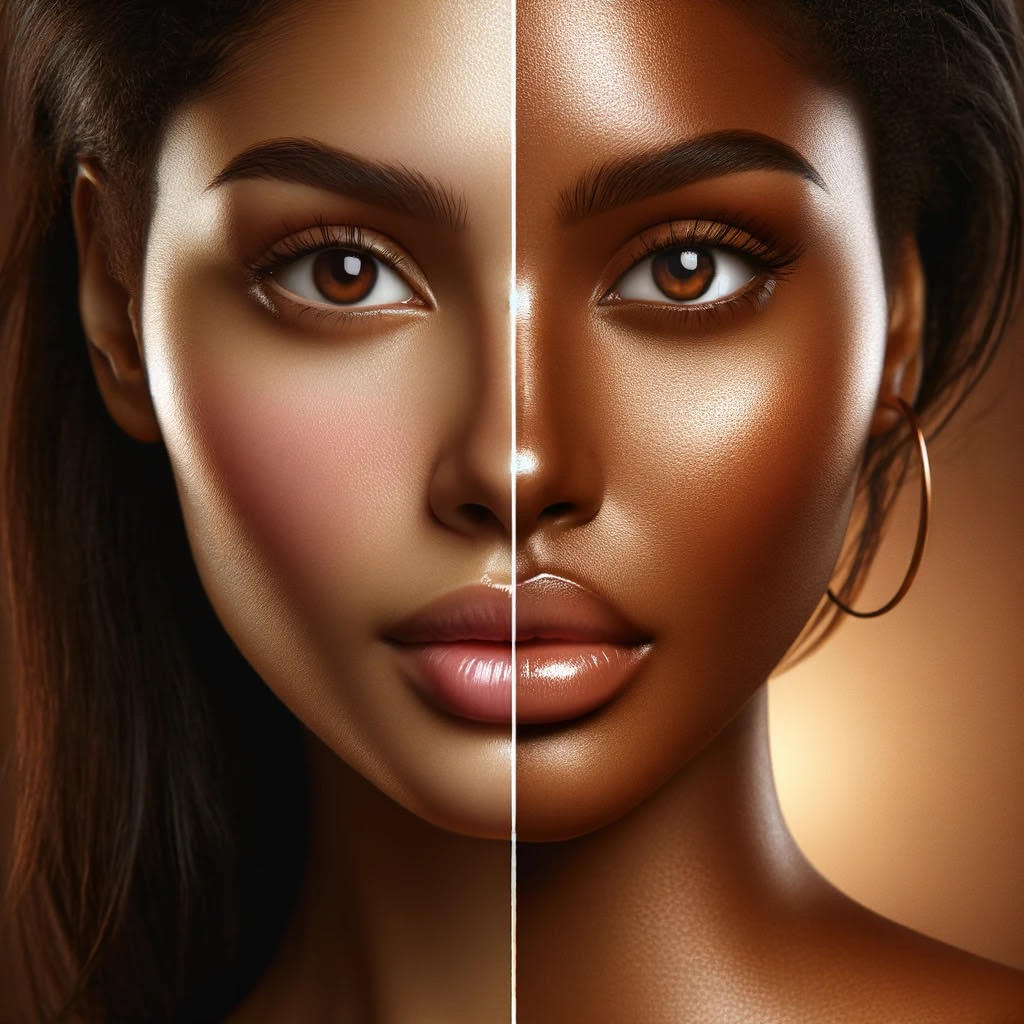

Firming Moisturizer, Advanced Hydrating Facial Replenishing Cream, with Hyaluronic Acid, Resveratrol & Natural Botanicals to Restore Skin's Strength, Radiance, and Resilience, 1.75 Oz

Skin Stem Cell Serum


Smartphone 101 - Pick a smartphone for me - android or iOS - Apple iPhone or Samsung Galaxy or Huawei or Xaomi or Google Pixel
Can AI Really Predict Lottery Results? We Asked an Expert.




Djamgatech

Read Photos and PDFs Aloud for me iOS
Read Photos and PDFs Aloud for me android
Read Photos and PDFs Aloud For me Windows 10/11
Read Photos and PDFs Aloud For Amazon
Get 20% off Google Workspace (Google Meet) Business Plan (AMERICAS): M9HNXHX3WC9H7YE (Email us for more)
Get 20% off Google Google Workspace (Google Meet) Standard Plan with the following codes: 96DRHDRA9J7GTN6(Email us for more)



FREE 10000+ Quiz Trivia and and Brain Teasers for All Topics including Cloud Computing, General Knowledge, History, Television, Music, Art, Science, Movies, Films, US History, Soccer Football, World Cup, Data Science, Machine Learning, Geography, etc....
List of Freely available programming books - What is the single most influential book every Programmers should read
- Bjarne Stroustrup - The C++ Programming Language
- Brian W. Kernighan, Rob Pike - The Practice of Programming
- Donald Knuth - The Art of Computer Programming
- Ellen Ullman - Close to the Machine
- Ellis Horowitz - Fundamentals of Computer Algorithms
- Eric Raymond - The Art of Unix Programming
- Gerald M. Weinberg - The Psychology of Computer Programming
- James Gosling - The Java Programming Language
- Joel Spolsky - The Best Software Writing I
- Keith Curtis - After the Software Wars
- Richard M. Stallman - Free Software, Free Society
- Richard P. Gabriel - Patterns of Software
- Richard P. Gabriel - Innovation Happens Elsewhere
- Code Complete (2nd edition) by Steve McConnell
- The Pragmatic Programmer
- Structure and Interpretation of Computer Programs
- The C Programming Language by Kernighan and Ritchie
- Introduction to Algorithms by Cormen, Leiserson, Rivest & Stein
- Design Patterns by the Gang of Four
- Refactoring: Improving the Design of Existing Code
- The Mythical Man Month
- The Art of Computer Programming by Donald Knuth
- Compilers: Principles, Techniques and Tools by Alfred V. Aho, Ravi Sethi and Jeffrey D. Ullman
- Gödel, Escher, Bach by Douglas Hofstadter
- Clean Code: A Handbook of Agile Software Craftsmanship by Robert C. Martin
- Effective C++
- More Effective C++
- CODE by Charles Petzold
- Programming Pearls by Jon Bentley
- Working Effectively with Legacy Code by Michael C. Feathers
- Peopleware by Demarco and Lister
- Coders at Work by Peter Seibel
- Surely You're Joking, Mr. Feynman!
- Effective Java 2nd edition
- Patterns of Enterprise Application Architecture by Martin Fowler
- The Little Schemer
- The Seasoned Schemer
- Why's (Poignant) Guide to Ruby
- The Inmates Are Running The Asylum: Why High Tech Products Drive Us Crazy and How to Restore the Sanity
- The Art of Unix Programming
- Test-Driven Development: By Example by Kent Beck
- Practices of an Agile Developer
- Don't Make Me Think
- Agile Software Development, Principles, Patterns, and Practices by Robert C. Martin
- Domain Driven Designs by Eric Evans
- The Design of Everyday Things by Donald Norman
- Modern C++ Design by Andrei Alexandrescu
- Best Software Writing I by Joel Spolsky
- The Practice of Programming by Kernighan and Pike
- Pragmatic Thinking and Learning: Refactor Your Wetware by Andy Hunt
- Software Estimation: Demystifying the Black Art by Steve McConnel
- The Passionate Programmer (My Job Went To India) by Chad Fowler
- Hackers: Heroes of the Computer Revolution
- Algorithms + Data Structures = Programs
- Writing Solid Code
- JavaScript - The Good Parts
- Getting Real by 37 Signals
- Foundations of Programming by Karl Seguin
- Computer Graphics: Principles and Practice in C (2nd Edition)
- Thinking in Java by Bruce Eckel
- The Elements of Computing Systems
- Refactoring to Patterns by Joshua Kerievsky
- Modern Operating Systems by Andrew S. Tanenbaum
- The Annotated Turing
- Things That Make Us Smart by Donald Norman
- The Timeless Way of Building by Christopher Alexander
- The Deadline: A Novel About Project Management by Tom DeMarco
- The C++ Programming Language (3rd edition) by Stroustrup
- Patterns of Enterprise Application Architecture
- Computer Systems - A Programmer's Perspective
- Agile Principles, Patterns, and Practices in C# by Robert C. Martin
- Growing Object-Oriented Software, Guided by Tests
- Framework Design Guidelines by Brad Abrams
- Object Thinking by Dr. David West
- Advanced Programming in the UNIX Environment by W. Richard Stevens
- Hackers and Painters: Big Ideas from the Computer Age
- The Soul of a New Machine by Tracy Kidder
- CLR via C# by Jeffrey Richter
- The Timeless Way of Building by Christopher Alexander
- Design Patterns in C# by Steve Metsker
- Alice in Wonderland by Lewis Carol
- Zen and the Art of Motorcycle Maintenance by Robert M. Pirsig
- About Face - The Essentials of Interaction Design
- Here Comes Everybody: The Power of Organizing Without Organizations by Clay Shirky
- The Tao of Programming
- Computational Beauty of Nature
- Writing Solid Code by Steve Maguire
- Philip and Alex's Guide to Web Publishing
- Object-Oriented Analysis and Design with Applications by Grady Booch
- Effective Java by Joshua Bloch
- Computability by N. J. Cutland
- Masterminds of Programming
- The Tao Te Ching
- The Productive Programmer
- The Art of Deception by Kevin Mitnick
- The Career Programmer: Guerilla Tactics for an Imperfect World by Christopher Duncan
- Paradigms of Artificial Intelligence Programming: Case studies in Common Lisp
- Masters of Doom
- Pragmatic Unit Testing in C# with NUnit by Andy Hunt and Dave Thomas with Matt Hargett
- How To Solve It by George Polya
- The Alchemist by Paulo Coelho
- Smalltalk-80: The Language and its Implementation
- Writing Secure Code (2nd Edition) by Michael Howard
- Introduction to Functional Programming by Philip Wadler and Richard Bird
- No Bugs! by David Thielen
- Rework by Jason Freid and DHH
- JUnit in Action
#BlackOwned #BlackEntrepreneurs #BlackBuniness #AWSCertified #AWSCloudPractitioner #AWSCertification #AWSCLFC02 #CloudComputing #AWSStudyGuide #AWSTraining #AWSCareer #AWSExamPrep #AWSCommunity #AWSEducation #AWSBasics #AWSCertified #AWSMachineLearning #AWSCertification #AWSSpecialty #MachineLearning #AWSStudyGuide #CloudComputing #DataScience #AWSCertified #AWSSolutionsArchitect #AWSArchitectAssociate #AWSCertification #AWSStudyGuide #CloudComputing #AWSArchitecture #AWSTraining #AWSCareer #AWSExamPrep #AWSCommunity #AWSEducation #AzureFundamentals #AZ900 #MicrosoftAzure #ITCertification #CertificationPrep #StudyMaterials #TechLearning #MicrosoftCertified #AzureCertification #TechBooks
Top 1000 Canada Quiz and trivia: CANADA CITIZENSHIP TEST- HISTORY - GEOGRAPHY - GOVERNMENT- CULTURE - PEOPLE - LANGUAGES - TRAVEL - WILDLIFE - HOCKEY - TOURISM - SCENERIES - ARTS - DATA VISUALIZATION

Top 1000 Africa Quiz and trivia: HISTORY - GEOGRAPHY - WILDLIFE - CULTURE - PEOPLE - LANGUAGES - TRAVEL - TOURISM - SCENERIES - ARTS - DATA VISUALIZATION

Exploring the Pros and Cons of Visiting All Provinces and Territories in Canada.


Exploring the Advantages and Disadvantages of Visiting All 50 States in the USA

Health Health, a science-based community to discuss health news and the coronavirus (COVID-19) pandemic
- What’s Keeping the US From Allowing Better Sunscreens?by /u/mcgillhufflepuff on May 9, 2024 at 1:59 am
submitted by /u/mcgillhufflepuff [link] [comments]
- How the parasite that RFK Jr. said he contracted infects the brainby /u/nbcnews on May 9, 2024 at 1:24 am
submitted by /u/nbcnews [link] [comments]
- Bird flu news trackerby /u/Annual_Judge_7272 on May 9, 2024 at 1:23 am
submitted by /u/Annual_Judge_7272 [link] [comments]
- Processed meats most strongly linked to a higher risk of death among ultra-processed foodsby /u/chrisdh79 on May 9, 2024 at 12:40 am
submitted by /u/chrisdh79 [link] [comments]
- Over 1 million Texas children dropped from Medicaid since April 2023by /u/audiomuse1 on May 9, 2024 at 12:34 am
submitted by /u/audiomuse1 [link] [comments]
Today I Learned (TIL) You learn something new every day; what did you learn today? Submit interesting and specific facts about something that you just found out here.
- TIL James Madison was the smallest U.S. president. He stood 5'4" and weighed just over 100 pounds.by /u/SnarkySheep on May 9, 2024 at 5:46 am
submitted by /u/SnarkySheep [link] [comments]
- TIL a study found that 25% of Labrador retrievers and 66% of flat-coated retrievers possess a genetic mutation that can lead to weight gain; dogs with the gene face the "double whammy" of constant hunger while burning fewer calories. The Labrador has the highest levels of obesity among dog breeds.by /u/tyrion2024 on May 9, 2024 at 4:02 am
submitted by /u/tyrion2024 [link] [comments]
- TIL Matthew McConaughey turned down a $14.5 million film offer & took a hiatus in order to pivot his acting career outside of rom-coms. The decision came after he searched himself online & realized he was largely known as a "rom-com shirtless guy" which prevented him from being hired in other genresby /u/tyrion2024 on May 9, 2024 at 3:57 am
submitted by /u/tyrion2024 [link] [comments]
- TIL the panic of 1873 triggered an economic depression until 1877 in the USA and was known as the Great Depression until the events of 1929 set a new standard. The depression also occurred in Europe and started 2 decades of stagflation in Britain.by /u/mankls3 on May 9, 2024 at 3:31 am
submitted by /u/mankls3 [link] [comments]
- TIL that our lips become thinner as we age, primarily due to collagen loss. Collagen, which constitutes 30% of the body’s and 70% of the skin’s protein, is vital for maintaining the skin's structural integrity and volume.by /u/wilcox_1023 on May 9, 2024 at 2:56 am
submitted by /u/wilcox_1023 [link] [comments]
Reddit Science This community is a place to share and discuss new scientific research. Read about the latest advances in astronomy, biology, medicine, physics, social science, and more. Find and submit new publications and popular science coverage of current research.
- Meta-analysis : childhood maltreatment accounts for 21% to 41% of common mental health conditions in Australiaby /u/KnoxCastle on May 9, 2024 at 3:54 am
submitted by /u/KnoxCastle [link] [comments]
- Study of different types of ultra-processed foods shows highest mortality risk is associated with consumption of Meat/poultry/seafood based ready-to-eat products (processed meats)by /u/BoredMamajamma on May 9, 2024 at 12:30 am
submitted by /u/BoredMamajamma [link] [comments]
- A new theory suggests that heavy snowfall could be a factor in triggering swarms of earthquakes — evidence that what’s happening on and above the Earth’s surface may play a role in events underground.by /u/nbcnews on May 9, 2024 at 12:20 am
submitted by /u/nbcnews [link] [comments]
- A new commercial boundary dataset for metropolitan areas in the USA and Canada built from open data | Defining boundaries of commercial areas by creating a consistent definition combining various commercial area types including downtowns, retail centres, financial districts, and employment centresby /u/Hrmbee on May 8, 2024 at 11:58 pm
submitted by /u/Hrmbee [link] [comments]
- Changes in running economy and attainable maximal oxygen consumption in response to prolonged running: The impact of training statusby /u/Hrmbee on May 8, 2024 at 9:37 pm
submitted by /u/Hrmbee [link] [comments]
Reddit Sports Sports News and Highlights from the NFL, NBA, NHL, MLB, MLS, and leagues around the world.
- Jalen Brunson returns from foot injury, sparks Knicks past Pacers for 2-0 lead in East semifinalsby /u/Oldtimer_2 on May 9, 2024 at 3:16 am
submitted by /u/Oldtimer_2 [link] [comments]
- Tkachuk, Pastrnak drop gloves in fiery Game 2by /u/Oldtimer_2 on May 9, 2024 at 2:35 am
submitted by /u/Oldtimer_2 [link] [comments]
- Fight Club: Boston @ Floridaby /u/Hockey-Daily on May 9, 2024 at 2:13 am
submitted by /u/Hockey-Daily [link] [comments]
- Paul Skenes debut: Pirates' top prospect, No. 1 pick in 2023 MLB draft, promoted to majorsby /u/Oldtimer_2 on May 9, 2024 at 1:56 am
submitted by /u/Oldtimer_2 [link] [comments]
- Gable Steveson drawing NFL interest, training in MMA after WWE releaseby /u/Oldtimer_2 on May 9, 2024 at 1:43 am
submitted by /u/Oldtimer_2 [link] [comments]